

Actor John Stamos discovers his paternal great-grandfather Vasilios was murdered in Kakouri village in Greece by a man named Ioannis Koliopoulos, who is described as “Judas.”
Month: April 2017
Vasilis Vasilas’ interview with Dimitris Danas of Danas Deli Café in Marrickville
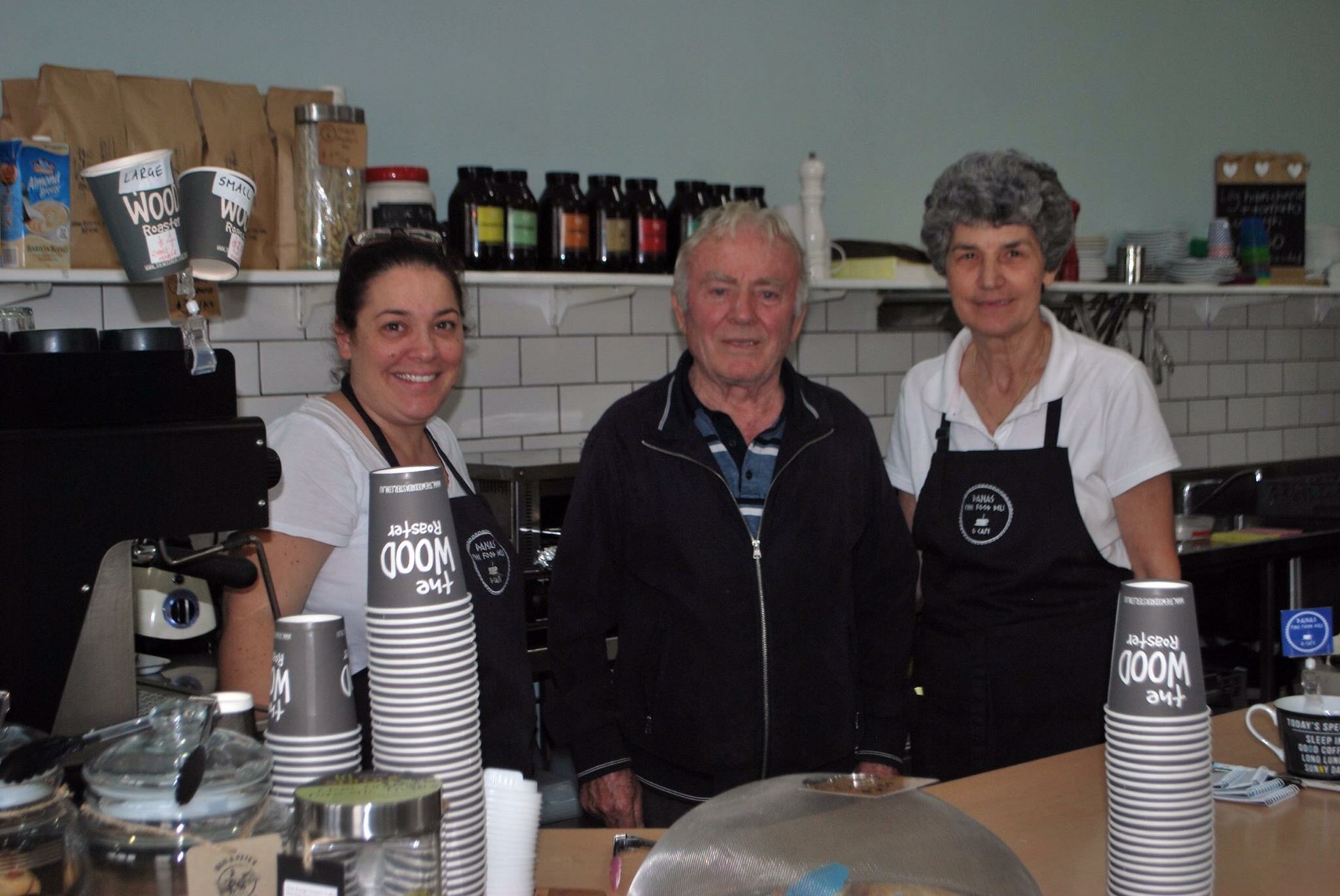
Vasilis recently interviewed Dimitris Danas of Danas Deli Café in Marrickville, Sydney. Dimitris opened this shop as a delicatessen in 1962! Yes… 1962! So, it has been going for 55 years!
The front section of the shop is the café, run by Dimitris’ daughters, Tina and Olga, while the back section remains a delicatessen- with so many of our favourite Greek products- run by Dimitris and his wife, Agathi.
‘This is an amazing story! Dimitris and his family have seen so many changes in their area and they have adapted to these changes to remain open and continue to service the local community,’ explains Vasilis, ‘No wonder Danas was awarded a Long Service Award by Marrickville Business Association in 2014!’
In the photograph are Dimitris and Agathi, and their daughter, Tina.
Source: https://www.facebook.com/SYNDESMOS-CONNECTING-PEOPLE-FROM-LESVOS-393246219501/
Vasilis Vasilas’ interview with Kostas Anagnostou about his Handmade Shoes at Hurlstone Park
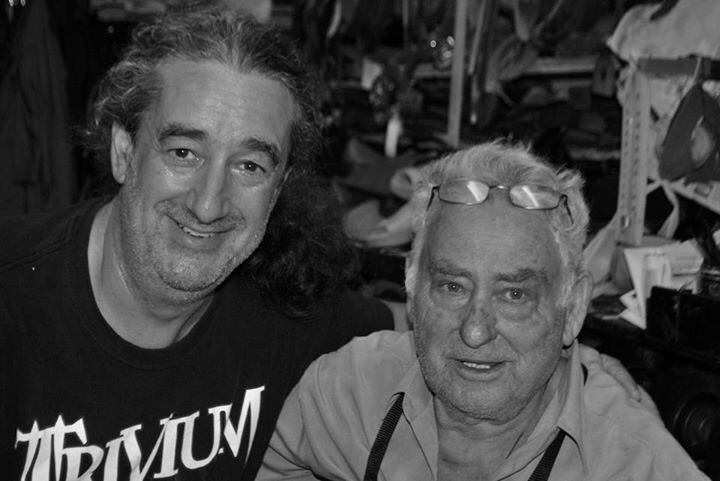
Another Gem of a Shop
Vasilis recently interviewed Kostas Anagnostou about his business, Con’s Handmade Shoes.
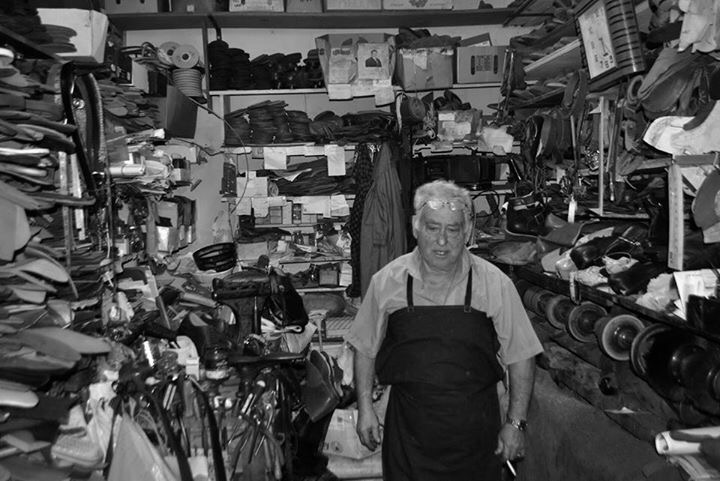
As Vasilis explains, ‘Kosta has an amazing skill, which is so rare today, for making shoes. No task or job scares Kosta! At one point, he was making boots for Movie World so he was making Wonder Woman’s boots! When Kosta told me of his incredible works, I was simply gobsmacked!’
Vasilis also loved being corrected by Kosta when he complimented Kosta as being one of the last shoe repairers. Kosta politely replied, ‘No, Vasili, I am not a shoe repairer; I am a shoe maker…’
Does this make Kosta the last shoe maker in Sydney?
Source: https://www.facebook.com/SYNDESMOS-CONNECTING-PEOPLE-FROM-LESVOS-393246219501/
Vasilis Vasilas’ interview with John Glynatsis, who runs Saltwater Seafoods at Revesby
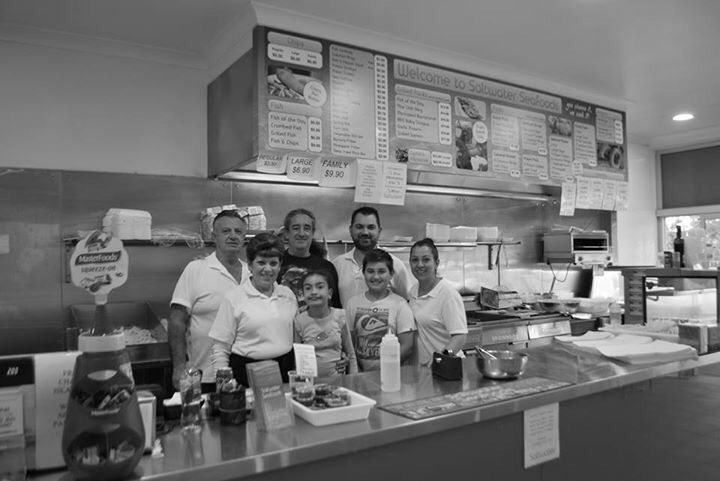
As it was Good Friday recently, it is only fitting to highlight a Greek seafood shop, as it will be teeming with customers for fresh seafood.
Vasilis recently interviewed John Glynatsis, who runs Saltwater Seafoods at Revesby, and his father, Nikitas, who owned Saltwater Seafoods in Maroubra in the 1990s and has worked in the seafood shop industry for three decades.
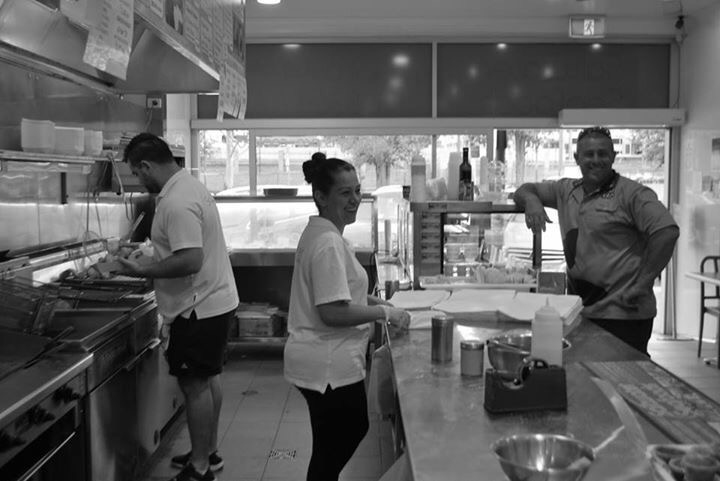
Nikitas’ story captures the hardship of the migrant experience; as his parents, siblings and he migrated to Australia in 1964, it was long after they arrived here that his father became very ill and then tragedy struck when he passed away.
Being the eldest son in the family, Nikitas worked very hard (and so many jobs) to help out his family, so his story is about courage.
Nikitas’s story is also about hope and determination to overcome adversities, as he succeeded in all facets of life, whether having a wonderful family or running his own business.
Vasilis highlights the importance of family when he visited Saltwater Seafoods. As he explains, ‘What I loved about being at John’s shop was the three generations of family there: there was John and his wife, Elizabeth; John’s parents, Nikitas and Anthoula, helping out; and, as it was school holidays, John and Elizabeth’s children were there too.
It was wonderful to see the hard work and strong spirit a family puts into their work.’
Source: https://www.facebook.com/SYNDESMOS-CONNECTING-PEOPLE-FROM-LESVOS-393246219501/
Vasilis Vasilas’ interview with Georgiou family celebrating their 40th year of operation this year is Olympic Hardware in Lakemba

Celebrating their 40th year of operation this year is Olympic Hardware in Lakemba, run by the Georgiou family. Is there a more Greek name than ‘Olympic’? Tasos Georgiou named the shop after his beloved soccer team, Sydney Olympic, who started their NSL campaign that year too.
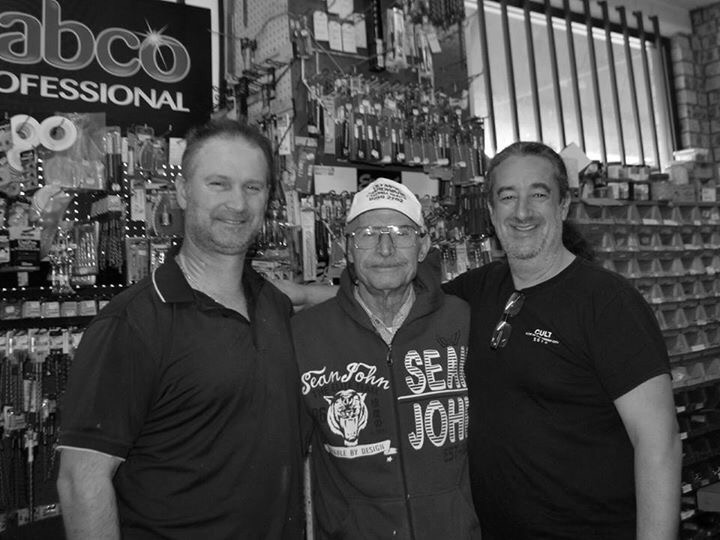
Tasos and his son, Steliy, recount a great story about receiving correspondence from Australia’s Olympic Committee stating not to use the Olympic Games’ rings as a company logo as they were patented; they even had an issue with the name Olympic.
Tasos reaction was, ‘They can have the rings but who are they to tell me not to call my shop, Olympic- I am more Greek than them.’
Steliy has worked with his parents, Tasos and Georgia, ever since he finished high school in 1986, making this truly a great family business.
After forty years, Tasos, Steliy and Georgia have acquired the invaluable experience and knowledge to provide a high-quality hands-on service to their customers- that’s what keeps them coming back!
We would like to wish Olympic Hardware a happy 40th and even happier returns.
Source: https://www.facebook.com/SYNDESMOS-CONNECTING-PEOPLE-FROM-LESVOS-393246219501/
Remembering Albert Leane: the Indigenous serviceman who fought at the Battle of Fromelles 100 years ago and survived
It was a battle of ‘mass slaughter and mass grief’, the first time Australians were confronted with ‘the full force and horror of industrialised warfare.’
That’s how Veterans’ Affairs Minister Dan Tehan this week described the 14-hour bloodbath that became known as the Battle of Fromelles 100 years ago.
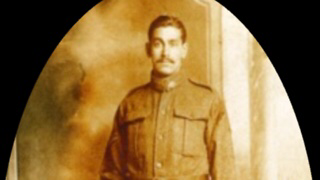
Nearly 2000 Australian soldiers died and nearly 3000 were wounded in one day. One of them was 38-year-old Indigenous digger, Albert Charles Leane.
It will probably never be known how many Indigenous Australians have served in the Australian defence forces. At the time of the First World War, Aboriginal people were not even entitled to vote.
Those who enlisted were not required to declare their ethnicity and even today, ticking the “Aboriginal or Torres Strait Islander” box is voluntary.
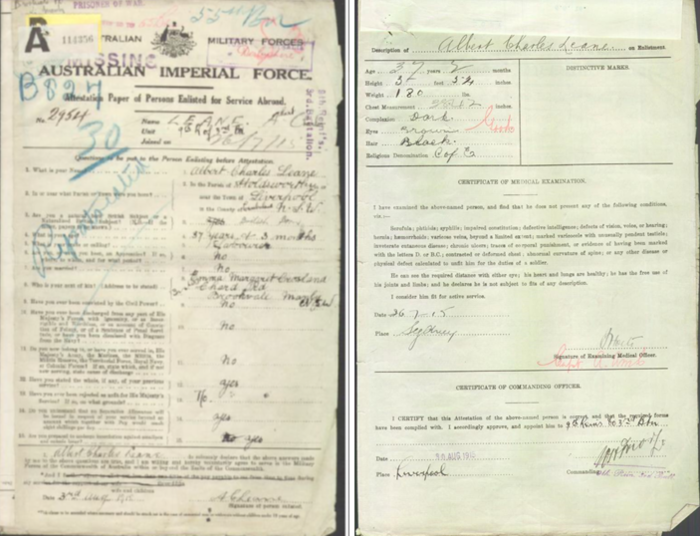
Albert Charles Leane’s Service Record
Albert Leane, who was born in 1877 in Holsworthy, New South Wales, had signed up at the age of 37 the year before the battle. He had sailed from Sydney to Egypt to join the 55th Battalion and then shipped out to the Western Front.
On July 19, the full horror of war erupted at Fromelles and as German machine gunners strafed the battlefield Albert was wounded in the legs. He was captured by the Germans and became a prisoner of war, first at Stendal in Germany and then at Wittenberg.
He wrote several letters to his family from the PoW camps. In two of them, which are with the Australian Red Cross Society and on his service file, he reassures his loved ones by saying he’s doing well “under the circumstances”.
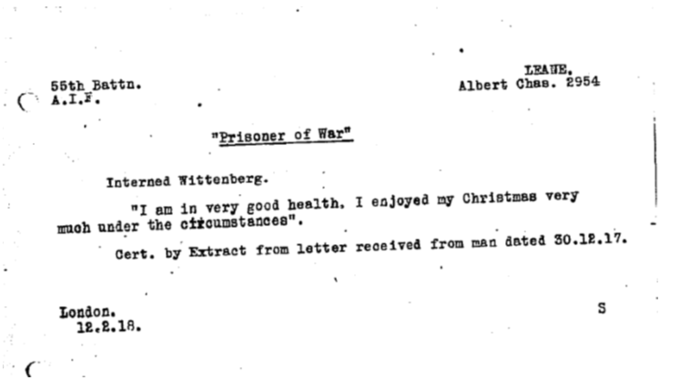
Australian Red Cross Society Wounded and Missing Enquiry. Bureau file, 2954 Private Albert Charles Leane. Australian War Memorial
When the war ended he was released and shipped to England in December 1918, returning to Australia the following March.
At the Centennial Memorial Ceremony held at Fromelles earlier this week, Mr Tehan said 16,900 Australians remain unaccounted for from the fighting on the Western Front.
“The industrial scale of the killing, the machines and weapons that swept away life created limited time for recognition, recovery or even burial,” he said.
“The grief and uncertainty of families with no plots for their loved ones was immense, pieces of their lives could never be fully recovered.
“It is our duty to honour their duty … they are unknown but not remembered any less.”
Mr Tehan thanked the French people and particularly the people of Fromelles for the respect they continued to show to the Australian fallen.
The AWM have at present approximately 1000 names of Aboriginal Australians who fought in the First World War. Many who tried to enlist were rejected on the grounds of race but this did not deter them changing their nationalities, names and places of origin in attempts to enlist.
Note: NITV wishes to thank Aunt Judith Joyce Niece of Albert, who provided the photos and information used for this article.
Aunt Judy is a Darug women, who wishes to Acknowledge and pay respect to her elders both past and present. She also would like to thank Philippa Scarlett and Rebecca Batemen for all the research they have done into her family’s history.
The Holy Monastery of St George is located in the Old Cairo
Προσκυνητής στον αρχαίο ελληνορθόδο ναό του Αγίου Γεωργίου, στο Κάϊρο! Συγκινητή επίσκεψη, με την κάμερα του enlefkotv, στο πιο λαμπρό μνημείο του Χριστιανισμού στην Αίγυπτο. Βρίσκεται κοντά στις πυραμίδες, μεταξύ της αρχαίας Μέμφιδος και της Ηλιουπόλεως.
Χτίσθηκε στα θεμέλια του Παλαιού Οχυρού της Βαβυλώνας στην ευρύτερη περιοχή της Μέμφιδας, που ήταν η αρχαία πρωτεύουσα της Κάτω Αιγύπτου. Το 383 μ.Χ. ο Μέγας Θεοδόσιος με διάταγμά του μετέτρεψε το φρούριο σε ναό προς τιμήν του στρατιώτη Αγίου Γεωργίου. Ο ιερός ναός είναι κτισμένος στον τέταρτο όροφο επάνω σε πύργο Ρωμαϊκού φρουρίου, το οποίο πολλές φορές χρησίμευε σαν καταφύγιο των Χριστιανών. Αξίζει να σημειωθεί ότι εδώ υπάρχει και το μοναδικό ελληνικό νεκροταφείο στο Κάιρο, όπου βρίσκονται οι τάφοι των μεγάλων ευεργετών, το μνημείο του άγνωστου αεροπόρου και το ηρώο πεσόντων στη μάχη του Ελ Αλαμέιν. Επίσης, υπάρχουν σπουδαία έργα μεγάλων γλυπτών.
——————————————-
The Holy Monastery of St George is located in the are of Old Cairo. It is the old area known as Babylonos of Egypt, which took its name after the settlement of the Babylonian captives which the Pharaoh Ramses I (1390 BC) brought to Egypt from his campaign in Asia. It is close to the pyramids, between ancient Memphis and Heliopolis.
The Monastery of St George through the ages operated as a convent, hospital, poorhouse, old age home, school and cemetery, was prone to consecutive destructions and renovations, the last in 1904, when it suffered serious damage from a fire and was renovated by Patriach Fotios (1900-1925).
The Church of St George is round, eight-columned, similar to the Basilica of St Vitale in Ravenna, surrounded by an ancient wall at a distance of half a square kilometer, the largest part of which has been destroyed. In 1998 Greece undertook the construction of a new wall to preserve its ancient parts, with two entrances, the central one towards the Hegumen’s residence and the other entrance towards the Greek cemetery, which witnesses to and preserves glorious memories of the Hellenes of Egypt.
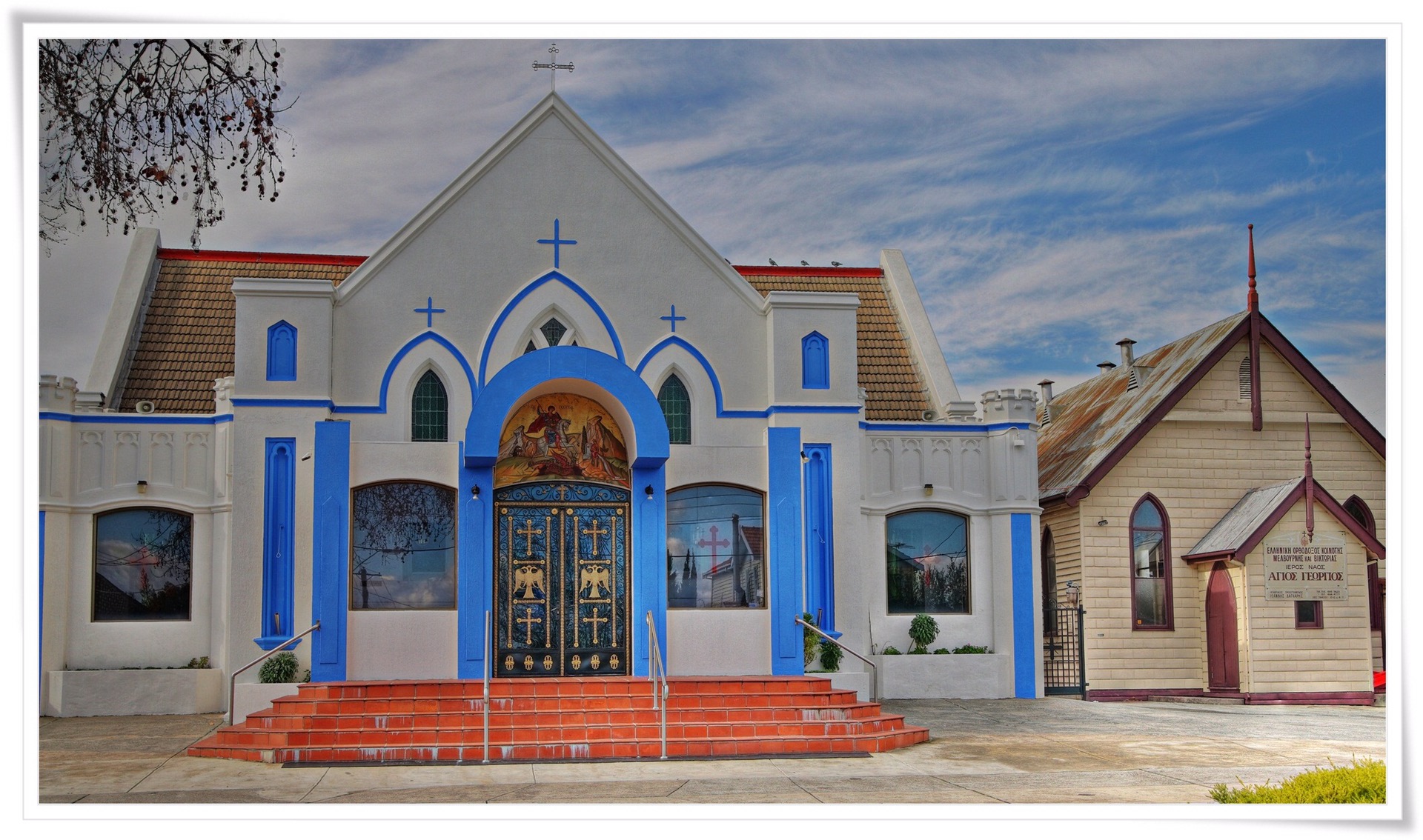
The celebration of Feast Day of the St George church by His Grace Bishop Iakovos of Miletopoulis on Sunday 23 April 2017
PRESS RELEASE
21/4/2017
The celebration of Feast Day of the St George church
The Greek Community of Melbourne’s Holy Church of “St George” celebrates its Feast Day on Sunday 23 April 2017.
To celebrate the Feast of the St George church, the Very Rev Fr Ioannis Dangaris, the Church committee and the Board of Directors of the Greek Community wish to invite all the members of the Greek community to the following:
Saturday 22 April 2017 – 6:30pm (66 St. David St, Thornbury). The Archieratical Great Vespers for the feast of the St George church celebrated by His Grace Bishop Ezekiel of Dervis.
Sunday 23 April 2017 – 7:30am (66 St. David St, Thornbury)
Feast Day of the St George church and Archieratical Divine Liturgy celebrated by His Grace Bishop Iakovos of Miletopoulis.
Information:
Greek Community of Melbourne: 9662 2722.
Church: 9484 3423
Level 3, 168 Lonsdale St., Melbourne, Vic. 3000
Phone: +61 3 9662 2722, Email: info@greekcommunity.com.au, Website: greekcommunity.com.au
——————————————————
PRESS RELEASE
21/4/2017
Πανηγυρίζει ο Ιερός Ναός του Αγίου Γεωργίου
Την Κυριακή 23 Απριλίου 2017, εορτή του Αγίου Γεωργίου, γιορτάζει και πανηγυρίζει ο φερώνυμος Ιερός Ναός της Κοινότητάς μας «Άγιος Γεώργιος», 66 St. David St, Thornbury , με το ακόλουθο πρόγραμμα:
• Το Σάββατο 22 Απριλίου και ώρα 7.00μμ θα ψαλεί ο Μέγας Πανηγυρικός Εσπερινός χοροστατούντος του Θεοφιλέστατου Επισκόπου Δέρβης κ. Ιεζεκιήλ.
• Την Κυριακή, 23 Απριλίου, κυριώνυμον ημέρα της εορτής, όρθρος και Πανηγυρική Θεία Λειτουργία, ιερουργούντος του Θεοφιλέστατου Επισκόπου Μιλητουπόλεως κ. Ιακώβου.
Μετά το πέρας της Θείας Λειτουργίας θα ακολουθήσει γεύμα στο χολ της Εκκλησίας. Όλοι ευπρόσδεκτοι.
Ο Ιερατικώς Προϊστάμενος π. Ιωάννης Δάγκαρης, το Διοικητικό Συμβούλιο της Κοινότητας, η Εκκλησιαστική Επιτροπή και οι κυρίες της φιλόπτωχου εύχονται σε όλους χρόνια πολλά, υγεία, ευλογία, αγάπη και χαρά.
Πληροφορίες:
Eλληνική Κοινότητα Μελβούρνης, τηλ.: 9662 2722.
Ιερός Ναός Αγίου Γεωργίου, τηλ.: 9484 3423
Πληροφορίες: 9662 2722
Level 3, 168 Lonsdale St., Melbourne, Vic. 3000
Phone: +61 3 9662 2722,
Email: info@greekcommunity.com.au,
Website: greekcommunity.com.au
The Olympia Pizza saga: from a small Greek Island to a Vancouver institution
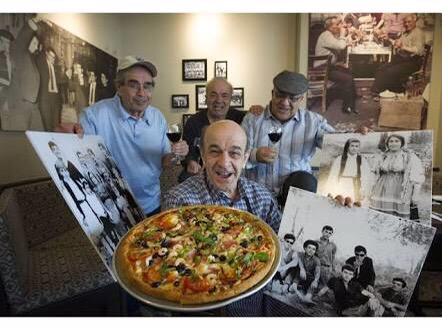
Four of the six Kerasiotis brothers from Olympia Pizza – left to right, Peter, Jim, George (with pizza) and Nick. Mark van Manen / Vancouver Sun
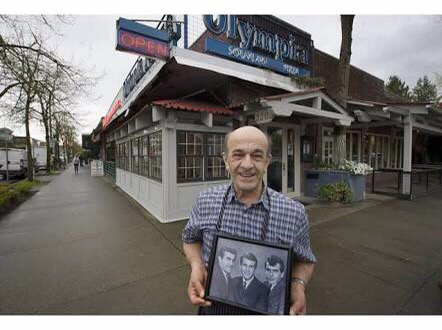
Olympia Pizza c0-owner George Kerasiotis outside of the West Broadway restaurant with a vintage photograph of himself (centre) and his brothers.Mark van Manen / Vancouver Sun
In 1959 times were tough on the Greek Island of Evia. So a beneficent English lord who employed many of the island’s young people put up the money to send a bunch of them abroad.
John Kerasiotis was dispatched to work on a berry farm in Ontario. But he wasn’t too fond of the winter, and within a year he migrated across the country to B.C.
Kerasiotis worked in pulp mills up the coast, and slowly but surely brought his five brothers over from Greece. Peter came in 1962, George in 1966, Jim in 1968, and Nick and Tim in 1974.
In 1967, the family opened a restaurant in Kitsilano with their friend George Scouras. But it wasn’t a Greek restaurant, it was a pizza joint.
“That was the thing to do back then, pizza,” said George Kerasiotis, 69.
“When we started, there was only John’s Pizzarama across the street. But then everybody followed, every Greek was opening a pizza and pasta place.”
Fifty years later, Olympia Pizza is still going strong at 3205 West Broadway. And it’s still owned and operated by the Kerasiotis family, who have become a Vancouver institution.
In 1975 the family went into the nightclub business with the Luvafair, which started off as a gay bar, turned into an alternative music venue and reeled in generations of night clubbers until it closed in 2003.
In the ‘80s the family ran another alternative hot spot, Graceland. Today they own three thriving nightclubs: Celebrities, the Venue and the Caprice.
It all began at Olympia Pizza, where all six brothers worked.
“Some were cooking, some were managers at the front, some did the late shift,” said Nick Kerasiotis, 66.
“We did everything,” said Peter Kerasiotis, 73. “We washed dishes sometimes too.”
“They put me as a dishwasher first,” said Nick with a chuckle. “A year as a dishwasher. (In Greece) I was an accountant.”
The restaurant thrived thanks to their hard work.
“We opened at 11 in the morning for lunch, and stayed open ‘til four in the morning,” said George, who was initially known as “Small George” (the late co-founder Scouras was “Big George”).
“We would get busy for dinner, five to eight-nine, then have an hour quiet period, then people would come in from the bars and we would get full again, and go to four in the morning.”
Still, immigrating to Canada wasn’t easy.
“When I came I had no English at all,” said George.
“It’s hard when you leave your country, family and friends when you’re 18 or 19, to go to another country. And when I came here it was raining for a week. Rain, rain. (Then) two weeks. I was going out and looking, ‘where is the sun?’ It must have rained over a month straight.”
When big brother John told him he had to go to Ladysmith for work, George said he was going with him, or going back to Greece. So John took him, and he stayed.
John (who died in 2008) went through some trying times himself.
“I have to tell you a good story,” relates Nick.
“(John) was working in Ontario on a farm. The foreman was from Vancouver, and said to (the young Greek farm workers) ‘Vancouver, it’s a better place, I will take you there.
“But he said ‘On the train, people are stealing. So I will keep all your money.’ There was four of them. They said ‘okay’ and gave all their money to the foreman.”
Unfortunately the foreman hopped off the train in New Westminster, and the four young immigrants stayed on to Vancouver. They waited and waited for the foreman, but he had absconded with their money.
They started walking west with their bags, winding up at 8th and Trafalgar.
“A Greek guy was sitting having a coffee and saw them sweating,” said Nick.
“He called to them ‘Hey are you Greeks?’ They said ‘Yeah.’ He said ‘Come here.’ He invited them into his house, fed them. They told him the story, they said ‘we don’t have a family (in Canada).’
“He said ‘Fine, work for me.’”
The stranger was Kyriakos Katsionis. John Kerasiotis remained friends with him the rest of his life —and all the Kerasiotis brothers would stay at his home over the years.
George still works at Olympia, but most of the family business is now done by a new generation — 14 sons of the six Kerasiotis brothers.
Many of their customers remain from Olympia’s early days.
“We’ve met a lot of people who used to come to Olympia when they went to UBC, and now they come in with their families,” said George.
“They married, they’ve got kids and they still come here.”
The fascinating art and history of Athens’s First Cemetery in a new guide book
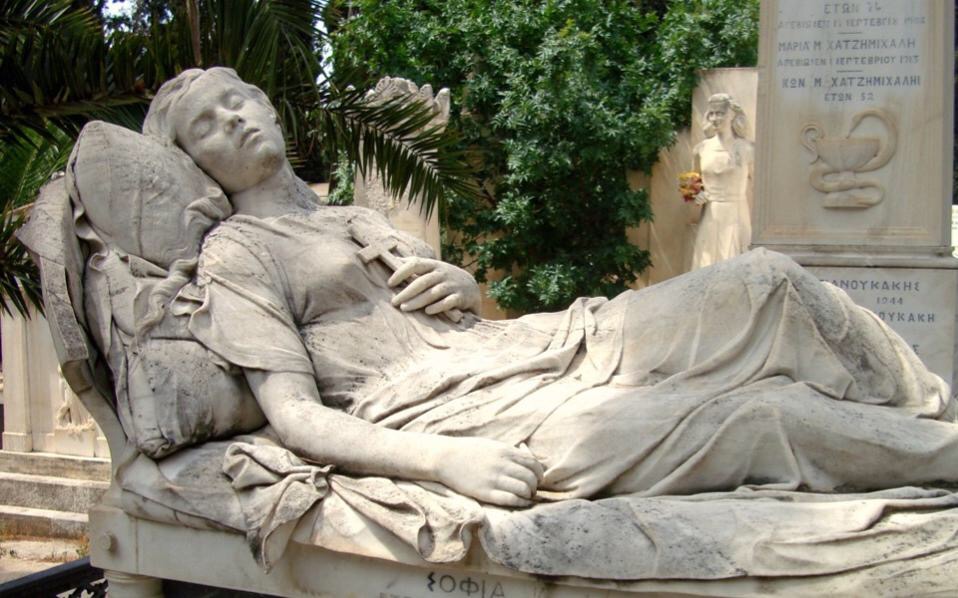 Yiannoulis Halepas’s ‘Sleeping Girl’ was sculpted for a young woman who committed suicide at the age of 18, in 1878, after her father prevented her from being with her beloved, an Italian opera singer. (Photo: Nikos Vatopoulos)
In Greek, the words for monument (mnimeio) and tomb (mnima) both come from the word “mnimi,” or memory, making cemeteries places where death, life and continuity are celebrated. And while other countries make sure to maintain their biggest cemeteries in a state of perfection and to develop them for tourism – like the Pere Lachaise in Paris, for example – in Greece, the country’s most important cemetery, Athens First Cemetery, has for years been neglected by authorities.
While there are numerous coffee-table and other such books on the cemetery, there has never been a comprehensive a guide for people interested in its outdoor sculpture and the eminent men and women of politics, the sciences, the arts and the letters who are buried there.
This, however, is no longer the case, thanks to Olkos publications, which recently released an up-to-date and user-friendly guide of 170 pages, comprising texts by Athens University Professor Emeritus Kardamitsis-Adami Maro and architect Maria Daniil, and photographs by the architect and photographer Yiorgis Yerolymbos.
The guide is an initiative of the Hellenic Society for the Protection of the Environment and Cultural Heritage, which has done some amazing work in nature conservation and in the restoration of important historic buildings.
But what is so interesting about this guide to the First Cemetery? First and foremost, the maps that show the number of each grave site and help visitors locate those that are most valuable from an artistic or historical point of view – anyone who has been there knows how hectic the layout is.
Athens First Cemetery was established by royal decree in 1837 and has been in continuous operation for the entire 180 years since. It was expanded in the 1940s to include a section for Protestants and Jews, while there are also many Catholics in the Protestant section.
The Olkos guide provides valuable information on its history, but also extensive references and explanatory texts on the art of great sculptors or craftsmen that adorns many of the burial site.
Apart from the emblematic “Sleeping Girl” by Yiannoulis Halepas (which will likely be removed for preservation to the National Sculpture Gallery), there are 1,000 other remarkable sculptures, temples, tombstones and monuments created by celebrated Greek artists of the past and present. There are also works by acclaimed architects such as Lysandros Kaftantzoglou, Ernst Ziller, Theophil Hansen and Aris Konstantinidis.
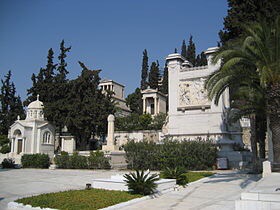
Foreground: Tomb of the Pesmazoglou family (right) and Melina Mercouri (middle). Background: Tomb of Heinrich Schliemann (left on the high pedestal).
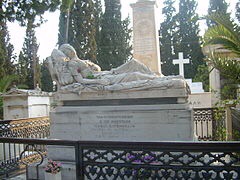
Tomb of Sofia Afentaki, a work of Yannoulis Chalepas.
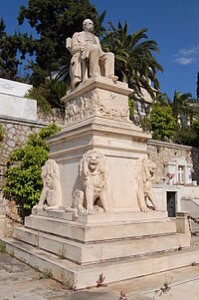
Grave of Georgios Averoff
In the cemetery there are three churches. The main is the Church of Saint Theodores and there is also a smaller of Saint Lazarus. The third church is a Catholic church.
The cemetery includes the tomb of Heinrich Schliemann, designed by Ernst Ziller, the tomb of Ioannis Pesmazoglou, that of Georgios Averoff, and one named I Koimomeni (the Sleeping Girl), by the sculptor Yannoulis Chalepas, from the island Tinos. There are also separate burial places for Protestants and Jews.
 GREEK WORLD MEDIA