Ο Ναός της Γεννήσεως, Βηθλεέμ


Εκατόν τριάντα χρόνια μετά την γέννηση του Χριστού, το Άγιο Σπήλαιο αποτελούσε τόπο προσκυνήματος για τους Χριστιανούς. Ο ειδωλολάτρης αυτοκράτορας Ανδριανός, θέλοντας να παραδώσει στην λήθη τον τόπο, ανήγειρε ναό αφιερωμένο στον Άδωνη, όπως είχε πράξει και στον Γολγοθά, με την ανέγερση ιερού αφιερωμένου στην Αφροδίτη. Η προσπάθειά του δεν τελεσφόρησε. Η μαρτυρία του Ωριγένη, που επισκέφθηκε την Παλαιστίνη το 213 μ.Χ. δείχνει, ότι ο τόπος ήταν περιφανής και το χριστιανικό προσκύνημα ξακουστό, ακόμα και ανάμεσα στους εθνικούς. Στις αρχές του Δ” αι. η Αγία Ελένη ανήγειρε χριστιανικό ναό και αφιέρωσε πολύτιμα κειμήλια. Το οικοδόμημα συμπλήρωσε ο Μ. Κωνσταντίνος και στόλισε με χρυσό, ασήμι και πολύτιμους λίθους τα αναθήματα, κατά την μαρτυρία του Ευσέβιου Καισαρείας. Την μαρτυρία αυτή επιβεβαιώνει και ο συγγραφέας του οδοιπορικού της Βουρδιγάλης, γράφοντας για την εκκλησία της Βηθλεέμ: «δύο μίλια πέρα του τάφου της Ραχήλ είναι η Βηθλεέμ, όπου γεννήθηκε ο Κύριος ημών Ιησούς Χριστός˙ εκεί οικοδομήθηκε εκκλησία κατά διαταγή του Μ. Κωνσταντίνου.


Η εκκλησία διατηρήθηκε για δύο αιώνες. Τον Ε” αι. ο Ιουστινιανός ανήγειρε μεγαλύτερη και περιφανέστερη εκκλησία. Ήθελε το οικοδόμημα αυτό να είναι το λαμπρότερο απ” όλα της Παλαιστίνης. Ο αρχιτέκτονας, όμως από σεβασμό στο αρχαίο έθος διατήρησε το αρχικό σχήμα του ναού, εν μέρει. Την επιβεβαίωση της πληροφορίας, ότι ο ναός στην Βηθλεέμ είναι έργο δικό του, λαμβάνουμε από ανώνυμο Αραβικό χρονικό. Μετά τον Ιουστινιανό σπανίζουν οι πληροφορίες για τον ναό αυτό. Η περσική εισβολή του 614 μ.Χ., ενδεχομένως να επέφερε καταστροφή και στην Βηθλεέμ, όμως η στιβαρή κατασκευή δεν επέτρεψε εκτεταμένες βλάβες. Η ζημιά διορθώθηκε εύκολα και επανήλθε στην πρότερη λαμπρή κατάσταση. Οι Αρκούλφος και Βιλιβάρδος περιγράφουν με θαυμασμό τον ναό, τους Ζ” και Η” αι. αντίστοιχα, ενώ ο Βερνάρδος την Θ” εκατονταετηρίδα γράφει: « στην Βηθλεέμ υπάρχει μεγάλη εκκλησία, στο μέσο της οποίας είναι ένα σπήλαιο υπόγειο, του οποίου η είσοδος βρίσκεται προς νότο και η έξοδος προς ανατολάς (ίσως προς βορά)˙ μέσα στο σπήλαιο δυτικά δεικνύεται η Αγία Φάτνη».

Όταν τον ΙΑ” αι. όλες οι εκκλησίες της Αγίας Γης κατεδαφίσθηκαν από τον Χακίμ ιμπν Αμρ-ιλλάχ μόνο η εκκλησία της Βηθλεέμ σώθηκε. Ο Γάλλος χρονογράφος Ademar έγραψε ότι, όταν οι Σαρακηνοί αποπειράθηκαν να καταστρέψουν τον ναό, φως ως αστραπή έπεσε πάνω τους και θανάτωσε πολλούς. Το 1099 μ.Χ. έφτασαν οι σταυροφόροι στα Ιεροσόλυμα. Βρήκαν την εκκλησία της Βηθλεέμ άθικτη. Ο Γοδεφρείδος απέστειλε τον Ταγκράδο με 100 ιππότες και κατέλαβαν την Βηθλεέμ μέσα σε μια μέρα. Το 1103 μ.Χ. γράφει, ότι όλη η περιοχή είχε ερημώσει και μόνο ο ναός έστεκε ακόμη όρθιος. Στον επόμενο μισό αιώνα η φθορά είχε επέλθει σε τέτοιο σημείο, ώστε ο αυτοκράτορας των Ρωμαίων κυρ Μανουήλ Κομνηνός με μεγαλοδωρία επισκεύασε αυτόν. Ο Ιωάννης Φωκάς στο σύγγραμμά του για τους Αγίους Τόπους δασώζει, ότι ο Λατίνος επίσκοπος έστησε την μορφή του αυτοκράτορα Μανουήλ στο Θυσιαστήριο του Αγίου Σπηλαίου. Μετά την διάλυση των σταυροφορικών βασιλείων, οι αυτοκράτορες της Κωνσταντινούπολης, διατήρησαν τον ορθόδοξο κλήρο στην Βηθλεέμ, κατευνάζοντες με πλούσια δώρα την εκδικητική μανία των μουσουλμάνων. Έτσι το 1348 ο Καντακουζηνός απέστειλε πρεσβεία στον Σουλτάνο των Μαμελούκων της Αιγύπτου Νασρεντίν Χασάν, υπό τον Πατριάρχη Ιεροσολύμων Λάζαρο, που μεσίτευσε υπέρ του Ναού της Αναστάσεως και των άλλων προσκυνημάτων.

Το 1435 μ.Χ. ο βασιλιάς της Τραπεζούντας Αλέξιος Κομνηνός ανακαίνισε την μολυβδοσκέπαστη στέγη του ναού. Το 1561 ο Πατριάρχης Ιεροσολύμων Σοφρώνιος έκτισε τις τέσσερις κάμαρες που βρίσκονται σε αμφότερα τα μέρη του Αγίου Σπηλαίου. Η στέγη του ναού έχρηζε ήδη εκ νέου επισκευή επί πατριαρχίας του Παϊσίου, αλλά αυτός δεν κατόρθωσε να φέρει εις πέρας το έργο, λόγω έλλειψης χρημάτων. Ο διάδοχός του Νεκτάριος έπεισε κάποιον επιφανή Μανωλάκη Καστοριανό να συνδράμει στις εργασίες και ξεκίνησε την διαδικασία της έκδοσης της σχετικής άδειας από την Πύλη. Οι εργασίες εκίνησαν τελικά από τον Πατριάρχη Δοσίθεο. Ο προαναφερθείς Μανωλάκης Καστοριανός συγκέντρωσε την απαραίτητη ξυλεία στην Ιόππη. Από εκεί με άμαξες κατευθύνθηκαν στα Ιεροσόλυμα. Αλλά στην κοιλάδα του χείμαρρου Σαλάμ, βόρεια από τους Εμμαούς, ο δρόμος ήταν δύσβατος και οι άμαξες δεν μπορούσαν να διέλθουν. Εξήλθαν λοιπό οι Ορθόδοξοι από τις πόλεις Ρεμπλί, Ραμμάλα και Λύδδα καθώς και από Ιερουσαλήμ και με την δική τους προσωπική εργασία διάνοιξαν την οδό προς Ιερουσαλήμ. Έτσι η μεταφορά διήρκεσε από Αύγουστο ως Δεκέμβριο. Τον Σεπτέμβριο του 1672 ξεκίνησαν η επισκευή που συμπεριελάμβανε την ανακαίνιση της στέγης, συτνήρηση στους τοίχους, διάνοιξη θυρών κεκλεισμένων και παραθύρων κι αντίστοιχη τοποθέτηση, μαρμαρόστρωση και ασβέστωμα. Για την κάλυψη της στέγης με μόλυβδο αναχωνεύθηκε ο ήδη υπάρχων και συμπληρώθηκε όσο έλειπε. Τα εγκαίνια έγιναν τον Ιούλιο του ίδιου (εκκλησιαστικού) έτους από την σύνοδο που απήλλαξε τον Κύριλλο Λούκαρη από τις κατηγορίες των Ιησουιτών.

Άλλες μικρότερες επισκευές έγιναν το 1689 μ.Χ. με την άδεια του σουλτάνου Σουλεϊμάν του Β” και το 1775 μ.Χ. επί πατριαρχίας Αβραμίου. Το 1842 μ.Χ. έγινε άλλη μια μεγάλη ανακαίνιση του οικοδομήματος επί Αθανασίου του Γ”. Η στέγη αντικαταστάθηκε και μολυβδοσκεπάστηκε. Το έδαφος του Καθολικού στρώθηκε με μάρμαρα, ενώ έξω στις κολώνες στρώθηκε με ντόπια πέτρα. Όλοι οι τοίχοι, των οποίων το μωσαϊκό κατέπεσε από την πολυκαιρία, καλύφθηκαν με μαρμαρόσκονη. Αυτή ήταν και η τελευταία μεγάλη ανακαίνιση του ναού.

Source: http://www.impantokratoros.gr

Greek School to Open for First Time Since 1964 on Turkey’s Imvros Island


Perhaps nowhere in Turkey have innocent people come between the cross fire of politics than on the tiny islands of Imvros and Tenedos— islands in the Aegean which have had a Greek identity and population for centuries but were handed to Turkey during the Treaty of Lausanne negotiations in the early 1920s.

Right after Christmas, for the first time since 1964, local Greek residents will finally have a school again, where children can be taught in the Greek language, after years and years of lobbying the education authorities of Turkish government.

Three five-year-olds will attend the new Greek kindergarten on Imvros, which is expected to open right after Christmas.

“It is a positive development instigated by the community whose needs we serve,” said Lakis Vingas, the head of the Imvros Educational Association, who took on the task of dealing with all the red tape in Ankara. “We expect the bell to ring just after Christmas.”

The opening of the Greek kindergarten comes one year after Turkish Education Ministry officials approved the opening of a middle and high school, giving Greek-language instruction to the minority Greek student population hasn’t had access to since 1964.


Imvros lies in the northeastern Aegean Sea. The Turks call this island Gökçeada

Imvros lies in the northeastern Aegean Sea. The Turks call this island Gökçeada

The history of modern Imvros is one of continuous human rights violations by Turkey against its once-majority Greek population, which today, has dwindled to about 300 people.

Imvros was always Greek. Since antiquity and even through Byzantine and during the Ottoman occupation, the island constituted a thriving ethnic Greek population with dozens of schools, churches and a thriving fishing industry.

In 1920 the Treaty of Sevres granted the islands to Greece. The Ottoman government, which signed but ratified the treaty, was overthrown by the new Turkish nationalist Government of Mustafa Kemal Atatürk, whose forces conducted a bloody genocide against ethnic Greeks in Asia Minor, leading to a massive exchange of populations.

The Greeks of Imvros (and the neighboring isle of Tenedos) were spared from the population exchange and were allowed to stay on the islands, but the islands were ceded to Turkey, its residents treated as pawns in a masterful and strategic game of political chess between Ataturk and the foreign powers administering the Lausanne Treaty between Turkey and Greece.

The treaty guaranteed the residents a special autonomy and protections to live, worship and educate their youth in Greek. Villages and geographic places were to retain their Greek names, as well.

This all changed shortly after the dust settled in the region after the bloody war and the Turkish government— in violation to the Treaty’s bylaws— began enacting laws that stripped the rights away from Greek residents. By 1926 all place names were officially changed to Turkish.

Massive, state-sponsored persecution against the Greek residents was commonplace and many began leaving their family homes and closing businesses, fleeing to Greece, the United States and Australia.

In the meantime, Turkey was re-settling mainland Turks to the islands, offering homes and property that Greeks were abandoning as incentive to move there, ultimately trying to change the demographic make up of Imvros and turn the majority Greek population into a minority.

Political upheaval between Athens and Ankara in 1964 and 1974 over the Cyprus issue caused massive departures on a scale that would change the island forever. Today, it is estimated by local associations that a 15,000-strong Imvriot diaspora resides abroad, mainly in Australia, with 318 people remaining on the island.

Source: PappasPost

Sunken Ancient City of Heracleion

It is a city shrouded in myth, swallowed by the Mediterranean Sea and buried in sand and mud for more than 1,200 years.

For centuries it was thought to be a legend, a city of extraordinary wealth mentioned in Homer, visited by Helen of Troy and Paris, her lover, but apparently buried under the sea.

In fact, Heracleion was true, and a decade after divers began uncovering its treasures, archaeologists have produced a picture of what life was like in the city in the era of the pharaohs.

The city, also called Thonis, disappeared beneath the Mediterranean around 1,200 years ago and was found during a survey of the Egyptian shore at the beginning of the last decade.

Now its life at the heart of trade routes in classical times are becoming clear, with researchers forming the view that the city was the main customs hub through which all trade from Greece and elsewhere in the Mediterranean entered Egypt.

But now archaeologists are unearthing the mysteries of Heracleion, uncovering amazingly well-preserved artifacts that tell the story of a vibrant classical-era port.

Known as Heracleion to the ancient Greeks and Thonis to the ancient Eygptians, the city was rediscovered in 2000 by French underwater archaeologist Dr. Franck Goddio and a team from the European Institute for Underwater Acheology (IEASM) after a four-year geophysical survey. The ruins of the lost city were found 30 feet under the surface of the Mediterranean Sea in Aboukir Bay, near Alexandria.

A new documentary highlights the major discoveries that have been unearthed at Thonis-Heracleion during a 13-year excavation. Exciting archaeological finds help describe an ancient city that was not only a vital international trade hub but possibly an important religious center. The television crew used archaeological survey data to construct a computer model of the city.

According to the Telegraph, leading research now suggests that Thonis-Heracleion served as a mandatory port of entry for trade between the Mediterranean and the Nile.

So far, 64 ancient shipwrecks and more than 700 anchors have been unearthed from the mud of the bay, the news outlet notes. Other findings include gold coins, weights from Athens (which have never before been found at an Egyptian site) and giant tablets inscribed in ancient Greek and ancient Egyptian. Researchers think that these artifacts point to the city’s prominence as a bustling trade hub.

Researchers have also uncovered a variety of religious artifacts in the sunken city, including 16-foot stone sculptures thought to have adorned the city’s central temple and limestone sarcophagi that are believed to have contained mummified animals. Giant 16 foot statues have been uncovered and brought to the surface while archaeologists have found hundreds of smaller statues of minor gods on the sea floor. Slabs of stone inscribed in both ancient Greek and Ancient Egyptian have also been brought to the surface. Dozens of small limestone sarcophagi were also recently uncovered by divers and are believed to have once contained mummified animals, put there to appease the gods.

Experts have marveled at the variety of artifacts found and have been equally impressed by how well preserved they are.

“The archaeological evidence is simply overwhelming,” Professor Sir Barry Cunliffe, a University of Oxford archaeologist taking part in the excavation, said in a press release obtained by The Huffington Post. “By lying untouched and protected by sand on the sea floor for centuries they are brilliantly preserved.”

A panel of experts presented their findings at an Oxford University conference on the Thonis-Heracleion excavation earlier this year.

But despite all the excitement over the excavation, one mystery about Thonis-Heracleion remains largely unsolved: Why exactly did it sink? Goddio’s team suggests the weight of large buildings on the region’s water-logged clay and sand soil may have caused the city to sink in the wake of an earthquake.

Παρουσίαση ορθόδοξη των Αγίων προσκυνημάτων στους Αγίους τόπους

Παρουσίαση ορθόδοξη των Αγίων προσκυνημάτων στους Αγίους τόπους. Οδοιπορικό στην Αγία γη, στην Ιερουσαλήμ, στην βηθλεέμ, την Ναζαρέτ, τον Ιορδάνη ποταμό, το Σαραντάριο όρος, στην Αγία Σιών, το όρος Θαβώρ, τις Ιερές Μονές Αγίου Σάββα, Αγίου Θεοδοσίου του κοινωβιάρχου, Φρέαρ του Ιακώβ, Χοτζεβά, Προφήτου Ηλίου, καθώς και σε κάθε άλλο Ιερό προσκύνημα που σχετίζεται με την Αγία Παρουσία του Ιησού Χριστού στους Αγίους τόπους.

Presentation of the Holy Orthodox pilgrimage to the Holy Land. Journey to the Holy Land in Jerusalem, Bethlehem, Nazareth, the Jordan River, the Sarantario term in St Zion, Mount Tabor, the Monasteries of St. Sava, St. Theodosius koinoviarchou, Jacob’s Well, Chotzeva, Prophet Elias, and any other sacred pilgrimage associated with the Holy presence of Jesus Christ in the Holy Land.

ΑΥΤΟΨΙΑ 15/12/2016 Ιεροσόλυμα – Αποκατάσταση του Πανάγιου Τάφου

Autopsy 15/12/2016 Jerusalem – restoration of the Holy Sepulchre


Αυτή την Πέμπτη 15 Δεκεμβρίου, στις 23:50, η Αυτοψία ταξιδεύει στα Ιεροσόλυμα και παρακολουθεί τις εργασίες αποκατάστασης του Πανάγιου Τάφου. Η εκπομπή καταγράφει τις μαρτυρίες των ανθρώπων που έζησαν από κοντά το άνοιγμα του Τάφου του Χριστού, μετά από 500 ολόκληρα χρόνια.

Οι Έλληνες επιστήμονες που ανέλαβαν το έργο, μιλούν για τις μοναδικές εκείνες στιγμές, όταν σηκώθηκε η μαρμάρινη πλάκα και αποκαλύφθηκε ο βράχος πάνω στον οποίο ακούμπησε το σώμα του Χριστού. Οι επιστήμονες περιγράφουν και τα μυστηριώδη φαινόμενα που κατέγραψαν, όταν μια ευωδιά άρχισε να αναδύεται από τον ανοικτό τάφο αλλά και όταν έσβησαν, ξαφνικά, τα ηλεκτρονικά τους όργανα.

Στην εκπομπή, ο Πατριάρχης Ιεροσολύμων Θεόφιλος περιγράφει πώς έζησε ο ίδιος το σπουδαίο αυτό γεγονός αλλά και τις προσπάθειες των Ισραηλινών να σφραγίσουν τον τάφο.
Η «Αυτοψία» επισκέπτεται, επίσης, το σημείο της γέννησης του Χριστού στη Βηθλεέμ, όπου ενόψει Χριστουγέννων, συρρέουν χιλιάδες άνθρωποι.

Ακόμη, η κάμερα της εκπομπής καταγράφει τη ζωή των μοναχών-φρουρών του Πανάγιου Τάφου, καθώς και των Ελλήνων του Πατριαρχείου, οι οποίοι ζουν ανάμεσα σε Παλαιστίνους, Ισραηλινούς, Αρμένιους και Μουσουλμάνους.

Greek American World War II Refugee Leaves $600 Million Fortune to Charity

John L. Santikos was a young boy who fled to the United States immediately after the Nazi occupation of Greece and at the heels of the Greek Civil War. One year after his death, officials at the San Antonio Area Foundation have announced that the Greek immigrant has left an estimated gift of $605 million to charity.

Santikos, who built a movie theater and real estate empire in San Antonio, Texas, died in December 2014. Although memorial gifts were made to some charities immediately after his death, the full extent of his gift was made public at a press conference at the San Antonio Area Foundation on December 15, 2015– almost a year after his passing. The SAAF will manage the gift and donations based on Mr. Santikos’ wishes.

Included in Santikos’ will a year ago were immediate gifts to charities working in his native Greece, including a $500,000 gift to International Orthodox Christian Charities, which is using the money to offer food assistance to vulnerable families in Greece, “This valuation represents the largest gift in the 51-year history of the Area Foundation and is the largest single gift on record in San Antonio. Santikos gifted the bulk of his estate, including his theater and real estate businesses and raw land assets to the Area Foundation after careful research on the best method for establishing a legacy fund that could make significant annual donations beyond his lifetime. The donation will fulfill Santikos’ desire to support a wide range of charitable programs in the local area. It will more than triple the community Foundation’s asset size,” according to a statement by the San Antonio Area Foundation.

Although born and raised in Greece, Santikos’ story actually began in America with his father Louis, who first emigrated to the United States in 1911 from Greece. First settling in Waco, where he first worked in a grocery store, he noticed long lines of people who lined up every day to get into the Rex Theatre, a nickelodeon across the street. Sensing the opportunity, he saved his money and was able to buy the theater, beginning what would be a century-plus of involvement in movie theaters.

In 1918 Louis relocated to San Antonio where he began operating the Rialto Theatre, and eventually opening the Palace Theatre on Alamo Plaza – San Antonio’s first “movie palace” and the forerunner of the Majestic, Aztec and Texas theaters— the biggest and grandest theaters in the region.

Louis returned to Greece in 1925 where he met and married Toula Gatos and brought her back to San Antonio. In 1927, He sold most of his business interests in San Antonio and moved back to Athens, Greece where he became a successful film distributor and where John was born.

During the Nazi occupation of Greece, German Nazi officers took over the Santikos home in Athens, living upstairs while the family lived downstairs – a time of great tension and fear for the family. When the German occupation ended in 1944, the civil war broke out between Communists and British/American-supported forces. At one point, Louis Santikos and eldest son John fled the house just hours before Communist guerrillas arrived looking for them. The civil war lasted until 1949.

Fearing for his children’s safety, Louis sent John and then his sister Kiki and brother Dean back to San Antonio in 1946. John entered St. Mary’s University in 1947, taking academic courses and learning English at the same time. He earned his business degree in only two and a half years, during which time his father and mother eventually moved back to San Antonio, where he opened another theater— the Olmos Theater.

Following in his father’s footsteps, John joined his father at the Olmos, taking tickets, handling concessions and managing the theatre in all aspects, learning film booking, marketing – a practical education from his father and by hands-on experience. By 1958, John’s parents Louis and Toula decided to return to their native Greece, with John taking over the company in San Antonio.

John grew Santikos Theatres rapidly, purchasing and building theaters up through the Texas real estate downturn of 1987, when he sold all his theaters to Act III Theatres, owned by TV impresario Norman Lear.

Act III later sold all of its theaters – including those in San Antonio – to Regal Cinema. When Regal filed for bankruptcy in 2001, John Santikos was able to buy back all the San Antonio theaters he had originally sold to Act III.

Over the years, Santikos Theatres continually brought cutting edge cinema technology to San Antonio and Houston. From the first drive-in theaters and multiplex indoor theaters, to premium large screen formats with 4k digital projection, THX and Dolby Atmos sound systems, Santikos Theatres led the way in innovation. The innovation continues as Santikos Theatres was among the first cinemas in the country to install laser projection technology in early 2015.

Source: Pappaspost

Monumental Forgotten Gardens of Petra Rediscovered After 2,000 Years

In Petra, there is a huge 2,000-year-old pool. This waste of water is a sign of power in the desert. Archaeologists reveal the mosaics that were from the Apostle Paul’s era.

The excavations of the Philistine Gath has discovered similarities to the Cypriot cities. The 6,000-year-old fortress that was discovered in Jordan displays signs of an advanced early society.

The most recent excavation at Petra has unveiled an advanced irrigation system and water storage systems that helped the desert city civilization to survive. They were as well able to maintain a garden that included a huge swimming pool, ponds, and fountains.

The engineering achievements and other luxuries are clear evidence of the ancient Nabateen capital’s former glory and wealth around 2,000 years ago.


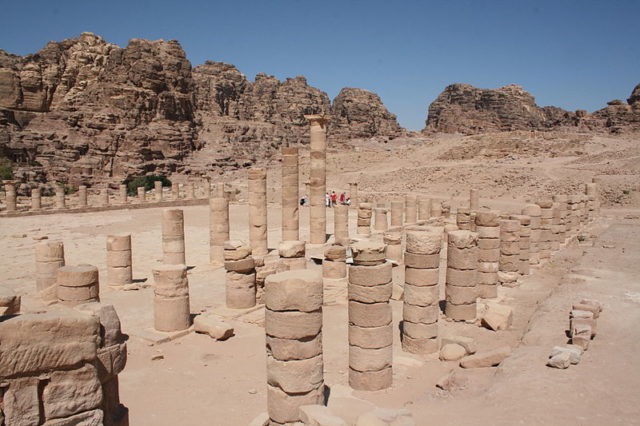
Ancient columns of the Great Temple Photo Credit

Petra is possibly best known for the sandstone canyon that goes directly to Al Khazneh.

This place was seen the the film Indiana Jones and the Last Crusade where two hero archaeologists, played by Sean Connery and Harrison Ford, had ridden out of the canyon and into the Treasury with their quest for the Holy Grail.
Yet 2,000 years ago Petra was famous for different reasons.

It had been one of the most famous water stops in the Middle East where the camel caravan routes linked to distant cities. Now the archaeologists are finding the Nabataean capital located in southwestern deserts of Jordan.

It was once beautiful with a delicate, irrigated garden. It most likely featured paths that were shaded by date palms, grasses, trees, and vines next to a large 44-meter wide swimming pool.
The Nabataean’s capability to tame nature, and the consumption of the precious resource of water, was pure propaganda to display their wealth and power.

They were able to do this since they invented the clever hydraulic system that allowed the people to not only reserve enough water for their own requirements. It also had lavish gardens with fountains and a pool.

Water was very scarce in the desert waste – it was usually used for only necessity.
The ongoing diggings in Petra have unveiled a shaft that seems to have guided water more than 10 meters down for the artificial conveyance of water to the pool level.

The archaeologists have as well discovered underground channels that helped in controlling runoff during the rainy season.


View of the Royal Tombs in Petra Photo Credit

This reveals the true quality of the system for the very first time.

The very complicated system of channels, underground cisterns, ceramic pipelines, and water tanks that also filtered the water allowed the people of Petra to be able to cultivate crops, produce wine, harvest fruit, and manufacture olive oil.
They could as well create a lavish garden with a large pool in the middle of the desert. Several cities of the ancient world had rivers whose large waters nourished and protected them.

Yet for Petra, situated on the northwest border of the Arabian Desert, this city rose to importance because of their lack of water.
Petra was located at the middle of two important trade routes. One had linked the Red Sea with Damascus.

The other was linking the Persian Gulf with Gaza, located on the shores of the Mediterranean.

Another was linking caravans from the Gulf loaded with expensive cargoes of spices.

They had to cross the large wastes of the Arabian Desert, traveling for weeks before they would eventually arrive at the narrow canyon on Petra. This city was a sign of lodging and food and as well refreshing cool water.

The citizens of Petra did not provide these comforts to visitors with no charge. Besides paying for lodging and the food, they had to give gifts to the guards, the priests, the gatekeepers, and the king’s servants.

Yet the high prices of perfumes and spices kept the caravans coming and filled up the treasures of Petra.


The Theatre Photo Credit

The Paradise of Petra

The fact that this city had any gardens at all was a miracle – it only got 10 to 15 centimeters (4 to 6 inches) of rain a year (currently, with climate change, it might even get less).

Without the techniques they invented, purifying and pressurizing and creating the ability to store water, the city of Petra might have not even existed.

The people of Petra had carved out large areas of water, pools, and containers from the solid rocks.

They even had “tanks” that would purify water. Almost every drop of rain that had fallen around Petra was collected and then conserved. The springs had been channeled to pipes that were emptied into hundreds of containers carved underground.
This would ensure a reliable source of bathing and drinking water in the heart of the desert, despite the season.

Botanical studies have shown that the garden was highly decorated with complex patterns. The garden was adorned with grass species and palm trees. The archaeologists as well discovered nut shells and charred seeds.
The large swimming pool was larger than today’s normal Olympic pools. It was created around the 1st century BC. Pools started to become trendy in the region the previous century.

The Hasmonean rulers of Judah created pools that were surrounded by gardens at their palaces. The Hasmonean palace located in Jericho had around seven.
Herod the Great, who was the Roman vassal king of Judah, had continued the tradition. He created a large swimming pool with a sunken garden located in his third winter palace at Jericho.

The Herodian design included an island structure, decorative tiles, and a large garden terrace.

This was almost identical to the garden pool that was located in Petra.


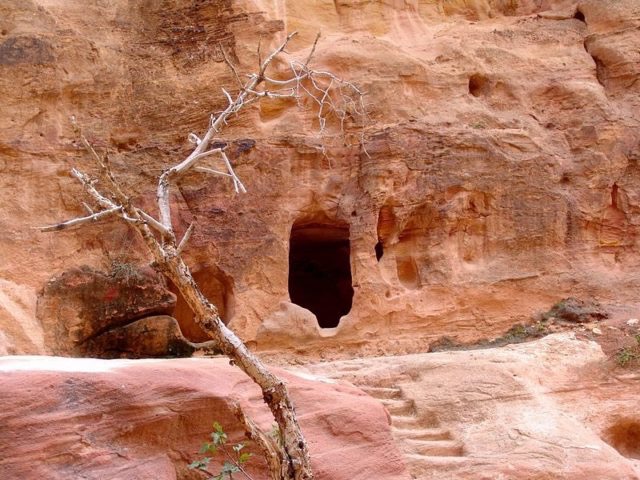
Lonely cave Photo Credit

City carved in rock

The citizens of Petra did not only know how to work with water, they were as well masters at stonework.

The name Petra mean “Mass of Rock”; this summons the vision of stone. The city of Petra was made of stone, unlike any other city in the Roman World. The Nabataeans engraved their houses, temples, and tombs out of solid rock.

The red sandstone mountains where Petra had settled was perfectly suited for this, and by the first century BC a large city had emerged in the middle of the desert. Possibly the most stunning evidence of the Nabatean mastery over stone was the Treasury.

This was an imposing structure was that carved out of a huge cliff.

The structure had been named after the large stone urn that crowns the building; this had supposedly stored precious stone and gold. The urn was actually created out of solid stone. Although not what Steven Spielberg had portrayed in his movie, the structure did not guide into a deep maze that was hiding the Holy Grail.


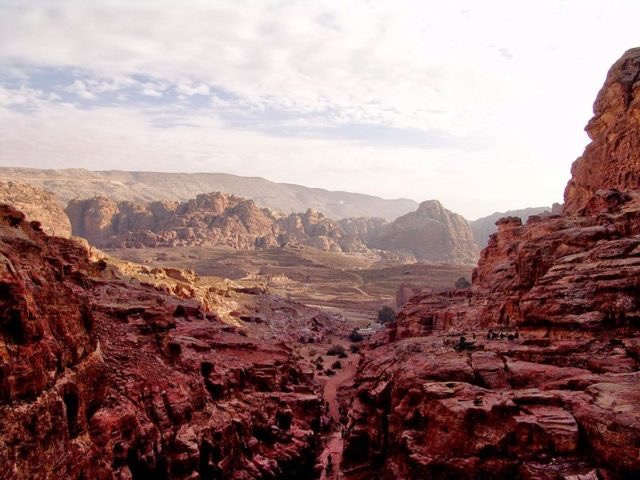
General view of Petra Photo Credit

The Treasury actually was holding a relatively small hall that was once used as a royal tomb.

The city as well features tombs that were carved into the cliff face.

These tombs were so large that any person who wanders into them will end up venturing into their dark interiors, Haaretz reported. Petra had survived for centuries, though Rome took possession of the city in 106 BC.

The importance it once had in international trade started diminish.

The theater and colonnade testify to the Roman presence in the city during the first and second centuries. The Romans had developed sea lanes located to the East.

We have another archeology story for you: German Archaeologist and Businessman blew up entire 9 levels of Archaeological the remains of Historical Troy with Dynamite

Yet in time the overland spice trade had collapsed and Petra was abandoned slowly to the desert sands. It would ultimately fail to resist the end of the Byzantine Empire’s rule around 700 BC.


Map of Petra Source:Wikipedia/public domain

The hidden platform has become the center of attention at Petra. Even though the building is small in size, this beautifully carved monument shows astounding attention to detail.

It has been speculated that the ancient people responsible for the construction of the obelisk thrived during the era that Petra flourished as the unparalleled capital of the Nabataean kingdom. This means that its roots are likely to have been as early as mid-first-century BCE.

Petra was a crucial center of trade between East and West from the fifth century BC until the first century AD. As Greek and Roman civilization thrived, Petra became an important caravan center for Arabian incense, Chinese silks, and Indian spices.

Being stationed at the crossroads between the Arabian kingdoms, the Egyptian Empire, and the powerful Syrian civilizations, it is easy to see how Petra played a vital role in the history of economic development at a critical time in human history.

The monument further stressed that the ancient city of Petra thrived during the latter half of its existence from 500 BC to 300 AD. Most of the ruins which have been recently unearthed were built and used during the later ages of the city.

PATRIARCH OF JERUSALEM: NO SACRILEGE IN OPENING LORD’S TOMB; BELIEVER SHOULD NOT SEEK FOR SIGNS

His Holiness Patriarch Theophilos III of Jerusalem has responded to criticisms that restoring the Lord’s Sepulchre constitutes an invasion of a holy space and a sacrilege.

Speaking in an interview with the press service of the Russian Ecclesiastical Mission in Jerusalem he stated, “The fact is that restoration has been ongoing in the Church of the Holy Sepulchre for many years already; the only part of the church that remained untouched was the Edicule, which therefore was in need of restoration, particularly of the burial cave of Christ, that is the Holy Sepulchre.”

He noted that restoration is being done on the entire complex, which therefore necessarily includes the very funeral bed of the Lord. Head of the restoration project Professor Antonia Moropoulou of the Athens Polytechnic University stated that the marble slab was removed to gain access to the historic masonry underneath which was swollen from decades of rainwater falling through a hole in the roof of the tomb. The walls were restored and water damage fixed.

The patriarch further noted that the corroded drainage system, dating to Ottoman times, is also to be restored in the future, to prevent further water damage to the Edicule.

Addressing circulating gossip of mysterious occurrences over Jerusalem—the blast of angels’ trumpets and supernatural phenomena in the sky—at the time of the opening of the Lord’s tomb, His Holiness denied such stories, saying, “This is nonsense. There were no such phenomena. Moreover, the Orthodox faith … is reasonable worship… Believers should not ask such questions—it is totally unacceptable.”

The patriarch also noted that work is moving according to schedule and they expect to celebrate Pascha 2017 at the Sepulchre.

Source: http://www.pravoslavie

Tsipras will put pensioner bonus to Greek parliament

A Greek pensioner leans on a shepherd's crook during a demonstration against planned pension cuts in Athens, Greece, 3 November 2016
A Greek pensioner at a protest against pension cuts in Athens last month
The Greek Prime Minister Alexis Tsipras has refused to back down over his plans to give poor Greek pensioners a pre-Christmas bonus.

A government official said Mr Tsipras would ask parliament on Thursday to approve the payment, worth €617m (£517m) in total.

Earlier, eurozone lenders suspended their recently agreed short-term debt-relief plan for Greece.

They said they had not been asked to approve the bonuses plan.

The European Stability Mechanism (ESM), the body that helps eurozone governments in trouble, said it would now be scrutinising the proposed handout.

“Following recent proposals by the Greek government to spend additional fiscal resources for pensions and VAT, our governing bodies have put their decisions temporarily on hold,” a spokesman for the ESM said.

“Institutions are currently assessing the impact of Greek government decisions vis-a-vis the ESM programme commitments and targets.

“[We] will then analyse the institutions’ assessment and subsequently decide how to proceed,” he said.

The debt-relief deal between Greece and the ESM was agreed on 5 December and would reduce the interest burden on the country’s debts of more than €300bn.

The Greek government announced its bonus for pensioners earning below €800 a month just three days later, but without consulting the eurozone representatives.

It also scrapped a rise in VAT for residents of Aegean islands to help relieve the economic pressure caused by an influx of migrants.

A spokesman for Jeroen Dijsselbloem, the head of the Eurogroup – the eurozone finance ministers who have been negotiating with the Greek government over its massive debts – said the Greek government’s action appeared “to not be in line with our agreements”.

There was “no unanimity now for implementing short-term debt measures”, the spokesman added.


Analysis: Andrew Walker, BBC economics correspondent

This is a familiar refrain in the long-running story of the Greek bailout.

The lenders are once again concerned about the Greek government straying from the agreed programme.

Over and over again, missed objectives and slipping timetables have led to loan payments being delayed.

This time it is debt relief agreed by eurozone ministers rather than a loan payment that is being held up.

The particular issue is whether the measures on pensions and VAT will lead to Greece missing its targets for the government finances.

But there is another dispute in the background.

The arrangement of 5 December included extending the maturity on certain loans to the Greek government, and locking in the interest rate on some of its debts in order to reduce the country’s repayment burden, but they did not alter the total amount owed.

A key player in the latest decision to suspend the recent agreement has been Germany.

“If the rescue programme is going to be deemed a success, it is imperative that measures are not taken unilaterally,” said a spokesman for the German Finance Ministry.

Shares traded on the Athens stock market closed 3% lower.

James Matthews shipwreck off Perth coast mapped using 3D modelling

Australian Shipwreck Mapped

The New Daily reports that archaeologists from the Western Australia Maritime Museum have returned to the wreck James Matthews, a British merchant ship that sunk in 1841.

The team’s goal is to create a detailed, 3-D model of the ship in order to closely monitor how the vessel’s condition changes in the future. 

“The idea is we will come back every few years and take another set of photographs and be able to overlay the models,” says former museum director Graeme Henderson. 

“You’ll see growth in seaweed and sponges on the site and you’ll also be able to see the deterioration if that’s happened.” 

First discovered in 1973, the ship had sailed from London laden with farming equipment and other supplies for the newly established Swan River colony.

Because much of the ship was buried in sand, its cargo was unusually well preserved. Research into the ship’s history also revealed the vessel had a dark past.

Earlier it was known as the Don Franciso, and served as a Brazilian slaving ship that was seized by the British in 1837 with more than 400 slaves aboard. 

To read in-depth about maritime archaeology, go to “History’s 10 Greatest Wrecks.”

Source: Archaeology.org