Water bills for the average Melbourne household could soar by $290 next financial year

Source: TheAge

Water bills for the average Melbourne household could soar by $290 next financial year under proposed price rises being considered by the industry regulator.

On Tuesday, the Essential Services Commission will decide whether to approve water plans by city retailers seeking price increases of an average 34 per cent – mainly to recoup costs from the Wonthaggi desalination plant. If approved, Yarra Valley Water customers would see their bills rise from about $910 to $1220 from July 1, an increase of $310.

South East Water bills would jump from $829 to $1118, an increase of $289.

And City West Water bills would rise from an average $793 to $1060 next year, an increase of $267.

Speaking on behalf of the industry, Yarra Valley Water’s managing director, Tony Kelly, said the cost of the desalination plant – which requires retailers to make $650 million in payments to the project’s consortium, AquaSure – was ”the main component” of the proposed increases.

But he added: ”The water industry in Melbourne has very good programs in place to assist customers who are struggling to pay bills – and we’re adding further to these programs to ease the burden of the next price rise. Customers should go to their water utilities websites for further details.”

Tuesday’s draft decision by the commission comes after the water retailers submitted a five-year plan, outlining their service delivery objectives, revenue requirements and proposed prices between now and 2018.

In country Victoria, most regional water businesses had suggested price increases ranging between 1 per cent to 28 per cent over the five years to June 2018.

The exception was Wannon Water, which sought a 3.4 per cent reduction.
But last month, the commission decided not to approve its plans. The commission chairman, Ron Ben-David, said that although retailers wanted to generate revenues of $4.2 billion over the next five years by marking up their prices, the regulator had proposed to reduce this amount by $185 million, in turn, giving customers lower water bills.
”Most of this reduction has come from savings we identified in the labour costs, energy costs and financing costs proposed by the water businesses,” Dr Ben-David said.

Consumer Action Law Centre spokesman Gerard Brody said he hoped the commission undertook a ”rigorous analysis” of the desalination costs to ensure that the retailers’ costs stacked up.

”We’ve also raised the prospect that some of the costs could be capitalised over a longer period – over the life of the asset,” he said.

”That could mean the initial price rises that have been forecast might not be as great.

The students of University of Athens won the First Prize at the Sixth International Roman Law Moot Court Competition

Source: LAW.OX.AC.UK

From 7 to 10 April 2013, students and academics from the Universities of Oxford, Cambridge, Liège, Trier, Athens, Vienna, Tübingen and Naples gathered in Oxford for the Sixth International Roman Law Moot Court Competition – the first time this event has been held outside of Greece. Professor Tony Honoré, formerly Regius Professor of Civil Law in Oxford, graciously opened the event with some remarks connecting Roman law mooting with civil law litigation and instruction in Oxford.

At moots conducted in the St Cross Building (where the Cube particularly impressed the Tübingen delegation) and at All Souls College (where the Old Library impressed everyone), teams presented submissions in relation to an alleged servitude, the applicability of the interdictum de fonte and a damnum iniuria claim arising out of the blocking of an underground watercourse in factual circumstances strongly reminiscent of the plot of Marcel Pagnol’s Jean de Florette.

The parties, Iohannes and Ugolinus, also contested contractual claims connected with the loan of a mule and a hypothec granted to secure a loan over the former’s now dried-out farming property.

The University of Athens was awarded the first prize (a silvered antoninianus from the reign of the Emperor Gordian), narrowly defeating the Oxford team of James Fisher (St Catherine’s), Nicholas Kamlish (St Catherine’s), Benjamin Ong (St Edmund Hall) and Alyssa Stansbury (Magdalen) in the Grand Final.

This is the second victory for an Athenian team in the contest. The Oxford team’s performance was, nonetheless, a very strong one across the competition, with three of the team members placing in the top ten oralists, and the runner-up prize of a silver denarius from the reign of Caracalla will now adorn the trophy shelf outside the Dean’s office.

20130419-205934.jpg

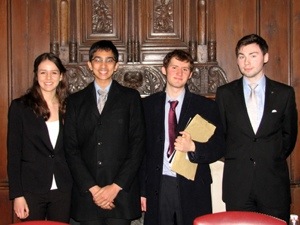
Oxford’s IRLM team (l-r): Alyssa Stansbury (Magdalen), Benjamin Ong (St Edmund Hall), Nicholas Kamlish (St Catherine’s) and James Fisher (St Catherine’s)

Although presently limited to the eight universities that have historically shared in the competition – held for the last five years in the Imaret of Kavala and in the Justinianic Roman forum at Philippi – the IRLM has generated a great deal of interest, with universities from four continents approaching the organisers to participate this year.

This interest attests to the wide influence of Roman law as well as the enthusiasm of law students, even from outside the common law tradition, for mooting. After a very successful event in 2013, sponsored by Clifford Chance LLP, the Oxford Law Faculty will look forward to hosting the Seventh International Roman Law Moot again in April 2014.

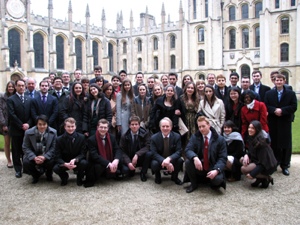
Judges and participants in the Sixth IRLM at All Souls College
20130419-205927.jpg

Spiegel: Οι Ελληνες δεν είναι φτωχοί, λένε ψέματα

Τα βέλη του εναντίον της Ελλάδας στρέφει για άλλη μια φορά το Der Spiegel.

Το γερμανικό περιοδικό κυκλοφορεί με τίτλο «Το ψέμα της φτώχειας.

Πώς οι ευρωπαϊκές χώρες που βρίσκονται σε κρίση καμουφλάρουν τον πλούτο τους» και κάνει επίθεση τόσο στους Ελληνες όσο και στους Κύπριους.

Χαρακτηριστικό είναι το εξώφυλλο που απεικονίζει έναν Ελληνα -κάτω από την ομπρέλα της Ευρωπαϊκής Ενωσης- να μεταφέρει χρήματα σε σακιά πάνω σε έναν γάιδαρο.

Το δημοσίευμα του Der Spiegel βασίζεται σε μια έκθεση της Ευρωπαϊκής Κεντρικής Τράπεζας, τα στοιχεία της οποίας παρουσιάζουν τα γερμανικά νοικοκυριά φτωχότερα από αυτά των Ελλήνων και των Κυπρίων, που οι πρώτοι καλούνται να «σώσουν».

Το θέμα αυτό πουλάει πολύ στη Γερμανία, της οποίας οι κάτοικοι εκνευρίζονται όταν βλέπουν πως οι λαοί που πλήττονται από την κρίση είναι σε καλύτερη οικονομική κατάσταση από εκείνους.

Τα στοιχεία που παρουσιάζει το περιοδικό έρχονται ως συνέχεια έρευνας της Unicef που έδειχνε ότι τα παιδιά στην Ελλάδα είναι πιο ευτυχισμένα από εκείνα στη Γερμανία.

Δεν ήθελαν και πολύ, λοιπόν, οι Γερμανοί για να… κιτρινίσουν την υπόθεση.

Ελληνες και Κύπριοι κρύβουν τον πλούτο τους

Πώς έχει προκύψει το συμπέρασμα ότι Ελληνες και Κύπριοι κρύβουν τον πλούτο τους; Η ΕΚΤ στο πλαίσιο μελέτης κατέθεσε ερωτηματολόγια για τον πλούτο των κατοίκων σε 15 κεντρικές τράπεζες χωρών – μελών της Ευρωζώνης.

Στην έρευνα πήραν μέρος 62.000 νοικοκυριά και τα στοιχεία αφορούν την περίοδο 2007 – 2011.

Το πόρισμα δείχνει ότι η Κύπρος είναι η δεύτερη πλουσιότερη χώρα της Ευρωζώνης με μέση περιουσία πολιτών 266.900 ευρώ.

Πιο πλούσιοι σύμφωνα με την ΕΚΤ είναι μόνο οι κάτοικοι του Λουξεμβούργου με 397.800 μέση περιουσία, ενώ στην τρίτη θέση ήταν η Μάλτα με 215.900 ευρώ.

Στην Ελλάδα το αντίστοιχο ποσό ήταν 101.900 ευρώ, σχεδόν διπλάσιο από τη μέση περιουσία των Γερμανών που φέρεται να είναι 51.000 ευρώ.

Από εκεί… πιάστηκαν οι δημοσιογράφοι του Spiegel και έστησαν το θέμα, στο οποίο αναρωτιούνται: «Υπάρχει πράγματι κρυμμένος πλούτος σε ευρωπαϊκές χώρες που βρίσκονται σε κρίση;» και «Θα μπορούσαν άραγε τα ίδια τα κράτη ”σκλάβοι” να βοηθήσουν τον ίδιο τους τον εαυτό;».

Το δημοσίευμα διαπιστώνει ότι η γνώση από τη μελέτη αυτή έρχεται μέσα από το γεγονός ότι οι πλούσιες χώρες του ευρώ δεν είναι και τόσο πλούσιες όσο νομίζαμε.

Με αυτόν τον τρόπο πλασάρεται το νέο δόγμα της Γερμανίδας καγκελαρίου που θα καλεί το Νότο να πληρώσει για τους φτωχούς Γερμανούς.

Μέρκελ, αγχόνη, κ.λπ. φαντασιώσεις
Στην ηλεκτρονική του έκδοση δε, το περιοδικό φιλοξενεί μία φωτογραφία της Ανγκελα Μέρκελ έξω από την ελληνική Βουλή, κρεμασμένη σε μία αγχόνη.

Ο τίτλος είναι «Φτωχή Γερμανία!» και η λεζάντα: «Πώς ακριβώς θα επιτευχθεί μία ευρω – διάσωση, πώς μπορούμε να μιλάμε για ευρω – διάσωση όταν οι χώρες που χρωστούν είναι πλουσιότερες από τη χώρα των δανειστών τους;».
Αξίζει να αναφέρουμε πως στη μελέτη της ΕΚΤ επισημαίνεται ότι οι σημαντικές διαφορές ανάμεσα στα κράτη-μέλη της Ευρωζώνης μπορούν να αποδοθούν στις αξίες των ακινήτων και στα ποσοστά ιδιοκτησίας τους.

Η μελέτη δημοσιεύτηκε σε αρκετά μέσα ενημέρωσης της Ευρώπης με το ενδιαφέρον να εστιάζεται στο συμπέρασμα ότι κράτη του ευρωπαϊκού νότου, όπως η Κύπρος, η Ισπανία και η Ιταλία, εμφανίζονται να διαθέτουν πλουσιότερα νοικοκυριά από τη Γερμανία.

Ο αντίλογος στο πόρισμα της μελέτης της ΕΚΤ, σύμφωνα με οικονομολόγους είναι πως δεν έχουν ληφθεί υπόψιν αρκετοί κρίσιμοι παράγοντες – που εν πολλοίς καθορίζουν το πόσο πλούσιο θεωρείται ένα νοικοκυριό.
.

Arrests following Greek mass shooting

Source: News

TWO men have been arrested in Greece after foremen for strawberry growers allegedly shot and wounded 27 migrant labourers who were demanding to be paid, police said.

The migrants, mainly from Bangladesh, were hospitalised in the western port of Patras and other areas with gunshot wounds after allegedly being fired upon late on Wednesday by three foremen for the growers in the village of Manolada, one of the main areas of strawberry production in Greece.

One man was arrested as a “moral instigator” of the alleged shootings and another for helping two of the presumed perpetrators to evade arrest, local police said on Thursday.

The migrants had been working in local farms without being paid for the past six months, the police said.

Around 200 of them went to demand their money when they were fired upon.

The government condemned the attack and anti-racist groups were planning a demonstration in the area later in the day.

Government spokesman Simos Kedikoglou said the attack was “inhuman” and “outside Greek morality” and pledged an immediate response by the authorities.

But the Communist-affiliated PAME union noted that the incident was only the latest in a long history of abuse of migrant workers in Greece.

PAME said the workers had been fired upon with shotguns and pistols.

It claimed 33 were hurt, while the police said 27 were wounded, one of them critically.

“Growers and landowners have operated with cover from the government and justice for years, creating a hell-hole with slavery labour conditions,” the union said.

“Modern slaves in Manolada work in stifling conditions, pay rent to their exploiters and are lodged in sheds without water and electricity,” it said.

In 2008, Manolada had been the focal point of a rare strike by hundreds of migrant workers against near-slavery conditions on the fields.

The treatment of migrants in Greece has long been criticised by domestic and international rights groups, to little avail.

New pain-free treatment for prostate cancer

Source: By medical reporter Sophie Scott – ABC

There is now a low-risk and relatively painless treatment available for the thousands of Australian men who have been diagnosed with prostate cancer.
Each day more than 30 Australian men are told they have prostate cancer and every three hours, one man will die from the illness.

For most patients, the options are surgery, radiation treatment or simply watching to see whether the tumour gets bigger.

But now, those men with low-risk prostate cancer have another option, called focal therapy.

It is an umbrella term for a number of non-invasive techniques for killing small tumours inside the prostate.

Some focal therapies use either heat or cold to destroy tumours and another option, called the Nanoknife, uses electrical currents to kill the tumours.

Doctors compare the procedure to a lumpectomy for breast cancer patients.

It can destroy specific areas of cancer, while preserving normal prostate tissue and surrounding organs.

Professor Phillip Stricker from Sydney’s St Vincent’s Hospital is trialling focal therapy using the Nanoknife for some of his patients.

Small wires are inserted into the tumour then electricity is directed across the cancer.

‘Fairly straight forward’

One of the first patients to have the treatment is Kris Stolzenheim, from Camden in New South Wales.

Mr Stolzenheim was diagnosed with low grade prostate cancer 18 months ago. He researched his options and discovered focal therapy.

He says he is not worried that it is a new procedure.

“I like the technological side of it. It’s fairly straight forward and simple,” he said.

“It takes a lot less time, recovery’s quite immediate, and if it works it’s the way of the future I believe.”

He wanted to get rid of the cancer, but minimise his recovery time.

Mr Stolzenheim says he had the procedure, which took about two hours, and was back home that afternoon.

“The only trouble, I had a cold three days afterwards and that’s been much worse than the operation,” he said.

“There was no pain really to talk about afterwards and no side effects afterwards either. Everything seems to be quite normal.”

But Professor Mark Frydenberg from Monash University says the use of focal therapy is very much still at the trial stage.

“What’s crucial is the accuracy of the biopsy in detecting the cancer,” he said.

“Through the MRI, you need a good map of the prostate. The concern is that you will end up treating disease that is not the main area of cancer, as MRIs are good but not perfect,” he said.

At the moment, focal therapy is only being done by a handful of specialists.

But Professor Stricker thinks that will change.

“Once a majority of urologists and professionals decide that it’s a reasonable option in a group of people then I think there’ll be lobbying to Medicare to have an item number for this type of treatment,” he said.

Researchers identify gene mutations responsible for subtype of childhood brain tumor

Source: St. Jude Children’s Research Hospital

The St. Jude Children’s Research Hospital — Washington University Pediatric Cancer Genome Project advances understanding of genetic defects underlying childhood low-grade gliomas and identifies promising new drug therapies
The St. Jude Children’s Research Hospital – Washington University Pediatric Cancer Genome Project has identified mutations responsible for more than half of a subtype of childhood brain tumor that takes a high toll on patients. Researchers also found evidence the tumors are susceptible to drugs already in development.

The study focused on a family of brain tumors known as low-grade gliomas (LGGs). These slow-growing cancers are found in about 700 children annually in the U.S., making them the most common childhood tumors of the brain and spinal cord. For patients whose tumors cannot be surgically removed, the long-term outlook remains bleak due to complications from the disease and its ongoing treatment. Nationwide, surgery alone cures only about one-third of patients.

Using whole genome sequencing, researchers identified genetic alterations in two genes that occurred almost exclusively in a subtype of LGG termed diffuse LGG. This subtype cannot be cured surgically because the tumor cells invade the healthy brain. Together, the mutations accounted for 53 percent of the diffuse LGG in this study. Researchers also demonstrated that one of the mutations, which had not previously been linked to brain tumors, caused tumors when introduced into the glial brain cells of mice.

The findings appear in the April 14 advance online edition of the scientific journal Nature Genetics.

“This subtype of low-grade glioma can be a nasty chronic disease, yet prior to this study we knew almost nothing about its genetic alterations,” said David Ellison, M.D., Ph.D., chair of the St. Jude Department of Pathology and the study’s corresponding author. The first author is Jinghui Zhang, Ph.D., an associate member of the St. Jude Department of Computational Biology.

The Pediatric Cancer Genome Project is using next-generation whole genome sequencing to determine the complete normal and cancer genomes of children and adolescents with some of the least understood and most difficult to treat cancers. Scientists believe that studying differences in the 3 billion chemical bases that make up the human genome will provide the scientific foundation for the next generation of cancer care.

“We were surprised to find that many of these tumors could be traced to a single genetic alteration,” said co-author Richard K. Wilson, Ph.D., director of The Genome Institute at Washington University School of Medicine in St. Louis. “This is a major pathway through which low-grade gliomas develop and it provides new clues to explore as we search for better treatments.”

The study involved whole genome sequencing of 39 paired tumor and normal tissue samples from 38 children and adolescents with different subtypes of LGG and related tumors called low-grade glioneuronal tumors (LGGNTs). Although many cancers develop following multiple genetic abnormalities, 62 percent of the 39 tumors in this study stemmed from a single genetic alteration.

Previous studies have linked LGGs to abnormal activation of the MAPK/ERK pathway. The pathway is involved in regulating cell division and other processes that are often disrupted in cancer. Until now, however, the genetic alterations involved in driving this pathway were unknown for some types of LGG and LGGNT.

This study linked activation in the pathway to duplication of a key segment of the FGFR1 gene, which investigators discovered in brain tumors for the first time. The segment is called a tyrosine kinase domain. It functions like an on-off switch for several cell signaling pathways, including the MAPK/ERK pathway. Investigators also demonstrated that experimental drugs designed to block activity along two altered pathways worked in cells with the FGFR1 tyrosine kinase domain duplication. “The finding suggests a potential opportunity for using targeted therapies in patients whose tumors cannot be surgically removed,” Ellison said.

Researchers also showed that the FGFR1 abnormality triggered an aggressive brain tumor in glial cells from mice that lacked the tumor suppressor gene Trp53.

Whole-genome sequencing found previously undiscovered rearrangements in the MYB and MYBL1 genes in diffuse LGGs. These newly identified abnormalities were also implicated in switching on the MAPK/ERK pathway.

Researchers checked an additional 100 LGGs and LGGNTs for the same FGFR1, MYB and MYBL1 mutations. Overall, MYB was altered in 25 percent of the diffuse LGGs, and 24 percent had alterations in FGFR1. Researchers also turned up numerous other mutations that occurred in just a few tumors. The affected genes included BRAF, RAF1, H3F3A, ATRX, EP300, WHSC1 and CHD2.

“The Pediatric Cancer Genome Project has provided a remarkable opportunity to look at the genomic landscape of this disease and really put the alterations responsible on the map. We can now account for the genetic errors responsible for more than 90 percent of low-grade gliomas,” Ellison said. “The discovery that FGFR1 and MYB play a central role in childhood diffuse LGG also serves to distinguish the pediatric and adult forms of the disease.”


W.H.I.A President, John Pandazopoulos’ statement on Boston Marathon Tragedy

Tuesday, April 16, 2013

“The World Hellenic Inter-Parliamentary Association conveys its deepest sympathy to the people of Boston, Massachusetts and the running community who today are dealing with the shocking and cowardly explosions at the 117th Boston Marathon.

This major global sporting event attended by many thousands of runners and participants from around the world is known for its celebration of endurance, willpower and freedom epitomized by the original Greek Marathon in 490BC.

It is an event sponsored and supported by New England’s large Greek community where the Greek Consul General in the spirit of the original Marathon crowns the victor a winning wreath of olive branches.

The olive wreath in the ancient Greek world symbolizes peace.

The W.H.I.A has 7 members in the State House of Massachusetts and I was honoured to be a participant just over a week ago in the State House recognition of Greek National Day.

Today we stand with the people of Boston who have lost loved ones and been injured. We wish US authorities a speedy outcome in bringing the culprits to justice.

The Greek community around the globe is dismayed that such an event that commemorates the best of the ancient Greek world should be targeted with such tragedy.

The Marathon long-distance running event (42.195 kilometers -26 miles and 385 yards) is run commemorating the Greek messenger Pheidippides who, according to the legend, was sent from the battlefield of Marathon to Athens to announce that the Persians had been defeated at the battle of Marathon (490 BC).

That Greek victory secured for mankind the intellectual treasures of Athens and the liberal enlightenment of the Western world”.

St Spyridon presented a cheque for $25K to the Sydney Children’s Hospital Foundation

Sydney Children’s Hospital Foundation

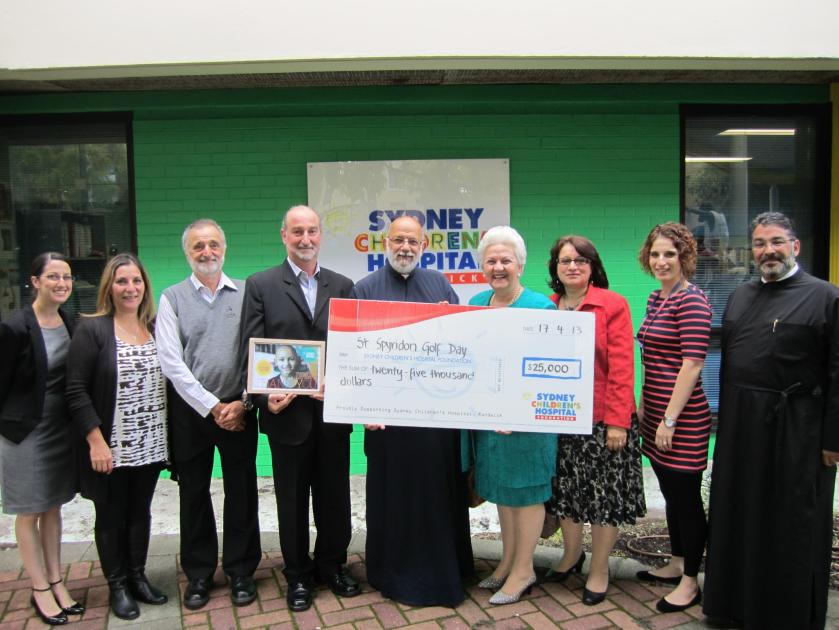
St Spyridon came in today to present us with a cheque for $25K from their annual Golf Day. The money raised will go towards funding a Paediatric Endocrine Fellow. This is the 22nd Annual Golf Day, and it has supported SCH every year!

Pictured at the presentation are, from left to right, Dr Lisa Amato, Lola Bariamis, John Stanly, Dennis Kourtis, Father Steven Scoutas, Mrs Sue Mayson, Christina Tsaconas, Rebecca Havas and Father Sotiris Drapaniotis,

Thank you for your support!!


Η τουριστική ιστοσελίδα της Περιφέρειας Κρήτης βραβεύτηκε στην τελετή απονομής των (ΕΒΓΕ) 2013

Source: ΑΠΕ-ΜΠΕ

Η τουριστική ιστοσελίδα της Περιφέρειας Κρήτης «IncredibleCrete.gr», βραβεύτηκε στην τελετή απονομής των Ελληνικών Βραβείων Γραφιστικής και Εικονογράφησης (ΕΒΓΕ) 2013 που πραγματοποιήθηκε στην Στέγη Γραμμάτων και Τεχνών του Ιδρύματος Ωνάση.

Στην τελετή απονομής παραβρέθηκε η υπουργός Τουρισμού και Πολιτισμού Όλγα Κεφαλογιάννη, τονίζοντας τη μεγάλη σημασία του τουρισμού στην οικονομία της χώρας, και την ουσιαστική συμβολή της γραφιστικής τέχνης στην προβολή και επικοινωνία του τουριστικού μας προϊόντος.

Ο περιφερειάρχης Κρήτης κ. Αρναουτάκης εξέφρασε την ικανοποίησή του για τη βράβευση, κάνοντας λόγο για την ενιαία τουριστική εικόνα της Κρήτης που προβάλλεται διαδικτυακά σε ολόκληρο τον κόσμο, μέσα από την τουριστική πύλη.

Ο κ. Αρναουτάκης, αναφέρθηκε στις δράσεις εξωστρέφειας της περιφέρειας στον τουρισμό, στον πρωτογενή τομέα- κρητικά προϊόντα, εκφράζοντας τη χαρά του που κρητικές επιχειρήσεις βραβεύονται για τις προσπάθειές τους στην Ελλάδα και στο εξωτερικό, καθιστώντας την Κρήτη παρούσα στις σύγχρονες εξελίξεις του επιχειρείν.

Τα ΕΒΓΕ, υπό την αιγίδα της Διεθνούς Συνομοσπονδίας Σωματείων Γραφιστικής και της Ένωσης Γραφιστών Ελλάδας (ΕΓΕ), είναι ένας θεσμός της οπτικής επικοινωνίας στην Ελλάδα που σκοπό έχει την προβολή και την ανάδειξη της ελληνικής δημιουργικότητας των χώρων της γραφιστικής, της εικονογράφησης και του διαδραστικού design, στην εγχώρια και διεθνή αγορά.

Athina Onassis sells legendary Skorpios to Russian billionaire’s daughter

20130416-111204.jpg

Skorpios: the small island on the Ionian Sea, where legendary tycoon Aristoteles Onassis married Jacqueline Kenndy, changes ownership. Half a century after Onassis purchased the island, his granddaughter Athina, 28, sold it to Ekaterina Rybolovlev, 24, daughter of Russian billionaire Dmitry.

After several days of scenarios circulating in the Greek press, Reuters confirmed on Saturday: “The daughter of Russian billionaire Dmitry Rybolovlev has bought the Greek resort island where shipping tycoon Aristotle Onassis famously married Jacqueline Kennedy in the 1960s, Rybolovlev’s investment office said.

“Ekaterina is delighted that the trust has negotiated this purchase,” a representative of Rybolovlev’s family investment office said on condition of anonymity. “She regards the acquisition as a long-term financial investment.” She also acquired the small neighboring island Sparti, Reuters noted.

The sale price was not disclosed. Greek media reports on Saturday placed the value of Skorpios island at over $100 million.

20130416-111314.jpg
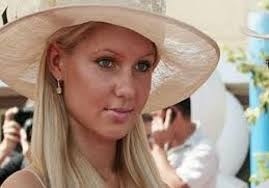
Ekaterina Rybolovlev

Media had reported in the past that the value of the island was even 220 million USD.

Athina Onassis, Skorpios island

Athina Onassis Russel, daughter of Christina Onassis and French Thierry Russel, is the only direct surviving descendant of Onassis family. She is married to Brazilian professional show-jumper Alvaro de Miranda and she hardly visits Greece. She seems to had not special bonds to Skoprios, where Aristostle, son Alexandros and daughter Christina are buried.

Legal obstacles

Greek media report of several obstacles for Skorpios sale, as the will of Onassis was ruling that the island should go over to the Greek state as holiday resort of the political leadership, if his wife and daughter would not be able to come up for the maintenance cost. Sparti island would be donated to Olympic Airways personnel and operate as summer camp for their children. Skorpios would also go over to OA personnel if the Greek state would not want to accept the donation.

However, as the island is managed by two companies owned by Athina Onassis, the new owner apparently bought the shares of the companies. Shares transfer could very well bypass the legal obstacles.

Not to mention that no Greek politician would dare to challenge multimillionaire Athina Onassis Russel, while Olympic Airways is not a state company since a couple of years.

Locals are not pleased with the sale of Skoprios with the mayor and other local personalities raising the issue of sale legitimation, while they are expressing their concern whether the new owner would respect the originality of Skorpios, its myth and its natural beauty.

The mayor of the nearby island of Meganisi, Efstathios Zavitsanos, who is administratively responsible for Skorpios, told Reuters that the deal was likely to be a long-term lease since, according to some lawyers, Aristotle Onassis’s will stated that Skorpios could not be sold or leave the family.

Rybolovlev’s office said that Ekaterina wanted the island not only for leisure but also business purposes.

20130416-111243.jpg

Aristotle Onassis bought Skoprios in 1963, a barren island at that time, and turned into a natural paradise by planting tress and even transferring sand from Mykonos island.

In 1968, Skoprios became the focus of international media when Onassis married former US First Lady Jacqueline Kennedy, widow of the assassinated U.S. president John F. Kennedy.