Greek Orthodox church nearly done with 10-year effort to paint saints

Source: sun-sentinel.com

St. Mark iconography project should be completed in February

St. Mark Greek Orthodox Church

St. Mark Greek Orthodox Church in Boca Raton is wrapping up its project to paint the interior of the building with Biblical iconography. Artist Laurence Manos has been painting the saints for 10 years for the project. (Amy Beth Bennett / December 19, 2013)

At Sunday Mass, children point to the freshly painted ceiling. They crane their necks at the larger-than-life icon of Jesus Christ, offering a blessing with his right hand and holding the gospels in his left, on the colorful sanctuary dome.

This enthusiasm warms the heart of Matt Jenetopoulos, 86, a founding member of St. Mark Greek Orthodox Church. One of the goals of the church’s decade-long iconography project, after all, is to connect children to their faith.

“They respond, each in their own way,” Jenetopoulos said. “It thrills me to see they’re getting the message.”

After 15 years of planning and 10 years of painting, the church’s $2 million endeavor to fill the sanctuary with Byzantine-style portraits of the saints, ranging from John the Baptist to Herman of Alaska, is scheduled to be completed in February. For many of those years, the sanctuary has been filled with scaffolding, paint cloths and unfinished sketches, as an artist decorated the walls, the dome and almost every crevice with vivid portrayals of the Bible’s stories.

“We are following a tradition handed down centuries ago,” said the Rev. Mark Leondis, the church’s pastor for the past two and a half years. “Byzantine iconogaphy has been called ‘windows to heaven.’ It’s a glimpse of heaven on Earth.”

The Greek Orthodox Church has a rich history of painted icons, or depictions of readily recognized faces and symbols of the Bible. The icons have consistent facial expressions, symbols and colors, including gold as a representation of heaven, blue for human beings and red for divinity.

The icons and architecture are similar in all Eastern Orthodox churches, including Russian, Serbian and Polish. Orthodoxy split off from Roman Catholicism in 1054 during the Great Schism, when Pope Leo IX excommunicated the Patriarch of Constantinople because of several disputes, including conflicts over papal supremacy and the Nicene Creed.

Artist Laurence Manos of New Jersey was chosen to paint the St. Mark sanctuary for his skills in the classical Byzantine style and lively use of color, Jenetopoulos said. Manos studied the intricacies of iconography in Greece, where he lived for 15 years, including time at Mount Athos, an Orthodox spiritual center on a peninsula filled with 20 monasteries.

He came back to the United States in 1986 and began painting Greek churches throughout the country, including sanctuaries in Savannah, Ga., Holmdel, N.J., and Detroit.

“This is not artwork; it’s theology in color,” Manos said. “Every day, I learn. I never say I am fully done.”

Pat Sourlis of Boca Raton, chair of the February weekend when the sanctuary will be consecrated, begins to tear up as she describes the painting of the icons.

“It’s very emotional,” said Sourlis, a member of the church’s original parish council in 1980. “When you walk into an Orthodox church anywhere in the world, the one thing we all have in common is the icons. Whether you know how to read or not, it’s all there for you.”

Latin and Greek ‘should be taught in every school’ – report

Source: independent.co.uk

Latin and Greek GCSEs have lost much of their “intellectual force” and should be replaced by tougher new O-level-style exams, say campaigners.

Students who take the subjects at Oxford receive lessons in basic grammar and syntax because their school education has been so lacking, according to the Parliament Street report. Too often, the report argues, the school syllabus is closer to studying classical civilisation than the language.

“There is (deliberately) no systematic learning of grammar and syntax and emphasis is laid on fast reading of a dramatic continuous story in made-up Latin which gives scope for looking at aspects of ancient life,” it adds. “GCSEs should be replaced by a modern version of the O-level that stretches pupils and does not hamstring them as at present.”

The pamphlet also argues that Latin should be a core part of the curriculum – rather than the preserve of independent and selective state grammar schools, “There is a substantial body of evidence that children who study Latin outperform their peers when it comes to reading, reading comprehension and vocabulary,” pamphlet author, John N Davie, said. Only 13 per cent of state secondary schools in the UK offer Latin.

Ala. man helped keep Greek tradition alive

Source: gazette.com

For more than 40 years, nearly every Greek wedding, funeral and baptism in Birmingham included music chanted by Angelos Petelos.

“He was there at every funeral,” said Toni Nordan, who learned to be a Greek chanter from Petelos. “If there was no one else there, Angelo was there.”

During that same time, nearly every Greek restaurant built in Birmingham was built by Petelos – from Niki’s West to Bright Star and the Fish Market – and he also oversaw the construction of the Colonial Chapel at American Village in Montevallo.

“He was a worker, a doer, more than a talker,” said the Rev. Paul Costopoulos, dean of the Greek Orthodox Cathedral of Holy Trinity-Holy Cross.

“He would work hard at our Greek festival. You could always see him sweating over the barbecue pit, cooking the lamb with his brother Tony.”

Petelos, born on the island of Samos, Greece in 1935, died on Dec. 4. He was 78.

On construction sites, Petelos was known to turn over a five-gallon bucket, sit down, smoke a cigarette, and tell a story about his childhood in Greece, his service in the U.S. Army or his work as a pilot and as Alabama Wing commander for the Civil Air Patrol, a civilian auxiliary of the U.S. Air Force. He often led search and rescue efforts for downed planes.

“He loved flying, the freedom that came from flying,” Costopoulos said. “Angelo enjoyed life. He loved Greek dance. He played a bouzoouki and was in a Greek band. He loved his Greek heritage. He was a repository of Greek culture.”

A few years ago he returned to visit Samos. “He was obviously proud of the island,” Costopoulos said. “He always drove a pickup truck with a license plate that said ‘Samos’ on back of it.”

Petelos left Greece at 12. His father was in the Greek army, fighting the Nazis, was rescued by the British when his ship sank, then joined the U.S. Army. He sent for his wife and three surviving children including Angelos. One of the children had died of malnutrition.

Petelos’ mother had five more children in America. They moved to Birmingham in 1950. When his father died in 1962, Angelos took over Petelos Construction Co. and provided for his younger siblings, ages 9-13.

“As the oldest brother, he assumed the role of patriarch,” Costopoulos said. “He was faithful to family, his church, his country. He was definitely a patriot. Politically, he was an Archie Bunker. The Tea Party would have been proud. He adopted America as his country. He was first and foremost an American, but he was proud of his Greek heritage.”

He liked telling stories and arguing about politics.

“He was rough around the edges, but he had a sweetness about him,” said George Sarris, owner of The Fish Market. “You could argue with him, but you still liked him. I was more liberal than him. We had so many fights. He’d have a cup of coffee and come back.”

Petelos could be a salty character at times.

“He was by no means a saint; he liked partying, he would always smoke,” Costopoulos said.

“I used to joke with him,” Sarris said. “‘You exalt God on Sunday, then come Monday you take the Lord’s name in vain.’ He’d say he’s a sinner; he’s going to do better. That’s like all of us. Not many of us are saints.”

But the Greek Orthodox religious traditions were safe in his hands, and kept alive every Sunday morning. He rarely missed services.

“There are several of us he has taught in the traditional way to be a chanter,” Nordan said. “It was always men who did this. The head chanter before Angelo would not allow women to do it. I’m the third woman he has allowed to become a chanter. You have your head chanter who invites you to join him, then he teaches you these traditional melodies and hymns. He taught each of us how to sing these traditional hymns so we can pass on this legacy. All of the hymns are written in Greek. You are taught the traditional melodies; you have to learn it in Greek.”

While preserving the Greek liturgy, Petelos helped the congregation move more toward singing and chanting in English.

“Angelos was at the forefront of those who said our congregation is not Greek-speaking, so we have to use more English,” Nordan said. “Angelos realized spreading the word of Christ was more important than being traditional about the Greek words.”

Petelos’ youngest brother, Tony Petelos, former Hoover mayor and now Jefferson County manager, gets choked up talking about the last time he saw his brother in church at the chanter’s stand. He was no longer able to sing. He was diagnosed with lung cancer last year. “It’s hard to imagine going to church and looking up and not seeing him there,” Petelos said. “He had a beautiful voice. He lost his voice with cancer this time last year at Christmas.”

Petelos said his brother, who was married to wife Catherine for 52 years, was like a father to him.

“I was the youngest of five born in this country,” Petelos said. “He was a father figure to us. He bought us our first cars. He gave us jobs working construction, cleaning up sites. I was always watching Angelos and his work ethic.”

Despite protests from his carpenter, Angelos would hire many unskilled workers to help put them through college, Petelos said.

“He wanted to give them a chance to make money to continue their education,” he said. “He was a huge influence on young people through the Civil Air Patrol. He was the wing commander from 1993-98. He rebuilt the cadet program. He had a flight academy and 40 kids flew solo in civil airplanes. He had a huge influence on hundreds, if not more than 1,000 kids. He touched so many lives, in so many different ways.”

Greek Cypriots realize it’s time to start benefiting from peace

Source: Hürriyet Daily News

Greek Cypriots have long hesitated about signing a final settlement over Cyprus’ division, but the necessity of a lasting solution is slowly dawning on the island’s southern half, according to Turkish Cyprus’ foreign minister. Economically, the only way forward is a solution, Özdil Nami says

Nami warned against accepting the status quo on the island, saying it was difficult to convince people to change othwerise. ‘As time passes, our job is getting more difficult, not easier,’ he says. DAILY NEWS photo, Emrah GÜREL

Nami warned against accepting the status quo on the island, saying it was difficult to convince people to change othwerise. ‘As time passes, our job is getting more difficult, not easier,’ he says. DAILY NEWS photo, Emrah GÜREL

Southern Cyprus is coming to the realization that it can accrue more benefits from a peaceful solution to their island’s division than maintaining the status quo, according to Turkish Cypriot Foreign Minister Özdil Nami.

Greek Cyprus has the realization that “it may be a better idea to tackle the real problem and reunite Cyprus and start benefiting from what peace can offer,” Nami recently told the Hürriyet Daily News.

Where do we stand on the efforts for a settlement?

We are engaged in a process that will result in the formation of a joint statement, to be read by both leaders at their first meeting which will signal the start of the new round of negotiations that will be a continuation of past efforts with the goal of establishing a bi-zonal, bi-communal federation in Cyprus with political equality with Turkish Cypriots and Greek Cypriots.

What are the remaining hurdles that have prevented a finalization of it?

It is the final phase. The Greek Cypriot leader put forward some concepts as vital issues for him. These included the issues of single sovereignty, single citizenship and a single international identity. The Turkish Cypriot side counteracted by saying that though it is true these concepts are important, concepts like political equality, internal citizenship and residual powers are also very important. At the stage we are at, we have managed to overcome difficulties we faced and created a common language on these issues. Having said that, both sides are trying to inject a few sentences that will reassure their voters that the deal has not jeopardized their well-known positions. I think it is natural that both leaders are attempting to do this; it is also natural that some suggestions while being accepted some may not be. In particular, the Turkish Cypriot side attaches a lot of importance that after our federation is established, the bitter experiences of the past when Turkish Cypriots were kicked out of the republic they co-founded will not be repeated. From our point of view, we would like this to be addressed in a clear fashion.

Greek Cypriots have their own needs for clarification; they are afraid that any wording that may indicate a potential for two independent states be formed with a settlement is dangerous so they are acting very cautiously to avoid any sentencing to that direction; so the final touches are being done right now.

As someone who has been witness to so many failed past initiatives, how would you describe the current chances for settlement?

We now have the potential to finalize the statement within the coming days; we don’t need months of negotiations; we are nearly there. It is going to be a historic document that addresses many of the controversial issues that have been in dispute between the two sides. This in itself is both good news but it also carries a lot of responsibility and if we are unable to finalize it despite the fact that a lot of work has been done and a lot of convergence has been achieved, this will be a signal in particular to the United Nations that we are unable to solve our own problem. At that point, how will the international community react? We don’t know. I think both sides would act responsibly and take the matter in their own hands instead of delegating it to third parties and bring it to a successful conclusion. I feel this spirit existing on both sides of the island and that’s what I am counting on.

What would make it different from past initiatives?

We had similar opportunities in the past. In the history of states, sometimes people do not grab the opportunity there and that’s what happened to Cypriots before. This time around, there is another golden opportunity presenting itself to us. It’s totally up to the Cypriots to grasp it or not; so we would have nobody to blame but ourselves if we don’t make good use of it. It is an important opportunity not to be missed.

Turkish public usually believes that Greek Cypriots don’t genuinely want a solution that will be acceptable to both sides since they are better off and they are EU member?

They are not well off; they have lost almost half of their bank deposits, their pension funds have evaporated. Without a comprehensive settlement, it will take them 20 years to fully recover. Youth unemployment is reaching 40 percent; it is a dire situation. Although they attained EU membership, their aspiration to use that membership to the detriment of Turkish Cypriots has turned to be futile expectation. At least on these two counts, there is a realization that rather than chasing these empty dreams, it may be a better idea to tackle the real problem and reunite Cyprus and start benefiting from what peace can offer.

On the other hand, we have the natural resources being discovered around Cyprus. The best way; the way with the least cost and risk would be to sell it through Turkey and the only way to achieve that will be through finding a solution to the Cyprus problem. Energy can be one of the game-changers if handled properly; it can be an incentive for a solution.

In comparison to the last decade, circumstances have changed, you say. How about the terms of the agreement? Usually, it is said that everybody knows what the solution looks like, but it is a matter of taking the decision. Is the new initiative bringing about surprises?

There will be no surprises. There already exists a very important U.N. body of work; there are guiding principles defined by Security Council resolutions, and room to maneuver is well-defined. Negotiations will not resume from scratch but it will be built on what has already been achieved by the past leaders. What it will look like is already well-known.

Greek Cypriot leader Nicos Anastasiadis is known to be pro-solution. Has he acted in line with that view about him so far?

One would hope they would act in a more courageous way and by now we would be talking about finalizing a settlement, not finalizing a joint statement. But both sides have political realities; on the Greek Cypriot side there are big agenda points regarding the economic crisis; the loss of confidence in Anastasiadis is a reality, so there is this level of caution. It is important not to lose the balance and not to go overbroad because that would trigger deep suspicions on the Turkish Cypriot side. It already started; we had much higher expectations from him which were not fulfilled, if he fails to show the necessary leadership to finalize the joint statement that he initially requested, then that would send a signal that Cypriots have tried but failed to reach a settlement. At that point, the U.N. would have to take a look at want is going on exactly.

The economic crisis could increase nationalist feelings and might poison the negotiation spirit.

From what I can gather talking to the business community on the Greek Cypriot side, they are seeing great potential for economic development with a settlement. Especially looking at Turkey like the rising star of the region, they see big economic benefit. During economic hardship, nationalist sentiments also come to the fore, but if I am to judge, the expectation of economic benefit from a settlement is higher now and at least the business community is looking forward.

There is a coalition in Turkish Cyprus and the president is coming from a different party? Has it been difficult to forge a common position?

We are using it to our benefit and telling Greek Cypriots that although we have a president coming from a right-wing party and a government dominated by a socialist party, all these political forces are united in supporting the peace talks and achieving a rapid solution. We are giving the message that on the Turkish side, with its government, main opposition, president and Turkey, we are all in.

You are relatively from a younger generation; is the passing of time making it easier or more difficult to reach a settlement?

It is a mixed picture. Younger generations do not carry the same bitter experiences with them; they don’t have good experiences of the past generations either. But as time passes there are more realities created on the ground like more property development and that will make many issues like territorial adjustments or a property regime more difficult to tackle in the future.

I don’t think it is a good idea to play for time and hope that future generations will find it easier to come to a settlement. Each generation gets more used to the status quo and lives and grows up with the status quo, and it is very difficult to convince people to change what they are accustomed to. As time passes, our job is getting more difficult, not easier.

Who is Özdil Nami?

Born in 1967, Özdil Nami graduated from the Boğaziçi University Faculty of Economics and Administrative Sciences Department of Business. He later completed his master’s degree at the University of California Berkeley’s Finance Faculty.

He started to work at Erdil & Sons Ltd. as a director in 1993. Between the years of 1997 and 2000, he served as political adviser at the TRNC Presidential office. From 2000 to 2001, he worked as a council member at the Turkish Cypriot Chamber of Commerce and from 2001 to 2003 as the chairman of the Cyprus Turkish Businessmen’s Association. In 2005, he was elected as the representative of the Turkish Cypriot Community at the Parliamentary Assembly of the Council of Europe.

In 2003, 2005 and 2009, he was elected as a Republican Turkish Party-United Forces MP for Nicosia. Between the years of 2008 and 2010, he served as the Turkish Cypriot president’s special representative for Cyprus negotiations. He was again elected this year to Parliament and on Sept. 1, he was appointed as the Turkish Cypriot minister of foreign affairs.


Glimmers of hope for Greek future

Source: bbc.co.uk

Athens sunset

With predictions of growth in 2014 and unemployment down slightly, there is a feeling of optimism in Athens – but Greeks say they know there are still difficult days ahead.

They come just before sunset – those magical few minutes in which Athens bathes in a deep purple glow.

It is a light I have never seen anywhere else. I often wait for it, looking out at the late afternoon sun.

It sets behind the Acropolis, where the ancient Gods were worshipped, glinting onto the Aegean nearby. Rays dance across the mountains.

And then they reach the one skyscraper in the city: the Athens Tower, as it is called, poking above a skyline where nothing is allowed to stand taller than the Parthenon.

The colours change – for a few seconds it seems like the building is on fire, the glass now reflecting the shot of orange that hits it square on.

It is an almost spiritual moment in a city revered throughout the centuries – but now associated with darker times.

And as I watch the scene today, I can hear the distant voices of protest, the megaphone shouting anti-austerity slogans: who is it this time? Doctors? University staff? You lose track.

Men hoist Greek flag in front of the Parthenon temple in Athens

But even as the rallies continue and the exhaustion of four years of financial crisis deepens, Greece goes on.

This is something that many outside fail to grasp: that even at the height of the meltdown, when petrol bombs and tear gas enveloped the main square, when parliament argued into the early hours over more cuts, when there were crisis talks in Brussels about how a country might transition out of the Euro – this one would pick itself up, dust itself off and go on living.

Shops would stay open, cafes remain busy, offices work and tourists arrive. What is known is the story of Greece’s decline, how a once-confident country has lost a quarter of its economy; of 27% unemployment – double that among the youth – of pensions slashed and homelessness up.

And that is all true, it has been heartbreaking to see the tearing of the social fabric. And yet perhaps the story correspondents have not told enough is about how Greece has not actually collapsed.

It has made me reflect. Hospitals and schools cannot afford basic equipment, the number of suicides has risen, some people who burned wood for their heating because oil was too expensive have died of suffocation, a party that denies the Holocaust and attacks immigrants is polling 10%. Does that not constitute collapse?

ultra nationalist party Golden Dawn

The far-right Golden Dawn party is the third most popular party in Greece

But on the other hand, Greece functions. The government has not fallen and this year the protest movement has faded. Far fewer have taken to the streets, there has been almost no violence. Why?

That the opposition here is split is certainly one reason. Communists, unionists, the weary middle class and anarchists converge clumsily in demonstrations, knowing what they are fighting against but not unified in their goals.

I joined students protesting this autumn who chanted the same tired slogans that have been heard here for 40 years. The importance of the family unit in Greece has shielded many. And people here love life: even if some cannot afford essentials, they still find pleasure in their climate, landscape and culture.

But perhaps it is also that there is a large proportion that quietly supports what has happened. I sat in a bustling bar last week with a lawyer who is among them.

The crisis is changing Greece for the better, he told me. The bloated, clientelist public sector that employed unqualified people in return for political support, is being reformed.

Greeks are learning to live within their means. Tax evasion is no longer accepted. A new culture of solidarity has emerged: a feeling of “we are all in it together”.

Nothing is allowed to stand taller than the Parthenon on the Athens skyline

There is even a spirit of entrepreneurialism being born. It is, he said, a painful transition – but a necessary one. Psychiatrists talk of the five stages of grief: denial, anger, bargaining, depression and acceptance. Maybe Greece, which has known much grief, is edging towards the final stage.

I meet far more now who tell me that if they could choose between going back to 2004, when Greece basked in the Olympics and European football victory and felt wealthy – or now, pushing on, out of all this – they would take the latter.

The realisation has dawned that pre-crisis Greece was an illusion: it was a party which just had to end.

For sure, this country is changing in fundamental ways. Yet visitors here always remark how “normal” it seems – that is perhaps above all, a testament to Greek resilience. Beneath the smiles, though, there is a fear of the future.

The government talks of the worst being over, of an end to recession next year, of unemployment starting to fall. On paper, the figures do look better.

But as another tumultuous 12 months come to a close, nobody can tell if that sunset over Athens really does mark a true glimmer of hope.

A Melodifestivalen Wedding? Helena Paparizou plans to marry after contest

Source: wiwibloggs.com

A Melodifestivalen Wedding? Helena Paparizou plans to marry after contest

As you all know, Helena Paparizou, the winner of the Eurovision Song Contest 2005, will participate in this year’s Melodifestivalen, the Swedish national selection. It seems that 2014 will bring her only happiness, as it is highly rumoured that she is getting married to her longtime boyfriend Andreas Kapsalis.


THE ROLE OF MELODIFESTIVALEN

The couple has not decided on the dates, as their wedding plans will be affected by Helena’s future in the Eurovision Song Contest. They want their marriage take place in late spring or during the summer. However, dates will change if she wins Melodifestivalen, and the opportunity to represent Sweden at Eurovision in May.


WHERE WILL IT TAKE PLACE?

Helena would love to marry Andreas in her birthplace, Oksia, the village in Karditsa (Central Greece) where her father grew up. The marriage can also take place in Aigina, the island where the groom comes from, or Athens, where they both spend a great deal of time.


WHO IS THE GROOM?

Born in 1970, Andreas is a successful business man in Greece. He comes from a prosperous family, with two other brothers, both of whom have also found great success. Having studied finance in the University of Athens and technology in Zyrich, he has worked as Construction Site Manager and Project Manager in his father’s company. He has been very close to his brothers, especially after their father died. At the age of 18 he already knew that he was going to have golden future. He knew that the resume was more important than playing sports or having relationships with girls. That demonstrated his focus. Now he promises that he will take care of Helena.

Danforth’s ‘Children of the Greek Civil War’ receives prestigious book prize

Source: bates.edu

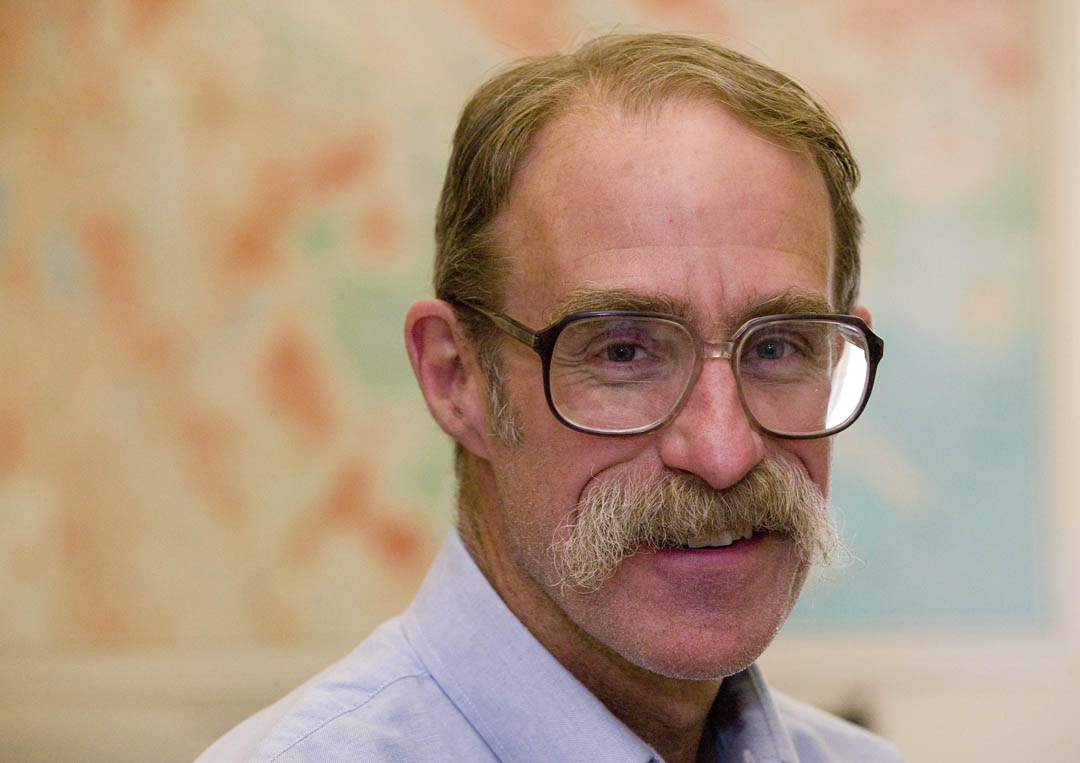
Dana Professor of Anthropology Loring Danforth. (Phyllis Graber Jensen/Bates College)

Dana Professor of Anthropology Loring Danforth. (Phyllis Graber Jensen/Bates College)

Co-written by Bates anthropologist Danny Danforth, the first comprehensive study of two children’s evacuation campaigns during the 1948 Greek Civil War has received the prestigious Edmund Keeley Book Prize.

Published in 2012 by the University of Chicago Press, Children of the Greek Civil War: Refugees and the Politics of Memory was co-written by Danforth, the Charles A. Dana Professor of History at Bates, and Riki Van Boeschoten, associate professor of social anthropology and oral history at the University of Thessaly, Greece.

Based in Brunswick, Maine, the Modern Greek Studies Association awards the Keeley Book Prize to an academic book first published in English and dealing with modern Greece or a Hellenic theme. Children of the Greek Civil War shared this year’s first prize with The Balkan Prospect: Identity, Culture, and Politics in Greece after 1989 by Vangelis Calotychos.

The warring sides in the Greek Civil War evacuated 38,000 children from their homes in the mountains of northern Greece. The Greek Communist Party relocated half of them to orphanages in Eastern Europe, while their adversaries in the national government placed the rest in children’s homes elsewhere in Greece.

A point of contention throughout the Cold War, this controversial episode continues to fuel tensions between Greeks and Macedonians and within Greek society itself.

Marshaling archival records, oral histories and ethnographic fieldwork, Danforth and Van Boeschoten analyzed the evacuation process, the political conflict surrounding it, the children’s upbringings and their fates as adults cut off from their parents and their homeland.

They also give voice to seven refugee children who, as adults, recount their experiences and efforts to construct new lives in diaspora communities throughout the world. A much-needed corrective to previous historical accounts, Children of the Greek Civil War is also a searching examination of the enduring effects of displacement on the lives of refugee children.

“Danforth and Van Goeschoten grippingly tell the stories of thousands of Greek children relocated” during the war, writes K. Dubinsky for Choice Reviews Online. “Amid charges of communist baby snatching and fascist child manipulation, the book charts an astonishingly evenhanded and supremely well-researched course.

“Insisting that refugee children ought to occupy center stage in their own history, the authors support their argument with two chapters of testimony from the historical actors themselves remembering their own childhood experiences,” Dubinsky writes. “This innovative book ends with some insightful thinking about the production of historical memory. Highly recommended.”

Danforth has written three other books, all published by Princeton University Press: The Death Rituals of Rural Greece (with photographer Alexander Tsiaras; 1982); Firewalking and Religious Healing: The Anastenaria of Greece and the American Firewalking Movement (1989); and The Macedonian Conflict: Ethnic Nationalism in a Transnational World (1997).

Isolated Greek population could hold the key to scientists’ quest to beat heart disease

Source: dailymail.co.uk

The villagers of Anogia appear to have developed a rare genetic mutation, protecting them from the risks posed by obesity and weight-gain

The villagers of Anogia appear to have developed a rare genetic mutation, protecting them from the risks posed by obesity and weight-gain

A village in Crete could provide the missing link in the battle against heart disease, researchers have found.

The high-fat Greek diet, typically rich in cheese, lamb and pastries, should cause most people health problems.

But the inhabitants of Anogia, and the surrounding area, nestled high in the island’s mountain range, appear to have developed a rare genetic mutation, protecting them from the risks posed by obesity and weight-gain.

A team of researchers from the Wellcome Trust Sanger Institute in Cambridge have discovered that the variant, which decreases levels of bad fats, is 40 times more common in the isolated Cretan community.

They hope the discovery could be a key piece of the puzzle, which has intrigued scientists and health experts for years.

The protective genetic variant, known as R19X, was first found in the Amish population in 2008.

Project leader professor Eleftheria Zeggini said she is hopeful the protection afforded by the variant could be replicated in other people, to lower the incidence of heart disease across the world.

The study, published this week in the journal Nature Communications, involved scientists examining samples taken from 1,200 villagers.

They found R19X, a genetic variant in the gene APOC3, was far more prevalent in this population than in other European communities.

The variant reduces the level of blood fat, that can increase the risk of heart disease. And it increases the levels of high density lipoproteins, also known as ‘good cholesterol’, lowering the risk of heart disease.

In other European populations the R19X variant is found in 0.05 per cent of people.

But in Anogia and the surrounding villages it is found in two per cent of the population.

A study by the Wellcome Trust Sanger Institute in Cambridge studied samples taken from 1,200 people living in the area. They discovered a rare genetic variant, offering protection against a high-fat diet, is 40 times more common in the isolated population

A study by the Wellcome Trust Sanger Institute in Cambridge studied samples taken from 1,200 people living in the area. They discovered a rare genetic variant, offering protection against a high-fat diet, is 40 times more common in the isolated population

‘The Mylopotamos villages residents have the same rate of diabetes as the general Greek population, but do not suffer from disease complications,” said Professor Zeggini, lead author of the study.

‘Genetic studies like this can help us begin to understand why this is.

‘The Mylopotamos villages residents have the same rate of diabetes as the general Greek population, but do not suffer from disease complications.

‘This type of study can increase the pace of new therapeutic treatments against cardiovascular and metabolic disease’

Dr Ioanna Tachmazidou, first author of the study

‘Genetic studies like this can help us begin to understand why this is.’

‘Our work exemplifies the importance of studying these isolated populations,’ said Dr Ioanna Tachmazidou, first author from the Wellcome Trust Sanger Institute.

‘APOC3 is a gene that is relevant to all populations.

‘This type of study can increase the pace of new therapeutic treatments against cardiovascular and metabolic disease.’

Emmanouil Tsafantakis, from the Anogia Medical Centre, told the Times that while he sees people showing the warning signs of diseases like diabetes, their symptoms rarely develop that far.

He said: ‘There have been no amputations, and nephropathies because of (diabetes) are almost non-existent.’

Dr Zeggini told the paper: ‘We have individuals who have had diabetes for years, but they don’t seem to get the complications.’

She pointed to the example of a patient in his 90s who was apparently healthy, but had a much higher-than-normal blood pressure, recording a systolic blood pressure of 190, where the healthy limit is 120.

A past study of heart disease in the area revealed around 40 of 100,000 men died of ischemic heart disease each year, compared with 140 in Greece.

The researchers believe the remote nature of the community has resulted in the rare variant becoming more common, in the last few hundred years.

Greek Parliament passes property tax reform

AP News

Greek lawmakers have passed a law on property tax, as demanded by the country’s creditors, but the ruling coalition of conservatives and socialists has lost another member when a former conservative minister voted against it and was immediately expelled from the party.

The law passed in the 300-member Parliament Saturday, with 152 lawmakers voting for and 143 against.

It consolidates previous taxes and replaces a property charge imposed in 2011, which was paid through electricity bills.

Immediately after the vote, Prime Minister Antonis Samaras said that a veteran lawmaker and former minister, Byron Polydoras, who voted against the law, has been expelled from the ruling New Democracy party.

The new law envisages that land plots over 1,000 square meters (10, 764 sq. feet) will be taxed for the first time.

ΚΑΛΑ ΧΡΙΣΤΟΥΓΕΝΝΑ


ΕΚ ΜΕΡΟΥΣ ΤΗΣ ΔΙΕΥΘΥΝΣΗΣ
ΣΑΣ ΕΥΧΟΜΑΣΤΕ
ΚΑΛΑ ΧΡΙΣΤΟΥΓΕΝΝΑ ΚΑΙ
ΚΑΛΗ ΠΡΩΤΟ ΧΡΟΝΙΑ,
ΜΕ ΥΓΕΙΑ ΚΑΙ ΧΑΡΑ ΣΕ ΟΛΟΥΣ


.

.
ΚΑΙ ΚΑΛΗ ΠΡΩΤΟ ΧΡΟΝΙΑ

.

;