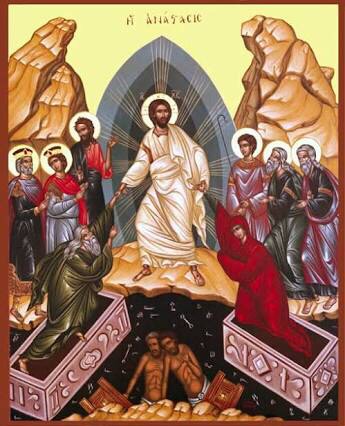
Πάσχα και Μεγάλη Εβδομάδα – Έθιμα και παραδόσεις


Το Πάσχα ονομάζεται και Λαμπρή η Πασχαλιά, είναι η πιο σημαντική γιορτή του έτους στην Ελλάδα. Το Πάσχα γιορτάζονται τα Πάθη, η Σταύρωση, η Ταφή και τελικά η Ανάσταση του Ιησού Χριστού.

Η κυριότερες ημέρες της Μεγάλης Εβδομάδας αντιπροσωπεύουν και μία απο τις ημέρες που πέρασε ο Ιησούς στην Ιερουσαλήμ απο την ημέρα της εισόδου του στην πόλη των Ιεροσολύμων μέχρι την Ανάσταση του.

Πολλά μέρη στην Ελλάδα γιορτάζουν το Πάσχα με τα δικά τους έθιμα. Μερικά παραδείγματα:

Στην Πάρο τα παιδιά αναπαριστούν τους αποστόλους του Ιησού, τον Μυστικό Δείπνο, την πορεία για τον Γολγοθά και τη Σταύρωση.

Στην Πάτμο δώδεκα μοναχοί αναπαριστούν τους αποστόλους, και ο Ηγούμενος πλένει τα πόδια τους στην πλατεία την Μεγάλη Πέμπτη .

Στην Κρήτη, όπως και σε πολλά σημεία στην Ελλάδα, μια κούκλα κατασκευασμένη από παλιά ρούχα καίγεται συμβολίζοντας το κάψιμο του Ιούδα.

Στην Κέρκυρα ο πολιούχος της πόλης Άγιος Σπυρίδωνας περιφέρεται την Κυριακή των Βαΐων και από το Σάββατο του Πάσχα κεραμικά και κανάτες ρίχνονται στους δρόμους.

Στη Θράκη και τη Μακεδονία νέες γυναίκες φορώντας την παραδοσιακή ενδυμασία που ονομάζεται Λαζαρινή πάνε στα γύρω χωριά τραγουδώντας παραδοσιακά τραγούδια του Πάσχα.

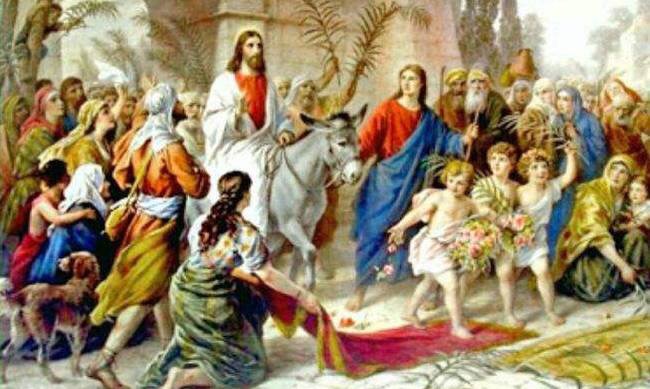
Η Κυριακή των Βαΐων που ειναι και η τελευταία της Σαρακοστής εορτάζει την είσοδο του Χριστού πάνω σε ένα γαϊδουράκι στην Ιερουσαλήμ και την υποδοχή του απο τους κατοίκους της με κλαδιά απο φοινικιές, τα βάγια. Την Κυριακή των Βαΐων μετά την λειτουργία μοιράζονται βάγια και μικροί σταυροί φτιαγμένοι απο φύλλα φοινικιάς.

Η Μεγάλη Δευτέρα ειναι αφιερωμένη στον Ιωσήφ τον πιο αγαπητό υιό του Ιακώβ τον οποίο πούλησαν τα αδέρφια του σε εμπόρους απο την Αίγυπτο. Ο Ιωσήφ εχει μεγάλη σχέση με το Πάσχα γιατί αυτός έφερε τον Λαό του Ισραήλ στην Αίγυπτο οπού και έμειναν αιχμαλωτισμένοι μέχρι την εποχή που ο Μωυσής με την βοήθεια του Θεού τους πήρε απο την Αίγυπτο για να τους φέρει στη Γη Χαναάν.

Το εβραϊκό Πάσχα γιορτάζει το πέρασμα του Αγγέλου που στάλθηκε απο τον Θεό για να θανάτωση όλα τα πρωτότοκα παιδιά των Αιγυπτίων χωρίς να πειράξει τα παιδιά των Ισραηλιτών που είχαν σημαδέψει τις πόρτες των σπιτιών τους με αίμα αρνιού. Την ίδια ημέρα διαβάζεται στην εκκλησία και η παραβολή της καταραμένης συκιάς απο το Ευαγγέλιο του Ματθαίου. Την Μεγάλη Δευτέρα ξεκινούν πολλοί την νηστεία της Μεγάλης Εβδομάδας μέχρι να κοινωνήσουν το Μεγάλο Σάββατο .

Την Μεγάλη Τρίτη διαβάζονται η παραβολή των δέκα Παρθένων πού όταν άκουσαν το ιδού ο Νυμφίος έρχεται έτρεξαν να συναντήσουν τον Νυμφίο, όμως οι πέντε απο αυτές, οι Μωρές, είχαν αποκοιμηθεί και αργοπόρησαν να βάλουν λάδι στα φανάρια τους, έτσι τελικά δεν μπόρεσαν να πάνε στο Γάμο, το δίδαγμα αυτής της παραβολής ειναι ότι οι άνθρωποι πρέπει να ειναι πάντα έτοιμοι για την βασιλεία των ουρανών. Η παραβολή του πλούσιου άρχοντα και των τριών υπηρετών του και ο τρόπος που διαχειρίστηκαν τα χρήματα που τους άφησε διδάσκουν την αγαθοεργία που πρέπει να έχουν οι άνθρωποι. Το βράδυ ψάλετε το τροπάριο της Κασσιανής.

Την Μεγάλη Τετάρτη διαβάζεται το Μύρωμα του Ιησού απο την αμαρτωλή, Ο Χριστός μιλάει ήδη για τον επερχόμενο θάνατο του λέγοντας στους μαθητές του ότι η γυναίκα τον μύρωσε για να τον προετοιμάσει για την ταφή του. Στη λειτουργία ψάλετε ο Ευχέλαιος.

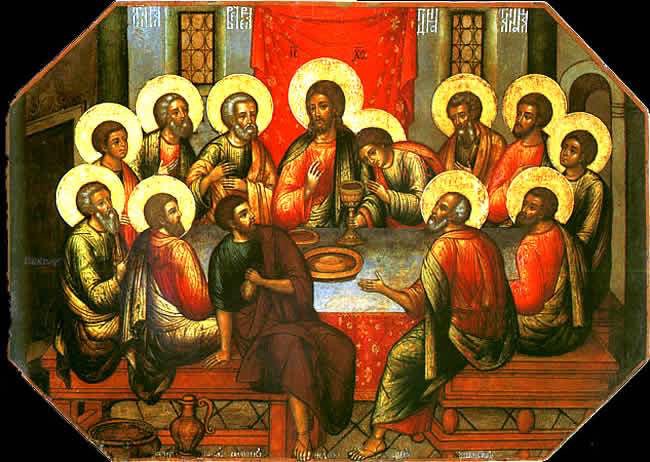
Την Μεγάλη Πέμπτη το Θειο Δράμα προχωρεί προς την αποκορύφωση του, την ημέρα αυτή γίνεται ο Μυστικός Δείπνος όπου ο Ιησούς κοινωνεί τους μαθητές του δίνοντας τους απο ενα κομμάτι ψωμί που συμβολίζει το σώμα του και κρασί που συμβολίζει το αίμα του. Απο αυτήν την πρώτη κοινωνία των μαθητών ξεκινά το μυστήριο της Θείας κοινωνίας.

Το ίδιο βράδυ ο Ιησούς γυρνώντας στους μαθητές τους λέει ότι κάποιος απο αυτούς θα τον προδώσει, ο Ιούδας φεύγει για να ετοιμάσει την προδοσία του κι ο Ιησούς συλλαμβάνεται στον κήπο της Γεσθημανής όπου εχει πάει για να προσευχηθεί με τους μαθητές του. Το βράδυ ψέλνονται τα Δώδεκα Ευαγγέλια και στην εκκλησία περιφέρεται ο Σταυρός με τον Ιησού.

Σημείωση: Η αναζήτηση του Αγίου Δισκοπότηρου με το οποίο ο Ιησούς ευλόγησε και έδωσε να πιουν κρασί οι μαθητές του, έγινε για τους δυτικούς και ειδικά για τους σταυροφόρους ένας θρύλος και μια απο τις δικαιολογίες τους για τις εκστρατείες τους για την απελευθέρωση των Αγίων τόπων απο τους Άραβες.

Η μεγάλη γιορτή του Πάσχα ξεκινά τη Μεγάλη Παρασκευή που συμβολίζει τα συμβάντα της δίκης του Ιησού απο τον Πόντιο Πιλάτο , την μαρτυρική πορεία Του προς τον Γολγοθά, την Σταύρωση του και τελικά την Ταφή του. Ο Επιτάφιος βρίσκεται στην εκκλησία στολισμένος με ανοιξιάτικα λουλούδια. Μετά το τέλος της Λειτουργίας κάθε ενορία γυρνά τον επιτάφιο στην περιφέρεια της, σε μερικές εκκλησίες απλώς περιφέρεται γύρω απο την εκκλησία. Ήδη σε πολλές περιοχές της Ελλάδας τα πρώτα πυροτεχνήματα εμφανίζονται την βραδιά του επιτάφιου.

Το Μεγάλο Σάββατο ειναι η γιορτή της Ανάστασης, σε πολλές εκκλησίες με την πρωινή λειτουργία της πρώτης Ανάστασης πέφτουν και πολλά πυροτεχνήματα, η μεγάλη λειτουργία της Ανάστασης και το αποκορύφωμα γίνεται τα μεσάνυχτα, ο κόσμος πηγαίνει στην εκκλησία αργά το βράδυ μεταφέροντας μαζί λαμπάδες και κεριά.

Τα μεσάνυχτα τα φώτα της εκκλησίας σβήνουν και ο ιερέας ψάλει το Δεύτε Λάβετε Φώς (Το Άγιο Φώς κάθε χρόνο φτάνει με ειδική πτήση της Ολυμπιακής απο τα Ιεροσόλυμα και μοιράζεται σε όλες τις εκκλησίες της Ελλάδας) . Μετά ακολουθεί το Αναστάσιμο Ευαγγέλιο, συνήθως στο προαύλιο της εκκλησίας, ο Ιερέας σηματοδοτεί την Ανάσταση του Χριστού ψάλλοντας το Χριστός Ανέστη.

Ο κόσμος σπάει κόκκινα αυγά και εύχεται Χριστός Ανέστη, φωτοβολίδες και πυροτεχνήματα φωτίζουν τον ουρανό. Κατα την επιστροφή στο σπίτι πολλοί φτιάχνουν ένα σταυρό πάνω απο την πόρτα με την αιθάλη του κεριού. Το τραπέζι ειναι στρωμένο με την παραδοσιακή μαγειρίτσα, κόκκινα αυγά και πασχαλιάτικες λιχουδιές.

Η Κυριακή του Πάσχα ειναι η μεγάλη γιορτή της Λαμπρής, απο νωρίς το πρωί ο παραδοσιακός οβελίας ψήνεται στη σούβλα ενώ γύρω απο το εορταστικό τραπέζι γλεντούν οικογένειά και φίλοι με τραγούδια και χορό.
Το Πασχαλινό Τραπέζι και ‘Aλλα Έθιμα

Τα Πασχαλινά φαγητά στην κεντρική και ανατολική Ευρώπη προετοιμάζονται εκ των προτέρων, και ευλογούνται από τον παπά προτού τα δοκιμάσει κανείς. Η παράδοση του Πασχαλινού Αμνού εξασφαλίζει αξιοζήλευτη θέση στο Πασχαλινό τραπέζι, αν και σε μερικές χώρες ένα γλύκισμα μπορεί να γίνει το υποκατάστατό του. 

Στην Πολωνία το αρνί φτιάχνεται από βούτυρο και περιστοιχίζεται από πολυάριθμα πιάτα που περιέχουν ζαμπόν, ψητό μοσχάρι, λουκάνικο και άλλες λιχουδιές. Σαν γενικός κανόνας το τραπέζι διακοσμείται όμορφα με λινό τραπεζομάντιλο, λουλούδια και γιρλάντες.

Εθιμοτυπικά χρησιμοποιείτο μια εποχή το ξινό βότανο για να δώσει άρωμα στα Πασχαλινά κέικ και τις πουτίγκες. 

Σπάνια χρησιμοποιείται στις μέρες μας, εξαιτίας της πικρής του γεύσης που αρχικά συμβόλιζε τα πικρά βότανα του Εβραϊκού Πασχαλινό γεύματος. 

Στην Αγγλία μια κόκκινη ρέγγα, που μοιάζει σαν έναν άνθρωπο πάνω στη ράχη αλόγου, στη βάση ενός καλαμποκιού, τρώγεται την Ημέρα του Πάσχα, ενώ τα ραπανάκια ήταν η σπεσιαλιτέ της εποχής.

Στην Πολωνία τα αγόρια της επαρχίας παίρνουν ένα δοχείο χυλού –φτιαγμένο από νερό αναμιγμένο με σίκαλη και μαγιά- και μια ρέγγα, και το κάνουν ταμπούρλο έξω από το χωριό πριν το θάψουν. Επειδή οι πιστοί ζούσαν με ελάχιστα την περίοδο της νηστείας, τα αγόρια διασκέδαζαν κάνοντας την κηδεία της τροφής.

Οι Ρώσοι ετοιμάζουν το πάσκα, ένα ψηλό, άκαμπτο ψωμί, φτιαγμένο με σπιτικό τυρί και ξερές σταφίδες γλασαρισμένο στη κορφή. Οι Ιταλίδες μητέρες δίνουν στα παιδιά τους τη τσιαμπέλα, ένα κέικ φτιαγμένο με ελαιόλαδο όπου: στα αγόρια δίνεται στο σχήμα ενός αλόγου, ενώ στα κορίτσια στο σχήμα ενός περιστεριού στολισμένο με πραγματικά φτερά. Τα παιδιά της Αυστραλίας παίρνουν ένα κέικ σε σχήμα φωλιάς γεμισμένο με αυγά. Μερικοί λόγιοι βλέπουν σε τέτοια εθιμοτυπικά γλυκίσματα τα υπολείμματα ενός παλαιού μαγικού τυπικού, όπου τελετουργικές προσφορές ψωμιού εξασφάλιζαν ευημερία στην κοινότητα και στη φυλή.

Μερικές φορές τα γλυκίσματα ήταν τμήμα μιας ελεημοσύνης ή φιλανθρωπικής διανομής, όπου εκπλήρωναν μια πραγματική ανάγκη σε καιρούς όπου η φτώχεια σήμαινε λιμοκτονία. Ελαφρώς διαφορετικές ήταν και οι Εκκλησιαστικές Μπύρες, που δίνονταν σε μερικά μέρη της Βρετανίας την ίδια εποχή. Στην Εβραϊκή γιορτή θυσιάζονταν αρνιά για να εορταστεί η απελευθέρωση του Ισραήλ από τη δουλεία στην Αίγυπτο, ενώ στη Χριστιανική παράδοση αντιπροσωπεύει ο πασχαλινός αμνός τον Χριστό. Μια άλλη άποψη τοποθετεί τον αμνό σε μια ποιμενική γιορτή, επρόκειτο για τη θυσία ενός αρνιού έτσι ώστε ο θεός των ποιμνίων-της γονιμότητας, να πάρει το μερίδιό του για να εξασφαλίσει τη γονιμότητα του ποιμνίου. Το αρνί τρωγόταν σε ένδειξη κοινωνίας με το θεό προστάτη.

Οι προετοιμασίες για το ορθόδοξο δείπνο της Ανάστασης ξεκινούν από το Μεγάλο Σάββατο το πρωί δίνοντας τέλος στη νηστεία της Μεγάλης Εβδομάδας. Αν και αρκετοί ήταν αυτοί που κάθονταν στην αναστάσιμη λειτουργία το βράδυ του Σαββάτου υπήρχαν πολλοί που κατέληγαν στο τραπέζι της αγάπης για την ελαφριά σούπα από κοτόπουλο, η οποία αντικαταστάθηκε σε πολλούς τόπους από την παραδοσιακή μας μαγειρίτσα, μια σούπα φτιαγμένη από τα σπλάχνα του αρνιού, ρύζι και αρωματικά βότανα αλλά και τα σκαλτσούνια ή μελιτίνια, τα συνοδευτικά γαρδουμπάκια, συκωταριά, ψητό κρέας, κόκκινα αυγά καθώς και πολλών άλλων φαγητών με τοπικό χαρακτήρα.

Το τραπέζι της Κυριακής του Πάσχα είναι από τα πλουσιότερα. Με αγάπη το γεμίζουν από όλα τα καλά, με λαμπροκουλούρες, καλτσούνια, λαζαράκια, τσουρέκια, αυγά κ.α. Όλοι μαζί, φίλοι και συγγενείς, ψήνοντας το αρνί ή το κατσίκι και το κοκορέτσι πίνουν και γλεντούν γιορτάζοντας την ανάσταση. Το αρνί αποτελεί ένα κατεξοχήν μυθικό σύμβολο, με την έννοια της αθωότητας και της αγνότητας κυρίως σε πνευματικό επίπεδο, έτσι με τον διαμελισμό του επιτρέπει στους ανθρώπους την επικοινωνία με αυτή την αγνότητα. Το «παραδοσιακό» Πασχαλινό τραπέζι διαφέρει από περιοχή σε περιοχή, αν και σε όλη τη χώρα αντικατοπτρίζει την ίδια αρχαία σοφία: «τίποτα δεν πάει χαμένο». Αν κάποιος έχει νηστέψει για 40 ολόκληρες ημέρες, απέχοντας από κρέας και γαλακτοκομικά, τότε η ιδέα να γευτεί και την τελευταία μπουκιά είναι ακόμη πιο σημαντική. Τέλος ένα έθιμο του Πάσχα που έρχεται από τα αρχαία χρόνια, πριν την γέννηση του Χριστού, είναι το διάβασμα της «κουτάλας» του αρνιού δηλ. της ωμοπλάτης του ζώου, που λεγόταν ότι με αυτό μπορούσε ο νοικοκύρης του σπιτιού να προβλέψει το μέλλον.

Το απόγευμα της ίδιας ημέρας διαβάζεται το Ευαγγέλιο της Ανάστασης σε εφτά γλώσσες. Αποτελεί τη «Λειτουργία της Αγάπης» και εκφράζει το ύψιστο μήνυμα της Ανάστασης του Χριστού. Σε πολλές περιοχές βραδιάζοντας καίνε ένα ομοίωμα του Ιούδα. Οι νέοι φτιάχνουν το ομοίωμα από παλιά χαλιά, βάζουν στα χέρια του τα τιμαλφή της προδοσίας, μια σακούλα με 30 νομίσματα, και το κρεμούν στην αυλή μέχρι να καεί.

Η ανανέωση και το ξανάνιωμα, που είναι στενά συνδεδεμένα με το κεντρικό νόημα του Πάσχα, συμβολίζονται με πολλούς τρόπους. Σύμφωνα με μια κοινή και ευρέως διαδεδομένη πίστη, το τρεχούμενο νερό γίνεται ευλογημένο την Ημέρα του Πάσχα επειδή ο Χριστός το καθαγίασε. Στη Γαλλία οι γυναίκες πλένουν το πρόσωπό τους στα ρυάκια ενώ σε άλλες χώρες οι αγρότες ραντίζουν τα ζώα τους. Μπουκάλια πασχαλινού νερού συχνά διατηρούνται προσεκτικά ως μια πηγή θεραπείας, ενώ στην Ιρλανδία λέγετε πως το συγκεκριμένο νερό τους παρείχε προστασία από τα κακά πνεύματα.

Το νερό είναι σημαντικό στο να βοηθήσει τις σοδειές να αναπτυχθούν, και οι πρωτόγονοι λαοί θεωρούσαν ότι αυτό κατείχε για γενικότερη γονιμοποιό επίδραση. Σε κάποιες Ευρωπαϊκές χώρες είναι σύνηθες να ραντίζουν κορίτσια και αγόρια. Στην Ουγγαρία αυτό λαμβάνει χώρα τη Δευτέρα του Πάσχα. Το ίδιο έθιμο υπήρχε στην Πολωνία, σήμερα μερικές σταγόνες κολόνιας ή ροδόνερου αντικαθιστούν το παλαιομοδίτικο κατάβρεγμα. Στο Μεσαίωνα πραγματοποιείτο μία διήμερη εορτή, όπου αφού πετούσαν νερό κορίτσια και αγόρια έριχναν ο ένας στον άλλο αυγά.

Μερικά Πασχαλινά έθιμα έχουν άμεσους δεσμούς με τυπικά ανάπτυξης της σοδειάς. Μία δημοφιλής ιεροτελεστία αποτελείται από το άγγιγμα ενός νεαρού ή νεαρής με το κλαδί ενός δέντρου. Αυτό έδινε υγεία και γονιμότητα. Στην Τσεχοσλοβακία η Πασχαλινή Βέργα πλέκεται με κλαδιά ιτιάς και διακοσμείται με κορδέλες. Ένα αγόρι θα χτυπούσε ένα κορίτσι στα πόδια με αυτή μέχρι να του δώσει πρόστιμο Πασχαλινά αυγά. Στην ανατολική Πομερανία της Γερμανίας, προς μεγάλη μας έκπληξη, τα παιδιά κυνηγούσαν τους γονείς να σηκωθούν από το κρεβάτι, χρησιμοποιώντας ένα κλαδί σημύδας. Στη Μακεδονία, τα κορίτσια ξυπνούν νωρίς το πρωί του Πάσχα, βρίσκουν μια κερασιά και φτιάχνουν μια κούνια. Αργότερα, και άλλες κούνιες ορθώνονται στο πράσινο του χωριού και η χόρα, ένας αρχαίος κυκλικός χορός, εκτελείται ενώ γίνεται η αιώρηση. Παρατηρείται κάτι αντίστοιχο και σε άλλες περιοχές όπως το Πήλιο, τη Μυτιλήνη και τη Σάμο. Οι κούνιες αποτελούν αρχαίο έθιμο και θυμίζουν την «αιώρα» των Αθηναίων παρθένων στα Ανθεστήρια, μια από τις λαϊκότερες γιορτές στις αρχές της ‘Aνοιξης. Ένα παρόμοιο παιχνίδι ήταν δημοφιλές στη Λετονία, η αρχική πρόθεση πιθανώς ήταν να ενθαρρύνει τις σοδειές να αναπτυχθούν τόσο ψηλά όσο αιωρούνταν τα κορίτσια.

Παραδοσιακά η εργασία απαγορευόταν στην Πολωνία κατά τη διάρκεια της Μεγάλης Εβδομάδος, ιδιαίτερα την Πέμπτη, η οποία είναι αφιερωμένη στη μνήμη των νεκρών. Λένε ότι ένας αγρότης που επέμενε να οργώνει τα χωράφια του τον κατάπιε η γη μαζί με τα βόδια του. Οποιοσδήποτε βάλει το αυτί του στο έδαφος θα τον ακούσει να καλεί σε βοήθεια. Μερικοί άνθρωποι απέφευγαν τη δουλειά με το λινό ή τα νήματα, όντας η παράδοση ότι, η σκόνη από αυτά τα υλικά θα έμπαινε στα μάτια των νεκρών. Προφανώς υπάρχει κάποια σύνδεση με τα σάβανα της κηδείας.

Η επίδραση όμως των τελετουργιών της αρχαίας Ελλάδος στο χριστιανισμό φαίνεται ότι είναι μεγαλύτερη από όσο οι περισσότεροι γνωρίζουμε. Για παράδειγμα το Πάσχα στην Αρχαία Ελλάδα γιόρταζαν τα «Αδώνια», κατά τα οποία γινόταν αναπαράσταση του θανάτου του ‘Aδωνι. Οι γυναίκες στόλιζαν το νεκρικό κρεβάτι με λουλούδια και καρπούς ενώ τραγουδούσαν μοιρολόγια. Ακολουθούσε επιτάφιος πομπή, ενώ την επομένη ημέρα γινόταν η ανάσταση του ‘Aδωνι, που συμβόλιζε την καρποφορία της φύσης.

Αλλά και η μετάληψη με το «θείο» σώμα και αίμα ήταν μέρος των τελετουργιών, τόσο των Κορυβαντικών όσο και των Ορφικών μυστηρίων. Στη μετάληψη των Ορφικών οι πιστοί, επιδίδονταν σε ωμοφαγία ταύρου και οινοποσία, που συμβόλιζε το σώμα και το αίμα του Διόνυσου Ζαγρέα. Πίστευαν ότι με αυτόν τον τρόπο κατέρχονταν σε αυτούς η θεότητα και γέμιζε τις ψυχές τους. Στα Κρητικά μυστήρια, η προσφορά του Διόνυσου Ζαγρέα και η θυσία του Μινώταυρου, ήταν η θεία Δωρεά, η κάθοδος της πνευματικής δύναμης, του συμβολικού ταυρείου αίματος. Αυτό το έθιμο αφού πέρασε από διάφορα στάδια στα ελληνικά Μυστήρια των ιστορικών χρόνων αλλά και στα Μιθραϊκά των Περσών πέρασε και στα Χριστιανικά στους μετέπειτα αιώνες.

Ένα άλλο έθιμο των ημερών είναι τα πασχαλινά κόκκινα αυγά, τα οποία συμβολίζουν το αίμα του Ιησού Χριστού, όταν οι στρατιώτες Τον λόγχιζαν επάνω στο σταυρό. Σύμφωνα όμως με τον Κοραή τα κόκκινα αυγά, συμβολίζουν το αίμα των προβάτων με το οποίο οι Ιουδαίοι έβαψαν τις οικείες τους, για να αποφύγουν την «υπό εξολοθρευτικού Αγγέλου φθοράν». Οι αρχαίοι Αιγύπτιοι και οι Γαλάτες πρόσφεραν βαμμένα αβγά για να γιορτάσουν την άνοιξη. Όπως αναφέρει ο Γ. Α. Μέγας, χρωματιστά κυρίως κόκκινα αυγά, μνημονεύονται ήδη από τον 5ο αι. στην Κίνα για γιορταστικούς σκοπούς και στην Αίγυπτο από τον 10ο αι. Ενώ τον 17ο αι. τα βρίσκουμε στους Χριστιανούς και τους Μωαμεθανούς, όπως στη Μεσοποταμία και τη Συρία, έπειτα στην Περσία και τη Χερσόνησο του Αίμου. Μερικοί υποθέτουν ότι τα κόκκινα αυγά του Πάσχα διαδόθηκαν, σε όλη την Ευρώπη και την Ασία και συνδέθηκαν με τα τοπικά έθιμα των λαών.

Το τσούγκρισμα των πασχαλινών αυγών, συμβολίζει την Ανάσταση του Χριστού, καθώς το αυγό συμβολίζει τη ζωή και τη δημιουργία που κλείνει μέσα του ζωή. Όταν το κέλυφος του αυγού σπάσει με το τσούγκρισμα, γεννιέται μια ζωή, έτσι παρομοιάζει το σπάσιμο του τάφου του Χριστού και την Ανάστασή Του. 

Το αυγό βέβαια σε όλες σχεδόν τις αρχαίες κοσμογονίες σήμαινε την γέννηση του σύμπαντος και της ζωής. Χαρακτηριστικό παράδειγμα το σύμβολο των ορφικών Μυστηρίων που ήταν ένα φίδι τυλιγμένο γύρω από ένα αυγό, που συμβόλιζε τον κόσμο που περιβάλλεται από το Δημιουργικό πνεύμα. Στο επίπεδο της μύησης και της φιλοσοφίας, αντιπροσώπευε τον νεόφυτο που την στιγμή της μύησής του έσπαγε το κέλυφος του αβγού και ένας καινούργιος πνευματικός άνθρωπος γεννιόταν.

Το τσουρέκι, η γνωστή μας λαμπροκουλούρα ζυμώνεται για το καλό. Οι αγρότες παραχώνουν κομμάτια τσουρεκιού και τσόφλια αυγών στα χωράφια τους για να ευλογηθεί η σοδειά τους. Οι νοικοκυρές στη Σίφνο ετοιμάζουν τα παραδοσιακά «πουλιά» και πασχαλινές κουλούρες σε διάφορα σχήματα ζώων και πουλιών, στολισμένα με κόκκινα αβγά. 

Τα πιο γνωστά είναι φυσικά η πλεξούδα, με ή χωρίς κόκκινο αβγό. Οι πλεξούδες και οι κόμποι προέρχονται από τους ειδωλολατρικούς χρόνους ως σύμβολα για την απομάκρυνση των κακών πνευμάτων. Ζύμωναν με μυρωδικά τις κουλούρες της Λαμπρής και τις στόλιζαν με λουρίδες από ζυμάρι και ξηρούς καρπούς. Παρόμοιες κουλούρες έφτιαχναν και στα βυζαντινά χρόνια, τις «κολλυρίδες», που ήταν ειδικά ψωμιά για το Πάσχα σε διάφορα σχήματα με ένα κόκκινο αυγό στο κέντρο τους.

Τα σοκολατένια πασχαλινά κουνελάκια, αποτελούν ίσως τη μεγαλύτερη χαρά των παιδιών, στην εορτή του Πάσχα. Αρχικά, το πασχαλινό κουνελάκι ήταν λαγός. Για τους Σάξονες ο λαγός ήταν το έμβλημα της θεάς Eastre, την οποία τιμούσαν την άνοιξη. Από αυτήν άλλωστε προέρχεται η λέξη Easter, που σημαίνει Πάσχα στα αγγλικά. Για τους Κέλτες και τους Σκανδιναβούς ο λαγός αποτελούσε επίσης το σύμβολο της θεάς της μητρότητας και της ανοιξιάτικης γονιμότητας. Το παραδοσιακό κουνελάκι που φέρνει αβγά στα παιδιά είναι γερμανικής προελεύσεως.

Μια σειρά από ιστορικά γεγονότα, πνευματικές εμπειρίες, έθιμα και κυρίως το «πάντρεμα» διαφορετικών πολιτισμών, αναβιώνουν και κυριαρχούν τις άγιες αυτές ημέρες. Ο συμβολισμός τους έχει ως σκοπό, την απόδοση του θείου δράματος, αλλά και τη λυτρωτική κατάληξη με την Ανάσταση του Θεανθρώπου. 

Η Σταύρωση και η Ανάσταση του Χριστού αποτελεί τη μετάβαση του ανθρώπου από το Θάνατο στη Ζωή. Ο Χριστός «ανέστη εκ νεκρών» και καταπάτησε τον Θάνατο. Με την Ανάστασή Του θα αναστήσει όλο το γένος από κάθε είδους μορφής σκλαβιάς καθοδηγώντας το σε Αναγέννηση. Θα φέρει τέτοια πνευματική διέγερση με τα πάθη του, που θα οδηγήσει την ανθρωπότητα σε μια νέα συνειδησιακή διεύρυνση.

Αντιλαμβανόμαστε το λόγο της ύπαρξής μας και τις δικές μας ευθύνες προς τη Ζωή, ως σύνολο. Η αναγκαιότητα της δικής μας ανάστασης ωθεί σε μια διεύρυνση της συνείδησης, διεύρυνση και επίγνωση της ευθύνης που έχουμε για την πνευματική ανάσταση της ανθρωπότητας και του πλανήτη.
Των Βαΐων: Έθιμα και παραδόσεις


Κυριακή των Βαΐων

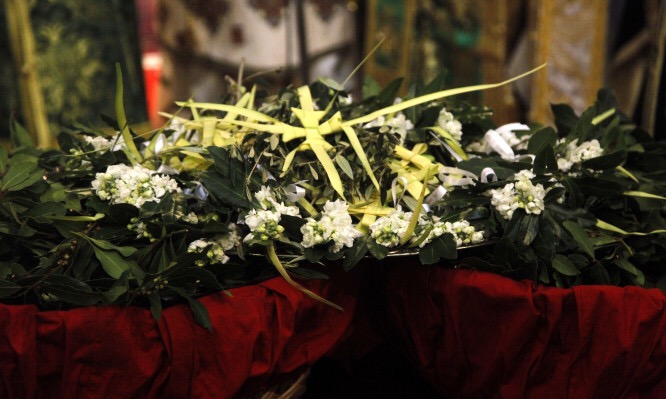
Η Κυριακή της Μεγάλης Εβδομάδας ονομάζεται έτσι, γιατί «μετά Βαΐων και κλάδων» έγινε η υποδοχή του Χριστού στα Ιεροσόλυμα. Χαρακτηριστικό έθιμο της ημέρας είναι ο στολισμός των εκκλησιών με βάγια, ενώ μετά τη λειτουργία ο παπάς ευλογεί και δίνει στους πιστούς σταυρούς από βάγια, τους οποίους βάζουμε στα εικονίσματα ή όπου αλλού χρειαζόμαστε προστασία.

Η Κυριακή της Μεγάλης Εβδομάδας ονομάζεται έτσι, γιατί «μετά Βαΐων και κλάδων» έγινε η υποδοχή του Χριστού στα Ιεροσόλυμα.

Ο Χριστός μπαίνει στην πόλη χωρίς την βασιλική πολυτέλεια, καθισμένος επί πώλου όνου, αντί για ροδοπέταλα και τελετές, τα μικρά παιδιά κουνούν τα βάγια των φοινίκων, αντί να τον υποδεχτούν οι πολιτικοί και θρησκευτικοί ηγέτες του τόπου.

Χαρακτηριστικό έθιμο της ημέρας είναι ο στολισμός των εκκλησιών με βάγια, ενώ μετά τη λειτουργία ο παπάς ευλογεί και δίνει στους πιστούς σταυρούς από βάγια, τους οποίους βάζουμε στα εικονίσματα ή όπου αλλού χρειαζόμαστε προστασία.

Στις φωτό από τον ιερό Ναό της Παναγίας Ναυπλίου και τον ιερό Ναό της Αγίας Τριάδος όπου από την παραμονή των Βαΐων, γυναίκες μαζεύονται και κόβουν τα βάγια και τα ετοιμάζουν για την εορτή.


Tην Κυριακή των Βαΐων είναι έθιμο να τρώμε ψάρι.

Ο Χριστός εισέρχεται στα Ιεροσόλυμα «επί πώλον όνου». Πορεύεται και οι Ισραηλίτες τον υποδέχονται με τιμές ως Βασιλιά. Εκείνος δεν δίνει ιδιαίτερη σημασία στις τιμές, δεν περιορίζεται στο πανηγύρι, στην πρόσκαιρη δόξα, αλλά προχωρεί στο σταυρό και την Ανάσταση.

Η είσοδος του Χριστού στα Ιεροσόλυμα είναι τελικά η είσοδος του μαρτυρίου στην επίγεια ζωή του Κυρίου.

Σε λίγες ημέρες θα μαρτυρήσει και θα θανατωθεί στο σταυρό, για να θανατώσει το θάνατο και να χαρίσει τη ζωή.


Έθιμα

Την Κυριακή των Βαΐων, σε ανάμνηση της θριαμβευτικής εισόδου του Χριστού στα Ιεροσόλυμα, όλοι οι ναοί στολίζονται με κλαδιά από βάγια, από φοίνικες δηλαδή ή από άλλα νικητήρια φυτά, όπως δάφνη, ιτιά, μυρτιά και ελιά. Μετά τη λειτουργία μοιράζονται στους πιστούς.

Η εκκλησία μας καθιέρωσε ήδη από τον 9ο αιώνα το έθιμο αυτό μια και όπως αναφέρει ο Ευαγγελιστής Ιωάννης «όχλος πολύς…έλαβον τα βαΐα των φοινίκων και εξήλθον εις υπάντησιν αυτώ».

Στα πρώτα χριστιανικά χρόνια, στα Ιεροσόλυμα, ο επίσκοπος έμπαινε στην πόλη «επί πώλου όνου», αναπαριστάνοντας το γεγονός, ενώ στα βυζαντικά γινόνταν «ο περίπατος του αυτοκράτορα», από το Παλάτι προς τη Μεγάλη Εκκλησία.

Στη διαδρομή αυτή ο αυτοκράτορας μοίραζε στον κόσμο βάγια και σταυρούς και ο Πατριάρχης σταυρούς και κεριά. Με τα βάγια οι πιστοί στόλιζαν τους τοίχους των σπιτιών και το εικονοστάσι τους. Και σήμερα ακόμα όλες οι εκκλησίες στολίζονται με δαφνόφυλλα ή βάγια.

Τα παλιότερα χρόνια τους τα προμήθευαν τα νιόπαντρα ζευγάρια της χρονιάς ή και μόνο οι νιόπαντρες γυναίκες, για το καλό του γάμου τους. Πίστευαν πως η γονιμοποιός δύναμη που κρύβουν τα φυτά αυτά θα μεταφερόταν και στις ίδιες και η μια χτυπούσε την άλλη με τα βάγια.

Τα “βαγιοχτυπήματα” σιγά-σιγά άρχισαν να γίνονται και από τις άλλες γυναίκες και τα παιδιά τις μιμούνταν και όπως χτυπιούνταν μεταξύ τους εύχονταν: “Και του χρόνου, να μη σε πιάν’ η μυίγα”. Δυνάμεις ιαματικές και αποτρεπτικές, μαζί με τις γονιμοποιές, αποδίδονταν στα βάγια και γι αυτό έπρεπε μετά την εκκλησία όλα να τα “βατσάσουν” για το καλό. Τα δέντρα, τα περβόλια, τα κλήματα, τις στάνες, τα ζώα, τους μύλους, τις βάρκες.

Από ένα κλαδάκι κρεμούσαν στα οπωροφόρα, για να καρπίζουν και στα κηπευτικά, για να μην τα πιάνει το σκουλήκι. “Μέσα βάγια και χαρές, όξω ψύλλοι, κόριζες !” ‘Ολα εξαφανίζονταν από τα σπίτια μόλις μπαίναν τα βάγια. Κρατούσαν την πρώτη θέση στο εικονοστάσι και μ’ αυτά “κάπνιζαν” οι γυναίκες τα παιδιά για το “κακό το μάτι”. Στη Λέσβο τα παιδιά, μετά την εκκλησία, στόλιζαν ένα δεμάτι από κλαδιά δάφνης με κόκκινα ή πράσινα πανάκια από καινούργιο φουστάνι, κρεμούσαν κι ένα κουδούνι και καθώς πήγαιναν από σπίτι σε σπίτι ψάλλοντας και λέγοντας εξορκισμούς για τους ψύλλους και τα ποντίκια, έδιναν και ένα κλαράκι δάφνης στη νοικοκυρά.

Στο τέλος ζητούσαν και το χάρισμά τους: “Χρόνια πολλά, εν ονόματι Κυρίου, δό μ’ τ’ αυγό να φύγω.” Στην Ανατολική Ρωμυλία, τα κορίτσια έφτιαχναν με τα βάγια στεφάνια, τους έδεναν μια κόκκινη κλωστή και τραγουδώντας όλες μαζί πήγαιναν και τα πέταγαν στο ρέμα κι όπως έπαιρνε τα στεφάνια το νερό, όποιας πήγαινε μπροστά εκείνη θα γινόταν “συντέκνησσα”.

Πρώτη στο γυρισμό, πρώτη στο χορό και στο δικό της σπίτι η μάνα της θα έφτιαχνε τα φασόλια και θα τις φίλευε όλες, μαζί με ελιές.

Στη Τήνο, την Κυριακή των Βαΐων, τα παιδιά τριγύριζαν στους δρόμους κρατώντας μαζί με το στεφάνι τους την “αργινάρα”, μια ξύλινη ή και σιδερένια ροκάνα που τη στριφογύριζαν με δύναμη. Μέσα σε εκκωφαντικό θόρυβο κατέληγαν στη θάλασσα, όπου πετούσαν στο στεφάνι στο νερό.

Το έθιμο της περιφοράς των κλαδιών θυμίζει την “ειρεσιώνη”, το στολισμένο με καρπούς κλαδί, που στις γιορτές της άνοιξης περιέφεραν στους δρόμους τα παιδιά, στην αρχαιότητα. Τα βάγια τα έπλεκαν σε πάρα πολλά σχέδια: φεγγάρια, πλοία, γαϊδουράκια, το πιο συνηθισμένο όμως ήταν ο σταυρός.

Σε μερικά μέρη τους έδιναν το σχήμα του ψαριού. Ψάρι είχαν σαν σημάδι αναγνώρισης οι πρώτοι χριστιανοί, η λέξη ΙΧΘΥΣ, εξάλλου, προέρχεται από τα αρχικά Ιησούς Χριστός Θεού Υιός Σωτήρ.

Αν και είναι ακόμα σαρακοστή, η εκκλησία την Κυριακή των Βαϊων επιτρέπει το ψάρι.

Έτσι και το τραγούδι των παιδιών λέει: “Βάγια, Βάγια των βαγιών, τρώνε ψάρι και κολιό, κι ως την άλλη Κυριακή με το κόκκινο αυγό!”

Αναγράφει το Ωρολόγιο: Πέντε μέρες προ του Νομικού Πάσχα, ερχόμενος ο Ιησούς από τη Βηθανία στα Ιεροσόλυμα, έστειλε δύο από τους μαθητές του και του έφεραν ένα ονάριο και αφού κάθισε πάνω του εισερχόταν στη πόλη.

Ο λαός μόλις άκουσε ότι έρχεται ο Ιησούς (είχαν μάθει και τα περί αναστάσεως του Λαζάρου) έλαβαν στα χέρια τους βάϊα από φοίνικες και πήγαν να τον προϋπαντήσουν. Άλλοι με τα ρούχα τους, άλλοι έκοβαν κλαδιά από τα δένδρα και τα έστρωναν στο δρόμο όπου διερχόταν ο Κύριος και τον ακολουθούσαν.

Ακόμα και τα νήπια τον προϋπάντησαν και όλοι μαζί φώναζαν: Ωσαννά, ευλογημένος ο ερχόμενος εν ονόματι Κυρίου, ο βασιλεύς του Ισραήλ (Ιωαν.ιε΄). Αυτή τη λαμπρή και ένδοξο πανήγυρη της εισόδου στα Ιεροσόλυμα του Κυρίου εορτάζουμε αυτή τη Κυριακή.

Σήμαιναν δε τα βάϊα, οι κλάδοι των φοινίκων, τη κατά του διαβόλου και του θανάτου νίκη του Χριστού. Το δε Ωσαννά ερμηνεύεται σώσον παρακαλώ. Το δε πωλάριο της όνου και το κάθισμα του Ιησού πάνω του, ζώου ακάθαρτου κατά τον νόμο τους, σήμαινε τη πρώην ακαθαρσία και αγριότητα των εθνών και την μετά από λίγο υποταγή αυτών στο άγιο Ευαγγέλιο.


Η Εκκλησία μας ψάλλει:

Αφού ταφήκαμε μαζί με Σε, Χριστέ και Θεέ μας, δια του βαπτίσματός μας (το οποίο είναι τύπος του θανάτου Σου και της ταφής Σου), αξιωθήκαμε δια της αναστάσεώς Σου να εισέλθωμε στην αθάνατο ζωή της Βασιλείας Σου. Γι’ αυτό υμνούντές Σε, κράζομε: Βοήθησέ μας και σώσε μας, Συ, που ως Θεός κατοικείς στα ύψιστα μέρη του Ουρανού. Άς είσαι ευλογημένος Συ, που έρχεσαι απεσταλμένος από τον Κύριο!

Sydney, These Are Your Dirtiest Restaurants

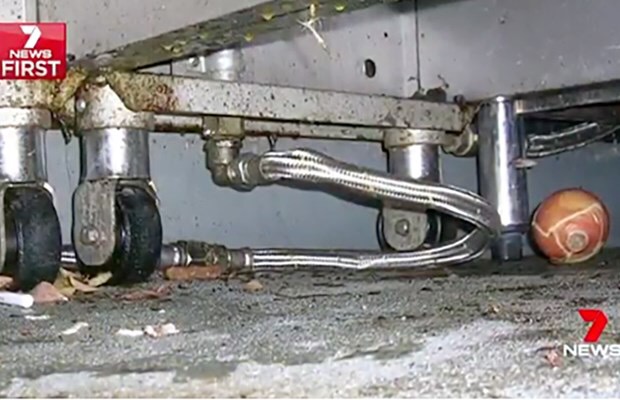
If you love to eat out, no doubt you like to think the food you’re inhaling is of a certain standard.

Well, a report the NSW Food Authority released by Channel 7 shows that many of the places you dine in frequently are well below par when it comes to hygiene and cleanliness.

In fact, over 50 Sydney restaurants have been issued a penalty notice in the last 30 days directly related to food safety.

Restaurants that have received penalty notices in the last 30 days are…

Wongasos Dumpling Master, Balgowlah

Eurotaste’s Grill, Bankstown

IGA Bankstown Lakai, Bankstown

Clover Sushi Cafe, Belrose

Blackett Baker, Blackett

Grange Buffet, Blacktown

Meteo Petroleum Blacktown West, Blacktown

Mezes Restaurant, Brighton-Le-Sands

Event Cinemas, Burwood

Cafe Byron, Byron Bay

An Phat Cake Shop, Cabramatta

Pho Star 72, Cambridge Park

Tokkuri, Cammeray

Mustang Spur, Campbelltown

Bun Bo Hue Gia Hoi, Canley Heights

Oishii Sushi Rail, Coffs Harbour

Korean Samurai, Cremorne
Midnight Pizza, Cronulla
Sakana-Ya, Crows Next
Becca’s Bakery, Dundas
Killara Bakery Cafe And Groceries, East Killara
Gas Point, Guildford
West Emperors Garden Cakes and Bakery, Haymarket
Oriental Dumpling King, Haymarket
The Eight Modern Chinese Restaurant, Haymarket
Thousand Spices, Homebush
Oliver Brown, Hornsby
Bridgeview Restaurant, Karuah
Oliver Brown, Kingsford
Hong Hang, Kogarah
Barista 2 Go (Food Stall), Kosciuszko National Park
Kurrajong Indian Cuisine, Kurrajong
IGA Lalor Park Cafe Arc Take Away, Leppington
Bakers Choice, Macquarie Fields
Manly Seaside Kebabs, Manly
Sydney Meats, Marrickville
GM Cafe Deli, Mascot
Cake And Bakery Shepherds Bay, Meadowbank
Delicious Noodle House, Merimbula
Banana Blosson, Mona Vale
Darley Street Depot, Mona Vale
Wongasos Dumpling Master, Mona Vale
Chef Ding Chinese Restaurant, Moore Park
Espresso Warriors, Mount Druitt
Rita Supermarket, Mount Druitt
Friendly Crocer, Murrambateman
Oyster 1, Nambucca Heads
Garlic Teppanyaki House, Neutral Bay
Green Gourmet Vegetarian Restaurant, Newtown
Edelweiss Restaurant, North Boambee Valley
First Sipzz Cafe, North Sydney
Rustic Board, North Sydney
Yoros Seafood, North Sydney
Jamaica Blue, Nowra
Anjappar Chettinad Indian Restaurant, Parramatta
Pendle Hill Fish Market, Pendle Hill
Chilli Jam, Penrith
The Ming Asian Cuisine, Penrith
Aritis Catering, Prestons Belmore
Bean Factory, Revesby
Last Bus To Kathmandu, Rockdale
Penny Lane, Rozelle
Artisan Cafe, Seven Hills
Red Rooster, Seven Hills
St Marys Bakery, St
Marys Crafty Cuts, Sydney
Davids Kitchen, Sydney
Merival, Sydney
Soul Origin, Sydney
Sumo Salad, Sydney
Magic Noodles, Tanilba Bay
Brenda’s Pastry And Cakes Shop, Toongabbie
Toongabbie Hotel, Toongabbie
Chargrill Charlies, Wahroonga
P L Cafe, Waterloo
Sun Catering, Wentworthville
Punjab Grill, Windsor
Woodcroft Bakery, Woodcroft
Crinitis Woolloomooloo, Woolloomooloo

http://www.foodauthority.nsw.gov.au/penalty-notices/default.aspx?template=results&abc=show&abc-field=Offence_City&startswith=A,Offence_City

Will Turkey drive the Greeks ‘into the sea’ again?

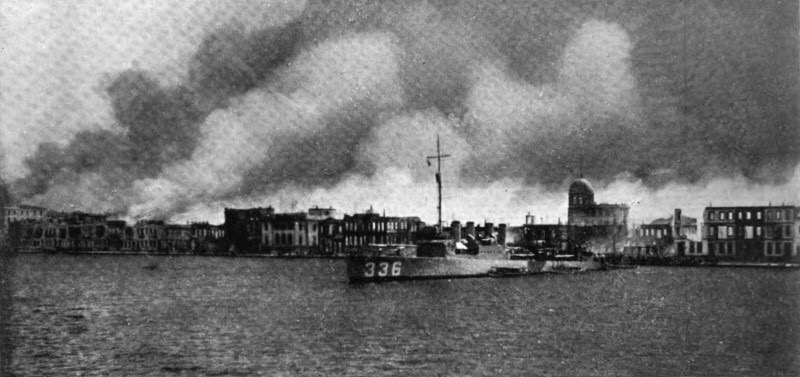
The Great Fire of Smyrna, that drove the Greek population into the sea.

Tension is running high between Greece and Turkey. The cause? Turkish Chief of the General Staff Gen. Hulusi Akar paid a visit to Imia, a pair of two small, uninhabited Greek islets in the Aegean Sea, on January 29. He was accompanied by the commanders of the Turkish land, naval and air forces.

Imia – which Turkey calls “Kardak” – was a subject of yet another crisis in 1996 that brought Greece and Turkey to the brink of war. Although armed conflict was ultimately averted, Turkey still claims that the islands are Turkish, even though the islands in the Aegean are historically and legally Greek.

Greek President Prokopios Pavlopoulos and Deputy Foreign Minister Ioannis Amanatidis have criticized Akar’s recent visit to the Greek island, describing it as a “serious violation” and a “show for Turkey’s domestic audience.”

Since then, Turkish government officials and politicians have continued to bring the issue of Kardak to the attention of the Turkish public in a tone that calls on Greece to “know its place.” 

The latest Turkish political leader who offered his opinions on the issue was Devlet Bahçeli, chairman of Turkey’s Nationalist Movement Party, the third-largest party in Turkey’s parliament.

“If the Greeks want to fall in the sea again, the Turkish nation is ready,” Bahceli said in his parliamentary speech on February 28.

Bahceli was referring to incidents that occurred in September 1922, when the armed forces of Greece – together with Christian residents of the city of Smyrna, on the Aegean shore in Ottoman Turkey – were literally thrown into the sea by Turkish forces. The current Turkish name of that city is Izmir.

Smyrna: A Historical Background

Christians in Turkey and the rest of the Middle East are often thought of as immigrants or communities that have always been minorities in the region. But nothing could be further from the truth.

Asia Minor and Smyrna have enormous importance for Christianity. The Metropolis of Smyrna, an ecclesiastical territory (diocese) of the Ecumenical Patriarchate of Constantinople, retained its ecclesiastical autonomy until 1922. Smyrna was also one of the Seven Churches spoken of by St. John in the biblical book of Revelation. Janene Keeth, a scholar of Christian education, wrote that “Smyrna has been described as the most beautiful of the seven cities. Presumably, this church was founded during Paul’s ministry in Ephesus (Acts 19:10).”

Greek culture has never been some foreign way of life in Anatolia. On the contrary, the region was predominantly Greek before Turkic people began to invade it in the 11th century.

According to the International Dictionary of Historic Places: Southern Europe, ancient Greeks were the ones “who raised Smyrna to heights of power and glory in the seventh century B.C. Smyrna passed into the hands of the Christianized, Greek-speaking Byzantine realm following the formal division of the Roman Empire.”

Smyrna was ruled by Christians for centuries. The Eastern Roman (or Byzantine) Empire fought fierce defense wars against Arabic, Seljuk and Ottoman Islamic armies. Riding from the steppes of Central Asia, the Seljuk Turks targeted Asia Minor by combining their long-held “tradition of invasion” with newfound Islamic zeal. The Islamic invasion of Asia Minor was completed by the Ottomans.

During the Middle Ages, Smyrna was the scene of many struggles, the fiercest of which was directed by Timur against the Christians. Timur – historically known as Tamerlane – a Turco-Mongol conqueror, stormed and sacked Smyrna in 1402 (then held by the Knights of St. John, who had recaptured it from the Ottoman Turks in 1344). A mass beheading was carried out in Smyrna by Timur’s soldiers. The city was then captured by the Ottomans in 1424.

The 1922 Great Fire of Smyrna

The events surrounding the Greek landing at Smyrna in 1919 and the great fire in the city in 1922 could be better understood if analyzed as part of the systematic campaign against Christians by Ottoman Turkey.

During World War I, the decaying Ottoman Empire adopted a policy that many scholars have called “the forced Turkification of Asia Minor.” Author George Makredes described the period as follows:

Imagine a life where it’s a crime to celebrate or reveal your ethnic heritage; where the law requires you to abandon your ways and culture and meld invisibly into one indistinguishable mass with the majority, or suffer the consequences. And woe to anyone caught reading, speaking, dressing as, or playing music of another culture.

Welcome to Asia Minor during the early part of the 20th century. It was during this grim period when over 1.5 million Armenians were systematically exterminated. Whether you were an Armenian man, woman or infant, you were fair game to be cut down on sight, per order of the state. Unarmed and powerless, Greeks witnessed this horror, terrorized with the fear that they were next.

What they feared soon became a reality.

Greeks also fell victim to the same Ottoman campaign of systematic extermination of Christians before, during and after World War I (1914–1923). According to the Greek Genocide Research Center, atrocities against Greek people during that period “included massacres, forced deportations and death marches, summary expulsions, boycotts, rape, forced conversion to Islam, conscription into labor battalions, arbitrary executions, and destruction of Christian Orthodox cultural, historical and religious monuments.”

At the end of World War I and with the Armistice of Mudros that ended the Ottoman front in the war, the allies launched a series of peace talks that focused on the future of the Ottoman Empire. According to James Marketos, an American Hellenic Institute board member,

By 1919, the allied winners of World War I – England, France, Italy and the U.S. – were still arguing over how to divide up the defunct Ottoman Empire, which had sided with Germany. In May that year, the Greek army was permitted to land at Smyrna and establish an administrative zone.

Scholars Evangelia Boubougiatzi, Ifigenia Vamvakidou and Argyris Kyridis write in Greeks’ Identities in Smyrna, 19th – 20th Century Local and Global Parameters that “In that society, Greeks had the dominant position, both in a demographic and economic level.” Smyrna was also one of the centers of Greek enlightenment culture, with several schools erected, such as the Evangelical School and the Philological Gymnasium.

“From ancient times, and through the Roman, Byzantine and Ottoman ages, the city remained essentially Greek,” Marketos said. “The later centuries saw the advent of Armenian, Turkish, Jewish, European and American influences, but through it all, the predominant spirit remained Greek.”

But this ended when Turkish military forces attempted to take back Smyrna from Greek administration on September 9, 1922.The military attacks against the Greeks and Armenians of Smyrna began with looting, rape and murder.
Marketos wrote,

They started in the Armenian quarter and then spread through the Greek portion of the city. This drove even more people to the narrow seafront. Then, on September 13, a fire started in the Armenian part of the city. A strong breeze blew the fire away from the Turkish quarter and quickly spread it to the rest of the city, driving still more horrified thousands of Greeks and Armenians to the harbor where they were now trapped between the raging flames at their backs and the harbor in front. And still the Allied warships watched as the refugees on the seafront were subjected to unspeakable atrocities by Turkish soldiers and residents.

After four days, the fire burned itself out. Beautiful Smyrna lay in ruins. Thousands of Greeks and Armenians had perished, either in the fire, or through slaughter in one form or another, or through simple exposure. Hundreds of thousands of others were eventually evacuated. But either way, the 20th century’s first holocaust effectively ended the Christian presence in Asia Minor.

And all the while, Allied warships, pledged to neutrality, watched from their anchorages as an immense humanitarian tragedy rapidly unfolded a few hundred yards away.

Sadly, this dark page of history remains mostly forgotten or ignored. Only a handful of scholars have shed light on and exposed the persecution of Christians in Smyrna in 1922. One is Lou Ureneck, Boston University professor and journalist, who penned The Great Fire: One American’s Mission to Rescue Victims of the 20th Century’s First Genocide. In it, he described the harrowing story of an American Methodist minister – Asa Kent Jennings – and an American naval officer – Arthur J. Hepburn – who helped rescue more than 250,000 Christian refugees during the burning of Smyrna by Turkish forces.

“A half a million people, packed into a narrow strip of pavement, maybe a mile and a half, two miles long, as a giant fire comes at them, basically pushing them into the sea,” Ureneck said in an interview with the Bostonia magazine. “And many of them did jump into the sea, either trying to swim to ships, or committing suicide, or their clothes and packages had caught on fire.”

Turkish soldiers burned and plundered Smyrna’s Christian neighborhoods, murdering defenseless residents. According to the statistics of the church, of the 459 bishops, metropolitans and clergy of Smyrna, some 347 were murdered in an atrocities manner. Scholar Speros Vryonis reported that among them was Chrysostomos, the last metropolitan of Smyrna.

Men, women and children – none were spared. Turkish soldiers forced Greek men to join labor battalions. Some were sent on death marches to the interior. The “lucky” ones were able to flee their homes in the city to seek shelter in Greece and other states.

Ureneck wrote,

This was no ordinary city fire. Huge even by the standards of history’s giant fires, it would reduce to ashes the richest and most cosmopolitan city in the Ottoman Empire. The fire would ultimately claim an even more infamous distinction. It was the last violent episode in a 10-year holocaust that had killed 3 million people – Armenians, Greeks and Assyrians, all Christian minorities – on the Turkish subcontinent between 1912 and 1922.

Before it burned itself out, the fire would destroy 13,100 buildings – homes, hospitals, school, warehouses, businesses, churches and factories – and cause $250 million in damage, billions of dollars in today’s terms. Only the Turkish and small Jewish quarters of the city and a few patches at the perimeter would remain unburned. The number of dead would never be firmly established, though some would place it on this night in the tens of thousands.

Due to the persecution of the Christians, Anatolia was almost completely cleansed of its Christian population by the time the Turkish republic was founded in 1923.

Journalist Ioanna Zikakou wrote that “the great fire of Smyrna was the peak of the Asia Minor catastrophe, bringing an end to the 3,000-year Greek presence on Anatolia’s Aegean shore and shifting the population ratio between Muslims and non-Muslims.”

But discrimination against the tiny minorities of Greeks, Armenians, Assyrians/Syriacs and Jews who remained has continued up until the present day.

In addition, the Turkish government has been trying to cover up its role in the fire and the slaughter of Greek and Armenian Christians. For decades, the Turkish official state ideology has glorified September 1922. “We have buried the Greeks in the sea” is a common and proudly used expression in Turkey.

“If they [the Greeks] want to fall into the sea again – if they feel like being chased after again – they are welcome. The Turkish nation is ready and has the faith to do it again. Someone must explain to the Greek government what happened in 1921 and 1922. If there is no one to explain it to them, we know how to stick like a bullet on the Aegean, rain from the sky like a blessed victory, and teach history to the couriers of ahl al-salib [the people of the cross] all over again,” the MHP leader, Bahceli, said in his parliamentary speech.

Even 95 years after the unspeakable crime committed in Smyrna, many Turks – including state authorities, politicians and academics – not only distort the facts surrounding the fire and other genocidal attacks against Ottoman Christians, but they also take pride in and attempt to justify them. And some openly threaten Greece with a repeat of the atrocities that the Turks perpetrated on hundreds of thousands of innocent people.

Uzay Bulut is is a Turkish journalist and political analyst based in Washington, D.C. This article was first published by the Philos Project, a hub positive Christian engagement in the Middle East. 

How the Ancient Greeks Did Math With Letters, Not Numbers

The ancient Greeks were incredibly talented mathematicians—but they rarely used numbers in their math. Their particular specialty, geometry, dances around actual quantities, focusing on higher-level logic and constant relationships. Even Pythagoras, whose triangles we navigate with easy examples like “3, 4, 5,” or “5, 12, 13,” was way more interested in diagrams than in specific situations.

But the ancient Greeks certainly had numbers. In fact, they had what was in some ways a much more elegant system than the clunky Roman numerals—like I, II, III—that we still occasionally adopt today. Like Roman numerals, their system borrowed letters; like the Arabic numerals we still use, it only needed one symbol for each decimal place.

In the 6th century BCE, the Greek alphabet used 24 letters. To make numbers, the Greeks added three more symbols (accounts differ as to whether these were resurrected older letters or newly designed characters), then doled them out nine at a time to account for the ones, tens, and hundreds columns. Hence:

1–9: Α, Β, Γ, Δ, Ε, [digamma], Ζ, Η, Θ

10–90: Ι, Κ, Λ, Μ, Ν, Ξ, Ο, Π, [qoppa]

100–900: Ρ, Σ, Τ, Υ, Φ, Χ, Ψ, Ω, [sampi]

These were combined to create individual numbers—for example, MA meant 41, and PNE meant 155. After they ran out of alphabet, a small comma-like tail at the lower left of a letter between Α and Θ signified thousands—so ,BTKZ meant 2327. An M with a small letter or set of letters above it stood for tens of thousands and higher. (Confusingly, in this instance the M represented the Greek ancestor of “myriad,” not the number 40.)

All together, that got a Greek up to 99,999,999—a much bigger number than they ever really needed, either for daily life or complex mathematics. They could accommodate fractions, too: A tick mark to the upper right of a number meant one divided by that number, and they developed special symbols for common fractions like 1/2.

Like any system, it had its pros and cons. Using different symbols for different magnitudes tidily got around the Greeks’ lack of a symbol for zero. Where we use 0 as a placeholder in writing numbers of different magnitudes (1 versus 10, for example), they used different symbols entirely—but that meant they needed more symbols. In certain cases, like abbreviation-prone inscriptions, figuring out whether a character was a number or a letter might have taken a second glance, but numerology gave a deeper meaning to letters and words [PDF].

This alphabetic counting system first arose as a local phenomenon on Greek islands in the Aegean during the 6th century BCE, likely adopted from the Egyptians through trade. At about the same time, Pythagoras was revolutionizing math with his theorem just a few islands away, on Samos (although we don’t have any clear evidence he used alphabetic numerals). It was one of many local number systems that varied across the Greek-speaking world and presaged the Roman system of focusing on repeating ones and fives.

Even locally, alphabetic numerals fell out of popularity for about 150 years, only to come rushing back on the scene during the late 4th century BCE—just in time for Archimedes to discover the joy of applied mathematics and for Ptolemy to calculate the latitude of thousands of places.

The timing isn’t a coincidence: the system benefited from Alexander the Great’s contemporary imperial conquests. Greek-speaking territories were suddenly more politically unified than ever before, and using similar but not quite identical systems across the land was simply not going to work. 

The alphabetic system shone in comparison because it didn’t cause miscommunication, and that geographic mobility gave it domination over the other systems. It also gave it staying power: the system remained in use in Greek texts and Greek-speaking territories—even as the Roman numerals still seen today were born—into the 15th century CE, when Greek letters finally lost out to Arabic numerals.

Arabic numerals aren’t going anywhere, but if you’re a little bored with balancing your checkbook or tallying your fantasy baseball score with twos, sevens, and fives, brush off those Bs and Zs and imagine yourself in ancient Greece. 

An Encounter with the Greeks of Chile

There has been a community of Greeks in Chile since the sixteenth century. According to official figures there are between 90,000 and 120,000 Chileans of Greek origin.[citation needed] Most reside either in the Santiago area or in the Antofagasta area.

The first immigrants arrived during the sixteenth century from Crete, so named “Candia” in honor of the island’s capital, the current Heraklion. The surname, although at present, is very disconnected from its ancient origins. 

The majority of Greek immigrants arrived in Chile at the beginning of century, some as part of their spirit of adventure and escape from the rigors of the World War and the catastrophe of Smyrna in Asia Minor, although many Greeks had already settled in Antofagasta, including crews of the ships commanded by Arturo Prat for the Pacific War (1879–1883) in naval battle of Iquique (boatswain Constantine Micalvi).

Amid this flood of foreigners who populated northern Chilean appeared the Greeks. There were numerous Collectivité Hellenic whose records were listed in two sources. 

One of these was the extensive collaboration that gave the Chilean press through its pages in the newspaper El Mercurio. The other end of the fire under the rubble of the first home that housed the proto-Hellenes of Chile.

According to El Mercurio of Antofagasta, between the years 1920 and 1935 there were about 4,000 Greeks in the city and other 3,000 in saltpeter offices.

In 1926 the first women’s association for excellence, filóptoxos (friends of the poor) which was chaired by Xrisí Almallotis. Since then to date there have been about four or five generations of descendants of Greeks. 

Some have moved south and are grouped mainly in Santiago and Valparaíso. Others returned to the motherland after the first war but most of the immigrants stayed in their new country and founded numerous Greek-Chilean families.

The main member of this community the employer is Don Constantino Kochifas Carcamo, owner of the ships Skorpios at Cruceros Skorpios in Puerto Montt.

Antofagasta is a community in Latin America established in 1890, notable for a town anniversary on the 14th of February, in which foreign communities present a stand. Many of the original families moved to Santiago and Valparaíso, however there are still an estimated seventy current residents who were born in Greece.

 Notable people

Mónica de Calixto, TV journalist.

Giakumis Kodogiannis, footballer.

Uranía Haltenhoff Nikiforos, model.

Alexandros Jusakos, public figure.

Constantino Kochifas, public figure.

Miguel Littín Cucumides, film director and writer.

Demetrio Marinakis, public figure.

Diana Massis, political.

Patricio Mekis Spikin, public figure.

Federico Mekis, political.

Gabriel Orphanopoulos Barker, Sportsmanship.

Arístides Progulakis, TV journalist.

Stavros Mosjos, CNN journalist and radio host.

Víctor Tevah Tellias, public figure.

Leonor Varela, actress.

Alex Zisis, actor.

A Eulogy for Dawson, New Mexico Where Greek Miners Worked and Died

Rubble is all that marks what was once Dawson, NM. As such, there is too little there to even call it a “ghost town.” Yet, what does remain aside from the odd mound of debris is the town’s cemetery, known both as Dawson Cemetery and Evergreen Cemetery.

Two terrible events led to the cemetery, not the town, being listed in 1992 on the National Register of Historical Places. Today, the Dawson Cemetery can be found at (approximately) four miles Northwest of junction US 64 and Dawson Road. The Dawson Cemetery is as much a part of Greek-American history as it is American labor movement or the history of New Mexico.

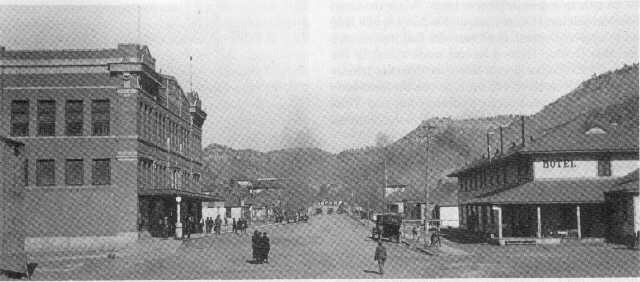
By 1869, coal had been discovered on the land that would become Dawson. After a series of owners, the Phelps-Dodge Corporation (PD) bought the area’s mines in 1906. To its credit, PD spared no expense in their efforts to make Dawson a model mining community. In time “the company built spacious homes for its miners, supplied with water from the company’s water system. They also built a four-story brick building which housed PD’s Mercantile Department Store, which sold virtually anything the townfolk might need: food, clothing, shoes, hardware, furniture, drugs, jewelry, baked goods and ice from its own plant.

A modern hospital was built which maintained a staff of five doctors and was complete with a laboratory, surgery, and X-ray equipment. For leisure, the miners enjoyed the use of the company-built movie theater, swimming pool, bowling alley, baseball park, pool hall, golf course, lodge hall, and even an opera house. PD also supported two churches, one Catholic and one Protestant.

Children attended either the Central Elementary School in Downtown Dawson or the Douglas Elementary School on Captain Hill. A large high school building was built that eventually employed 40 teachers, and their athletic teams won many state championships. The company also built a steam-powered electric plant, which powered not only Dawson, but also the nearby towns of Walsenburg, Colorado, and Raton. Providing good-paying jobs for the residents, the extra features of the company town helped keep the employment stable, and under the new management Dawson’s population grew quickly to 3,500 (legendsofamerica.com).” All seemed well and the town grew into approximately 9,000 residents supporting ten coal mines.

Then, on October 22, 1913, an incorrectly set dynamite charge resulted in an enormous explosion in Stag Canon Mine No. 2 that set a tongue of fire one hundred feet out of the tunnel mouth. It was later determined that the explosion was caused by a dynamite charge set off while the mine was in general operation, igniting coal dust in the mine. This was in violation of mining safety laws. Rescue efforts were well-organized and exhaustive, but only a few miners could be rescued. Two hundred and sixty three died in the second-worst mining disaster in American history. Only the December 6, 1907, Monongah Mining disaster was worse. In that underground explosion, 362 workers were killed in a in a Monongah, WV mine.

Of the Dawson 1913 catastrophe worker casualties tolled, 146 were Italians, 35 Greeks, and two rescuers. Despite the fact that they were specially equipped ‘helmet-men’ outfitted with airtanks during their rescue effort James Lurdi and William Poisa inexplicably died. The 35 identified dead Greek miners were: Amargiotu, John; Anastasakis, John; Andres, John; Andres, Pavlo; Andrios, Thelfno; Anezakis, Milos; Anezakis, Stilen; Arkotas, Nick; Bouzakis, Nick; Castenagus, Magus; Colonintres, John; Cotrules, George; Cotrules, Mak; Fanarakis, Michael; Gelas, George; Iconome, Demetrius; Katis, Gust; Ladis, Vassilias; Lopakis, Magus; Magglis, Vassos; Makris, Cost; Makris, George; Michelei, Agostino; Mifinigan, Tones; Minotatis, Emm; Nicolocci, Nick; Papas, Cost; Papas, Nakis; Papas, Strat; Paperi, Mike; Parashas, Manon; Pino, Kros; Sexot, John; Stavakis, Polikronis and Vidalakis, Antonios.

The Phelps-Dodge Corporation paid for all funeral costs for all the victims. In addition the company gave each widow $1,000 dead benefit and $200 to each child.

Given the technological advancements of the 1913-era a Pathe newsreel of the Dawson disaster toured the nation. A 17-minute silent film held by the Prelinger Archives on the Dawson disaster can be seen on YouTube. It is difficult to assess the Prelinger footage, since it seems to be the victim of an array of editorial cuttings. Sources suggest that this newsreel may in fact be a reenactment. It seems likely, then, that the helmeted mine rescue units, seen so prominently in this newsreel, arrived several days after the actual disaster (Salt Lake Tribune October 25, 1913).

Then, on February 8, 1923, yet another explosive disaster struck the Dawson mines in which 123 men died. At the time of that disaster, women who had run in 1913 to the mines to see about their husbands’ safety in 1923 ran to learn of their sons’ safety. From 1880 to 1910, mine accidents claimed thousands of fatalities all across the United States. Annual mining deaths had numbered more than 1,000 a year, during the early part of the 20th century. In addition to deaths, many thousands more miners were injured (an average of 21,351 injuries per year between 1991 and 1999). For the 1923 The Dawson Cemetery Inscriptions and Other Vital Records I can only find the following Greek individuals identified Nick Arvas; Evangelos P. Chiboukis, Evangelos P.; Scopelitis, Criss; Scopelitis; and Paul Stamos among the dead (chuckspeed.com/Dawson_Association/Dawson_Cemetery.pdf).

As anyone visiting can see, prominent in the center of the Dawson Cemetery is a large section of white trefoil crosses composed solely of the collective graves of miners killed both in 1913 and 1923. With so many miners coming from other countries, these tragedies were truly international incidents. In recognition of the importance of this overall site, the cemetery has been placed on the National Register of Historic Places.

In 2013, Greeks in New Mexico observed the “100 Year Anniversary Day of Remembrance” for all who perished in the mine explosions in Dawson. A coalition from Albuquerque St George Greek Orthodox Church and St Elias the Prophet of Santa Fe held memorial services first at the individual churches and then graveside services at the Dawson Cemetery. Greek-American event organizers such as Georgia Maryol and Nicolette Psyllas-Panagopoulos sought to alert the general New Mexican public about this day of observance to much success. Other events included the October 20th commemorative observance at the Raton Museum shared by historians and miner’s descendants.

Then, in 2014, the YouTube video “The Dawson Mines – 100 Years” was aired. The focus of that documentary is on the six Greek miners who died in the tragedy who were all from the village of Volada on the island of Karpathos: Vasilios Manglis, Polihronis Stavrakis, Alex Kritikos, Costas Makris, George Makris, Vasilios Ladis. Ladis had arrived in Dawson only two weeks before the 1913 disaster. This film was produced for the Pan-Karpathian Foundation’s 2014 annual ‘Mnimosino’ memorial service.

Clearly, the Dawson Cemetery is a part of Greek-American history as well as the American labor movement. Therefore, the Dawson Cemetery historical marker must be added to the ever growing list of Greek-American monuments and historic sites.

It is exactly in this manner that we are collectively creating a Greek-American Historical Commons, one location, one person, one event at a time.

Source: Thenationalherald

This 3,500-Year-Old Greek Tomb Upended What We Thought We Knew About the Roots of Western Civilization

The recent discovery of the grave of an ancient soldier is challenging accepted wisdom among archaeologists

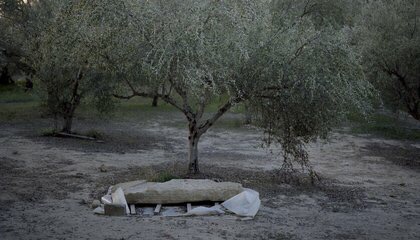
The warrior was buried in an olive grove outside the acropolis of Pylos. Though archaeologist Carl Blegen explored the olive grove in the 1960s, he did not find anything. (Myrto Papadopoulos)

They had been digging for days, shaded from the Greek sun by a square of green tarpaulin slung between olive trees. The archaeologists used picks to break the cream-colored clay, baked as hard as rock, until what began as a cluster of stones just visible in the dirt became four walls in a neat rectangle, sinking down into the earth. Little more than the occasional animal bone, however, came from the soil itself. On the morning of May 28, 2015, the sun gave way to an unseasonable drizzle. The pair digging that day, Flint Dibble and Alison Fields, waited for the rain to clear, then stepped down into their meter-deep hole and got to work. Dibble looked at Fields. “It’s got to be soon,” he said.

The season had not started well. The archaeologists were part of a group of close to three dozen researchers digging near the ancient Palace of Nestor, on a hilltop near Pylos on the southwest coast of Greece. The palace was built in the Bronze Age by the Mycenaeans—the heroes described in Homer’s epic poems—and was first excavated in the 1930s. The dig’s leaders, Jack Davis and Sharon Stocker, husband-and-wife archaeologists from the University of Cincinnati, in Ohio, had hoped to excavate in a currant field just downslope from the palace, but Greek bureaucracy and a lawyers’ strike kept them from obtaining the necessary permits. So they settled, disappointed, on a neighboring olive grove. They cleared the land of weeds and snakes and selected a few spots to investigate, including three stones that appeared to form a corner. As the trench around the stones sank deeper, the researchers allowed themselves to grow eager: The shaft’s dimensions, two meters by one meter, suggested a grave, and Mycenaean burials are famous for their breathtakingly rich contents, able to reveal volumes about the culture that produced them. Still, there was no proof that this structure was even ancient, the archaeologists reminded themselves, and it might simply be a small cellar or shed.

Dibble was clearing earth from around a large stone slab when his pick hit something hard and the monotony of the clay was broken by a vivid flash of green: bronze.

The pair immediately put down their picks, and after placing an excited call to Davis and Stocker they began to carefully sweep up the soil and dust. They knew they were standing atop something substantial, but even then they did not imagine just how rich the discovery would turn out to be.“It was amazing,” says Stocker, a small woman in her 50s with dangling earrings and blue-gray eyes. “People had been walking across this field for three-and-a-half-thousand years.”

Over the next six months, the archaeologists uncovered bronze basins, weapons and armor, but also a tumble of even more precious items, including gold and silver cups; hundreds of beads made of carnelian, amethyst, amber and gold; more than 50 stone seals intricately carved with goddesses, lions and bulls; and four stunning gold rings. This was indeed an ancient grave, among the most spectacular archaeological discoveries in Greece in more than half a century—and the researchers were the first to open it since the day it was filled in.

“It’s incredible luck,” says John Bennet, director of the British School at Athens. “The fact that it hadn’t been discovered before now is astonishing.” The spectacular find of priceless treasures made headlines around the globe, but what really intrigues scholars, says Stocker, is the “bigger world picture.” The very first organized Greek society belonged to the Mycenaeans, whose kingdoms exploded out of nowhere on the Greek mainland around 1600 B.C. Although they disappeared equally dramatically a few hundred years later, giving way to several centuries known as the Greek Dark Ages, before the rise of “classical” Greece, the Mycenaeans sowed the seeds of our common traditions, including art and architecture, language, philosophy and literature, even democracy and religion. “This was a crucial time in the development of what would become Western civilization,” Stocker says.

Yet remarkably little is known of the beginnings of Mycenaean culture. The Pylos grave, with its wealth of undisturbed burial objects and, at its bottom, a largely intact skeleton, offers a nearly unprecedented window into this time—and what it reveals is calling into question our most basic ideas about the roots of Western civilization.


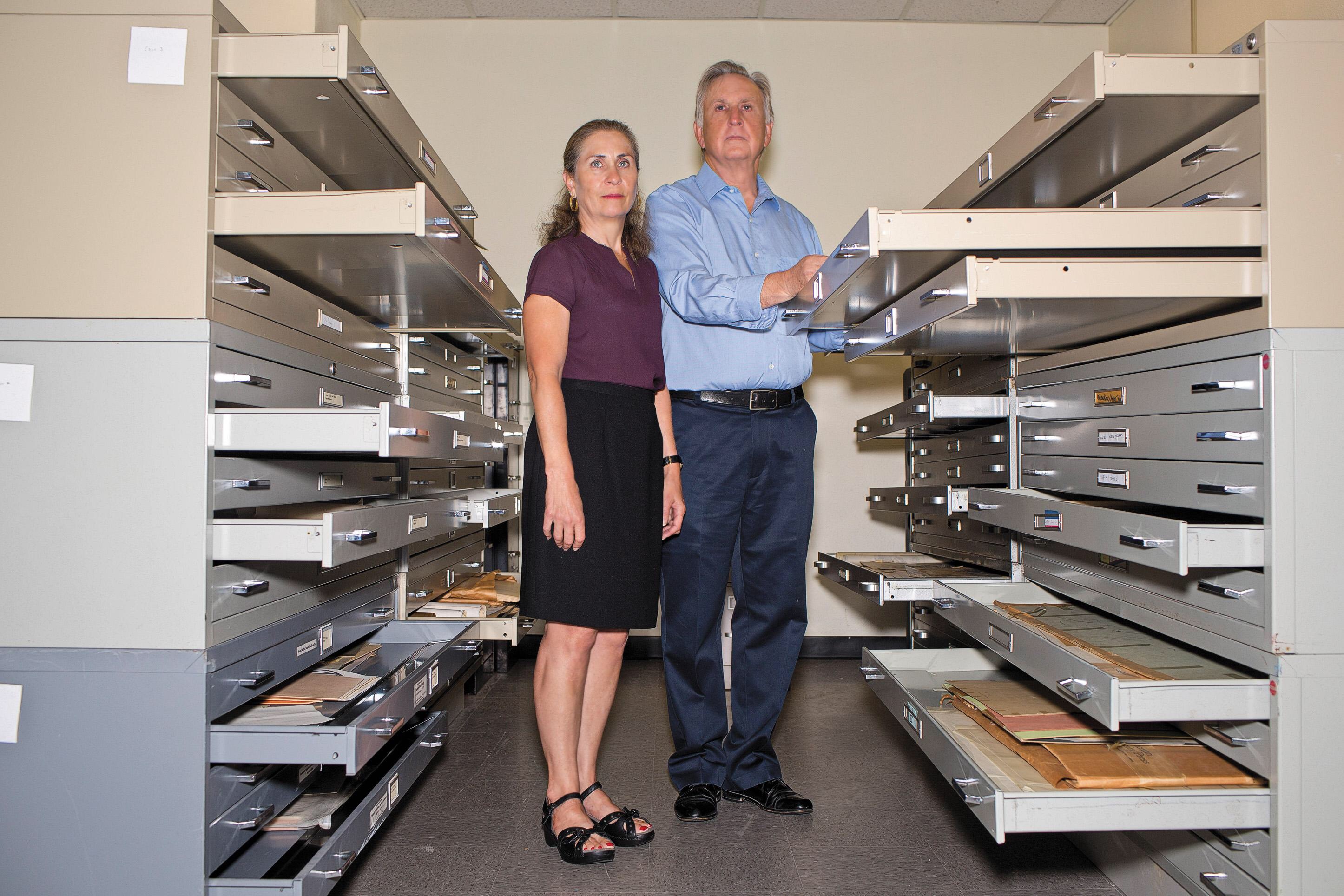
Jack Davis and Sharon Stocker, husband-and-wife archaeologists from the University of Cincinnati, discovered the warrior’s grave. (Andrew Spear)

In The Iliad, Homer tells of how Agamemnon, king of Mycenae, led a fleet of a thousand ships to besiege the city of Troy. Classical Greeks (and Romans, who traced their heritage to the Trojan hero Aeneas) accepted the stories in The Iliad and The Odyssey as a part of their national histories, but in later centuries scholars insisted that the epic battles fought between the Trojan and Mycenaean kingdoms were nothing more than myth and romantic fantasy. Before the eighth century B.C., archaeologists argued, societies on the Greek mainland were scattered and disorganized.

At the end of the 19th century, a German-born businessman named Heinrich Schliemann was determined to prove otherwise. He used clues in Homer’s epic poems to locate the remains of Troy, buried in a hillside at Hissarlik in Turkey. He then turned his attention to the Greek mainland, hoping to find the palace of Agamemnon. Near the ruins of the great walls at Mycenae, in the Argolid Peninsula, Schliemann found a circle of graves containing the remains of 19 men, women and children, all dripping with gold and other riches. He hadn’t found Agamemnon—the graves, nearly 3,500 years old, dated to several centuries before the battles of Troy—but he had unearthed a great, lost civilization, which he called the Mycenaean, after the sovereign city of the powerful mythic king.

Homer describes other palaces, too, notably that of King Nestor, at Pylos. The Iliad says Nestor contributed 90 ships to Agamemnon’s fleet, second only to the great leader himself. Schliemann searched in vain for Nestor’s palace; in modern Pylos, a sleepy coastal town in the southwest Peloponnese, there was no hint of ancient architecture, unlike at Mycenae. But in the 1920s, a landowner noticed old stone blocks near the summit of a hill near Pylos, and Konstantinos Kourouniotis, director of the National Archaeological Museum in Athens, invited his friend and collaborator Carl Blegen, of the University of Cincinnati, to investigate.

Blegen began excavations in April 1939. On his very first day, he uncovered a hoard of clay tablets, filled with an unreadable script known as Linear B, which had also been found on Crete, the largest of the Aegean islands. He had dug straight into the archive room of King Nestor’s palace. After World War II, Blegen went on to discover a grid of rooms and courtyards that rivals Mycenae in size and is now the best-preserved Bronze Age palace on the Greek mainland, not to mention a significant tourist attraction.

Today, Blegen’s work at Pylos is continued by Stocker and Davis (his official title is the Carl W. Blegen professor of Greek archaeology). Davis walks with me to the hilltop, and we pause to enjoy the gorgeous view of olive groves and cypress trees rolling down to a jewel-blue sea. Davis has white-blond hair, freckles and a dry sense of humor, and he is steeped in the history of the place: Alongside Stocker, he has been working in this area for 25 years. As we look out to sea, he points out the island of Sphacteria, where the Athenians beat the Spartans during a fifth-century B.C. battle of the Peloponnesian War.

Behind us, Nestor’s palace is surrounded by flowering oleander trees and is covered with an impressive new metal roof, completed just in time for the site’s reopening to the public in June 2016 after a three-year, multimillion-euro restoration. The roof’s graceful white curves protect the ruins from the elements, while a raised walkway allows visitors to admire the floor plan. The stone walls of the palace now rise just a meter from the ground, but it was originally a vast two-story complex, built around 1450 B.C., that covered more than 15,000 square feet and was visible for miles. Visitors would have passed through an open courtyard into a large throne room, Davis explains, with a central hearth for offerings and decorated with elaborately painted scenes including lions, griffins and a bard playing a lyre.

The Linear B tablets found by Blegen, deciphered in the 1950s, revealed that the palace was an administrative center that supported more than 50,000 people in an area covering all of modern-day Messenia in western Greece. Davis points out storerooms and pantries in which thousands of unused ceramic wine cups were found, as well as workshops for the production of leather and perfumed oils.

Echoes of Homer are everywhere. In The Odyssey, when Odysseus’ son Telemachus visits Pylos, he finds the inhabitants on the shore sacrificing bulls to the god Poseidon, before traveling to the palace to receive a bath from one of Nestor’s daughters. Tablets and animal bones that Blegen found in the archives room recall a feast in which 11 cattle were sacrificed to Poseidon, while on the other side of the building is a perfectly preserved terra-cotta bathtub, its interior painted with a repeating spiral motif.

Source: smithsonianmag

THE WORLD’S 50 BEST RESTAURANTS


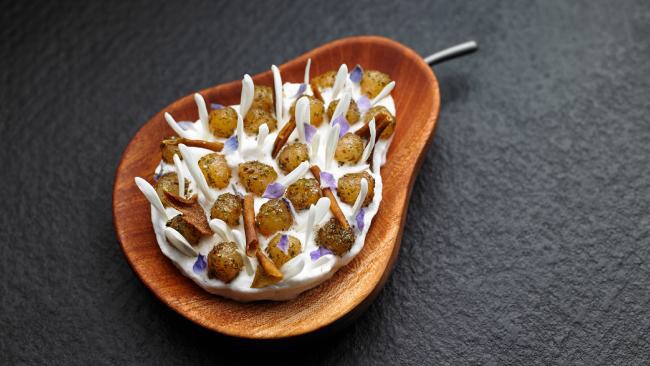
The pears and maidenii dish at Melbourne’s Attica restaurant, which has made the World’s 50 Best Restaurants list.


50 Hof Van Cleve, Kruishoutem, Belgium RE-ENTRY
49. Tegui, Buenos Aires, Argentina NEW ENTRY
48. Restaurant Tim Raue, Berlin, Germany
47. Vendôme, Bergisch Gladbach, Germany
46. L’Astrance, Paris, France RE-ENTRY
45. Den, Tokyo, Japan NEW ENTRY
44. Brae, Birregurra, Australia NEW ENTRY
43. Reale, Castel Di Sangro, Italy NEW ENTRY
42. Boragó, Santiago, Chile
41. Ultraviolet by Paul Pairet, Shanghai, China
40. Cosme, New York, USA NEW ENTRY
39. Relae, Copenhagen, Denmark
38. Azurmendi, Larrabetzu, Spain
37. Saison, San Francisco, USA
36. Dinner By Heston Blumenthal, London, UK
35. Septime, Paris, France
34. De Librije, Zwolle, Netherlands
33. Astrid y Gastón, Lima, Peru
32 Attica, Melbourne, Australia
31. Alléno Paris au Pavillon Ledoyen, Paris, France NEW ENTRY
30. Arzak, San Sebastian, Spain
29. Le Calandre, Rubano, Italy
28. Nahm, Bangkok, Thailand
27. The Ledbury, London, UK
26. The Clove Club, London, UK
25. Tickets, Barcelona, Spain
24. Amber, Hong Kong, China
23. White Rabbit, Moscow, Russia
22. Quintonil, Mexico City, Mexico
21. Alinea, Chicago, USA
20. Pujol, Mexico City, Mexico
19. Geranium, Copenhagen, Denmark
18. Narisawa, Tokyo, Japan
17. Le Bernardin, New York, USA
16. D.O.M., São Paulo, Brazil
15. Piazza Duomo, Alba, Italy
14. Restaurant André, Singapore
13. Alain Ducasse au Plaza Athénée, Paris, France RE-ENTRY
12. Arpège, Paris, France
11. Blue Hill at Stone Barns, New York, USA
10. Steirereck, Vienna, Austria
9. Mugaritz, San Sebastian, Spain
8. Maido, Lima, Peru
7. Gaggan, Bangkok, Thailand
6. Asador Etxebarri, Axpe, Spain
5. Central, Lima, Peru
4. Mirazur, Menton, France
3. El Celler de Can Roca, Girona, Spain
2. Osteria Francescana, Modena, Italy
1. Eleven Madison Park, New York, USA

Open Seminar: Metaphors for Political Power from the Sumerian to the Seleucids

PRESS RELEASE ​​                           

28/3/2017

Greek History and Culture Seminars

In the Garden of Gods: Metaphors for Political Power from the Sumerian to the Seleucedes

Eva Anagnostou-Laoutides, senior lecturer in Classical Studies at Monash, will present a lecture entitled “In the Garden of Gods: Metaphors for Political Power from the Sumerian to the Seleucedes”, at the Ithacan Philanthropic Society, on Thursday 6 April 2017 at 7:00pm, as a part of the Greek History and Culture Seminars offered by the Greek Community of Melbourne.

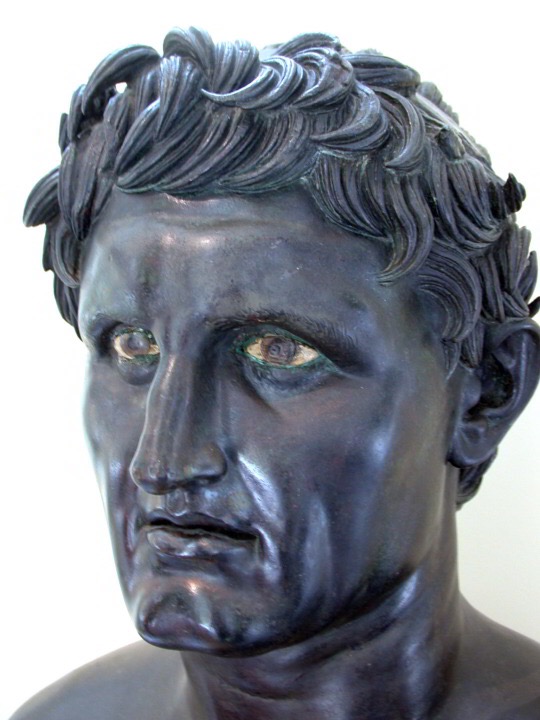
“My presentation, drawing on chapter four of my recent book In the Garden of the Gods, discusses the appropriation of eastern cults by Seleucus I Nicator and his son Antiochus in their struggle to establish their dynasty,” says Ms Anagnostou-Laoutides. “I examine the roles of Zeus and Apollo, the foremost divine protectors of the Seleucids, against near eastern royal traditions. I argue that the founding members of the dynasty had an intimate knowledge of Babylonian traditions that celebrated Šamaš, the Sun god, as protector of royal legitimacy and Marduk as warrantor of military supremacy and that they employed these traditions meticulously to promote their claim to kingship.”

By encouraging the identification of Marduk and Nabû with Zeus and Apollo respectively, Seleucus and Antiochus mirrored the father-son relationship of the gods.

She will also examines the importance of royal gardens under the Seleucids in connection with “sacred marriage” and akītu (New Year) ceremonies which the Hellenistic kings embraced enthusiastically.    

Eva Anagnostou-Laoutides holds degrees in Classical Studies from Aristotle University, the University of Leeds and the University of Kent at Canterbury as well as in Ancient History from Macquarie University. She has published extensively on various aspects of ancient mythology and religion and their appropriation in ancient political agendas. Her most recent book is In the Garden of the Gods: Models of Kingship from the Sumerians to the Seleucids (London and New York: Routledge, 2017). Recently she was awarded an ARC Future Fellowship on a project that examines Platonic inebriation and its reception in late antiquity and the Middle Ages.  

———————————

When: Thursday, 6 April 2017 at 7.00pm

Where: Ithacan Philanthropic Society (Level 2, 329 Elizabeth Street, Melbourne)

FREE Admission

More info: greekcommunity.com.au/seminars or +61 3 9662 2722

__________________________

More information: 9662 2722

Level 3, 168 Lonsdale St., Melbourne, Vic. 3000

Phone: +61 3 9662 2722, Email: info@greekcommunity.com.au,