ΑΓΓΕΛΟΣ ΑΝΔΡΕΑΤΟΣ «ΤΟ ‘ΧΟΥΜΕ» Κυκλοφορεί από την Kυκλοφορεί από την Noize-spicy

20130409-130206.jpg

Μουσική: Άγγελος Ανδρεάτος
Στίχοι: Γρηγόρης Βαξαβανέλης
Επιμέλεια Παραγωγής: Παναγιώτης Μπρακούλιας

Ο Άγγελος Ανδρεάτος επιστρέφει πιο ανανεωμένος από ποτέ και μας παρουσιάζει την νέα του επιτυχία με τίτλο «Το ‘χουμε»!

Μετά τις ραδιοφωνικές επιτυχίες «Να μας γράφεις», «Νιώσε το ρυθμό», «Να μ’αγαπάς τώρα», «Μείνε εδώ», «Καλοκαίρι και πάλι», «Ομολογουμένως» κ.ά, ο Άγγελος Ανδρεάτος, ένας από τους πολλά υποσχόμενους νέους καλλιτέχνες και με πολλές συνεργασίες με μεγάλους καλλιτέχνες στο ενεργητικό του κερδίζει σταθερά έδαφος στο χώρο του τραγουδιού και για ακόμα μία φορά μας εκπλήσσει ευχάριστα!

«Το ‘χουμε», δεν υπάρχει αυτό που νιώθουμε… μας τραγουδάει και μας ξεσηκώνει με τη νέα του δισκογραφική δουλειά, ένα δυναμικό χορευτικό τραγούδι με ελαφρολαϊκά στοιχεία και πολύ σύγχρονο ήχο που θα κερδίσει και πάλι τις εντυπώσεις!

Ακούστε το τραγούδι εδώ:

ΟFFICIAL FACEBOOK PAGE:
https://www.facebook.com/AggelosAndreatospage

Berlin Owes Greece Billions in WWII Reparations

Source: Spiegel

Details of a Greek report on the amount of World War II reparations still owed by Germany leaked to the press over the weekend.

A top-secret report compiled at the behest of the Finance Ministry in Athens has come to the conclusion that Germany owes Greece billions in World War II reparations. The total could be enough to solve the country’s debt problems, but the Greek government is wary of picking a fight with its paymaster.

The headline on Sunday’s issue of the Greek newspaper To Vima made it clear what is at stake: “What Germany Owes Us,” it read. The article below outlined possible reparations payments Athens might demand from Germany resulting from World War II. A panel of experts, commissioned by the Greek Finance Ministry, spent months working on the report — an 80-page file classified as “top secret.”

Now, though, the first details of the report have been leaked to the public. According to To Vima, the commission arrived at a clear conclusion: “Greece never received any compensation, either for the loans it was forced to provide to Germany or for the damages it suffered during the war.”

The research is based on 761 volumes of archival material, including documents, agreements, court decisions and legal texts. Panagiotis Karakousis, who heads the group of experts, told To Vima that the researchers examined 190,000 pages of documents, which had been scattered across public archives, often stored in sacks thrown in the basements of public buildings.

The newspaper offered no concrete figure regarding the possible extent of reparation demands outlined in the report. But earlier calculations from Greek organizations have set the total owed by Germany at €108 billion for reconstruction of the country’s destroyed infrastructure and a further €54 billion resulting from forced loans paid by Greece to Nazi Germany between 1942 and 1944. The loans were issued by the Bank of Greece and were used to pay for supplies and wages for the German occupation force.

Bad Time to ‘Pick a Fight’

The total sum of €162 billion is the equivalent of almost 80 percent of Greece’s current annual gross domestic product. Were Germany to pay the full amount, it would go a long way toward solving the debt problems faced by Athens. Berlin, however, has shown no willingness to revisit the question of reparations to Greece.

Athens too is wary of moving ahead with the demands. The government sees the report as being particularly sensitive due to the fear that it could damage their relations with Europe’s most important supplier of euro-crisis aid.

The Greek public, however, has a different view. To Vima reflected the feelings of many by arguing that “the historical responsibility now falls on the three-party coalition government. It should publish all the findings and determine its position on this sensitive issue, which has detonated like a bomb at a time we are under extreme pressure from our lenders.”

But political analysts believe that the Greek government is disinclined to raise the issue with Germany. The official government position, most recently expressed by deputy finance minister Christos Staikouras, is that Greece considers the issue open and “reserves the right … to bring it to a satisfactory conclusion.”

The report is no longer in the hands of Finance Ministry officials. It was delivered in early March to Foreign Minister Dimitris Avramopoulous and Prime Minister Antonis Samaras. “It will be a top level, political decision regarding how to use it, and Mr. Samaras will be the one to decide,” a senior government official told SPIEGEL ONLINE. “This is no time to pick a fight with Berlin.”

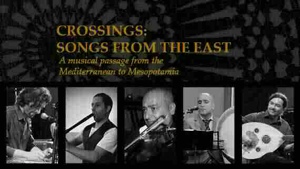
CROSSINGS: SONGS FROM THE EAST – June 2nd 2013 – Sydney Opera House

20130409-112614.jpg

Crossings: Songs from The East is a cross-cultural collaboration presenting traditional and improvised music spanning the Greek, Kurdish, Arabic and Persian traditions. This is an exciting coming together of local Sydney-based musicians from diverse cultural and linguistic backgrounds, drawing both from their own musical heritage and their contemporary experience of multi-cultural Australia. A rich program of song from both the folk and classical traditions of the cultures of the Eastern Mediterranean and Near East regions, taking the audience on a musical passage from the Mediterranean to Mesopotamia.
The five musicians featured, including first-generation Australians of Greek, Kurdish, Iraqi and Persian origin, share a common musical language – a language anchored in centuries old systems but at the same time contemporary and inspiring of innovation. And this is exactly what audiences can expect from Metin Yilmaz, Mustafa Karami, John Robinson, Dimitri Koubaroulis and Imad Rahem on their respective instruments: kaval (wooden flute), daf (frame drum), oud (fretless lute), kanun (plucked lap zither), voice and violin.

Artist Information

Dimitri Koubaroulis – voice and kanun
Dimitri studied Byzantine chant from the age of 9 in Greece, graduating with a Diploma of Byzantine Music in 1998 from the Philippos Nakas Conservatorium of Athens. He migrated to Australia in 2002, where he began his studies in oud and kanun with renowned Turkish-Australian music teacher Sabahattin Akdagcik. He has since founded The Melisma Ensemble, which debuted with a sell-out concert in 2012. He has been invited to perform as a vocalist and instrumentalist by The Greek Festival of Sydney and in various other engagements.

Mustafa Karami – daf and voice
Mustafa began his musical studies at the age of 10 with vocal training. He later began studies in daf and oud. He holds the Iranian award for best daf player, 2005, 2006 and 2007. Mustafa has worked with many musicians in Iran both as a performing and recording artist and has made several appearances on Iranian television and radio. Since migrating to Australia in 2009 he has performed at various festivals and engagements, has taught daf and founded his own musical ensemble, Salmak.

Imad Rahem – violin and voice
Imad graduated from the Institute of Fine Arts, Baghdad, where he later went on to become a teacher of the violin. He held a position in the Iraqi National Symphony Orchestra and performed regularly on Iraqi radio and television and with various renowned Iraqi artists including: Hussein al-Adhamy, Kadim Al Sahir and Naseer Shamma, before arriving in Australia five years ago. He is a very active musician within his local community.

John Robinson – oud
John is a multi-instrumentalist with a deep appreciation of and interest in multi-cultural music. Over the last 12 years he has collaborated with many esteemed artists in Australian music including: Bobby Singh, Bukhchuluun Gangburged, Tunji Beier, Fiona Hawkins, Andy Busuttil, Mara! Llew Kiek, Paul Jarman, The Renaissance Players, and has recorded with Fiona Hawkins, Skorba, Mark Saliba with the Czech Philharmonic Orchestra, and Equus.

Metin Yilmaz – kaval and voice
Metin is a master of the kaval, having studied under Turkish kaval virtuosos: Sinan Celik and Osman Aktas. Of Kurdish origin and born in Turkey, Metin’s experience as a performing and recording artist in Turkey and Europe is extensive. In 2008, he performed with the Bremen Philharmonic Orchestra, Germany, in an opera adaptation of renowned director Fatih Akin’s award-winning film, ‘Gegen Die Wand’ (Head-On). He has also performed alongside internationally renowned Kurdish artists, Sivan Perwer and Aynur Dogan. Since migrating to Australia in 2009 he has performed at events for the Sydney Peace Foundation, Amnesty International, NSW Parliament House, The Rocks Aroma Festival and The Greek Festival of Sydney. He continues to work on various musical projects, recently founding the musical ensemble, Sounds of Mesopotamia.

PRICING INFORMATION
Prices correct at the time of publication and subject to change without notice. Exact prices will be displayed with seat selection.

Early Bird – book before 1 May $40
Standard $55
Insiders $40
*Concession $45
**Group 8+ $42
Booking fee applies per transaction
$8.50 – Contact Centre
$8.50 – Internet
$5.00 – Box Office Counter

PRICING INFORMATION EXPLAINED
PERFORMANCE DATES
Sunday 2 June, 5pm Running Time: Approximately 1 hour and 15 minutes, no interval

Pre-show artist talk by Dimitri Koubaroulis at 4pm – 20 minutes

Science tests for all school students in push to expand NAPLAN

Source: TheAustralian

ALL students will sit national science tests in Years 3, 5, 7 and 9 under an expansion of the literacy and numeracy testing program that bolsters the federal government’s reforms linking school improvement to increased funding.

The National Education Reform Agreement, which will go to the Council of Australian Governments on April 19, includes an expansion of the existing National Assessment Program — Literacy And Numeracy tests to include science from 2015, with online testing available from 2016.