Greece joins Spain and Portugal in protesting austerity measures

Source: SMH

A riot police officer stands in front of burning firebombs in Athens during a 24-hours general strike.Up in flames … burning firebombs form a backdrop to a riot officer during a demonstration in Athens on Wednesday. Photo: AFP

ATHENS: After a period of relative calm, European markets shuddered once again as protests erupted across Greece and demonstrators surrounded the Spanish parliament for a second day to protest against the austerity program of the Prime Minister, Mariano Rajoy.

Greek riot police clashed with hundreds of hooded youths hurling petrol bombs on Wednesday, as tens of thousands of striking workers rallied against a latest round of austerity measures in Athens.

On Tuesday in Spain tens of thousands of demonstrators besieged the parliament over the austerity measures. Last week more than half a million people marched in cities across Portugal to protest against an increase in social security contributions, and a million marched in Barcelona calling for Catalan independence.

The Greek clashes took place after more than 50,000 people marched to parliament demanding the government ignore the latest demands of the country’s creditors for additional cuts to salaries, pensions and benefits. Riot police fired tear-gas and pepper spray against demonstrators who used marble stones and bottles as weapons and set fire to garbage bins and portable kiosks in central Syntagma Square.

One group could be seen setting fire to trees in the National Gardens, causing flames and black smoke to fill the skies above the parliament.

The nationwide strike, called by the country’s two biggest private and public sector unions, is the first such action since the country’s conservative-led coalition government was formed in June.

The 24-hour walkout affected schools, pharmacists, customs workers, ports and government offices. Museums and major archaeological sites turned tourists away. Shops were closed and ferry services suspended. More than a dozen domestic and international flights were cancelled or rescheduled after air traffic controllers called a three-hour stoppage. Petrol stations remained shut for most of the day and hospitals operated on emergency staff as doctors joined the strike.

Among the strikers was Babis Vasiliadis, a hotel chef who was recently left unemployed. He said: ”This is not just about having a decent job and making enough money to feed your family – it is about the right of every citizen to live a decent life.”

Marching nearby, 58-year-old pensioner Stavroula Zervea, said she no longer can survive after her pension was slashed by more than a third. ”I suspect it will only get worse – but the question is how much more tax hikes can the Greek people handle?” she said.

Hours before demonstrators hit the streets, the Prime Minister, Antonis Samaras, and his Finance Minister, Yannis Stournaras, reportedly hammered out a deal on the $15 billion package of spending cuts, along with a further $2.6 billion in taxes, demanded by the country’s international lenders, the European Commission, the European Central Bank and the International Monetary Fund.

The bulk of the cuts will affect wages, pensions and welfare benefits, putting renewed pressure on the country, which is in the fifth year of recession and has seen unemployment soar to more than 24 per cent.

And the World’s Most Educated Country Is..

Source: Times

With spiking tuition costs, insurmountable loan balances, and the unemployment rate for recent college graduates hovering around 53%, it’s clear that a college education hasn’t gotten the best rap lately.

Despite the ongoing financial woes across the globe, though, many think that college is still worth the investment.

A new study shows that we’ve continued to flock to institutions of higher learning, enrolling at record rates over the past few years.

Not surprisingly, the percentage of adults with degrees soared highest in developed nations, reaching 30% in 2010. But which of these nations can boast the status of most educated?

Based on a study conducted by the Organization for Economic Cooperation and Development (OECD), 24/7 Wall St. compiled a list of the 10 countries with the highest proportion of college-educated adult residents. but topping the charts is Canada — the only nation in the world where more than half its residents can proudly hang college degrees up on their walls.

In 2010, 51% of the population had completed a tertiary education, which takes into account both undergraduate and graduate degrees.

Canada commanded the top spot in the last study in 2000, but even still has shown serious improvement.

A decade ago, only 40% of the nation’s population had a college degree.

Snagging the number two most-educated spot was Israel, which trailed Canada by 5%. Japan, the U.S.,

New Zealand and South Korea all ranked with more than 40% of citizens having a higher-education degree.

The top 10 most-educated countries are:

1. Canada

2. Israel

3. Japan

4. United States

5. New Zealand

6. South Korea

7. United Kingdom

8. Finland

9. Australia

10. Ireland

Museum of our innocence

Source: NeosKosmos
By Dean Kalimniou

20120928-113951.jpg

“The power of things inheres in the memories they gather up inside them, and also in the vicissitudes of our imagination, and our memory of this there is no doubt.” Orhan Pamuk

Where do old photographs go when the people they depict and those who remember them are no longer extant? Are they as perishable as the memories they supposedly encapsulate or do they become the memory itself?

In the Museum of Innocence, Nobel Prize winning author Orhan Pamuk examines the concept of memory and its objectification by relating an account of the obsessive love that Kemal, a wealthy businessman, bears for Fusun, a lower class shop girl.

Oblivious to his own selfishness, Kemal first refuses to give up his fiance to be with the love of his life, and then becomes an obsessive collector of the artefacts of his life with her.

This is a relationship that is both lengthy and increasingly bizarre as Kemal objectifies Fusun and becomes a collector intent on satisfying his emotional obsession with his object of desire rather carrying on a healthy human relationship with his beloved.

At the close of the novel, Kemal is founding a museum wherein the artefacts he collected that relate to his beloved will be exhibited.

Here in Melbourne, artefacts attesting to times long forgotten lie, largely forgotten in various unsuspected places. For example, in the file of one of my clients, I once found the cheque book and minute memoranda of one of our more ancient and largely defunct pre-war community organizations.

A cursory glance of such records, inscribed in beautiful copperplate handwriting, do much to illuminate a particularly obscure period in our early communal history.

A particularly avid collector of such artefacts is the indefatigable proprietor of the renowned Greek restaurant Philhellene and astounder of the native populace by the poise of his mustachios, John Rerakis.

The walls of his restaurant are wallpapered with old and rare photographs, gravures and other visual media that allude to times past, not only in Greece but also in Melbourne itself and which provide the patron with a fascinating crash course in contemporary Greek culture.

One of the pictures that adorn his walls is the one featured in this diatribe. It is a picture that John Rerakis was given by stalwart Greek dance teacher Olga Black. It truly is a masterpiece, with light and shadow accentuating the youthfulness, optimism and vitality of its subjects, yet at first glance it appears to be what it is: an old photo of some traditionally clad Greek dancers, something to look up from your meal of lago stifado, to appreciate for a few moments, only to re-commence immersing yourself in the ecstasies of the aforementioned dish. Yet for unsuspecting patrons, a chance glance at such photographs, have the capacity to prove life-changing. Enter Menelaos Stamatopoulos, who, looking up absent-mindedly from his Philhellenic plate of comestibles a few weeks ago, was shocked to arrive at the realization that the smiling and dapper young gent pictured second from the right was a youthful portrayal of his now eighty seven year old progenitor, Odysseus. Moved beyond belief and astounded that he had never seen this photograph of his father before, he arranged a small surprise for him, inviting him to dinner at the restaurant and seating him directly underneath the photograph. When the venerable, hearty but hale octogenarian cast eyes on the photograph and beheld himself in his prime, resplendent in full foustanella, fashionably fastened at the waist, he wept. A few weeks later, I am seated opposite both Menelaos and Odysseus at Philhellene restaurant. With trembling hands, Odysseus lovingly opens an envelope and fingers the black and white photographs that spill out from it. They too, are photographs of a suave and debonair Odysseus, resplendent in full regalia, ensconced among other suitably attired gents and demoiselles, posed in various dancing attitudes. The play of light and shadow causes their outline to be juxtaposed crisply against the background, granting them a nineteen forties movie star aura of glamour. The reason for the fortuitous capturing of these moments in such a skilful manner can be discerned by flipping to the reverse of the photographs. There we see stamped indelibly in purple ink: “Property of the Herald.” “These photographs were taken in 1953,” Odysseus explains. “I had just arrived in Melbourne and was feeling lonely, so I joined the Olympic Dance Group, a way of meeting new people. Of the girls that you see in the photos, at least two are Australian. Back in those days, some of the Australian girls who had married Greek men would learn to dance and perform with us. Other Australian girls had no connection with Greece other than an interest in the country after the War.” This statement, it seemed to me, tended to do much to restore balance to a somewhat one-sided community myth that would have the pre-nineteen sixties broader Australian social context look disparagingly upon migrants and especially their culture to the extent where openly being Greek was socially impermissible. The stereotype of Greek men marrying Australian women who were invariably opposed to manifestations of Greek culture and thus excluded their men-folk from the community also seemed to be in part, contradicted. Such bias apparently did not exist among the smiling young Australian ladies of the photograph who seem less embarrassed to don Greek traditional costume then some of their Greek-Australian counterparts some six decades later. Further belying the myth that Australia was largely not interested in the migrant cultural experience prior to the advent of the official policy of multiculturalism, is the fact that the series of photographs have been taken by mainstream Australian print media. Odysseus takes great pains to point out that the bulk of the performances undertaken by the young dance group were for Australian audiences, with the group even performing publicly at festivals organized to welcome the advent of the 1954 Olympic Games to Melbourne.

It appears that, possibly because of the novelty value, that exhibitions of Greek culture, such as they were, and possibly owing to their novelty and the sympathy Greece elicited in the hearts of many Australian returned servicemen at the time, were much more integrated within the mainstream and captured more interest than many do now, our primary focus being our own entertainment. As I gazed at the photograph and listened to the venerable Odysseus relate fascinating stories of his life, I marvelled at the swiftness of the passage of time. The young man, full of promise, optimism and raw sexual energy is now a mellow yet sprightly grandfather. Many of the smiling youths of the photograph are no longer with us and when the last of them go, one of the fading reminders of their brief sojourn on this earth will be a photograph on the wall of a restaurant, interesting, evocative but largely incomprehensible to those who have not yet embraced oblivion. As Odysseus talks, I notice that the street-facing window of his restaurant, John Rerakis has strategically placed some old suitcases that have an unknown lady’s name painted on them and then that singular word «ΠΑΤΡΙΣ,» that evokes so many memories and causes an outpouring of emotion from first generation migrants, upon its utterance. “I bought it at a local second hand shop,” Rerakis explains, with the relish of a connoisseur. Then his voice plunges and becomes sombre. “A wooden stefanothiki came with it and it was part of a deceased estate. Just imagine. This old lady kept the suitcases she arrived in Australia with and of course, the stefana with which she was married. And they ended up in an op-shop. I display the suitcases so that Greek and other patrons alike always are reminded where we came from. A half remembered early childhood sitting on old wooden milk-crates and surrounded by rusty farming implements from the fifties, old photographs, printed tickets to dances long ago forgotten and being told stories of our family’s life on the farm in Bulla in the thirties suffice to convince me that it is not enough for us to attempt to understand and draw our identity solely from the motherland, ossifying an idealized interpretation of its traditions into a liturgy of aspirant cultural continuity. A whole way of life, the time of Innocence, of the valiant first generation struggling to acculturate and settle in Australia, is disappearing before our very eyes, its values considered quaint and irrelevant and its accoutrements, hoarded lovingly in the polished drawers of nineteen sixties furniture, being discarded in the trash or adorning the shelves of op-shops around Melbourne. As we lose this value insight into our past, its labyrinthine permutations as exemplified by Odysseus Stamatopoulos’ experiences, we lose a veritable part of our souls. John Rerakis valiant anthropological endeavours to preserve the material evidence of our past should act as a clarion call to our entire community. It is high time that a Museum of our own Innocence is established, there to house the multitude of ephemera and memorabilia that testify to the vibrancy and cohesiveness of our community during its most golden period. A festival program, tattered and replete with advertisements for 1980’s business long since closed down, old props from school plays, report cards from Greek schools, all these things form as much a part of our cultural heritage as the Parthenon. And in pride of place over the foyer there should hang, the photo of Odysseus and his merry crew of dancers – a reminder to the visitor of our innate optimism, permitting one to ponder just how far we have departed from our perceived communal path and whether the future roads will take us. *

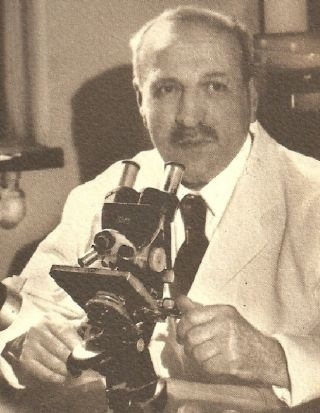
50th anniversary of the death of Greek medical pioneer Georgios Papanikolaou of cervical cancer prevention

20120928-113247.jpg

The grandfather of cervical cancer prevention

This year marks the 50th anniversary of the death of Greek medical pioneer Georgios Papanikolaou – the inventor of the Pap smear.

Every year, an immeasurable amount of women around the world engage in one of the most effective weapons they have for the fight against cervical cancer.

That weapon is a Pap smear examination – a screening that detects cervical cancer in its most early stages. Since World War II, the Pap smear examination has become the most widely used cancer screening method in the world and the test that itself can also detect pre-cancerous cells in the cervix making it an invaluable tool for cervical cancer prevention.

Thousands of women around the world owe their life to the man who invented the Pap smear – Greek pioneer Georgios Papanikolaou.

The Pap smear was named after its inventor Georgios Nicholas Papanikolaou. Born in Kymi, Greece on May 13, 1883, George Papanikolaou had three siblings.

His father, Nicholas, was a doctor.

His mother, Maria, loved music and literature. As a young man, Dr Papanikolaou went to the University of Athens in 1898 and majored in Music and Humanities.

He then followed in his father’s footsteps and attended medical school. After graduating with a perfect “A” average in 1904, Dr. Papanikolaou began his medical career in the Greek military as Assistant Surgeon.

Dr. Papanikolaou left the military in 1906 and, after a brief stint caring for patients at a leper colony in Greece, he began postgraduate study at the Zoological Institute in Munich, where he received a Ph.D. In 1914, Dr. Papanikolaou secured a position in the Anatomy Department at the Cornell University Medical School in New York. In 1920, he began his study of vaginal cytology (the study of the microscopic appearance of cells).

Over time, Dr. Papanikolaou became very familiar with the normal cytological changes that occur in cervical cells. This familiarity allowed him to make what he called one of the most thrilling experiences of his scientific career; his first discovery of cancer cells in a smear from of the uterine cervix.

Dr Papanikolaou knew malignant cancer cells could be viewed under a microscope after reading a book by Walter Hayle Walshe in 1843 regarding lung diseases.

Papanikolaou began testing the vaginal fluid of guinea pigs before he tested human women.

In 1923, he explained to an audience of physicians that smearing the vaginal fluid on a glass slide would enable the cells from the female reproductive system to be analysed.

When he began testing actual women, by chance one of the women tested positive for cervical cancer. Discovering the cervical cancer cells with the use of his procedure was a thrill for Papanikolaou and it turned out to be a medical breakthrough.

In 1928, Dr. Papanikolaou first presented his findings that uterine cancer could be diagnosed by means of vaginal smear in the paper, New Cancer Diagnosis.

Over a decade passed before the collaboration between Dr Herbert Traut, a gynaecologist and pathologist, and Dr Papanikolaou that would validate and scientifically prove the potential of the vaginal smear for the diagnosis of Cervical Cancer.

Their collaboration involved the taking regular vaginal smears of all women patients at Cornell’s Hospital. The study provided the basis of the book, Diagnosis of Uterine Cancer by the Vaginal Smear.

In 1943, when Diagnosis of Uterine Cancer by the Vaginal Smear was published, Dr. Papanikolaou’s work quickly became widely known and accepted.

The book describes the process of preparing a cervical smear and the cytologic changes that are seen as cervical cells change from normal, to pre-cancerous, to cancer.

Papanikolaou died in 1962 just before the opening of the Papanikolaou Cancer Research Institute at Miami University. He was awarded the Albert Lasker Award for Clinical Medical Research in 1950. 2012 marks the 50th anniversary of the death of this influential cytologist.

On the 130th anniversary of the birth and 50 years since the death of the outstanding Greek scientist George Papanikolaou, the Odessa branch of the Hellenic Foundation for Culture is holding a series of activities and events, in collaboration with the municipality of Odessa, the city’s Department of Health, and the Odessa National Medical University.

The events include a flatbed photo exhibition, titled The Great Giver of Life – George Papanikolaou (1883-1962), featuring photographs, letters and other memorabilia from the life and work of the scientist who changed women’s lives, along with the screening of a 2008 documentary, lectures, master classes and roundtable discussions.

Today, Pap smears are considered one of the most successful and effective forms of cancer screening.

The Pap smear is used to check changes in the cervix – the neck of the womb – at the top of the vagina. It is a screening tool to find early warning signs that cancer might develop in the future.

The Pap smear is a simple procedure. Cells are collected from the cervix and placed (smeared) onto a slide.

The slide is sent to a laboratory where the cells are tested for anything unusual. If abnormal changes are found at screening, further tests will be done to see if treatment is needed.

The Pap smear is not for diagnosing cancer, but rather, for finding early changes which might become cancer.

All women with a cervix who have ever had sex at some time in their life are at risk of cervical cancer.

About half the new cases of cervical cancer diagnosed each year are in women over 50 years of age. More women over 50 years of age die from cervical cancer because their cancer is diagnosed later when treatment is more difficult.

Regular Pap smears every two years can help prevent up to 90 per cent of the most common type of cervical cancer.

Greece Seeks Taxes From Investors in London Property

Source: The International Herald Tribune

Real estate listings in the South Kensington area of London. British finance authorities are poring over a list of about 400 Greek individuals who have bought and sold London properties since 2009.

Real estate agents recall sifting the listings for some of the most prestigious, and expensive, properties in South Kensington, a favored area for London’s international set.

But the supposed house hunter, Lavrentis Lavrentiadis, never pulled the trigger back in the spring of 2011, realtors say. Within months his failing institution, a small lender known as Proton Bank, was seized. The Greek government, suspecting that Mr. Lavrentiadis may have moved money out of the country, is now investigating his activities to see if he engaged in fraud and money laundering.

Greece, heavily in debt and desperate to track down money wherever it can, is leaving no stone unturned.

Mr. Lavrentiadis has denied the allegations, and his lawyer did not respond to questions about any interest his client might have had in London properties. But the Greek banker’s rumored flirtation with this city’s prime real estate market, and the frenzy it stirred among sales agents, is telling.

At the request of the Athens government, the British financial authorities recently handed over a detailed list of about 400 Greek individuals who have bought and sold London properties since 2009.

The list, closely guarded, has not been publicly revealed. But Greek officials are poring over it to determine whether the people named — who they say include prominent businessmen, bankers, shipping tycoons and professional athletes — have deceived the tax authorities by understating their wealth.

“These people have money and they are known — but it is not clear yet if they have violated any laws,” said Haris Theoharis, an official in the Greek Finance Ministry. Tax investigators have been examining the list to see if there is any overlap between those who bought London properties and those already identified as being tax cheats.

The Greek government, under pressure from its international lenders to raise €13.5 billion, or $17.4 billion, via tax increases and spending cuts, is intent on making the well-heeled share the burden. Studies have shown that the country may be forgoing as much as €30 billion a year in uncollected taxes, with a significant portion of that amount having been shipped out of the country as the affluent seek shelter from Greece’s financial storm.

This week, the government of Prime Minister Antonis Samaras, opened an investigation into the bank accounts of more than 30 Greek politicians to determine whether they should be charged with tax evasion and the illegal accumulation of wealth. The politicians on the list included the president of the Greek Parliament, Evangelos Meimarakis, creating an embarrassing distraction for Mr. Samaras’s coalition government. Mr. Meimarakis is a former defense minister who has also been implicated in allegations of a money-laundering network said to involve two other former ministers.

But London, long a magnet for foreign real estate investors, has become a special focus for Greek officials trying to track down money that has fled the country.

Bankers say that accounts in Singapore and even in the country of Georgia have become favorite destinations for fleeing funds, more so than the traditional Swiss haven, because of those countries’ looser rules and regulations about accepting large sums of foreign money.

But while Singapore and Switzerland have been reluctant to divulge information about its Greek clientele, the British government has been more cooperative in sharing its real estate records.

There is an air of desperation to this Athens fund-raising drive, which includes leasing out empty Greek islands and even putting up for sale the former residence of the Greek consul general in the tony London neighborhood of Holland Park.

But with Greece’s membership in the euro at stake, every conceivable revenue-raising strategy is being pursued, even if it remains unclear how successful it will be.

For the better part of a century, owning a grand London home in Belgravia or Mayfair has been accepted practice for the wealthiest Greeks — ship owners in particular — looking to hedge their bets against their country’s volatile economy. Since 2008, when the country’s problems began to surface, a much broader spectrum of Greek investors has turned to London real estate.

“Greeks are panicking,” said Sandy Triantopoulou-von Croy of EPPC, a real estate firm in London that does a lot of work with Greek clients. “They just do not know what to do with their money.”

Mr. Lavrentiadis was not the only bank chief to dabble in London real estate. Theodore Pantalakis, a former chief executive of Agricultural Bank of Greece, another ailing lender, caused a stir in Athens this year when it was revealed that in 2011 he had transferred €8 million abroad with the intent to purchase a property in London. Mr. Pantalakis has said that the authorities were informed of the transaction and that the appropriate taxes were paid.

Greek money, along with wealth from China, Russia and various other countries, has kept the high end of London’s property market buoyant despite — or maybe because of — the global financial turmoil. According to research by Savills, a London-based property company, £20 billion of foreign money has been invested in prime residential real estate here since 2006.

The biggest year on record was 2011, when foreigners snapped up £5.2 billion worth of new residences. With economic uncertainty in the euro zone increasing this year, demand for these properties in 2012 shows no sign of letting up, real estate agents say.

Investors from Italy and France have been most prominent in using London properties as a hedge against the euro. But the Greek influx has been especially striking.

Officials in Greece examining these transactions estimate that about 250 Greeks invested over £100 million in prime London residences in 2009 and 2010, according to records collected with the assistance of the British government. As the crisis grew worse last year and this year, government officials say it is likely that the inflows increased.

Not everyone, of course, was looking for a £60 million manse as Mr. Lavrentiadis was said to have done. Even in London, with its enclaves of billionaire oligarchs and sheiks, such requests do not frequently roll around.

Ms. von Croy says that the average asking price from her Greek clients is about £1.5 million, which is still a significant enough barometer of wealth to attract the attention of the Greek tax authorities.

Experts say it is not only high rollers looking to make a splash. Many of the recent buyers hail from Greece’s professional classes, including lawyers, doctors, accountants and midlevel bankers who are paying £300,000 to £500,000 for modest apartments.

Notably, a recent study conducted by economists at the University of Chicago concluded that it was within this segment of society where most of Greece’s tax collection shortfall occurs. By delving through bank records, the economists found that Greek professionals — not the truly wealthy, but the comfortably affluent — skirted as much as €28 billion worth of taxes in 2009.

That would have been enough to cover one-third of the country’s budget deficit that year.

Mr. Theoharis, of the Greek Finance Ministry, said London properties represented but a small portion of the billions Greeks had shipped out of their country since 2009. In 2011, according to government figures, Greeks sent €6 billion to foreign bank accounts. The data for 2012 are even more stark: for the first half of the year about €5 billion left the country, Mr. Theoharis said.

Much of that outflow came in the panicky months preceding the two rounds of Greek elections in May and June.

More recently, the effort by Mr. Samaras’s government to push through spending cuts and economic overhauls has somewhat calmed fears of an immediate Greek euro exit. In fact there was actually a rare increase, of 2 percent, in Greek bank deposits in July.

The harder trick to turn could be persuading Greek real estate money in London to come back home — especially now, with the tax man closely watching.


Are Greeks Europeans? by Peter Economides

Business strategist Peter Economides gives an answer to a German journalist of Süddeutsche Zeituns who asked if Greeks are Europeans.

By Peter Economides* – It took me a while to answer this question.

Not because it was a difficult question to which I did not have an answer. But simply because it had been asked.

The person asking was a known journalist from Süddeutsche Zeitung, one of the most widely read, and most highly respected, German newspapers.

Isn’t Europe a Greek name?

The woman abducted by Zeus in the form of a white bull?

Isn’t Greek thought at the heart of European civilization? Perhaps we don’t have to go as far as claiming, as did Giscard d’Estaing that “Europe without Greece would be like a child without a birth certificate.”

But where did we go wrong?Apart from the genesis of Europe – in name or in spirit – isn’t Europe a mosaic? A beautiful, multicolored mosaic in which each piece plays a role and the whole is bigger than each of its individual pieces.It was a big question this journalist was asking me.

Much, much bigger than I thought.Of course Greeks are Europeans.Perhaps not, however, in a world dominated by productivity, efficiency, balanced books and the Protestant ethic. But is this all that Europe is about?

Greeks are under pressure.

To become “good Europeans.” And what it means to be a good European is dominated by the Northern European definition. This definition may move sometime to the more encompassing idea with which the European Union was initially intended.

But no matter what, it is up to Greeks to carve out a meaningful role within Europe and the world. And Greeks can only do this by being in touch with their essential DNA. If Greeks lose this DNA, then Greeks lose themselves. Full stop.

Let me make one thing clear. I am not talking about physiological DNA. This page is not the place to attempt to trace back Greek lineage to the ancients.

I am talking about the essential concept of Greece. The spirit with which Greeks live their lives.

The stuff that defines the “Greekness” of Greece. About what makes this nation tick. What makes us get up in the morning.

I think the world understands what this is. It’s called life. And the amazing love that Greeks have for life. It was present in ancient Greece.

The love of humanity that gave rise to democracy. The love of beauty that gave rise to sculpture. The love of peace that gave rise to the Olympic Truce.

The love of knowledge which gave rise to science. The love of discovery that gave rise to philosophy. The love of wisdom that shines from the Acropolis in Athens.

Life. This is Greek knowhow. And when we harness its creative power we will reverse our image as a nation with a zest for life and an aversion to productivity.

We need to utilize our “life knowhow” and transform it into creative enterprise that will be valued by the world.

This is how we can reignite our economy. By doing things that Greeks can excel at.

By creating sustainable competitive advantage based on the uniquely Greek knowledge – and love – of life.

*Peter Economides is a brand strategist with a global perspective.

He has lived on four continents doing work that has impacted brands and consumers almost everywhere.

He has learned from the leaders of some of the world’s best brands. He is the owner and founder of Felix BNI.

Amateur Astronomer Kardasis Maps Jupiter’s Moon

Amateur astronomers have proved time and again how much their contributions can help professionals promote progress in their field.

A recent example is Greek amateur astronomer Emmanuel Kardasis, a member of the Hellenic Amateur Astronomy Association.

Kardasis created the new Ganymede brightness map (or albedo map) by using a common “hobby” telescope, ordinary camera and computer equipment.

Officials of the European Planetary Science Congress (EPSC) said that his map matches with the ones taken by professionals.

The EPSC is meeting this week in Madrid and Kardasis’ map is to be presented in hope of encouraging amateur astronomers to continue their own research.

Kardasis’ map identifies features on Ganymede, such as Phrygia Sulcus, a system of thousands of miles of grooves and ridges and a low-lying dark area called the Nicholson region.

20120928-052553.jpg

IT may not be art but it will take over Newcastle for the next few days

Source: NewcastleTheHerald

The annual This Is Not Art Festival was launched last night, with a smorgasbord of creative events spread across 22 venues in the city today and over the weekend.

This Is Not Art is expected to play a key part in a blockbuster weekend in the Hunter expected to net between $10 million and $12 million for the region’s economy.

Festival co-ordinator Sarah Thrift said the four-day festival would have a digital bent this year as part of a push to expand the event’s focus.

‘‘It’s not just for the arts, it’s for the business sector to come along as well,’’ Ms Thrift said.

‘‘This year we’ve tapped into the fact the creative and business sectors need to start talking more.’’

Among the attractions will be three large, luminescent mobile sculptures mounted on bicycle taxis called the Angler Fish.

Group D Creative Collective principal Cassie Stronach said her creations were designed for the Vivid Festival in Sydney earlier this year.

‘We spent three months designing and building them,’’ Ms Stronach said.

This weekend’s appearance, commissioned by the Hunter Development Corporation, is the first outside that festival.

They will be based in the Honeysuckle area. Newcastle City Council major tourism event developer Mark Stratford said This Is Not Art had an appeal that drew visitors internationally.

‘‘It’s becoming quite a lucrative festival,’’ he said.

‘‘It’s a bit of a strange beast because it rebirths itself every year but this year I think will be above previous attendance.’’

Mr Stratford said the festival was also a key component of Newcastle being named a World Festival and Events City by the International Festivals and Events Association.

The title recognises the Hunter’s ability to host major events as well as its strong annual calendar of attractions.

Several hotels and hostels have been booked out.

Αυτός είναι ο Έλληνας που μιλά 32 γλώσσες!

Source: ΑΠΕ

Ο πιο πολύγλωσσος άνθρωπος -μιλά 32 γλώσσες- στην Ευρώπη, ο Γιάννης Οικονόμου από την Κρήτη, πήρε μέρος στο συνέδριο «Πολυγλωσσία στην Ευρώπη», που πραγματοποιήθηκε στη Λεμεσό.

Ο κ. Οικονόμου εργάζεται από το 2002 ως μεταφραστής στην Ευρωπαϊκή Επιτροπή.

Σπούδασε γλωσσολογία στο πανεπιστήμιο της Θεσσαλονίκης και στη συνέχεια έκανε μεταπτυχιακές σπουδές Μεσανατολικών Γλωσσών και Πολιτισμών στο πανεπιστήμιο Κολούμπια (Columbia), των Ηνωμένων Πολιτειών Αμερικής.

Στο πλαίσιο τού συνεδρίου, η Επίτροπος της Ευρωπαϊκής Ένωσης, αρμόδια για θέματα Εκπαίδευσης, Πολιτισμού, Πολυγλωσσίας και Νεολαίας, Ανδρούλλα Βασιλείου, απένειμε τα βραβεία με το «Ευρωπαϊκό Σήμα Γλωσσών» σε πέντε έργα από το Βέλγιο, την Ιταλία, τη Λιθουανία, τη Νορβηγία και τη Ρουμανία, τα οποία σημείωσαν εξαιρετικές επιδόσεις στην προώθηση της διδασκαλίας και της εκμάθησης γλωσσών.

Σε δηλώσεις της, η κ. Βασιλείου επεσήμανε ότι η γλωσσική πολυμορφία είναι πλούτος για την Ε.Ε. και όλοι θα πρέπει να προσπαθήσουν, ώστε οι νέες γενιές να μαθαίνουν ακόμη περισσότερες γλώσσες.

Επίσης, δήλωσε ότι η Ευρωπαϊκή Επιτροπή συνεχίζει την προσπάθειά της, ώστε κάθε παιδί να γνωρίζει δύο επιπλέον γλώσσες, πέραν της μητρικής του.

20120928-050142.jpg

Διέρρηξαν το σπίτι της Έλενας Παπαρίζου

Στο «στόχαστρο» διαρρηκτών βρέθηκε το σπίτι της Έλενας Παπαρίζου.

Πιο συγκεκριμένα, άγνωστοι τα ξημερώματα της Πέμπτης εισέβαλαν στο σπίτι της δημοφιλούς τραγουδίστριας, που βρίσκεται στην ευρύτερη περιοχή των Καλυβίων και αφαίρεσαν χρήματα, κοσμήματα και άλλα προσωπικά αντικείμενά της.

Όπως είναι λογικό, όταν επέστρεψε στην οικεία της η Παπαρίζου υπέστη «σοκ», βλέποντας το σπίτι της να είναι… λεηλατημένο, κι έτσι κοιμήθηκε το βράδυ σε σπίτι φιλικού της προσώπου.

Mάλιστα όπως αναφέρει το star, η δημοφιλής τραγουδίστρια λίγο έλειψε να έρθει πρόσωπο με πρόσωπο με τους διαρρήκτες, καθώς όταν ετοιμαζόταν να εισέλθει στην οικεία της, εκείνοι έφευγαν από την άλλη πόρτα!

20120928-044641.jpg