Stanford-Rooted Companies Would Form World-Sized Economy

Source: Bloomberg

Almost 40,000 active for-profit companies trace their roots to Stanford University, and if they formed an independent country, it would be the world’s 10th largest economy, a study found.

The companies’ combined annual sales of about $2.7 trillion have generated an estimated 5.4 million jobs since the 1930s, according to the study released last month by Charles Eesley, an assistant professor in management science and engineering, and William Miller, an emeritus professor of public and private management, at the college near Palo Alto, California.

The entrepreneurial community at Stanford played a key role in attracting future business founders to the school, Miller said. In the past decade, 55 percent of alumni who started companies said they chose Stanford specifically because of its entrepreneurial environment, the study found. The university first offered classes in small business and entrepreneurship after World War II. Stanford graduates have also created about 30,000 nonprofit organizations.
In 2011, Eesley sent an e-mail survey to 142,496 Stanford alumni, current faculty and selected research staff. He received responses from 27,780 individuals. About 23 percent of survey recipients with connections to the business school responded.

The study doesn’t name the companies that participated and offers only a partial list of those that didn’t respond, including Hewlett Packard Co. (HPQ), Cisco Systems Inc., Yahoo! Inc. and Google Inc. (GOOG), the Internet giant founded by alumni Sergey Brin and Larry Page. These companies aren’t figured into the methodology.

The Stanford study was modeled after a similar study Eesley helped conduct when he was a doctoral student at the Massachusetts Institute of Technology, based in Cambridge, Massachusetts. By the end of 2006, that study found that living MIT alumni had created 25,800 still active companies, which employed 3.3 million people and produced annual global revenues of almost $2 trillion, the school said.

Miss Teen America 2012 Proud of Greek Origin

ΕΛΕΑΝΑ ΦΡΑΝΓΚΕΔΗ: Η ωραιότερη πιτσιρίκα της Αμερικής έρχεται στην Αθήνα

Άρωμα Ελλάδας είχε ο φετινός διαγωνισμός ομορφιάς στις ΗΠΑ για νεαρές κοπέλες κάτω των 18 ετών.

Η Ελεάνα Φρανγκέδη (Eleana Frangedis), Ελληνίδα τρίτης γενιάς, στέφθηκε Miss Teen America 2013.

Η 17χρονη Ελεάνα γεννήθηκε και μεγάλωσε στη Φλόριντα, αλλά επισκέπτεται συχνά την Ελλάδα. Σε λίγες ημέρες μάλιστα θα έρθει στην Αθήνα για να λάβει μέρος στον 30οΚλασικό Μαραθώνιο της Αθήνας.

Η ίδια μιλώντας στον ΣΕΓΑΣ, δήλωσε: «Είμαι πολύ ενθουσιασμένη που θα συμμετάσχω στον μαραθώνιο. Ως Ελληνίδα του εξωτερικού, νιώθω μεγάλη χαρά και θέλω να προσφέρω στην πατρίδα μου με τον οποιονδήποτε θετικό τρόπο. Είναι μια μεγάλη ευκαιρία για εμένα να συνδεθώ με την ιστορία της χώρας μου».

————————————————————-

Eleana Frangedis, the 18-year-old Greek-American from Clearwater, Fla. who was crowned Miss Teen America 2012 earlier this year said she’s proud of the title, but more so of her origin and one day would like to live in Greece. She has made a good impression not just with her beauty, but her intelligence.

She is going to study Biomedical Engineering while staying active in the community and said she especially loves Greek culture and Easter celebrations.

According to an interview in Real Life magazine, she will be in Athens to take part in the 30th Athens Classic Marathon on Nov. 11 and was photographed for the campaign Marathon for Greece, which aims to change Greece’s image abroad.

She said her dream is to eventually be able to buy a house in Greece and stay here with her family, but for now her obligations as the Teen Queen of America and education will keep her busy.

Ένα θησαυρό αξίας 33.433 δολαρίων, είχε «θαμμένο» στη σοφίτα του σπιτιού του, ο Harve Bennett

Είχε ένα θησαυρό στη σοφίτα του...

Είχε ένα θησαυρό στη σοφίτα του…

Όσο απίστευτο και αν ακούγεται, ο «θησαυρός» ήταν ένα βιντεοπαιχνίδι που ο αμερικανός είχε κάποτε αποκτήσει σχεδόν τυχαία, έπαιξε για λίγο και μετά βαρέθηκε. Μόνο που το συγκεκριμένο παιχνίδι, θεωρείται ένα από τα πιο σπάνια.

Έτσι η τιμή του είναι ιδιαίτερα υψηλή.

Πρόκειται για το Air Raid που κυκλοφόρησε σε λίγα αντίτυπα το 1982, για τη δημοφιλή συσκευή Atari 2600. Ένα αντίγραφο του παιχνιδιού είχε πουληθεί το 2010 για 31.600 δολάρια, επειδή θεωρούνταν το μοναδικό που είχε και το κουτί του.

Ωστόσο, ο Bennett εκτός από το κουτί είχε επιπλέον και τις οδηγίες χρήσεις και όλα αυτά σε σχεδόν άριστη κατάσταση! Έτσι η πώλησή του απέφερε 33.433 δολάρια, ήτοι περίπου 26.000 ευρώ.

Ο Bennett απέκτησε το παιχνίδι, ενώ εργάζονταν στο τμήμα βιντεοπαιχνιδιών ενός καταστήματος. Ένας πωλητής του δειγμάτισε το Air Raid. Ο άντρας πήρε το παιχνίδι σπίτι του προκειμένου να το δοκιμάσει και απογοητεύτηκε.

Ωστόσο η Men-A-Vision, η εταιρεία που το δημιούργησε του είπε να το κρατήσει. Αυτός απλά το αποθήκευσε στο πατάρι, μέχρι κάμποσα χρόνια αργότερα να μάθει για την αξία του και να το βγάλει προς πώληση.

The world’s best islands, according to TripAdvisor including Santorini

Source: TripAdvisor

MOST AMAZING ISLANDS ON EARTH

If you’re itching for an island escape but don’t know where to start, check out this list of TripAdvisor’s top 10 must-see islands.

Galapagos Islands, Ecuador

Abundant wildlife on the Galapagos Islands makes it a Mecca for eco tourists. Visitors are likely to spot sea lions, sea turtles, flamingos and iguanas. Picture: blinkingidiot/Flickr.


Madagascar

A biodiversity hotspot, Madagascar is a nature-lover’s dream destination. A getaway to the world’s fourth-largest island would be the adventure of a lifetime. Picture: Frank.Vassen/Flickr


Anguilla, Caribbean

White, powdery sand, pristine waters and romantic public beaches for swimming and sunbaking. Top it off by dancing the night away to calypso music, and you’ve got the ideal island getaway. Picture: axalady/Flickr.


Easter Island, Chile

This amazing South Pacific island’s isolation has helped protect its 1500-year-old volcanic rock sculptures, which Easter Island is famous for. The unique landscape and uncrowded beaches are worth staying for. Picture: Travelwayoflife/Flickr


Ischia, Italy

The largest island in the Bay of Naples, Ischia is known for its curative spas. Picture: Chiara Marra/Flickr

Ko Phi Phi Don, Thailand

Mostly protected marine park, this pristine island is known for its unspoiled beaches and excellent diving and snorkelling. Picture: mattmangum/Flickr


Sri Lanka

This is an island of tea plantations, gorgeous beaches and ancient cities. Days can easily be filled by scuba diving, visiting an elephant orphanage, exploring the jungles and visiting temples and shrines. Picture: YIM Hafiz/Flickr.

Santorini, Greece

An island in the Aegean Sea, it is the site of one of the largest volcanic eruptions in recorded history. Santorini is famous for its dramatic views and spectacular sunsets. Picture: sanderovski & linda/Flickr.

Maui, Hawaii

Exquisite beaches to scenic wonders, the second-largest Hawaiian island has a small population and is punctuated with small towns and airy resorts. Picture: rhett maxwell/Flickr.

For the first time in its 91-year history, Chanel No 5 perfume is under threat

Source: News

What’s really in the world’s favourite perfume?

Chanel no. 5

An EU advisory committee says tree moss, which provides the woody notes for Chanel No 5, should be outlawed. Picture: Supplied

FAMOUSLY, it was the only thing Marilyn Monroe wore in bed, and it has been synonymous with style and sophistication for more than nine decades. But now, for the first time in its 91-year history, Chanel No 5 perfume is under threat.

The reason? One of its key ingredients – a naturally occurring type of tree moss – has come under the microscope of a team of EU scientists who believe it may cause allergies.

It may seem bizarre that the top-selling perfume in the world – a bottle is sold every 30 seconds – could potentially be so damaging when tens of thousands of women across the globe wear it every day.

But it’s just the latest in a long line of restrictions imposed on the scent industry in the past few years. Under rules implemented by the European Commission in 2006, 26 common ingredients including the now-infamous tree moss and eugenol (found in rose oil), must be declared on the packaging of perfume because they are potentially allergenic.

Now it has emerged that the Commission’s Scientific Committee of Consumer Safety, charged with protecting citizens from harmful substances, has extended the list to cover 100 “unsafe” materials.

While they recommend that some must be declared on packaging or the amount used in a perfume be restricted, they want some – including the tree moss used in Chanel No 5 to help give it its distinctive smell – banned entirely.

And while these are only guidelines and not law, it is likely that perfume manufacturers will feel pressure to comply. The industry watchdog, the International Fragrance Association, is taking it so seriously it has decided to conduct further research into the potential skin allergens on the back of the recommendations.

This doesn’t affect only Chanel; a host of other well-loved perfumes – from Miss Dior to Guerlain’s Shalimar and Angel by Thierry Mugler – could be caught up, too.

For the new list calls for restrictions of many commonly used ingredients such as citral, found in lemon and tangerine oils, and coumarine, which comes from the spicy South American tonka bean – all naturally sourced ingredients, it should be pointed out, which have been used for decades in perfume-making without causing serious harm.

It is even feared that jasmine and rose – some of the most common ingredients in the world’s favourite scents – could be put on future lists.

But back to Chanel. What is this innocuous-sounding tree moss, and how important is it to Chanel No 5?

According to Francis Pickthall, director of UK-based international fragrance house CPL Aromas, tree moss has always been an important ingredient in high-end fragrances thanks to its distinctive earthy, woody scent, which No 5 fans would immediately recognise.

“It’s created by scraping moss from the bark of Northern hemisphere trees, often in former Yugoslavian countries, which is then steam-distilled,” he says. “But it has already started to be phased out of many perfumes and replaced with similar-scented synthetic mosses or oak moss, though only if it is low in atranol, the component of moss which is a known skin-sensitiser”.

Oak moss, it must be mentioned, is also in Chanel No 5, and also on the future “forbidden” list. But Mr Pickthall argues that ingredients being banned or restricted is nothing new to the industry, and that perfumers are expert at phasing out problem materials while finding alternatives.

That is clearly not how everyone feels, though. Chanel spokeswoman Francoise Montenay declared: “It would be the end of beautiful perfumes if we could not use these ingredients”; while the French Perfumer’s Society said it would lead to “the death of perfume if this continues”.

One wonders what Coco Chanel herself would have thought of being told by EU scientists that her beloved fragrance had to be updated before it had even reached its 100th birthday. Because the story leading to its creation is just as captivating as the scent itself.

Until Chanel No 5 emerged in 1921, perfumes had tended to be thick and rich with animal musk. Having already taken the Parisian fashion scene by storm, Gabrielle ‘Coco’ Chanel decided to turn her hand to a beauty product that had so far eluded her, a fragrance that was light, fresh and reflected the liberated spirit of the new decade.

Her mother had been a laundry woman in rural France, so she loved the smell of soap, but for years she was unable to find a perfumer who was up to the task, because citrus fragrances such as lemon, bergamot and orange just didn’t last on the skin.

Then, in 1920, she heard about a daring perfumer Ernest Beaux, who had worked for the Russian Royal family and lived in the capital of perfume, Grasse. He took up her challenge, spending months creating ten samples for her to try. They were numbered one to five and 20 to 24. And, you guessed it, she picked number five.

She is said to have told Beaux: “I present my dress collections on the fifth of May, the fifth month of the year, and so we will let this sample number five keep the name it has already — it will bring good luck.”

And it did. The scent combined jasmine, rose, sandalwood and vanilla with other background notes, and it is said that when Chanel sprayed the perfume around her table in an upmarket Paris restaurant, women passing by literally stopped in their tracks to ask her what the fragrance was and where it came from.

She declared later: “It was what I was waiting for. A perfume like nothing else. A woman’s perfume, with the scent of a woman.”

Time would show that millions of women from all walks of life agreed with her, from the American war-time wives who had it brought back from Europe by their GI sweethearts, to the one-in-ten modern women who were wearing Chanel No 5 when they met “the One”, according to a study in 2009.

So will all these women really fail to notice if the formula is changed? Perfumer Roja Dove is not so sure.

While he admits that it has been necessary to remove certain common components of fragrances over the last century – both for health reasons, such as when benzene was phased out when it was discovered to be a potential carcinogen, and ethical ones, like the disappearance of musks taken from slaughtered animals – he says it is never easy to recreate a well-known scent with different raw materials.

“It’s impossible to reformulate without making a product smell different – that is why the original ingredients were used in the first place,” he says.

Dig it! Australia among the best places to dig for buried treasure

Source: News

Coober Pedy

Coober Pedy in South Australia has been named as the best place to hunt for loot. Picture: Mike Burton

Dinosaur

Travellers can join in a fossil dig at Winton, QLD. Picture: Australian Age of Dinosaurs.

THERE’S a secret world of goodies buried beneath the earth’s rocks and waves.

Looking for loot – from pirate booty to secret stashes – is an adventure all its own.

Lonely Planet has compiled a list of the world’s top 10 places to hunt for treasure in their Best in Travel 2013 book.

1. Opal Mining, Coober Pedy, Australia

Outback adventure and the chance to strike it rich: can you dig it?

The good folk of Coober Pedy can… and have done, ever since opal was first discovered there in 1915.

Named from the local aboriginal term ‘kupa-piti’ (meaning ‘whitefella in a hole’), this far-flung town is known as the opal capital of the world; it’s also famous for its underground homes, excavated to escape the desert sizzle.

While hardcore miners need a government permit, anyone is allowed to fossick – in local parlance, ‘noodle’ – through the town’s many mine dumps.

Don’t let the whimsical verb fool you: many a noodler has hit paydirt.

Before going it alone, try a sanctioned noodle at Tom’s Working Opal Mine or Old Timers’ Mine.

2. Norman Island, British Virgin Islands

Peg-legs, black spots, West Country accents: if there was a map showing the home of every pirate cliché known to fancy-dressers, Norman Island would be marked with an X.

Not shivering your timbers? Perhaps its fictional name, Treasure Island, will make you go ‘aaargh’.

The inspiration behind Robert Louis Stevenson’s tale of mutiny and booty, Norman Island today is a haven for snorkellers and nature lovers.

But rumours of undiscovered doubloons hidden in the Caves – a series of aptly murky watery caverns – attract rum-hoisters convinced the island remains home to ‘plenty of prizes and plenty of duff !’.

Norman Island is a short boat trip from Tortola, the biggest and most populated of the BVIs. Tortola is reached via ferries or flights out of various Caribbean hubs.

3. Oak Island, Nova Scotia, Canada

Home to a huge, mysterious hole nicknamed the Money Pit, this otherwise unremarkable island is the destination for those answering the call of booty.

First discovered in 1795, the cryptic Pit is the site of the world’s longest-running treasure hunt… although just which treasure is being hunted remains the cause of frenzied debate.

Rumoured riches hidden within the hole (which supposedly runs at least 60m deep) include Captain Kidd’s stash, the lost jewels of Marie Antoinette, documents proving the ‘real’ identity of Shakespeare (Francis Bacon, FYI) and the holy grail of treasure seekers, the, erm, Holy Grail.

Beware the booby traps!

Oak Island is privately owned and permission is required before setting off to solve the mystery of the Pit. Start here for legends and links.

4. Las Vegas, US

Cache-ING! Looking for loot in Las Vegas? Forget fruit machines and bank breaking: these days, thousands of Sin City visitors are forgoing gambling for geocaching.

A real-life treasure hunt that relies on GPS and cryptic clues, geocaching is more likely to yield a Kinder Egg than that of the nest variety, but that hasn’t stopped five million enthusiasts worldwide.

Vegas has become a must-do for the high-tech hobbyists, with more than 2400 stashes hidden in and around the city, including scores on the Strip, in the surrounding desert and in spooky spots for ‘haunted’ night caching.


Las Vegas

A real-life treasure hunt in Las Vegas for hidden stashes is a must-do for high-tech hobbiests. Picture: WriterGal39/Flickr.

5. Gold Detecting, Papua New Guinea

There’s gold in them thar hills… and on them thar islands… and under that thar sea.

Papua New Guinea is absolutely awash with the shiny stuff , and while much of it falls into the hands of multinational mining companies, there’s no reason the budding prospector can’t have a pick or a pan as well.

Gold fever peaked in the 20th century, with nuggets the ‘size of goose eggs’ attracting feverish prospectors, including a certain Mr Errol Flynn.

These days, PNG’s rough-and-tumble landscape (social and geographic) make joining an organised tour a better idea than striking out on your own.

They’re not cheap, but with a potential ‘Eureka!’ moment lurking beneath every step, who cares?

PNG Gold Tours offers fully escorted, two-week gold-hunting trips to Misma Island, an area renowned for rich alluvial deposits.

6. Roman Coins, English Countryside

Either togas suffered from a lack of pockets or departing Romans hadn’t time to stop at a currency exchange, because England is aglitter with ancient currency.

And it’s yours for the picking. Amateur archaeologists and quaint folk with metal detectors have been responsible for massive finds across the island; in 2010, a chef uncovered a pot filled with 52,000 coins dated between AD 253 and 293, the largest such hoard yet discovered.

Study up, be sure to get landowners’ permission and you too could hold history in your hands!

Contact the National Council for Metal Detecting for information on detector hire, regional clubs and valuing your treasure.

7. Digging For Dinos, Australia

Thrilled by theropods? Is ‘muttaburrasaurus’ more than just an amusing tongue-twister to you? Then it’s a fair bet that joining a dinosaur dig is your idea of the ultimate treasure hunt.

And where better to pander to your inner palaeontologist than outback Winton, home to Australia’s largest hoard of dino bones?

The not-for-profit organisation Australian Age of Dinosaurs holds tri-annual Dinosaur Discovery Weeks, giving ‘enthusasauruses’ the chance to excavate, plaster and prep fossils buried for the past 95 million years.

No experience is necessary, but only 13 spots per dig are available. Book quickly: they’ll be gone before you can say ‘Diamantinasaurus matildae’.

Digs run between July and September. Find out more and reserve your spot here.

8. Arctic Amethysts, Kola Peninsula, Russia

Far above the Arctic Circle, all that glitters is not ice: western Russia’s extreme north sparkles with the purple slivers of the prized amethyst.

The rugged Kola Peninsula – a mineralogist’s dream with its hundreds of rare rock and metal species – is home to the windswept, amethyst-rich Tersky Coast.

Unlike gold, the amethyst is surprisingly easy to find if you know where to look (Tersky’s Korabl Cape – ‘Ship Cape’ – is a great place to start): simply look for the purple clumps.

In addition to its beauty, amethyst has a legendary quality which may come in handy in these frozen, vodka-loving lands: it’s believed to protect its bearer from drunkenness.

While spotting amethysts is simple enough, getting around Kola Peninsula is not.

Consider joining a mineralogical tour with the South Kola group.

9. Fossil Gawking, Gobi Desert, Mongolia

To the hurried eye, the vast Gobi Desert looks like 1.3 million sq km of dusty nothing.

But stop, stoop and focus: the Gobi is one of the world’s richest fossil depositories, with many ancient (as in 100-million-years-ancient) remains lying only centimetres from the surface.

It was here the first dinosaur eggs were discovered; other major excavated finds include rare, mid-evolutionary birds and some of the world’s best-preserved mammal fossils.

Hunting hotspots include the Flaming Hills of Bayanzag and Altan Uul (‘Golden Mountain’).

You’re not supposed to take your finds home with you – they’re rightfully considered national treasures – but here, especially, the thrill is in the chase.

Independent (not package) tours can be hard to stumble across, but not impossible. Many guesthouses in Mongolia’s capital Ulaanbaatar can help get your expedition underway.

10. Wreck Diving, Florida, US

It may be known as the Sunshine State, but many of Florida’s richest attractions haven’t seen the light of day in centuries.

Thought to be home to more sunken treasure than any other state in the US, Florida’s blue waters may be hiding more than US$200 million worth of loot.

Now home to Disneyworld and pampered retirees, the state was once a notorious pirate haven (even Blackbeard dropped anchor here), and its hurricanes sent countless Spanish galleons to Davy Jones’ locker.

Check local legalities before you wriggle into your wettie, and never dive alone in Florida’s oft-treacherous waters: those wrecks are down there for a reason.

This website is a treasure trove of super-detailed listings of potentially enriching (and legal) wreck-dive spots across Florida.

This is an extract from Lonely Planet’s Best in Travel 2013 © Lonely Planet 2012, RRP: $24.99, available in stores now.


Scientists offer quantum theory of soul’s existence

Source: News

Patrick Swayze

Maybe Patrick Swayze was onto something when he walked off to heaven at the end of ‘Ghost’.

A PAIR of world-renowned quantum scientists say they can prove the existence of the soul.

American Dr Stuart Hameroff and British physicist Sir Roger Penrose developed a quantum theory of consciousness asserting that our souls are contained inside structures called microtubules which live within our brain cells.

Their idea stems from the notion of the brain as a biological computer, “with 100 billion neurons and their axonal firings and synaptic connections acting as information networks”.

Dr Hameroff, Professor Emeritus at the Departments of Anesthesiology and Psychology and Director of the Centre of Consciousness Studies at the University of Arizona, and Sir Roger have been working on the theory since 1996.

They argue that our experience of consciousness is the result of quantum gravity effects inside these microtubules – a process they call orchestrated objective reduction (Orch-OR).

In a near-death experience the microtubules lose their quantum state, but the information within them is not destroyed. Or in layman’s terms, the soul does not die but returns to the universe.

Dr Hameroff explained the theory at length in the Morgan Freeman-narrated documentary Through the Wormhole, which was recently aired in the US by the Science Channel.

The quantum soul theory is now trending worldwide, thanks to stories published this week by The Huffington Post and the Daily Mail, which have generated thousands of readers comments and social media shares.

“Let’s say the heart stops beating, the blood stops flowing, the microtubules lose their quantum state,” Dr Hameroff said.

“The quantum information within the microtubules is not destroyed, it can’t be destroyed, it just distributes and dissipates to the universe at large.

‘If the patient is resuscitated, revived, this quantum information can go back into the microtubules and the patient says “I had a near death experience”.’

In the event of the patient’s death, it was “possible that this quantum information can exist outside the body indefinitely – as a soul”.

Dr Hameroff believes new findings about the role quantum physics plays in biological processes, such as the navigation of birds, adds weight to the theory.

Hurricane Sandy Aftermath: Storm Leaves Millions Without Power, More Than A Dozen Dead

Source: HuffingtonPost

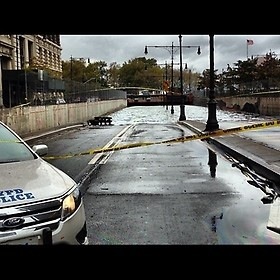
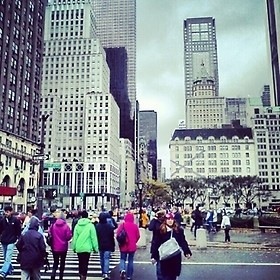
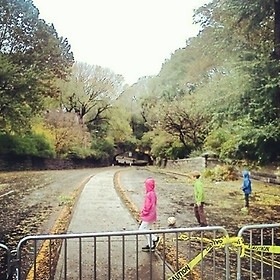
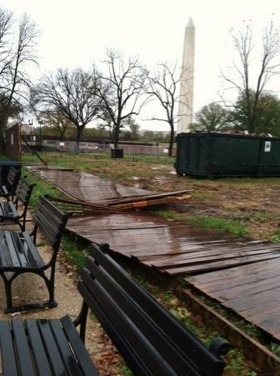
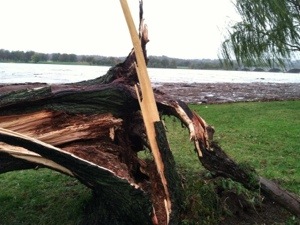
Millions of people from Maine to the Carolinas awoke Tuesday without electricity, and an eerily quiet New York City was all but closed off by car, train and air as superstorm Sandy steamed inland, still delivering punishing wind and rain. The U.S. death toll climbed to 33, many of the victims killed by falling trees.

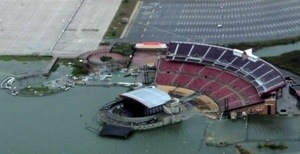
The full extent of the damage in New Jersey, where the storm roared ashore Monday night with hurricane force, was unclear. Police and fire officials, some with their own departments flooded, fanned out to rescue hundreds.

“We are in the midst of urban search and rescue. Our teams are moving as fast as they can,” Gov. Chris Christie said. “The devastation on the Jersey Shore is some of the worst we’ve ever seen. The cost of the storm is incalculable at this point.”

At least 7.4 million people across the East were without power. Airlines canceled more than 15,000 flights around the world, and it could be days before the mess is untangled and passengers can get where they’re going.
The storm also put the White House campaign on hold just a week before Election Day. President Barack Obama canceled a third straight day of campaigning, scratching events scheduled for Wednesday in swing state Ohio, which got clobbered by Sandy’s winds as the storm pushed west.
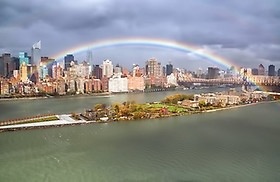
Lower Manhattan, which includes Wall Street, was among the hardest-hit areas after the storm sent a nearly 14-foot surge of seawater, a record, coursing over its seawalls and highways and into low-lying streets.
Water cascaded into the gaping, unfinished construction pit at the World Trade Center, and the New York Stock Exchange was closed for a second day, the first time that has happened because of weather in more than a century.
A huge fire destroyed as many as 100 houses in a flooded beachfront neighborhood in Queens on Tuesday, forcing firefighters to undertake daring rescues. Three people were injured.
A downtown hospital, New York University’s Tisch, evacuated 200 patients after its backup generator failed. About 20 babies from the neonatal intensive care unit were carried down staircases and on battery-powered respirators.
And a construction crane that collapsed in the high winds on Monday still dangled precariously 74 floors above the streets of midtown Manhattan. And on Staten Island, a tanker ship wound up beached on the shore.
With water standing in two major commuter tunnels and seven subway tunnels under the East River, and Mayor Michael Bloomberg said it was unclear when the nation’s largest transit system would be rolling again. It shut down Sunday night ahead of the storm.
Joseph Lhota, chairman of the regional Metropolitan Transportation Authority, said the damage was the worst in the 108-year history of the New York subway.
The saltwater surge inundated subway signals, switches and electrified third rails and covered tracks with sludge. Workers began pumping the water out and will ultimately have to walk all of the hundreds of miles of track to inspect it.
Millions of more fortunate New Yorkers surveyed damage as dawn broke, their city brought to an extraordinary standstill.
“Oh, Jesus. Oh, no,” Faye Schwartz said she looked over damage in neighborhood in Brooklyn, where cars were scattered like leaves.
Reggie Thomas, a maintenance supervisor at a prison near the overflowing Hudson River, emerged from an overnight shift there, a toothbrush in his front pocket, to find his Honda with its windows down and a foot of water inside. The windows automatically go down when the car is submerged to free drivers.
“It’s totaled,” Thomas said with a shrug. “You would have needed a boat last night.”
Besides the subway and the stock exchange, most major tunnels and bridges in New York were closed, as were schools, Broadway theaters and the metropolitan area’s three main airports, LaGuardia, Kennedy and Newark.
“This will be one for the record books,” said John Miksad, senior vice president for electric operations at Consolidated Edison, which had more than 670,000 customers without power in and around New York City.
The death toll climbed rapidly, and included 17 victims in New York State — 10 of them in New York City — along with four dead in Pennsylvania and three in New Jersey. Sandy also killed 69 people in the Caribbean before making its way up the Eastern Seaboard.
In New Jersey, a huge swell of water swept over the small town of Moonachie, near the Hackensack River, and authorities struggled to rescue about 800 people, some of them living in a trailer park.
And in neighboring Little Ferry, water suddenly started gushing out of storm drains overnight, submerging a road under 4 feet of water and swamping houses.
Police and fire officials used boats and trucks to reach the stranded.
“I looked out and the next thing you know, the water just came up through the grates. It came up so quickly you couldn’t do anything about it. If you wanted to move your car to higher ground you didn’t have enough time,” said Little Ferry resident Leo Quigley, who with his wife was taken to higher ground by boat.
Jersey City was closed to cars because traffic lights were out, and Hoboken, just over the Hudson River from Manhattan, dealt with major flooding. In Atlantic City, most of the world-famous boardwalk was intact, but pieces washed away Monday night.
Remnants of the hurricane were forecast to head across Pennsylvania before taking another sharp turn into western New York by Wednesday morning. Although weakening as it goes, the storm will continue to bring heavy rain and flooding, said Daniel Brown of the National Hurricane Center in Miami.
As Hurricane Sandy closed in on the Northeast, it converged with a cold-weather system that turned it into a monstrous hybrid of rain, high wind — and even snow in West Virginia and other mountainous areas inland.
In a measure of how big the storm was, high winds spinning off the edge of Sandy clobbered the Cleveland area early Tuesday, uprooting trees, cutting power to hundreds of thousands, closing schools and flooding major roads along Lake Erie.
Hundreds of miles from the storm’s center, gusts topping 60 mph prompted officials to close the port of Portland, Maine, and scared away several cruise ships.
Just before it made landfall at 8 p.m. near Atlantic City, N.J., forecasters stripped Sandy of hurricane status, but the distinction was purely technical, based on its shape and internal temperature.
While the hurricane’s 80 mph winds registered as only a Category 1 on a scale of five, it packed the lowest barometric pressure on record in the Northeast, giving it terrific energy to push water inland.
Obama declared a major disaster in the city and Long Island.
In New York, the construction crane atop a 1,000-foot, $1.5 billion luxury high-rise in midtown Manhattan dangled for a second day while authorities tried to figure out how to secure it. Thousands were ordered to leave nearby buildings as a precaution, including 900 guests at the ultramodern Le Parker Meridien hotel.
Alice Goldberg, 15, a tourist from Paris, was watching television in the hotel — whose slogan is “Uptown, Not Uptight” — when a voice came over the loudspeaker and told everyone to leave.
“They said to take only what we needed, and leave the rest, because we’ll come back in two or three days,” she said as she and hundreds of others gathered in the luggage-strewn marble lobby. “I hope so.”
An explosion Monday night at a substation for Consolidated Edison, the main utility service New York City, knocked out power to about 310,000 customers in Manhattan.
“It sounded like the Fourth of July,” Stephen Weisbrot said from his 10th-floor apartment.
In Baltimore, fire officials said four unoccupied rowhouses collapsed in the storm, sending debris into the street but causing no injuries. A blizzard in western Maryland caused a pileup of tractor-trailers that blocked part of Interstate 68 on slippery Big Savage Mountain.
“It’s like a long-tailed cat in a room full of rocking chairs up here,” said Bill Wiltson, a Maryland State Police dispatcher.

20121031-044520.jpg

20121031-044525.jpg

20121031-044530.jpg

20121031-044535.jpg

20121031-044541.jpg

20121031-044546.jpg

20121031-044550.jpg

20121031-044555.jpg

New Film Project from Nia Vardalos in the Works

Source: Variety

Nia Vardalos has partnered with Paramount Pictures to write and produce a film titled “Leftovers,” Variety reports.

While plot and further details about the story have yet to be released, “Leftovers” is being described as an “anti-romantic comedy.”

Mike Karz, responsible for ensemble cast hits “Valentine’s Day” and “New Year’s Eve,” and Josie Rosen are also producing.

In addition to having her book, “Instant Mom,” published next year, which talks about life after the success of “My Big Fat Greek Wedding” as well as the adoption of her daughter, Vardalos will be working behind the scenes on “Leftovers” and take a lead on-camera role in the film.

The Greek Canadian-American actress also collaborated with Tom Hanks to co-write “Larry Crowne,” starring Hanks and Julia Roberts.

World’s Highest National Park Opens In Tibet

With the opening of Qomolangma National Park Friday, Tibet is now home to the world’s highest national park, reports Xinhua.

The park is named for Mt. Everest, which is known locally as Qomolangma or Chomolungma.

Within its boundaries are five mountains that reach more than 8,000 meters (26,246 feet), the highest being Everest at 8,848 meters (29,029 feet). It also encompasses 10 mountains that peak above 7,000 meters (22,966 feet).

“The national park will be focused on the protection of the ecology and biodiversity and prevention from illegal resource exploitation or land use,” Sun Yongping, deputy chief of the region’s tourism bureau, told Xinhua.

Covering 78,000 square kilometers (30,116 square miles,) the park is spread through six districts of Tibet’s Shigatse region, and shares a border with Nepal, reports Nepali news site Republica.

Qomolangma National Park is Tibet’s third, following Namtso National Park and Yarlung Zangbo Grand Canyon National Park.

For those who can’t quite make it as far as Tibet, here are the best national parks that are a little closer to home.