The timeline of Earth, mankind and the universe has been mapped out

Source: News.com.au

CONTINENTS fuse, galaxies collide, man dies out and the Earth plunges into the Sun.

This is what will happen in the future (but don’t worry, you’ve got a few quintillion years yet).

We find it hard enough to plan ahead to the weekend, but some scientists have mapped out what will happen to the Earth and the universe’s major events all the way to over one hundred quintillion years from now.

BBC Future created a meandering infographic based on research and hypothesis from scientists and NASA with major natural milestones laid out in front of our worrying eyes. The ambitious predictions begin around one thousand years from now, when most of our words would have become extinct, up to the moment when the Earth stops spinning and falls into the Sun.

We’ve plucked the biggest events worth looking out for (if you live to one hundred quadrillion years old, that is). These are all years from now:

One thousand years to ten thousand years from now.

One thousand years to ten thousand years from now. Source: Supplied

1,000: If civilisation fails to make it another thousand years, all the buildings, dams and bridges decay and fall

1,000: Most words are extinct due to the rapid evolution of languages

2,000: Greenland ice sheet melts

5,125: Mayan time ends again. World didn’t come to an end last time. Probably won’t next time.

13,000: Earth’s axial tilt reverses. Northern hemisphere suffers extreme weather due to higher percentage of land

20,000: Chernobyl finally safe

One hundred thousand to one million years from now.

One hundred thousand to one million years from now. Source: Supplied

50,000: Niagara Falls disappears

100,000: Laptops dissolve. The titanium in MacBooks will corrode

100,000: Global disaster. A supervolcano or climate-altering asteroid would have affected the Earth by now.

1,000,000: All glass created will have degraded.

One hundred to one billion years from now.

One hundred to one billion years from now. Source: Supplied

10,000,000: New ocean formed. Red sea flooded dividing Africa.

50,000,000: Australia and Indonesia merge.

250,000,000: All continents fuse to make one supercontinent.

1,000,000,000: Game over. The sun’s luminosity rises by 10% evaporating the Earth’s oceans.

2,800,000,000: The end of all life on Earth. Even cockroaches.

One trillion to one hundred quintillion years from now. Game over.

One trillion to one hundred quintillion years from now. Game over. Source: Supplied

5,400,000,000: Sun’s hydrogen exhausted and begins to swell into a red giant consuming nearby planets.

20,000,000,000: All matter is torn apart by the expansion of the universe. All distances become infinite.

110,000,000,000,000: All stars have died.

100,000,000,000,000,000,000 (that’s one hundred quintillion years from now): Earth dies. If not already consumed by a swollen sun, the Earth’s orbit will have decayed and it will plunge into the sun.

IBIS World releases list of best and worst industries for 2014

Source: News.com.au

The world is your oyster, unless you want to own a DVD store, according to IBISWorld. Picture: Thinkstock

The world is your oyster, unless you want to own a DVD store, according to IBISWorld. Picture: Thinkstock Source: ThinkStock

IT’S a great time to be in gemstones or online shopping, but if you dream of starting your own video store, look out.

That’s according to the latest list of industries set to fly and fall in 2014 released by research company IBISWorld.

General manager Karen Dobie said it’s forecast to be a great year for diamond and gemstone mining, which is set to receive a 24 per cent boost taking revenue to $821.9 million, amid strong demand from South-East Asia.

“High-quality stones as a share of total output is expected to increase, which will have a positive impact on total industry revenue,” she said.

Superannuation funds will also be big business as sharemarkets return to levels seen before the financial crisis. The sector is expected to grow 23 per cent to take revenue to $356.6 billion due to the increased super guarantee and stable labour market.

“Characterised by a growing labour force, the conditions in our employment market mean more people are contributing to superannuation than before,” Ms Dobie said.

Aussie super funds are in for a good year as sharemarkets recover and the labour force stays steady. Picture: Thinkstock

Aussie super funds are in for a good year as sharemarkets recover and the labour force stays steady. Picture: Thinkstock Source: ThinkStock

Organic farmers will also be in for a boost as organic products become more mainstream. Revenues in the sector are expected to rise nearly 14 per cent to more than $707 million.

“A broader selection of organic foods in supermarkets, independent retailers and markets should assist in increasing sales and driving revenue for primary producers. This will include more private-label organic products available at lower pricepoints”, Ms Dobie said.

Online shoppers and internet publishing are also expected to take off as people increasingly live their lives online.

The online retailing sector will rise 13 per cent to become a $13.2 billion industry while internet publishing will grow by 11 per cent to become a $1.7 billion sector, IBISWorld forecasts.

Organic farming is set to be a high growth area in 2014. Picture: Thinkstock

Organic farming is set to be a high growth area in 2014. Picture: Thinkstock Source: Supplied

However it’s not such a rosy picture for other industries, with some set to experience major downturns.

Video and DVD hire shops will suffer due to competition online with the industry contracting 15 per cent to $534.2 million, while sugar cane growers will also have it tough due to extreme weather conditions.

After years of booming mineral exploration, this sector will shrink nearly 8 per cent as the Chinese economy slows down and companies shift their focus from exploration to production.

Newspaper publishing will also take a hit with more people getting their news online, IBISWorld reports.

Horse and dog racing will also suffer, with $1.6 billion in revenue down nearly 4 per cent on the previous year due to tighter regulations and falling attendance.

IBISWorld’s industries set to rise in 2014

• Diamond and gemstone mining

• Superannuation funds

• Organic farming

• Online shopping

• Internet publishing and broadcasting

Industries set to fall in 2014

• Video and DVD hire outlets

• Sugar cane growing

• Mineral exploration

• Newspaper publishing

• Horse and dog racing

Unprecedented success in trialling new adult leukaemia therapy

Source: ACRF

A new, potentially life-saving drug has raised new hope for patients in advanced stages of chronic lymphocytic leukaemia – one of the most common types of adult leukaemia in Australia.

In many cases this cancer becomes resistant to traditional treatment methods such as chemotherapy. This is because of its high levels of a “pro-survival” protein called BCL-2 that render cancer cells, according to Walter and Eliza Hall Institute haematologist Prof. Andrew Roberts “basically indestructible”.

This new drug, currently in phase one clinical trials, targets this BCL-2 protein and breaks down the leukaemia cancer cells with-in the patient’s body creating a positive outlook for many patients battling the advanced stages of this disease.

Results from the trial reveal the cancer has become completely undetectable in almost a quarter of patients and in 61 per cent of cases the patient has gone into partial remission.

Peter MacCallum Cancer Centre chair of haematology, Professor John Seymour, said while trials were at an early stage, the drug’s success was unprecedented. “Patients on the trial were typically incurable, with an average life expectancy of up to 18 months, so to see complete clearance of cancer in nearly one quarter of these patients after taking this single therapy is incredibly encouraging,” he said.

The protein and its significance in leukaemia – as well as several other cancers including some lymphomas, breast and prostate, was first identified by scientists at the Walter and Eliza Hall Institute (WEHI) in 1988. Professor Andrew Roberts said it had long been a target of scientists trying to develop anti-cancer drugs.

The drug, taken as a pill, also shows promise for the treatment of these other types of cancer, which are also reliant on the BCL-2 protein.

Melbourne patients with advanced stages of chronic lymphocytic leukaemia were the first in the world to receive this new therapy developed in partnership with the WEHI. Trials have been run by the Royal Melbourne Hospital and the Peter MacCallum Cancer Centre. The ACRF is very proud to have provided significant funding to each of these three research centres in Melbourne.

A phase two trial to establish the drug’s safety and effectiveness in a larger group of patients in Australia, the US and Europe is under way and could lead to approval for wider use by regulatory authorities within three years.

Queen Vic christmas tree

Britain’s Royal Family in 1848 – Queen Victoria, Prince Albert and their children around a Christmas tree. Picture: Thinkstock

HAVE you ever wondered how the Christmas tree came about? We have the answers.

The first tree is thought to have been put up in the Strasbourg Cathedral in Germany in 1539, according to German historian Alexander Demandt.

In 1844, Hans Christian Andersen published the first Christmas tree fairytale, called The Fir-Tree, which recounted the fate of a fir-tree being used as a Christmas tree.

But although the Christmas tree’s inception was in Germany, it was Britain who popularised it.

The Illustrated London News of 1848 contained Britain’s most influential picture of a Christmas party (right). It showed Queen Victoria, Prince Albert and their children around a tree – they were the Royal Family at the time.

“Respectable, snug, worthy of emulation, they set the pattern for everyone else,” historian Lucy Worsley told The Daily Mail.

“Contrary to popular belief, it wasn’t Albert, who was born in Germany, who introduced the Christmas tree to Britain. Victoria’s grandmother, Queen Charlotte, also born in Germany, put up decorated trees in the 18th-century palaces,” she said.

But it was Albert’s love for the tree that made it a must-have. His widely quoted comment in 1847 describes the appeal of a lit, decorated, tree: “I must now seek in the children an echo of…the old time, of what we felt and thought; and their delight in the Christmas tree is not less than ours used to be.”

“The Christmas tree according to German tradition was decorated with gingerbread, nuts and apples. Over time, these were replaced with glass and plastic – our modern baubles” Lucy said.

Interestingly, it wasn’t until late in the 19th century that the Christmas tree was accepted in the United States.

If you’ve just returned from a tree lot and plan to pull out boxes of decorations this afternoon, you may find it hard to imagine that Christmas trees took well into the 19th century to be widely accepted in the United States.

“In a sense,” writes scholar Bernd Brunner in his compact cultural history of the holiday icon, “the Americanization of the ‘German’ Christmas tree runs parallel to the Americanization of German immigrants.”

Brunner unpacks the history of the Christmas tree as calmly and carefully as someone might unwrap keepsake ornaments. While there are many conjectures about the origin of Christmas trees, the first tree Brunner can document was in the Strasbourg Cathedral in 1539. Summing up the roots of this holiday icon, he quotes German historian Alexander Demandt: “The meaning is Christian, the origins are ancient, and the form of the Christmas celebration is Germanic.”

The book’s many period illustrations include a 19th-century engraving of Martin Luther and his family sitting by a Christmas tree, proof of the power of images to make myth. Luther died in 1546; the first confirmed Christmas tree in his hometown, Wittenberg, didn’t appear until the 18th century, and family celebrations around a tree didn’t become common until the end of that century. But Luther had encouraged the celebration of Christmas; for a long time, Christmas trees in Germany, sometimes called Lutherbaum , were considered a Protestant thing.

“The attraction of all things green, colorful, and glittering in the cold season is elemental,” Bernd writes. While some people have used deciduous trees, conifers won out because of their year-round greenery. Fir trees, Bernd notes, “have traditionally been credited with extraordinary strength and perseverance.”

While some church leaders initially saw the trees as hedonistic symbols, their embrace by German nobility and bourgeoisie helped transform them into Christian icons. Changes in home architecture that led to sitting rooms and parlors also provided a convenient place for Christmas trees.

Tree decorations have evolved over the centuries, too. Until the 19th century, nuts, sweets, baked goods and other edibles were the chief décor. Christian symbols became increasingly common in the 19th century. Tinsel, he contends, was inspired by the silver- and gold-plated copper wire left over from metal work. Some trees sported Dresdens, three-dimensional paper ornaments named after the city. Glass ornaments grew out of the glassblowing craft of Germany’s central region.

The tradition of placing an angel or another fancy object on the top of the three also grew in the 19th century, when fewer trees were hung from rafters or joists.

Candles were the first Christmas tree lights. They could be dangerous, and people and houses were burned. Striving for safer illumination, one inventor made a gaslit cast-iron Christmas tree in the 1870s. That didn’t catch on in this universe, but electric lights did.

Brunner even addresses the history of the humble but necessary Christmas tree stand, without dwelling on the fingers that get caught in them. In times of adversity, he said, people were known to cut a rutabaga in half, and drill a hole in it to hold the tree.

In the United States, Bernd reports, “Christmas trees remained exotica for some time, eyed with both interest and skepticism.” Despite Puritanical opposition, the Christmas tree became as important to American celebrations as it is to European ones. From his European vantage point, Brunner noted that a heavy use of lights and a preference for symmetrical trees are the clichés of an American Christmas, the latter being “a preference famously lampooned in the popular television special ‘A Charlie Brown Christmas,’ which encouraged affection for imperfect trees.”

He notes the tradition of a “meticulously chosen” Christmas tree each year in the Blue Room of the White House, singling out Jacqueline Kennedy’s “Nutcracker”-decorated tree. But New York City, Bernd suggests, can fairly be called “the tree’s world capital,” with pride of place going to the tree that graces Rockefeller Center each year.

Bernd spares a few words for artificial trees, both realistic and deliberately not so, and for genetic research into the genotypes of evergreens. “Mysterious and ancient though its roots may be, the Christmas tree remains one of our more visible icons, and it is always being invented anew.”

STUDY SAYS MANY LUNG CANCER TUMORS PROVE HARMLESS

Source: Bigstory.ap.org

Harmless lung cancer? A provocative study found that nearly 1 in 5 lung tumors detected on CT scans are probably so slow-growing that they would never cause problems.

The analysis suggests the world’s No. 1 cause of cancer deaths isn’t as lethal as doctors once thought.

In the study, these were not false-positives — suspicious results that turn out upon further testing not to be cancer. These were indeed cancerous tumors, but ones that caused no symptoms and were unlikely ever to become deadly, the researchers said.

Still, the results are not likely to change how doctors treat lung cancer.

For one thing, the disease is usually diagnosed after symptoms develop, when tumors show up on an ordinary chest X-ray and are potentially life-threatening.

Also, doctors don’t know yet how to determine which symptomless tumors found on CT scans might become dangerous, so they automatically treat the cancer aggressively.

The findings underscore the need to identify biological markers that would help doctors determine which tumors are harmless and which ones require treatment, said Dr. Edward Patz, Jr., lead author and a radiologist at Duke University Medical Center. He is among researchers working to do just that.

Patz said patients who seek lung cancer screening should be told about the study results.

“People have to understand that we’re going to find some cancers which if we’d never looked, we never would have had to treat,” he said. Among patients and even many doctors, “it’s not something that is commonly known with lung cancer.”

A leader of an influential government-appointed health panel agreed.

“Putting the word ‘harmless’ next to cancer is such a foreign concept to people,” said Dr. Michael LeFevre, co-chairman of the U.S. Preventive Services Task Force.

The panel recently issued a draft proposal recommending annual CT scans for high-risk current and former heavy smokers — echoing advice from the American Cancer Society. A final recommendation is pending, but LeFevre said the panel had already assumed that screening might lead to overdiagnosis.

“The more we bring public awareness of this, then the more informed decisions might be when people decide to screen or not,” LeFevre said. He called the study “a very important contribution,” but said doctors will face a challenge in trying to explain the results to patients.

In testimonials, patients often say lung cancer screening via CT scans cured them, but the study suggests that in many cases, “we cured them of a disease we didn’t need to find in the first place,” LeFevre said.

The study was published Monday in the journal JAMA Internal Medicine.

More than 200,000 Americans are diagnosed with lung cancer each year, and more than half of them die. Worldwide, there are about 1.5 million lung cancer deaths annually.

The new study is an analysis of data from the National Lung Cancer Screening Trial — National Cancer Institute research involving 53,452 people at high risk for lung cancer who were followed for about six years.

Half of them got three annual low-dose CT scans — a type of X-ray that is much more sensitive than the ordinary variety — and half got three annual conventional chest X-rays. During six years of follow-up, 1,089 lung cancers were diagnosed in CT scan patients, versus 969 in those who got chest X-rays.

That would suggest CT scans are finding many early cases of lung cancer that may never advance to the point where they could be spotted on an ordinary chest X-ray.

An earlier report on the study found that 320 patients would need to get CT screening to prevent one lung cancer death.

The new analysis suggests that for every 10 lives saved by CT lung cancer screening, almost 14 people will have been diagnosed with a lung cancer that would never have caused any harm, said Dr. Len Lichtenfeld, the cancer society’s deputy chief medical officer.

He said that is a higher rate of overdiagnosis than he would have predicted, but that the study shows how much understanding of cancer has evolved. Decades ago, “every cancer was a bad cancer,” he said.

Now it’s known that certain cancers, including many prostate cancers, grow so slowly that they never need treatment.

The American College of Radiology said in statement Monday that the earlier study showed lung cancer screening significantly reduces lung cancer deaths in high-risk patients and that the benefit “significantly outweighs the comparatively modest rate of overdiagnosis” found in the new analysis.

Low-dose CT scans are the only test shown to reduce lung cancer deaths in high-risk smokers, the radiology group said, adding, “Overdiagnosis is an expected part of any screening program and does not alter these facts.”

Scientists discover huge freshwater reserves beneath the ocean

Source: News.com.au

Scientists discover freshwater under the ocean.

Scientists discover freshwater under the ocean. Source: ThinkStock

SCIENTISTS have discovered vast reserves of fresh water located deep beneath the ocean that could prevent a global water crisis.

A new study published this month reveals that an estimated half a million cubic kilometres of low-salinity water are buried beneath the seabed on continental shelves around the world.

The water is located off the coast of Australia, North America, China and South Africa, reports Science Daily.

“The volume of this water resource is a hundred times greater than the amount we’ve extracted from the Earth’s sub-surface in the past century since 1900,” says lead author Dr Vincent Post of the National Centre for Groundwater Research and Training (NCGRT) and the School of the Environment at Flinders University.

Dr Post says that while scientists knew of freshwater under the sea floor, they thought it only occurred under rare and specific conditions.

“Fresh water on our planet is increasingly under stress and strain so the discovery of significant new stores off the coast is very exciting. It means that more options can be considered to help reduce the impact of droughts and continental water shortages,” Dr Post said.

These reserves were formed over the past hundreds of thousands of years when on average the sea level was much lower than it is today, and when the coastline was further out, Dr Post explains.

“So when it rained, the water would infiltrate into the ground and fill up the water table in areas that are nowadays under the sea.

“It happened all around the world, and when the sea level rose when ice caps started melting some 20,000 years ago, these areas were covered by the ocean,” he said.

Dr Post says that these aquifers (underground layers of water) are protected from seawater by the layers of clay and sediment that sit on top of them.

The aquifers are similar to the ones below land, which much of the world relies on for drinking water, and their salinity is low enough for them to be turned into portable water.

So how can we collect this hidden water source?

“There are two ways to access this water – build a platform out at sea and drill into the seabed, or drill from the mainland or islands close to the aquifers.”

But Dr Post also has cautions for the countries closest to the non-renewable freshwater deposits, saying that we should take care not to contaminate the seawater and subsequently the aquifers.

“We should use them carefully – once gone, they won’t be replenished until the sea level drops again, which is not likely to happen for a very long time.”

Brain Cancer Cells Hide While Drugs Seek

Source: ScienceDaily.com

A team of scientists, led by principal investigator Paul S. Mischel, MD, a member of the Ludwig Institute for Cancer Research and professor in the Department of Pathology at the University of California, San Diego School of Medicine, has found that brain cancer cells resist therapy by dialing down the gene mutation targeted by drugs, then re-amplify that growth-promoting mutation after therapy has stopped.

The findings are published in the December 5, 2013 online issue of Science.

“This discovery has considerable clinical implications because if cancer cells can evade therapy by a ‘hide-and-seek’ mechanism, then the current focus (of drug therapies) is unlikely to translate into better outcomes for patients,” said Mischel.

In recent years, new cancer therapies have emerged that target tell-tale gene mutations to identify specific cancer cells for destruction. Unfortunately, a variety of “resistance mechanisms” have also emerged, among them incomplete target suppression, second-site mutations and activation of alternative kinases or enzymes that maintain growth-promoting signals to the cancer itself.

“Most research is aimed at developing better drugs or better drug combinations to suppress these downstream signals,” Mischel said. “However, one thing that has not been carefully considered is whether cancer cells can modulate the levels of — and thus their dependence on — the target of the drug, evade therapy, and then re-acquire the oncogene to promote tumor growth when the drug is withdrawn.”

Mischel and colleagues, including Webster K. Cavenee, PhD, and Frank B. Furnari, PhD, of the Ludwig Institute and the UC San Diego School of Medicine, investigated the behavior of glioblastoma multiforme (GBM), the most common malignant primary brain cancer in adults. More than 9,000 new cases of the disease are diagnosed each year in the United States and effective treatments are limited. The tumors are aggressive and resistant to current therapies, such as surgery, radiation and chemotherapy. The median survival rate for newly diagnosed GBM patients is just 14 months.

GBM is characterized by a mutated variant of the epidermal growth factor receptor known as EGFRvIII that is found on extrachromosomal DNA in cancer cells. EGFRvIII promotes tumor growth. Some new drugs kill cancer cells by specifically suppressing or inhibiting EGFRvIII, but lose effectiveness as drug resistance soon develops.

The researchers found that this resistance may be due to the cancer cells temporarily dumping their extrachromosomal EGFRvIII, which essentially renders them invisible to drugs looking for that particular mutation. When the drug therapy is halted, the EGFRvIII reappears at previous levels and accelerated tumor growth resumes.

“This is, to the best of our knowledge, the first demonstration that reversible loss of an oncogene on extrachromosomal DNA can lead to targeted cancer drug resistance,” said Mischel, who hoped the findings would “shift the discussion about what directions need to be taken to improve the success rate for targeted cancer treatments.”

Socceroos draw Spain, Greece in mock World Cup draw

Source: News.com.au

Ange Postecoglou with the Socceroos.

Ange Postecoglou with the Socceroos.

THE eyes of the world will be on Brazil for Saturday morning’s (EST) FIFA’s World Cup draw.

THE Socceroos will be hoping for a relatively smooth passage through the group stages, but as the lowest ranked team in the tournament, there is every likelihood we find ourselves in the Group of Death.


Ange Postecoglou on World Cup draw, base camp location 2:37

Socceroos coach Ange Postcoglou discusses the process he will undertake following tonight’s FIFA World Cup draw.

News Limited football writer David Davutovic and Fox Football presenter Tara Rushton are in Brazil ahead of the draw, and conducted a phantom, to see what kind of group we could end up with for June’s tournament.

The outcome pitted us against European powerhouses Spain as well as Ecuador and Greece.

Could be better, could be worse … check out Groups A and D.

Join our LIVE chat 12pm (EDT) right here with our man in Brazil, David Davutovic, to talk all things World Cup draw and how preparations are shaping up seven months out from the tournament.

PHANTOM DRAW

GROUP A

Brazil – England – South Korea – Portugal


GROUP B

Colombia – Cameroon – Japan – Bosnia-Herzegovina


GROUP C

Uruguay – Nigeria – USA – Russia


Dutch great Clarence Seedorf talks Brazil 2014 1:50

Former Netherlands international and Brazilian resident Clarence Seedorf discusses the importance of the World Cup to the host nation.

GROUP D

Germany – Chile – Iran – Italy

GROUP E

Switzerland – Algeria – Costa Rica – Netherlands

GROUP F

Belgium – Ghana – Mexico – France


Ante Covic hopes for challenging draw for Socceroos 0:58

Western Sydney goalkeeper Ante Covic says he’d love to see the Socceroos picked in a difficult group in Saturday morning’s World Cup draw.

GROUP G

Spain – Ecuador – Australia – Greece


GROUP H

Argentina – Ivory Coast – Honduras – Croatia

Maths results a concern in PISA schools study

Source: TheAge

Australian 15-year-olds are falling behind in maths amid a sizeable gap between rich and poor students, an international test has shown.

The Program for International Student Assessment, which assessed the performance of students from 65 countries, showed 16 nations were ”significantly higher” than Australia.
Australia recorded one of the largest declines in maths among OECD countries since 2000, a Fairfax Media analysis found.

In total, 775 Australian schools participated – and all states and territories except Victoria dropped substantially in ”maths literacy” since 2003. Victoria’s performance fell since 2003 but the decline was not considered statistically significant.
The assessment is held every three years. It includes academic tests and students’ evaluations of their schooling and background.
The test, held last year, focused on maths but also covered science and reading.

A report on the assessment, produced by the Australian Council for Educational Research, found more than 20 per cent of Australian students felt they did not belong, were not happy or were unsatisfied at school. Maths performance declined more for girls than boys.

The raw mean scores showed Australia was equal 16th in science and equal 13th in reading.
The council’s director of educational monitoring and research, Sue Thomson, said the test results were a ”major concern”.

”Other countries have managed to improve their performance over this same period of time whereas we’ve actually declined,” she said.
However, Australia exceeded the OECD average in maths.

Dr Thomson said there were substantial gaps between the performance of rich and poor students across the subject areas although it was less pronounced in Victoria.

”That’s the equivalent of about 2½ school years difference on average.”
But federal Education Minister Christopher Pyne said the report showed Australia’s education system was ”high-equity where socio-economic status matters less when compared to other OECD countries”.

Victorian Education Minister Martin Dixon said Victorian schools were ”high performers” but the results confirmed the need for ”ambitious education reforms”.
”Inconsistency within and between schools continues to impact our performance, which means we have the capacity to be world-leading, but more work needs to be done,” he said. ”The focus of our reform agenda is on lifting our schools into the global top tier over the next decade.”
The report found Australians were more disruptive in class than students from seven high-performing countries.

No battle of the sexes, our brains just wire differently

Source: CanberraTimes

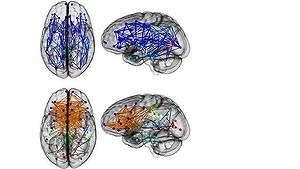
20131203-092519.jpg

Wired differently: tracking men’s brain connections at top and women’s beneath.

Women can’t parallel park and men can’t communicate with emotional intelligence. These common stereotypes get used as ammunition in the so-called battle between the sexes.
But, a new study by the University of Pennsylvania provides support for these (often unfair) standards.

Previous studies have looked at brain size; men’s tend to be around 10 per cent bigger than women’s, and composition; men have more white matter in their brains, which is linked to motor skills, while women have more grey matter, which is linked to sensory perception such as seeing and hearing, memory, emotions, and speech.

Nurture, as well as nature, is also known to play a part, affecting the way we act.

But, little research has been done on the way our brains fire and wire differently.

This latest study, to be published in the journal, Proceedings of the National Academy of Science, has discovered unique sex differences in brain connectivity.

The researchers used high-tech 3D scanners to trace nerve fibre connections in 949 healthy individuals, aged eight to 22.

Interestingly, the connectivity of young girls and boys was similar, but by the time of adolescence, the changes become marked. By the time of adulthood, the differences are considerable.

The male brain showed stronger connections within one hemisphere, whereas the female brain tended to work more across both hemispheres.
The results suggest that male brains are structured for perception and co-ordinated action, the study’s authors said, whereas females are designed for communication between the analytical and intuitive parts of the brain.

“Connectivity in females would facilitate integration of the analytical and sequential reasoning modes of the left hemisphere with the spatial, intuitive processing of information of the right hemisphere,” the authors said. While connectivity in males “would confer an ef?cient system for co-ordinated action”.
Additional cognitive tests by the researchers found “the females outperforming males on attention, word and face memory, and social cognition tests and males performing better on spatial processing and motor and sensorimotor speed.”

It has long been hypothesised that behavioural differences between men and women have developed to be complementary and create harmonious social structures and procreation.
Indeed, in her best-selling book The Female Brain, Louann Brizendine says that while there are always exceptions we shouldn’t be afraid of acknowledging biological differences. “The fear of discrimination based on difference runs deep, and for many years assumptions about sex differences went scientifically unexamined for fear that women wouldn’t be able to claim equality with men,” she writes. “But pretending that women and men are the same, [does] a disservice to both men and women … It also ignores the different ways that they process thoughts and therefore perceive what is important.”

The authors of the University of Pennsylvania study concluded that their findings support the idea that there are developmental neural “substrates” behind this (stereotypical) behavioral complementarity between the sexes.