Alex Perry dumped from David Jones, replaced by Martin Grant

Source: News.com.au

Designer Alex Perry

Designer Alex Perry Source: Supplied

DAVID Jones has celebrated the signing of designer Martin Grant after having “deleted” high-profile designer Alex Perry.

David Jones has held an intimate fashion parade at its Elizabeth Street Sydney flagship store, showcasing a collection of elegant, black outfits and modern geometric patterned dresses, created by Melbourne-born Paris-based designer Martin Grant.

Outfits by Martin Grant, who designed the new Qantas uniforms, will be available at the department store from February, while the Alex Perry brand will be “exited” from August.

Alex Perry joined David Jones after defecting from Myer in 2007, but a David Jones spokeswoman said sales of the brand have declined over the past three years.

“The deletion of this brand enables David Jones to reallocate this floorspace to new brand Martin Grant and to high performing brands such as Camilla World and Rachel Gilbert,” group executive merchandise Donna Player said on Monday.

Meanwhile, Martin Grant, who attended the launch event, said he was honoured to have secured representation in his home market, adding that he is “excited that my collections will be available locally in Australia.”

Martin Grant’s designs are worn by actors and celebrities, such as Cate Blanchett, Juliette Binoche, Blake Lively and Kate Hudson and are stocked in high-end department stores around the world, including US stores Barneys and Saks Fifth Avenue.

Victoria’s Multicultural Awards for Excellence – Greek Australian recognised in the community

2013 RECIPIENTS

The awards attracted more than 200 nominations, showing the breadth and support of people who make Victoria a great place to live.

List of all 2013 Victoria’s Multicultural Awards for Excellence recipients in category order (PDF 224 kb)

Seven Greek Australians have been honoured with Multicultural Awards of Excellent for their service to the community this week.

The awards are a Victorian Multicultural Commission initiative and aim to highlight everyday heroes who offer their time to ethnic communities of Victoria.

Chris Chistodoulou from Lalor

Pandelis Hatzipandelis from Roesbud

Theodora Koufopoulos from Reservoir

Anna Nichola from Malvern East

Nellie Nikoloudis from Richmond

Maria Sotiriou from Mount Elisa

Maria Vlachodimitropoulos from Wheelers Hill

all got honoured for their service to the Greek Australian community.

In 2013, the Victorian Government honoured 77 people and 23 organisations. Awards were presented across ten categories, including the Premier’s Award for Community Harmony and the Victorian Multicultural Honour Roll Inductee.

The awards were also presented by the Minister for Multicultural Affairs and Citizenship Nicholas Kotsiras, Minister for Local Government Jeanette Powell, Minister for Education Martin Dixon, and Chief Commissioner of Police Ken Lay.

Mr Chistodoulou was honoured for his work for the Greek Australian Cypriot community, and has been instrumental in the development of the new Cypriot Age Care Facility in South Morang.

VMC Chairperson, Mr Chin Tan said it was nice to see emerging communities represented in the awards.

Harry Danalis has been re-elected as President of the Greek Orthodox Community of New South Wales.

Source: NeosKosmos.com

Danalis re-elected President

Danalis re-elected President

The President of the Greek Orthodox Community of NSW Harry Danalis. Photo: Themis Kallos

The ticket of the current President of the Greek Orthodox Community of New South Wales Harry Danalis was endorsed overwhelmingly in the Board elections that took place last Sunday.

Mr Danalis’ ticket won 66 percent of the vote and had all twenty board members elected, nine of which join the Greek community’s Board for the very first time.

On the whole, membership turn-out and participation was high, with 1854 votes out of a membership of 2590 entitled to take part in the electoral process. Proxies accounted for 1430 votes, while 23 per cent opted to vote in person.

The result came as no surprise, given the fact that the winning Danalis’ ticket was estimated to have submitted the majority of proxy votes registered.

The newly elected Board met on Wednesday in order to elect its new Executive – Mr Danalis was re-elected as President, Ms Nia Karteris- Vice President and Chair of the Sydney Greek Festival, Mr Michael Tsilimos – Secretary, Mr Chris Gravaris – Assistant Secretary, Mr Chris Belerhas – Treasurer, Mr Nick Malaxos- Assistant Treasurer and Mr Chris Georgopoulos was given the position of representing the Greek Orthodox Community of N.S.W. at the Federation of the Greek Orthodox Communities of Australia.

Financial distress is one of the key issues the new Board Executive has promised to resolve.

The current belt-tightening period for the Community comes after last year’s deficit of $300,000 had almost doubled this year.

Other priorities for the new Board are the creation of a Child Care facility, the expansion of the Home for the Aged with an additional dementia wing, the utilisation of the Lakemba premises and the estoration of their Paddington building.

The new Executive is believed to be less affiliated to political parties than at any other time, during the last few decades.

The coordinators of the various GOC of NSW committee, shall be elected within the next few days.

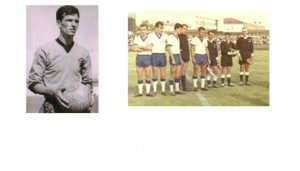
Vasilis Vasilas, pays tribute to Pan-Hellenic’s charismatic striker Giannis Karayiannis (1939-2013)

Source: SydneyOlympic.com.au

20131206-104556.jpg

Giannis Karayiannis (1939-2013)

With the sad passing of, Giannis Karayiannis (1939-2013), last week, Sydney school teacher and historian, Vasilis Vasilas, pays tribute to Pan-Hellenic’s charismatic striker by publishing an old interview with him- in full- for the first time.

Growing up in Athens during the Occupation immensely impacted and shaped my family and childhood. Desperation and survival were our daily lives; as a child, I may have been only an observer of what goes on but I quickly learnt to read and understand the pain and anguish on people’s faces. When my stomach began to rumble from hunger and I was told that there was nothing to eat, I quickly learnt of daily hardship. There is no other greater tragedy in a young family than to lose a parent; in all his desperation, my father, Panayiotis, jumped onto a truck- which was carrying bread- and began throwing out loaves to other hungry people. The Germans arrested him and he was later executed at Goudi. My memories of my father are dream-like- of him returning home and playing with me on rug or handing me a piece of bread. They are almost unreal. My mother, Maria, was left to rear four sons; luckily, my two brothers, Nikolaos and Dimitrios, were much older than Spyros and me, and they worked odd jobs to help us survive.

In Kesariani, our home was less than fifty metres away from the German guardhouse where executions- of captured Greek resistance fighters, petty criminals or ‘troublemakers’- frequently occurred. On May 1, 1944, the Germans executed a few hundred Greeks; I remember the hearing these men singing the Greek national anthem before being shot. The exploding gunshots echoed throughout our minds, leaving a deep sorrow in us. When the council rubbish trucks- carrying all the corpses- drove out of the guardhouse and passed us in the street, there was blood dripping from the trucks and onto the road. Adults and children, we all tried to cover the blood with dirt. These were horrors one cannot forget, even though I was so young. Later that year, the fear of the Germans was replaced by the fear of the Greek Civil War. All the children were told not to openly speak about anything, as it could easily be misconstrued by the authorities and land our families into trouble. These were traumatic years to grow up in; our childhood innocence was taken away from us and we developed this notion that things cannot get better. Even when these wars were over, and the reconstruction of Greece began, we looked for ways to suppress these horrific memories- I played sport.

Despite not being a dedicated student, I still did reasonably well at school. I put all my energy in track and field, basketball and football. At Pagrati High School, I was always first in high jump and was captain of the basketball team. As Ethnikos Asteras’ home ground was close to our house, it was only natural for me to play for them. As a teenager, you dream of playing football for one of the big Athenian football clubs; the skills and techniques I learnt in athletics and basketball would prove invaluable when I did pursue a football career. One afternoon, as we were playing neighbourhood football, George Gasparis- a former A.E.K. Athens player, was passing and stopped to observe us. He invited a group of us to trial with Ethnikos Asteras on the following Tuesday. Gasparis was a scout and coach who took young players and dedicated a lot of time to successfully develop them. This was the beginning of my dream.

From 1953, I spent eight seasons at Ethnikos Asteras, which was one of the better teams in the Athenian A2 competition. For three years, 1958- 61, I had been one of the best centre-backs in the competition. When I was selected to play in the Under 18’s mixed Athens team, I realised the ‘unreachable’ childhood aspirations becoming a reality; in our annual match against the 1st Division Champions- that season, it had been Panathinaikos- we defeated them 2-0 at Near East Stadium. Such matches gave me the exposure for interested 1st Division teams to possibly signing me. A.E.K approached Gasparis; they saw my abilities on the field but needed to find out more about my character. As Panathinaikos was also interested in me, I was sent to the island of Andros where Club President, Nikos Goumas, hosted me while my contract was being finalised and to be signed. From as young as I can remember, I was always an A.E.K supporter. My father was from Aivali, a town on the Asia Minor coast, and came to Greece as a refugee after the exchange of populations between Greece and Turkey (1923). A.E.K represents these lost homelands, and there was nothing more sacred than playing for that shirt. While A.E.K was well into their pre-season training, I began mine alone on Andros. A.E.K. came to the island for a friendly against Andros where I made my debut in our 0-9 thrashing. I was playing alongside legendary players such as Kostas Nestorides and Andreas Stamatiades; I had made the big league.

Part of the agreement was for A.E.K. to find me work; there was very little money in football and you still needed a good job to survive. Whether it was in Greece’s national communications or water companies, it did not bother me; all I wanted was job security. However, nothing had eventuated. Our coach, Trifonas Tzanetis, did not show a liking towards me and he showed this by only selecting me on important matches. It was like being thrown into the ‘fire’ every time; I was not prepared as my match-time before these matches was extremely limited. My matches include: a loss to Barcelona 2-5, wins against Bolton and L.U.S.K , 4-1 and 2-0 respectively, a win against Olympiakos 2-0 and a draw in our return match against them. I did not mind playing against such great teams and I also desired stability- to build my confidence and fitness for these matches over a few matches.

I did not leave A.E.K. because I could not break into 1st Grade, or I was never playing; it was the issue of work. George Salapatas was visiting Greece on a business trip and approached me with Pan-Hellenic’s offer. Former A.E.K. player and Pan-Hellenic winger, Chris Ambos, who was already playing for Pan-Hellenic, probably recommended me to the Club’s coaching staff and Committee. When I boarded onto the Sydney-bound plane in September 1962 I looked back and believed it was the last time I was seeing Athens. Despite thousands of Greeks migrating to Australia, it was still an enormous decision to come here- especially for sports stars. What if I did not make it in Sydney and returned to Greece; how difficult would it be to re-establish myself?

Luckily I was still only twenty-two years old when I arrived in Sydney in 1962; although there was so much uncertainty, my young spirit allowed me to adjust and overcome any initial problems. My reunion with my fiancé, Eleutheria, in January 1963 also made it easier for me. My initial experiences at Pan-Hellenic were not favourable; I cannot say the Club looked after me. It was only after a couple seasons, when I was moved to striker and began scoring goals, that suddenly Pan-Hellenic changed their attitude and looked after me. However, those first years at the Club were difficult. Once I began to overcome the language barrier, I began to get onto my feet. If the Club was not going to look after me, I had to do things for myself. Thankfully there were people like Comino Omeros who lived nearby and we became family friends and even worked together. Others such as Paul and Kay Peters looked after us as if we were family. We were fortunate to establish a caring support network that helped us adjust to Sydney.

Although the team made the semi-finals in 1963, the Committee had a change of direction towards who they would sign to play for the team; suddenly, Greek players- including myself- were out of favour. I was so disappointed when my dear friend, Ambos, was released. The 1964 team was almost a new team. I did not understand why the Committee would tamper with a team that was already relatively strong enough to make the finals. The Committee did not have experience in the management of a football team; they suddenly came onto the scene and their inexperience showed. Club Secretary, George Pappas, was a good administrator but a successful team needs an efficient group of administrators to maintain its order and progress. Club President, Andrew Carr, and later Angelo Mallos, may have been enthusiastic and willing to spend lots of money to help the Club, but experience and expertise was needed to ensure their generosity was reaching places where it was really needed.

For a couple of seasons, I was in the players’ wilderness but I continued going to training and was still very fit. I was happy to play 2nd Grade; it did not worry me. Off the field, the birth of daughter, Maria Christina, brought Eleutheria and I great joy. I had other priorities to really worry about- other than the decisions of the coaching staff. However, I did become disgusted by the manner some of the Greek players were treated when our new coach, Manny Poulikakis, brushed them aside. He decided to release club stalwarts, Omeros and Sotiris Patrinos, and Fotis Dakouvanos. I was the best player in 2nd Grade, and I would be invited to play in 1st Grade; but I continued to turn up for the 2nd Grade matches. This was my personal protest against what I believed were poor coaching decisions. I had absolutely no problems with any of the Pan-Hellenic players- Greek or non-Greek. I fondly remember going to a pub after training with players such as John Cole, Roy Blitz, Doug Logan and Jimmy Pearson and they would teach me English. I only had problems with the coaching staff. When Pan-Hellenic was on the verge of relegation in 1965, I openly expressed my appalled feelings to Poulikakis; I would turn up to training and ask him, “Are you still here?” He did not see out the season.

The arrival of our new coach, Walter Tamandl, changed our fortunes; he was a coach that made me enjoy playing for him. Playing for F.K. Austria and Prague in their hey-day made everyone listen up. However, the team still found itself in play-offs against a strong Polonia for relegation. Whoever lost was relegated. We were down 1-0 when our half, Johnny Sanchez, instructed me to move up front. Blitz made a dash down the sideline and crossed the ball, which I headed the ball into the net to equalise- we survived with a 1-1 draw. At high school, I could jump 1.85cm in the high jump, so it was only natural to jump for such high crosses. In the next relegation play-off, Tamandl instructed me to play forward and I scored a double in our 5-4 win. We celebrated our victory at the Hellenic Club; I cannot remember that night! From this point I was Pan-Hellenic’s striker. Over the next three seasons, I would be the Club’s top scorer and in 1967, I was third in the whole competition- after Giacomo Giacometi and Johnny Warren. The player who I attribute my success as striker was Blitz; we really complimented each other because his precision crosses needed someone to put the ball into the opposition’s net. It was as though Blitz and I were a couple; we both made each other look great on the field. I remember going together Paddy’s Markets once and all the Italian fruit stall owners gave us all these bags of fruit; it was their way of showing Blitz and I their appreciation of what we were achieving on the field- it did not matter if they were A.P.I.A. supporters.

When certain players begin to shine on the field, it is mostly because they are surrounded by in-form players: George McCulloch was workaholic; John Cole was a classic defender and Brian Smith never stopped running. In 1968, Tamandl returned for his second-stint as coach at the club and Greek legend, Takis Loukanidis, arrived to a team already playing well which needed a classy player, such as him, to cap it off. Our confidence was up throughout the season, but I feel the team was tired in final few rounds. The Minor Premiership slipped through our fingers; we did not finish the year on a high- losing to Prague 1-0, and drawing to Melita Eagles 1-1. Everyone remembers Loukanidis’ failed penalty against Hakoah; I always took our team’s penalties but this time he asked me if he could take it. I saw no problem with it. The rest is history.

The match against Melita was my last match for Pan-Hellenic. During the 1st half, I had missed some opportunities and I was having an unlucky day. At the interval, Tamandl informed me I was being substituted. I could not believe this. This decision also deprived me of any chance of being the competition’s top goal scorer. I later found out certain members of the Club’s executive instructed Tamandl to change his tactics. Naturally, I was upset. I walked out of the Club; I was not going to give anyone the satisfaction to humiliate me. It was an abrupt exit.

However, my football career continued. I went down to Canberra Olympic as player-coach for one season, before playing for the local Juventus- where we won the local Championship and Cup double. I received an offer to play for New York’s Greek- Americans by their coach at the time, Alketos Panagoulias. Suddenly, I found myself a migrant a second time and moving to another country again; I suppose it was much easier this time because I could communicate (i.e. English). It was in the United States that Eleutheria gave birth to our second daughter, Angela Patricia. I enjoyed myself playing there, as the team was practically filled with former Greek1st Division players such as Kyriakos Hasekidis, Lolos Hasekidis and Kostas Kouyioukas. In 1974, we won the U.S.A Championship and Cup double, and I retired on a high note. I still remained close to the team- coaching it several times over the years- until my family and I returned to Greece in 1989.

For two years I was not involved with sport in any way. An opportunity did arise when A.E.K. legend, Andreas Stamatiades and I were asked to become involved with A.E.K’s Academy; between Apostolos Toskas, George Karafeskos and Stelios Serafidis, we all rotated in coaching the different age groups. My association with the Academy lasted until 2002. I remained General Secretary of A.E.K.’s “All Stars”- organising friendly matches against other “all stars” teams to help other players who were not as fortunate as us- in health and finances.

I spent almost six seasons at Pan-Hellenic; it was disappointing to leave behind so many friends. The years at the Club coincided with so many developments in our lives- experiencing personal growth and my young family. Our supporters were incredible; my daughter, Maria, used to come to watch some of our matches; our supporters would care for her until the final whistle and return her to me after the match. In 1968, she was actually Miss Junior Pan-Hellenic, and one of my proudest moments was escorting her onto the stage. Such are my wonderful memories at the Club. Both our daughters grew up in football circles; whether at training or at matches- it was a way of life for our family. I love Pan-Hellenic the same way I love Ethnikos Asteras because I experienced all the joys and sorrows of what it meant to be football player. I am a happy retired grandfather who looks through photo albums of my football career and… I would not change anything. Pan-Hellenic and Sydney always have a separate part in my heart- with the fondest memories.

Extracts of this interview and all photographs were published in: Vasilios Vasilas, ‘The Giant Who Never Awoke: History and Oral Stories of Pan-Hellenic SC (1957-76), Sydney, (2012).


Greece to be added to the Working Holiday visa programme in Australia

Source: australiaforum.com

Greece is expected to be added to the Working Holiday visa programme where young people can travel in Australia and work for a certain amount of time to support themselves.

Discussion over holiday working visas for young Greek people are to take place amid concerns that there could be a flood of them wanting to apply due to the economic situation in their country.

The Working Holiday visa programme allows young people to travel in Australia and work to support themselves

Australian Immigration Minister Scott Morrison is meeting Greece’s Ambassador to Australia to discuss concerns that many young people from Greece take off for a new life in Australia without knowing enough about the country and armed with inefficient and sometimes wrong information.

The Australian Council of Trade Unions (ACTU) is calling for a moratorium on the working holiday visa programme amid worries that floods of young people from abroad means that young Australians are losing out on jobs.

ACTU president Ged Kearney said that the government should review signing off working holiday agreements with new countries such as Greece and other European countries suffering economic difficulties.

‘If you look at just unemployed teenagers in Australia who are looking for full time work it’s rising well toward 25%. Before we just jump into saying well, let’s open up the holiday visa program for example and allow all those young people in Europe to come to Australia, we have to stop and just have a think about what impact that will have on our economy; what the impact of that is on our young people,’ she commented.

In the last year there has been a 30% increase in the number of young foreigners coming to Australia on working holiday visas. But supporters point out that the working holiday visa programme for Greece is expected to be initially capped at 500 per year and point out that more of a threat is the number of working holiday visas being granted for young people from Taiwan and South Korea which are uncapped.

Morrison said the Australian government would continue to offer working holiday visas for the good of the economy. ‘The facts are that tourists coming to Australia on working holiday maker visas create jobs for Australians. They are good for jobs and good for our regions. The programme is not a work visas and undertaking work is an optional part of a working holiday visa,’ he added.

Meanwhile, the Australian-Greek Welfare Society has organised an awareness campaign in Melbourne to inform the new immigrants about the visas and the immigration law in Australia.

The Greek community in Australia has seen a huge increase in the number of people moving to Australia as a result of Greece’s economic woes. But the society said that many arrive without sufficient information and not knowing the immigration law and the life conditions of the country.

Also, sometimes even those who speak English very well, are lost in the information that the Department of Immigration provides them. They are confused about what path to follow in order to stay in Australia while having to find a house and work in order to pay visa expenses, and tuition fees.

The Australian-Greek Welfare Society said it will carry out new research to gather as much information as possible on the critical issues facing new Greek immigrants and how they are adapting to life in Australia. The results will be discussed with government institutions and will create the basis for creating future programmes to support immigrants.

Assistant Treasurer Arthur Sinodinos may review pledge to scrap Clean Energy Finance Corporation

Source: TheAge

20131205-122546.jpg

The Coalition’s pre-election promise to scrap the Clean Energy Finance Corporation may be reviewed because of the fund’s apparent success.

A senior Coalition minister has indicated he will reconsider the government’s decision to scrap Labor’s Clean Energy Finance Corporation, given its apparent financial success.

While he was reluctant to break a Coalition election promise, Assistant Treasurer Arthur Sinodinos told ABC radio on Thursday he was ”happy to go through the CEFC’s annual report and have another look”.

Senator Arthur Sinodinos says the ”challenge” for the Coalition is that it went to the election with a promise to abolish the carbon tax and its associated infrastructure.

CEFC chair Jillian Broadbent has been urging the Abbott government to reconsider its promise to axe the organisation given its success in raising money for clean energy programs without cost to taxpayers.

The corporation writes business cases for new clean energy projects, offers security for private investors and exploits the government’s ability to borrow money at lower rates.

Joining with the CEFC lowers the risk for private investors and encourages them to back emerging technologies.
So far, the CEFC has been financially successful, attracting $2.90 for every $1 it has invested.

Investment in 39 projects to date will lead to 3.88 million tonnes of carbon emissions abatement each year.
These investments turn a profit for taxpayers of about $2.40 per tonne.
After it was put to him that it made no sense to scrap the CEFC, Senator Sinodinos said the ”challenge” for the Coalition was that it had gone to the election with a promise to abolish the carbon tax and the infrastructure surrounding it.

”If this was commercially viable, well, it wouldn’t need the government,” Senator Sinodinos added.

”Co-financiers see the government as standing behind all these projects then essentially they’re getting up simply because the government can borrow more cheaply.”

Senator Sinodinos was asked why it was a bad thing for the government to use its ”might” to unleash more investment in clean energy.

He said if the government backed clean energy investments, business people might think the government ”could do this across the board and just support all borrowing or all lending by the private sector”.

Ms Broadbent said Australians wanted to see ”good policy and continuity of policy”.

”Promises can be too much of a simplification,” Ms Broadbent told ABC radio on Thursday.

”A promise to abandon a fund when it hadn’t really been operating and hadn’t really demonstrated its effectiveness should be reassessed.”

Ironman MP John Pandazopoulos announces he won’t recontest the seat of Dandenong

Source: Dandenong Leader

John Pandazopoulos won't recontest the seat of Dandenong at the next state ...

John Pandazopoulos won’t recontest the seat of Dandenong at the next state election. Source: News Limited

STATE Labor MP for Dandenong John Pandazopoulos has announced he won’t be standing at the next State Election

Mr Pandazopoulus said he was retiring from 22 years in State Parliament and 26 years in public life, including his time as a councillor and Mayor of the then City of Berwick.

‘Panda’, as he is affectionately known, said it was an honour and privilege to have served the people of Dandenong and surrounding suburbs.

“It’s mostly an area of working people and migrants who are working hard to make a living for themselves and their families, a story similar to that of my parents,” Mr Pandazopoulos said.

“These people rely on us Labor people to look after them, advocate for them, defend their rights and interests and, when in government, deliver for them.”

Mr Pandazopoulos said he was proud of his achievements in office, including the transformation of the Dandenong CBD, EastLink, the Dandenong Bypass, and enshrining multiculturalism in the Multicultural Victoria Act and the Racial and Religious Tolerance Act.

“All of these were achieved through the shear hard work of the many people that I have worked with who shared the vision,” he said.

“I, of course, remain in Parliament until the next election, serving the people of Dandenong and continuing my work on Parliament’s Environment and Natural Resources Committee.”

Mr. Pandazopoulos has served in the Parliament of Victoria for 22 years and he will not be running again in the November 2012 election. He is the longest standing Greek politician to hold a seat in Australian parliament. He was elected to the City of Berwick Council in 1987, and was Mayor of Berwick from 1990-1991. He is also the chairman in the World Hellenic Inter-Parliamentary Association (WHIΡA).

In the meantime, the former Mayor of Monash, Stephen Dimopoulos, announced that he will fight for the nomination of candidate for the Labor Party for the government seat of Oakley.

The Greek Lambros Tapinos, the current Mayor of Moreland announced that he will fight for the seat of Pasko Veil with the Labor Party.

Nick Xenophon calls for Senate Inquiry into GM crop farming

Source: dailymercury.com.au

Senator Nick Xenaphon Senator Nick Xenaphon

CONCERNS over genetically-modified crops are again hitting the headlines as Independent senator Nick Xenophon calls for a Senate Inquiry into GM crop farming and what it can costs their non-GM farming neighbours.

Mr Xenophon is inspired by a case due to his the West Australian Supreme Court next year in which a farmer lost his organic certification after a neighbour’s GM crop spread on to his property.

The organic markets he profited from were now closed to him and he claims 70% of his property was affected.

The inquiry, Mr Xenophon said, needs to review the regulations around GM farming so those unwillingly affected can seek compensation without having to fight an expensive court battle.

“Certainly if someone has to pursue their right through a multi-million dollar court case, it is beyond the means for almost any farmer in Australia,” Mr Xenophon said.

The Senator expects to launch the inquiry once the WA case wraps up.

Mayor vows considered response to desecration of Greek and Lebanese Orthodox Church section graves

Source: dailyliberal.com.au

Anna Sarantzouklis holds back tears as she looks in horror at her husband’s desecrated grave. 	Photo: KATHRYN O'SULLIVAN

Anna Sarantzouklis holds back tears as she looks in horror at her husband’s desecrated grave. Photo: KATHRYN O’SULLIVAN

One of the almost dozen graves which were desecrated. Photo: KATHRYN O'SULLIVAN

One of the almost dozen graves which were desecrated. Photo: KATHRYN O’SULLIVAN

One of the almost dozen graves which were desecrated. Photo: KATHRYN O'SULLIVAN

One of the almost dozen graves which were desecrated. Photo: KATHRYN O’SULLIVAN

One of the almost dozen graves which were desecrated. Photo: KATHRYN O'SULLIVAN

One of the almost dozen graves which were desecrated. Photo: KATHRYN O’SULLIVAN

One of the almost dozen graves which were desecrated. Photo: KATHRYN O'SULLIVAN

One of the almost dozen graves which were desecrated. Photo: KATHRYN O’SULLIVAN

One of the almost dozen graves which were desecrated. Photo: KATHRYN O'SULLIVAN

One of the almost dozen graves which were desecrated. Photo: KATHRYN O’SULLIVAN

One of the almost dozen graves which were desecrated. Photo: KATHRYN O'SULLIVAN

One of the almost dozen graves which were desecrated. Photo: KATHRYN O’SULLIVAN

One of the almost dozen graves which were desecrated. Photo: KATHRYN O'SULLIVAN

One of the almost dozen graves which were desecrated. Photo: KATHRYN O’SULLIVAN

One of the almost dozen graves which were desecrated. Photo: KATHRYN O'SULLIVAN

One of the almost dozen graves which were desecrated. Photo: KATHRYN O’SULLIVAN

One of the almost dozen graves which were desecrated. Photo: KATHRYN O'SULLIVAN

One of the almost dozen graves which were desecrated. Photo: KATHRYN O’SULLIVAN

One of the almost dozen graves which were desecrated. Photo: KATHRYN O'SULLIVAN

One of the almost dozen graves which were desecrated. Photo: KATHRYN O’SULLIVAN

One of the almost dozen graves which were desecrated. Photo: KATHRYN O'SULLIVAN

One of the almost dozen graves which were desecrated. Photo: KATHRYN O’SULLIVAN

One of the almost dozen graves which were desecrated. Photo: KATHRYN O'SULLIVAN

One of the almost dozen graves which were desecrated. Photo: KATHRYN O’SULLIVAN

One of the almost dozen graves which were desecrated. Photo: KATHRYN O'SULLIVAN

One of the almost dozen graves which were desecrated. Photo: KATHRYN O’SULLIVAN
One of the almost dozen graves which were desecrated. Photo: KATHRYN O'SULLIVAN

VANDALS desecrated almost a dozen graves in the New Dubbo Cemetery at the weekend, breaking off religious icons from headstones and smashing glass reliquaries.

  • One of the graves that was damaged at New Dubbo cemetery.

DUBBO’S mayor has promised to look into security options to prevent a second spate of vandalism at the New Dubbo Cemetery.

Councillor Mathew Dickerson slammed the recent desecration of almost a dozen graves and vowed the council would take action.

“It’s a very sad fact that the final resting place of people, a very sacred area, is desecrated,” he said.

“I struggle to understand the mindset of the people who vandalised the graves.”

A man who would only be identified as Lonnie for fear of retribution said he was shocked to see a funeral cross thrown in his backyard on Saturday afternoon.

Lonnie, who lives across the road from the cemetery, was mowing the lawn when he sighted the cross intact and called the police.

“I couldn’t believe someone would do such a low thing like that,” he said.

Cr Dickerson said he was not in favour of security guards roaming the cemetery as it was too expensive.

Security fencing would be a better option which would be discussed with councillors based on cost and the frequency of vandalism attacks.

“It’s a sad reflection of our community that we’re contemplating this fact to stop it happening,” he said.

Cr Dickerson said there should not be a need to install a high security fence as it was a sacred area which should be respected.

“My guess is a few people a bit drunk from the pub walked through the cemetery on the way home and caused damage,” he said.

“If this fence goes up it would be difficult enough to get over and (this would) reduce the chances of vandalism.”

The council’s director community services David Dwyer said the current low-height fence was installed to prevent dogs and cattle from entering the cemetery.

He called on the council to install security to keep the vandals out.

“To think someone came to the cemetery and desecrated the graves is disgusting… just senseless,” he said.

The vandals broke off religious icons from headstones, smashed glass reliquaries and scattered items from the graves in the grass near the two areas they struck – one general burial area near the centre of the cemetery and the Greek and Lebanese Orthodox Church section in a far corner.

Police are continuing their investigation and call on members of the community with any information to contact the Dubbo Police Station.

Vandals desecrate Greek and Lebanese Orthodox Church section graves at New Dubbo Cemetery

Source: dailyliberal.com.au

Anna Sarantzouklis holds back tears as she looks in horror at her husband’s desecrated grave. 	Photo: KATHRYN O'SULLIVAN

Anna Sarantzouklis holds back tears as she looks in horror at her husband’s desecrated grave. Photo: KATHRYN O’SULLIVAN

One of the almost dozen graves which were desecrated. Photo: KATHRYN O'SULLIVAN

One of the almost dozen graves which were desecrated. Photo: KATHRYN O’SULLIVAN

One of the almost dozen graves which were desecrated. Photo: KATHRYN O'SULLIVAN

One of the almost dozen graves which were desecrated. Photo: KATHRYN O’SULLIVAN

One of the almost dozen graves which were desecrated. Photo: KATHRYN O'SULLIVAN

One of the almost dozen graves which were desecrated. Photo: KATHRYN O’SULLIVAN

One of the almost dozen graves which were desecrated. Photo: KATHRYN O'SULLIVAN

One of the almost dozen graves which were desecrated. Photo: KATHRYN O’SULLIVAN

One of the almost dozen graves which were desecrated. Photo: KATHRYN O'SULLIVAN

One of the almost dozen graves which were desecrated. Photo: KATHRYN O’SULLIVAN

One of the almost dozen graves which were desecrated. Photo: KATHRYN O'SULLIVAN

One of the almost dozen graves which were desecrated. Photo: KATHRYN O’SULLIVAN

One of the almost dozen graves which were desecrated. Photo: KATHRYN O'SULLIVAN

One of the almost dozen graves which were desecrated. Photo: KATHRYN O’SULLIVAN

One of the almost dozen graves which were desecrated. Photo: KATHRYN O'SULLIVAN

One of the almost dozen graves which were desecrated. Photo: KATHRYN O’SULLIVAN

One of the almost dozen graves which were desecrated. Photo: KATHRYN O'SULLIVAN

One of the almost dozen graves which were desecrated. Photo: KATHRYN O’SULLIVAN

One of the almost dozen graves which were desecrated. Photo: KATHRYN O'SULLIVAN

One of the almost dozen graves which were desecrated. Photo: KATHRYN O’SULLIVAN

One of the almost dozen graves which were desecrated. Photo: KATHRYN O'SULLIVAN

One of the almost dozen graves which were desecrated. Photo: KATHRYN O’SULLIVAN

One of the almost dozen graves which were desecrated. Photo: KATHRYN O'SULLIVAN

One of the almost dozen graves which were desecrated. Photo: KATHRYN O’SULLIVAN

One of the almost dozen graves which were desecrated. Photo: KATHRYN O'SULLIVAN

One of the almost dozen graves which were desecrated. Photo: KATHRYN O’SULLIVAN
One of the almost dozen graves which were desecrated. Photo: KATHRYN O'SULLIVAN

VANDALS desecrated almost a dozen graves in the New Dubbo Cemetery at the weekend, breaking off religious icons from headstones and smashing glass reliquaries.

The damage in two areas of the cemetery was discovered when families visited the graves of loved ones yesterday.

Police have begun investigating the attack and the Dubbo City Council’s director community service David Dwyer slammed it as a “pretty low act”.

Vandals scattered items from the graves in the grass near the two areas they struck – one general burial area near the centre of the cemetery and the Greek and Lebanese Orthodox Church section in a far corner.

One woman, who would only be identified by her first name Joina, said she received the biggest shock in her life on seeing her father’s tomb had been desecrated.

“This is bloody disgusting… very disturbing,” Joina said, choking back tears.

“How can you have the heart to do this?

“They (the vandals) won’t let anyone rest in peace. They have no morals. It’s terrible.”

A cross worth thousands of dollars was ripped off her father’s tomb and could not be found among other scattered grave items.

“I don’t think these people have a conscience because if they did they wouldn’t do this,” she said.

“We have enough grief to deal with. We don’t need this. This isn’t fair.”

She said the cemetery was a place of rest for loved ones and should be respected.

“How can you protect the dead from stupid people?” she said.

“Do you leave them in cages so you can protect their graves? Disgusting. Disgusting is all I can say.”

Joina said she had heard of grave desecration on the news but never thought it would happen in Dubbo.

“It happened to us today and I pray it will never happen to someone else” she said.

Anna Sarantzouklis struggled to understand why her husband Elias’s grave was targeted.

The vandals smashed the glass reliquary. Holy oil from Jerusalem was splashed on the grass. A cross with an icon of the Risen Christ on the headstone was broken into pieces and other reliquary contents were taken.

“Honestly I can’t believe it. What do they get out from it?” she said shaking her head.

“How can you explain this? They don’t have anything better to do? The cemetery is the last place I’d imagine vandals would come.”

Police arrived on the scene after repeated calls from families and found some items scattered at another desecrated grave.

Dubbo City Council’s director community services David Dwyer slammed the “pretty low act” of the vandals.

“To think someone came to the cemetery and desecrated the graves is disgusting… just senseless,” he said.

He called on the vandals to think of the consequences.

“Wake up to yourself. Look at the amount of distress and heartache you’ve caused loved ones,” he said.

Mr Dwyer said the council should look at security measures to keep vandals out.

Orana Local Area Command Inspector Brad Johnston said police were investigating the vandalism and called on residents with information to contact the Dubbo Police Station.

The attack at the cemetery follows a spate of vandalism incidents at public sites in Dubbo in the past few months.