Greek ambassador visits Newcastle

Source: TheHerald

20131027-201116.jpg

20131027-201125.jpg

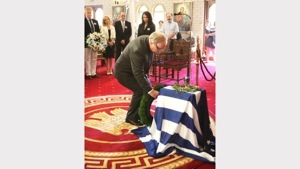
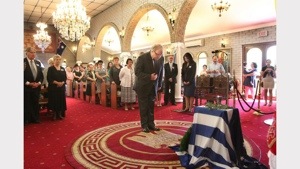
Scenes from the special liturgy attended by the ambassador of Greece to Australia Charalambos Dafaranos at the Greek Orthodox Church in Hamilton on Sunday. Picture: Phil Hearne

FOSTERING relationships with academics, the business community and “all walks of life” was on the agenda for the Greek Ambassador to Australia when he visited Newcastle at the weekend.

Charalambos Dafaranos led the celebrations for the National Day of Greece on Sunday at the Greek Orthodox Church of the Holy Apostles in Hamilton.

It was his first time in Newcastle and he said he was impressed with the vibrant Greek community and the strong and positive presence it held in the city’s culture.

He also talked about the strong economic strength of an industrial hub such as Newcastle.

“As you know Greece is counting very much on all the people who live overseas,” he said.

“Newcastle is a dynamic port and a very important outlet for coal exports.

“We are happy that the Greek shipping is a very important part of the business of transporting Australian exports overseas.”

Mr Dafaranos described the region as a “beacon of activity”.

“For us it is an opportunity to see all walks of life, meeting with all the professionals, a special focus on academia and the business community and also on the friends of Greece,” he said.

“We would love to have the opportunity to have more co-operation with our academics of Greek origin with the focus to have more scholarships and more scientific co-operation with Greece.”

“Every stone unturned is a missed opportunity, so the Greeks are covering all walks of life.

“I would never want to miss out on visiting such an important industrial hub.”

Saving the Greek Monastery at Yellow Rock the St George Monastery

Η πύλη της Ιεράς Μονής Αγίου Γεωργίου του Βουνού πριν την πυρκαγιά

Photo

Photo
Photo
Photo
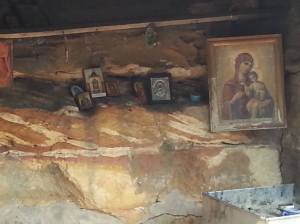
Greek Monastery in Yellow Rock.
Greek Monastery in Yellow Rock
Greek Monastery in Yellow Rock.
j
l

http://media.sbs.com.au/audio/greek_131019_295711.mp3

George Spiliotis spoke to the Greek Program from Blue Mountains giving information about the condition of the Greek Monastery in Yellow Rock.

p

The gate of the Monastery before the fires (St. George Monastery NSW)

Κινδύνευσε να καεί Ελληνορθόδοξο μοναστήρι στο Σίδνευ

Από την μεγάλη πυρκαγιά που ξέσπασε στη Νέα Νότια Ουαλία της Αυστραλίας κινδύνευσε η Μονή του Αγίου Γεωργίου, στο Yellow Rock στην περιοχή Blue Mountains του Σίδνευ.

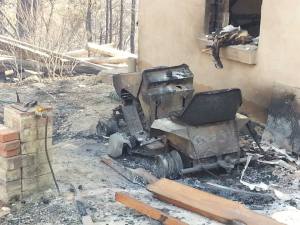
Δυστυχώς το οίκημα που διαμένει ο πάτερ Κυριάκος, ιερέας της Μονής του Αγίου Γεωργίου, κάηκε ολοσχερώς και μαζί με αυτό πολλά βιβλία, εικόνες και όλα τα άμφια.

Ο ιερέας μαζί με μερικά άτομα που διέμεναν στο μοναστήρι αγωνίστηκαν σκληρά για να σώσουν το σπίτι αλλά μάταια. Επίσης, κάηκαν εξωτερικές τουαλέτες και υπόστεγα .

Ο Ξενώνας και οι εκκλησίες του Αγίου Γεωργίου, του Αγίου Ιωάννη του Θεολόγου και του Οσίου Χριστόδουλου απειλήθηκαν, ωστόσο γλίτωσαν από τη φωτιά .

Μέχρι στιγμής, οι αρχές δεν επιτρέπουν στους ανθρώπους να εισέλθουν.

Στην ανακοίνωση της Μονής παρακαλούνται οι πιστοί να αποφύγουν τις επισκέψεις στους χώρους της όσο είναι κλειστοί «γιατί είναι επικίνδυνο» και σημειώνεται ότι ο Επίσκοπος κ. Σεραφείμ θα κάνει σχετικές ανακοινώσεις για διεξαγωγή εράνου στις ελληνορθόδοξες εκκλησίες με στόχο την αποκατάσταση των ζημιών.

St. George Monastery

St. George Monastery

St. George Monastery

MONASTERY OF ST GEORGE, BLUE MOUNTAINS AFFECTED BY THE FIRE.

As you may have heard NSW was recently hit with the worst fire emergency this decade. Unfortunately this raging fire also went through the Monastery of St. George, Yellow Rock in the Blue Mountains.

The report so far is as follows:
At Approximately 1:00pm Thursday 17th October, with high temperatures and winds exceeding 110km/h and with no warning the fire which was near the Monastery suddenly was upon it.

Fr Kyriakos is the Abbott of the Holy Monastery of St George, Yellow Rock.

Fr. Kyriakos’ residence was completely burnt down and with it many books, icons and all vestments were lost. Father and a few men who were staying at the Monastery at the time fought hard to save the house but could not. Also external toilets and sheds were burnt.

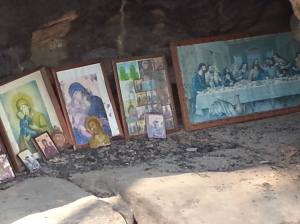
The Xenona and the Churches of St. George, St. John the Theologιαn and St. Christodoulos were also under threat, all fought hard to save them and with the help of God and Panagia were spared from the fire.

So far the Monastery is not safe and authorities will not allow people to enter.

With more high temperatures and winds predicted this weekend, please lets all be joint as one family of Christ to pray for Fr. Kyriakos and everyone who lost their homes. May God bring relief to Yellow Rock and the surrounding area and protect the Monastery from further devastation.

The Greek Orthodox Archdiocese of Australia is taking up the initiative to help bring in donations, for Father Kyriakos and all the other victims affected.

The Archdiocese has opened a bank account to raise funds for the monastery.

People are urged to donate to the Greek Orthodox Archdiocese Property Trust – St. George Monastery, BSB: 082 057, Account Number: 616 960 042, Bank: NAB.

You can also donate to the Australian Red Cross, by calling 1800 811 700 or visiting http://www.redcross.org.au/

Made in Greece

Source: TheAustralian

Calombaris

George Calombaris is opening a new Hellenic Republic at the site of the old St Katherines in Kew, Melbourne. Source: Supplied

http://www.theaustralian.com.au/executive-living/food-drink/made-in-greece/story-fn86jbrr-1226744042853#ooid=ZnbDduZjp3YAOpToRuCJhA2L-P_jmp1l

ST KATHERINE’S, the suburban dude food haven set up by The Made Group in Melbourne’s Kew with former collaborator Shane Delia, is to close.

But the group has plans for the space: it will become the second Hellenic Republic, the George Calombaris-inspired modern taverna the group operates in Melbourne’s Brunswick. Delia and The Made Group separated amicably this year, with Delia buying out the balance of his Maha restaurant. “We know what we’re good at,” says Calombaris of Hellenic Republic Kew, “and it’s all things Greek.” The new 100-seat restaurant will close for a refit next month that will include a bespoke Greek pastry kitchen and shop as well as an events space upstairs. Is a third Hellenic likely? “We’re not ruling it out,” says the chef. Meantime, Jimmy Grant’s, the group’s gang-busting souvlaki joint, is expanding; a new site, in the Melbourne suburb of Ormond, has been confirmed. We don’t expect it to end there, either. Calombaris’s tiny, lab-like Press Club will reopen before Christmas with an armory of technology unseen in any Australian kitchen, ever.

BRISBANE: It’s not all bad news in Brisbane, where One Eleven and Ortiga announced final drinks last week (see video). Former Circa/Prince of Wales exec chef Jake Nicolson has made the move north to start work on the city’s next big riverside restaurant project, Blackbird, for the Ghanem Group. It’s due to open mid-January. “In the meantime, I will be based at 5th Element where I am busy working on relaunching the restaurant,” he says.The Southbank wine bar is one of four venues the group operates.

BAROSSA: Appellation, the restaurant at Barossa luxury resort The Louise, is the latest to respond to the changing mood at the top end of dining. It’s out with tablecloths and degustation, in with a more casual look and a rotating, 16-dish carte. “Altering a winning formula may seem counter-intuitive,” said Jim Carreker, the property’s owner. “However, we are convinced that these adaptations signal the future of contemporary regional dining in Australia”. Ryan Edwards remains head chef.

SYDNEY: Atelier (Glebe) is the latest to announce closure. The small, set-menu restaurant of chef Daren Templeman will shut for good on New Year’s Day after 10 years. In a surprisingly candid statement, Templeman said: “After much thought and reflection on the direction of the Sydney dining scene, we’ve come to realise that Restaurant Atelier no longer seems relevant in the current climate.”

MELBOURNE: Restaurateur/investor Frank Van Haandel will relaunch the less than stellar Trocadero, at Hamer Hall, as Fatto, with his group general manager Anthony Musarra back in the kitchen channelling his Italian roots. It’s probably not what Musarra was looking for at his stage of career maturity, however, Fatto, which the chef has a stake in, needs a potent bite when a total refit, after less than a year, is finished next month. The rather bland initial design will be replaced by a look penned by design darlings of the restaurant industry, Projects of Imagination.

ADELAIDE: Peel Street is shaping as the CBD’s go-to laneway for food and wine stuff. Last week, a new vodka bar – Bar Bushka (no Kate Bush songs, please) – opened, adding to the momentum of excellent small wine bar Clever Little Tailor and the wonderful new restaurant of Ben McLeod and chef Jordan Theodorus, Peel Street. Chihuahua (you guessed the theme) is next while hospitality mover/shaker Simon Kardachi (Press, Melt, Proof) is set to open a burger/hot dog cocktail bar early in the new year. We hear a Spanish tapas bar is mooted for Peel, as is something Serbian. Well done, Adelaide.

HAPPY 40TH BIRTHDAY WARATAH FLORIST

Champion Canterbury Business Awards 2013

HAPPY 40TH BIRTHDAY WARATAH FLORIST...Yes today 40 years ago,my parents Paul and Pauline opened the doors to the their beloved flower shop.Congratulations mum(and Dad in heaven)!! What a milestone and to add to the celebrations during the week we won the  2013 Canterbury Small Business Awards!Thanks to all our valued customers for voting and their ongoing support and our amazing staff for their dedication and hard work!

Yes today 40 years ago, my parents Paul and Pauline opened the doors to the their beloved flower shop.

Congratulations mum and Dad in heaven.

What a milestone and to add to the celebrations during the week we won the 2013 Canterbury Small Business Awards!

Thanks to all our valued customers for voting and their ongoing support and our amazing staff for their dedication and hard work!


STEVE KYRITSIS and the KOKODA TRACK 2013

His Excellency the Ambassador of Greece to Australia Mr Charalambos DAFARANOS is visiting the City of Newcastle the 26-27/10/2013

Visa deal on

L-R: Ms Eleni Lianidou, Greek Consul General for Victoria, Ambassador for Greece; Mr Charalampos Dafaranos.

GREEK ORTHODOX ARCHDIOCESE OF AUSTRALIA

HOLY APOSTLES GREEK ORTHODOX PARISH & COMMUNITY OF NEWCASTLE

His Excellency the Ambassador of Greece to Australia Mr Charalambos DAFARANOS is visiting the City of Newcastle Saturday the 26th and Sunday 27th of October 2013

Mr and Mrs  Dafaranos with Her Excellency Quentin Bryce Governor-General of the Commonwealth of Australia

His Excellency the Ambassador of Greece to Australia Mr.Charalambos Dafaranos, accompanied by wife Mrs. Eva Dafaranos will visit the city of Newcastle on Saturday October 26 and Sunday 27 October 2013.

The Ambassador will attend the Divine Liturgy at the Church of the Holy Apostles, on Sunday the 27th at 10.00am and will lead the Celebrations for the National Day of Greece. Following the Liturgy, His Excellency will be the Official Guest of Honour at the Luncheon, at the Hellenic Community Centre together with the Congregation.

Mr. Daraafanos , who took office in November 2012 , is an experienced career diplomat with thirty-two years service in the Ministry of Foreign Affairs.

He served in order, the Greek Embassy in Jeddah, Saudi Arabia, the Consulates in Jerusalem and in Gothenburg, Sweden, as Consul General of Greece in Johannesburg, South Africa, before being served as Chargé d’Affaires at the Embassy of Greece in New Delhi India and as an ambassador of Greece in Nigeria.

Before being awarded the position of Ambassador to Australia , he was director of the A10 Foreign Ministry with responsibility for Asia -Pacific (2009-2010) , and from 2010 until October 2012 he served as Director of the Diplomatic Office of the President of the Greek Republic Karolos Papoulias.

His Excellency the Ambassador inspecting the Guard of Honour at the Governor’s General Residence on the occasion of His Excellency presenting his credentials to the Governor General of Australia.

Race and racism drive Christos Tsiolkas after The Slap

Source: Australian Broadcasting Corporation

Author Christos Tsiolkas doesn’t mind tackling difficult areas of Australian identity and his thoughts on race and racism reveal some of what is behind his new novel.

Transcript

ANNABEL CRABB, PRESENTER: The writer Christos Tsiolkas is the son of Greek immigrants who would never have imagined when they arrived here that one day their child would write a novel about their new homeland that would sell more than a million copies and dominate a summer’s worth of backyard arguments.

That novel was The Slap, which went on to become a hit ABC series.

Tsiolkas is now one of Australia’s best-known writers and thinkers. I caught up with him to talk about his new novel, Barracuda.

Christos, thanks for joining us on 7.30.

CHRISTOS TSIOLKAS, AUTHOR: Thank you very much.

ANNABEL CRABB: Listen, you’re a great Australian novelist, but I am seriously pleased that you do not write our tourism material. Some of the Australians in your novels just are so awful. Are we really like that?

CHRISTOS TSIOLKAS: Yes. Yes, sometimes we are really awful. Sometimes we are incredibly parochial and incredibly selfish, incredibly fearful. Maybe we are still insecure about who we are, so we tend to want to be represented in particular ways. I think that may be – I don’t think Australia’s the only nation that has that insecurity, but it is an insecurity that I think is part of our culture.

ANNABEL CRABB: The new novel Barracuda is about this boy Danny, who’s a second-generation Greek boy, working class …

CHRISTOS TSIOLKAS: Second-generation Greek on his mother’s side, but Scotch-Irish on his father’s side, which is …

ANNABEL CRABB: Right. And he’s a working-class boy who leaves his school and all his mates to go and be trained as an elite swimmer at a really posh boys’ school. And I guess social mobility is something that we treasure in Australia and we think that we have, but sometimes I think we overlook just how painful that process can be and to me that’s the most sort of heart-wrenching part of your novel.

CHRISTOS TSIOLKAS: You know, in a way I think Barracuda has been a novel that I’ve been putting off writing for a long time. I’m not Danny Kelly, I’m not the character, but I think one of the most wrenching and most exhilarating experiences of my life was when I got into university. And suddenly I was torn from a working class migrant world that after a few years at university, after choosing this – following this desire to be a writer, I feel that I am no longer a part of. I’m very proud of that – of where I’ve come from. I’m really proud of who my parents were and are. But I don’t feel like I have an ownership to that notion of working class that my parents did.

ANNABEL CRABB: Isn’t this such a deep part of Australia, this migrant cycle that happens, that you’ve got these people that come and live here, bringing all of their expectations and their own histories and their own cultures sort of snap-frozen who have to adjust to the world that they find and then the world that that world becomes. I mean, you wrote in your piece for The Monthly recently about the extent of hostility towards asylum seekers in first and second-generation migrant groups in Australia, which I think touches on this, doesn’t it?

CHRISTOS TSIOLKAS: In that piece it’s certainly true that I think one of the histories of migration is that every immigrant group turns on the other. It’s part of how we defend our space in this country. But I also think that if you – whatever position my relatives may take about asylum seekers, if you actually sat down and explain the situation to them and explained – conveyed the exile of that individual, of that family, of that child, that woman, that man – I have heard it again and again from Greek immigrants, from Vietnamese immigrants, from Italian immigrants – it doesn’t matter where they come from – we have so much space here. We have more space. With that article in particular, I wanted to say that we don’t need to be frightened of talking about racism. Maybe it goes back to that thing I said about this – our insecurity as Australians about who we are. Racism is part of who we are. Racism is part of the history of this country. Racism is inevitable in a colonial nation.

ANNABEL CRABB: So what happens to these kids, these migrant kids? You wrote about them in The Slap and Danny is a classic example, caught up in that incredible cocktail of aspiration, shame, pride, love for his own background. What happens to these kids?

CHRISTOS TSIOLKAS: I will try and answer as Christos Tsiolkas, the person first and then talk about the characters. I had to do battle for so long about, “Am I Greek? Am I Australian?,” a battle that took so long and that was quite wearying. And I look at my nieces now, my nephews and nieces, who’s – one parent may be Greek, another parent may be Irish-Australian, one parent may be Chinese, one may be Dutch. They seem to possess a greater confidence about being able to live this duality, that they’re actually – and I’m really – I think that’s really important. I think that’s – to go to your question about, “Will we always be racist?,” yes, but we won’t always be racist in the same way we are now, I think – I have to be hopeful for that. And I think that’s partly what I wanted to do with the character of Danny in Barracuda, kinda to say his questioning of what it means to be Australian is not identical to mine. Because he’s from a different time, he’s from a different context.

ANNABEL CRABB: Well there’s nothing like the sniff of a redemptive ending, is there? (Laughs)

CHRISTOS TSIOLKAS: (Laughs) People are going to ask me what this book is about, and I had a note that was above my desk at the beginning of writing this book and it’s how to be a good man. That to me – yes, it’s about a boy who wants to be an Olympic swimmer. That’s part of what the book is. But really, it’s about how do you be a good man? It’s about how do you come back from something so shameful – and failure, real failure is shameful. And real failure does mean that you can do things to yourself and you can do things to others that are unforgivable. The question I wanted to ask was: can that occur and at the same time that you can make atonement? Are we forever going to be judged by something that happens in our youth?

ANNABEL CRABB: Well, thank you for joining us on 7.30, Christos. The book, congratulations on it; it’s a great adventure, but also furiously thought-provoking at the same time, very typically of you. Thanks for joining us.

CHRISTOS TSIOLKAS: Thanks very much, mate.

Με βάση τα αρχαία ελληνικά θέατρα σχεδιάστηκε η διάσημη όπερα του Σίδνεϋ

Απίστευτο κι όμως αληθινό! Ο σχεδιασμός της διάσημης Όπερας του Σίδνεϊ στηρίχτηκε στα αρχαία ελληνικά θέατρα σύμφωνα με όσα αναφέρει το ένθετο Review της εφημερίδας The Weekend Australian, στις σελίδες αρχιτεκτονικού ενδιαφέροντος όπου καταγράφεται η ιστορία της κατασκευής του γνωστού αξιοθέατου του Σίδνεϊ, του κτιρίου της Όπερας.

Σε μια ιστορική αναδρομή από το 1957, από τη σύλληψη της ιδέας και τη διεξαγωγή διαγωνισμού για την κατασκευή του κτιρίου, αναφέρεται ότι «η επικρατέστερη κατασκευή, η οποία και κέρδισε στον διαγωνισμό, ήταν εμπνευσμένη από τα αρχαία ελληνικά ημικυκλικά θέατρα, με τους μικρότερους ή μεγαλύτερους διαδρόμους παραπλεύρως της σκηνής».

Ιδιαίτερη σημασία δίνεται, επίσης, στους «γυάλινους τοίχους, οι οποίοι αιχμαλωτίζουν το φως», ενώ σημειώνεται ότι το κτίριο της Όπερας του Σύδνεϊ αποτέλεσε «αρχιτεκτονικό αριστούργημα σχεδίου, μορφής και λειτουργικότητας, συνδυάζοντας το παραδοσιακό και το μοντέρνο».

Greek-Australian citizens look to Australia to escape economic crisis

Source: SBS

Greek couple Demetre Katsikopoulos and Loukia Kontou.

Greeks are again heading for Australia in order to escape the economic crisis that has devastated their economy.

Over previous decades, many hundreds of thousands of Greeks came to Australia and established families and communities.

Most stayed, but some returned to rediscover their homeland.

Now, Australian citizens – the children of those earlier Greek immigrants who returned – are heading to Australia’s shores.

Greek welfare organisations in Sydney and Melbourne say they are getting many inquiries every week from these new Greek immigrants.

Unlike those who came with the earlier waves of immigrants in the 1950s, ’60s and ’70s, the family support and communities that once existed are no longer here.

In many cases their children, and sometimes their parents, do not speak English.

Greek immigrants escape financial ruin

Demetre Katsikopoulos came to Australia with his parents in 1970, when he was aged seven.

“They wanted to come because a lot of people coming to Australia they were making money so we came here, ” he said.

“We are alright. I was going to school here, I love it here, and one day after seven-and-a-half years my parents decided that we should go back.

“We went to Greece and because I didn’t know the Greek language, my father put me in American community schools, but that was expensive, so a year later they put me in a job.”

Mr Katsikopoulos left school and was trained as an upholsterer. He worked in the trade for three decades, eventually opening his own shop.

But the Greek economic crisis changed everything.

Mr Katsikopoulos’s wife, Loukia Kontou, says no one in Greece has money.

“People can’t pay taxis, can’t pay the rents, can’t pay nothing,” she said.

Mr Katsikopoulos added:

“That’s the worst thing that can happen to people. You know because the smile is off the face. Everyone is thinking about what they have to pay.

“I had my mother in 2011 in the hospital. I was bringing the medication from home. They didn’t have any medication in the hospital so I have to bring it from home, and it’s all very bad.”

Leaving life in Greece a difficult decision

The crisis prompted Mr Katsikopoulos and his wife to think about leaving Greece.

It was more than 30 years since he had left Australia, but as Loukia Katsikopoulos explains, the idea of returning continued to burn in her husband.

He was still an Australian citizen and his memories of the six years he spent in Australia were strong,” she said.

“I feel that Demetre wants to come back. He has the dreams and he can’t do anything in Greece with the crisis. We have problems with everything in Greece,” she said.

Mr Katsikopoulos says: “It was my dream, back of my head. It was a solution. That’s the only reason I came back. You can’t came back if you’re not an Australia citizen.”

But leaving behind a life, family and friends wasn’t easy.

“You know when you live somewhere over 30 and 35 years, it’s too difficult to leave,” he said.

“You have everything, you have your house, you have your car, you have your friends, you have your family.”

When the couple left Athens airport, many of their friends and relatives came to say goodbye.

They had to come on motorbikes because they couldn’t afford the petrol for cars.

Loukia Katsikopoulos says she cries a lot.

“It is difficult for me, because I have all my friends. I stay the place, which I born. But I have to try,” she said.

New wave of immigrants without support network

Maria Petrehelos, a psychologist at the Greek Welfare Centre in Sydney, says this wave of Greek immigrants differ from their predecessors because they don’t have the same support networks as their parents and grandparents had when they arrived half a century ago.

“It’s not easy. It was difficult with the chain migration in the ’50s and ’60s because you had a relative, someone you were coming to,” she said.

“It’s a bit different now because people are coming just as their individual nuclear unit.

I didn’t come to Australia to be rich, I just came to live with dignity.

Demetre Katsikopoulos


“Parents, siblings, they’re all part of the family. It is not the nuclear family that has the most importance for Greek families so leaving that and coming just as your nuclear unit is very isolating.”

Demetre Katsikopoulos found a place to live and a job as an upholsterer within 20 days of arriving in Australia.

He has brought his parents out, too, but after more than three decades away from Australia it’s like starting again.

“It’s strange. I’m still trying to get used to Australia because they’re two different countries,” he said.

“I’m curious [to see] how it is going to be my future here. I didn’t come to Australia to be rich, I just came to live with dignity.”


Ailing economy sparks new wave of Greek migration to Australia

Source: SBS

null

Greeks with Australian citizenship are returning here in the hope of finding jobs and a better life, away from the instability crippling Greece’s economy.

Australia is also seeing an increase in the number of new migrants from Greece, many coming to our shores with the support of family and friends.

Department of Immigration figures show that there was an increase in the number of Australian temporary and permanent visas granted for Greek nationals in the last fiscal year.

The increase was seen in nearly all Australian visa categories, with a significant rise in temporary 457 visas, up by nearly 70 percent.

There is also an approximately 61.5 percent increase in the number of permanent immigrants under family and skilled migration routes during the period between 2011-12 and 2012-13, from 325 to 525 issued visas.

Yianni Veskoulis and his friend George Vynos are among the many new Greek migrants who now call Australia home.

“I miss some things from my country, but I find other things here, that I don’t have in my country,” says Yianni. “My future is here.”

“You can find job, you can survive, like financial way, you know,” says George.

Yianni found work as a carpenter and George works as a mechanic.

Peter Jasoniadis knows the story well.

He runs a college which offers courses in English, business, childcare and community services.

Over the past three years he’s seen a large increase in the number of pupils.

But it’s tough and the new migrants are grateful for the support of family and friends.

“They know that Melbourne for example, is the third largest Greek city in the world. What they don’t know, is the laws of migration in Australia are different to what they were 20, 30 or 40 years ago.”

And with so many losing their jobs in Greece, those who lived here but went back – are now returning.

“I was without a job for 2 years in Greece, and at one stage,” says Nick Maniatis. “My sister lost her job as well. And that’s when I decided that I’m going to come back to Australia.”

While the economic crisis in Greece might have been the major factor in the decision to return here, many Greeks with dual citizenship say they had a personal reason to the country they were raised and educated in.

Arthur Gialamas left Australia when he was 12.

32 years on, he’s back, with his wife and teenage children.

“I always had a special place for Australia in my mind, and that I would want to come back again,” he says.