Writer Odysseus Lappas sues over Justin Timberlake film ‘plagiarism’

Source: BBCNews

Justin Timberlake and Amanda Seyfried in In Time

In Time, released in 2011, starred both Justin Timberlake and Mamma Mia’s Amanda Seyfried

A Greek writer is suing the makers of Justin Timberlake’s sci-fi thriller In Time, saying they stole his idea.

Odysseus Lappas is demanding $4.5m (£2.8m) from 20th Century Fox and New Regency, according to papers filed in Los Angeles Superior Court.

In Time was set in a future world, where humans stop aging at 25, and must buy, borrow or steal time from other people – otherwise they die.

Lappas claims he wrote an “uncannily similar” synopsis in 1996.

His story, which was filed with the Writer’s Guild of America, was called Time Card.

Still image from In Time

In the film, the protagonists’ remaining time on earth counts down via a clock on their arm

According to his legal case, it was “an action-adventure love story about a man and a woman who live in a future world wherin the human life span had changed and people would die after reaching their 25th birthday”.

“Specifically, the Time Card synopsis outlines the main character as being broke and out of time, yet in love with a very rich woman who is virtually immortal,” the filing continues.

“The similarities are striking”.

Lappas said he met with a representative from 20th Century Fox, who offered to buy the rights to his idea for £80,000 (£49,733).

He refused, as he wanted to either write or produce any film arising from his story – but said the two parties entered into an “implied-in-fact contract”, suggesting he would be compensated if his synopsis was used.

In Time, released by Fox in 2011, made $173m (£107.5m) worldwide. It was credited to screenwriter/director Andrew Niccol, who previously penned the scripts for The Truman Show and Gattaca.

There has been no comment on the legal case by Fox or New Regency.

Eurovision 2014: Αυτά είναι τα επικρατέστερα ονόματα για την Ελληνική συμμετοχή!

20131112-101752.jpg

Στην δημοσιότητα βγήκαν τα επικρατέστερα ονόματα της ελληνικής συμμετοχής για τον φετινό διαγωνισμό της Eurovision στην Κοπεγχάγη.

Σύμφωνα με ρεπορτάζ της εκπομπής «Μελέτησέ το» τα ονόματα που θα διαγωνιστούν είναι ο Λούκας Γιώρκας, ο Μύρωνας Στρατής, οι Wedding Singers, ο Κώστας Μαρτάκης με τον Νίκο Ζωιδάκη και η Κρυσταλλία.

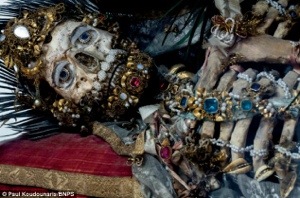
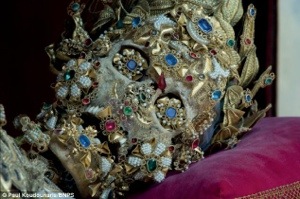
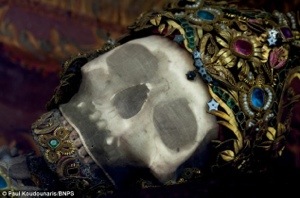
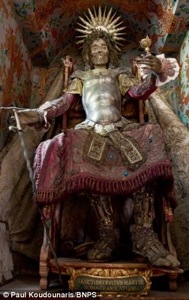
Incredible skeletal remains of Catholic saints discovered by Art historian Paul Koudounaris

Source: DailyMail.uk

Art historian Paul Koudounaris hunted them down in secret Catholic vaults

Said to be remains of Catholic martyrs dug up from Roman catacombs
They were sent to churches to replace relics destroyed in Reformation
Some took up to five years to decorate in gold, silver and gemstones
But none were actually canonised, so many have been stripped of honours

A relic hunter dubbed ‘Indiana Bones’ has lifted the lid on a macabre collection of 400-year-old jewel-encrusted skeletons unearthed in churches across Europe.

Art historian Paul Koudounaris hunted down and photographed dozens of gruesome skeletons in some of the world’s most secretive religious establishments.

Incredibly, some of the skeletons, said to be the remains of early Christian martyrs, were even found hidden away in lock-ups and containers.

20131110-111801.jpg

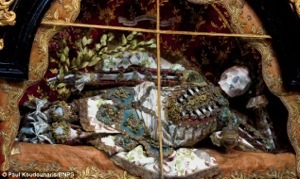
St Valerius in Weyarn: Art historian Paul Koudounaris hunted down and photographed dozens of gruesome skeletons in some of the world’s most secretive religious establishments

St Albertus and St Felix: Incredibly, some of the skeletons, said to be the remains of early Christian martyrs, were even found hidden away in lock-ups and containers

They are now the subject of a new book, which sheds light on the forgotten ornamented relics for the first time.
Thousands of skeletons were dug up from Roman catacombs in the 16th century and installed in towns around Germany, Austria and Switzerland on the orders of the Vatican.

Laughing in the face of death: Revealed, a poignant treasure trove of memorabilia from the trenches
They were sent to Catholic churches and religious houses to replace the relics destroyed in the wake of the Protestant Reformation in the 1500s.

St Benedictus: Thousands of skeletons were dug up from Roman catacombs in the 16th century and installed in towns around Germany, Austria and Switzerland on the orders of the Vatican

Spooky: St Deodatus in Rheinau, Switzerland (left) and St Valentinus in Waldsassen (right). The skeletons were sent to Catholic churches and religious houses to replace the relics destroyed in the wake of the Protestant Reformation in the 1500s

St Getreu in Ursberg, Germany: Mistaken for the remains of early Christian martyrs, the morbid relics, known as the Catacomb Saints, became shrines reminding of the spiritual treasures of the afterlife
Mistaken for the remains of early Christian martyrs, the morbid relics, known as the Catacomb Saints, became shrines reminding of the spiritual treasures of the afterlife.
They were also symbols of the Catholic Church’s newly found strength in previously Protestant areas.

Each one was painstakingly decorated in thousands of pounds worth of gold, silver and gems by devoted followers before being displayed in church niches.
Some took up to five years to decorate.

St Friedrich at the Benedictine abbey in Melk, Austria: They were also symbols of the Catholic Church’s newly found strength in previously Protestant areas

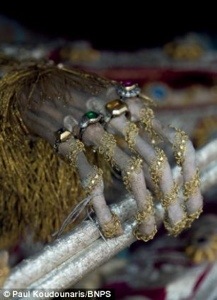
Long dead: The hand of St Valentin in Bad Schussenreid, Germany (left) and St Munditia, in the church of St Peter in Munich (right). By the 19th century they had become morbid reminders of an embarrassing past and many were stripped of their honours and discarded
They were renamed as saints, although none of them qualified for the title under the strict rules of the Catholic church which require saints to have been canonised.

But by the 19th century they had become morbid reminders of an embarrassing past and many were stripped of their honours and discarded.
Mr Koudounaris’ new book, Heavenly Bodies: Cult Treasures and Spectacular Saints from the Catacombs, is the first time the skeletons have appeared in print.

Mr Koudounaris, from Los Angeles, said: ‘I was working on another book looking into charnel houses when I came across the existence of these skeletons.

‘As I discovered more about them I had this feeling that it was my duty to tell their fascinating story.

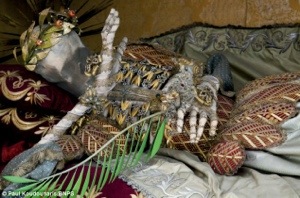
Lounging louche: aSt Vincentus’ ribs are exposed beneath a web of golden leaves In Stams, Austria. Mr Koudounaris’ new book, Heavenly Bodies: Cult Treasures and Spectacular Saints from the Catacombs, is the first time the skeletons have appeared in print

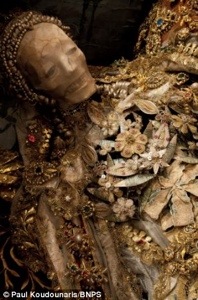
Adorned: St Luciana (right) arrived at the convent in Heiligkreuztal, Germany and was prepared for display by the nuns in Ennetach. The identity of the skull on the left is unknown
‘After they were found in the Roman catacombs the Vatican authorities would sign certificates identifying them as martyrs then they put the bones in boxes and sent them northwards.
‘The skeletons would then be dressed and decorated in jewels, gold and silver, mostly by nuns.

‘They had to be handled by those who had taken a sacred vow to the church – these were believed to be martyrs and they couldn’t have just anyone handling them.

‘They were symbols of the faith triamphant and were made saints in the municipalities.

‘One of the reasons they were so important was not for their spiritual merit, which was pretty dubious, but for their social importance.

‘They were thought to be miraculous and really solidified people’s bond with a town. This reaffirmed the prestige of the town itself.’

He added: ‘It’s impossible to put a modern-day value on the skeletons.’

Heavenly Bodies: Cult Treasures and Spectacular Saints from the Catacombs is published by Thames and Hudson and costs 18.95 pounds.

20131110-111945.jpg

20131110-111953.jpg

20131110-112000.jpg

20131110-112007.jpg

20131110-112013.jpg

20131110-112020.jpg

20131110-112026.jpg

Δύο παγκόσμια Ρεκόρ Guinness από τις Kosmocar-Volkswagen, EKO & Driving Academy

Source: highoctane.gr

Δύο παγκόσμια Ρεκόρ Guinness από τις Kosmocar-Volkswagen, EKO & Driving Academy. Οι τρεις ελληνικές εταιρίες συνεργάστηκαν και πέτυχαν σε πραγματικές συνθήκες οδήγησης, παγκόσμιο ρεκόρ χαμηλής κατανάλωσης, διασχίζοντας 9 ηπειρωτικά διαμερίσματα της Ελλάδας και πάνω από 1.577 χλμ εθνικού και επαρχιακού οδικού δικτύου.

Στις 16-18 Οκτωβρίου 2013 η Kosmocar – Volkswagen διέθεσε στους εξειδικευμένους εκπαιδευτές στην οικονομική οδήγηση της Driving Academy, 2 αυτοκίνητα ένα Volkswagen Polo 1.2 TDI BlueMotion και ένα Volkswagen Golf 1.4 TSI 140PS με Ενεργό Σύστημα Διαχείρισης Κυλίνδρων (ACT), τα οποία ανεφοδίασε αντίστοιχα η ΕΚΟ με τα εξελιγμένα καύσιμά της ΕΚΟ Diesel Ekonomy και ΕΚΟ 95 Εkonomy. Τα ρεκόρ;

Guinness World Record χαμηλότερης κατανάλωσης καυσίμου για αυτοκίνητα Diesel – Ο γύρος της Ελλάδας:

Η πρώτη ομάδα είχε το Volkswagen Polo 1.2 TDI BlueMotion με οδηγούς τους εκπαιδευτές της Driving Academy, Δημήτρη Χατζητόλιο και Νικόλα Παπαπάσχο, εφοδιασμένο με ΕΚΟ Diesel Ekonomy και κάλυψε την απόσταση των 1.577 χιλιομέτρων με συνολική κατανάλωση diesel 46,75lt, που αντιστοιχεί σε μέση κατανάλωση 2,96 lt/100 km. Στην επιτυχία αυτή συνέβαλαν εξίσου η νέα τεχνολογία TDI και BlueMotion της Volkswagen, οι πλέον σύγχρονες τεχνικές οικονομικής οδήγησης της Driving Academy, που διδάσκει σε πάνω από 1000 οδηγούς κάθε χρόνο και βέβαια τα εξελιγμένα καύσιμα τελευταίας τεχνολογίας Ekonomy, που έφεραν την επανάσταση στα ελληνικά δεδομένα επιτυγχάνοντας ιδιαίτερα χαμηλές καταναλώσεις. Η αφετηρία ήταν η πόλη της Αλεξανδρούπολης με τερματισμό την Κόρινθο και έκταση σε όλο το εθνικό και επαρχιακό εθνικό δίκτυο.

Η δεύτερη ομάδα οδήγησε το Volkswagen Golf 1.4 TSI 140PS – ACT, με οδηγούς τους εκπαιδευτές Θωμά Παπαπάσχο και Γιάννη Τσιγκρή, εφοδιασμένο με EKO 95 Ekonomy, και κάλυψε την απόσταση των 1.592 χιλιομέτρων με συνολική κατανάλωση βενζίνης 54,52lt, που αντιστοιχεί σε μέση κατανάλωση 3,42 lt/100 km. Εδώ βέβαια σημαντικό ρόλο έπαιξαν η τεχνολογία TSI και Ενεργού Συστήματος Διαχείρισης Κυλίνδρων της VW, η εξαιρετική εφαρμογή των πρακτικών οικονομικής οδήγησης της Driving Academy και φυσικά, το εξελιγμένο καύσιμο ΕΚΟ 95 Ekonomy ένα καύσιμο που με τη βελτιωμένη σύνθεσή του, μειώνει αποτελεσματικά την Τα δύο πληρώματα επιτηρούνταν σε όλη τη διάρκεια της διαδρομής από εξειδικευμένους συνεργάτες του Οργανισμού Guinness World Records, του ΚΑΠΕ, της Ελληνικής Αστυνομίας και άλλων δημόσιων φορέων. Στο τέλος της διαδρομής πιστοποιήθηκαν οι μετρήσεις ανεφοδιασμού των αυτοκινήτων, η χιλιομετρική απόσταση που κάλυψε κάθε αυτοκίνητο αλλά και η ακρίβεια των στοιχείων μέσα από τις αυστηρές προδιαγραφές και οδηγίες του οργανισμού Guinness World Records. Ο οργανισμός, αφού αξιολόγησε όλα τα δεδομένα, τις μετρήσεις του εγχειρήματος, τις μαρτυρίες των επίσημων φορέων, το ολοκληρωμένο βίντεο της διαδρομής και τα δεδομένα των GPS, πιστοποίησε την επίτευξη και των δύο ρεκόρ.

Την απονομή των δύο σημαντικών βραβείων πραγματοποίησε την 1 Νοεμβρίου, ο απεσταλμένος κριτής του Guinness World Records, κος Mark McKinley.

Gov’t claims the measure transformed Greek cities, while retailers fear smaller stores will suffer as a result

Source: Ekathimerini.com

The government and the Development Ministry in particular appear to have passed the Sunday opening test, as consumer traffic at stores in Greece last Sunday, at least in the main shopping areas, turned out to be greater than expected.

A key factor in the success of the first application of the Sunday opening law was the fact that it was a day that formed part of the fall sales – also a new measure – while the favorable weather also helped.

“The picture of our cities changed. Consumers embraced both the idea of the 10-day sales periods and stores opening on a Sunday,” stated Development Minister Costis Hatzidakis on Monday. “We have therefore done very well to ignore those who expressed a fear of the new. We are just doing the same as most countries in Europe. Why shouldn’t we in Greece?” the minister said.

However, it was again evident that retail commerce is a two-speed market in Greece, with those benefitting being the major chains and enterprises with stores in malls, rather than small and medium-sized enterprizes.

“Compared to the same Saturday last year – when there was no Sunday opening – the visits to shopping centers went up this year by up to 300 percent,” claimed Antonis Makris, the head of the Association Retail Enterprises in Greece (SELPE). He added that turnover during the November 2-3 weekend was up between 50 and 100 percent on that of Saturday, November 3, 2012. In fact, the losers were the supermarket chains, as sector estimates put their sales on Sunday at just 25 to 30 percent of an ordinary day for the stores that did open.

Smaller retail stores are reporting a very different picture, though. They had a significant number of shoppers coming in but turnover was far from satisfactory. According to data compiled by the National Confederation of Greek Commerce (ESEE), only one in three such shops opened in Attica and just one in four in the rest of the country.

ESEE head Vassilis Korkidis admitted to Kathimerini that “the turnover enterprises will record by the end of the intermediary sales period will likely be smaller than that which was originally expected as consumers turned to major chains and malls on Sunday.”

Tit-for-tat warfare feared as Greek police believe far-left may be behind murders of far-right Golden Dawn members

Source: Nationalpost

Police investigate the area around an office of the Golden Dawn party in northern Athens, Friday, Nov. 1, 2013. A drive-by shooting killed two members of Greece's Nazi-inspired Golden Dawn party and wounded one outside a party office in Athens on Friday night, officials said

AP Photo/Thanassis StavrakisPolice investigate the area around an office of the Golden Dawn party in northern Athens, Friday, Nov. 1, 2013. A drive-by shooting killed two members of Greece’s Nazi-inspired Golden Dawn party and wounded one outside a party office in Athens on Friday night, officials said.

Police in Greece believe far-left terrorists may have been behind the murder of two members of the far-right Golden Dawn party, raising fears of tit-for-tat warfare between the country’s radical factions.

The Greek counter-terrorism squad has taken over the investigation into Friday night’s attack, when two assassins on a motorbike opened fire on men outside Golden Dawn’s offices in Athens.

Police said they were looking at whether the murders may have been carried out in retaliation for the fatal stabbing of an anti-fascist musician by a supporter of the neo-Nazi party in September, a killing which prompted angry protests across Greece.

Investigators were examining all avenues, but “particularly those that link these events to extremist groups” behind a string of far-left attacks in recent years on politicians, police, banks and the media. A police official said the shooting, for which no one has so far claimed responsibility, appeared to be a “terrorist attack.”

Athens residents gathered at the site of the killings in the suburb of Neo Iraklio and laid flowers as politicians said the country, already mired in a deep financial crisis, was at risk of spiralling street attacks. “We cannot let this cycle of violence continue,” Makis Voridis, a senior member in Antonis Samaras, the prime minister’s, New Democracy party, told Greek television. “This must end here.”

“Twelve bullets against democracy,” Ta Nea, the country’s top-selling daily newspaper, wrote on its front page Saturday. “The double cold-blooded murder was a coarse provocation against stability.”

AP Photo/Kostas Tsironis

AP Photo/Kostas TsironisA supporter of the extreme right party of Golden Dawn, lights a candle during a memorial ceremony at the site of the attack and fatal shooting of two party members in northern Athens, on Saturday, Nov. 2, 201

As well as Golden Dawn, Greece is home to far-left and anarchist extremist groups who have claimed responsibility for a series of shootings and bombings in recent years. In 2009, a police officer was killed by three gunmen in Athens, and in 2010, a prominent investigative journalist, Sokratis Giolas, was shot dead at his home. Both murders were claimed by the Sect of Revolutionaries, a radical Leftist organisation.

Following the death of Mr. Giolas, the Sect of Revolutionaries issued a direct threat to the Greek state, pledging to transform the country into “a war zone of revolutionary processes, with arson, sabotage, fierce demonstrations, bomb attacks, armed killings”.

“We are at war with your democracy”, the group said.

We will not allow our country to become a place to settle scores

Another extremist group, the Conspiracy of Fire Nuclei, has claimed responsibility for a number of recent attacks, including a car bomb which exploded outside home of a prison director the Athens in June.

Greek media claimed that the weapon used in Friday’s attack was the same type of gun used in the 2009 police shooting. Police identified the gun as a Zastava Tokarev-type semi-auto pistol from which 12 rounds were fired, but said it was not the same weapon used in previous terrorist incidents.

Golden Dawn has in recent years emerged from the fringe of Greek politics to establish itself as the country’s third most popular party, with 18 seats in parliament. Its surge in popularity came as it capitalised on widespread anger over austerity measures and immigration in the debt-stricken nation, which has for the past six years been in severe recession. Some 60 per cent of Greek youth are now unemployed.

Friday’s attack “marked a continuation of political uncertainty and instability in the country,” said George Tzogopoulos, an analyst at an Athens-based think-tank.

Golden Dawn uses a Swastika-like emblem and has also been associated with attacks on immigrants. It has insisted it is not a neo-Nazi group.

But the Greek government announced a crackdown on the party following the murder in September of Pavlos Fyssas, a white anti-racist rapper also known as “Killah P,” for which a Golden Dawn supporter was arrested and charged. The party’s leader, Nikolaos Michaloliakos, and two of its MPs have been imprisoned pending trial on charges of establishing a criminal group.

The Golden Dawn leadership denies government claims that it was involved in the musician’s killing.

In the wake of Friday’s attack, the Greek government has been under pressure to show that it takes violence against Golden Dawn members seriously.

“We will not allow our country to become a place to settle scores,” said Nikos Dendias, the public order minister, expressing his “sadness at the death of the young men”. The left-wing main opposition Syriza party also condemned the shootings. “This murder creates a climate of instability and targets democracy,” it said. “It feeds fascism, it does not beat it,” added Dimitris Papadimoulis, a Syriza MP.

Golden Dawn also attributed the shooting to “terrorists” and blamed the Greek government for failing to protect the party amid the crackdown. It said it had asked for police protection at its offices after receiving threats but that it had recently been withdrawn. “The criminals wanted to execute anybody outside the party offices,” it said in a statement. “Before they drove off, the terrorists shot again at the boys lying on the ground. They literally emptied their weapons on them.”

The victims were named as Emmanuel Kapelonis and Giorgos Fountoulis, both in their 20s. A 29-year-old man who was wounded remained in hospital in a serious condition yesterday.

The mother of the injured man, named as Alexandros Gerontas, made a televised appeal to the Greek people to “overcome their differences” and to “stop the bloodshed”.

Golden Dawn had planned a meeting for Friday night at the office where the shooting took place.

A police source said that footage from a nearby security camera confirmed the party’s accounts that the gunmen started firing from 50ft away and finished off his victims from point-blank range.

The gunmen also fired at a fourth Golden Dawn member, who managed to escape unharmed.

Supreme Court rejects appeal on conviction, sentence in Greek Patriarchate Affair

Source: jpost

Businessman forged signature of bed-ridden Patriarch in fraudulent KKL-JNF real estate purchase.

Israeli woman meets the greek patriach 521

Israeli woman meets the greek patriach 521 Photo: JIM FLETCHER

The Supreme Court has rejected an appeal for a reduced sentence and fine by a central player in the Greek Patriarchate Affair, one of the most scandalous and galling frauds pulled off in Israel’s history.

The decision was announced Sunday, though it was handed down on Friday.

The central appeal was filed by convicted Israeli businessman Benno Zussman against his five-and-a-half year sentence and over NIS 4 million in fines, for his part in a conspiracy and fabricated deal between Keren Kayemeth LeIsrael-Jewish National Fund and Jerusalem’s Greek Patriarchate.

The scandal culminated with Zussman and Yaakov Rabinovich, conspiring to forge the signature of an ailing and bed-ridden Greek patriarch to sign over valuable real estate in Jerusalem for a comparatively small sum.

The state had cross-appealed, asking for an even harsher sentence and higher fine, which was also rejected.

Another point of high drama in the case was Zussman’s fleeing to Romania, where he avoided prosecution until 2010, when, after extensive efforts, he was extradited to Israel.

The other parties in the affair, which dates back to April 2000, such as KKL-JNF and well-known lawyer Jacob Weinroth, were never found to have known about the conspiracy and were also considered to have been fooled, though they were key players in the fabricated transaction.

In September 2012, the Jerusalem District Court convicted Zussman of fraud and sentenced him to five-and-a-half years in prison, fined him NIS 4 million and ordered him to pay compensatory damages of NIS 250,000.

In his appeal, he asked the court to overturn his conviction for fraud, and asked the court for a lighter sentence and a lower fine should it uphold his conviction.

Zussman said that the lower court failed to properly consider the testimony of several of the other parties who were present at the time the transaction was finalized who all testified that the Patriarch was of sound mind.

He also said that the lower court ignored a recording he presented in which one of the Patriarch’s aids appears to confirm that Zussman genuinely paid significant funds to the Patriarch.

The state said that his fine was much lower and his prison sentence shorter than that of his co-conspirator, Rabinovich, convicted and sentenced years before while Zussman was still in Romania.

The Supreme Court upheld the lower court’s findings of fact, stating that the witnesses that Zussman referred to were nearby, but never actually in the room with the Patriarch, reducing the value of their testimony. It added that the recording did not constitute proof when Zussman failed to produce documentary evidence in support of paying the Patriarch and when the Patriarch’s aid failed to testify on his behalf in court.

In convicting Zussman, the district court said the fraud was extraordinarily sophisticated and one in which the reality of what happened was hard to believe.

At an earlier stage when the Supreme Court stiffened Rabinovich’s prison sentence from four to six years, it called the plot one of the largest and most cunning real estate frauds in the state’s history.

Zussman had cultivated a close relationship with the Greek Patriarchate for years.

He exploited these ties to craft a vast real estate conspiracy to “buy” invaluable Greek Patriarchate lands in the capital’s Rehavia neighborhood, near the old Jerusalem bus station and in Beit Shemesh.

Zussman and Rabinovich convinced others that aging Patriarch Diodoros wished to “sell” many of the valuable lands for a paltry $20m., in exchange for a 999-year lease (which would automatically be renewed every 99 years).

KKL-JNF was thrilled about the deal as it had concerns that when its current lease on those lands from the Greek Patriarchate runs out, the Patriarchate would demand an inordinate sum for a new lease.

When Zussman, Rabinovich, Weinroth, a notary named Avraham Peri, a medical evaluator named Dr. Bruno Austfeld and KKL-JNF representative Mordecai Tenuri arrived to get the patriarch’s signature for the deal, Zussman and Rabinovich went into see the patriarch only with the notary, claiming he was too ill to see all those present.

Ultimately, Zussman and Rabinovich visited the patriarch (having told him beforehand it was a holiday visit) and convinced the notary to confirm the patriarch’s signature, telling him that the patriarch had already signed.

Austfeld was convinced to go along with confirming the procedure even though he did not examine the patriarch.

They then proceeded to pocket $16m. of the $20m. “purchase price,” which was supposed to go to the patriarch – one of the reasons the prosecution seeks a higher fine.

Diodoros was patriarch from 1981 until his death in 2000.

Are these the 10 best attractions in Europe?


Cappadocia. Picture: Wadgey, Flickr

Cappadocia. Picture: Wadgey, Flickr Source: Supplied

NINE months ago Peter Shaw quit his job in Perth to set off on a journey without an end date. Here he reveals his picks of the places you can’t afford to miss while in Europe.

“It’s tough putting together a list of the 10 best tourist attractions in Europe.

After all, Europe’s a big place and there are a ridiculous number of great sites to experience.

So following my list of the worst attractions in Europe, here are some of the best. Enjoy.

1. Cappadocia, Turkey

Hoodoos, fairy chimneys, earth pyramids – whatever you want to call them – they look awesome. These earthly towers of cool are about as common in Cappadocia as carpet salesmen are in the Grand Bazaar, and to make them even more interesting, a large portion have been hollowed and carved out to form dwellings that look like they’d be more fitting to a sci-fi film like Avatar than Central Turkey.

Try to imagine one of the most interesting and desolate places on earth with a solid dose of history, a dash of adventure and spectacular sunsets and you have Cappadocia. Lying on the ancient Silk Road, the region has been inhabited since the latter part of the Bronze Age and the remnants of the various civilisations who once called the area home now lie scattered across the region. Underground churches, real life Flintstone houses and hot air ballooning make the Cappadocia experience possibly one of the more memorable in your life.

Travel tip: Hire a scooter or four-wheeler and go off-road; exploring the fairy chimneys around Goreme. When it gets too steep leave the bike and keep going on foot for some truly breathtaking views. I’d recommend packing a bottle of (great) locally produced wine and timing your walk to catch a spectacular Cappadocia sunset.


The weird sites in Cappadocia. Picture: Virtualwayfarer, Flickr

The weird sites in Cappadocia. Picture: Virtualwayfarer, Flickr Source: Supplied

2. Sagrada Familia, Spain

Gaudi was to architecture what Einstein was to physics, Tesla was to electricity and Leonardo was to the Ninja Turtles. In my opinion it’s humanity’s single greatest architectural achievement and the Pyramids, Hanging Gardens and Acropolis can all go jump in the lake.

It’s like nothing you have ever seen and in the words of an American tourist I overheard: “What kind of insane genius could come up with something like this?!” Gaudi described the interior of his work as a ‘spiritual forest’ and the building does indeed remind you of something organic, even alive … The outside of the building is enough to keep anyone spellbound with its size, complexity and the bizarre interplay of shapes.

While not as ‘alien’ as the exterior, the inside of the cathedral is equally powerful and interesting. The colours, shapes, columns, scale, use of light and metal make it literally breathtaking. I can’t think of anything else in the world I have ever seen built by man that comes even close to this building.

Travel tip: Buy your tickets online, print them out and you can skip the insane line wrapping around the block. For some reason people don’t seem to research these things before arriving, and much like the Louvre, spend hours waiting in line in the hot sun.


Top 10 surprisingly awesome places in Europe

Sagrada Familia. Picture: Supplied Source: News Limited

3. Bruges, Belgium

It is one of the best preserved medieval towns in Europe, however the downside of Bruges is that every man and his dog knows about it! Still, it is worth a couple of days in any European itinerary.

Bruges is built on the canals, is a history buff’s dream and has one of the best medieval squares in the world; complete with bell tower and enough Gothic architecture to keep the Addams Family happy. Hire a bike and tour the canals from the saddle (in summer), you can circumnavigate the town in about an hour and there are plenty of quaint little lanes and cobbled streets to meander down and explore when you’re not riding along the canals themselves.

Travel tip: Summer pulls larger crowds than The Beatles did so I’d recommend visiting in winter, which has the added bonus of the beautiful buildings and canals being dusted in snow.


Bruges - Market Square shops. Picture: Supplied

Bruges — Market Square shops. Picture: Supplied Source: Supplied

4. The Tower of London

Maybe it’s the small part of me that still holds some nerdish Game of Thrones style fantasy about being a knight sitting atop a steaming warhorse, leading my men at arms into glorious battle … OK I admit it’s not a very realistic fantasy as just the thought of medicine, hygiene and religious practices in the 12th century are enough to keep me firmly grounded in the 2013. Still, the Tower of London is a fantastic experience for anyone with an interest in English or Medieval history.

The various museums within the walls and White Tower are really worth a look given the powerful historical context of the structure. Hilariously, there are also the world’s biggest and smallest sets of full plate armour on display. That’s right, the museum even has the armour of a giant and a dwarf. Brilliant.

Travel tip: Your admission includes a free tour by one of the well-practised and hilarious Beefeaters, which are absolutely worth doing.


Tower Bridge in London. Picture: Supplied

Tower Bridge in London. Picture: Supplied Source: Supplied

5. Sachsenhausen Concentration Camp, Berlin

This place is scary. This memorial museum lets you walk in the footsteps of a concentration camp prisoner for a day. Rewarding as it is confronting, the Sachsenhausen experience is an important one for anyone visiting Berlin.

Travel tip: Pack lunch and spend a day with your audio guide (cheap and totally essential in my opinion) wandering the grounds, going through each area in-depth for a powerful, moving and unforgettable experience. I spent about six hours at Sachsenhausen and felt that I could easily have spent a few more wandering the grounds, absorbing the personal stories and tragedies of its occupants.


Sachsenhausen Concentration Camp. Picture: David. Kungsholmen, Flickr

Sachsenhausen Concentration Camp. Picture: David. Kungsholmen, Flickr Source: Supplied

6. The Louvre, Paris

So you’ve made the pilgrimage to see the Mona Lisa and noticed its somewhat underwhelming demeanour … the best part is you now get to spend the rest of the day getting lost (both physically and metaphorically) in the labyrinthine halls of one of the world’s best museums. There is so much art at The Louvre that if you spent a minute at each piece (forgetting the time spent admiring the building itself) it would take roughly 24 days to see them all. You would also have seen enough naked flesh to make Vegas blush.

Travel tip: The first Sunday of every month is free and there are MULTIPLE ENTRANCES. Never wait in the main (glass pyramid) line to get in. On a recent visit this line was literally about two kilometres long and yet the side entrance I used did not have a single person waiting.


The pyramid of the Louvre Museum. Picture: AFP

The pyramid of the Louvre Museum. Picture: AFP Source: AFP

7. Orvieto, Italy

An absolute must for anyone visiting central Italy, this tiny village is perched precariously atop a rocky and fortified plateau in the Umbria region (very similar to better known Tuscany). This for me is the real Italy, with rustic lanes, cobbled roads, beautiful buildings and the earthy colours all brought together with the sound of old Italian ladies pinching the cheeks of their grandkids. I can honestly say this is one of my favourite spots in all of Europe.

The village is accessed via the funicular at the train station and once at the top you can easily walk around the entire town in a day taking in the amazing views of the surrounding countryside which is dominated by vineyards, fruit plantations, old churches and monasteries. There is also a rather impressive 14th century cathedral and a series of underground tunnels, passages, galleries and cellars cut deep into the rock below the town itself known as the ‘Underground City’.

Due to the extreme average age of Orvieto’s’ withered inhabitants (everybody is really, really old) there are a number of random emergency defibulators (like phone booths) situated all over the village. Some would say that they’re only necessary due to the town’s heart-stopping views.

Travel tip: Orvieto is easily accessed out of Rome, lying only about two hours away by high-speed train.


Orvieto. Picture: Hsivonen, Flickr

Orvieto. Picture: Hsivonen, Flickr Source: Supplied

8. Santorini, Greece

I feel sorry for the donkeys in Santorini. They have the unenviable job of hauling an endless supply of overweight tourists up the side of a truly monumental cliff. It’s a tourism hotspot (which usually I hate) however in this case I’m going to overlook the irritations of dealing with tourists because Santorini is amazing. This crescent moon-shaped Greek Island is what’s left of what was once a more symmetrical shape after one of the largest volcanic eruptions in recorded human history (the Minoan Eruption) disintegrated most of the island in about the year 250. Yep that’s right most of the island exploded!

The volcanic activity is the reason behind Santorini’s famous black sand beaches (which physics dictates is also the reason so many tourists have burnt feet here).

The classic town of Oia on the NW point of the island is famous for its blue domed roofs, whitewashed dwellings and as one of the best spots to watch the fabled Santorini sunsets, which alone are worth coming to the Island to see. Join the mob of eager tourists in the early evening to enjoy the sun’s last hour as it plunges into the South Aegean.

Travel tip: Santorini is like a magnet for cruise ships and prices reflect this so the best way to do the island is to sleep out of town, hire a four-wheeler and cruise the island at your leisure.


Santorini. Picture: Supplied

Santorini. Picture: Supplied Source: Supplied

9. The Burren, Ireland

What would the earth look like if people stopped planting crops, trees and grass, then decided to just grow rocks instead? Exactly like the Burren, that’s what. The name ‘Burren’ derives from the Irish word Boireann, meaning ‘great rock’ … wonder why they called it that? This rural ‘Karst’ landscape in NW County Clare, Ireland is filled with more rocks than soil.

I have no idea what the farmers do, given 80 per cent of their land is one big stone. Like everywhere in country Ireland the people are absurdly pleasant and the quaint roads are also so narrow that every time you pass another car you get a few more grey hairs. There are some memorable sites in the area too, including the fabled cliffs of Moher, the tiny musically inclined village of Dingle and more pubs than a drunk Irishman can poke an empty Guinness glass at. The Burren is where you go to hike through the little lanes, climb ancient stone walls, gawk at standing crosses, meander through cow-laden fields and dance to excellent Irish music. It’s ountry Ireland at its best.

Travel tip: You need a car to really appreciate the region.


The Burren. Picture: TechnoHippyBiker, Flickr

The Burren. Picture: TechnoHippyBiker, Flickr Source: Supplied

10. The Isle of Skye, Scotland

The most northerly island of the Inner Herbrides of Scotland is a beautifully picturesque, barren and untamed place. It’s an amazing spot to do some camping and hiking, and has some of the most intriguing landscapes in all of the UK. Skye also has the rather unique ability to make its inhabitants constantly appear as though they have just woken up and stumbled out of bed. It’s windy on Skye, really, properly, briskly, category five, Scottish windy; even in summertime (which may or may not actually exist in Scotland, the jury’s still out on that one).

There are two spots on the isle that turn it from just ‘damn cool’ to ‘freaking amazing’.

• The old man of Storr, a large rocky pinnacle that dominates the southern approach of the Trotternish Peninsula. You can see it from kilometres away and can climb up to the bottom of the pinnacle if you’re careful (lots of loose rocks, and a fairly steep incline) but the view is worth the effort and with any luck the area will get covered in low hanging clouds for added atmosphere. It’s also been used as a location in many films due to its remarkable appearance, the latest being Ridley Scott’s Prometheus.

• The Fairy Glen is a tiny area on the outskirts of Uig that does almost feel magical in an eerie sort of way (hence the name, genius). The glen is dominated by a number of bizarre corkscrew shaped ‘twisted’ hills in addition to the gnarled, old trees and enough creepy stone piles and circles to keep the Blair Witch happy (legend has it that if you get lured into a stone fairy circle by the fairy lights you will be trapped there, mesmerised by their dancing forever). Sadly I didn’t see any fairies or freaky lights but the glen does make for a truly memorable experience and some very unique photos.

Travel tip: Camp on Skye if you can, that or hire a camper van and stay in one of the many campsites on the island.”


The Isle of Skye. Picture: Supplied

The Isle of Skye. Picture: Supplied Source: News Limited

Starting a business in Greece is now much easier than a year ago

Source: Ekathimerini

Augusto Lopez-Claros (right), director of Global Indicators and Analysis at the World Bank, with Development Minister Costis Hatzidakis.

Greece leapt 111 spots in the World Bank’s global Doing Business chart in terms of starting a new enterprise, as it climbed from the 147th to the 36th position in the world, according to the report for 2014 released on Tuesday.

The main reasons for the major increase in Greece’s attractiveness for starting a business are the introduction of a new form of private company, known as IKE, which has simplified the start-up process, the reduction in the minimum capital required to start a company, and the abolition of the minimum capital needed to set up a limited company (Ltd).

On the other hand, Greece continues to find itself among the countries with the most procedures required for the transfer of commercial property, while the well-known delays in the justice system have also weighed heavily on Greece’s image as a destination for business. Nevertheless, the Development Ministry has stated that the obligatory presence of lawyers for the transfer of properties will be abolished in the next few months, which should improve Greece’s position in that respect.

“Greece’s continued regulatory reforms are laudable and a further step in the right direction to improve the quality of the investment climate,” stated Augusto Lopez-Claros, director of Global Indicators and Analysis with the World Bank Group. “Making it significantly easier to start a business is particularly important for growth and job creation in Greece at this point in time,” he added.

The report’s researchers counted the procedures required for the start of an IKE in Athens. They found that five procedures are needed, equal to the average for Organization of Economic Cooperation and Development (OECD) member states. The process takes 14 days (against an OECD average of 11.1 days), a minimum capital of near zero (hence the nickname one-euro companies), and a cost of 1,544.99 euros, which amounts to 4.6 percent of the per capita income (against an OECD member state average of 3.6 percent). A year earlier, the cost amounted to 24.4 percent of the per capital income in Greece.

Greek island on frontline of Europe’s migration war

Source: BBC

Exterior of Moria camp

An immigrant detention camp that has been built in Moria is officially called a “reception centre”

The Greek coast guard boat races through the vast expanse of the Aegean, the water glinting in the morning sun.

Behind, in silhouette, are the lush mountains of Lesbos island – Greece’s third largest, a place of extraordinary natural beauty – but now one of Europe’s key immigration frontiers.

Since August 2012, when the Greek authorities increased controls on the land border with Turkey, the country’s islands have born the brunt of the inflow.

And Lesbos holds first spot. This year alone, 4,409 migrants attempted to enter the island from mainland Turkey – just six miles away.

Of those, 2,600 were arrested here, with the remainder detected in Turkish waters and sent back. Smugglers squeeze desperate people into overcrowded dinghies for a small fortune.

Humanitarian disaster

Lt Antonios Sofiadelis from the Lesbos coast guard says they sometimes come across boats designed for 10 people, with 40 or 50 packed in.

Ferry leaving Lesbos for Athens

At noon, the daily ferry leaves for Piraeus, the port next to Athens, taking locals, tourists – and those migrants released with papers from Moria camp

“They destroy the raft when they see us and jump into the water, screaming. But we have to do our job.”

Since the Lampedusa tragedy earlier this month, when 366 people lost their lives trying to reach the southern Italian island, illegal immigration has shot back onto the agenda of Europe’s leaders.

An EU summit last week promised only a “task force” to report back – but southern European countries have long argued that substantial steps are needed to tackle a growing humanitarian disaster.

Until 2012, 90% of illegal immigrants entered Europe through Greece. The numbers have now dropped but the Greek government says it is still shouldering a huge burden in the midst of its worst financial crisis in living memory – and that the north must show solidarity.

Appalling conditions

“I ask for more support from EU member states,” says Lt Sofiadelis, “because we defend Europe’s borders too. We have to protect our country from criminal networks.”

I feel desperate and ashamed when the immigrants talk to us about the problems they face in my country – and I feel very angry”

Efi Latsoudi Local co-ordinator, Doctors of the World

Until 2010, Lesbos had an immigrant detention centre in the town of Pagani.

It was criticised by human rights groups for its appalling conditions and subsequently closed.

Now another facility has been built in the town of Moria – officially called a “reception centre”.

Those arrested are taken here to be registered and held.

Non-Syrians stay for around 25 days before being given papers ordering them to leave Greece within a month.

Syrians, due to their country’s civil war, are released more quickly and allowed six months in Greece.

I tried to get into the camp to see the conditions and talk to inmates – but was refused access.

Inside are offices of NGOs and the UN Refugee Agency, the UNHCR.

Behind barbed wire are a dozen small containers housing about 70 refugees. They sit outside, their hands gripping the fence.

When some try to engage me in conversation, the police ask me to move away.

“This is a prison,” one Afghan tells me.

‘Escape from danger’

“I feel desperate and ashamed when the immigrants talk to us about the problems they face in my country – and I feel very angry,” says Efi Latsoudi, the local co-ordinator of the group Doctors of the World.

The cemetery on the mountain overlooking Lesbos

The cemetery on the mountain overlooking Lesbos contains the names of immigrants who have died seeking a better life

“Because I believe we can change something – and we don’t.”

What needs to change, I ask her?

“There must be a political decision that we have these arrivals here and we have to support them as humans, not as a problem or an illegal thing.

“Most of them are like us – they are simply escaping from danger and they must be helped.”

Away from Moria, I am taken to another facility provided by locals and NGOs, housing an Afghan family, who arrived two months ago.

The mother – who does not wish to be identified – and her four young children live in a tiny room.

She breaks down as she tells me the story of her husband being arrested here and their treacherous journey from Jalalabad.

Numbers and codes

“We’d hoped we could find safety and that our children could go to school,” she says.

“But instead we have nothing – the smugglers took all our money and we had a dangerous trip here – one of my children fell into the water on the way and I thought he’d die. I think it wasn’t worth it to come here. Europe wasn’t worth it.”

Immigrants board the ferry leaving Lesvos for Athens

Perhaps the most perilous part of the journey made by these immigrants – arriving in Europe – is behind them

Perched on the mountain overlooking Lesbos, a corner of the cemetery is given to those who do not make it here.

A few have been identified – the name “Mohamed Amin” is written on one stone.

But most are simply given labels: “Afghan, 31/07/07”, “Number 3, 5/1/13”.

They were people, individuals before they tried to come to Europe. Now they are reduced to numbers and codes.

At noon, the daily ferry leaves for Piraeus, the port next to Athens, taking locals, tourists – and those migrants released with papers from Moria camp.

I meet a few young Syrians there. They are educated, speak good English and dress well – far from the stereotypical image of refugees.

“We paid 1,300 euros [£1,100; $1,800] each to the smugglers to take us here,” says one.

“My family don’t want to see me die in our war. So they told me to leave. I won’t stay in Athens because of the economic situation – I want to go to another European city. I want only life.”

As the ferry doors close, they climb aboard, carrying one bag each – and their dreams.

Perhaps the most perilous part of their journey – arriving in Europe – is behind them. But plenty more hardship awaits in Athens and beyond. And thousands more will follow in their wake.