Χαμός στο facebook με τις δηλώσεις της Σαμπρίνας για τον Νότη Σφακιανάκη

Source: gossip-tv.gr

Χαμός έγινε στο facebook μετά τα όσα έγραψε η Σαμπρίνα, η οποία εξέφρασε στην προσωπική της σελίδα την γνώμη για τα όσα είπε ο Νότης Σφακιανάκης για την Χρυσή Αυγή.

Η τραγουδίστρια έγραψε χαρακτηριστικά: «Σφακιανάκης-Βανδή.. 1/0

προσωπικά δεν με απασχολούν οι πολιτικές πεποιθήσεις κανενός…
” δεν συμφωνώ ουτε με μια λέξη από όσα λες, αλλα θα υπερασπιστώ ακόμα και με το τίμημα της ζωής μου, το δικαίωμα σου να λες ελευθέρα αυτο που πιστεύεις” Βολταίρος.. και δεν καταλαβαίνω τι ενόχλησε… ;

οτι υποστηρίζει την Χρυσή Αυγή ο Σφακιανάκης;

ή οτι εξέφρασε τα πιστεύω του;
αν κρίνω από τα λεγόμενα,, τα πιστεύω λίγο πολύ ήταν γνωστά ούτως η άλλως..

άρα μάλλον οτι είπε ελεύθερα αυτό που πιστεύει….. ενόχλησε….
Σφακιανάκης-Βανδη λοιπόν ξανά… 1/0».

Και αφού έγινε ο κακός χαμός με αυτό της το κείμενο επανήλθε γράφοντας τα εξής:
«Πολύ λυπάμαι για όσους από εσάς, κολλάτε ταμπέλες σε όποιον έχει το θάρρος να λέει την γνώμη του, χλευάζοντας με διάφορα σχόλια… ασκείτε εσείς τρομοκρατεί και φασισμό..

Δεν συμφωνώ με μια λέξη από όσα λες ,αλλά έχεις το δικαίωμα να λες ελεύθερα την γνώμη σου… μείνατε στο δεύτερο μισό μόνο.. το πρώτο μισό που λέει δεν συμφωνώ με μια λέξη απο όσα λες το ξεχάσατε;

Και έτσι τρέξατε να κολλήσετε ταμπελίτσα… τι σας ενόχλησε λοιπόν; Κατηγορώ συμπεριφορές που έχουν ΔΙΑΣΠΑΣΤΙΚΟ ΧΑΡΑΚΤΗΡΑ.

Τώρα η πατρίδα μας χρειάζεται Έλληνες ενωμένους και όχι δηλώσεις και συμπεριφορές που το μόνο που καταφέρνουν είναι να σπέρνουν διχόνοια και μίσος μεταξύ μας..

Τέτοιες συμπεριφορές έχουν αποτελέσματα τραγικά όπως οι δολοφονίες που έγιναν των παιδιών.. ΤΩΝ ΣΥΜΠΑΤΡΙΩΤΩΝ ΜΑΣ.. τέτοιες συμπεριφορές σας κάνουν ηθικούς αυτουργούς…

Τώρα περισσότερο από ποτέ πρέπει να είμαστε ενωμένοι.. και εσείς παρόλα αυτα συνεχίζετε το Διαίρει και βασίλευε…. Εύχομαι τα καλυτέρα σε όλους μας.

Project short film Why “No Man is an Island”? with Hollywood producer and advisor Sid Ganis

Source: Kickstarter

Stories like this come along once in a generation. And the story behind our proposed film is perhaps one of the greatest of the generation of our parents and grandparents who valiantly fought tyranny and oppression during the hard years of the Second World War in Greece.

But ours isn’t one of resistance, sabotage and bombs and bullets– against the occupier. “No Man is an Island” is a story of soft power– the victory of humanity over hatred; and, compassion over cruelty.

Our short film will tell the story– the survival story that is unique in all of Europe– of the only Jewish community that didn’t lose a single soul during the Holocaust. It is a story of heroism that needs to be told– not only for future generations, but for the current one.

The script– already called a “masterpiece” by some of the top names in Hollywood who have read it, was written by British screenwriter Mia Christou and the team we are assembling to make the film is of international caliber. (Updates to follow so pls follow our campaign!)

Producers Gregory Pappas and Steven Priovolos, with Hollywood producer and advisor of this project, Sid Ganis, the former president of the Academy of Motion Picture Arts and Sciences
Although it happened seventy years ago, the message is timeless and resonates with contemporary society. Our film will educate and inspire a new generation and generations to come by making our history relevant.

Most importantly, this film will share a largely unknown and untold story of how two men and 35,000 citizens of a Greek Island stood on the side of goodness and humanity and stared evil in the face.

“No Man is an Island” is a film that must be made. It is a story that must be told. With your help, this can become a reality.

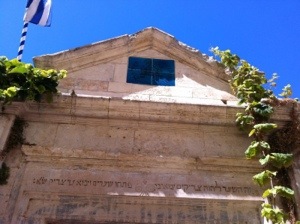
The 15th century synagogue of Etz Hayim on the island of Crete– a potential location for our shooting since it matches the architecture of the period
Our budget is more than $165,000 to shoot the short film in Greece and ultimately submit it to festivals throughout the world. We have already raised half of this budget from major donors from a community of people around the world, like you!

This Kickstarter campaign is designed to raise $25,000 and build a bigger army of support for this project. Remember– your support is tax-deductible. The Greek America Foundation is a non-profit organization.

The project and the story of the Jews of Zakynthos has already generated international attention and media publicity in Greece, the United States, Canada, Mexico and beyond in major newspapers and media outlets. The story was even the topic of conversation between the Prime Ministers of Greece and Israel recently when the two met.

Shalom Life, Canada’s largest online Jewish publication
Kathimerini, one of Greece’s top daily newspapers

Sincerely,
Gregory Pappas & Steven Priovolos
Producers

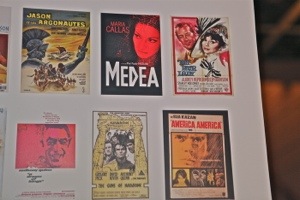
PS: We are grateful for the support we’ve received from our friends for this and other projects already. This year, we successfully completed our “Greeks of Hollywood” Kickstarter campaign that involved the exhibition of an important collection of memorabilia. This exhibition is now in the process of being digitized and transformed into a website for the entire world to see. Estimated delivery of the Greeks of Hollywood website is Summer 2014.

20131127-113835.jpg

20131127-113846.jpg

20131127-113853.jpg

Πέθανε η ελληνικής καταγωγής γηραιότερη γυναίκα της Τσεχίας

Source:

Πέθανε η ελληνικής καταγωγής γηραιότερη γυναίκα της Τσεχίας

Πέθανε σε ηλικά 109 ετών η γηραιότερη γυναίκα της Τσεχίας, Ευαγγελία Καράσοβα, η οποία είχε γεννηθεί το 1904 στην Ελλάδα και ήταν μέλος της ελληνικής κοινότητας στη χώρα.
Η Καράσοβα εγκαταστάθηκε στην πρώην Τσεχοσλοβακία το διάστημα 1948 – 1949 και όπως έγινε γνωστό καθ ‘όλη τη διάρκεια της ζωής της χρησιμοποιούσε τη μητρική της γλώσσα.
Ζούσε από το 1950 στο χωριό Ντίβτσι Χράντ, κοντά στα πολωνικά σύνορα και εργάστηκε για το μεγαλύτερο χρονικό διάστημα της ζωής της στον τομέα της γεωργίας. Είχε τρεις γιους και δύο κόρες.
Περίπου 12.000 Έλληνες εγκαταστάθηκαν στην πρώην Τσεχοσλοβακία το διάστημα 1948 – 1949, μετά τον εμφύλιο πόλεμο. Η ελληνική κοινότητα στη Δημοκρατία της Τσεχίας αριθμεί τώρα περίπου 3.500 ενεργά μέλη που ζουν κυρίως στα βόρειο – ανατολικά.
Η Καράσοβα πέθανε στο νοσοκομείο της πόλης Κρνόβ από πνευμονία. «Η μητέρα έπασχε από υπέρταση και ανέπνεε με δυσκολία . Ήταν στο νοσοκομείο από την Τετάρτη και πέθανε σήμερα το πρωί», δήλωσε στο πρακτορείο ειδήσεων CTK, η 78χρονη κόρη της εκλιπούσας, Πολυξένη Καντάσοβα.

Η γηραιότερη γυναίκα της Τσεχίας και μια από τις γηραιότερες γυναίκες της Ευρώπης και του κόσμου, πέθανε προ ημερών σε ηλικία 109 ετών και ήταν Ελληνίδα μετανάστης. Πρόκειται για την Ευαγγελία Καρασόβα (Evangelia Carasova), η οποία είχε γεννηθεί στις 15 Φεβρουαρίου 1904 στην Ελλάδα και ήταν μέλος της Ελληνικής Κοινότητας της Τσεχίας.

Το 1949, λόγω του ελληνικού εμφυλίου πολέμου, η οικογένεια της Καρασόβα μετακινήθηκε, μέσω Αλβανίας, στην τότε Τσεχοσλοβακία. Το ελληνικό επίθετο της οικογένειας ήταν Καράς και άλλαξε μετά την εγκατάσταση στην Τσεχοσλοβακία.

Η Ευαγγελία Καρασόβα ζούσε από το 1950 στο χωριό Ντίβτσι Χραντ (Divci Hrad), κοντά στα πολωνικά σύνορα και εργάστηκε για το μεγαλύτερο χρονικό διάστημα της ζωής της στον τομέα της γεωργίας. Είχε τρεις γιους και δύο κόρες.

Όπως δήλωσαν οι δικοί της καθ ‘όλη τη διάρκεια της ζωής της χρησιμοποιούσε τη μητρική της γλώσσα (ελληνικά) και είχε πάντα την ελληνική σημαία στο δωμάτιό της. Κι αυτό ήταν το καταφύγιό της, στα τελευταία χρόνια, καθώς δεν μετακινούνταν σχεδόν καθόλου, παρά περνούσε ήρεμα τις ημέρες της βλέποντας τηλεόραση (είχε τη δυνατότητα να βλέπει και ελληνικά προγράμματα), με τη φροντίδα της κόρης της, Πολυξένης Καντάσοβα (Polyxeni Candasova) και με συγγενείς και φίλους να την επισκέπτονται συχνά. Παρά τα χρόνια της, όταν ο καιρός ήταν ευνοϊκός, έβγαινε για μικρές βόλτες στη γύρω περιοχή. Ήταν ολιγοδίαιτη και τα αγαπημένα της γεύματα προέρχονταν τόσο από την ελληνική όσο και από την τσεχική κουζίνα και δεν είχε πιει ποτέ αλκοόλ στη ζωή της.

Η Ευαγγελία έζησε μια γεμάτη οικογενειακή ζωή , έχοντας αποκτήσει 5 παιδιά, 20 εγγόνια, δισέγγονα και τρισέγγονα. Η οικογένειά της ζούσε στην Τσεχία και στην Ελλάδα και κάθε καλοκαίρι στο σπίτι της, στο χωριό Ντίβτσι Χραντ (Divci Hrad), συγκεντρώνονταν όσα πιο πολλά μέλη της οικογένειας μπορούσαν, για να γιορτάσουν οικογενειακά και χαρούμενα.

Η Καράσοβα πέθανε στο νοσοκομείο της πόλης Κρνoβ (Krnov) από πνευμονία. “Η μητέρα έπασχε από υπέρταση και ανέπνεε με δυσκολία. Ήταν στο νοσοκομείο από την Τετάρτη και πέθανε σήμερα το πρωί” δήλωσε την Παρασκευή στο πρακτορείο ειδήσεων CTK, η 78χρονη κόρη της εκλιπούσας, Πολυξένη Καντάσοβα (Polyxeni Candasova).

Περίπου 13.000 Έλληνες εγκαταστάθηκαν στην πρώην Τσεχοσλοβακία το διάστημα 1948 – 1949, μετά τον εμφύλιο πόλεμο. Η ελληνική κοινότητα στη Δημοκρατία της Τσεχίας αριθμεί σήμερα περίπου 3.500 ενεργά μέλη. Περίπου 800 Έλληνες μένουν στην Πράγα και πολλοί άλλοι ζουν στη Μοραβία. Η Ελληνική Κοινότητα της Πράγας δραστηριοποιείται με ποικίλες εκδηλώσεις, οι οποίες έχουν στόχο τη σωστή προβολή του ελληνικού πολιτισμού, της γλώσσας και της ιστορίας. Οργανωμένες Ελληνικές Κοινότητες υπάρχουν και στην πόλη Μπρνό (Brno) καθώς και στην πόλη Σούμπερκ (Sumperk).

Στην Τσεχία οι Έλληνες αναγνωρίζονται επίσημα ως μειονότητα της χώρας, με δικαιώματα να ιδρύουν συλλόγους, να χρησιμοποιούν ελληνικά ονόματα, να χρησιμοποιούν ελληνικές ονομασίες χωριών, πλατειών, οδών, να χρησιμοποιούν τη γλώσσα τους δημοσίως και στα δικαστήρια, να μορφώνονται και σπουδάζουν στη γλώσσα τους κ.α.

Greek property taxes for 2014 are 8 times higher than in 2009

Source: Ekathimerini

Owners of real estate in Greece will have to pay eight times more property tax next year than they did in 2009, according to the 2014 draft budget tabled last week in Parliament.

The budget provides for revenues from all forms of property taxation to reach 3.93 billion euros, against revenues of just 526 million in 2009. A year later, in 2010, property tax revenues came to no more than 487 million euros, as it became clear that the Finance Ministry was unable to collect the FAP property tax – as it was then known – which was supposed to be paid by the owners of properties worth 400,000 euros or more. Those with properties valued at under that amount did not have to pay.

In 2011 the tax collected more than doubled to 1.17 billion euros, which soared to 2.85 billion last year with the introduction of the extraordinary levy paid via electricity bills. Direct taxes on properties for this year are expected to reach 2.78 billion euros, according to data presented over the weekend by Stratos Paradias, the president of the Panhellenic Federation of Property Owners (POMIDA).

While levies have risen eightfold, transactions have effectively stopped, rents have nosedived and thousands of properties remain empty.

Desperate Greek citizens ‘are intentionally infecting themselves with HIV’ to qualify for state benefit which is set aside for addicts

Source: dailymail.co.uk

In Greece, HIV carriers are entitled to a state benefit of 700 Euros per month (picture posed by model)

In Greece, HIV carriers are entitled to a state benefit of 700 Euros per month (picture posed by model)

Desperate Greek citizens are intentionally infecting themselves with the HIV, in a bid to qualify for benefits which are given to sufferers of the killer virus, a report has claimed.

A World Health Organization report has revealed what it calls a ‘significant rise’ in the number of sufferers between 2007 and 2009, when the European financial crisis brought the country’s economy to its knees.

The number of reported new infections then continued to soar, from 22 in 2010 to 245 in 2011, according to the European Centre for Disease Prevention and Control.

Shockingly, the research said around half of new cases could be self-inflicted by drug addicts who want to cash in on welfare handouts.

In Greece, HIV carriers are entitled to a state benefit of €700 (£590) per month as well as access to drug substitution programmes which can help battle the illness.

A European Union-funded injection site, the first of its kind in Greece, has also been opened in a run-down part of central Athens in October this year.

Addicts are paid small sums of money for visiting the facility and providing data for anonymous surveys, as well as returning to pick up their HIV test results.

The WHO report cited a piece of work by the country’s Mental Health Research Institute in 2011 which noted ‘the well-founded suspicion’ that some problem drug users ‘are intentionally infected with HIV, because of the benefit that are entitled to approximately €1,400 every two months.’

The claims show the shocking effect of the Greek fiscal meltdown which is filtering down from big business and banks to ordinary citizens.

A World Health Organization report has revealed what it calls a significant rise in the number of sufferers between 2007 and 2009, when the European financial crisis brought the country's economy to its knees

A World Health Organization report has revealed what it calls a significant rise in the number of sufferers between 2007 and 2009, when the European financial crisis brought the country’s economy to its knees

The report also found that the economic crisis could be related to a sharp rise in suicide, which soared by 17 per cent in Greece between 2007 and 2009 and then another 25 per cent in 2010.

As the crisis deepened in the first half of 2011, suicide attempts surged again by 40 per cent.

When the report was compiled in autumn of this year, Greek unemployment stood at 26.9 per cent.

That grim figure is more than the Spanish total which stands at 26 per cent and the next highest, Portugal, at 16.3 per cent.

Despite the existence of a drug benefit being linked to rising cases, drug experts have urged governments to exclude drug-abuse treatment from austerity budget cuts.

Austerity measures imposed by the Greece since their economic crisis have caused disturbances in country. But drug experts have urged the government not to impose cuts on drugs benefits, saying removing support networks could make matters worse

Austerity measures imposed by the Greece since their economic crisis have caused disturbances in country. But drug experts have urged the government not to impose cuts on drugs benefits, saying removing support networks could make matters worse

Thomas Kattau, a Council of Europe official said: ‘There are alarming figures in Greece. So I think it’s very important that vulnerable people are targeted for treatment.’

Kattau said program like the injection-zone had been regarded as successful in Germany, the Netherlands and other European countries, as well as Canada.

He added: ‘The experience in those countries shows they don’t use to the money to buy drugs, but things like hygiene products. So it puts them on a road to recovery.

‘In the end the goal is to stop the spread of HIV-Aids. Every euro invested into drug treatment is an investment to public health and public safety.

Former rockstar turned Orthodox priest, Dr Themis has joined forces with the Red Cross in Sierra Leone

The V. Rev. Dr. Themistocles Adamopoulo, born in Alexandria and raised in Melbourne, is an archimandrite in Freetown, Sierra Leone, within the Greek Orthodox Patriarchate of Alexandria and All Africa. His work is in mission and charity, using education as a means of bringing people out of poverty.

Eleftherius and Helen Adamopoulo were the parents of a Greek family who lived in Alexandria, Egypt. Eleftherius was an author, successful banker and had a double qualification in Chemistry; and Helen was a headmistress of a school. In 1945, Themistocles was born. Seeing developments that would have dire consequences for foreigners in Egypt, in 1956, Eleftherius and Helen immigrated with their family – including their son, Themistocles – to Melbourne, Australia. Themistocles, because of the social stigma of Greeks at the time, grew up wishing to fit into wider Australian society.

Due to the Adamopoulo’s being Greeks from a non-Greek country, they were considered to be Greeks by Anglo-Celtic Australian society, and outsiders within the Greek community. As such, Eleftherius became a labourer, and Helen worked in factories. However, in a few years, Helen was recognised by Melbourne University, becoming a teacher at Presbyterian Ladies College, and Eleftherius was recognised by local industries, becoming an industrial chemist.

Themistocles went to high school at Williamstown High School, being gifted in academic areas, and getting a result good enough to win a scholarship to Melbourne University. He began a Bachelor of Commerce degree in 1964, and then formed a music group similar to the Beatles and the Rolling Stones known as The Flies. This caused a two-year deferment in his university studies while he pursued the music industry, including records, Top 10 songs, a fan club and supporting the Beatles on their Australian tour.

However, he decided that this was not to be a permanent occupation, and returned to university in a Bachelor of Arts course, studying philosophy, political science and history. His readings, and perspectives on human rights, social justice and minority groups, were formed during this period, and are acknowledged by himself to have affected the way he lives his religion today. At 22, he became a tutor at Melbourne University.

However, at the time, he held a strict athiestic view that he later recognised as contradictory. Themi attributes his conversion to anti-establishment ideas that happened in greater society, such as the opposition to the Vietnam War, and to Timothy Leary’s influence in exploring counter-cultural concepts in spiritual terms. This anti-establishment focus was brought to bear on Nietzsche and Marx, and Themi was to look at various religions, looking for truths in them that could be useful in an ideal world. Undergoing a Christian mystical experience, Themi then accepted Christianity as the path to God.

He did not immediately go to the Greek Orthodox Church of his parents, but first held a belief in Christ while looking for the denomination that could best understand his experience. Through reading the Bible and the life of St Francis of Assisi, Themi began to sell his property, give to the poor, and resign from his tutorship in political science. Speaking to one or two Greek Orthodox priests in Melbourne, he asked about God and was told not to inquire into God. Finding this unsatisfactory, he then went to other churches, finding in the Presbyterian church interesting people willing to discuss God and accommodate his previous experiences, people who accepted and greatly respected him. However, he began to ask why he was born a Greek and baptised Orthodox, and looked again at Orthodoxy.

Pity for the state of the Orthodox Church in Melbourne in the early seventies led him to join the Church – there was no teaching of Christ, Sunday schools, youth groups or Bible study groups, but rather joining together as a common identity of Greeks. Themi felt sorry for these people, whom he had already learnt more about the Bible than. He was immediately accepted due to being Greek, and received permission to begin a Sunday school.

Themi, after beginning a Masters of Education, transferred to a Diploma of Education for teaching at technical schools to continue his new-found association and identification with the working class. He went on to teach at Richmond Technical School, Essendon Technical School and Preston Technical School, all in the heartlands of the working class. However, his unwavering and spoken commitment to Christ meant that he was transferred from school to school, finally resigning from Lalor High School due to frustration at the continued restriction of his freedom of speech.

After this, due to the lack of Orthodox seminaries at the time, he took up studies at a Catholic theological school. He was advised by Archbishop Stylianos, the then-new Greek Orthodox Archbishop of Australia, to study at Corpus Christi College, Melbourne. He then went on to study at Holy Cross, Massachusetts, beginning a Masters of Theological Studies and concurrently studying at Harvard Divinity School. After this, he undertook a Master of Theology at Princeton Divinity School, and completed a Ph.D. at Brown University with his thesis entitled Endurance, Greek and Early Christian: The Moral Transformation of the Greek Idea of Endurance, From the Homeric Battlefield to the Apostle Paul, explaining how endurance changed from the Greek philosophical concept of something that one could do on their own, to St Paul’s transformation into endurance being something a gift of God in Christ.

Fr Themistocles, by this time a tonsured monk usually called ‘Br Themi’, returned to Australia and, in 1986, was one of the founding lecturers at St Andrew’s Greek Orthodox Theological College, Sydney, Australia; he was also teaching at Macquarie University and University of Sydney.

After considerable time lecturing, Fr Themi began to wish to personally act out his theology, and due to his being born in Africa he decided to return there in 2000, utilising his academic ability at the Orthodox Patriarchal Ecclesiastical School “Archbishop Macarius III” in Nairobi, Kenya.

Ordained and elevated in Kenya to the rank of Archimandrite, he conducted liturgies and preached in various parishes in Kenya, but his primary focus is on teaching people in Kenya to earn a living on their own. With the blessing of Archbishop Makarios, Fr Themistocles established the Saint Clement of Alexandria Philanthropic Education Centre. Through the centre, he set up a school for unemployed women to learn tailoring and dressmaking in November 2001, then a computer school for unemployed youth in 2002; in September of that year, he then set up a pre-school and primary school for children in slum areas, giving them free education, food and clothing.

In January 2003, the Teachers’ College was established. This grew into the Saint Clement of Alexandria Orthodox College of Africa, currently consisting of an education department and a business/information technology department, teaching for minimal cost to break the cycle of depression. Future plans include a nursing and pharmacy school; furthermore, serious negotiations are underway with the University of Thessalonica towards the creation of a Paediatric Medical School within the College. Fr Themistocles envisaged an Orthodox University of Africa.

In January 2008, with the blessing of His Beatitude Patriarch Theodoros of Alexandria and sponsored by the international charity ‘Paradise Kids 4 Africa’ (PK4A), Fr Themi moved from Kenya to Sierra Leone, where he involved himself in similar activities that he had initiated in Kenya. As of 2009, there are 9 building projects in progress, including a missionary residence and 3 places of worship (including the Cathedral of St Eleftherios), as well as providing many feeding programs for the hungry.

Negotiations with the government in March 2008 led to Fr Themi having responsibility for two schools, with a total of 3500 students and 90 staff; and in May, grants were received from two Greek missionary societies, the Orthodox Missionary Fraternity and the Missionary Alliance of St. Cosmas the Aetolian – one grant to build infrastructure for one of the schools, and the other to begin construction of a Teachers’ College. Work began on the Teachers’ College before the end of that month, and construction has begun on housing for the disabled and victims of the war.

A former Australian rock star, who once shared the stage with the Rolling Stones and the Beatles, has joined forces with the President of Sierra Leone’s Red Cross, to help the people of this West African country still recovering from a terrible civil war that lasted 11 years and left over 50,000 dead.

Dr. Themi Adams who, after several years of performing before screaming audiences “Down Under” turned down a life of fame to serve God as a missionary to some of Africa’s most oppressed nations and is based in Sierra Leone’s capital city of Freetown where he runs a mission.

Now Adams is receiving some invaluable help in the form of Edward T. Ngandi, the Former Registrar of Sierra Leone University who brings to the Orthodox Mission in Freetown, Sierra Leone, 30 years academic of experience, including 40 years with the Red Cross with which he is still actively involved as its local president. His organization has been hailed as the most structured in Africa

Ngandi will be passing on his many skills to new volunteers, and will be implementing a new youth recruitment drive to support the Red Cross and the local community.

“He is now working at the Orthodox Mission in Freetown, supporting brother Themi Adams, a one-time trailblazer and now a beloved Greek Orthodox priest, and he has plans to develop future youth leaders to become apart human intervention programs with the Red Cross providing aid to Sierra Leone during natural disasters,” said John Tsambazis, a friend of the ministry.

Recently Edward T. Ngandi took some time out to attend the Australian Red Cross Movement’s 2013 International Meetings in Sydney to talk to Pk4a supporters.

“Over 1,000 delegates from 189 countries came together for a series of high level international talks, humanitarian speakers and seminars, cultural performances, exhibits and outdoor events,” added John Tsambazis.

“On November 11, up to 800 lively Red Cross supporters formed a giant human formation of the Red Cross Red Crescent emblem on the famous Sydney Opera House steps.”

Human emblems have become a Red Cross tradition, and Sydney turned out a proudly Australian Red Cross symbol of humanity and volunteer spirit to share with the world. This was a colorful wonderful way to start the week-long Statutory Meetings.

Australian Red Cross CEO Robert Tickner joined the crowd as they transformed themselves into a giant Red Cross and Red Crescent.

Speaking to the members of Paradise Kids 4 Africa, known by its supporters as PK4A, Edward T. Ngandi, explained, “There are 17 district managers in Sierra Leone overseeing 7,000 volunteers, predominantly comprising of 70% of youths.

“When I was registrar at Sierra Leone University, it was our mandate to train students for community service. The Red Cross was the perfect vehicle for their work experience and for further academic development. I would like to see this happen with the youth at the Orthodox Mission too.”

Dr. Themi Adams has also just completed a large teachers college and mission house in Freetown. It was built to house volunteers and helpers from across the globe and to offer free education for students wishing to go to college.

Overwhelmed with joy at the caliber of the people supporting him and the standard of education he can provide, Adams, who was born in Egypt to Greek parents and raised in Melbourne, Australia, said, “I welcome these initiatives that Mr. Ngandi proposes for the betterment of our society. That is what we are here for — to educate our future leaders, harness good citizens to care for their community, and for them to lead meaningful lives”.

Rev Themi went on to say: “They come from all over the world and walks of life; from football (soccer) stars, to medical practitioners, and educators with great qualifications.

“Over one year of hard work has paid off as we are able to house specialists, doctors and more volunteers inside the mission compound. I can’t express my gratitude to all the supporters who worked tirelessly to fund this project and make it a reality.

Adams added: “This is the best gift we can give to a nation that has gone through a terrible civil war and has a chronic shortage of skilled labor.

“Whilst we attend to the welfare of the local people by providing them with their basic needs like food and clothing, education is the key and can and will lift the poor out of poverty into a future where anything is possible.”

Red Cross veteran, Mr. Ngandi, during his visit to Australia, spoke of his work with the Red Cross, and stated, “Our volunteers have been at the forefront of humanitarian action during recent national disasters, including the Shenge sea accident, the floods at Daru and Pujehun; the storms in Bonthe, Kamakwe, Kono and Koinadugu, among others providing help to the victims of those disasters. Last year’s cholera outbreak.

“The Society’s active First Aid and Community Development volunteers have provided psycho-social support, activated early warning systems, worked in emergency response and long-term recovery, helped reunite separated family members and continued to be a driving force for change at the community level.”

He commended volunteers of the society for the free services they have been rendering to the nation over the past years, adding that the success stories of the society in Sierra Leone would not have been achieved without the commitment of the volunteers. He acknowledged that the number of volunteers in the society is growing rapidly, which according to him, is as a result of the active work done by existing volunteers.

So now, Themi Adams has some invaluable help in his vital ministry and he is excited by the quality that Mr. Edward T. Ngandi brings to his work.

Between them, they will be bringing a shine light to a land that has seen much violence in recent years.

The Sierra Leon Civil War (1991–2002) began on March 23, 1991 when the Revolutionary United Front (RUF), with support from the special forces of Charles Taylor’s National Patriotic Front of Liberia (NPFL), intervened in Sierra Leone in an attempt to overthrow the Joseph Momoh government. The resulting civil war lasted 11 years, enveloped the country, and left over 50,000 dead.

For more information on Themi Adams’ unique ministry, please go to http://paradise4kids.org/

1950s, 60s and 70s before them, Cypriot youth are being forced to leave the island in search of work

Looking to Europe for work

Source Constantinos Psilides

Looking to Europe for work

LIKE THEIR relatives in the 1950s, 60s and 70s before them, Cypriot youth are being forced to leave the island in search of work.

In the European Union as a whole, unemployment for the under 25s averages out at 23 per cent. In Cyprus it is nearly double that. Around 44 per cent of under-25-year-olds are looking for work.

But unlike their predecessors who emigrated as far away as Australia and South Africa, young Cypriots are turning for help in the only direction currently available to them, the European Union.

Among a whole raft of measures the EU has announced to help young adults find work was a locally organised two-day job fair in Nicosia called Youth on the Move. Jointly organised by the European Employment Services (EURES) Cyprus and the European Commission Representative Office, the fair focused on job opportunities and living conditions in various EU countries.

The fair, which ended on Saturday, was attended by hundreds of young adults who had travelled from as far away as Paphos.

Looking for work: Valentina

Looking for work: Valentina

“I’ve been unemployed for a year. I came here to ask for jobs in Cyprus but mostly for opportunities in other countries,” said Valentina, 27, a mathematician from Paphos.

“When I started studying mathematics there weren’t a lot of us. Now the list for appointments in the public sector as a teacher is really long and we don’t have much chance for employment in the private sector due to the financial crisis,” the young scientist said, adding that if the opportunity arose she would most probably leave the island.

Looking for work: Chryso

Looking for work: Chryso

Chryso, 24, a graduate from Derynia is in her second year of unemployment. “I was just told that there job vacancies in my field of studies in Finland and Holland. I have a degree in psychology so as you can guess there are no job opportunities in Cyprus,” she said.

She said she was prepared to move abroad even though it would be hard to leave her family behind.

“Families in Cyprus are closer than families abroad. We have stronger bonds,” she said. “Leaving the country will take some thinking. But what can we do? If I get a job offer I’ll probably leave,” the 24-year-old said.

Andria, 23, was mostly interested in getting a job in Finland. “If I get a job there I’m leaving the next day,” said Andria, who is currently a part-time employee in a job unrelated to her studies.

“I studied business administration and I enquired about jobs related to my field. I wouldn’t mind being employed in another field though. What matters is employment and that things are better in other countries,” the 23-year old said.

While specific job opportunities were available at the fair, a major focus was on the practicalities and hurdles of living in another country.

Top of the list is the need to learn another language.

Chryso, who found job vacancies in her field of psychology in Finland and Holland, accepted this was a problem, but preferred to focus on the fact that job opportunities existed at all.

For 16-year-old Nikoletta, the issue of language appeared to be just a minor obstacle.

“I’m likely going to live abroad. Job opportunities and the job market is far bigger than Cyprus,” said the teenager from Paphos, expressing the preference for countries like Bulgaria. “There, the only requirement needed is knowing the language,” she added blithely.

She was among the many lyceum students were bussed in for the Friday session by the ministry of education which was a co-sponsor of the event.

Nikoletta’s friend Niki said she would jump at the chance of leaving Cyprus.

“I’ll do it in a heartbeat,” the sixteen-year old said. “I think I’ll have more luck there, a better chance to find employment, have better experiences and see new things.”

Twelve countries were represented in the job fair.

“I hope more people come and ask me for a job. We have them there!” said Niek Iversen the Netherlands representative, almost apologising for the fact that most vacancies were in engineering.

“It’s still a job,” he added, expressing his satisfaction that many people had come to his stand and asked about life in the Netherlands.

Antonis Kafouros, EURES Cyprus manager

Antonis Kafouros, EURES Cyprus manager

The man in charge for the event, Antonis Kafouros the EURES manager in Cyprus explained that providing guidance was a major part of the event.

“What we are aiming for here is to give them the necessary information to start looking for something else,” the EURES manager said recognising that moving to another country is hard. “We inform people on living conditions, about transportation and a variety of practical issues that may arise, such as taxation for example. People who decide to move to another country must be determined and most of all, properly informed.”

Other opportunities exist for those interested in starting off in the business world but lacking proper training and innovative ideas via the Erasmus Plus initiative which was passed by the European Parliament on Tuesday. The youth learning programme has set aside 14.5 billion euros over a seven year period to provide training and education opportunities. Each year Erasmus Plus will allow more than 400,000 students to go on internships abroad.

Cyprus representative Nadia Karayianni was at the jobs fair and explained just what the programme will offer.

“Let’s say a beautician is interested in opening up a beauty parlour but wants to be original and learn how to handle day-to-day problems. We can get her a job at a beauty parlour of another European country,” Karayianni explained, adding that the programme pays for transportation and living costs.

“It’s not a job. It’s a chance to learn from people who were at this job for years and know a thing or two” Karayianni said.

The Erasmus Plus programme is just part of a larger plan to fight youth unemployment. The EU has approved an eight billion euro plan for the next seven years to fight youth unemployment in the EU as part of its Youth Employment Initiative. The goal of the project is for any person under 25 to be able to secure a job or an internship position, four months after finishing studies or losing their job. Cyprus has been allocated 10 million euros.

Labour Minister Zeta Emilianidou told the opening session of the jobs fair that with these funds the government intends to unveil two more initiatives to battle youth unemployment in 2014, though she did not specify what those initiatives would entail.

“Our goal is to utilise all forms of funding the EU has to offer regarding youth unemployement,” said the minister.

But in the meantime, there was a sense that the government, like the unemployed visiting the fair, accepted the reality of looking abroad for work.

“Our goal is to inform people on the chances of securing a job in another European country,” said the minister. “We want to give them whatever they need to succeed in that endeavour, if they choose that path.”

The EURES operates a portal to inform people on job vacancies in the EU, found at www.eurescyprus.eu. More about the Erasmus Plus initiative can be found at http://www.ec.europa.eu/education

Pop star singer Despina Vandi lashes out at colleague Notis Sfakianakis over comments supporting Golden Dawn

Best-selling Greek pop singer Despina Vandi has announced that she will be breaking off her collaboration with her colleague Notis Sfakianakis due to recent remarks made by the controversial artist in support of the neofascist Golden Dawn party.

In a message posted on her Facebook page on Friday, Vandi said an upcoming joint appearance in Athens was off “because the things that divide us are more than those that bring us together.”

“My parents were migrants,” said Vandi, causing a furor on social media.

In comments made on television on Thursday, Sfakianakis, who has in the past claimed that humans were created by aliens, praised Golden Dawn and the 1967-1974 military dictatorship, and called PASOK leader and government Deputy Prime Minister Evangelos Venizelos a “pig.”


ΔΑΙΜΟΝΕΣ 2013 ΑΝΝΑ ΒΙΣΣΗ FULL ΠΡΩΤΗ ΠΡΑΞΗ VIDEO

BBC’s ‘Atlantis’ combines Greek myths and bromance

Source: News.com.au

The myths, magic and monsters of ancient Greek lore are coming to life in the BBC’s new fantasy-adventure series “Atlantis” — from the unlikely setting of a former frozen-food warehouse in Wales.

A vast space once stuffed with supermarket foodstuffs has been turned into a television studio, filled with sets recreating the fabled lost city, complete with temples and terracotta-roofed houses, ceremonial bull ring and regal palace.

“Atlantis,” which starts on BBC America Saturday, is already a sizable hit in Britain, where it fills the family-viewing weekend slot previously occupied by sword-and-sorcery series “Merlin.”

“Atlantis” was created by some of the same team as “Merlin,” and like that show takes age-old stories and seasons them with humor, thrills and a central bromance.

Actor Mark Addy, who plays a less-than-heroic version of Hercules in “Atlantis,” says the recipe involves “a lot of heart and a lot of humor and a huge amount of action and adventure.”

“They wanted it to be epic in scale and in feeling, and that’s what they’ve managed to do,” he said during a break on a busy day’s filming in August.

“We’re doing stuff that you’d only ever see in movies, because it’s difficult and it’s expensive and it’s time consuming and it’s challenging,” Addy said of the 13-part series, shot over nine months in Wales and Morocco.

“Atlantis” opens with a young man named Jason — played by the strapping, curly haired Jack Donnelly — washing up in the city of Atlantis, disoriented but somehow instantly at home. The Oracle — there’s always an oracle — hints at big secrets to be revealed.

Jason soon meets brainy, kindly Pythagoras. “The triangle guy?” asks Jason, and indeed it is the ancient philosopher and mathematician, here a young man played by Robert Emms.

The third side of the central triangle is Hercules, in the — perhaps surprising — form of Addy, the burly actor who played a steelworker-turned-stripper in “The Full Monty” and King Robert Baratheon in “Game of Thrones.”

The casting is a sign of the show’s flexible approach to the Greek myths. This Hercules has superhuman strength, but he’s no bronzed muscleman.

“He wasn’t strong because he went to the gym, he was strong because he was Zeus’s son,” Addy explained, reasonably. “Although he was a demigod, I think he’s inherited most of his mother’s mortal traits. He drinks and gambles and he’s a womanizer.”

The cast includes Sarah Parish as scheming queen Pasiphae, Aiysha Hart as comely princess Ariadne, and Jemima Rooper as Medusa — here a young woman who has yet to become the snake-haired gorgon of legend.

But the show rests on the three main actors, referred to collectively by their fellow actors as “the boys.”

For the 49-year-old Addy, being one of the boys has been fun — even if hanging out with his 27-year-old co-stars makes him feel “very old.”

He recalled nipping out for a cigarette during a meal with Emms and hearing a woman at the next table say “‘Your dad’s being very polite.’ And Rob of course didn’t disabuse her.”

Such mix-ups probably ended as soon as the first episode of “Atlantis” was broadcast in September. The show is watched by seven million people a week in Britain, and a second season has already been announced. And Donnelly has become something of a heartthrob.

On set in August, Donnelly said the feeling that his life was about to change was “amazing and daunting.”

“It’s the best thing that’s ever happened to me by a long, long way,” said the cheerful actor, looking as bouncily indestructible as his character, who is required to battle bulls, baddies and Minotaurs on a weekly basis, clad in a fetching jerkin.

“The first few weeks I was terrified. I was just waiting to get fired. … I mean, my last job before this was in (comedy show) ‘Misfits’ and I was wearing a white rabbit mask and I had no lines and no one saw my face.

“To go from that to this, I suddenly thought ‘I’m not ready.’ It has got slightly easier since then.”

Emms has a longer CV, including major film roles in “War Horse” and opposite Julia Roberts in “Mirror Mirror.” But he said he was also nervous — although that was offset by his family’s delight at his new role.

“I’ve played … some not very nice people, some weirdos,” he said. “And my mum’s like, ‘I’m so pleased you’re playing a nice person who doesn’t kill anyone.’

“She always just wanted me to play a doctor.”