Greek School to Open for First Time Since 1964 on Turkey’s Imvros Island


Perhaps nowhere in Turkey have innocent people come between the cross fire of politics than on the tiny islands of Imvros and Tenedos— islands in the Aegean which have had a Greek identity and population for centuries but were handed to Turkey during the Treaty of Lausanne negotiations in the early 1920s.

Right after Christmas, for the first time since 1964, local Greek residents will finally have a school again, where children can be taught in the Greek language, after years and years of lobbying the education authorities of Turkish government.

Three five-year-olds will attend the new Greek kindergarten on Imvros, which is expected to open right after Christmas.

“It is a positive development instigated by the community whose needs we serve,” said Lakis Vingas, the head of the Imvros Educational Association, who took on the task of dealing with all the red tape in Ankara. “We expect the bell to ring just after Christmas.”

The opening of the Greek kindergarten comes one year after Turkish Education Ministry officials approved the opening of a middle and high school, giving Greek-language instruction to the minority Greek student population hasn’t had access to since 1964.


Imvros lies in the northeastern Aegean Sea. The Turks call this island Gökçeada

Imvros lies in the northeastern Aegean Sea. The Turks call this island Gökçeada

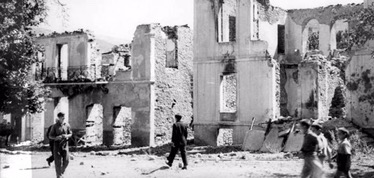
The history of modern Imvros is one of continuous human rights violations by Turkey against its once-majority Greek population, which today, has dwindled to about 300 people.

Imvros was always Greek. Since antiquity and even through Byzantine and during the Ottoman occupation, the island constituted a thriving ethnic Greek population with dozens of schools, churches and a thriving fishing industry.

In 1920 the Treaty of Sevres granted the islands to Greece. The Ottoman government, which signed but ratified the treaty, was overthrown by the new Turkish nationalist Government of Mustafa Kemal Atatürk, whose forces conducted a bloody genocide against ethnic Greeks in Asia Minor, leading to a massive exchange of populations.

The Greeks of Imvros (and the neighboring isle of Tenedos) were spared from the population exchange and were allowed to stay on the islands, but the islands were ceded to Turkey, its residents treated as pawns in a masterful and strategic game of political chess between Ataturk and the foreign powers administering the Lausanne Treaty between Turkey and Greece.

The treaty guaranteed the residents a special autonomy and protections to live, worship and educate their youth in Greek. Villages and geographic places were to retain their Greek names, as well.

This all changed shortly after the dust settled in the region after the bloody war and the Turkish government— in violation to the Treaty’s bylaws— began enacting laws that stripped the rights away from Greek residents. By 1926 all place names were officially changed to Turkish.

Massive, state-sponsored persecution against the Greek residents was commonplace and many began leaving their family homes and closing businesses, fleeing to Greece, the United States and Australia.

In the meantime, Turkey was re-settling mainland Turks to the islands, offering homes and property that Greeks were abandoning as incentive to move there, ultimately trying to change the demographic make up of Imvros and turn the majority Greek population into a minority.

Political upheaval between Athens and Ankara in 1964 and 1974 over the Cyprus issue caused massive departures on a scale that would change the island forever. Today, it is estimated by local associations that a 15,000-strong Imvriot diaspora resides abroad, mainly in Australia, with 318 people remaining on the island.

Source: PappasPost

Greek American World War II Refugee Leaves $600 Million Fortune to Charity

John L. Santikos was a young boy who fled to the United States immediately after the Nazi occupation of Greece and at the heels of the Greek Civil War. One year after his death, officials at the San Antonio Area Foundation have announced that the Greek immigrant has left an estimated gift of $605 million to charity.

Santikos, who built a movie theater and real estate empire in San Antonio, Texas, died in December 2014. Although memorial gifts were made to some charities immediately after his death, the full extent of his gift was made public at a press conference at the San Antonio Area Foundation on December 15, 2015– almost a year after his passing. The SAAF will manage the gift and donations based on Mr. Santikos’ wishes.

Included in Santikos’ will a year ago were immediate gifts to charities working in his native Greece, including a $500,000 gift to International Orthodox Christian Charities, which is using the money to offer food assistance to vulnerable families in Greece, “This valuation represents the largest gift in the 51-year history of the Area Foundation and is the largest single gift on record in San Antonio. Santikos gifted the bulk of his estate, including his theater and real estate businesses and raw land assets to the Area Foundation after careful research on the best method for establishing a legacy fund that could make significant annual donations beyond his lifetime. The donation will fulfill Santikos’ desire to support a wide range of charitable programs in the local area. It will more than triple the community Foundation’s asset size,” according to a statement by the San Antonio Area Foundation.

Although born and raised in Greece, Santikos’ story actually began in America with his father Louis, who first emigrated to the United States in 1911 from Greece. First settling in Waco, where he first worked in a grocery store, he noticed long lines of people who lined up every day to get into the Rex Theatre, a nickelodeon across the street. Sensing the opportunity, he saved his money and was able to buy the theater, beginning what would be a century-plus of involvement in movie theaters.

In 1918 Louis relocated to San Antonio where he began operating the Rialto Theatre, and eventually opening the Palace Theatre on Alamo Plaza – San Antonio’s first “movie palace” and the forerunner of the Majestic, Aztec and Texas theaters— the biggest and grandest theaters in the region.

Louis returned to Greece in 1925 where he met and married Toula Gatos and brought her back to San Antonio. In 1927, He sold most of his business interests in San Antonio and moved back to Athens, Greece where he became a successful film distributor and where John was born.

During the Nazi occupation of Greece, German Nazi officers took over the Santikos home in Athens, living upstairs while the family lived downstairs – a time of great tension and fear for the family. When the German occupation ended in 1944, the civil war broke out between Communists and British/American-supported forces. At one point, Louis Santikos and eldest son John fled the house just hours before Communist guerrillas arrived looking for them. The civil war lasted until 1949.

Fearing for his children’s safety, Louis sent John and then his sister Kiki and brother Dean back to San Antonio in 1946. John entered St. Mary’s University in 1947, taking academic courses and learning English at the same time. He earned his business degree in only two and a half years, during which time his father and mother eventually moved back to San Antonio, where he opened another theater— the Olmos Theater.

Following in his father’s footsteps, John joined his father at the Olmos, taking tickets, handling concessions and managing the theatre in all aspects, learning film booking, marketing – a practical education from his father and by hands-on experience. By 1958, John’s parents Louis and Toula decided to return to their native Greece, with John taking over the company in San Antonio.

John grew Santikos Theatres rapidly, purchasing and building theaters up through the Texas real estate downturn of 1987, when he sold all his theaters to Act III Theatres, owned by TV impresario Norman Lear.

Act III later sold all of its theaters – including those in San Antonio – to Regal Cinema. When Regal filed for bankruptcy in 2001, John Santikos was able to buy back all the San Antonio theaters he had originally sold to Act III.

Over the years, Santikos Theatres continually brought cutting edge cinema technology to San Antonio and Houston. From the first drive-in theaters and multiplex indoor theaters, to premium large screen formats with 4k digital projection, THX and Dolby Atmos sound systems, Santikos Theatres led the way in innovation. The innovation continues as Santikos Theatres was among the first cinemas in the country to install laser projection technology in early 2015.

Source: Pappaspost

PATRIARCH OF JERUSALEM: NO SACRILEGE IN OPENING LORD’S TOMB; BELIEVER SHOULD NOT SEEK FOR SIGNS

His Holiness Patriarch Theophilos III of Jerusalem has responded to criticisms that restoring the Lord’s Sepulchre constitutes an invasion of a holy space and a sacrilege.

Speaking in an interview with the press service of the Russian Ecclesiastical Mission in Jerusalem he stated, “The fact is that restoration has been ongoing in the Church of the Holy Sepulchre for many years already; the only part of the church that remained untouched was the Edicule, which therefore was in need of restoration, particularly of the burial cave of Christ, that is the Holy Sepulchre.”

He noted that restoration is being done on the entire complex, which therefore necessarily includes the very funeral bed of the Lord. Head of the restoration project Professor Antonia Moropoulou of the Athens Polytechnic University stated that the marble slab was removed to gain access to the historic masonry underneath which was swollen from decades of rainwater falling through a hole in the roof of the tomb. The walls were restored and water damage fixed.

The patriarch further noted that the corroded drainage system, dating to Ottoman times, is also to be restored in the future, to prevent further water damage to the Edicule.

Addressing circulating gossip of mysterious occurrences over Jerusalem—the blast of angels’ trumpets and supernatural phenomena in the sky—at the time of the opening of the Lord’s tomb, His Holiness denied such stories, saying, “This is nonsense. There were no such phenomena. Moreover, the Orthodox faith … is reasonable worship… Believers should not ask such questions—it is totally unacceptable.”

The patriarch also noted that work is moving according to schedule and they expect to celebrate Pascha 2017 at the Sepulchre.

Source: http://www.pravoslavie

Tsipras will put pensioner bonus to Greek parliament

A Greek pensioner leans on a shepherd's crook during a demonstration against planned pension cuts in Athens, Greece, 3 November 2016
A Greek pensioner at a protest against pension cuts in Athens last month
The Greek Prime Minister Alexis Tsipras has refused to back down over his plans to give poor Greek pensioners a pre-Christmas bonus.

A government official said Mr Tsipras would ask parliament on Thursday to approve the payment, worth €617m (£517m) in total.

Earlier, eurozone lenders suspended their recently agreed short-term debt-relief plan for Greece.

They said they had not been asked to approve the bonuses plan.

The European Stability Mechanism (ESM), the body that helps eurozone governments in trouble, said it would now be scrutinising the proposed handout.

“Following recent proposals by the Greek government to spend additional fiscal resources for pensions and VAT, our governing bodies have put their decisions temporarily on hold,” a spokesman for the ESM said.

“Institutions are currently assessing the impact of Greek government decisions vis-a-vis the ESM programme commitments and targets.

“[We] will then analyse the institutions’ assessment and subsequently decide how to proceed,” he said.

The debt-relief deal between Greece and the ESM was agreed on 5 December and would reduce the interest burden on the country’s debts of more than €300bn.

The Greek government announced its bonus for pensioners earning below €800 a month just three days later, but without consulting the eurozone representatives.

It also scrapped a rise in VAT for residents of Aegean islands to help relieve the economic pressure caused by an influx of migrants.

A spokesman for Jeroen Dijsselbloem, the head of the Eurogroup – the eurozone finance ministers who have been negotiating with the Greek government over its massive debts – said the Greek government’s action appeared “to not be in line with our agreements”.

There was “no unanimity now for implementing short-term debt measures”, the spokesman added.


Analysis: Andrew Walker, BBC economics correspondent

This is a familiar refrain in the long-running story of the Greek bailout.

The lenders are once again concerned about the Greek government straying from the agreed programme.

Over and over again, missed objectives and slipping timetables have led to loan payments being delayed.

This time it is debt relief agreed by eurozone ministers rather than a loan payment that is being held up.

The particular issue is whether the measures on pensions and VAT will lead to Greece missing its targets for the government finances.

But there is another dispute in the background.

The arrangement of 5 December included extending the maturity on certain loans to the Greek government, and locking in the interest rate on some of its debts in order to reduce the country’s repayment burden, but they did not alter the total amount owed.

A key player in the latest decision to suspend the recent agreement has been Germany.

“If the rescue programme is going to be deemed a success, it is imperative that measures are not taken unilaterally,” said a spokesman for the German Finance Ministry.

Shares traded on the Athens stock market closed 3% lower.

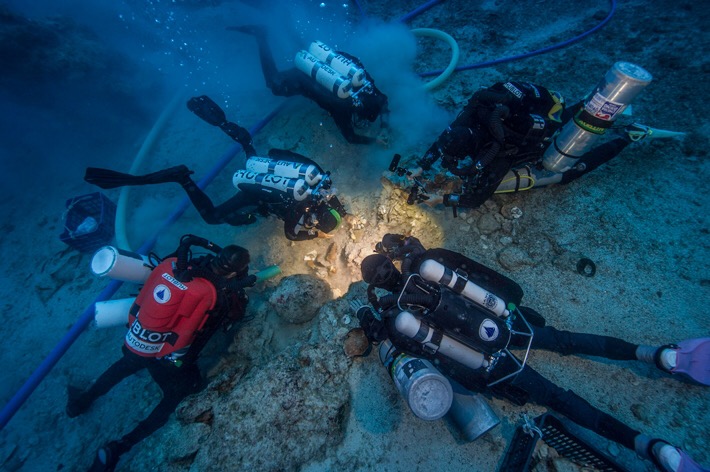
Ancient world’s largest, richest, and perhaps most famous wreck in Antikythera, Greece

Underwater archaeologists investigate the first human remains to be found at the Antikythera shipwreck in almost 40 years.


The Antikythera shipwreck (circa 65 B.C.) is the ancient world’s largest, richest, and perhaps most famous wreck.

Discovered in 1900 off the Greek island of Antikythera, the site has yielded hundreds of treasures, including bronze and marble statues, as well as the Antikythera Mechanism, often referred to as the world’s oldest computer.

However, an important new discovery was made in summer 2016 when an international team recovered a human skeleton there. 

The remains, which include parts of the cranium, jaw, teeth, ribs, and long bones of the arms and legs, most likely belonged to a young male.

Evidence of at least four other individuals had previously been found at the site, but the newly discovered remains are the first to be uncovered in almost 40 years—and during the age of DNA analysis.

According to ancient DNA expert Hannes Schroeder, the discovery might provide the first opportunity to examine the genetics of an ancient mariner. 

“Human remains from ancient shipwrecks are extremely uncommon,” he says. 

“DNA analyses can potentially provide fascinating new information on the crew’s genetic ancestry and geographic origins.”

Project codirector Brendan Foley suggests that the individual may have been trapped belowdecks when the ship smashed into the rocks and sank. 

Parts of the skeleton discovered in 2016 remain in situ and will be further excavated this summer. 

Foley believes that even more human remains may survive at the site along with other precious cargo.

Source: Archaelogy.org

Remembering the Kalavryta Holocaust – December 13, 1943

Today, one of the worst atrocities in all of World War II history is remembered, when over 1,200 male residents of the town of Kalavryta and surrounding villages were gunned down on a hillside overlooking the town by the Nazi German invaders.


In November 1943, the German 117th Jäger Division began an operation to root out Greek guerrilla fighters in the mountainous area surrounding Kalavryta. During the operation, 77 German soldiers were captured by Greek rebels and killed. The German command responded ferociously, ordering a harsh reprisal operation signed and ordered by Karl von Le Suire on December 10, 1943.

The operation began from the coastal area of Achaea in Northern Peloponnese as German troops marched towards Kalavryta, burning every village in their path and murdering civilians along the way.

When they arrived in Kalavryta, they locked all women and children in the town’s school and ordered all male residents 12 years old and older to a hillside overlooking the town, where they were made to stand in a straight line and gunned down with machine gun fire.

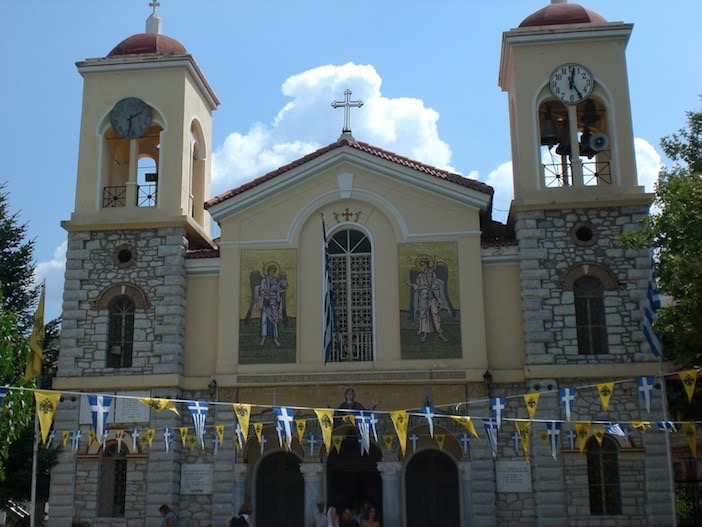
Almost 500 men and boys were gunned down in this single incident, which began at 2:35pm on December 13th. Since that moment, the hands of the town’s main church have not moved— leaving an impression on visitors to recall the exact time the atrocity took place.

Following the mass murder of these innocent civilians, the Nazis went on a rampage, burning more than 1,000 houses and looting and burning every building in the town. The following day the Nazi troops burnt down the Monastery of Agia Lavra, a landmark of the Greek War of Independence.

The school where the women and children were assembled was set on on fire by the Nazis but they broke windows to try to escape. The Germans tried to beat them back inside, but ultimately allowed them out, according to the town museum. Other accounts speak of a sympathetic Nazi who unlocked the doors and let the prisoners out, where they scattered into the surrounding brush.

The German occupation of Greece was one of the most brutal in Europe, according to noted historian and author Mark Mazower, whose book “Inside Hitler’s Greece: The Experience of Occupation, 1941-1944.” remains a main go-to book for Greek World War II history.

Numerous survivor-account books have been written about the Kalavryta Holocaust including Hitler’s Orphan: Demetri of Kalavryta by Marc Zirogiannis, and Just Another Man: A Story of the Nazi Massacre of Kalavryta by Andy Varlow.

In 2007, then film student Alethea Avramis was awarded a prestigious award for Best Honors Thesis entitled “Kalavryta, Greece, and December 13, 1943.” Avramis, now an award-winning filmmaker shot a short documentary film called The Last Widow, featuring an interview with Efthymia Vaya, the last remaining widow survivor from the massacre. Her project was an in depth analysis of the tragic events leading up to the massacres.

Source: GREGORY PAPPAS 

Lost Greek city dating back 2,500 years discovered by archaeologists

‘The fact that nobody has ever explored the hill before is a mystery’.
Archaeologists have discovered a 2,500-year-old lost city in Greece.

Researchers from the University of Gothenburg and University of Bournemouth have begun exploring the ruins at a village called Vlochos, five hours north of Athens.

While some of the ruins were already known, they had been dismissed as part of an irrelevant settlement on a hill, the leader of the team, Robin Ronnlund, said in a statement.

He added: “A colleague and I came across the site in connection with another project last year, and we realised the great potential right away.

“The fact that nobody has ever explored the hill before is a mystery.”


Fortress walls, towers and city gates are clearly visible from the air (SIA/EFAK/YPPOA)

The team found the remains of towers, walls and city gates on the summit and slopes of the hill. 

They hope to avoid excavation and use methods such as ground-penetrating radar instead, which will allow them to leave the site in the same condition as when they found it.

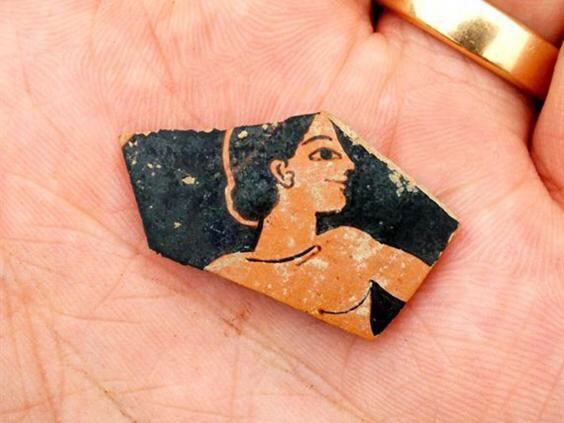
During their first two weeks of field work in September, they have discovered an ancient pottery and coins dating back to around 500 BC.


A fragment of red-figure pottery from the late 6th century BC (SIA/EFAK/YPPOA)

Mr Ronnlund said the city appears to have flourished from the fourth to the third century BC before it was abandoned — possibly because of the Roman conquest of the area.

He added: “Very little is known about ancient cities in the region, and many researchers have previously believed that western Thessaly was somewhat of a backwater during Antiquity.

“Our project therefore fills an important gap in the knowledge about the area and shows that a lot remains to be discovered in the Greek soil.”

Source: http://www.independent.co.uk

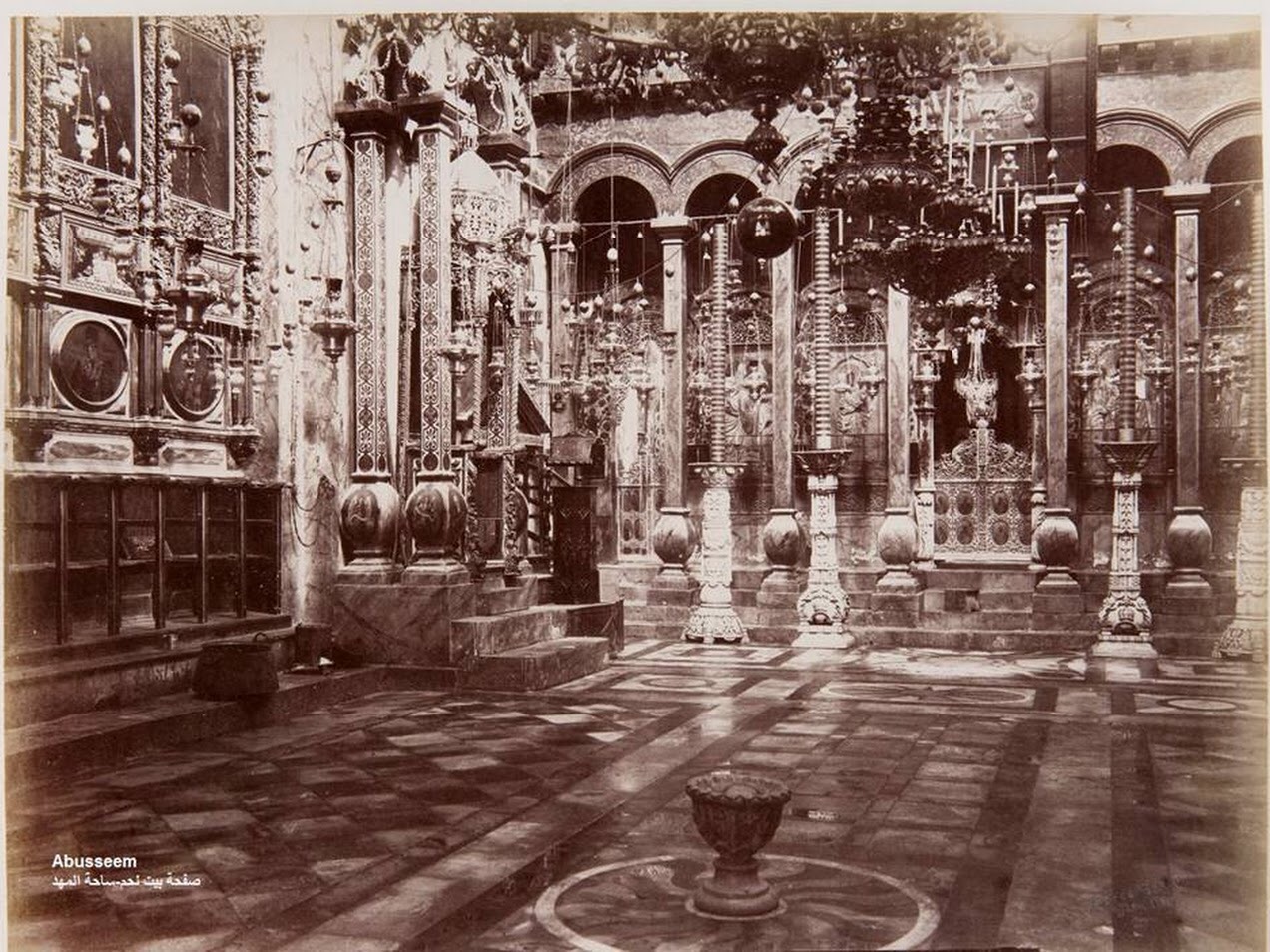
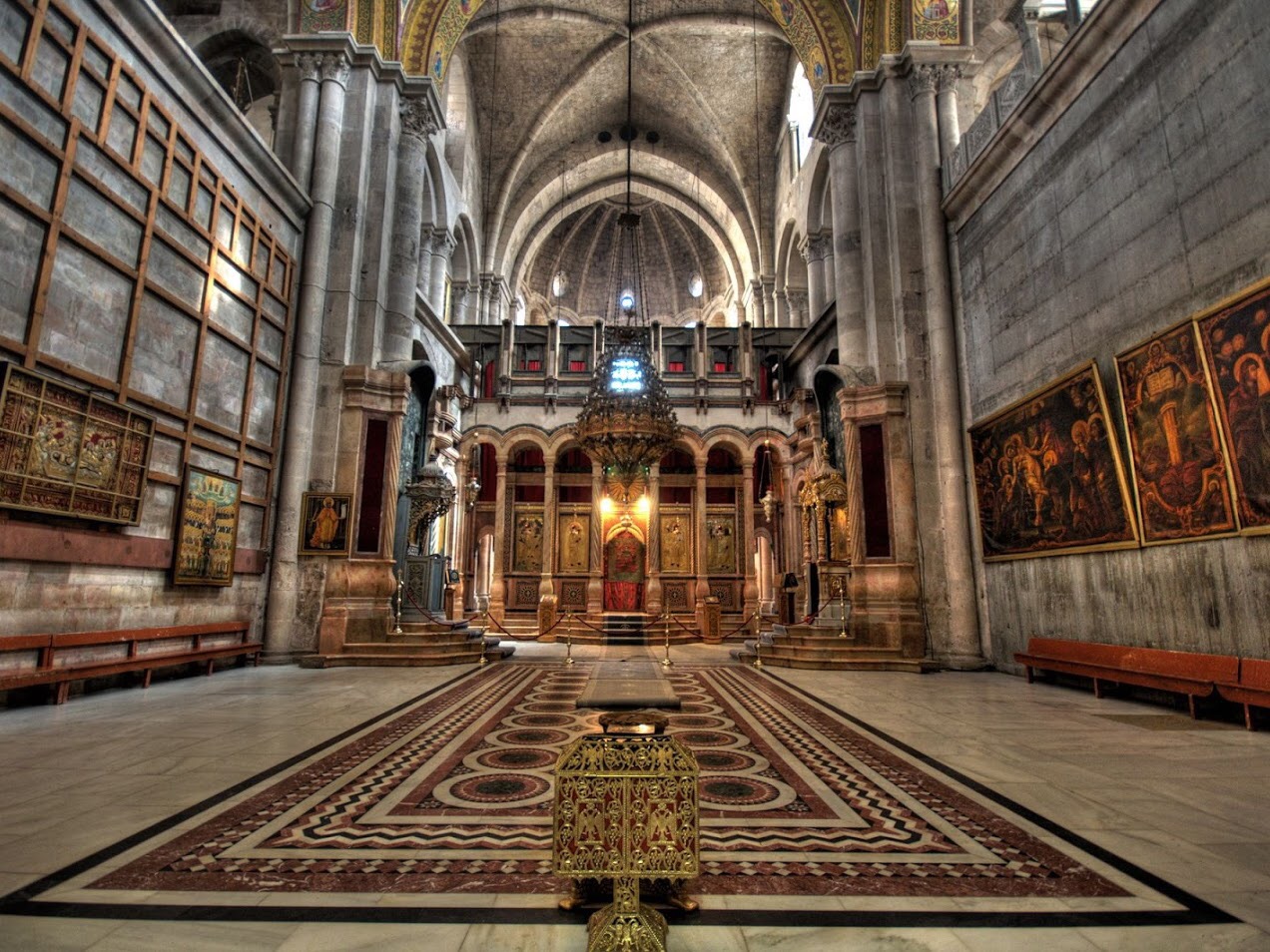
O Πανίερος Ναός της Αναστάσεως Χριστού στα Ιεροσόλυμα

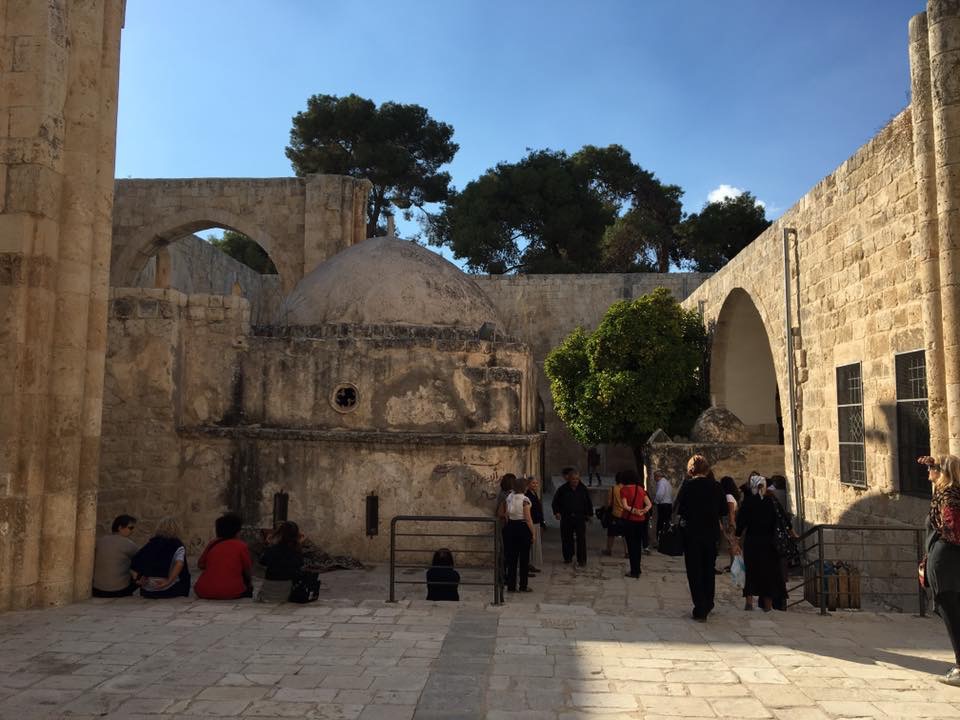
O Πανίερος Ναός της Αναστάσεως Χριστού στα Ιεροσόλυμα σε φωτογραφία το 1890, και στις επόμενες δύο όπως είναι σήμερα,έτος 2016.

Πάντως στην παλαιά φωτογραφία δείχνει τόσο αρχοντικός και περίτεχνος, καλλωπισμένος και γεμάτος.

Σήμερα φαίνεται απέριττος αλλά το ίδιο ευλογημένος, και αποτελεί το κέντρο όλου του κόσμου, τον “ομφαλό της γης”!

Source: Ignatios Kazakos

Ο Τάφος του Τιμίου Προδρόμου Ιωάννου του Βαπτιστού.

ΑΡΧΑΙΑ ΣΕΒΑΣΤΕΙΑ – Ο Τάφος του Τιμίου Προδρόμου Ιωάννου του Βαπτιστού.

Στα βόρεια της Νεάπολης (Αρχαία Συχέμ) βρίσκεται η πόλη Σεβάστεια, άλλοτε πρωτεύουσα του Ισραηλιτικού βασιλείου.

Εκεί σήμερα είναι μόνον ερείπια και ένα μικρό αραβικό χωριό. Το πιό αξιόλογο στο χώρο αυτό, είναι τα ερείπια μεγαλοπρεπούς βασιλικής εκκλησίας που είχε κτίσει η Αγία Ελένη, προς τιμή του Αγίου Ιωάννου του Προδρόμου και Βαπτιστού. 

Δυτικά ανακαλύφθηκε ρωμαικό θέατρο, που αναφέρεται ότι ήταν το θέατρο όπου χόρεψε η Σαλώμη και όπου ζήτησε “…την κεφαλήν Ιωάννου του βασπτιστού επί πίνακι…” 

Εκεί πλησίον είναι και η φυλακή του Τιμίου Προδρόμου, και σε μισοκαταστρεμένο τέμενος – τζαμί, που είχαν χτίσει οι μουσουλμάνοι, βρίσκεται και ο τάφος του Αγίου. Τον χώρο αυτό σέβονται και οι μωαμεθανοί και οι χριστιανοί.

Είναι επισκέψιμοι χώροι αλλά λίγοι γνωρίζουν το δρόμο. Είναι εντελώς παραμελημένοι και δεν έχει υπάρξει καμία μέριμνα λόγω της ιδιαιτερότητας του τόπου. 

Δεν ανήκουν τα μέρη αυτά στο Πατριαρχείο μας. Εχουν γίνει ενέργειες από τον π.Ιουστίνο Μάμαλο ηγούμενο του Φρέατος του Ιακώβ, αλλά απαιτούνται πολλά χρήματα για να κατορθώσει κανείς να αναδείξει τον ιερό αυτό τόπο ως προσκυνηματικό ορθόδοξο χριστιανικό μέρος λατρείας. Εχει ο Θεός. Ισως στο μέλλον να αναλάμψει και πάλι η περίφημη αυτή Σεβάστεια με όλα αυτά τα ευλογημένα χώματα. Εύχεσθε.

Source: Ignatios Kazakos

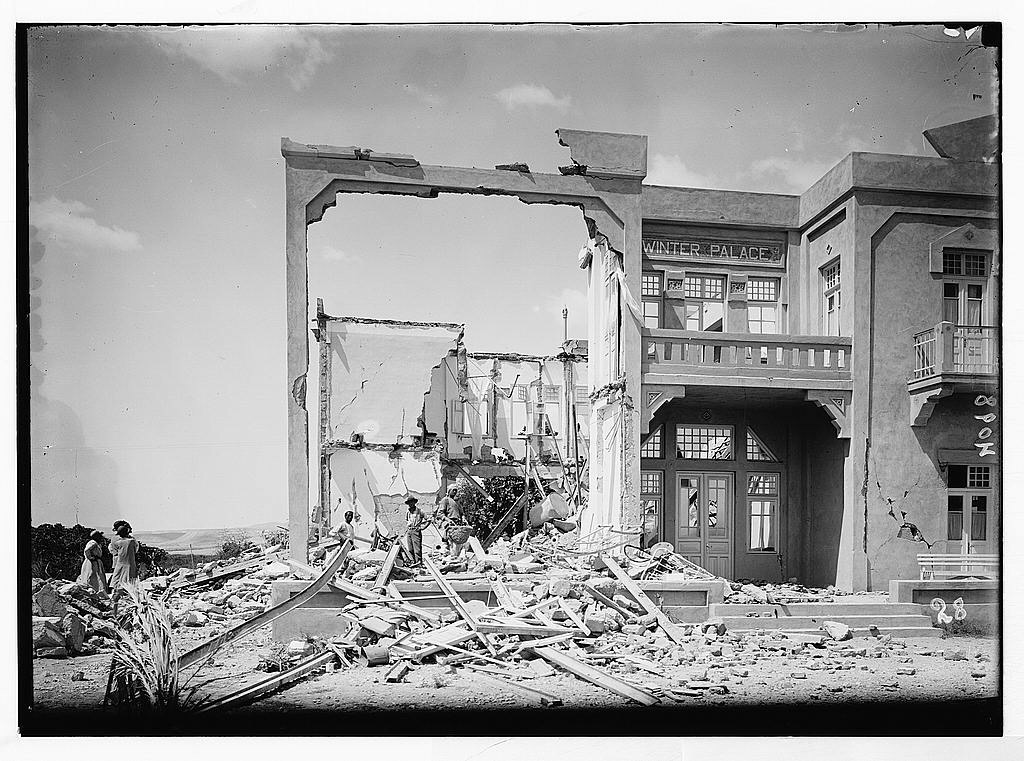
Ο σεισμός του 1546 στην Αγία Γη

Ο σεισμός αυτός έγινε στις 14 Ιανουαρίου 1546 και έβλαψε κυρίως με ζημιές την Ιερουσαλήμ, Νεάπολη, Ρέμλη (Αριμαθαία), Ιόππη και την Δαμασκό στη Συρία. Στα Ιεροσόλυμα έπεσε μέρος του τείχους της νέας πόλης, που είχαν χτίσει οι Τούρκοι. Επεσαν επίσης οι μιναρέδες πολλών τζαμιών, και το Κωδωνοστάσιο-καμπαναριό του Ναού της Αναστάσεως και σκοτώθηκαν 10-12 άτομα. Πολλά σπίτια καταστράφηκαν εντελώς, ισοπεδώθηκαν. Στη Νεάπολη, όπου βρίσκεται το Φρέαρ του Ιακώβ, σκοτώθηκαν 500 άνθρωποι μέσα στη πόλη. Στη Χεβρώνα, όπου βρίσκεται η Δρυς του Μαμβρή, εντός της πόλης φονεύθηκαν από το σεισμό 16 κάτοικοι και υπήρξαν 70 τραυματίες. Ο Ιορδάνης ποταμός από την φοβερή ένταση του σεισμού διαιρέθηκε σε δύο ρεύματα. Το ίδιο συνέβη και με τον σεισμό του 1267, του 1906 και 1927 – όταν και πάλι ο Ιορδάνης έτρεχε σε δύο ρεύματα – και αυτό κράτησε από δέκα μέχρι είκοσι ώρες. Με τον σεισμό του 1546 ο ποταμός έφραξε για δύο – τρεις ημέρες, από τα μεγάλα τμήματα της γης από τις όχθες του, που έπεσαν εντός του. Στην Ιεριχώ η πηγή του Προφήτου Ελισσαίου είχε γίνει κόκκινη σαν αίμα! (Palestine Post, March 8, 1939 / Εφημερίδα Παλαιστίνη, 8 Μαρτίου 1939).
Source: Ignatios Kazakos