It’s unthinkable and unfair, but children come here to die and Bear Cottage makes it OK

Source: DailyTelegraph

Where children come to die

The Bear Cottage Hospital for Children in Manly. Source: News Limited

WALKING through the doors of Manly’s Bear Cottage immediately leaves a lump in your throat and sick feeling in your stomach – this is a place where children come to die.

It’s unthinkable, it’s unfair, but it’s inevitable and, remarkably, Bear Cottage makes it OK.

The Bear Cottage is warm and welcoming.

The Bear Cottage is warm and welcoming. Source: News Limited

Because when you gather the strength to step into one of only two Australian hospices for terminally ill youngsters, you discover senior nurses dressed as fairies, Christmas lights twinkling and cheeky toddlers zipping down the hall on scooters – their cheerful normalcy making the pain bearable.

The cottage itself is warm and welcoming.

Bright books fill the shelves, colourful quilts line the beds, handmade artworks decorate the walls and toys are tucked into every nook and cranny.

Children zip down the halls of Bear Cottage.

Children zip down the halls of Bear Cottage. Source: News Limited

And it’s these little things that make all difference.

Since the cottage opened 12 years ago, its been the home away from home for the families of more than 600 dying children.

Some have made it, but, heartbreakingly, most haven’t.

However, they won’t be forgot.

Their innocent faces are forever plastered on one of the walls within the facility – and nursing unit manager Narelle Martin, who has worked at the cottage since it opened, remembers every single one.

Nursing unit manager Narelle Martin remembers every face.

Nursing unit manager Narelle Martin remembers every face. Source: News Limited

“There are so many people who have touched me – it’s a real privilege to know so many special kids,” an emotional Ms Martin said as she admired their pictures.

“And the strength and resilience they show is incredible, and it has really taught me so much.

“Some of them I think ‘how do you get up every day to face another day’ and they say ‘but look at that person and what they are going through’ – they really are amazing.”

Bear Cottage can house up to eight children and their extended families, even including two private two-bedroom apartments.

Bear Cottage can house eight children and their extended families.
Bear Cottage can house eight children and their extended families. Source: News Limited

The cottage is one street away from the beach.
The cottage is one street away from the beach. Source: News Limited

Located a street away from the beach, ocean views and vast outdoor space make the tranquil environment one of peace and calm: a world away from the hospitals the young bodies are used to.
Some have cancer, others have rare genetic neurological disorders. They come for respite for a week at a time, but if it’s at the end of their illness, their stay is open ended.

Ellie is one of the little girls racing around on her scooter, here to support her big brother, who is at the end of his life.

She’s dressed in matching pink fairy gowns with a tiara-wearing senior nurse better known as ‘Princess Rosalia’.

She’s happy, distracted for a moment from the heartbreak her family is experiencing.

Costing $3 million a year of mostly community donations to operate, Bear Cottage has a holistic approach to care, including a full-time play therapist, while using music and art therapy to help children get the most from their stay.

The cottage offers play therapy including music and art.

The cottage offers play therapy including music and art. Source: News Limited

They have interactive televisions for the bed-bound, treatments from volunteer reflexologists and massage therapists, a spa, outdoor music area, wheelchair swing, a games room, multi-sensory room – and loved pet dog, Frankie.

“It is really a big home, and not just for the children, but for their families,” Ms Martin said.

Bear Cottage recently launched a Mum Boot Camp well-being program, giving six stressed out mums six months of support to look after themselves, and their children – with guidance on nutrition, help from motivational speakers, exercise programs and tips to survive the hard times.

“A lot of our mums are isolated, have low self-esteem and are in a space that is so hard to get out of,” Ms Martin said.

“The first part they come for a week, and we look after their child and once a month they come for the weekend as a follow up.”

Katrina Young, a 38-year-old from Sydney’s Allambie Heights, is one of them.

Katrina Young with her daughter Hannah.

Katrina Young with her daughter Hannah. Source: News Limited

Ms Young said the staff at Bear Cottage had given her and daughter Hannah great strength – particularly after the death of Hannah’s identical twin sister, Amelia, last May.

The eight-year-old girls suffered Rett syndrome, a severe genetic disorder of the nervous system, affecting all body movement, as well as scoliosis, autism and epilepsy, with Amelia suffering her first seizure at just 14 months of age.

Confined to a wheelchair, Hannah can’t talk, is fed by a tube, and unable to use her hands, relies on her mum for everything.

“Christmas last year was really difficult and all those firsts without Amelia were so hard,” Ms Young said.

“When it changed to the New Year I was so sad because Amelia wouldn’t be part of that year with us, and birthdays are really hard because they are identical.

“Boot camp came at the right time for me because when Amelia was in hospital all the time I didn’t get the chance to eat properly – you only eat what is in the cafeteria or what can be put in the microwave – and then after Amelia died it just got harder with a lot of emotional eating.

“At first I was just worried about Hannah because she and Amelia were so close, but she is doing a lot better. She is still sad, but she is doing better.

“Now I am ready to start looking after myself.”

Resident dog Frankie.

Resident dog Frankie. Source: News Limited

Ms Young said her girls had been coming to Bear Cottage for three years, during which time Amelia, who was physically weaker than Hannah, suffered some 23 pneumonias.

“She couldn’t fight any longer,” the single mother said.

Seanne Lavender’s daughter Gaby has been coming to Bear Cottage since it opened 12 years ago.

Talking to The Sunday Telegraph just before the Port Stephens family left the facility for the last time, Ms Lavender was devastated that Gaby, who had just turned 18, was no longer eligible for care. She now falls into the age bracket for adult palliative care.


'We are lucky to have her': Seanne Lavender and her d...

‘We are lucky to have her’: Seanne Lavender and her daughter Gaby. Source: News Limited

With a rare mitochondrial disorder leaving her unable to metabolise glucose and carbohydrates, Gaby wasn’t expected to live past the age of one.

“We are very lucky to have her, she has far exceeded all medical expectations – her brain was dying at 10 weeks of age and all her vital organs were starving of energy,” a tearful Ms Lavender said.

“She is fed by a tube, she can’t swallow, she can’t walk, is vision impaired and has epilepsy.

“Gaby can’t speak or communicate in any meaningful way, but she can sing.

With three other children, Ms Lavender said struggling to care for Gaby left little time for the rest of their family – a fact of life changed by Bear Cottage.

“Coming here meant we could actually spend time with the other kids, because we trusted the staff to be with Gaby and we could take the kids for a walk on the beach, or to have an ice-cream,” she said.

Going home for the last time, Ms Lavender said she was forever grateful to Bear Cottage and its staff.

“The people here have been our family, and we will really miss that.”

* To support Bear Cottage, phone 9976 8300 or visit http://www.bearcottage.chw.edu.au

Socceroos land in FIFA World Cup Group B alongside Spain, Netherlands and Chile

Source: News.com.au

Socceroos coach, Ange Postecoglou, puts a positive spin on what is being deemed a horror draw.

This is the group that awaits the Socceroos.

This is the group that awaits the Socceroos. Source: AFP

SO it’s not just the World Cup, but the world champions, that awaits the Socceroos.

Australia will face a hugely difficult task to qualify from Group B at next year’s World Cup after drawing the holders, Spain, European giants Holland and South American qualifiers Chile at this morning’s draw in Brazil.

Ange Postecoglou’s men will kick off what will inevitably be termed a group of death against Chile on June 13 in Cuiba, the day after the opening game of the tournament between Brazil and Croatia, then face Holland in Porto Alegre on June 18 – before tackling Spain on June 23 in the final group game in Curitiba.


The Socceroos have been dealt a horror draw for next year’s World Cup in Brazil. They will face Chile, Netherlands and defending champions Spain.

As if that wasn’t hard enough, should Australia upset the odds and qualify in second place in Group B, they would face the hosts, Brazil, in the Round of 16.


World Cup Groups

  • Group A
  • Brazil, Croatia, Mexico, Cameroon
  • Group B
  • Spain, Netherlands, Chile, Australia
  • Group C
  • Colombia, Greece, Ivory Coast, Japan
  • Group D
  • Uruguay, Costa Rica, England, Italy
  • Group E
  • Switzerland, Ecuador, France, Honduras
  • Group F
  • Argentina, Bosnia-Herzegovina, Iran, Nigeria
  • Group G
  • Germany, Portugal, Ghana, USA
  • Group H
  • Belgium, Algeria, Russia, South Korea

“It probably couldn’t be tougher, but it’s exciting – I look at the teams and they all play good football, it’s not just that they’re strong teams. It’s our chance to play our part in that, and I’m looking forward to it,” Postecoglou said.

Adam Peacock and Andy Harper run us through Australia’s group, including where they will play and how coach Ange Postecoglou reacted.

“We’ll go there to play football, we’ve got a chance to make some headlines ourselves. I don’t think many people will give us much chance in this group, so that’s an opportunity in itself.

“It probably is [the toughest group]. The Netherlands and Chile could easily have been seeded when you look at their qualification campaigns. So it’s a tough group but an exciting group.

“Anyone watching will see some exciting football played and we can play a part.”

Spain sauntered to qualification in Europe’s Group I, winning six of eight games, drawing the other two and relegating France to a play off.

Holland, who lost the 2010 final to Spain 1-0, cruised through qualifying under veteran coach Louis van Gaal registering 28 of a possible 30 points against Romania, Turkey and an improving Hungary.

Playing a swashbuckling style of football reminiscent of the 2010 World Cup coach Marcelo Bielsa, Chile finished third in South American qualifying behind Argentina and Colombia.

The climate will also be a major factor with temperatures in Cuiba often topping 30C in Cuiba, but often down to single figures in Porto Alegre – although Curitiba averages a pleasant 20C.

The Socceroos’ fate was determined amid typical FIFA largesse, in a draw ceremony for the 20th World Cup that cost more than $16m to stage. For reasons likely to be connected to avoiding more demonstrations by disaffected Brazilians, it was held at the Costa do Sauipe resort on Brazil’s north eastern coastline – a seriously up-market holiday destination some 75km from the nearest city, Salvador.

It was a dramatic draw in Brazil overnight.

It was a dramatic draw in Brazil overnight. Source: Getty Images

Presented by Brazilian actors Fernanda Lima and Rodrigo Hilbert, the teams were drawn by iconic names from previous tournaments l include England’s 1966 hat-trick hero Sir Geoff Hurst, France’s Zinedine Zidane, Brazil’s Cafu and Italy’s Fabio Cannavaro.

Around 2000 media attended, with the draw itself now rivalling some international sporting events for the attention and money lavished upon it.

ACT leads nation in Program for International Assessment but Australia is slipping

Source: CanberraTimes

Canberra teens are leading the country according to the 2012 Program for International Student Assessment, but the ACT and Australia are slipping when it comes to literacy in mathematics, reading and science.

The triennial PISA survey measured 15-year-old school students in 65 countries, and while Australia ranks significantly above the OECD average in all three fields, experts are concerned that mean scores have continued on a downward trend since the first PISA in 2000.

The ACT ranks among the highest in the world when it comes to reading, with mean scores putting it just above Finland, which is third in the OECD country rankings, compared to Australia’s eighth.

Across the gender divide, boys universally performed worse than girls in reading, but the average Canberra girl is 49 points ahead of the average boy, the biggest difference in the country.

Canberra tops the nation in mathematics, ranking equal with Canada, the fifth-ranking OECD country, well above Australia in 11th.
But the ACT decreased by 30 score points on average in maths, with the territory behind world-leading Shanghai in mathematical literacy by the equivalent of almost three years of schooling.

The proportion of top mathematical performers in the ACT decreased 9 per cent between 2003 and 2012 and the number of students not meeting the proficiency benchmark is up 5 per cent from 2003.

When it comes to science, Western Australia outperformed the ACT by the narrowest margin, with both regions just shy of Korea, which ranks No. 2 out of the OECD countries.

There was a significant decline in the mean scientific literacy performance for ACT students; 15 points on average.
Canberra’s girls and boys perform almost equally well in science and maths; boys scoring just one point higher on average, whereas WA has the largest gender difference in the country for both.

Nationally, Australia’s rankings fell in all subjects, from 15th to 19th in mathematics, 10th to 16th in science and ninth to 14th in reading since 2009, based on raw mean scores.

The PISA results confirm serious inequality within the education system in Australia, a fact highlighted by David Gonski’s review of school funding.
The latest results show Australia students in the lowest socio-economic quartile are performing on average at a rate equivalent to 2½ years behind the highest socio-economic quartile, while the same gap also occurred between the results of indigenous and non-indigenous students.

Gonski review panellist and former director-general of NSW education Ken Boston said Australia should compare itself in OECD comparisons to Canada, which performed significantly higher than Australia in maths and reading in the latest tests.

”Forget Shanghai and Finland,” he said. ”Canada is the country Australia needs to compare itself with because it is culturally similar. The key thing is that it has a higher performance than us overall and a lower correlation between disadvantage and performance.”

Mean scores were highest in independent schools, followed by Catholic and then government schools, but after allowing for differences in school socio-economic status, the results were similar.

”It is evident from this report that locally and as a nation there are areas where we can continue to improve,” ACT Education Minister Joy Burch said.

”This report shows the need for certainty with funding through the Better Schools program and a more direct approach to needs-based funding which Better Schools delivers.”

Australian family reclaims Guinness world record with more than 500,000 Christmas lights

Source:  he Associated Press

Australian family reclaims Guinness world record with more than 500,000 Christmas lights

People look at The Richards home illuminated with miniature lights in Canberra, Sunday, Nov. 24, 2013. The Australian family has reclaimed their Guinness World Record by stringing up more than half a million Christmas lights around their suburban home. Guinness World Records official Chris Sheedy confirmed Monday, Nov. 25, that the Richards family set the record for Christmas lights on a residential property with 502,165 twinkling bulbs. (AP Photo/AAPIMAGE, Alan Porritt)

CANBERRA, Australia – An Australian family has reclaimed their Guinness World Record by stringing up more than half a million Christmas lights around their suburban home.

Guinness World Records official Chris Sheedy confirmed Monday that the Richards family of Canberra set the record for Christmas lights on a residential property with 502,165 twinkling bulbs.

The family first entered the famous record book in 2001 with 331,038 multi-colored lights. But they were trumped last year by a family in LaGrangeville, New York, who illuminated their home with 346,283 lights.

The Richards home with its lights on more than 50 kilometres (31 miles) of wire in suburban Forrest will be open to the public from the weekend to raise money for charity.

David Richards — husband of Janean and father of Aidan, 13, Caitlin, 10, and Madelyn, 6 — said most of his neighbours supported the display. But some hadn’t spoken to him since the last record was set.

“I have always loved Christmas. Having the Christmas lights with the community coming in and sharing it is a time when you get to know people you probably should know better, I guess,” he said.

He said while he bought the lights, a local power company would donate the estimated 2,500 Australian dollars ($2,300) in electricity that would illuminate them for the next month.

He had vowed he had retired from Christmas lights competition after his 2011 record. While Richards won’t rule out a defence of his latest record, he said he would need a generator to get any more electricity for his home.

Here’s how to make sure you can keep watching SBS – or find our channels if you’ve lost them

Source: SBS.com.au

Retune to watch SBS

Retune Information

  • SBS and other digital TV channels around the country are being moved to new frequencies as the final step in the move to digital-only TV. These changes will occur progressively in most areas of Australia between now and the end of December 2014.
  • There are different public retune dates for different areas and information can be found by visiting the Australian Government’s retune website and typing your address details into the “get retune information for your place” section.
  • What do I need to do? – If you are in an area where SBS or other channels are changing frequency, you will need to do a retune if you find you are missing TV channels after your retune date.
  • When do I retune? – You will need to retune your digital TV or receivers on or after your public retune date.
  • How do I retune? – Consult your user manual or for general instructions click here.
  • Missed your retune date? – If you are away during your retune date, don’t worry. You can retune your digital equipment when you return home.
  • Apartment and other shared antenna systems – If you receive TV in a building with a shared antenna like a hospital, motel, office or apartment block you should check with your building manager or body corporate for more information if you are having problems retuning.

If you own or manage a building with a Master Antenna TV system, click here for information.

How to do the Retune

The instructions below are for general retuning. Menu descriptions and labels may vary depending on your equipment.

Auto Tuning

Menu or Home button on remote control

Press OK

Settings or Setup

Press OK

Digital Setup

Press OK

Auto scan or Auto retune will appear,

Press OK

It will take few seconds to do the rescan. This will search for the channel and restore it in your Digital TV or receiver.

Press Exit

For detailed retuning instructions, see your equipment manual. For more assistance or information regarding retune, please contact the Digital Ready Information line on 1800 20 10 13, from 8am to midnight (AEDST), 7 days or visit the Australian Government’s retune website.

Information for owners or managers of Multi Dwelling Units (MDUs)

If you own or manage a multiple dwelling units (MDU) then you may need to have your distribution system and in some cases, possibly your antenna checked to ensure it can accommodate the frequency changes.

Contact your installer or system maintainer to determine if your system will require adjustment or possibly an upgrade. If you choose not to do anything then viewers in the MDU may lose some (or all) of their free to air channels on the retune date.

If you watch TV from the main site in Perth, both old and new frequencies of channels that are changing (including SBS) will transmitted for 1 month before the retune date and If you are watching TV from the main sites in Sydney, Melbourne, Brisbane or the Gold Coast then both old and new frequencies of the channels that are changing (including SBS) will be transmitted for 3 months before the retune date so that people have time to have their systems checked and adjusted if necessary before the retune.

For all other areas, we recommend you have your distribution system and antenna checked in the lead up to the public retune date, so you can arrange for any adjustments or upgrades (if required) to occur at the appropriate time.

We suggest you discuss your options as soon as possible to ensure the availability of an installer as there may be increased demand in some areas for installers to check shared systems in the lead up to the retune.

After the frequency changes, the spectrum previously used for UHF television channels 52 to 69 may be used for other purposes. You should discuss with your installer and system maintainer anything you may need to do in order to avoid any interference and other potential problems.

Genocide denier ‘should not be silenced’

Source: SMH.com.au and asbarez.com

Armenians lay flowers at the Genocide Memorial in Yerevan. Professor Justin McCarthy's views on the   genocide, in which more than one million people are believed to have died at the hands of the Ottoman Empire between 1915 and 1923, have made him a controversial figure.Armenians lay flowers at the Genocide Memorial in Yerevan. Professor Justin McCarthy’s views on the genocide, in which more than one million people are believed to have died at the hands of the Ottoman Empire between 1915 and 1923, have made him a controversial figure.

The Labor backbencher who booked a room in Parliament House for a visiting US historian who is accused of denying the Armenian genocide said the controversial academic does not deserve to be silenced.

Labor MP Laurie Ferguson booked a committee room on the request of a former constituent for a talk on Thursday afternoon by Justin McCarthy, a professor of history at the University of Louisville, Kentucky.

Professor McCarthy’s views on the so-called Armenian genocide, in which more than one million people are believed to have died at the hands of the Ottoman Empire between 1915 and 1923, have made him a controversial figure.

Labor MP Laurie Ferguson  says he does not agree with all Professor McCarthy's views, but  he doesn't think ''closing him down would be justified''.

Labor MP Laurie Ferguson says he does not agree with all Professor McCarthy’s views, but he doesn’t think ”closing him down would be justified”. Photo: Alex Ellinghausen

Professor McCarthy is held by Armenians in similar low regard as Jews hold Holocaust denier David Irving.

Advertisement

In the lead-up to Thursday’s event, organised by the Australian Turkish Advocacy Alliance, the Armenian National Committee of Australia’s executive director, Vache H. Kahramanian, wrote to MPs and senators urging them not to attend the talk by the “noted genocide denier”.

“It is abhorrent that the Australian Parliament will be utilised as a venue for McCarthy to spread his denialist views,” Mr Kahramanian wrote.

Organisers of Professor McCarthy’s tour had booked venues for him to speak at the University of Melbourne and the Art Gallery of NSW, but both organisations cancelled the bookings after learning of his views.

Mr Ferguson said he did not agree with all Professor McCarthy’s views, but “he’s not a denier and I don’t think closing him down would be justified”.

“I don’t put him in the same category as David Irving or [Dutch right-wing politician] Geert Wilders. If I did, I certainly wouldn’t be sponsoring him.”

Mr Ferguson said he had been critical of Turkey’s human rights record over a long period of time.

“I’m not an apologist for the Turkish government,” he said.

Before the event, Greens spokesman on multiculturalism Richard Di Natale said the event should not be held in parliament.

“Justin McCarthy is a rallying point for those who deny the Armenian genocide,” Senator Di Natale said.

“The Australian Parliament should not be providing Professor McCarthy with a platform because that just lends legitimacy those views.”

“To deny the fact that genocide occurred is to disrespect those people who lost their lives and to cause further pain for those who lost loved ones.”

Treasurer Joe Hockey, who is of Armenian descent, as well as Communications Minister Malcolm Turnbull and Labor MP Michael Danby, have previously called for the Australian Parliament to formally recognise the Armenian genocide. The Australian Turkish Advocacy Alliance did not return a call requesting comment.

The Northern Territory named among world’s best tourist destinations

Source: News.com.au

 Aerial view of waterfall at Kakadu, Northern Territory. Picture: Supplied

Aerial view of waterfall at Kakadu, Northern Territory. Picture: Supplied Source: Supplied

RED earth, blue skies and the golden eyes of watchful crocodiles in the flower-tangled waterways of Kakadu National Park have won the Northern Territory the only Australian mention on a list of the best tourist destinations in the world, according to National Geographic.

The NT is listed in its 2014 top 20 Best of the World.

“This is fantastic news for the Territory,” Tourism Minister Matt Conlan said.

“It means now the whole world knows the Territory is the place to visit if you want an unforgettable holiday like no other.” The list says that apart from the NT’s undeniable physical beauty, the people make the place come alive.

National Geographic Traveller Magazine claims to be the most widely read travel magazine in the world, with 7.6 million readers, and it is published in 12 languages in 21 countries.

The Best of the World list reflects what is authentic, culturally rich, sustainable and superlative in the world of travel.

The top 20 destinations for 2014 (in alphabetical order):

• Alentejo, Portugal

• Arbil, Iraq

• Bolaven Plateau, Laos

• Cacao Trail, Ecuador

• Cape Verde

• Cathar country, France

• Cordoba, Argentina

• Derawan Islands, Indonesia (readers’ choice)

• Guyana

• John Muir Trail, Scotland

• Liechtenstein

• Nahanni National Park, Canada

• New Orleans, Louisiana

• Northern Territory, Australia

• Nyungwe National Park, Rwanda

• Puglia, Italy

• Ranthambore National Park, India

• Riga, Latvia

• Rocky Mountain National Park, Colorado

• Sarajevo, Bosnia and Herzegovina

• Sochi, Russia

It's a spectacular place. Picture:...

It’s a spectacular place. Picture: Supplied Source: Supplied

Aussie destination named among wor...

Cracked Flood Plains, Kakadu. Picture: Northern Pictures Source: Supplied

Ange Postecoglou keen to build a bubble of belief after first up win

Source: TheRoar

While the quality of the opponents in Costa Rica wasn’t particularly high, the Socceroos rounded off what has been a positive first week under Ange Postecoglou with a performance that gives them a building base and a bit of belief.

While the manager was upbeat in his praise post-match, no doubt keen to build a positive air around a squad that doesn’t have a lot of time before Brazil, Ange Postecoglou also recognised there is still plenty to do.
But he says he is happy for the nation to get carried away with the effort at the SFS last night.

Little doubt he wants to build belief among the Socceroos and in the Socceroos.

He says we shouldn’t fear anyone.

It’s an interesting strategy, and a first up win and positive showing certainly provides at least some fuel for a nation to get behind the team.

While it wasn’t World Cup class by any means, certainly there looked a foundation that at least gives us a chance of being more competitive than we have been.

While Costa Rica came here with an experimental squad and what looked a negative back five, you can only control what’s in front of you, and the Roos deserve credit for doing that.

This was a performance a world away from some of the recent regressive showings that brought an end to the Holger Osieck years.

Here was a team playing on the front foot, stepping up to press the opponents across the pitch.

Defensive pressure was the foundation of this first-up effort, suffocating the Ticos, not allowing them to gain any control of the match, let alone a strike.

‘Control of the opposition’ and ‘control across all the thirds’ were buzz phrases under Guus Hiddink and while there might have been a little more control of the final third at times, certainly there were plenty of good signs across the pitch.

Primarily, it was the squeezing of the opponents as a unit that gave the Roos the space to start stringing their passes.

Coming from a team that looked afraid to play under Osieck, there were some good signs that this team will have a crack and try to play under Postecoglou.

Certainly he is encouraging them to, and you could see a few smiles return, not that the skipper Lucas Neill was smiling when heckled by some of the fans in the eastern terrace.

While it will take Postecoglou time to build the confidence in possession, one of the most pleasing aspects, as he said post-match, was that even if there was an error in distribution and a lost ball, the team would work hard, and collectively, to win it back quickly.

Setting the pressing tempo were the two midfield anchors, the imposing Mile Jedinak and and composed Mark Milligan, who protected their back five with distinction.

This was Jedinak’s best game in green and gold for what seems an eternity and he reminded many, including this correspondent, he’s not giving up his spot under Postecoglou without a fight.

After a very nervy start on the ball, he started to stroke it around with more confidence.

Milligan continued his recent high standards, and is still, to my mind, the man for the armband.

There were encouraging signs also from right fullback Ivan Franjic, striker Mat Leckie, right sided attacker Robbie Kruse and substitute number 10 Tom Rogic.

Overall, there was a real hunger and enthusiasm about this camp, and the challenge for Postecoglou is to bottle that desire and take it to Brazil and beyond.

There is little room for complacency, and Postecoglou would do well to maintain a healthy and objective distance from his players, keeping everyone on their toes, assessing them and others in detail.

For example, the nervy start among the new look back five might have been punished by a team more in tune with their strategy.

While we shouldn’t get too carried away with last night, as greater challenges lie ahead, you can understand Postecoglou’s want to create a snowball.

Unlike Osieck’s empty rhetoric, there was enough to suggest Postecoglou has turned the corner and started trending the Roos in the right direction.

The ABC is stifling debate on Armenia by denouncing critics

Source: ABCNEWS

THE ABC has a new topic on which no debate is allowed. Try, and you’re denounced as a “denier”. God, I’m sick of these attacks on reason.

Demonstrate that the “stolen generations” is a myth are you’re a “racist”.

Point out that the world has failed to warm as global warming activists claimed and you’re a “climate change denier”.

Now this, from the ABC on the weekend: “One of the world’s most vocal Armenian genocide deniers will make an address at Parliament House in Canberra next week.”

Labor’s Laurie Ferguson had booked a room for an address titled “What happened during 1915-1923?”

“The address will be given by Professor Justin McCarthy, an American history professor who many Armenians view with the same disdain as Jews view Holocaust denier David Irving.”

I’ve heard McCarthy lecture and am appalled this scholar is likened to a Holocaust denier.

McCarthy does not deny that a million or more Armenians died in Turkey in one of the last century’s most brutal conflicts. What he disputes is that Turkish authorities deliberately planned the killings to wipe out the Christian Armenians.

He argues they were instead the result of a civil war after Armenian irregulars backed a Russian invasion.

Here come our politicians.

NSW Premier Barry O’Farrell was attacked by Turkey last week for successfully getting Parliament to condemn “the genocide of the Armenians”.

It is not the NSW Parliament’s business or expertise to resolve historical debates over events a century ago in another land.

Time we thought with our brains, not our fashion sense.

Medal struck by First Fleet surgeon expected to fetch $500,000

20131118-111545.jpg

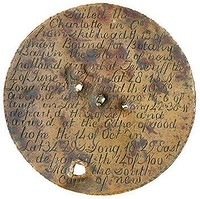
Historical interest: The Charlotte Medal. Photo: Supplied

Source: SMH.com.au

It’s not in great condition but the Charlotte Medal is of ”immense historical interest” and, despite a few holes, is expected to fetch $500,000 at auction this month.

The Charlotte was one of the six convict ships in the First Fleet. The ship’s surgeon John White was keen to have a memento to record the arrival.

Who better to engrave a silver medal for him than convict Thomas Barrett, known to White as an adept engraver who had already been caught forging a few coins along the way?

White’s personal servant William Broughton handed over the silver disc and engraving tool, and supplied the fixes of the ship’s position to be recorded.

Broughton is believed to have commissioned a copper version of the medal for himself.

A month after arriving at Port Jackson, Barrett, having finished the medals, was tried for stealing provisions and hanged. He became the first convict to be executed in the fledgling colony of NSW.

The silver version, having first returned to England, now resides at the Australian National Maritime Museum at Darling Harbour. The copper version went ashore with Broughton, who was appointed government storekeeper in Parramatta. The coin was found in 1940 on a farm in Camden that Broughton had links to and appears to bear his initials ”WB”.

John O’Connor, of Noble Numismatics, which will auction the medal in Sydney, said when they originally sold the silver Charlotte Medal the owners of the copper medal came forward. Until that time it was thought perhaps the silver medal had been produced in England because it was in an English collection but as soon as the copper medal appeared it immediately substantiated a theory that the silver medal had been engraved in Australia.

Mr O’Connor said: ”Apart from the design of the ship, which is on the silver medal, the rest of the inscription is almost repeated verbatim. I would think if the Maritime Museum found out about it there would be a bit of a mad scramble to make sure it never leaves the country.”