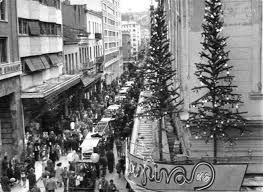
Τα χριστούγεννα στην παλιά Αθήνα

img_0160

Τα Χριστούγεννα στην παλιά Αθήνα και η Βυζαντινή (Ελληνική) καταγωγή του χριστουγεννιάτικου δένδρου !

Αποτέλεσμα εικόνας για Τα χριστουγεννα στην παλια Αθήνα
Στην παλιά Αθήνα τα Χριστούγεννα είχαν μια ξεχωριστή ομορφιά. Όλοι οι Αθηναίοι, μικροί και μεγάλοι, έβγαιναν στην αγορά, τρεις ή τέσσερις μέρες νωρίτερα, όχι βέβαια για να ψωνίσουν, αλλά περισσότερο για να κάνουν χάζι στα διάφορα μαγαζιά, όπως γίνεται και σήμερα.
«Την εποχή εκείνη, σημειώνει παλιός Αθηναίος, οι Βαυαροί είχαν φέρει από τη βορινή τους πατρίδα το έθιμο του στολισμένου έλατου, που στην πραγματικότητα ήταν έθιμο καθαρά βυζαντινό. Γιατί ο πρώτος που σκέφθηκε να στολίσει τα κλαδιά του έλατου με πολύχρωμα κεριά, άσπρα, κίτρινα και κόκκινα, ήταν ο νεαρός αυτοκράτορας Μιχαήλ ο Γ΄, ο επιλεγόμενος ‘Μέθυσος’. Για τον Μιχαήλ, θα μπορούσε να πει κανείς πως ήταν ο πρώτος ‘τέντυ –μπόυ’, που έβγαλε η φημισμένη πόλη των Καισάρων, επειδή του άρεσε να ξαφνιάζει τους ανθρώπους με τις τρέλες του.

Μια παραμονή Χριστουγέννων, λοιπόν, διέταξε τους αυλικούς του να τοποθετήσουν κατά τη διάρκεια της νύχτας ένα μεγάλο έλατο στην πλατεία του Ταύρου, όπου ήταν και τα ανάκτορα. Έπειτα ο ίδιος, με μια σκαλωσιά, κρέμασε στα κλαδιά του δέντρου διάφορα κεριά τεράστια σε μέγεθος και χοντρά όσο ένα μπράτσο δυνατού άντρα. Τα κεριά αυτά τα άναψε, τη στιγμή ακριβώς που οι καμπάνες του μεσονυκτίου καλούσαν τους πιστούς στην εκκλησία. Η νύχτα ήταν γλυκιά και ήρεμη. Δεν φυσούσε καθόλου και το χιόνι είχε σταματήσει να πέφτει, λες και του άρεσε η παράξενη εκείνη σκηνοθεσία του Μιχαήλ. Τα κεριά έμειναν αναμμένα αρκετή ώρα και ο κόσμος που περνούσε από την Πλατεία του Ταύρου, βλέποντας το φωτισμένο έλατο, έμενε με το στόμα ανοιχτό. Δεν ήξερε τι να υποθέσει και νόμιζε ότι βρισκόταν μπροστά σε ένα θαύμα. Στον λαό άρεσε αυτό και έτσι τον επόμενο χρόνο αρκετοί άρχοντες του Βυζαντίου επανέλαβαν το ίδιο σκηνικό. Με μια διαφορά. Ότι αντί να στολίσουν κάποιο δέντρο του κήπου τους στόλιζαν τα σπίτια τους».

Με τον καιρό η συνήθεια αυτή εδραιώθηκε τόσο πολύ στη συνείδηση του λαού ώστε γενικεύθηκε και έμεινε σαν έθιμο. Το έθιμο του στολισμένου έλατου το πήραν μαζί τους οι Σταυροφόροι που είχαν καταλάβει την Κωνσταντινούπολη και το μετέφεραν στις πατρίδες τους. Μετά την Άλωση οι Έλληνες το ξέχασαν. Οι Δυτικοί όμως εξακολούθησαν να το διατηρούν χωρίς να ξέρουν πολλά πράγματα για την προέλευσή του. «Πάντως πίστευαν, όπως το πιστεύουν ακόμη», σημειώνει πάντα ο παλιός Αθηναίος, «όσοι δεν διάβασαν την ιστορία του, μια ιστορία που λέει καθαρά ότι το έθιμο αυτό είναι καθαρά βυζαντινό και κατ’ επέκταση ελληνικό».

Απ’ όπου και αν προέρχεται το χριστουγεννιάτικο έλατο δεν παύει να γοητεύει μικρούς και μεγάλους. Είναι σαν τα παραμύθια της γιαγιάς με τις νεράιδες και τους καλικάντζαρους. Με τον ερχομό του Όθωνα στην Ελλάδα, οι ακόλουθοί του έφεραν μαζί τους και το έθιμο του χριστουγεννιάτικου δέντρου, χωρίς όμως να φαντάζονται πως το κουβαλούσαν πίσω στον τόπο της καταγωγής του. Είναι γνωστό πως η Αθήνα ήταν επαρχία της Βυζαντινής Αυτοκρατορίας.

Όπως και αν έχει το ζήτημα, «οι παλιοί Αθηναίοι, που έβλεπαν για πρώτη φορά στολισμένο έλατο, με κεριά, με παιχνίδια και με επιχρυσωμένες κουκουνάρες, γοητεύονταν τόσο πολύ που σχημάτιζαν ουρές για να το θαυμάσουν». Ιδίως τα παιδιά δεν ξεκολλούσαν τα μάτια τους από πάνω του. Και ήταν φυσικό. Το δέντρο, ένα τεράστιο έλατο, είχε τοποθετηθεί κοντά στο σημερινό Πεδίο του Άρεως, όπως περίπου γίνεται και σήμερα με τα έλατα που στήνουν στις κεντρικές πλατείες οι διάφοροι δήμοι. Ήταν φορτωμένο με όμορφα και πολύχρωμα παιχνίδια και λαμποκοπούσε ολόκληρο. Το δέντρο είχε για φύλακες δύο Βαυαρούς φρουρούς για να μην κλέψει κανείς κάποιο από τα ωραία στολίδια του. Έμεινε δε σε εκείνη τη θέση όλο το Δωδεκαήμερο. Την ημέρα που έπρεπε να το πάρουν από τη θέση του οι Αθηναίοι αντέδρασαν. Ήθελαν να το κρατήσουν λίγο ακόμη. Ο δήμος τους έκανε το χατίρι. Συνεννοήθηκε με τους Βαυαρούς και αυτοί το άφησαν στην ίδια θέση ως το τέλος Ιανουαρίου.

Μόλις η Ελλάδα ελευθερώθηκε από τους Τούρκους και έγινε ανεξάρτητο κράτος, τα Χριστούγεννα βρήκαν και πάλι την παλιά τους αίγλη. Αυτή την αίγλη που είχαν πριν από την Άλωση της Πόλης. Παρ’ όλο που η Αθήνα περιοριζόταν σε τέσσερις συνοικίες: την Πλάκα, το Μοναστηράκι, του Καλαμιώτου και τον Άγιο Φίλιππα. Η μικρή πρωτεύουσα του ελληνικού κράτους ζούσε έντονα τη ζωή της, τουλάχιστον τις εορτάσιμες αυτές μέρες. Το κέντρο της πόλης είχε μεταφερθεί τώρα, από την οδό Αδριανού, όπου ήταν παλαιότερα, στη διασταύρωση των οδών Αιόλου και Ερμού. Εκεί ήταν τα εμπορικά καταστήματα, τα καλύτερα ζαχαροπλαστεία και τα καφενεία: το πιο γνωστό ήταν της Ωραίας Ελλάδος, κοντά στην Αγία Ειρήνη.

Το μεγάλο αυτό καφενείο «ήταν το πρώτο δημόσιο κέντρο που στόλισε για πρώτη φορά το 1848 χριστουγεννιάτικο έλατο με πολύχρωμα κεράκια, επιχρυσωμένους καρπούς, παιχνίδια από αληθινή πορσελάνη και ένα σωρό άλλα μπιχλιμπίδια. Για την εποχή στοίχιζαν πανάκριβα, επειδή τα έφερναν όλα από το εξωτερικό. Αυτή η χριστουγεννιάτικη ‘ατραξιόν’, που κατέπληξε και συνάρπασε κυριολεκτικά τους Αθηναίους, μικρούς και μεγάλους, ήταν έμπνευση ενός Βαυαρού αξιωματικού, του Ρούντολφ Έρχαρτ, που ήταν πραγματικά φιλέλληνας». Ο Έρχαρτ , όπως γράφει στα απομνημονεύματά του, ήθελε να γενικεύσει το ωραίο αυτό έθιμο, πιστεύοντας πως ήταν προϊόν της πατρίδας του. Δεν ήξερε, δηλαδή, πως το «χριστουγεννιάτικο δεντράκι» είχε τις ρίζες του στο Βυζάντιο.

Όπως και αν έχει το ζήτημα, κατά κάποιον τρόπο ο Έρχαρτ πέτυχε αυτό που ήθελε. Γιατί τα επόμενα Χριστούγεννα, τα Χριστούγεννα του 1849, έκαναν την εμφάνισή τους και άλλα στολισμένα έλατα, σε διάφορα αρχοντικά της Αθήνας. Από εκεί και πέρα το έθιμο καθιερώθηκε φτάνοντας ως την εποχή μας. Λένε ότι το ωραίο παρελθόν σβήνει και χάνεται. Και οι απαισιόδοξοι συμπληρώνουν ότι όπως όλα έχουν χάσει την ποίησή τους στην πεζή εποχή μας, έτσι και οι γιορτές και τα έθιμά τους έχασαν την παλιά τους ομορφιά, το παλιό τους χρώμα. Λάθος. Η εποχή μας θα μπορούσε να πει κανείς ότι είναι ρομαντική. Απόδειξη, ότι μόλις απαγορεύθηκε η κοπή των ελάτων, όλοι έπεσαν στα ψεύτικα έλατα, στα πλαστικά, που η πώλησή τους αυξήθηκε κατακόρυφα.

Αλλά και το πρώτο ψεύτικο «δέντρο» κρατάει και τούτο από παλιά. Τα Χριστούγεννα του 1905, από την παραμονή άρχισε να χιονίζει. Η Αθήνα έγινε κατάλευκη. Όλο το απόγευμα, ωστόσο, μερικοί εργάτες κάτι μαστόρευαν στην Πλατεία του Συντάγματος. Οι διαβάτες δεν έδιναν σημασία. Αλλά η πλατεία φώτισε με μιας. Τι είχε συμβεί; Ένα τεράστιο ψεύτικο έλατο που μας το έστειλαν από τη Γερμανία είχε στηθεί στο κέντρο της. Πολύχρωμα λαμπιόνια και φαναράκια ήταν αναμμένα σε κάθε του κλαδί μαζί με διάφορα παιχνίδια. Το τι έγινε τότε δεν περιγράφεται. Όλη η Αθήνα και ο Πειραιάς συγκεντρώθηκαν στο Σύνταγμα για να χαρούν το πανέμορφο εκείνο χριστουγεννιάτικο δέντρο, που ο κόσμος πίστευε πως ήταν αληθινό.
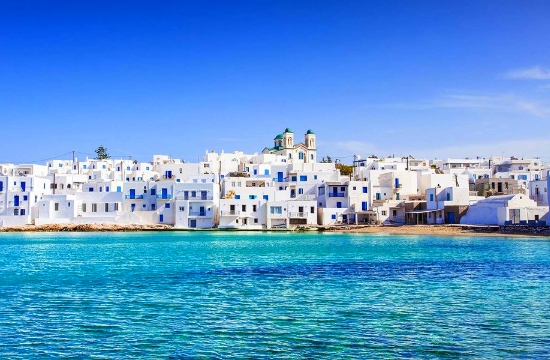
Travel and Leisure magazine: Paros in top 50 list to visit in 2017

Dec, 10 2016

img_0159

The island of Paros was included in travel renowned travel magazine’s “Travel + Leisure” list of top 50 destinations to visit in 2017.

Paros-Greece

Kitesurfers have long made a playground of the breezy beaches of Paros, and no wonder: this sunshiny isle is a Cycladic triumvirate of sandy shoreline, history, and culture. Last summer the island debuted a new airport, opening it to larger aircraft and more vacationers. And the fishing village of Naousa, with its boxy white architecture and seaside tavernas, is increasingly sophisticated—check in to the modern, adults-only apartments of Porto Naousa or the elegant Seven Santa Maria, where six airy, all-white suites (and a separate villa) come with a private boat and skipper for exploring the island’s secret coves.

Following are 20 of the places worth visiting, according to Travel and Leisure Magazine:

Angra dos Reis, Brazil

Angra dos Reis, RJ, Brazil

Belfast, Northern Ireland

Belgrade, Serbia

Bermuda

Cambodian Coast

Cape Town, South Africa

Cincinnati, Ohio

Devon, England

Guayaquil, Ecuador

Hamburg, Germany

Hampi, India

Helsinki, Finland

Honolulu, Hawaii

Indianapolis, Indiana

Jackson Hole, Wyoming

Jebel Akhdar, Oman

Jerusalem, Israel

Jura, France

Kanazawa, Japan

Lake Lucerne, Switzerland

Saint Nicholas true story

CLICK ON THE LINK TO SEE VIDEO SAINT NICHOLAS STORY
The great veneration with which St. Nicholas has been honored for many ages and the number of altars and churches all over the world that are dedicated in his memory are testimonials to his wonderful holiness and the glory he enjoys with God. As an episcopal see, and his childhood church falling vacant, the holy Nicholas was chosen bishop, and in that station became famous by his extraordinary piety and zeal and by his many astonishing miracles. The Greek histories of his life agree he suffered an imprisonment of the faith and made a glorious confession in the latter part of the persecution raised by Dioletian, and that he was present at the Council of Nicaea and there condemned Arianism. It is said that St. Nicholas died in Myra, and was buried in his cathedral.

St. Nicholas’ episcopate at Myra during the fourth century is really all that appears indubitable authentic, according to Alban Butler, an English Roman Catholic priest from the 1700s. This is not for lack of material, beginning with the life attributed to the monk who died in 847 as St. Methodius, Patriarch of Constantinople. Nevertheless, the universal popularity of the saint for so many centuries requires that some account of the legends surrounding his life should be given.

St. Nicholas, also known as “Nikolaos of Myra,” was a fourth century saint and Greek bishop of Myra. Nicholas was born in Asia Minor in the Roman Empire as an only child to Christian parents. Nicholas would take nourishment only once on Wednesdays and Fridays, and that in the evening according to the canons. “He was exceedingly well brought up by his parents and trod piously in their footsteps. The child, watched over by the church, enlightened his mind and encouraged his thirst for sincere and true religion.” Both of his parents tragically died during an epidemic when he was a young man, leaving him well off, but to be raised by his uncle – the Bishop of Patara. Nicholas was determined to devote his inheritance to works of charity, and his uncle mentored him as a reader and later ordained him as a presbyter (priest).

An opportunity soon arose for St. Nicholas and his inheritance. A citizen of Patara had lost all his money, and needed to support his three daughters who could not find husbands because of their poverty; so the wretched man was going to give them over to prostitution. Nicholas became informed of this, and thus took a bag of gold and threw it into an open window of the man’s house in the night. Here was a dowry for the eldest girl and she was soon duly married. At intervals Nicholas did the same for the second and the third; at the last time the father was on the watch, recognized his benefactor and overwhelmed Nicholas with his gratitude. It would appear that the three purses represented in pictures, came to be mistaken for the heads of three children and so they gave rise to the absurdstory of the children, resuscitated by the saint, who had been killed by an innkeeper and pickled in a brine-tub.

Coming to the city of Myra when the clergy and people of the province were in session to elect a new bishop, St. Nicholas was indicated by God as the man they should choose. This was during the time of persecutions in the beginning of the fourth century and “as he [Nicholas] was the chief priest of the Christians of this town and preached the truths of faith with a holy liberty, the divine Nicholas was seized by the magistrates, tortured, then chained and thrown into prison with many other Christians. But when the great and religious Constatine, chosen by God, assumed the imperial diadem of the Romans, the prisoners were released from their bonds and with them the illustrious Nicholas, who when he was set at liberty returned to Myra.”

St. Methodius asserts that “thanks to the teaching of St. Nicholas the metropolis of Myra alone was untouched by the filth of the Arian heresy, which it firmly rejected as death-dealing poison,” but says nothing of his presence at the Council of Nicaea in 325.

According to other traditions St. Nicholas was not only there during the Council of Nicaea in 325, but so far forgot himself as to give the heresiarch Arius a slap in the face. The conciliar fathers deprived him of his episcopal insignia and committed him to prison; but our Lord and His Mother appeared there and restored to him both his liberty and his office.

As against Arianism so against paganism, St. Nicholas was tireless and often took strong measures: among other temples he destroyed was that of Artemis, the principal in the district, and the evil spirits fled howling before him. He was the guardian of his people as well in temporal affairs. The governor Eustathius had taken a bribe to condemn to death three innocent men. At the time fixed for their execution Nicholas came to the place, stayed the hands of the executioner, and released the prisoners. Then he turned to Eustathiujs and did not cease to reproach him until he admitted his crime and expressed his penitence.

St. Nicholas’ presence was found in a separate occasion involving three imperial officers simply on their way to duty in Phrygia. When the men were back again in Constantinople, the jealousy of the prefect Ablavius caused them to be imprisoned on false charges and an order for their death was procured from the Emperor Constantine. When the officers heard this they remembered the example they had witnessed of the powerful love of justice of the Bishop of Myra and they prayed to God that through his merits and by his instrumentality they might yet be saved. That night St. Nicholas appeared in a dream to Constatine, and told him with threats to release the three innocent men, and Ablavius experienced the same thing. In the morning the Emporor and the prefect compared notes, and the condemned men were sent for and questioned. When he heard they had called on the name of the Nicholas of Myra who appeared to him, Constatine set them free and sent them to the bishop with a letter asking him not to threaten him any more, but to pray for the peace of the world. For a long time, this has been the most famous miracle of St. Nicholas, and at the time of St. Methodius was the only thing generally known about him.

The accounts are unanimous that St. Nicholas died and was buried in his episcopal city of Myra, and by the time of Justinian, there was a basilica built in his honor at Constantinople.

An anonymous Greek wrote in the tenth century that, “the West as well as the East acclaims and glorifies him. Wherever there are people, in the country and the town, in the villages, in the isles, in the furthest parts of the earth, his name is revered and churches are built in his honor. Images of him are set up, panegyrics preached and festivals celebrated. All Christians, young and old, men and women, boys and girls, reverence his memory and call upon his protection. And his favors, which know no limit of time and continue from age to age, are poured out over all the earth; the Scythians know them, as do the Indians and the barbarians, the Africans as well as the Italians.” When Myra and its great shrine finally passed into the hands of the Saracens, several Italian cities saw this as an opportunity to acquire the relics of St. Nicholas for themselves. There was great competition for them between Venice and Bari.

Bari won and the relics were carried off under the noses of the lawful Greek custodians and their Mohammedan masters. On May 9, 1087 St. Nicholas’ relics safetly landed in Bari, a not inappropriate home seeing that Apulia in those days still had large Greek colonies. A new church was built to shelter the relics and the pope, Bd. Urban II, was present at their enshrining.

Devotion to St. Nicholas has been present in the West long before his relics were brought to Italy, but this happening greatly increased his veneration among the people, and miracles were as freely attributed to his intercession in Europe as they had been in Asia.

At Myra “the venerable body of the bishop, embalmed as it was in the good ointments of virtue exuded a sweet smelling myrrh, which kept it from corruption and proved a health giving remedy against sickness to the glory o f him who had glorified Jesus Christ, our true God.” The translation of the relics did not interrupt this phenomenon, and the “manna of St. Nicholas” is said to flow to this day. It was one of the great attractions that drew pilgrims to his tomb from all parts of Europe.

The image of St. Nicholas is, more often than any other, found on Byzantine seals. In the later middle ages nearly four hundred churches were dedicated in his honor in England alone, and he is said to have been represented by Christian artists more frequently than any saint, except our Lady.

St. Nicholas is celebrated as the patron saint of several classes of people, especially, in the East, of sailors and in the West of children. The first of these patronage is most likely due to the legend that during his lifetime, he appeared to storm tossed mariners who invoked his aid off the coast of Lycia and brought them safely to port. Sailors in the Aegean and Ionian seas, following a common Eastern custom, had their “star of St. Nicholas” and wished one another a good voyage in the phrase “May St. Nicholas hold the tiller.”

The legend of the “three children” is credited to his patronage of children and various observances, ecclesiastical and secular, connected there with; such were the boy bishop and especially in Germany, Switzerland and the Netherlands, the giving of presents in his name at Christmas time.

This custom in England is not a survival from Catholic times. It was popularized in America by the Dutch Protestants of New Amsterdam who converted the popish saint into a Nordic magician (Santa Claus = Sint Klaes = Saint Nicholas) and was introduced into this country by Bret Harte. It is not the only “good old English custom” which, however good, is not “old English,” at any rate in its present form. The deliverance of the three imperial officers naturally caused St. Nicholas to be invoked by and on behalf of prisoners and captives, and many miracles of his intervention are recorded in the middle ages.

Curiously enough, the greatest popularity of St. Nicholas is found neither in the eastern Mediterranean nor north-western Europe, great as that was, but in Russia. With St. Andred the Apostle, he is patron of the nation, and the Russian Orthodox Church even observes the feast of his translation; so many Russian pilgrims came to Bari before the revolution that their government supported a church, hospital and hospice there.

He is also the patron saint of Greece, Apulia, Sicily and Loraine, and of many citiesand dioceses (including Galway) and churches innumerable. At Rome the basilica of St. Nicholas in the Jail of Tully (in Carcere) was founded between the end of the sixth and the beginning of the seventh centuries. He is named in the preparation of the Byzantine Mass. St. Nicholas became recognized as a saint long before the Roman Catholic Church began the regular canonizing procedures in the late 10th century. Therefore, he does not have a specific date of canonization, rather records of him exist in a gradual spread until his stories became widley known and celebrated. St. Nicholas’ feast day is December 6.

Niarchos Foundation Establishes Scholarship Program at Columbia Journalism School

December 9, 2016

ATHENS – The Stavros Niarchos Foundation (SNF) has awarded a $1.3 million grant to Columbia Journalism School in New York City for a three-year pilot program allowing both entry-level and mid-career mass media professionals as well as recent journalism program graduates from Greece to participate in three intensive summer courses at the prestigious school.

Up to 18 candidates annually will have the opportunity through the SNF grant to enhance their skills and careers with training courses at Columbia Journalism School. All expenses associated with these courses, including tuition, airfare, local transportation, as well as room and board will be fully covered by the SNF scholarships.

The scholarships are being offered in the following three courses:

The Lede Program – An four-month intensive certification course designed to teach journalists and storytellers of all kinds the computational skills needed to turn data into narrative. No prior experience in data or coding is necessary. Over the course of the program, students are introduced to the essentials of computing, data analysis and data visualization. It is offered from May 22 – September 11, 2017.

Multimedia Reporting Course – Designed for journalists who are interested in the use of video and multimedia for storytelling, this three-week course focuses on how to conceive of and structure a story, how to handle a camera, how to use post‐production software, and how to combine audio and visual components to deliver a story. The course runs from June 12-30, 2017.

Investigative Reporting Course – Over three weeks, journalists and editors from around the world in all media platforms, examine the structured process of investigative journalism, how stories are conceived, researched, and written. Fellows bring to the course an idea for an investigative project, and with the instruction of the lecturers will develop their hypothesis. Participants must be experienced journalists who can provide work samples from published/broadcast news media organizations and be proficient in English. The course, offered in conjunction with the Toni Stabile Center for Investigative Journalism, runs from July 10-28, 2017.

More information on these programs is available online- https://journalism.columbia.edu/professional-development

Andreas Dracopoulos, Co-President and Director of SNF, stated: “All of us at the Stavros Niarchos Foundation are excited to be in a position to collaborate with the renowned Columbia Journalism School in order to give the opportunity to young and established mass media professionals from Greece to attend these intensive summer training programs and obtain additional valuable knowledge and experience.”

Steve Coll, dean of the Columbia Journalism School, said: “The Stavros Niarchos Foundation is creating an extraordinary opportunity for journalists from Greece to hone their skills, further equipping them to do deep, impactful reporting that will help advance their individuals careers and strengthen the quality of journalism produced in the public interest in Greece.”

The application process starts in January 2017 and lasts until the end of February. More detailed information on the process will be posted on the SNF website, http://www.snf.org, early in 2017.

The Foundation is providing full support for the initiative. Admission to the programs is the sole responsibility of the Columbia Journalism School.

The Stavros Niarchos Foundation is one of the world’s leading private international philanthropic organizations, making grants in the areas of arts and culture, education, health and sports, and social welfare. The Foundation funds organizations and projects that are expected to achieve a broad, lasting and positive impact for society at large, focusing on vulnerable groups such as children and the elderly, and also exhibit strong leadership and sound management. The Foundation also seeks actively to support projects that facilitate the formation of public-private partnerships as an effective means for serving public welfare. 2016 marks the twentieth year of the Stavros Niarchos Foundation’s global philanthropic activity. Since 1996, the SNF has made grant commitments of $1.9 billion / €1.6 billion, through 3,646 grants to nonprofit organizations in 111 nations around the world.

Greece Year Zero was screened on Sunday December 4th at The Royal


GREECE YEAR ZERO TRAILER VIDEO

GREECE YEAR ZERO was shown to an audience of three hundred colleagues, friends, and family. 

“Greece Year Zero” is a cinematic essay of the last 120 years of Greece’s tumultuous and largely untold story by the genius writer and talented director, Dannis Koromilas. 

It’s a project years in the making that has been very hard to keep secret. The film is scheduled for a Fall 2016 release.

GREECE YEAR ZERO


Είναι η ιστορία της Ελλάδας από τους πρώτους Ολυμπιακούς Αγώνες του 1896, μέχρι το έτος 2011 (που χαρακτηρίζεται και έτος Μηδέν, λόγω ΔΝΤ). Δείτε ένα 16λεπτο απόσπασμα (Vid)

Βασισμένη σε σπάνιο αρχειακό υλικό, η ταινία GREECE YEAR ZERO, αφηγείται όπως αναφέρουν οι παραγωγοί, “την συνταρακτική περιπέτεια του Ελληνισμού, μετά την Ελληνική Επανάσταση και την ανεξαρτησία του ελληνικού Κράτους”. Το ντοκιμαντέρ, φθάνει στις μέρες μας. Η άνοδος του ΣΥΡΙΖΑ στην εξουσία, είναι το τελευταίο κεφάλαιο.

Συμπαραγωγός, στο φιλμ GREECE YEAR ZERO, είναι ο Μανώλης Νταλούκας, ενώ στο σενάριο και τη σκηνοθεσία είναι ο Ελληνοκαναδός σκηνοθέτης και συγγραφέας, Dannis Koromilas (Διονύσης Κορομηλάς).

Η ταινία-ντοκιμαντέρ, θα προβληθεί και σε Φεστιβάλ του εξωτερικού (έχει αφήγηση στην αγγλική γλώσσα), αποσκοπώντας στην ευαισθητοποίηση της Ευρωπαϊκής και Διεθνούς κοινής γνώμης, για την υπόθεση του ελληνικού Δημόσιου Χρέους. Σκοπός ακόμη της ταινίας είναι να στηλιτεύσει τα στερεότυπα που ακολουθούν τους Έλληνες στο πέρασμα των χρόνων και να αποδείξει ότι αυτός ο λαός δεν είναι σπάταλος, ούτε τεμπέλης. Επίσης, θέλει να αναδείξει τις μεγάλες περιπέτειες στις οποίες οδηγήθηκε ο Ελληνισμός και τις τραγωδίες που έζησε.

Η ταινία θα προβληθεί επίσης και στο 19ο Φεστιβάλ Ντοκιμαντέρ της Θεσσαλονίκης, τον Μάρτιο του 2017.

Δείτε παρακάτω τα 16 πρώτα λεπτά, από το σύνολο των 77 λεπτών της ταινίας όπως αναρτήθηκαν στο blog του Μανώλη Νταλούκα.
GREEECE YEAR ZERO

A Film By Dannis Koromilas

Narrated By Alex Karzis

Original Music Compose By Konstantine Arnokouros

Edited By Mike Makrimichalos

Produced By Manolis Daloukas

2016

AHI Releases Letter To 60 Minutes Refuting Importance Of Turkey’s Air Bases

FOR IMMEDIATE RELEASE CONTACT: Georgea Polizos
December 6, 2016—No. 57 (202) 785-8430

WASHINGTON, DC —The American Hellenic Institute wrote to 60 Minutes following Correspondent Steve Kroft’s November 20, 2016 report, “Turkey’s disillusionment with the U.S.,” which described Turkey’s air bases, namely Incirlik, as having extreme importance to the United States and NATO for its staging areas and projection of power in the region

AHI President Nick Larigakis’ November 22 letter presents how the facts prove otherwise by citing how Turkey refused to allow the United States to use its bases to open a northern front against the Saddam Hussein dictatorship. “The United States’ successful prosecution of the war against Iraq without access from Turkey proved Turkey’s limited value as a strategic military resource,” Larigakis wrote.

Furthermore, Larigakis states that when Turkey does allow access, such as was the case with the fight against ISIS, it does so only after it stalls.  

Click here to read President Larigakis’ letter 

The American Hellenic Institute is a non-profit Greek American public policy center and think tank that works to strengthen relations between the United States and Greece and Cyprus, and within the Greek American community.

###

For additional information, please contact Georgea Polizos at (202) 785-8430 or at pr@ahiworld.org. For general information about the activities of AHI, please see our website at http://www.ahiworld.org.


November 22, 2016
Mr. Michael H. Gavshon
Mr. Howard L. Rosenberg
Mr. David M. Levine
Producers
60 Minutes
CBS News
524 West 57th Street
New York, NY 10019

Dear Mr. Gavshon, Mr. Rosenberg, and Mr. Levine:

Correspondent Steve Kroft’s report, “Turkey’s disillusionment with the U.S. President” described Turkey’s air bases, namely Incirlik, as having extreme importance to the United States and NATO for its staging areas and projection of power in the region. The facts of the matter prove otherwise. Turkey refused to allow the United States to use its bases to open a northern front against the Saddam Hussein dictatorship. Turkey’s reasoning was that it wanted $6 billion more — in addition to $26 billion offered by the Bush Administration — for a total of $32 billion. A former Bush administration official called Turkey’s negotiating tactics “extortion in the name of alliance.” (New York Times, Feb. 20, 2003; A1; col. 6.) The United States’ successful prosecution of the war against Iraq without access from Turkey proved Turkey’s limited value as a strategic military resource.  

Further, almost on a daily basis, Turkey violates the sovereign territory (air and sea) of neighboring NATO ally, Greece. And 43 years later continues to illegally occupy Cyprus, an EU country.

Moreover, when Turkey does allow access, it stalls.  

In 2015, U.S. Director of National Intelligence James R. Clapper, when asked if he was optimistic that Turkey would become “more engaged” in the fight against ISIS, testified before the Senate Armed Services Committee, “No, I’m not. I think Turkey has other priorities and other interests.”

Turkey serves to destabilize the region and not to project U.S. interests in the vitally important region of the Eastern Mediterranean.


Respectfully submitted,

Nick Larigakis

President  

###

For additional information, please contact Georgea Polizos at (202) 785-8430 or at pr@ahiworld.org. For general information about the activities of AHI, please see our website at http://www.ahiworld.org and follow us on Twitter @TheAHIinDC. 

CYPRUS NATIVE DINOS IORDANOU INDUCTED INTO THE EASTERN NEW YORK SOCCER HALL OF FAME


The Eastern New York Youth Soccer Association (ENYYSA) is very pleased to announce that Dinos Iordanou has been inducted into the Eastern New York Soccer Hall of Fame. The induction ceremony took place at our 2016 Holiday Party on December 4 at Marina del Rey in the Bronx.
Born on the island of Cyprus, he came to the United States in 1969. With an uncle in Astoria providing the roof over his head, Dinos’ first job was pumping gas at a Shell station. He also washed dishes in a nursing home, drove a cab and worked as a cook.

“You’ve got to earn your way through school and get on,” Dinos said. With his father’s voice in his head, he moved on and stayed on track, playing soccer and graduating from New York University with a degree in aerospace engineering.

His first career stop was Pratt and Whitney, then the AIG Insurance Company for 10 years, then to CV Starr which was part of AIG, where he was a partner. He later went on to Berkshire Hathaway, and today is the CEO of Arch Capital Group.

He has been active with the Pancyprians since the beginning, helping to found the association in 1975, and he is one of their lifetime Trustees, continuing to be active. His brother Michael is the head of its athletic division and his brother George is the Vice President of the soccer club.

“I played for their soccer team when I was young,” he added with pride, winning three US Open Cup titles and three Cosmopolitan Soccer League championships with the New York Pancyprian Freedoms in the late 1970s and early ‘80s. He also played professionally in Cyprus.

The Upper Brookville resident is also founding member of FAITH, a charitable organization for the advancement of Greek-Americans in Education. He is a Trustee for the Holy Child Academy, Our Lady of Mercy Academy, Roosevelt University and the College of Insurance.

His children all grew up in Eastern New York’s Olympic Development Program (ODP). Tina just concluded her collegiate career as a starting player at the University of Virginia while Danielle played at Northwestern and Alexandra went to William & Mary.

Dinos has been involved with Eastern New York’s soccer programs for the past decade and has graciously donated nearly $500,000 to our organization during this time. Congrats to our newest Hall of Famer, Dinos Iordanou.

With over 100,000 youth soccer players––both boys and girls––and more than 25,000 volunteers, the non-profit Eastern New York Youth Soccer Association (ENYYSA) stretches from Montauk Point, Long Island to the Canadian border. Members are affiliated with 11 leagues throughout the association, which covers the entire state of New York east of Route 81. ENYYSA exists to promote and enhance the game of soccer for children and teenagers between the ages of 5 and 19 years old, and to encourage the healthy development of youth players, coaches, referees and administrators. All levels of soccer are offered––from intramural, travel team and premier players as well as Children With Special Needs. No child who wants to play soccer is turned away. ENYYSA is a proud member of the United States Soccer Federation and United States Youth Soccer Association. For more information, please log on to http://www.enysoccer.com/, which receives nearly 300,000 hits annually from the growing soccer community.

Source: Hellenic News

‘The Lobster’ nabs Best Screenplay at Los Angeles Film Critics Association awards

Congratulations to The Lobster!

“The Lobster” has nabbed Best Screenplay for Greek writers Yorgos Lanthimos and Efthymis Filippou at the Los Angeles Film Critics Association 2016 awards.


Starring Colin Farrell and Rachel Weisz, “The Lobster” is directed by Greek filmmaker Lanthimos (“Dogtooth,” “Alps”), hailed as a leading proponent of the so-called Weird Wave of cinema.

https://youtu.be/Yd86qCE5_iM
“The Lobster” has nabbed Best Screenplay for Greek writers Efthymis Filippou and Yorgos Lanthimos at the Los Angeles Film Critics Association 2016 awards.

Starring Colin Farrell and Rachel Weisz, “The Lobster” is also directed by Lanthimos (“Dogtooth,” “Alps”), hailed as a leading proponent of the so-called Weird Wave of cinema.

The action is set in a fictional world where single people or those who have lost their mates must find love during a hotel “dating game” or be turned into the animal of their choice.

“Moonlight,” the three-part tale of a young African-American from Miami’s Liberty City ghetto coming to terms with his sexuality, was the big winner on Sunday, taking home four awards for best picture, director, supporting actor and cinematography.

LAFCA’s 2016 winners will be honored at an awards dinner on January 14.

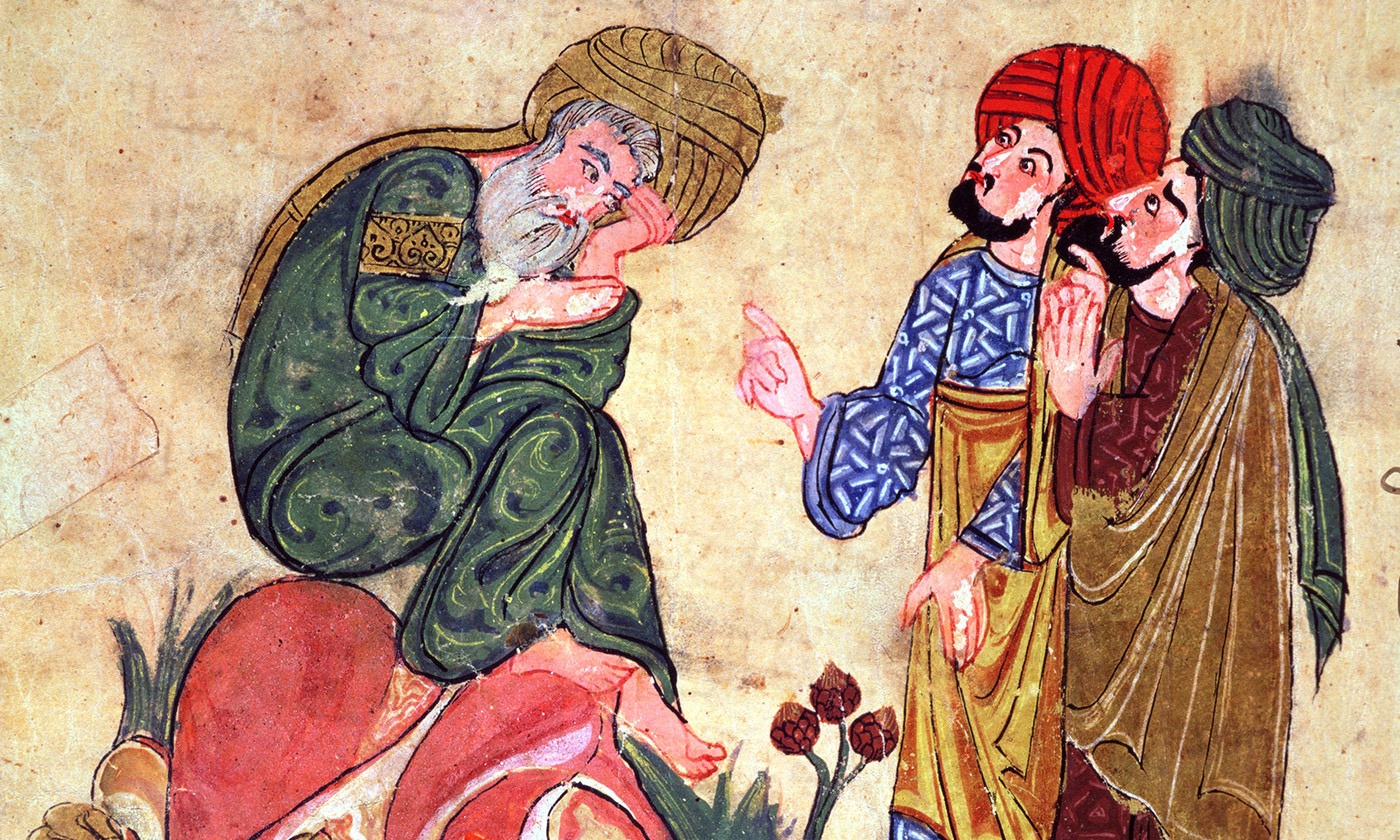
Arabic translators did far more than just preserve Greek philosophy

https://youtu.be/qFT_Km87AqU 

In European antiquity, philosophers largely wrote in Greek. Even after the Roman conquest of the Mediterranean and the demise of paganism, philosophy was strongly associated with Hellenic culture. The leading thinkers of the Roman world, such as Cicero and Seneca, were steeped in Greek literature; Cicero even went to Athens to pay homage to the home of his philosophical heroes. Tellingly, the emperor Marcus Aurelius went so far as to write his Meditations in Greek. Cicero, and later Boethius, did attempt to initiate a philosophical tradition in Latin. But during the early Middle Ages, most of Greek thought was accessible in Latin only partially and indirectly.

Elsewhere, the situation was better. In the eastern part of the Roman Empire, the Greek-speaking Byzantines could continue to read Plato and Aristotle in the original. And philosophers in the Islamic world enjoyed an extraordinary degree of access to the Hellenic intellectual heritage. In 10th-century Baghdad, readers of Arabic had about the same degree of access to Aristotle that readers of English do today.This was thanks to a well-funded translation movement that unfolded during the Abbasid caliphate, beginning in the second half of the eighth century. Sponsored at the highest levels, even by the caliph and his family, this movement sought to import Greek philosophy and science into Islamic culture. Their empire had the resources to do so, not just financially but also culturally. From late antiquity to the rise of Islam, Greek had survived as a language of intellectual activity among Christians, especially in Syria. So when Muslim aristocrats decided to have Greek science and philosophy translated into Arabic, it was to Christians that they turned. Sometimes, a Greek work might even be translated first into Syriac, and only then into Arabic. It was an immense challenge. Greek is not a semitic language, so they were moving from one language group to another: more like translating Finnish into English than Latin into English. And there was, at first, no established terminology for expressing philosophical ideas in Arabic.

What drove the political class of Abbasid society to support this enormous and difficult undertaking? Part of the explanation is no doubt the sheer utility of the scientific corpus: key texts in disciplines such as engineering and medicine had obvious practical application. But this doesn’t tell us why translators were paid handsomely to render, say, Aristotle’s Metaphysics or Plotinus’ Enneads into Arabic. Research by leading scholars of the Greek-Arabic translation movement, especially by Dimitri Gutas in Greek Thought, Arabic Culture (1998), has suggested that the motives were in fact deeply political. The caliphs wanted to establish their own cultural hegemony, in competition with Persian culture and also with the neighbouring Byzantines. The Abbasids wanted to show that they could carry on Hellenic culture better than the Greek-speaking Byzantines, benighted as they were by the irrationalities of Christian theology.

Muslim intellectuals also saw resources in the Greek texts for defending, and better understanding, their own religion. One of the earliest to embrace this possibility was al-Kindī, traditionally designated as the first philosopher to write in Arabic (he died around 870CE). A well-heeled Muslim who moved in court circles, al-Kindī oversaw the activity of Christian scholars who could render Greek into Arabic. The results were mixed. The circle’s version of Aristotle’s Metaphysics can be almost incomprehensible at times (to be fair, one could say this of the Greek Metaphysics too), while their ‘translation’ of the writings of Plotinus often takes the form of a free paraphrase with new, added material.

It’s a particularly dramatic example of something that is characteristic of the Greek-Arabic translations more generally – and perhaps of all philosophical translations. Those who have themselves translated philosophy from a foreign language will know that, to attempt it, you need a deep understanding of what you are reading. Along the way, you must make difficult choices about how to render the source text into the target language, and the reader (who might not know, or not be able to access, the original version) will be at the mercy of the translator’s decisions.

Here’s my favourite example. Aristotle uses the Greek word eidos to mean both ‘form’ – as in ‘substances are made of form and matter’ – and ‘species’ – as in ‘human is a species that falls under the genus of animal’. But in Arabic, as in English, there are two different words (‘form’ is ṣūra, ‘species’ is nawʿ). As a result, the Arabic translators had to decide, every time they came across the word eidos, which of these concepts Aristotle had in mind – sometimes it was obvious, but sometimes not. The Arabic Plotinus, however, goes far beyond such necessary decisions of terminology. It makes dramatic interventions into the text, which help to bring out the relevance of Plotinus’ teaching for monotheistic theology, repurposing the Neoplatonic idea of a supreme and utterly simple first principle as the mighty Creator of the Abrahamic faiths.

What was the role of al-Kindī himself in all this? We’re not entirely sure, actually. It seems clear that he did no translating himself, and he might not even have known much Greek. But it is recorded that he ‘corrected’ the Arabic Plotinus, which could have extended to adding his own ideas to the text. Evidently, al-Kindī and his collaborators thought that a ‘true’ translation would be one that conveys truth, not just one that has fidelity to the source text.

But al-Kindī wasn’t satisfied with this. He also wrote a series of independent works, usually in the form of letters or epistles to his patrons, who included the caliph himself. These letters explained the importance and power of Greek ideas, and how these ideas could speak to the concerns of ninth-century Islam. In effect, he was like a public relations man for Hellenic thought. Which is not to say that he slavishly followed the ancient predecessors who had written in Greek. To the contrary, the originality of al-Kindī’s circle lay in its adoption and adaptation of Hellenic ideas. When al-Kindī tries to establish the identity of the first principle in Aristotle and Plotinus with the God of the Quran, the way has been prepared by translations that already treat that principle as a Creator. He knew what we are apt to forget today: that translating philosophical works can be a powerful way of doing philosophy.

Το νησί του Ιονίου που πήρε «χρυσό μετάλλιο»

03 Δεκεμβρίου 2016


Το νησί του Ιονίου που πήρε «χρυσό μετάλλιο»

Το Ιόνιο κατάφερε να τερματίσει στην πρώτηθέση των προτιμήσεων για τις διακοπές της φετινής τουριστικής περιόδου, όπως έγινε γνωστό από την Περιφέρεια Ιονίων νήσων. 

Σύμφωνα με τα αποτελέσματα του Οκτωβρίου τα νησιά του Ιονίου έκλεισαν την τουριστική περίοδο 2016 κατακτώντας την πρώτη θέση με άνοδο των αφίξεων κατά 13,20% σε σχέση με το 2015. 

Αναλυτικά τον Οκτώβρη η Κέρκυρα σημείωσε άνοδο κατά 31,80 % , το ‘Ακτιο 84,20 %, η Κεφαλονιά 37,70% και η Ζάκυνθος 51,00% ενώ αυξητική τάση παρουσίασαν οι αφίξεις από το εσωτερικό στη Ζάκυνθο κατά 38,60% και στην Κέρκυρα κατά 19,30%.

Την ίδια στιγμή σύμφωνα με τα στοιχεία η κρουαζιέρα στην Κέρκυρα αυξήθηκε κατά 15% μέχρι σήμερα. 

Η αύξηση των τουριστών στα νησιά οδήγησαν και στην παράταση της τουριστικής περιόδου με αποτέλεσμα πολλές μεγάλες τουριστικές μονάδες να μείνουν ανοιχτές ως και τα τέλη του Οκτώβρη.

Πηγή: EUROKINISSI/ΓΙΩΡΓΟΣ ΚΟΝΤΑΡΙΝΗΣ