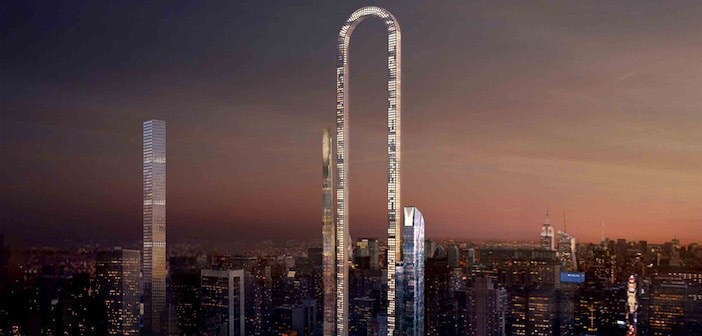
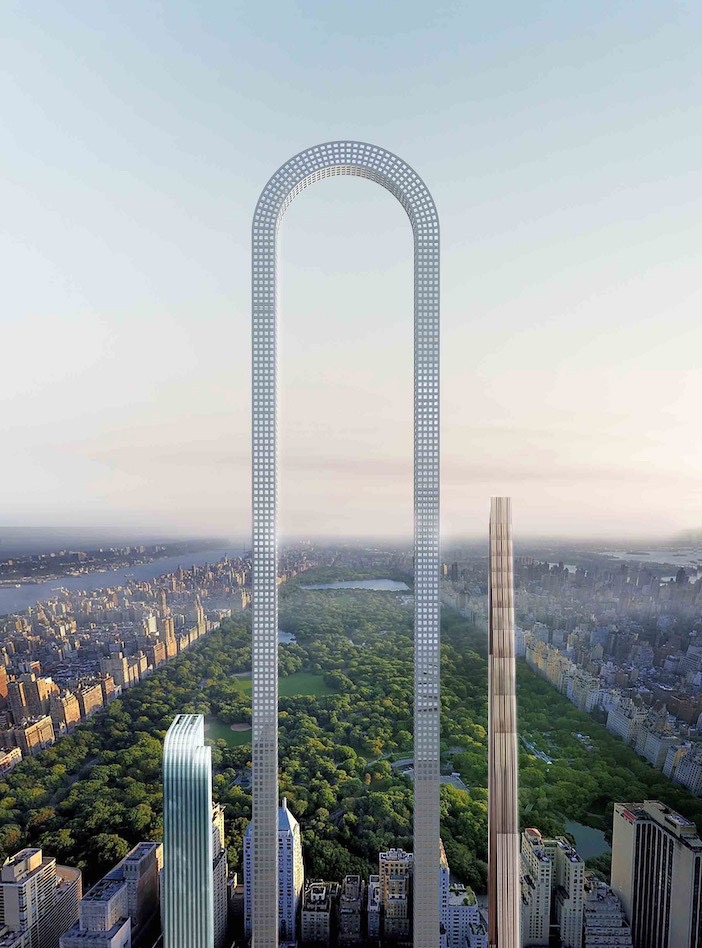
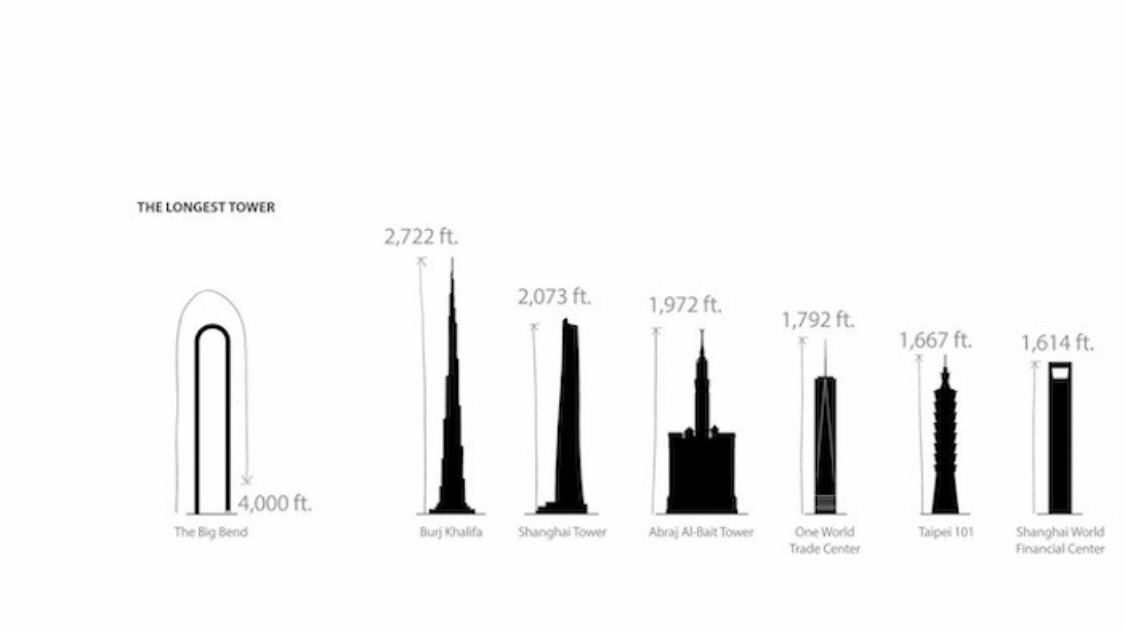
A Greek architect wants to twist up the famed New York City skyline with a building that will be not only amongst the world’s tallest— but also the world’s longest.
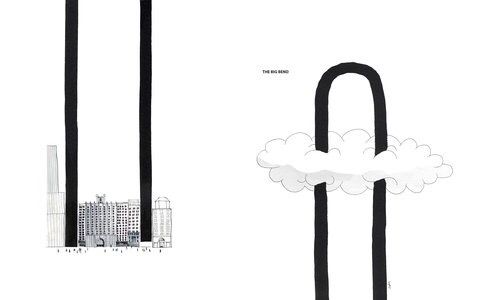
A firm called Oiio, run by Yiannis Oikonomou with offices in New York City and Athens has proposed The Big Bend, an inverted U-shaped structure that would twist in the sky, forever reshaping the skyline just south of Central Park, known as “Billionaire’s Row” and the entire cityscape.
We have become familiar with building height measurements. We usually learn about the latest tallest building and we are always impressed by it’s price per square foot. It seems that a property’s height operates as a license for it to be expensive.
New York city’s zoning laws have created a peculiar set of tricks trough which developers try to maximize their property’s height in order to infuse it with the prestige of a high rise structure. But what if we substituted height with length? What if our buildings were long instead of tall?
If we manage to bend our structure instead of bending the zoning rules of New York we would be able to create one of the most prestigious buildings in Manhattan. The longest building in the world. The Big Bend can become a modest architectural solution to the height limitations of Manhattan. We can now provide our structures with the measurements that will make them stand out without worrying about the limits of the sky.
It all sounds like an interesting concept, right?
And that, it remains: a concept. It seems highly unlikely that a project like this would ever get off the ground.
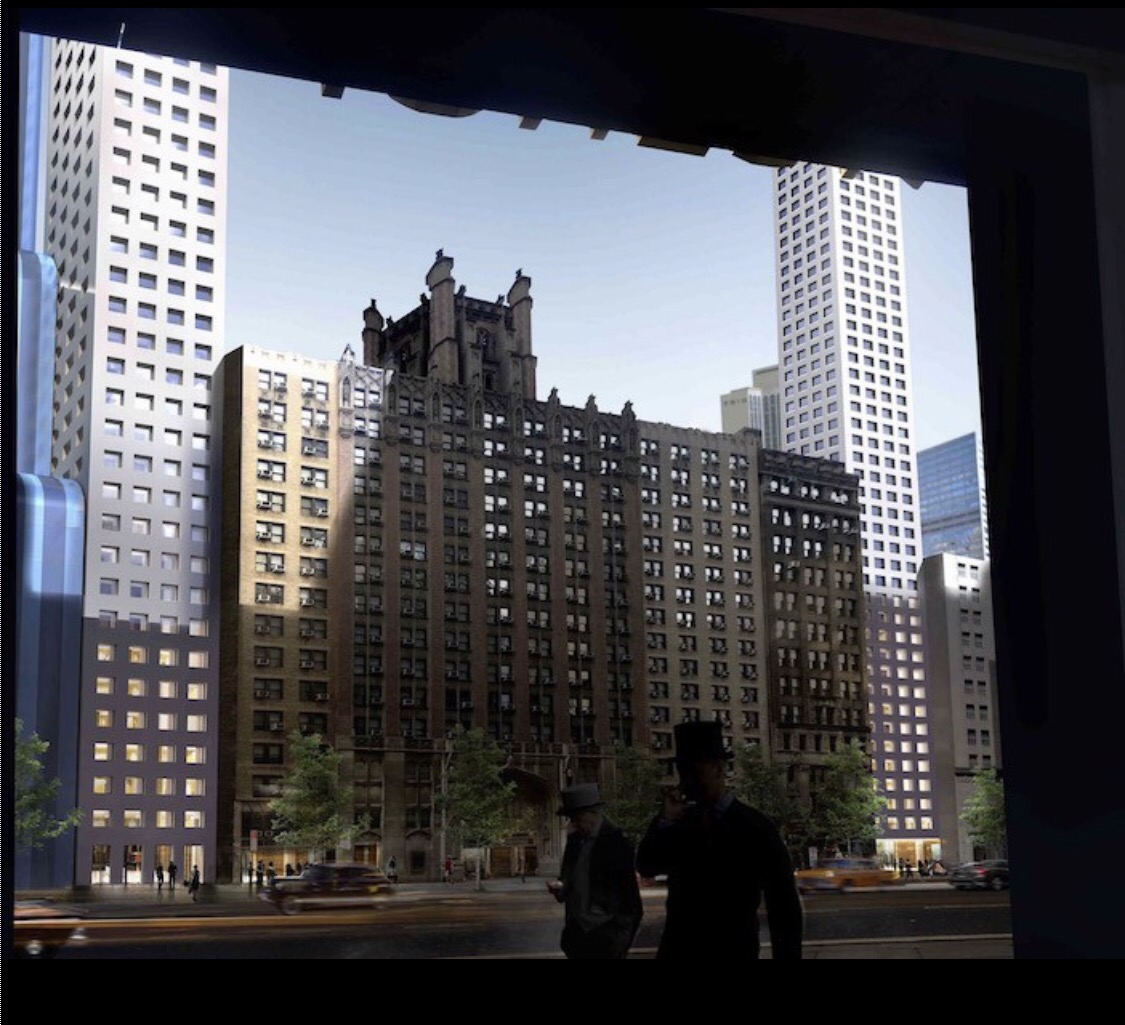
The politicians, community leaders and preservation groups have already condemned the rise of supertall structures that are currently rising along Central Park South, so adding another one to the mix wouldn’t possibly go over well with them— especially one as radical as Oikonomou’s Big Bend.
Alexander III of Macedon (20/21 July 356 BC – 10/11 June 323 BC), commonly known as Alexander the Great (Greek: Ἀλέξανδρος ὁ Μέγας, Aléxandros ho Mégas Koine Greek: [a.lék.san.dros ho mé.gas]), was a king (basileus) of the Ancient Greek kingdom of Macedon[a] and a member of the Argead dynasty.
He was born in Pella in 356 BC and succeeded his father Philip II to the throne at the age of twenty.
He spent most of his ruling years on an unprecedented military campaign through Asia and northeast Africa, and he had created one of the largest empires of the ancient world by the age of thirty, stretching from Greece to northwestern India.
He was undefeated in battle and is widely considered one of history’s most successful military commanders. During his youth, Alexander was tutored by Aristotle until the age of 16. After Philip’s assassination in 336 BC, he succeeded his father to the throne and inherited a strong kingdom and an experienced army.
Alexander was awarded the generalship of Greece and used this authority to launch his father’s Panhellenic project to lead the Greeks in the conquest of Persia.
In 334 BC, he invaded the Achaemenid Empire (Persian Empire) and began a series of campaigns that lasted ten years. Following the conquest of Anatolia, Alexander broke the power of Persia in a series of decisive battles, most notably the battles of Issus and Gaugamela.
He subsequently overthrew Persian King Darius III and conquered the Achaemenid Empire in its entirety. At that point, his empire stretched from the Adriatic Sea to the Indus River.
He sought to reach the “ends of the world and the Great Outer Sea” and invaded India in 326 BC, winning an important victory over the Pauravas at the Battle of the Hydaspes. He eventually turned back at the demand of his homesick troops.
Alexander died in Babylon in 323 BC, the city that he planned to establish as his capital, without executing a series of planned campaigns that would have begun with an invasion of Arabia.
In the years following his death, a series of civil wars tore his empire apart, resulting in the establishment of several states ruled by the Diadochi, Alexander’s surviving generals and heirs.
The Battle of Thermopylae was fought between an alliance of Greek city-states, led by King Leonidas of Sparta, and the Persian Empire of Xerxes I over the course of three days, during the second Persian invasion of Greece. It took place simultaneously with the naval battle at Artemisium, in August or September 480 BC, at the narrow coastal pass of Thermopylae (“The Hot Gates”).
The Persian invasion was a delayed response to the defeat of the first Persian invasion of Greece, which had been ended by the Athenian victory at the Battle of Marathon in 490 BC. Xerxes had amassed a huge army and navy, and set out to conquer all of Greece.
The Athenian general Themistocles had proposed that the allied Greeks block the advance of the Persian army at the pass of Thermopylae, and simultaneously block the Persian navy at the Straits of Artemisium. A Greek force of approximately 7,000 men marched north to block the pass in the middle of 480 BC.
The Persian army, alleged by the ancient sources to have numbered over one million, but today considered to have been much smaller (various figures are given by scholars, ranging between about 100,000 and 150,000),[8][9] arrived at the pass in late August or early September. The vastly outnumbered Greeks held off the Persians for seven days (including three of battle) before the rear-guard was annihilated in one of history’s most famous last stands. During two full days of battle, the small force led by Leonidas blocked the only road by which the massive Persian army could pass.
After the second day, a local resident named Ephialtes betrayed the Greeks by revealing that a small path led behind the Greek lines. Leonidas, aware that his force was being outflanked, dismissed the bulk of the Greek army and remained to guard their retreat with 300 Spartans, 700 Thespians, 400 Thebans, and perhaps a few hundred others, most of whom were killed.
At Artemisium, the Greek navy, under the command of the Athenian politician Themistocles, received news of the defeat. Since the Greek strategy required both Thermopylae and Artemisium to be held, and given their losses, it was decided to withdraw to Salamis. The Persians overran Boeotia and then captured the evacuated Athens. The Greek fleet—seeking a decisive victory over the Persian armada—attacked and defeated the invaders at the Battle of Salamis in late 480 BC.
Fearful of being trapped in Europe, Xerxes withdrew with much of his army to Asia (losing most to starvation and disease), leaving Mardonius to attempt to complete the conquest of Greece. However, the following year saw a Greek army decisively defeat the Persians at the Battle of Plataea, thereby ending the Persian invasion.
Both ancient and modern writers have used the Battle of Thermopylae as an example of the power of a patriotic army defending its native soil. The performance of the defenders is also used as an example of the advantages of training, equipment, and good use of terrain as force multipliers and has become a symbol of courage against overwhelming odds.
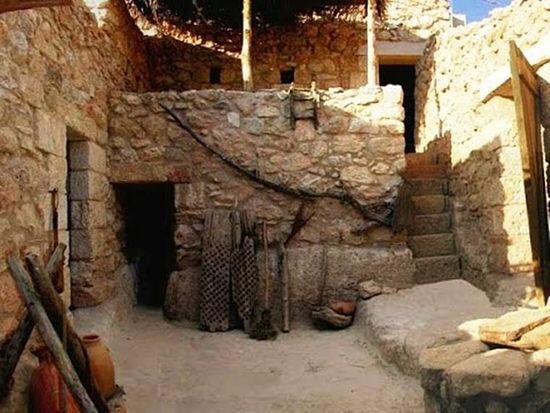
British archaeologist Dr. Ken Dark of the University of Reading believes that a house first discovered in the 1880s is in fact the childhood home of the Lord Jesus Christ Himself.
Although discovered in the nineteenth century, the modest Nazareth home in northern Israel, discovered by nuns from the Sisters of Nazareth Convent, was not dated to the first century until 2006, reports Express. Dr. Dark argues in a recent article in the Biblical Archaeological Review that there is “no good reason” why the home should not be that of Christ.
Holy site: An exterior view of the house believed to be where Jesus lived as a young boy
Merely dating to the first century in Nazareth of its own seems a weak argument, but the expert further notes that “Great efforts had been made to encompass the remains of this building within the vaulted cellars of both the Byzantine and Crusader churches, so that it was thereafter protected,” proving that the home bore some kind of significance for early Christians.
Dr. Dark further points to textual evidence of a tradition of early Christians having preserved the childhood home of the Son of God, forgotten at some point in the ensuing centuries. In 670 AD St. Adomnan of the Scottish monastery of Iona offered a written description of Frankish bishop Arculf’s pilgrimage to Nazareth in which is mentioned a church “where once there was the house in which the Lord was nourished in His infancy.”
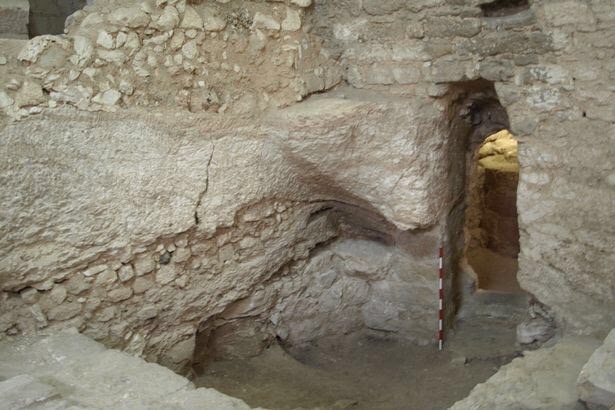
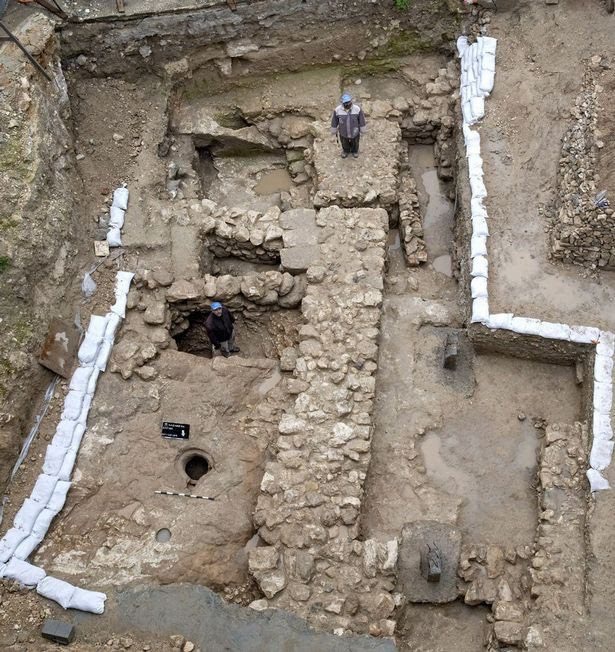
The house, found beneath the Sisters of Nazareth Convent, is cut out of limestone, with a series of rooms and a stairway. According to the archaeologist’s article, the house is located between two tombs at a Nazareth church built near a vault.
Dig: The archaeological excavation near the Church of the Annunciation
More light is expected to be shed on Jesus’ childhood home in one of the upcoming episodes of CNN’s “Finding Jesus” documentary series, whose second season premiered on Sunday.
More than 21 centuries ago, a mechanism of fabulous ingenuity was created in Greece, a device capable of indicating exactly how the sky would look for decades to come — the position of the moon and sun, lunar phases and even eclipses. But this incredible invention would be drowned in the sea and its secret forgotten for two thousand years.
This video is a tribute from Swiss clock-maker Hublot and film-maker Philippe Nicolet to this device, known as the Antikythera Mechanism, or the world’s “first computer”.
The fragments of the Mechanism were discovered in 1901 by sponge divers near the island of Antikythera.
It is kept since then at the National Archaeological Museum in Athens, Greece. For more than a century, researchers were trying to understand its functions.
Since 2005, a pluridisciplinary research team, the “Antikythera Mechanism Research Project”, is studying the Mechanism with the latest high tech available.
The results of this ongoing research has enabled the construction of many models. Amongst them, the unique mechanism of a watch, designed by Hublot as a tribute to the Mechanism, is incorporating the known functions of this mysterious and fascinating ancient Mechanism.
A model of the Antikythera Mechanism, built by the Aristotle University in Greece, together with the mechanism of the watch and this film in 3D are featuring in an exhibition about the Mechanism that is taking place in Paris, at the Musée des Arts et Métiers.
The original fragments of the Mechanism, its main models and the watch designed by Hublot are on display at the National Archaeological Museum in Athens, Greece.
With his official death certificate and cause of death officially released— more than two and a half months after his death, beloved pop singer George Michael will finally be laid to rest in a traditional Greek Orthodox burial that is believed to be officiated by “top Greek Orthodox clerics” in the United Kingdom.
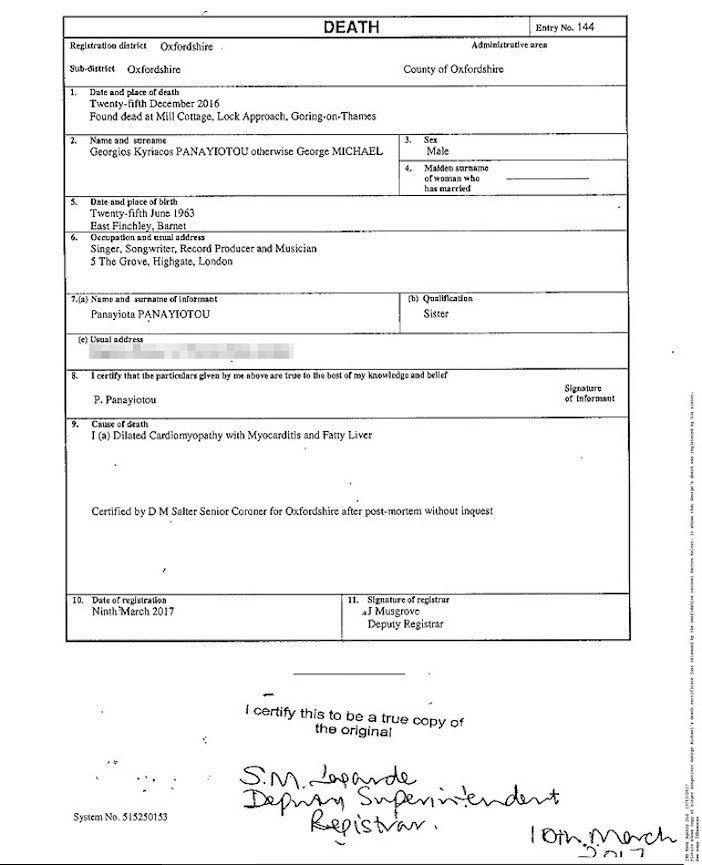
The death certificate used his birth name, Georgios Kyriacos Panayiotou, but referred to the star being otherwise known as George Michael and the body was released to his sister, Panayiota Panayiotou, according to the public documents.
A source not authorized to speak publicly and asking to remain anonymous who works at the Greek Orthodox Archdiocese of Thyateira and Great Britain said that “top Greek Orthodox clerics” at the Archdiocese, which oversees the British Isles parishes, were involved in burial plans and that the funeral could take place as early as this Sunday.
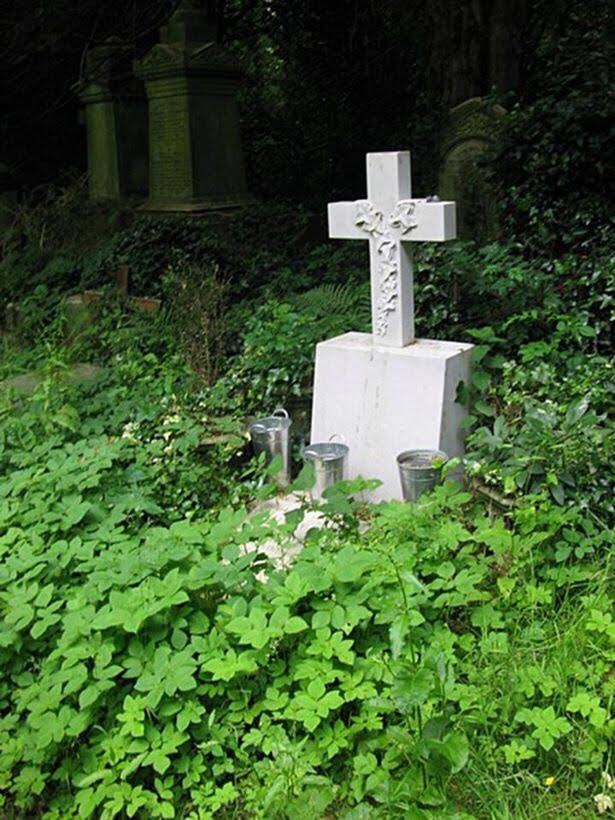
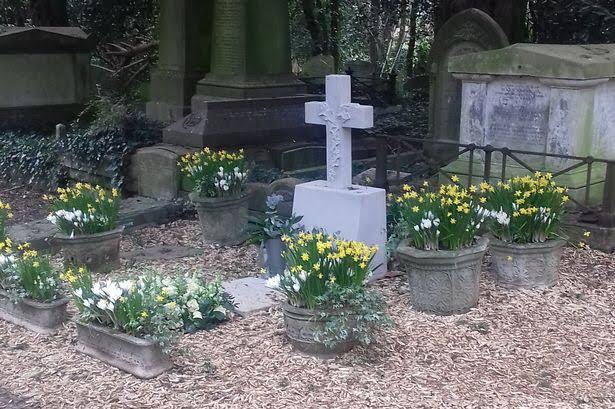
The British media have speculated that Michael could be laid to rest at Highgate Cemetery where his mother Lesley is buried, but the family has kept all details of date and location quiet.
Lesley Panayiotou’s grave at Highgate Cemetery
The singer’s official cause of death was recorded on the certificate as ‘dilated cardiomyopathy with myocarditis and a fatty liver’, crushing speculation and tabloid reports that drugs were involved.
Death certificate naming the deceased as Georgios Kyriacos Panayiotou
Following Michael’s passing, details emerged of his tremendous philanthropy, including his passionate support of a Greek charity that supports people with Thalassemia, an blood disorder that has affected many of his own friends and family who hail from Cyprus.
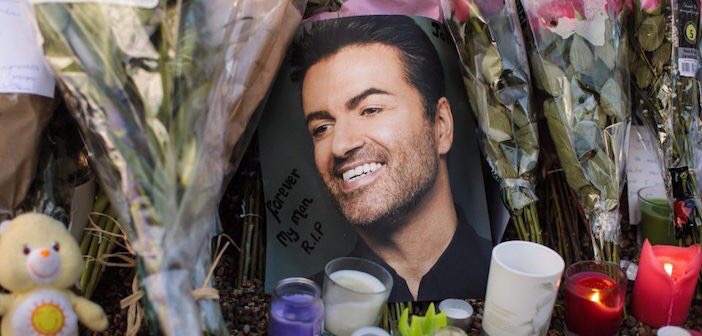
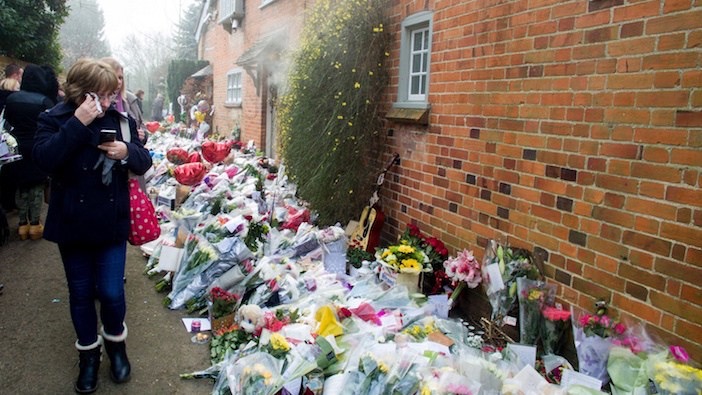
Even months after the singer’s death, the scene outside his home continues to be a pilgrimage site for beloved fans from throughout the world.
Outside George Michael’s house, where fans have come from throughout the world to pay tribute to the pop star.
Wham! singer was found dead in his country home on Christmas Day last year
53-year-old had suffered health scares and fought drug addictions for years
A coroner has now said he died from natural causes and there will be no inquest
Body has now been released to his family, who are planning a private funeral
The details of George Michael’s funeral are to be kept under wraps after his family and friends decided to organise a private service.
An announcement on Monday stated that the 53-year-old Wham! star died from a disease of the heart muscle and a fatty liver, meaning an inquest into his death is not needed.
The revelation means that, more than two months after his death, Michael’s body has finally been returned to his family ahead of a planned funeral.
The funeral had been delayed after an initial post-mortem examination was said to have been ‘inconclusive’.
George Michael died of natural causes with a weakened heart and fatty liver, a coroner said
It also means it is unlikely a full toxicology report will ever be released.
Meanwhile a recorded message for Highgate Cemetery, where the singer’s mother is buried, states: ‘If you’re phoning about George Michael, I’m sorry we haven’t got any information for you.’
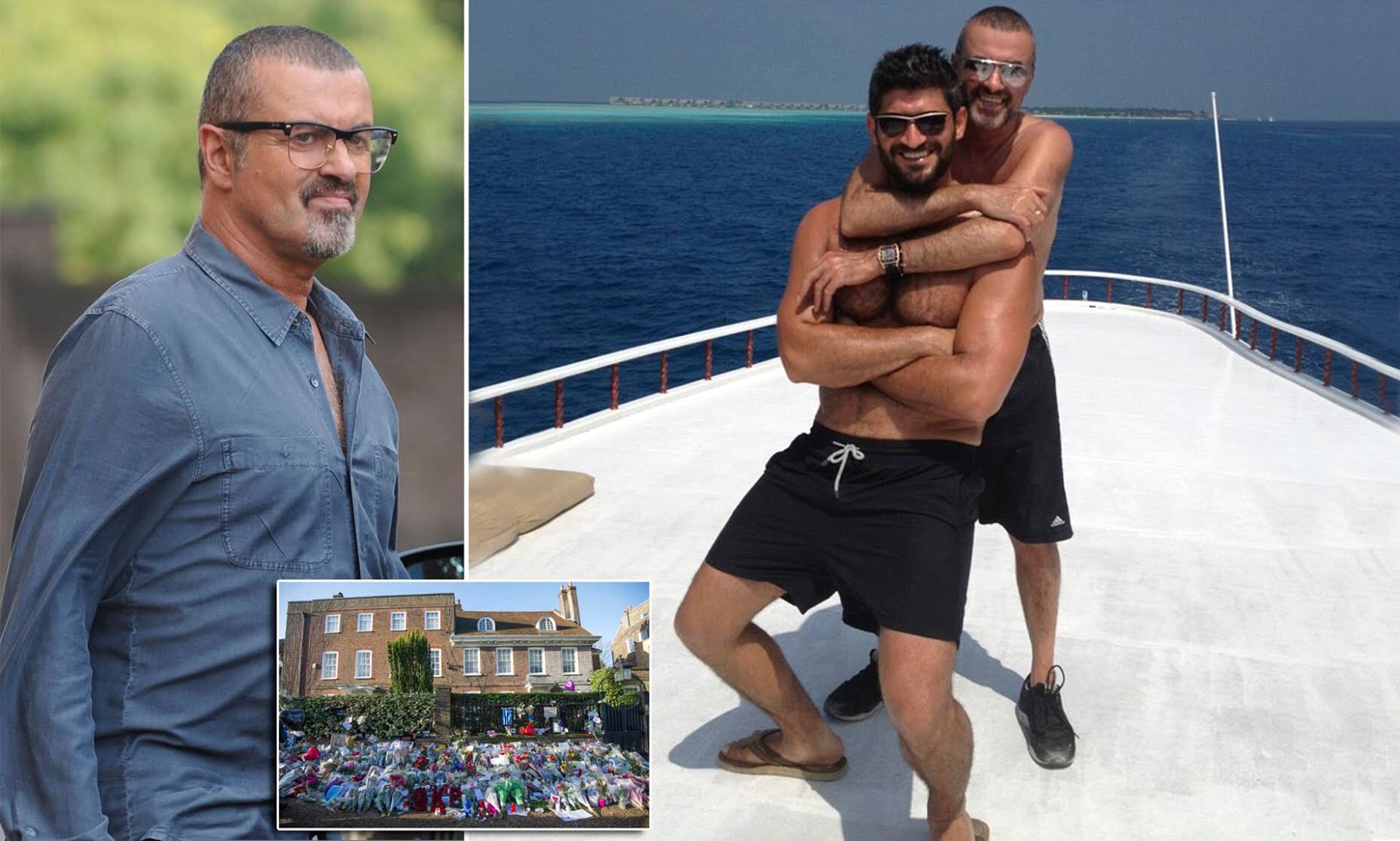
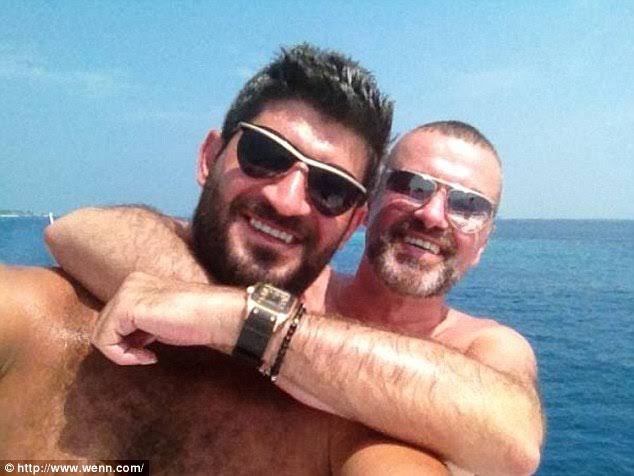
On Monday the singer’s boyfriend Fadi Fawaz, who found him dead at his home in Goring-on-Thames on Christmas Day, took to Twitter shortly after the coroner’s statement, tweeting: ‘F*** YOU’ and ‘The Truth is out’.
On Monday the singer’s boyfriend Fadi Fawaz took to Twitter shortly after the coroner’s statement, tweeting: ‘F*** YOU’ and ‘The Truth is out’
Fawaz has come under fire from some fans since the singer’s death and his Twitter account was said have been hacked before comments were posted suggesting Michael had wanted to take his own life. The 999 call he made was also leaked.
Today former Spice Girl Geri Horner opened up about the loss of her close friend while on This Morning.
Former Spice Girl Geri Horner opened up about the loss of her close friend while on This Morning today (pictured)
She said: ‘I absolutely loved him…I’m going to cry. I’m all hormonal as well. But when I left the Spice Girls he took me under his wing.
‘He was such a lovely person, so it was very shocking. And suddenly I have a baby, it was just like the circle of life… you just don’t expect it. He was such a good man.’
She added: ‘You know how real friends tell you how it is… they keep your feet on the ground.
‘That’s what I really loved about him. He was quite normal. And so generous! He bought me a car, he helped me with first daughter, I lived with him, so I was gutted… it’s not until someone goes you suddenly go ‘Oh my God’… It’s very sad when someone we all love dies.’
Darren Salter, senior coroner for Oxfordshire, said on Monday: ‘Inquiries into the death of George Michael have been concluded and the final post-mortem report received.
‘As there is a confirmed natural cause of death, being dilated cardiomyopathy with myocarditis and fatty liver, the investigation is being discontinued and there is no need for an inquest or any further enquiries.’
Toxicology tests were also ordered to determine whether drugs contributed to his death, but Monday’s statement means only his family are likely to see the results.
MEMORIAL CONCERT FOR SINGER SELLS OUT IN JUST DAYS
The tiny village hall in the village where George Michael was found dead is told hold a memorial concert on what would have been the pop icon’s 54th birthday.
Tickets for the event, called You Have Been Loved: Celebrating the Life and Music of George Michael, have already sold out.
The evening will feature music from a tribute band, who will perform Wham! and the signer’s greatest hits as well as performance from other bands and fans.
Singer David Wright who organised the even on June 25th said: ‘We’re big fans and wanted to do something to celebrate his life in a place that had significance for him.
‘We didn’t know how the village hall trustees would respond but they were keen on the idea and very welcoming.’
Profits from the £15 pounds tickets, which include a free glass of wine to members of the audience before the performance, will be donated to Childline.
Michael’s cousin, Andros Georgiou, had said he suspected the singer died of an accidental drugs overdose and former lover Paul Stag claimed he had been hooked on a drug called Liquid G.
But Michael’s former partner Kenny Goss said he believed the pop superstar’s body ‘just gave up’.
Speaking earlier this month, he said: ‘I can’t say for sure but I think his body just gave up. All these years, it was just weak.’
Dilated cardiomyopathy, identified as a cause of Michael’s death, is a disease of the heart muscle which affects how blood is able to pump around the body.
In some cases, it is an inherited condition, otherwise, it is caused by things such as viral infections, uncontrolled high blood pressure and problems with the heart valves.
Myocarditis meanwhile is inflammation in or around the heart and is usually caused by a viral, bacterial or fungal infection.
The third condition listed by the coroner, fatty liver disease, can be caused by a build-up of fat in the liver and is usually seen in people who are overweight or obese.
A different type of fatty liver disease is caused by excessive drinking and is known as alcoholic fatty liver disease.




 GREEK WORLD MEDIA