Nick Xenophon believes Brighton Caravan Park evictees have legal case

Source: News

Brighton Caravan Park

SA Senator Nick Xenophon is pledging his support for Brighton Caravan Park residents facing eviction. Mr Xenophon and Ken Rollond with some of the affected residents. Picture: Sam Wundke

BRIGHTON Caravan Park residents facing eviction may have grounds to pursue legal action, SA Senator Nick Xenophon says.

Senator Xenophon, a lawyer, met with the residents last week to offer support and discuss possible legal remedies available to them.

“There is a potential legal case,” he told the Guardian Messenger after the meeting.

“We need to get all of the facts on the table and get advice from a barrister so my job now is to collate all the information.”

Mr Xenophon said the legal issues were complicated, and he would again speak with the tenants this weekend to garner more information, before deciding how to proceed.

Senator Xenophon hoped the council and the tenants could reach a compromise which would rule out legal action.

“I really want there to be a negotiated outcome,” he said.

About 40 permanent residents of the seafront park were told by the council in January their leases, which expire on July 1, would not be renewed, to make way for a $3 million redevelopment of the park.

Mr Xenophon also met Holdfast Bay chief executive Justin Lynch and deputy mayor Rosemary Clancy.

“It was a constructive meeting that shows the council is willing to talk,” Senator Xenophon said.

Cr Clancy said the council had informed Mr Xenophon about the council’s offer of help to relocate the tenants.

“It was a very good meeting which recognised the need for the redevelopment,” she said.

“We assured him of our flexibility with arrangements for each individual affected by the change.”


New report on migration and multiculturalism in Australia (MP Maria Vamvakinou)

Source: APH

Australia is a vibrant multicultural society according to the findings of the Migration Committee report tabled in the Parliament today (March 18). The report received bi-partisan support and made 32 recommendations after receiving over 500 submissions and holding 27 public hearings over a two year period.

The report found that Australian multiculturalism is a success story, and stands as a good example to the world on how to build a cohesive society.

Member for Parliament Maria Vamvakinou

Chair of the Migration Committee Maria Vamvakinou said: “immigration and settlement in Australia has always been a nation building exercise. The committee believes that access to Australian citizenship has been at the heart of the success and cohesion of Australian society. Settlement is a long term and intergenerational process, and we need a whole of government approach and better coordination between all three tiers of Australian government”.

The committee’s recommendations include: rebuilding Australia’s research capacity in this field, especially in qualitative research; factoring cultural and linguistic diversity into the Government’s Social Inclusion Agenda, greater flexibility in English language training and support for micro enterprises, especially for women. The Committee found Job Services Australia needs to improve its delivery of services to people of diverse backgrounds, including refugees.

Deputy Chair Louise Markus said the committee welcomed meeting people at the grass roots where business and local communities were collaborating to improve relationships, and build skills and opportunities for people from different backgrounds.

“In Dandenong, the South East Melbourne Manufacturers Alliance is bringing employers and young refugees together; the National Australia Bank’s African Inclusion Program is exemplary; and social enterprises, like The Studio, are inspirational. These initiatives deserve special mention and prove that cooperation, cross-cultural awareness, and commitment provide tangible results,” Mrs Markus said.

Mrs Markus said there was “no doubt that immigration has enriched the social, economic and cultural life of our country”.

Ms Vamvakinou said every society is dynamic and open to the influences of globalisation, wars, and economic crises. We are a resilient society and well placed to meet these challenges.


“Mitsias Sings For Greece”: Greek Legendary Singer Manolis Mitsias to perform at a benefit concert FUNDS RAISED AS OF THIS PRESS RELEASE $140,000

Source: greeknewsonline

New Jersey

On March 23, 2013, at 7:00 p.m., the P.G.E.I. Charitable Foundation and the Hellenic Federation of New Jersey will co-host, with the support of Pan Gregorian Enterprises, a concert to benefit charities in Greece and Cyprus who are well known for their transparency and the wonderful results of their charitable mission.

This benefit concert is anticipated for a long  time by the Hellenic Community of New Jersey and will be an event to remember.  The concert will be a first class event performed by Manolis Mitsias, the acclaimed and well known singer of many memorable songs and will be accompanied by Dimitris Mariolas on Bouzouki and the Syn-Phonia Band featuring Aphrodite Daniel, Rena Tsapela, Panagiotis Andreou Christos Papadopoulos.  The concert will be given at the impressive Nicholas Music Center at Rutgers University, New Brunswick.

The funds raised are dedicated for the support of four charities: Hamogelo tou Paidiou (Smile of the Child) which provides a home and other services to needy children throughout Greece, Kivotos tou Kosmou (Ark of the World) which provides services to needy families in Greece, Apostoli (Mission) of the Archdiocese of Athens which runs soup kitchens for the hungry in Athens and surrounding areas, and The Cyprus Children’s Fund which assists needy children in Cyprus.

Place: Rutgers University                                  Time:  7:00 PM

Douglass Campus                                             Tickets & Sponsorships:

Nicholas Music Center                                      Contacts:

85 George Street                                               Despina 201-981-5764  axio@aol.com

New Brunswick, NJ 08901                                Toni:    908-624-0250 toni@pge-nj.com


WJC urges Greek action against neo-Nazis

Source: WorldJewishCongress

Leaders of the World Jewish Congress (WJC) on Sunday sent a strong message of solidarity to the Jewish community of Greece as they gathered in the northern Greek city of Thessaloniki for meetings of the WJC Executive Committee and commemorations on the 70thanniversary of the first deportation of Salonican Jews to the death camps. In a speech in the presence of Greek Prime Minister AntonisSamaras, WJC President Ronald S. Lauder urged Greece to take decisive action against the growing neo-Nazi movement Golden Dawn, which he called “the new Nazis” and “a threat to democracy.” In a resolution, the World Jewish Congress called on Greece to consider banning extremist parties such as Golden Dawn.

Samaras (pictured below) on Sunday became the first sitting Greek prime minister of the last 100 years to visit a synagogue. He pledged that his government would do everything to rein in the extremists. The Greek government would enact legislation that will be “completely intolerant to violence and racism,” he said, noting that with neo-Nazi parties on the rise again in Europe, governments had to “be very careful not to let them gain ground as they did in the 1930s.”

Fifty Jewish community heads and representatives from around the world attended the series of events in Thessaloniki in commemoration of the victims of the Holocaust. They were co-organized by the Jewish Community of Thessaloniki. More than 48,000 Jews of Thessaloniki were deported between March and August of 1943 and 96 percent of them were murdered in the German death camps.

On Saturday, World Jewsh Congress representatives took part in a commemorative march organized by Thessaloniki’s mayor YiannisBoutaris which attracted nearly 3,000 participants.

In his speech at the Monastiriotes Synagogue, Ronald Lauder thanked the survivors – some of whom were present and lit candles – for returning and rebuilding the Salonican community. He also praised Jewish community leader David Saltiel for his tremendous efforts in strengthening the community.

As part of the resolution, the WJC calls on Greece to “consider banning political parties, such as the Golden Dawn movement, which pose a serious danger to liberal democracy”; and also calls on the European Union to “ensure that political movements that actively espouse a platform of discrimination of ethnic or religious minorities, in contravention of the EU Charter of Fundamental Rights, are dealt with in a coordinated manner in all EU member states that law enforcement authorities receive all necessary support for the protection of citizens against such crimes.”

On Monday, the members of the WJC Executive will travel to Israel to hold talks with members of the newly appointed Israeli government and President Shimon Peres.

Resolution by WJC Executive Committee, adopted on 17 March 2013 in Thessaloniki, Greece

The Executive Committee of the World Jewish Congress, meeting in Thessaloniki, Greece on 17 March 2013 to commemorate the 70thanniversary of the deportation of nearly 50,000 Thessaloniki Jews to the Nazi death camps where more than 48,000 of them were murdered:

EXPRESSES the solidarity of world Jewry with Greek Jews, many of who are suffering from growing anti-Semitism and economic hardship;

NOTES that Greece is the country where Democracy was born and that during World War II, thousands of Greeks gave their lives to protect freedom and in opposition to the barbarism of the Nazis;

NOTES with alarm the growing expressions of anti-Semitism and the rise of the extremist and violently racist Chrysi Avgi (Golden Dawn) movement, which has parliamentary representation, manifest in: its open denial of the Shoah and the existence of gas chambers at Nazi death camps; a series of anti-Semitic and racist statements; and physical assaults on dark-skinned people and immigrants which have become an almost daily occurrence in Greece;

EXPRESSES its great concern that a part of Greek society appears not to be sufficiently alert as to where such hateful ideology can ultimately lead, with members of Greek law enforcement authorities being repeatedly accused of leniency toward Golden Dawn activists who brutally attacked immigrant workers, and with the Greek judiciary being weak in bringing those who commit hate crimes, to justice;

RECALLS with immense sadness the fact that the failure by Germany’s democratic parties to effectively combat the Nazis, led to the appointment, 80 years ago, of Adolf Hitler as German chancellor and the establishment of a murderous dictatorship that ultimately led to World War II and the Shoah;

URGES the Greek authorities to: take serious and concerted actions against Holocaust denial, anti-Semitism, racism and xenophobia; implement all relevant European laws in that domain; and unite all democratic forces against the enemies of democracy, so as not to allow society to drift into the darkness of racial hatred and anti-Semitism.

CALLS on Greece to consider banning political parties, such as the Golden Dawn movement, which pose a serious danger to liberal democracy;

CALLS on the European Union to ensure that political movements that actively espouse a platform of discrimination of ethnic or religious minorities, in contravention of the EU Charter of Fundamental Rights, are dealt with in a coordinated manner in all EU member states and that law enforcement authorities receive all necessary support for the protection of citizens against such crimes.


70 YEARS ON, GREEK SURVIVOR RECALLS ‘RED SKY OVER BIRKENAU’

Source: YahooNews

70 years on, Greek survivor recalls red sky over Birkenau

THESSALONIKI, Greece (AFP) – Heinz Kounio was put aboard the first train to transfer Jews from the northern Greek city of Thessaloniki to the Auschwitz death camp on March 15, 1943.

As Greece held solemn ceremonies to mark the 70th anniversary of the forced deportations, the 85-year-old says he vividly recalls “the red sky” over the death camp, lit up by flames from the crematoria chimneys.

One of the last living survivors, every detail of Nazi horror is engraved in the memory of Kounio who was 15 at the time of his deportation and totally unaware of the hell of methodical human extermination he was about to experience.

Once he got off the train, at night, after a harrowing seven-day journey, the first thing he saw was “a red sky over Birkenau,” and “a kind of rain of small ashes that fell from the sky”.

“The SS were waiting for us. They had dogs. They hit us and they did not understand why nobody obeyed,” he told AFP.

The Thessaloniki Jews, often of Spanish origin, did not speak German.

Kounio, his father, his mother who was of Czechoslovak origin and his sister were the only ones who spoke German.

They were immediately selected to translate the SS orders into Greek.

“Obey.”

“Don’t speak.”

Kounio says this is what saved them.

“We were there each time a Greek transport arrived in Auschwitz, to translate.”

Sometimes he saw familiar faces, but “I could not talk to people I knew, never,” or he would be beaten.

After Auschwitz, Kounio was transferred to Matthausen, then Merk and finally to the Ebensee camp in Austria where he remained until the arrival of general George Patton and his army in 1945.

Today, sitting on the front row during the commemoration events in the former “Jerusalem of the Balkans,” Kounio still has the number 109565 tattooed on his arm.

Decimated by the Nazis, the Jewish community of his city which amounted to nearly 50,000 before World War II now numbers fewer than 2,000.

Kounio does not want to talk about politics although he said he finds the existence of Holocaust deniers in many European countries and a lack of democracy “frightening”.

In June, in a shocking first for Greece, neo-Nazi party Golden Dawn was elected into parliament, riding a wave of social tensions as a result of the deep economic crisis.

But Kounio said he is optimistic for the future of Europe.

“I don’t think Europe will split again, politicians know it is too dangerous,” he says.

“I believe Germany wants power but they know they cannot survive without the others.”

In May, Golden Dawn leader Nikos Mihaloliakos publicly denied the Nazis’ extermination of the Jews and the existence of concentration camps.

“Many of the problems in Greece stem from the fact that, despite official statements, the Holocaust is not really taught at school,” said the head of the Thessaloniki Jewish Museum, Erika Perahia.

“History books only contain about five lines, that’s all.”

Addressing one of the commemorative events on Sunday, Greek Prime Minister Antonis Samaras called for zero tolerance on racism adding that society had no room for racists and anti-Semites.

“Today neo-Nazism is reappearing in all of Europe, aided by the crisis and the high numbers of unemployment,” Samaras said.

“That is why today, more than any other time and especially in countries experiencing a great crisis, it is our duty to be alert.”

Speaking at the same event, head of the World Jewish Congress Ronald S. Lauder asked Samaras to take action against what he called the “new Nazis.”

“The same extremist, fanatic ideology that brought devastation over Europe 70 years ago has today representation in the Greek parliament. They call themselves Golden Dawn,” Lauder warned.

On the same day, 20-year-old footballer Giorgos Katidis was banned for life from playing for his country by the Greek football federation after giving a Nazi salute during a game.

“I am not a fascist and I would not have done it if I had known what it means,” claimed the midfielder on his Twitter account on Saturday.

Cypriot banks to transfer Greek units to Greek owners

Source: Cyprus-Mail.com

CYPRIOT banks will transfer their Greek units to Greek owners as part of the island’s international bailout agreed earlier yesterday, two government and banking sources in Athens told Reuters.

Cypriot banks account for the bulk of the €0 billion that Nicosia will get from eurozone countries to stave off bankruptcy. In sharp contrast with previous bailouts for other indebted nations, the rescue package is co-funded by levies on bank deposits.

The units of Cypriot banks in Greece, which account for about a tenth of Greece’s banking market, were specifically excluded from the levy after a deal to transfer them to Greek lenders, one senior banking source and one senior finance ministry official said.

“They will be transferred to a Greek bank,” the finance ministry official said. It was not yet clear which Greek bank would take them over and on what terms.

Greek lenders have themselves been bailed out with up to €50 billion in EU/IMF funds after a Greek debt cut in 2012 severely hit the value of their bondholdings.

The eurogroup said earlier yesterday, without elaborating, that it welcomed “that an agreement could be reached on the Greek branches of the Cypriot banks, which protects the stability of both the Greek and the Cypriot banking systems”.

It said this would be done in a way which “does not burden the Greek debt-to-GDP ratio”.

Cyprus’ two top lenders with a presence in Greece are Bank of Cyprus and Popular Bank. Greek operations accounted for more than a quarter of total group operating income at Bank of Cyprus and 10 per cent at Popular, according to nine-month 2012 results.

According to Greek media reports, Cypriot lenders’ assets will be most likely transferred to Hellenic Postbank, a formerly state-controlled lender which was itself bailed out in January.

But a Postbank official told Reuters it was not yet known if this would happen.

Postbank, whose capital shortfall was estimated at €3.7 billion passed into the full ownership of Greece’s bank bailout fund (HFSF) with a view to being sold at some point to private investors.


Life ban from Greek team for Nazi salute player Giorgos Katidis

Source: HeraldSun

NAZI SALUTE OUTRAGE ON SOCCER FIELD

Greek soccer player Giorgos Katidis has been banned for life after giving a Nazi salute while celebrating a goal.

GREEK soccer player Giorgos Katidis has been banned from his national team for life after giving a Nazi salute while celebrating a goal.

Greece’s soccer federation said in a statement the AEK Athens midfielder’s gesture was “a deep insult to all victims of Nazi brutality.”

The 20-year-old Katidis gave a Nazi salute after scoring the go-ahead goal on Saturday in AEK’s 2-1 victory over Veria in the Greek league.

He pleaded ignorance of the meaning of his gesture – right arm extended and hand straightened. He claimed on his Twitter account he detested fascism.

Giorgos Katidis

AEK Athens midfielder Giorgos Katidis raises his hand in a Nazi style salute as Roger Guerreiro looks on. Picture: AP

AEK and the Greek league are considering separate sanctions. AEK fans have demanded Katidis’ dismissal from the team.Katidis has played for Greek national junior teams but not the senior side.

In 1996, Australian goalkeeper Mark Bosnich was fined 1,000 pounds and censured by England’s Football Association when he made a similar gesture during a match at Tottenham Hotspur, a club with a strong Jewish following.

Mark Bosnich Nazi salute

Aston Villa goalkeeper Mark Bosnich gives a Nazi salute to the crowd at Tottenham Hotspur in 1996. He was fined 1000 pounds.


Earth Hour Is a Colossal Waste of Time—And Energy

Source: Slate

Plus, it ignores how electricity has been a boon for humanity.

142198193

The Eiffel Tower is seen after the lights are turned off during Earth Hour 2012 in Paris.
Photo by Antoine Antoniol/Getty Images

On the evening of March 23, 1.3 billion people will go without light at 8:30—and at 9:30, and at 10:30, and for the rest of the night—just like every other night of the year. With no access to electricity, darkness after sunset is a constant reality for these people.

At the same time, another 1 billion people will participate in “Earth Hour” by turning off their lights from 8:30-9:30.

The organizers say that they are providing a way to demonstrate one’s desire to “do something” about global warming. But the reality is that Earth Hour teaches all the wrong lessens, and it actually increases CO2 emissions. Its vain symbolism reveals exactly what is wrong with today’s feel-good environment.

Earth Hour teaches us that tackling global warming is easy. Yet, by switching off the lights, all we are doing is making it harder to see.

Notice that you have not been asked to switch off anything really inconvenient, like your heating or air-conditioning, television, computer, mobile phone, or any of the myriad technologies that depend on affordable, plentiful energy electricity and make modern life possible. If switching off the lights for one hour per year really were beneficial, why would we not do it for the other 8,759?

Hypothetically, switching off the lights for an hour would cut CO2 emissions from power plants around the world. But, even if everyone in the entire world cut all residential lighting, and this translated entirely into CO2 reduction, it would be the equivalent of China pausing its CO2 emissions for less than four minutes. In fact, Earth Hour will cause emissions to increase.

As the United Kingdom’s National Grid operators have found, a small decline in electricity consumption does not translate into less energy being pumped into the grid, and therefore will not reduce emissions. Moreover, during Earth Hour, any significant drop in electricity demand will entail a reduction in CO2 emissions during the hour, but it will be offset by the surge from firing up coal or gas stations to restore electricity supplies afterward.

And the cozy candles that many participants will light, which seem so natural and environmentally friendly, are still fossil fuels—and almost 100 times less efficient than incandescent light bulbs. Using one candle for each switched-off bulb cancels out even the theoretical CO2 reduction; using two candles means that you emit more CO2.

Electricity has given humanity huge benefits. Almost 3 billion people still burn dung, twigs, and other traditional fuels indoors to cook and keep warm, generating noxious fumes that kill an estimated 2 million people each year, mostly women and children. Likewise, just 100 years ago, the average American family spent six hours each week during cold months shoveling six tons of coal into the furnace (not to mention cleaning the coal dust from carpets, furniture, curtains, and bedclothes). In the developed world today, electric stoves and heaters have banished indoor air pollution.

Similarly, electricity has allowed us to mechanize much of our world, ending most backbreaking work. The washing machine liberated women from spending endless hours carrying water and beating clothing on scrub boards. The refrigerator made it possible for almost everyone to eat more fruits and vegetables, and to stop eating rotten food, which is the main reason why the most prevalent cancer for men in the United States in 1930, stomach cancer, is the least prevalent now.

Electricity has allowed us to irrigate fields and synthesize fertilizer from air. The light that it powers has enabled us to have active, productive lives past sunset. The electricity that people in rich countries consume is, on average, equivalent to the energy of 56 servants helping them. Even people in Sub-Saharan Africa have electricity equivalent to about three servants. They need more of it, not less.

This is relevant not only for the world’s poor. Because of rising energy prices from green subsidies, 800,000 German households can no longer pay their electricity bills. In the United Kingdom, there are now more than 5 million fuel-poor people, and the country’s electricity regulator now publicly worries that environmental targets could lead to blackouts in less than nine months.

Today, we produce only a small fraction of the energy that we need from solar and wind—0.7 percent from wind and just 0.1 percent from solar. These technologies currently are too expensive. They are also unreliable (we still have no idea what to do when the wind is not blowing). Even with optimistic assumptions, the International Energy Agency estimates that, by 2035, we will produce just 2.4 percent of our energy from wind and 0.8 percent from solar.

To green the world’s energy, we should abandon the old-fashioned policy of subsidizing unreliable solar and wind—a policy that has failed for 20 years, and that will fail for the next 22. Instead, we should focus on inventing new, more efficient green technologies to outcompete fossil fuels.

If we really want a sustainable future for all of humanity and our planet, we shouldn’t plunge ourselves back into darkness. Tackling climate change by turning off the lights and eating dinner by candlelight smacks of the “let them eat cake” approach to the world’s problems that appeals only to well-electrified, comfortable elites.

Focusing on green R&D might not feel as good as participating in a global gabfest with flashlights and good intentions, but it is a much brighter idea.

Jorge Mario Bergoglio of Argentina was elected in a surprise choice to be the new leader of the troubled Roman Catholic Church

VATICAN CITY – Jorge Mario Bergoglio of Argentina was elected in a surprise choice to be the new leader of the troubled Roman Catholic Church on Wednesday, taking the name Francis I and becoming the first non-European pontiff in nearly 1,300 years.

Pope Francis, 76, appeared on the central balcony of St. Peter’s Basilica just over an hour after white smoke poured from a chimney on the roof of the Sistine Chapel to signal 115 cardinal electors had chosen him to lead the world’s 1.2 billion Roman Catholics.

“Pray for me,” the new pontiff, dressed in the white robes of a pope for the first time, urged the crowd, smiling warmly.

The choice of Bergoglio, who is the first Latin American and first Jesuit pope, was announced by French cardinal Jean-Louis Tauran with the Latin words “Annuntio vobis gaudium magnum. Habemus Papam” (“I announce to you a great joy. We have a pope.”)

Francis has became the 266th pontiff in the Church’s 2,000-year history at a time of great crisis, with the church under fire over a child sex abuse scandal and torn by infighting in the Vatican bureaucracy.

Jubilant Argentines poured into churches, some crying and praying, after the announcement at the Vatican. “This is a blessing for Argentina,” one woman shouted on a Buenos Aires street.

“I hope he changes all the luxury that exists in the Vatican, that he steers the church in a more humble direction, something closer to the gospel,” said Jorge Andres Lobato, a 73-year-old retired state prosecutor.

JESUIT ORDER

Although a conservative, Francis is seen as a reformer and was not among the small group of frontrunners identified before the election. The Jesuit order to which he belongs was founded in the 16th century to serve the pope. It is best known for its work in education and the intellectual prowess of its members.

Bergoglio is known as a humble man who leads an austere and sober life without ostentation, travelling by public transport and living in a small apartment outside Buenos Aires.

He is a moderate who is willing to challenge powerful interests and is deeply concerned about the social inequalities in Argentina and elsewhere in Latin America. He has had a sometimes difficult relationship with President Cristina Fernandez and her late husband and predecessor Nestor Kirchner.

Francis has spoken out strongly against gay marriage, denouncing it in 2010 as “an attempt to destroy God’s plan”.

He was born into a middle-class family of seven, his father an Italian immigrant railway worker and his mother a housewife.

Replacing Pope Benedict, who resigned last month, he overturned one of the main assumptions before the election, that the new pope would be relatively young.

Bergoglio is the oldest of most of the possible candidates and was barely mentioned in feverish speculation about the top contenders before the conclave.

He is the first non-European pope since Syrian-born Gregory III in the eighth century, and the third successive non-Italian pontiff.

The Vatican said his inaugural mass would be held on March 19.

U.S. President Barack Obama said the election of Francis “speaks to the strength and vitality of a region that is increasingly shaping our world.”

“PRAY FOR BENEDICT”

In brief remarks from the balcony of St. Peter’s, Francis called on the faithful to pray for Benedict and said the Church was setting off on a “journey of fraternity, of love, of trust.”

It seemed the cardinal electors “went to the end of the world” to find him, he said.

The Vatican said Francis would visit Benedict soon at his temporary home in the summer papal residence outside Rome.

Thousands of people sheltering from heavy rain under a sea of umbrellas had occupied the square all day to await the decision and the crowd swelled as soon as the white smoke emerged.

They cheered wildly and raced towards the basilica as the smoke billowed from a narrow makeshift chimney and St Peter’s bells rang.

The tens of thousands in the square cheered even more loudly when Francis appeared, the first pontiff to take that name. “Viva il Papa (pope),” they chanted.

The election was enthusiastically welcomed in Latin America. “I am happy because another European pope would be like eating the same bread every day,” said Mexico City cab driver Martin Rodriguez.

“We’re happy because we have a new pope and because the choice of a Latin American shows that the Church is opening, is now focused on the entire Church. It’s not just a church only focused on Europe,” said Leonardo Steiner, general secretary of the national conference of Brazilian bishops.

Frontrunners at the conclave had included Brazilian Odilo Scherer, and Italy’s Angelo Scola, who would have returned the papacy to traditional Italian hands after 35 years of the German Benedict XVI and Polish John Paul II.

The decision by cardinal electors sequestered in a secret conclave in the Sistine Chapel came sooner than many experts expected because there were several frontrunners before the vote to replace Pope Benedict.

The cardinals faced a thorny task in finding a leader capable of overcoming crises caused by priestly child abuse and a leak of secret papal documents that uncovered corruption and rivalry inside the Church government or Curia.

Francis will head a Church also shaken by rivalry from other churches, the advance of secularism, especially in its European heartland, and allegations of scandal at the Vatican bank.

The series of crises is thought to have contributed to Benedict’s decision to become the first pontiff in 600 years to abdicate.

RIVAL TO RATZINGER IN 2005

Bergoglio was a moderate rival candidate at the 2005 conclave to the conservative Cardinal Joseph Ratzinger, who went on to become Benedict.

Italian media say he impressed cardinals in pre-conclave meetings where they discussed the Church’s problems.

Reserved and humble, Francis does not fit the profile of an active preacher that many cardinals had previously said they were seeking. He studied chemistry before joining the priesthood nearly a decade after losing a lung to respiratory illness.

“He’s very humble, I heard that in Buenos Aires he used to take public transport, have an apartment and cook for himself. The fact that he chose the name Francis means a lot. It means we will have a humble, simple pope close to the poor people. But it was a big surprise,” said Jules Charette, 54, a Canadian lawyer in St. Peter’s Square.

Bands from the Italian armed forces and the Vatican’s own Swiss guard army paraded in front of the basilica before the new pope appeared.

The secret conclave began on Tuesday night with a first ballot and four ballots were held on Wednesday. Francis obtained the required two thirds majority in the fifth ballot.

Following a split ballot when they were first shut away amid the chapel’s Renaissance splendour on Tuesday evening, the cardinal electors held a first full day of deliberations on Wednesday. Black smoke rose after the morning session to signal no decision.

The previous four popes were all elected within two or three days.

Seven ballots have been required on average over the last nine conclaves. Benedict was clear frontrunner in 2005 and elected after only four ballots.

In preparatory meetings before the conclave, the cardinals seemed divided between those who believe the new pontiff must be a strong manager to get the dysfunctional bureaucracy under control and others who are looking more for a proven pastoral figure to revitalise their faith across the globe.

Apart from Brazil’s Scherer and Italy’s Scola, a host of other candidates from numerous nations had also been mentioned as potential popes – including U.S. cardinals Timothy Dolan and Sean O’Malley, Canada’s Marc Ouellet and Argentina’s Leonardo Sandri.

But the frontrunners list never mentioned Bergoglio.
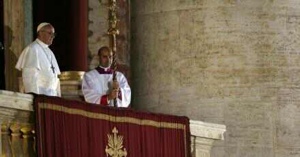
20130314-103344.jpg

Australian research brings hope to cancer kids

Source: News

When Sydney woman Maria Rossi learned her baby girl had blood cancer, the only thing she wanted to hear was high percentage odds that little Mia would pull through.

“We kept asking, what are her chances? And you just want to hear that number,” she remembered on Tuesday.

“Any number that is higher gives you more hope.”

Now, thanks to an Australian-led medical trial published on Tuesday, more families will be presented with odds that give them belief.

As recently as the 1990s, as few as a third of children with high-risk Acute Lymphoblastic Leukaemia (ALL) recovered from the illness.

But research initiated at the Sydney Children’s Hospital Randwick and The Children’s Hospital at Westmead, and detailed in the journal Leukaemia on Tuesday, has boosted the survival rate for those children to 75 per cent.

Scientists at the Children’s Cancer Institute Australia (CCIA) developed a way to test for the slightest trace of diseased cells in the bone marrow of children with ALL – including among patients who appeared to be responding well to treatment – to identify possible relapses months or years in advance.

Children at a high risk of relapsing were then treated with an intensive chemotherapy protocol.

Glenn Marshall, director of the Kids Cancer Centre at Sydney Children’s Hospital Randwick, said 1000 children had been involved in the research in Australia, New Zealand and the Netherlands.

“Approximately 30 to 40 children in those countries would not be alive today if we didn’t have our trial, because the cure rate for those high-risk patients compared to the 90s has doubled,” he told reporters on Tuesday.

Deputy CCIA director Murray Norris said doctors had previously relied on slides under a microscope to determine whether cancer was in remission.

“You’re lucky if you can pick up one leukaemia cell amongst 20 or 50 normal cells,” he said.

“What we developed was a molecular genetic test, essentially it was based on taking a DNA fingerprint of the child’s leukaemia.”

The Minimal Residual Disease testing could pick out the equivalent of one leukaemia cell from up to a million normal cells, he said.

Maria Rossi credits the research with saving her daughter’s life.

Today, Mia Yule needs to visit a hospital for check-ups only every four weeks.

The rest of the month, the bouncy six-year-old is busy going to school, playing soccer, and even doing kung-fu.

“I really hope Dr Marshall makes other kids better,” Mia told reporters.

Her mum said she felt “blessed”.

“We went through treatment with other families who weren’t so lucky,” she said.

“I think it was one in three of them who didn’t make it, so we feel very excited by the news today that they’re continuing to make progress to give every child the chance to live a life.”