
How did this exhibition come together? Hear Frank Howarth and Anna Trofimova talk about bringing this wonderful show to the Australian Museum Sydney.
Behind the Scenes of the Alexander the Great Exhibition

How did this exhibition come together? Hear Frank Howarth and Anna Trofimova talk about bringing this wonderful show to the Australian Museum Sydney.
Behind the Scenes of the Alexander the Great Exhibition
Source: Cypriotcommunitywa
Date: 10th February 2013
Location: Kingsway Sports Ground in Madeley (entry from Kingsway or Bellerive Bvd)
Price: $20 Adults $10 Children under 12yrs (meal tickets purchased on entry)
Fully Licenced Bar available for drink purchases.
The Cypriot Community Annual Souvla is one of the Community’s favourite and well attended events and in 2013 it’s going to be held on the 10th of February.
If you haven’t been before, please be assured this event is ALWAYS an enjoyable day in which anyone and everyone can appreciate authentic Cypriot Souvla, fresh salads and dips and of course delicious home made loukoumades.

As usual, it will be held at the child friendly venue of the Kingsway Sports Ground in Madeley (entry from Kingsway or Bellerive Bvd) and starts at 12pm.
Come early to set up your picnic table or blanket or select a table inside and enjoy succulent meats off the souvla!
In addition, we will be providing popular Greek music inside and outside to create the proper Cypriot Kefi!

Σε ένα μήνα σχεδόν η Καλομοίρα θα κρατά στην αγκαλιά της τα δυο της αγγελούδια και μετά τα μαθήματα που παρακολούθησε με τον σύζυγό της, Γιώργο Μπούσαλη, τώρα μαθαίνει τραγουδάκια που θα τους λέει για να κοιμηθούν!
Η τραγουδίστρια, που η κοιλίτσα της έχει φουσκώσει πάρα πολύ, έχει αρκετό άγχος μιας και θέλει να είναι μία καλή μανούλα!
Όπως μας ενημέρωσε μέσω του προσωπικού της site η τραγουδίστρια, η φίλη της Εφημία της έκανε δώρο το βιβλίο και μαθαίνει όλα τα τραγουδάκια!

PROLOGUE
The day on which the stranger appeared in the village was a snapping, spitting day in March; the sort of day on which men were wont to grouse about their arthritis and gout and to bicker with everyone in their household before heading down to the kapheneion, where they could, for a time, forget all their troubles. It was 1935 and only the devil could have masterminded the current state of the economy. This was the one thing everyone seemed to agree on.
Despite the belligerent weather, all the regulars were there when the gypsy turned up: playing cards or backgammon, gossiping over drinks. Philippas Adham, the headmaster, sat discussing Hitler’s denunciation of the Treaty of Locarno with his friend, the doctor. He had just ordered coffee and was about to light a cigarette when the gypsy tramped in, tailed by two scruffy boys with shoes so large they had to be half-dragged across the threshold. The stranger looked slatternly but imperious, closing the door behind her with a decisive toss of wet plaits. She wore a colourful skirt and a faded green sweater; a small crimson scarf was tied around her neck, as beguiling as a poppy in a field of thorns.
‘Good afternoon.’ The gypsy stood peering through the haze of smoke, a bale of tablecloths draped over her arm. ‘Good afternoon, gentlemen!’
The greeting was grudgingly returned by a handful of men; others went on staring at the stranger with mute interest. She was an attractive woman with nutmeg-hued skin and a beauty spot on her left cheekbone. The children had found a vacant table and sat with their bare legs dangling, staring at the rain. It was growing dark.
‘Look here, gentlemen! I’ve got tablecloths – fine tablecloths all the way from Athens.’ The gypsy plucked off the protective oilcloth and cast it aside. ‘I invite your offers!’ She stood surveying the room: the men toying with their worry beads, the blazing pot-bellied stove. The fire crackled and hissed, spitting out an occasional spark. One of the lamps on the wall flickered, running out of oil.
‘Do I hear an offer?’ The question was cast over to the right, where Mimis Lyras, the village wit and football champion, sat bantering at the fishermen’s table. One of the few fair-haired men in the village, Mimis was idly picking his teeth, staring appraisingly as the gypsy danced her way towards his table.
‘How ’bout you, sir? I bet your wife could use a nice tablecloth for thirty drachmas, eh?’
Mimis took a lazy drag on his cigarette, gazing at the stranger. ‘What’s your name?’ he asked, his tongue testing his inner cheek.
‘Amalia. Amalia the fortune-teller’s what they call me.’
‘Well,’ said Mimis, his eyes full upon her. ‘Look here, Amalia. I’d gladly pay thirty drachmas – maybe even sixty – but the God’s truth is I don’t have a woman.’
‘What?! A handsome palikari like you!’ The gypsy cackled. ‘You pay me sixty drachmas, sir, and I’ll find you two wives for your money!’ She winked, flinging back her plaits, while Mimis’s companions guffawed and Hektor the fool hooted in the background. Someone called out, demanding a coffee reading. Only the kapheneion owner appeared impassive, slowly stirring beans in a steaming cauldron.
‘Your own wives couldn’t match this with their nimble fingers!’ the gypsy was saying. Someone – the doctor or the headmaster – had ordered a plate of beans for the rawboned boys. The kapheneion owner’s father-in-law set the plates down with a sour look. The men had all but abandoned their games; the shop, entitled to ten per cent of all winnings, was beginning to lose money.
‘All right: only twenty-three drachmas and your fortune free!’ The gypsy stood warming her hands at the wood stove, scanning the crowded room.
‘I’ll tell you what!’ she cried at last. ‘I’ll read one man’s fortune, one man’s only, then—’ She paused dramatically. ‘If he wants – if he wants – he can buy one of these lovely tablecloths. How’s that?’
The question was aimed at one of the fishermen, who’d recently lost two fingers while fishing with dynamite.
‘Why . . . why don’t you try the Alexiou brothers here?’ The gnome-like man made a flustered gesture, then buried his maimed hand in his lap. ‘They’ve got money to burn, those two. I . . . I’m just a poor fisherman,’ he stammered.
The Alexiou brothers were seated in the corner, lingering over their coffee. The gypsy glanced over her shoulder, then made her way towards them, her teeth flashing.
‘Don’t be afraid . . . there’s nothing to be afraid of.’ She pulled out a chair and sat down, theatrically overturning one of the coffee cups. The cup belonged to Iason Alexiou, the village merchant’s middle son. He was in his mid-twenties, with sparkling blue eyes and the sleek, tender skin of a pampered adolescent.
The fortune-teller studied Iason’s features, waiting for his coffee dregs to settle. The rain was still falling but its fury had gradually been exhausted. At the back of the room, Hektor the fool swatted a fly, snickering to himself.
‘Well!’ exclaimed the gypsy, wagging her head. ‘This is a fine – an excellent – cup. Excellent!’ she repeated, her eyes sweeping the surrounding men, as if every one of them stood to benefit from her pronouncements.
‘You don’t say.’ Iason half-smiled, fumbling for his pack of cigarettes. He seemed about to add something, but his older brother stopped him.
‘We’ve already got us a fortune-teller in this village!’ he tossed out, his pugnacious jaw pulsing. Anyway, I’m sure you’ll do better with the women – much better,’ he reiterated.
‘He’s right,’ said Iason. ‘Our women, they give us nothing but pocket money for a drink or two.’ He paused, eyes round with mock innocence. ‘What? You don’t believe me?’
The gypsy let out a hoarse little laugh. ‘And what would you know about it, my friend? I don’t believe you’re even married yet, are you?’
The merchant’s son smiled, but did not contradict her.
‘He’s looking for a wife, is Iason!’ screeched Hektor. He squinted towards Iason’s table, tittered, then clamped his hand over his mouth, like an irrepressible child during Sunday Mass.
‘Is that so?’ The gypsy shifted her attention to the coffee-smeared cup, tilting it this way and that, intent on its spotty motifs. Iason remained silent, but the village wit muttered something that made the fishermen howl with laughter. One of them rose to leave, slapping Iason’s shoulder in passing. The rain had ceased, but the wind went on gusting in the thickening dark. Soon, the headmaster and the doctor also paid and left, the headmaster trudging uphill, the doctor heading down. Dr Dhaniel was not a regular at the kapheneion, but had darted in after being caught in the downpour.
‘Well,’ the gypsy was saying, ‘every man needs a wife. You don’t need Amalia to tell you that.’ She spoke in a husky, seductive voice, smiling deeply into Iason’s eyes. ‘But you, my friend – you are destined to marry the girl of your dreams!’
‘In the dark, every woman’s a dream,’ Mimis put in.
The men laughed again, but the gypsy remained unfazed. ‘In the dark, maybe. But this man . . . this man shall have a truly beautiful girl! The most beautiful girl any of you have seen!’ she pronounced, glowing with satisfaction.
‘Ca-Cal-liope!’ screamed Hektor the fool. He jumped out of his chair like a jack-in-a-box, scratching at his crotch. ‘She . . . she’s the most . . . the most beau-ti-ful girl in the whole wide world! She’s got di-di-dimples!’
Calliope Adham was the headmaster’s daughter, still unspoken for at the age of twenty.
‘As for that, I can’t say.’ The gypsy shrugged, glancing up as the kapheneion owner came to refill the guttering lamp. The two young boys had finished their beans and were rolling soft, leftover bread into little pellets.
‘So!’ said the gypsy with abrupt resolve. ‘Will any of you gentlemen be buying a new tablecloth for Easter? We’ll make it only twenty drachmas, since the women hold the purse strings here. What d’you say?’ She turned and winked at Iason.
‘Well, let’s see now.’ Iason leaned in to examine the hem on one of the tablecloths. ‘All right, I’ll take three of them,’ he finally said, reaching into his pocket.
‘He…he’s gonna sell them in…in the pantopoleion!’ shrilled Hektor. ‘He—’
‘Ach, shut up, Hektor!’ Iason’s brother swore, but before Hektor could summon a retort, the kapheneion owner told the gypsy it was time to go.
‘It’s stopped raining,’ Rozakis pointed out, gesturing with his chin. He had a heavy chin and a long nose, but his most striking feature was a kidney-shaped birthmark on his left temple. He beckoned the gypsy boys over, offering peppermints. ‘Anyway, this is no place for a woman with young children.’
‘Ach, you’re right there!’ conceded the gypsy, rising. ‘Perfectly right, my friend.’ She stood gazing into Rozakis’s eyes, as if mesmerised by something in their weary depths. Suddenly, she reached out and lightly touched his birthmark. ‘But how ’bout you, sir?’ she said, as tender-voiced as a mother. ‘Might you want to know something ’bout your own future?’
Rozakis just looked at her, stolid and impassive in his smoke-blurred kingdom.
‘Time tells the end of a story, lady.’
Time, people said, was not going to wait for the headmaster’s daughter. They said she was too headstrong for her own good. They said she read too much. They said she might go blind before she found a suitable husband. She was bold and dreamy and much too outspoken. She was oddly indifferent to her own single state – a hen hoping to lay eggs without a rooster in sight! Some said Philippas should have known better than to let his daughter become a schoolmistress, cramming her head with useless knowledge: French, German, poetry! Her poor mother. She’d done her best to teach Calliope to sew and cook and embroider, but her father was the only one the girl seemed to heed. The headmaster was widely respected, but who could fathom what went on between an educated man’s ears?
The Adhams’ windows overlooked one of Molyvos’s public fountains, so the headmaster’s wife had heard the neighbours whisper that very afternoon. She wasted no time repeating what she’d heard, for there was a new suitor she had been pressing her daughter to consider. An Athenian wine merchant.
‘Uncle Kleanthis says he’s still quite young,’ Mirto ventured over supper. ‘He says—’
‘Ach, Mama! I said I’d think about it, didn’t I?’ Calliope glanced at her father, pleading for support. And then she changed the subject.
But she did think about it. In the morning, waiting for her class to copy an exercise, she sauntered over to the window, mulling over the little she knew about her latest suitor. She imagined him as just a younger version of her mother’s brother. Uncle Kleanthis was a banker; a childless, overfastidious man who had about him the slightly perplexed look of someone awakened from deep slumber. The only thing that interested Calliope about her Mytilene relations was their library. Could the wine merchant possibly be a bibliophile?
Two mangy tomcats were roaming the dusty school grounds, stopping now and then to eye the new swallows’ nest under the schoolhouse eaves. The cats appeared restless, as did the schoolchildren. After six consecutive days of wind and rain, the sun had emerged, the choppy sea had grown placid. It was only late March, but the warm weather had blown in a heady reminder of the long, voluptuous days of summer. Every time a dog barked or a sheep bleated, the children would twist around on their scarred benches and gaze at the windows, eyes dilated with longing.
‘Very well, you can close your books. Go out and play for a while.’ Calliope put her book down. She clapped away chalk dust. But the children only gawked at her, blinking in disbelief. ‘Well? What are you waiting for? Go – quietly, please – before I change my mind!’
She threw open the door, flattening her back as her pupils stormed out. Sunlight danced on the classroom walls; children’s laughter wafted in from the schoolyard. One of the youngest boys stopped to pick his nose, dreamily watching the schoolmistress pause to adjust her belt. The belt was handloomed, splitting a paisley dress whose principal col-our conspicuously matched her plaited auburn hair. Another moment was spent pinning a stray tendril, then Calliope Adham padded into the midday glare, breathing in the penetrating scent of rain-soaked earth, of blossoming honeysuckle.
The school had two classes, one of them taught by the headmaster. Soon, Philippas Adham let his own pupils out and went to join his daughter, skimming newspaper headlines with one eye and watching the children play with the other. There had been a recent outbreak of measles, so the groups were unusually small. The girls in their blue smocks played skipping rope; the boys chased each other along the picket fence. Only Pericles Alexiou, the pantopoleion owner’s youngest son, seemed to be alone. When Calliope beckoned to him, the boy shuffled over, a melancholy ten-year-old with the world’s sorrows weighing on his shoulders.
‘Yes, Kyria?’
‘I was just talking here to the headmaster and we couldn’t agree on the German capital. Can you perhaps . . .’
‘It’s Berlin, Kyria.’
‘Not Munich, eh?’
The boy was obsessed with world capitals; Germany was on Calliope’s mind because Hitler’s recent decision to expand his army had violated the Treaty of Versailles. It was all in her father’s paper.
‘No, it’s Berlin, Kyria,’ Pericles repeated, smiling down at his own scuffed shoes.
Calliope thought the smile sublime, though the child’s bookishness often left him out of children’s games, as she herself had been. Whenever she thought of her own childhood, what Calliope saw on her mental screen was her young, plain self gazing longingly at a cluster of giggling girls.
‘Book-eater!’ boys would jeer at her, greedy hands snatching whatever she happened to be reading and casting it in the air, ripped pages whirling down like chicken feathers. ‘Book-eater! Book-eater!’
‘How about the capital of Romania?’ the schoolmistress asked her pupil. There was something in the paper about a new Bolshevik movement in Romania.
‘It’s Bucharest, Kyria. Not Budapest . . . Budapest’s in Hungary—’
‘Yes . . . yes, I see. It’s easy to confuse those two, I suppose?’
Pericles shrugged. He never seemed in the least confused.
The headmaster patted the boy’s shoulder. A pale, hulking man, he had ferocious grey eyebrows but the gleeful chuckle of a four-year-old who has just managed to win a game of marbles against an older sibling. His daughter had no formal qualifications. She’d been invited to take over the younger class when the new schoolmaster engaged from the mainland had died of malaria.
‘The boy will go far,’ said the headmaster, smiling to see Pericles Alexiou dodge a flying ball. But soon the smile faded. Philippas Adham sneezed, pulled a handkerchief out of his pocket, and forcefully blew his nose. ‘I hope I haven’t caught the measles from one of the kids,’ he grumbled.
Calliope cast him a sceptical look. ‘Didn’t you have it as a child?’
‘Ach, I don’t know,’ Philippas said and sneezed yet again.
He was still sniffling, still blowing his nose, when the whistle sounded. The children were sent home, scattering in all directions like hens released from a coop. The headmaster and his daughter strolled companionably towards the agora: Philippas to get a haircut, Calliope to buy laundry soap. It was Friday afternoon. Easter would be late this year, but the village houses, with their red roofs and colourful shutters, were being readied for Independence Day. Olive cans had been painted to hold basil and geraniums; courtyards and privies were being swept and whitewashed.
‘So, what about the wine merchant?’ Philippas asked at length. ‘You promised your mother you’d think about it.’
‘I thought about it.’
‘And?’
‘I’m not interested.’
He looked at her for a moment. ‘Just like that? Why?’
‘I prefer goats’ milk to wine!’ Calliope tossed out, letting go of her father’s arm. She had just spotted a fisherman’s cap, which the wind had blown from a balcony onto a roadside bush. She plucked the cap from the oleander branch, arranging it on her own head with a small, theatrical moue. ‘What do you think? Would the Athenian like me in this?’
‘Ach, koritsi mou, koritsi mou!’
The village was perched on a hill, its maze of stepped streets overlooking fields and mountains and sea. The main street led steeply to the wisteria-shaded agora, then gradually sloped down towards the fishing harbour. In the heart of the agora, between the barber’s and the main kiosk, was a small plateia with a mulberry tree and a faded bench that had been there as far back as anyone could remember. The tree, too, was ancient, its leafy canopy offering shelter on hot summer days.
On that clear, spring-perfumed afternoon, two men were idling under the mulberry tree, bantering in loud voices. One was the kiosk-owner, the other a local man who had prospered in Melbourne and had just returned to marry off his two sisters, and possibly find a bride for himself. Johnny the Australian. Calliope had been at school with his younger sister, but the fisherman’s son could now almost pass for a foreigner.
Calliope met Johnny’s curious gaze, smiled vaguely, then stepped aside to let a mule-riding farmer go by. Then she saw the gypsy.
The stranger was standing next to the barber, laughing, as sprightly and colourful as a tropical bird. Calliope’s father had entered the shop, stopping to greet two children waiting to have their hair cut. They were not Molyvos boys. Calliope watched for a moment, cast a final glance towards the green-eyed Johnny, then sauntered towards the pantopoleion.
It was a cluttered general store, selling everything from rice and sugar to bolts of silk and cotton. The shop was owned by Pericles’s father, who had recently fallen ill. It was being run by his two grown sons. Vangelis was married and often wore the churlish air of a man displaced in his wife’s affections by too many children. Iason, more genial, seemed to enjoy teasing Calliope.
‘And what would our little teacher like today?’ he would ask, clasping his hands to his chest like an obsequious Turk at a carpet bazaar. ‘Can I possibly be of service?’
Calliope was almost as tall as Iason: a solidly built young woman with thickish eyebrows and bright, unflinching, amber-hued eyes. Hektor the fool was not the only one who thought her the most beautiful girl in the village, yet she had never been kept under lock and key. And now there was the new teaching post, conferring even more liberties denied other girls. Not even the boldest of them would have been permitted to wander alone through the village the way Calliope was prone to do day and night, accompanied only by Socrates, her beloved dog. As if keeping a dog was not bad enough! The neighbours had long since given up issuing dark warnings to the headmaster’s wife: Mirto was obviously under Philippas’s sway, letting her daughter do exactly as she pleased!
It pleased Calliope to shop at the pantopoleion, which often had something new for sale: toiletries or ribbons, imported caramels or bananas. Crammed with crates and boxes, and jute sacks bulging with legumes and spice, the store had a musty-sweetish smell, slyly evocative of distant lands: foreign ports, mysterious alleys.
Philippas Adham had an older brother, who lived in Paris, and who was in the habit of sending fine chocolates every Christmas. For Calliope, the pleasure of the annual treat was eclipsed only by the collectable photographs enclosed in the box: the Eiffel Tower and the Taj Mahal, the Statue of Liberty, the Egyptian Pyramids. As a young girl, she would often clamber up a giant plane tree and hide for hours among its leafy branches. She was Amelia Earhart, bold and free! She was a young stowaway headed for exotic shores!
She was a twenty-year-old schoolmistress, but the arrival of spring could still stir up the familiar yearning – for what, she could not say. Some obscure but transcendent event. Some sublime revelation.
Nothing of the sort seemed to be in the offing that Friday afternoon. Calliope entered the pantopoleion planning only to buy laundry soap, but soon found herself tempted by a pair of beaded, butterfly-shaped haircombs. She had been paid that day and could afford to indulge the impulse. But then, at the last moment, another item caught her eye, though this one would serve neither domestic necessity nor feminine vanity. She refused to tell Iason what she intended to do with her purchase, but left the store bemused, her eyes flicking towards the plateia.
Johnny the Australian was gone. Some invisible creature was stirring in the leafy tree, strewing tiny, unripe berries onto the empty bench. It was growing warm. In front of the kiosk, two schoolgirls stood blowing soap bubbles, watching them drift up towards the cloudless sky and, one by one, explode into nothing.
The idea of keeping a journal, like so many of Calliope’s ideas, had been inspired by something she had read in a foreign novel. The fat notebook she had just purchased had stiff black covers edged in red, with a medallion holding a single red rose. It was the rose that had first caught her eye at the pantopoleion.
That very afternoon, after a short siesta, Calliope went into the blossoming garden, bearing a small cup of coffee and her brand-new journal. Her father had left for the kapheneion; her mother to visit her sister, Elpida, the new mayor’s wife. No interruptions for at least an hour! There was a stone bench in the grape arbour and that was where she sat, mentally reviewing the day’s events as she sipped her coffee. The setting sun was the colour of a blood orange.
A stray kitten came from behind an oleander bush, meowing plaintively. Mirto had issued countless warnings about ringworm, but Calliope scooped up the kitten and hugged it to her chest. Socrates, snoozing by the doghouse, opened his eyes, blinked a few times, then went back to sleep; the kitten began to purr. Then the mother cat came leaping over the stone fence and the kitten scrambled away and went sidling up to its mother.
It had been an interesting day. Calliope began by writing about the gypsy she had seen at the barber’s, going on to recall a childhood trip to Athens, where she had encountered entire families camped on the sidewalks: mothers with their breasts thrust out to nurse their children, fathers sleeping like dishevelled islands amid urban traffic. Next, she recorded her impressions of Johnny the Australian. It was hard to pinpoint the subtle change that came over a man after a decade spent living abroad, but there was unexpected satisfaction in the attempt; a thrill, almost, in being able to express herself without any need for self-censorship.
The following day, Saturday, Calliope was back in the grape arbour. As there were no exceptional events to record, she wrote about her pupils, going to some length to describe her favourite. Little Eleni Bastia reminded Calliope of herself as a girl, incessantly asking impossible questions.
‘If God made the world, who made God?’ the blacksmith’s daughter had demanded only that morning. Then, ‘If there was nothing before He made it, what was nothing like?’
That she’d had no satisfactory explanation to offer had left Calliope feeling vaguely disgruntled, as she often was when answers eluded her. She felt particularly protective towards Eleni, whose family life was almost as bitter as that of Stendhal’s Julien Sorel. The poor child not only had twin brothers who liked to torment her, but a brutish father given to slapping her around.
‘How fortunate I am to have my doting father,’ Calliope wrote in her journal, ‘even if he can be a bit of a nag sometimes. And a malade imaginaire,’ she added for good measure. She had, a little earlier, seen Philippas take his temperature, fussing over what seemed like a common cold. He had gone down to the agora as usual but, barely an hour later, returned, coming in through the garden gate with a complicated expression on his florid face.
‘I didn’t go to the kapheneion!’ he announced hoarsely. ‘I went to the clinic!’
‘The clinic?’ An afternoon coffee in the agora was one of her father’s daily rituals. Calliope closed her journal. ‘And?’
‘Well, the doctor examined me. My mouth, my ears, everything.’
‘And?
‘And! And! I was right, of course!’
‘What, you’ve got the measles? Did the doctor say so?’
‘You never believe me!’ Philippas complained, though without much heat. ‘But it’s like I said: I must have caught it from the children!’ With this, the headmaster bent slightly so his daughter could examine his scalp. ‘You see anything? Dhaniel says that’s where the rash usually starts!’
‘I’m sorry, Baba,’ Calliope said.
‘We’ll have to find someone to take over my class on Tuesday,’ he said at length, turning to go indoors. Monday was Independence Day, which gave them an extra day to find a substitute. ‘Ask the mayor to phone Petra if necessary.’ Petra was Molyvos’s sister village, but as yet only the town hall and the police station had telephones.
‘Yes, yes, I’ll go immediately.’
Mirto greeted them in the hallway, wringing her hands on hearing the news. ‘Ach, Panaghia mou! Didn’t you have it as a child?’ she asked.
‘Dhaniel says I couldn’t have,’ Philippas said, overcome by a cough. He then turned back to Calliope, who was putting on her street shoes, slipping the journal into her handloomed satchel. ‘The retired schoolmaster in Petra, what’s his name? Maybe he can come.’
‘Please don’t worry, Baba. I can handle both classes if I have to.’
‘Ach, no. Try to find someone,’ Philippas said. He stationed himself before the hall mirror, with Mirto squinting and craning her neck to look into his mouth. He had opened his mouth wide, stretching it with his fingers in search of more telltale symptoms. ‘I can’t see any spots!’ he said in an aggrieved tone. ‘But Dhaniel ordered immediate bed rest!’ he added, as if to ward off any suspicion that he might be malingering.
‘Go to bed, Baba. Don’t worry about a thing,’ Calliope reiterated.
She kissed her father and watched him plod away, supported by Mirto, who was slightly lame from childhood polio. Her father certainly looked unwell, yet somehow, at the same time, almost – there was no other word for it – triumphant. As if his symptoms were the consequence of some exceptional effort, she said to herself, some stupendous achievement. She remembered one of her young pupils, who had come to her recently, proudly displaying his scraped, iodine-stained knee.
‘How odd men can be sometimes,’ she was to write later in her new journal. ‘I don’t know who created God. I’m not even sure I believe He exists, but I hope He does, because no one else could possibly understand the extraordinary two-legged creature He is said to have created in his own image.’
Excerpted from The Captive Sun by Irena Karafilly. Copyright © 2012 by Irena Karafilly.
All rights reserved. No part of this excerpt may be reproduced or reprinted without permission in writing from the publisher.
Excerpts are provided by Pan Macmillan Australia solely for the personal use of visitors to this web site.
Source: News

Fortescue Metals’ chairman brought his mining company back from the brink by restructuring enough of its $12 billion debt to ensure it would remain viable.

Gina Rinehart also lost about $150 million on her investments in Fairfax Media and Network Ten. Picture: File
CONSUMER confidence was a powerful and pervasive force in 2012, remaining stubbornly low worldwide and claiming victims across all sectors, particularly mining and media.
Even the great success stories were largely about making the best of a bad situation, as the list of the year’s winners and losers shows.
David Gyngell: Nine Entertainment’s chief executive emerged victorious from fraught negotiations to save the network from collapse under $3.3 billion in debt and put the one-time ratings leader on the comeback path.
James Packer: The Crown chairman surprised Sydney with a bold plan for a $1 billion VIP casino complex, won the support of the NSW government and won a publicity battle with rival Echo Entertainment.
Andrew Forrest: Fortescue Metals’ chairman brought his mining company back from the brink by restructuring enough of its $12 billion debt to ensure it would remain viable. Twiggy also savoured victory over the corporate regulator in an eight-year court battle defending a charge that he had misled investors in a 2004 statement.
Mike Smith: Australia’s top paid banker and second-most cashed-up chief executive behind BHP-Billiton’s Marius Kloppers achieved a record profit $5.66 billion profit for 2011/12. ANZ led the big banks in 2012 with its new policy of breaking away from the Reserve Bank in setting interest rates – a strategy its rivals followed. And while Mr Kloppers finishes 2012 with questions over his longevity, Mr Smith shrugged off talk he might take a job with UK bank Barclays to say he was focused on building ANZ’s Asian presence.
Coles: Retailers largely endured a grim 2012 but supermarket giant Coles showed food, grog and to some extent gambling were good defensive positions to be in. Coles helped parent Wesfarmers to a $2.1 billion profit – up 11 per cent – while rival Woolworths suffered a 14.5 per cent fall in annual profit to $1.82 billion owing to costs associated with restructuring its Dick Smith electronics chain.
Nathan Tinkler: The 36-year-old coal baron sold off assets, had companies liquidated, lost his private jet and his three-year hold on first place in the BRW Young Rich list in 2012 as a plummeting coal price crippled his cashflow and ability to service debts. The future looks uncertain.
Gina Rinehart: The mining magnate and media sector agitator-investor gained, and most likely lost, the title of world’s richest woman in 2012 as a falling iron ore price trimmed her estimated $29 billion fortune. Mrs Rinehart also lost about $150 million on her investments in Fairfax Media and Network Ten, failed to gain a Fairfax board seat and is still embroiled in a court battle with her children over the handling of a multi-billion dollar family trust. That said, she remains Australia’s wealthiest individual.
James Warburton: The Network Ten chief executive began 2012 as the star lured from rival Seven Network but watched a series of programming flops (The Shire, Being Lara Bingle) drag Ten’s share price down 63 per cent, presided over one capital raising to pay off debt, then was forced to announce a second raising after saying one wasn’t needed.
Myer, David Jones, Billabong: Traditional retailers Myer and David Jones watched online sellers eat up their business before belatedly upgrading their internet effort, with the benefits as yet unseen. Selling clothes in bricks-and-mortar shops was a tough-enough business without missing out on two takeover bids. Surfwear group Billabong’s shares were above $3 in 2011 but are finishing 2012 around 89 cents.
Fairfax Media: The 171-year-old company is cutting 1,900 jobs, closing major printing presses and stripping costs in a race to catch the leaner future of digital-centric media, but its shares remain near historic lows as analysts question whether its survival strategy will be enough.
December 07th, 2012 on TV100 Thessaloniki, Macedonia – Greece
I did not make this video and I do not own it. The copyrights belong to the producer of this video, which deserves all my gratitude.
ALEXANDER THE GREAT WAS GREEK! (0:54)
MACEDONIA IS GREECE AND NOT F.Y.R.O.M.! (1:24)
Thank you very much, Mr. Robin Lane Fox from the Great Britain’s respected Oxford University!
Skopje is the capital city of the Former Yugoslav Republic of “Macedonia” (F.Y.R.O.M.)
Ο διεθνούς κύρους καθηγητής και μελετητής της μακεδονικής ιστορίας, Ρομπιν Λέιν Φοξ, μίλησε στην κάμερα της Tv100, με αφορμή την παρουσία του στο Διεθνές Συνέδριο που πραγματοποιήθηκε στη Μίεζα της Ημαθίας, για τον Μέγα Αλέξανδρο.
Ο Βρετανός Καθηγητής του Πανεπιστημίου της Οξφόρδης μίλησε για τη δημιουργία εικονικού Μουσείο για τον Μακεδόνα Στρατηλάτη, για τη συμμετοχή του στην ταινία του Όλιβερ Στόουν αλλά και για τις ανιστόρητες αναφορές των γειτόνων μας Σκοπιανών.
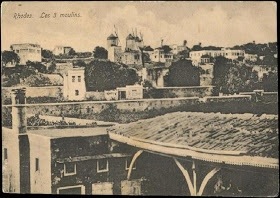
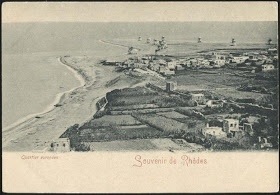
Σπάνιες φωτογραφίες της Ρόδου 1882-1900
Η Ρόδος του χθες
μέσα από την συλλογή του
Χρήστου Η. Χατζηαλεξίου…
1890 μια άποψις της Κολωνας
1882 Πανόραμα της Ρόδου (από τις πιο σπάνιες κάρτες που κυκλοφορούν) ένα άδειο απέραντο τοπίο
1900 ΡΟΔΟΣ παλιά πόλη φαίνονται και οι τρεις Μύλοι του Φάρου


The National Hellenic Museum, which opened its new 40,000-square-foot facility on Halsted Street in Chicago’s Greek Town in December 2011, is the first and only major museum dedicated to chronicling the entire Greek story: the path from Greece to the United States, to becoming American, to the Greek contribution to the American historical landscape and culture. Presently, two exhibits curated by Bethany Fleming, Curator of the Museum, celebrate the Museum’s first year on Halsted Street, “The Spirit of the Marathon: From Pheidippides to Today”, and “American Moments: The Legacy of Greek Immigration”.

The Museum has been in existence for 30 years, having been established in 1983, but the new museum is an $18 million super facility with interactive exhibits, children’s education center, research library, oral history center, gift shop, special events hall, and rooftop terrace, and, it has a super new Director, as well, Connie Mourtoupalas. “This is something I really love doing,” Ms. Mourtoupalas told the GN. “The Museum is not only about the Greek-Americans of Chicago or of Illinois, but it is a national repository of everything that relates to Greek immigration, and then to the life and history of the communities and its members and what they have contributed to America in general. Because the way we view this is that it is not just Greek American history, its American history.”
John Calamos Sr., CEO and Global Co-Chief Investment Officer of Calamos Investments and Chairman of the Board of the National Hellenic Museum concurred with this, saying “The National Hellenic Museum is valuable in that it conveys the stories of Greek immigrants as they came to America, worked hard and relied on their value system to achieve the American dream. This is not just a story for and about Greeks, however, it is a story for all Americans.”
Mr. Calamos, who is very concerned about the young generation and their knowledge of history, feels that the Museum is of great importance in the education of the new generation. “The Museum has an important opportunity to motivate young people and educate them about history and the contributions of Greek Americans,” he said, with the warning that “If we don’t preserve this history now, it will be lost forever. We need to give the strength of our heritage to our children.”
The National Hellenic Museum a valuable way to preserve and share Greek history, but it serves as a cultural center, as well, Calamos added, “It’s important to note that while the Museum is located in Chicago’s Greek Town, it has a focus that is national and even international. I feel strongly that in order to know where we’re going as a society and as the Greek community, you have to know where you’ve been.”
And Greek Town, the Greek community, and the Museum are a great inspiration to Ms. Mourtoupalas. “When I came here and saw this building, I was just amazed, and I was very moved,” she said with emotion, “Nobody had done something like this; the community here had the vision and the foresight…. they really saw the need for a national home for the Greek story, and moved ahead little but little by little… they all stuck together and some people put themselves out on a limb; they gave a lot of money, they put aside their professions for some time and made sure that it was built.”
Ms. Mourtopalas hasn’t worked at an in-house museum before but it seems clear that she is eminently qualified to do so, as a Greek-born Greek American and having worked for 16 years at the Embassy of Greece in Washington, DC, where she served as Cultural Attaché, initiating, developing and managing the Embassy’s cultural and public outreach programs and serving as Public Affairs Advisor to the Ambassador, establishing relationships with the U.S. Congress and Administration, major media outlets, the diplomatic community, think-tanks, museums, cultural centers, universities and Greek American organizations nationwide.
Enthusiastically, Mourtoupalas describes the Museum as “state of the art, 40,000 square feet. Incredible exhibit space, wonderful spaces for events, archival section, library, recording studio for oral histories, temperature-controlled storage space, an incredible, big, education center that accommodates 80 students at a time–we offer Greek classes here–and workshops for kids relating to our exhibits.
Furthermore, the turnout is terrific, “It hasn’t even been a year since the museum opened; as of May 6,000 kids from the Chicago public schools had come through, and by now, it’s probably close to 11,000. The Museum has programs relating to the exhibits. The kids come in and do arts and crafts, as they did for our show this August, ‘Gods, Myths, and Mortals’.”
“Right now, our exhibit, ‘The Spirit of the Marathon: From Pheidippides to Today’, which was sponsored by the National Hellenic Society, tells the story of what is now a ubiquitous event. Everyone knows what a Marathon is… millions of people participate in them, but who knows the history, what inspired it? This show explores the history, culture and impact of the Marathon.” Ms. Mourtoupalas explained that this was designed to be a traveling exhibition. “When it goes to New York we will get rid of the last panel shown here–the Chicago Marathon, and we will design a panel for the New York Marathon, for the Boston Marathon, Atlanta…and so on, for different cities.”
“Our exhibit ‘American Moments: The Legacy of Greek Immigration’, is very moving and very educational–everything we do is educational–and it presents the history of Greek immigration to the United States from an objective point of view. We focus on the 1800’s and later,” said Mourtoupalas, going on to detail “some incredible stories of early Greek immigrants who made an impact on American history and society,” such as George M. Colvocoresses, a survivor of the 1822 Chios Massacre who became a United States Naval Officer commanding the Saratoga in the American Civil War (and winning several definitive battles against the Confederates) then a lead member of the U.S. Exploring Expedition, exploring the Pacific Ocean; John C. Zachos and Photius Fisk, orphans of the Greek War of Independence who had a particular interest in helping slaves and the uneducated; Michael Anagnos, a supporter of the Cretan Revolution against the Ottomans whom American Philhellene Samuel Gridley Howe hired as an assistant and who eventually became the Director of the Perkins School for the Blind, where led to the family of a blind girl, Helen Keller, by Alexander Graham Bell, Anagnos sent his graduate, Anne Sullivan, to help the young girl, who went on to graduate from the Perkins School and become a legendary speaker and activist.
“The exhibition begins with the first really large wave of immigration, the mass migration of the 1890’s, the European Depression; just like now, Europe was in a depression, and some arts of the US weren’t doing much better, so in 1893, Prime Minister Harilaos Trikoupis declared bankruptcy for Greece,” said Ms. Mourtoupalas, drawing a parallel with today, and going on to describe in detail the historical events the exhibition illustrates, such as the occupations that Greeks took, naming among others, mining, sponge diving, “anywhere they could find work”. Ms. Mourtoupalas, whose grandfather’s foustanella is included in the exhibit, pointed out that as the well as the foustanella, some of the Greek arrivals to Ellis Island were actually wearing the heavy goat hair capes worn in Greece at the time.
Addressing the question of how the public can support the Museum’s endeavors, Ms. Mourtoupalas said, “Joining, or giving a Museum membership as a holiday gift. People can make a donation in someone’s memory or participate in the Legacy Brick program; document a journey, celebrate a special occasion, or memorialize a loved one, and the brick will be on permanent display by the main entrance of the National Hellenic Museum.”
She reports that there are original ideas, as well. “It’s amazing how people find ways to help. Recently there was a request, when a loved one died, to make a donation to the Museum instead of sending flowers. Coming to visit, is an important way; Chicago is a worthwhile trip, a great trip for the holidays. It’s a beautiful city. Now the spectacular Jaharis galleries at the Art Institute of Chicago are an additional attraction… and Greek Town is a destination. And you can bring your kids. On December 15 we are planning a wonderful Greek Christmas for families. There will be programs for children: we will have the kalanda, and traditional breads and desserts. There will be storytelling… stories about the kalikantzari!… and there will be dancing…”
For more information go to: http://www.nationalhellenicmuseum.org
Source: News

Lava waterfalls: spectacular vision of volcanic lava flowing into the ocean off Hawaii. Photo: Lava Ocean Tours
THIS is not a Hollywood set. It is actual lava cascading into the ocean. Watch incredible video footage of this amazing natural event in Hawaii at the foot of this article.
For the first time in nearly a year, lava is flowing into the ocean from Kilauea volcano in Hawaii.

Lava waterfalls: spectacular vision of volcanic lava flowing into the ocean off Hawaii. Photo: Lava Ocean Tours
And a tour operator is cashing in on the spectacular.

Lava waterfalls: spectacular vision of volcanic lava flowing into the ocean off Hawaii. Photo: Lava Ocean Tours
Lava Ocean Tours say the lava has been pouring into the ocean daily now for a couple of weeks.

Lava waterfalls: spectacular vision of volcanic lava flowing into the ocean off Hawaii. Photo: Lava Ocean Tours
Shane Turpin of Lava Ocean Tours says they have ramped up tours and are seeing a huge increase in the number of people booking trips.

Lava waterfalls: spectacular vision of volcanic lava flowing into the ocean off Hawaii. Photo: Lava Ocean Tours
Tourists from all over the world, even Hollywood actors have come to see the spectacular event.

Lava waterfalls: spectacular vision of volcanic lava flowing into the ocean off Hawaii. Photo: Lava Ocean Tours
Scientists are not sure how long the lava will keep flowing into the ocean but there are plenty queuing to see the natural wonder.

Lava waterfalls: spectacular vision of volcanic lava flowing into the ocean off Hawaii. Photo: Lava Ocean Tours

Lava waterfalls: spectacular vision of volcanic lava flowing into the ocean off Hawaii. Photo: Lava Ocean Tours

Lava waterfalls: spectacular vision of volcanic lava flowing into the ocean off Hawaii. Photo: Lava Ocean Tours

Lava waterfalls: spectacular vision of volcanic lava flowing into the ocean off Hawaii. Photo: Lava Ocean Tours
Source: News

Greece’s PM believes he will soon be able to declare success in his country’s debt buy-back plan.
GREECE’S prime minister says he’s convinced he will soon be able to declare success in his country’s huge debt buy-back plan.
Greek authorities have set a $US30 billion euros ($A28.75 billion) target for a complex financial operation to buy back some of the country’s huge debt pile at reduced prices that began on Monday.
Speaking after talks in Bavaria with Bavarian state premier Horst Seehofer, Antonis Samaras told reporters on Sunday he was confident of a positive outcome.
“I believe or I am firmly convinced that on Monday or Tuesday, we will actually be able to say with certainty that things have gone well,” he said.
The operation aims to cut the national debt by around 20 billion euros and is vital to qualify for more financial aid from the European Union and International Monetary Fund.
Samaras also said the debt buy-back scheme would be crucial to get the debt-wracked country back on track and said he wanted to put the past behind him.”The only thing I want to look to is the future. My presence here brings hope to the Greek people,” he said.
Members of Seehofer’s Christian Social Union (CSU), up for re-election in nation-wide polls in September, have been some of the harshest German critics of Greece.
At the height of the crisis earlier this year, several CSU members called for Greece to leave the eurozone, often sending markets into a tailspin.
The party, a junior coalition partner in Chancellor Angela Merkel’s centre-right government, has since toned down its rhetoric as Samaras has pushed through a raft of reforms to unlock vital international aid.
And Seehofer stressed that “we now have a situation in which we can work well together”, adding “the future is now set up well”.
He said the two leaders had agreed to task their ministers with finding ways to deepen ties between Greece and Bavaria after a traditional regional dinner featuring oxtail soup and apple strudel with Greek yoghurt.
The Greek leader had set the tone for the meeting by telling the local Muenchner Merkur on the eve of the talks that he was “coming as a friend”.
“We are partners who share the same values and ideals,” he said.
 GREEK WORLD MEDIA