

Η Τάμτα είναι μία τραγουδίστρια που της αρέσει να αλλάζει συνεχώς look!
Η τραγουδίστρια, η οποία θα εμφανίζεται με τον Νίκο Βέρτη, φωτογραφήθηκε για την αφίσα του σχήματος και σε μια από τις πόζες της είναι σχεδόν αγνώριστη.

Η Τάμτα είναι μία τραγουδίστρια που της αρέσει να αλλάζει συνεχώς look!
Η τραγουδίστρια, η οποία θα εμφανίζεται με τον Νίκο Βέρτη, φωτογραφήθηκε για την αφίσα του σχήματος και σε μια από τις πόζες της είναι σχεδόν αγνώριστη.

Η Άννα Βίσση στο ρόλο της «Ροζάνας» επιστρέφει με την περίφημη ροκ όπερα, «Δαίμονες»!
Η όπερα παρουσιάστηκε πρώτη φορά το 1991, δηλαδή πριν από 22 χρόνια και επιστρέφει ξανά με την Άννα Βίσση φυσικά πρωταγωνίστρια!
Πάντως στην φωτογράφηση που έκανε η τραγουδίστρια είναι πιο λαμπερή από τότε, από το 1991, δεν συμφωνείτε;

Η Ελευθερία Ελευθερίου είναι στεναχωρημένη, αφού δεν πρόλαβε καλά καλά να φτάσει στην Θεσσαλονίκη και ξέχασε σ’ ένα ταξί ένα πορτοφόλι, που είχε αγοράσει ως δώρο σ’ ένα πρόσωπο της οικογένειας της.
Η τραγουδίστρια έκανε το γεγονός γνωστό μέσω του Twitter της.
Μάλιστα, μίλησε στην “Μεσημεριανή Μελέτη” και τόνισε πως δεν ήταν η χρηματική αξία του πορτοφολιού, αλλά η συναισθηματική του.

Χαρά και ευτυχία για την Σίσσυ Χρηστίδου και τον Θοδωρή Μαραντίνη.
Ένα νέο μέλος προστέθηκε στην οικογένειά τους. Ο αδερφός της Σίσσυς, ο Γιάννης έγινε πατέρας.
Η σύζυγός του έφερε στον κόσμο ένα υγιέστατο κοριτσάκι και όλη η οικογένεια πλέει σε πελάγη ευτυχίας.
Περήφανη θεία δήλωσε η Σίσσυ Χρηστίδου και είναι ξετρελαμένη με την μικρούλα.
Η Σίσσυ και ο Θοδωρής ταξίδεψαν ως την Θεσσαλονίκη και έμειναν εκεί για τέσσερις ημέρες.
Source: Steve Georganas
This is an update on my latest actions regarding live exports.
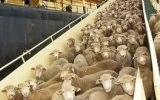
Like many Australians, I have been very disappointed in recent weeks to read yet more reports footage of animals continuing to suffer overseas after being exported from Australia, including in Kuwait and Pakistan.
You might be aware that I’ve been fighting to end live exports for some time now.
Back in March I took your message to the House of Representatives and told my colleagues in the parliament that it is time to end live exports.
I told them that the only way to ensure our animals are treated in accordance with Australian welfare standards is to keep them here in Australia. I told them that it is time we move from a live export trade to a fully onshore meat processing. And I told them that we need to do this now not just because it makes economic sense, but because it is the right thing to do. You can read my speech on the official Hansard record or at the bottom of this email.
Since then, things have changed. There is a new quality assurance system which is supposed to keep our animals from harm, help us track their movements, and ensure their welfare. But animals are still being mistreated. We saw sheep in Kuwait which should never have been there being brutally slaughtered. So last week, I moved a private member’s motion calling on the Minister to launch a full scale review of the new system to see what’s going wrong, and how we can fix it.
Here’s a copy of the motion I submitted:
PRIVATE MEMBERS’ BUSINESS
Notices given for Thursday, 20 September 2012
MR GEORGANAS: To move—That this House:
1) Condemns in the strongest possible terms the cruel slaughter of Australian sheep at the Al Rai meat market in Kuwait City
2) Supports the urgent investigation into the matter by the Department of Agriculture, Fisheries and Forestry
3) Demands the strongest possible penalties to be imposed for any found contravention of the current provisions
4) Calls on the Minister to review the Exporter Supply Chain Assurance System to ensure its integrity, efficacy and adequacy
5) Notes the level of public concern in the community about live exports in general including the widely held desire for a total shut down of the industry
6) Recognises the economic and employment creation potential of expanded meat processing in Australia
Moved: Steve Georganas MP
Seconded: Jill Hall MP
You can see that I called for a total review of the current system. That’s because even just one more animal being treated with such brutality to me, is one too many.
I’ve also pointed to the possibilities for Australia’s economy if we look toward a future without any live export at all.
And I also wanted to acknowledge you, and the voices of so many other Australians, for the time you have taken to contact me on this important issue.
Please rest assured I will continue to lobby my fellow parliamentarians for an end to the live export industry. In the meantime, click through to my Facebook Page and follow me on Twitter for all the latest updates. If there’s anything else I can do to help you, don’t hesitate to contact me.
Yours sincerely,
Steve Georganas MP
Federal Member for Hindmarsh
2/670 Anzac Hwy, Glenelg East 5045
Tel: 08 8376 9000 Fax: 08 8376 7888
RG-54 Parliament House, Canberra
Tel: 02 6277 4415 Fax: 02 6277 8438
Website: http://www.stevegeorganas.com
House of Representatives – Hansard – Tuesday 13 March 2012 – Live Animal Exports
Mr GEORGANAS (Hindmarsh) (22:15): On behalf of many constituents in my electorate I rise to convey to the House their overwhelming desire for an immediate end to live animal exports. Many constituents have contacted me in the last few weeks since the dreadful scenes we saw on the ABC. I have received hundreds of emails from people across my electorate who are angry and upset at seeing more footage emerge of animal cruelty overseas. They have written to me to express their frustration at seeing cattle in abattoirs overseas not only failing to be stunned but actually being cut up while still alive. This was horrendous vision for any Australian viewing it. It was terrible to watch and we can only imagine the pain and suffering those animals endured.
Whilst we have not yet confirmed the origin of those animals, the message was clear—you just cannot guarantee Australian welfare standards in a country that is not Australia. I think anyone who saw the footage would be horrified. There is absolutely no excuse for that kind of cruelty. I am glad that the Minister for Agriculture, Fisheries and Forestry reacted swiftly by launching an investigation. We spoke with the minister’s office, who confirmed that they had launched an investigation. The frustrating thing is that, if we did not have live exports, there would be no need for such an investigation.
Last year when the issue first arose I was one of the first to call for a ban, as was the member for Wills, who is here in the chamber. We did succeed in having a temporary ban imposed, but of course live exports soon resumed despite a lot of lobbying from me, the member for Wills and many other members of the Labor caucus. We now find ourselves in a distressing groundhog day situation. There have been some improvements, and I am pleased that there have been and I am glad the minister has put them in place. Before, we did not have a way of tracking where cattle had come from and now, with new supply chain standards, we do. But this is no excuse for the way animals are being treated, based on the footage we saw on the ABC a couple of weeks ago.
There have been improvements in aspects of the animals’ welfare, but the fact remains that the only way to guarantee the welfare of Australian animals is to keep them in Australia. It is time to bring our meat processing fully onshore. Let us turn a bad thing into a good thing. Let us stop exporting cattle and start processing them here in Australia and value adding. Let us turn a basic product into a premium, value added one. Let us do that not only because it makes absolute economic sense but because it is the right thing to do. I do not agree with those assessments that say a ban on live exports will put cattle producers out of business. I do not believe that for one moment. Just think about the opportunities that fully onshore meat processing presents for jobs—it means more jobs in regional communities and regional areas. It will mean more money staying in the local economy rather than going offshore. New Zealand has been able to do this. There will be a big expansion in our chilled and frozen meat exports, which could open up new markets overseas. It will mean that Australians can be satisfied that our animals are treated humanely when they are slaughtered here in Australia.
Just last weekend Minister Emerson—we saw reports of this in the Australian newspaper—was talking about the fantastic opportunities we have as a nation to become the world’s food bowl, particularly in terms of the demand for meat. He spoke about the increasing demand for beef and lamb in China and other countries where the middle class is rapidly expanding and the appetite for animal protein also continues to increase rapidly. The time is right to make this transition—it is up to us to seize the opportunity with both hands. The message from my electorate and the wider community is crystal clear: end live exports now.
Source: SMH
Get Great Savings w/ Low SMSF Fees! Apply On Esuperfund & Take Control.
 Up in flames … burning firebombs form a backdrop to a riot officer during a demonstration in Athens on Wednesday. Photo: AFP
ATHENS: After a period of relative calm, European markets shuddered once again as protests erupted across Greece and demonstrators surrounded the Spanish parliament for a second day to protest against the austerity program of the Prime Minister, Mariano Rajoy.
Greek riot police clashed with hundreds of hooded youths hurling petrol bombs on Wednesday, as tens of thousands of striking workers rallied against a latest round of austerity measures in Athens.
On Tuesday in Spain tens of thousands of demonstrators besieged the parliament over the austerity measures. Last week more than half a million people marched in cities across Portugal to protest against an increase in social security contributions, and a million marched in Barcelona calling for Catalan independence.
The Greek clashes took place after more than 50,000 people marched to parliament demanding the government ignore the latest demands of the country’s creditors for additional cuts to salaries, pensions and benefits. Riot police fired tear-gas and pepper spray against demonstrators who used marble stones and bottles as weapons and set fire to garbage bins and portable kiosks in central Syntagma Square.
One group could be seen setting fire to trees in the National Gardens, causing flames and black smoke to fill the skies above the parliament.
The nationwide strike, called by the country’s two biggest private and public sector unions, is the first such action since the country’s conservative-led coalition government was formed in June.
The 24-hour walkout affected schools, pharmacists, customs workers, ports and government offices. Museums and major archaeological sites turned tourists away. Shops were closed and ferry services suspended. More than a dozen domestic and international flights were cancelled or rescheduled after air traffic controllers called a three-hour stoppage. Petrol stations remained shut for most of the day and hospitals operated on emergency staff as doctors joined the strike.
Among the strikers was Babis Vasiliadis, a hotel chef who was recently left unemployed. He said: ”This is not just about having a decent job and making enough money to feed your family – it is about the right of every citizen to live a decent life.”
Marching nearby, 58-year-old pensioner Stavroula Zervea, said she no longer can survive after her pension was slashed by more than a third. ”I suspect it will only get worse – but the question is how much more tax hikes can the Greek people handle?” she said.
Hours before demonstrators hit the streets, the Prime Minister, Antonis Samaras, and his Finance Minister, Yannis Stournaras, reportedly hammered out a deal on the $15 billion package of spending cuts, along with a further $2.6 billion in taxes, demanded by the country’s international lenders, the European Commission, the European Central Bank and the International Monetary Fund.
The bulk of the cuts will affect wages, pensions and welfare benefits, putting renewed pressure on the country, which is in the fifth year of recession and has seen unemployment soar to more than 24 per cent.
Source: Times
With spiking tuition costs, insurmountable loan balances, and the unemployment rate for recent college graduates hovering around 53%, it’s clear that a college education hasn’t gotten the best rap lately.
Despite the ongoing financial woes across the globe, though, many think that college is still worth the investment.
A new study shows that we’ve continued to flock to institutions of higher learning, enrolling at record rates over the past few years.
Not surprisingly, the percentage of adults with degrees soared highest in developed nations, reaching 30% in 2010. But which of these nations can boast the status of most educated?
Based on a study conducted by the Organization for Economic Cooperation and Development (OECD), 24/7 Wall St. compiled a list of the 10 countries with the highest proportion of college-educated adult residents. but topping the charts is Canada — the only nation in the world where more than half its residents can proudly hang college degrees up on their walls.
In 2010, 51% of the population had completed a tertiary education, which takes into account both undergraduate and graduate degrees.
Canada commanded the top spot in the last study in 2000, but even still has shown serious improvement.
A decade ago, only 40% of the nation’s population had a college degree.
Snagging the number two most-educated spot was Israel, which trailed Canada by 5%. Japan, the U.S.,
New Zealand and South Korea all ranked with more than 40% of citizens having a higher-education degree.
The top 10 most-educated countries are:
1. Canada
2. Israel
3. Japan
4. United States
5. New Zealand
6. South Korea
7. United Kingdom
8. Finland
9. Australia
10. Ireland
Source: NeosKosmos
By Dean Kalimniou

“The power of things inheres in the memories they gather up inside them, and also in the vicissitudes of our imagination, and our memory of this there is no doubt.” Orhan Pamuk
Where do old photographs go when the people they depict and those who remember them are no longer extant? Are they as perishable as the memories they supposedly encapsulate or do they become the memory itself?
In the Museum of Innocence, Nobel Prize winning author Orhan Pamuk examines the concept of memory and its objectification by relating an account of the obsessive love that Kemal, a wealthy businessman, bears for Fusun, a lower class shop girl.
Oblivious to his own selfishness, Kemal first refuses to give up his fiance to be with the love of his life, and then becomes an obsessive collector of the artefacts of his life with her.
This is a relationship that is both lengthy and increasingly bizarre as Kemal objectifies Fusun and becomes a collector intent on satisfying his emotional obsession with his object of desire rather carrying on a healthy human relationship with his beloved.
At the close of the novel, Kemal is founding a museum wherein the artefacts he collected that relate to his beloved will be exhibited.
Here in Melbourne, artefacts attesting to times long forgotten lie, largely forgotten in various unsuspected places. For example, in the file of one of my clients, I once found the cheque book and minute memoranda of one of our more ancient and largely defunct pre-war community organizations.
A cursory glance of such records, inscribed in beautiful copperplate handwriting, do much to illuminate a particularly obscure period in our early communal history.
A particularly avid collector of such artefacts is the indefatigable proprietor of the renowned Greek restaurant Philhellene and astounder of the native populace by the poise of his mustachios, John Rerakis.
The walls of his restaurant are wallpapered with old and rare photographs, gravures and other visual media that allude to times past, not only in Greece but also in Melbourne itself and which provide the patron with a fascinating crash course in contemporary Greek culture.
One of the pictures that adorn his walls is the one featured in this diatribe. It is a picture that John Rerakis was given by stalwart Greek dance teacher Olga Black. It truly is a masterpiece, with light and shadow accentuating the youthfulness, optimism and vitality of its subjects, yet at first glance it appears to be what it is: an old photo of some traditionally clad Greek dancers, something to look up from your meal of lago stifado, to appreciate for a few moments, only to re-commence immersing yourself in the ecstasies of the aforementioned dish. Yet for unsuspecting patrons, a chance glance at such photographs, have the capacity to prove life-changing. Enter Menelaos Stamatopoulos, who, looking up absent-mindedly from his Philhellenic plate of comestibles a few weeks ago, was shocked to arrive at the realization that the smiling and dapper young gent pictured second from the right was a youthful portrayal of his now eighty seven year old progenitor, Odysseus. Moved beyond belief and astounded that he had never seen this photograph of his father before, he arranged a small surprise for him, inviting him to dinner at the restaurant and seating him directly underneath the photograph. When the venerable, hearty but hale octogenarian cast eyes on the photograph and beheld himself in his prime, resplendent in full foustanella, fashionably fastened at the waist, he wept. A few weeks later, I am seated opposite both Menelaos and Odysseus at Philhellene restaurant. With trembling hands, Odysseus lovingly opens an envelope and fingers the black and white photographs that spill out from it. They too, are photographs of a suave and debonair Odysseus, resplendent in full regalia, ensconced among other suitably attired gents and demoiselles, posed in various dancing attitudes. The play of light and shadow causes their outline to be juxtaposed crisply against the background, granting them a nineteen forties movie star aura of glamour. The reason for the fortuitous capturing of these moments in such a skilful manner can be discerned by flipping to the reverse of the photographs. There we see stamped indelibly in purple ink: “Property of the Herald.” “These photographs were taken in 1953,” Odysseus explains. “I had just arrived in Melbourne and was feeling lonely, so I joined the Olympic Dance Group, a way of meeting new people. Of the girls that you see in the photos, at least two are Australian. Back in those days, some of the Australian girls who had married Greek men would learn to dance and perform with us. Other Australian girls had no connection with Greece other than an interest in the country after the War.” This statement, it seemed to me, tended to do much to restore balance to a somewhat one-sided community myth that would have the pre-nineteen sixties broader Australian social context look disparagingly upon migrants and especially their culture to the extent where openly being Greek was socially impermissible. The stereotype of Greek men marrying Australian women who were invariably opposed to manifestations of Greek culture and thus excluded their men-folk from the community also seemed to be in part, contradicted. Such bias apparently did not exist among the smiling young Australian ladies of the photograph who seem less embarrassed to don Greek traditional costume then some of their Greek-Australian counterparts some six decades later. Further belying the myth that Australia was largely not interested in the migrant cultural experience prior to the advent of the official policy of multiculturalism, is the fact that the series of photographs have been taken by mainstream Australian print media. Odysseus takes great pains to point out that the bulk of the performances undertaken by the young dance group were for Australian audiences, with the group even performing publicly at festivals organized to welcome the advent of the 1954 Olympic Games to Melbourne.
It appears that, possibly because of the novelty value, that exhibitions of Greek culture, such as they were, and possibly owing to their novelty and the sympathy Greece elicited in the hearts of many Australian returned servicemen at the time, were much more integrated within the mainstream and captured more interest than many do now, our primary focus being our own entertainment. As I gazed at the photograph and listened to the venerable Odysseus relate fascinating stories of his life, I marvelled at the swiftness of the passage of time. The young man, full of promise, optimism and raw sexual energy is now a mellow yet sprightly grandfather. Many of the smiling youths of the photograph are no longer with us and when the last of them go, one of the fading reminders of their brief sojourn on this earth will be a photograph on the wall of a restaurant, interesting, evocative but largely incomprehensible to those who have not yet embraced oblivion. As Odysseus talks, I notice that the street-facing window of his restaurant, John Rerakis has strategically placed some old suitcases that have an unknown lady’s name painted on them and then that singular word «ΠΑΤΡΙΣ,» that evokes so many memories and causes an outpouring of emotion from first generation migrants, upon its utterance. “I bought it at a local second hand shop,” Rerakis explains, with the relish of a connoisseur. Then his voice plunges and becomes sombre. “A wooden stefanothiki came with it and it was part of a deceased estate. Just imagine. This old lady kept the suitcases she arrived in Australia with and of course, the stefana with which she was married. And they ended up in an op-shop. I display the suitcases so that Greek and other patrons alike always are reminded where we came from. A half remembered early childhood sitting on old wooden milk-crates and surrounded by rusty farming implements from the fifties, old photographs, printed tickets to dances long ago forgotten and being told stories of our family’s life on the farm in Bulla in the thirties suffice to convince me that it is not enough for us to attempt to understand and draw our identity solely from the motherland, ossifying an idealized interpretation of its traditions into a liturgy of aspirant cultural continuity. A whole way of life, the time of Innocence, of the valiant first generation struggling to acculturate and settle in Australia, is disappearing before our very eyes, its values considered quaint and irrelevant and its accoutrements, hoarded lovingly in the polished drawers of nineteen sixties furniture, being discarded in the trash or adorning the shelves of op-shops around Melbourne. As we lose this value insight into our past, its labyrinthine permutations as exemplified by Odysseus Stamatopoulos’ experiences, we lose a veritable part of our souls. John Rerakis valiant anthropological endeavours to preserve the material evidence of our past should act as a clarion call to our entire community. It is high time that a Museum of our own Innocence is established, there to house the multitude of ephemera and memorabilia that testify to the vibrancy and cohesiveness of our community during its most golden period. A festival program, tattered and replete with advertisements for 1980’s business long since closed down, old props from school plays, report cards from Greek schools, all these things form as much a part of our cultural heritage as the Parthenon. And in pride of place over the foyer there should hang, the photo of Odysseus and his merry crew of dancers – a reminder to the visitor of our innate optimism, permitting one to ponder just how far we have departed from our perceived communal path and whether the future roads will take us. *
The grandfather of cervical cancer prevention
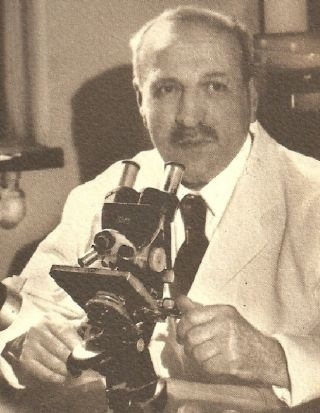
This year marks the 50th anniversary of the death of Greek medical pioneer Georgios Papanikolaou – the inventor of the Pap smear.
Every year, an immeasurable amount of women around the world engage in one of the most effective weapons they have for the fight against cervical cancer.
That weapon is a Pap smear examination – a screening that detects cervical cancer in its most early stages. Since World War II, the Pap smear examination has become the most widely used cancer screening method in the world and the test that itself can also detect pre-cancerous cells in the cervix making it an invaluable tool for cervical cancer prevention.
Thousands of women around the world owe their life to the man who invented the Pap smear – Greek pioneer Georgios Papanikolaou.
The Pap smear was named after its inventor Georgios Nicholas Papanikolaou. Born in Kymi, Greece on May 13, 1883, George Papanikolaou had three siblings.
His father, Nicholas, was a doctor.
His mother, Maria, loved music and literature. As a young man, Dr Papanikolaou went to the University of Athens in 1898 and majored in Music and Humanities.
He then followed in his father’s footsteps and attended medical school. After graduating with a perfect “A” average in 1904, Dr. Papanikolaou began his medical career in the Greek military as Assistant Surgeon.
Dr. Papanikolaou left the military in 1906 and, after a brief stint caring for patients at a leper colony in Greece, he began postgraduate study at the Zoological Institute in Munich, where he received a Ph.D. In 1914, Dr. Papanikolaou secured a position in the Anatomy Department at the Cornell University Medical School in New York. In 1920, he began his study of vaginal cytology (the study of the microscopic appearance of cells).
Over time, Dr. Papanikolaou became very familiar with the normal cytological changes that occur in cervical cells. This familiarity allowed him to make what he called one of the most thrilling experiences of his scientific career; his first discovery of cancer cells in a smear from of the uterine cervix.
Dr Papanikolaou knew malignant cancer cells could be viewed under a microscope after reading a book by Walter Hayle Walshe in 1843 regarding lung diseases.
Papanikolaou began testing the vaginal fluid of guinea pigs before he tested human women.
In 1923, he explained to an audience of physicians that smearing the vaginal fluid on a glass slide would enable the cells from the female reproductive system to be analysed.
When he began testing actual women, by chance one of the women tested positive for cervical cancer. Discovering the cervical cancer cells with the use of his procedure was a thrill for Papanikolaou and it turned out to be a medical breakthrough.
In 1928, Dr. Papanikolaou first presented his findings that uterine cancer could be diagnosed by means of vaginal smear in the paper, New Cancer Diagnosis.
Over a decade passed before the collaboration between Dr Herbert Traut, a gynaecologist and pathologist, and Dr Papanikolaou that would validate and scientifically prove the potential of the vaginal smear for the diagnosis of Cervical Cancer.
Their collaboration involved the taking regular vaginal smears of all women patients at Cornell’s Hospital. The study provided the basis of the book, Diagnosis of Uterine Cancer by the Vaginal Smear.
In 1943, when Diagnosis of Uterine Cancer by the Vaginal Smear was published, Dr. Papanikolaou’s work quickly became widely known and accepted.
The book describes the process of preparing a cervical smear and the cytologic changes that are seen as cervical cells change from normal, to pre-cancerous, to cancer.
Papanikolaou died in 1962 just before the opening of the Papanikolaou Cancer Research Institute at Miami University. He was awarded the Albert Lasker Award for Clinical Medical Research in 1950. 2012 marks the 50th anniversary of the death of this influential cytologist.
On the 130th anniversary of the birth and 50 years since the death of the outstanding Greek scientist George Papanikolaou, the Odessa branch of the Hellenic Foundation for Culture is holding a series of activities and events, in collaboration with the municipality of Odessa, the city’s Department of Health, and the Odessa National Medical University.
The events include a flatbed photo exhibition, titled The Great Giver of Life – George Papanikolaou (1883-1962), featuring photographs, letters and other memorabilia from the life and work of the scientist who changed women’s lives, along with the screening of a 2008 documentary, lectures, master classes and roundtable discussions.
Today, Pap smears are considered one of the most successful and effective forms of cancer screening.
The Pap smear is used to check changes in the cervix – the neck of the womb – at the top of the vagina. It is a screening tool to find early warning signs that cancer might develop in the future.
The Pap smear is a simple procedure. Cells are collected from the cervix and placed (smeared) onto a slide.
The slide is sent to a laboratory where the cells are tested for anything unusual. If abnormal changes are found at screening, further tests will be done to see if treatment is needed.
The Pap smear is not for diagnosing cancer, but rather, for finding early changes which might become cancer.
All women with a cervix who have ever had sex at some time in their life are at risk of cervical cancer.
About half the new cases of cervical cancer diagnosed each year are in women over 50 years of age. More women over 50 years of age die from cervical cancer because their cancer is diagnosed later when treatment is more difficult.
Regular Pap smears every two years can help prevent up to 90 per cent of the most common type of cervical cancer.
 GREEK WORLD MEDIA