NSW to fund grants to help young people and migrants celebrate Anzac Day

Grants for migrant communities to celebrate Anzac spirit

The NSW government has introduced grants for young people and multicultural communities who wish to take part in Anzac events. Minister for Citizenship and Communities Victor Dominello announced the Anzac Community Grants program will help schools, community organisations and veterans’ groups to raise awareness of the Anzac legacy in the lead-up to the Centenary of the First World War (2014-2018).

“With more than a quarter of NSW residents being born overseas, we need to ensure that knowledge and respect for Anzac traditions are passed on to all young Australians,” Mr Dominello said.
“On Remembrance Day it is important that all Australians, including people from a multicultural background, embrace the Anzac spirit.”

Grants can be given for up to $5,000 from ex-service organisations, community groups, schools and other educational institutions, local government, museums and historical societies.

“These grants will ensure that the people of NSW, through commemorative and educational initiatives, can share in and honour the enormous sacrifices Anzac diggers have made throughout Australia’s military and peacekeeping history.
“We are particularly keen to support innovative projects that bring people of diverse backgrounds together, or that use the web and social media to bring the Anzac story into the 21st century,” Mr Dominello said.

“A primary school may have an idea to document families identified on the local war memorial, or an ex-service association may want to help veterans share their stories with people who have just arrived in Australia”.

Applications close on Friday, 8 March 2013. For more information and to apply, visit http://www.communities.nsw.gov.au.

He took the road less travelled but Dionysus will now be right at home

Source: SMH

AS HEROIC gods go, Dionysus would fit right into Sydney: god of the grape harvest, bringer of culture and ritual ecstasy, he was the mythological inspiration for Alexander the Great, the 4th century BC Macedonian king and spreader of civilisations who is being honoured with his own blockbuster exhibition in our city on Saturday.

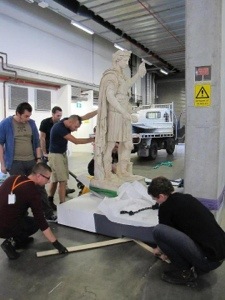
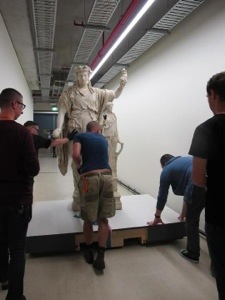
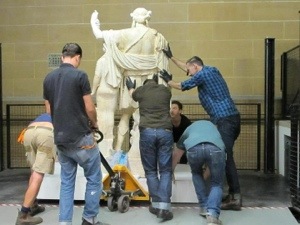
Dionysus, or at least his marble likeness cast in Rome in the second century AD based on the Greek BC original, arrived at the Australian Museum last week.
His tall, bespectacled courier, Andrey Nikolaev, looked a little weary after almost a week accompanying Dionysus over rail, sea and air only for museum staff to finally decide the two-metre tall, 1.5-tonne statue, which can only be moved by the base, was too fragile to part so soon from the wooden crate.

St Petersburg, home of the statue, has no cargo planes, so beginning on November 7, Nikolaev had chaperoned Dionysus by train to Helsinki, then ferry across the Baltic Sea to Travemunde, Germany; another train to Amsterdam; then a Boeing 747 to Frankfurt, Mumbai and Hong Kong; and finally a second Boeing 747, arriving in Sydney on November 13. Having sat in the crate for a day or two to acclimatise on the Australian Museum’s exhibition floor, Dionysus – joined on his plinth in the 18th century by a smaller marble statue bearing a dubious likeness of Persephone or Cora, wife of the ruler of the underworld – met with approval when workers drilled away the wooden crate screws and removed the door.
Why was this god of the grape so important to Alexander the Great? ”Because Dionysus is not just the god of wine, he also is a god of inspiration,” said Anna Trofimova, the head of classical antiquities at The State Hermitage Museum in St Petersburg. ”He was the god, the Greeks believe, that brought culture to different peoples in a lot of countries.”
More to the point, Dionysus was the ”guiding star” for Alexander, who in turn brought civilisation, founded cities and spread Greek language and art from the Mediterranean to Central Asia and India. Alexander was the ”first political leader who thought on the scale of the planet”.
Whether Alexander’s death at the age of 32 was due to fever or poisoning is open to conjecture, but Dr Trofimova is certain of Alexander’s legacy.

”The dream of Alexander, and I believe in it, was unity of mankind between east and western people. His belief in civilisation, this is a great lesson for us; especially important in our days when west and east are very, very sensitive.”

The installation begins of Alexander the Great here in Sydney Museum which opens 24 November 2012

Alexander the Great: 2000 years of treasures opens 24 November 2012 http://t.co/rGK7VnS7

20121121-130230.jpg

20121121-130241.jpg

20121121-130250.jpg

20121121-130305.jpg

20121121-130314.jpg

20121121-130321.jpg

20121121-130328.jpg

WORLD COUNCIL OF HELLENES ABROAD (SAE) Media Release

ΣΥΜΒΟΥΛΙΟ ΑΠΟΔΗΜΟΥ ΕΛΛΗΝΙΣΜΟΥ (ΣΑΕ)

WORLD COUNCIL OF HELLENES ABROAD (SAE)

Δρ. Όλγα Σαραντοπούλου
Γραμματέας Παγκοσμίου ΣΑΕ

Βιέννη, 19.11.2012

ΔΕΛΤΙΟ ΤΥΠΟΥ

Την ανάγκη συσπείρωσης των δυνάμεων του Ελληνισμού εντός και εκτός Ελλάδας για την προώθηση της συνεργασίας μεταξύ της Ομογένειας και του μητροπολιτικού κέντρου, ανέδειξε η Δρ. Όλγα Σαραντοπούλου, Γραμματέας ΣΑΕ, στο πλαίσιο των εργασιών της 5ης Πανελλήνιας Σύναξης Νεότητας που διοργάνωσε το Κέντρο Ενότητας, Μελέτης και Προβολής των αξιών μας η «Ενωμένη Ρωμιοσύνη» υπό την Αιγίδα της Αρχιεπισκοπής Αθηνώ.

Η κα Σαραντοπούλου στην ομιλία της με τίτλο : «Ο Ελληνισμός της Ομογένειας», αναφέρθηκε στον τρόπο με τον οποίο μπορεί να αξιοποιηθεί το σημαντικό δίκτυο των Ελλήνων του Εξωτερικού στη προώθηση του Οικουμενικού Ελληνισμού, αλλά και τους τρόπους ανάδειξης του Απόδημου Ελληνισμού ως πολύτιμου σύμμαχου της Ελλάδας.

Ιδιαίτερη αναφορά έκανε στα επιτεύγματα των Ελλήνων του Εξωτερικού, τονίζοντας ότι η μεγάλη πρόκληση για εκείνους είναι σήμερα η διατήρηση της ταυτότητας, μέσα και από την εκμάθηση της ελληνικής γλώσσας.

Η Γραμματέας του ΣΑΕ υπογράμμισε ότι σημαντικό βήμα για την αποκατάσταση της επικοινων ίας μεταξύ Ελλάδας και Ομογένειας είναι η δημιουργία μιας αμφίδρομης σχέσης αλληλοϋποστήριξης και αγαστής συνεργασίας, κυρίως με την νέα γενιά. Ενώ αναφέρθηκε στην ανάγκη εκπόνησης μιας μακροπρόθεσμης στρατηγικής που θα αξιοποιήσει τις υπάρχουσες υποδομές στον Ελληνισμό της Διασποράς, πάντα με στόχο την στήριξη της Ομογένειας και το συμφέρον της πατρίδας.

Τόνισε δε, ότι προς αυτή την κατεύθυνση σημαντικός είναι ο ρόλος των Ομογενειακών Οργανώσεων, της Ορθόδοξης Εκκλησίας μας και του Συμβουλίου Απόδημου Ελληνισμού, αλλά και των δικτύων που διαθέτει σήμερα η Ελληνική Διασπορά, τα δίκτυα των επιστημόνων, των πολιτικών ελληνικής καταγωγής, των επιχειρηματιών, τα οποία συνιστούν μια πηγή αστείρευτου και μέχρι στιγμής ανεκμετάλλευτου πλούτου για την Ελλάδα.

Υπογράμμισε ότι η σχέση μεταξύ των Ελλήνων εντός Ελλάδος και του Ελληνισμού του Εξωτερικού μπορεί να καταστεί εποικοδομητική με την σφυρηλάτηση συνεργασιών στον πολιτιστικό και εκπαιδευτικό τομέα, αλλά και την ανάπτυξη κοινών πρωτοβουλιών για την τουριστική προβολή και την επιχειρηματική δράση προς την Ελλάδα ως σημείο αναφοράς του Παγκόσμιου Πολιτισμού.

Τέλος επεσήμανε την ανάγκη επιστροφής στα ιδανικά του Ελληνικού Πολιτισμού και της αξίες που μας κληροδότησε η Εκκλησία μας ωστε ενωμένες όλες οι δυνάμεις του Ελληνισμού να βοηθήσουν στη δύσκολο περίοδο που βιώνει η Ελλάδα.

Bill Papastergiadis has been named in the top ten lawyers in Australasia by one of the foremost legal journals, Australasian Legal Business

Papastergiadis: top ten legal mind in Australasia

Papastergiadis: top ten legal mind in Australasia
Bill Papastergiadis.

Bill Papastergiadis has been named in the top ten lawyers in Australasia by one of the foremost legal journals, Australasian Legal Business. Mr Papastergiadis came in at number ten out of the 40 lawyers in the list.

This is the third time Mr Papastergiadis has appeared in the list but first time in the top ten. As the Managing Partner of the Melbourne office of law firm Moray & Agnew, Mr Papastergiadis says his work at the law firm was recognised because its been – for a number of years – one of the fastest growing firms in Melbourne, both in terms of revenue and head count.

“We are the leading firm in Victoria for government and insurance legal work and I can say that confidently,” Mr Papastergiadis told Neos Kosmos.

“Our aim is to expand into planning, development and property and we have recently recruited who we consider the best planning and property lawyers in Victoria into our team.”

He says the firm wants to cement itself as the leading firm in this area and work alongside the largest developers and builders in the state. Moray & Agnew has 450 staff nationally, with 110 of those in Victoria.

When Mr Papastergiadis started at the firm six years ago, there were only 16 staff. “That’s a dramatic growth,” he explains, “it’s basically been 100 per cent per year; we have been doubling in growth every year”. Although Mr Papastergiadis was singled out for this recognition, he is quick to acknowledge his colleagues and team at Moray & Agnew.

“The key is surrounding yourself with good people and I am blessed to have a really good team that work with me,” he says.

“Those people have engineered the growth as much as anyone else has. They are good at what they do, they are leaders in their particular fields. They are really professional and hard working, diligent.”

Mr Papastergiadis adds that the lawyers he has bought into the firm who are of Greek background have, “contributed significantly to the fabric of the firm”. “Having a broad cultural background assists you in your dealings with people.”

Apart from his work as Managing Partner of Moray & Agnew, Mr Papastergiadis is kept busy in his role as president of the Greek Orthodox Community of Melbourne and Victoria.


=======================


Αυστραλία: Ο Βασίλης Παπαστεργιάδης μεταξύ των κορυφαίων δικηγόρων Αυστραλίας και Ασίας

Το δικηγορικό γραφείο του προέδρου της Ελληνικής Κοινότητας Μελβούρνης, Βασίλη Παπαστεργιάδη (Moray &Agnew) ανακηρύχτηκε ως ένα από τα δέκα κορυφαία δικηγορικά γραφεία της Αυστραλίας και της Ασίας για το 2012. Η ανακήρυξή του έγινε από την έγκριτη νομική επιθεώρηση Australasian Legal Business Review.

Το αυστραλιανό νομικό περιοδικό γράφει πως με τον Βασίλη Παπαστεργιάδη στην διεύθυνσή του το γραφείο Moray &Agnew παρουσιάζει εντυπωσιακή άνοδο τα τελευταία χρόνια. Μόνο πέρσι τα έσοδά του αυξήθηκαν 44%.

Εκτιμάται πως στην Αυστραλία και τη Νέα Ζηλανδία υπάρχουν πάνω από 100.000 δικηγόροι και η παρουσία ενός ομογενή στους πρώτους δέκα δικηγόρους, αποτελεί σημαντική επιτυχία.

Five-piece Melbourne band Meyhane have recorded alongside Haralambos Fakos on a new album to be launched in 2013

Meyhane records with last active Epirot musician

Meyhane records with last active Epirot musician

Haralambos Fakos.

Five-piece Melbourne band Meyhane have recorded alongside Haralambos Fakos on a new album to be launched in 2013. And now, Meyhane are needing the help of the Greek community, and aficionados of the music they play to sponsor them and donate to the costs associated with their upcoming release.

Meyhane is made up of Lambros Kappas (Oud, Vocals), Paddy Montgomery (Politiki Lyra, Yayli Tanbour, Saz, Lute, Vocals), Demetris Hoplaros (Violin, Vocals), Tony Iliou (Lute, Vocals) and George Kiriakidis (South Balkan Lyra, Accordion, Cane Flute, Percussion, Vocals).

Their common interest involves the undying passion of performing the finer forms of traditional music from Anatolia, The Balkans and Eastern Mediterranean. The name Meyhane is a very old expression used commonly in the Balkans and Anatolia deriving from “mey” (wine) and “hane” (tavern). For hundreds of years, fine musicians performed at these “wine-taverns”.

Patrons enjoying an aperitif were enthralled by the ageless, exotic sounds of the old Meyhane. With the release of their first album in March 2011 entitled Colours of my Heart, with traditional pieces from the Eastern Mediterranean, they have performed at various venues and events: the Brunswick Festival, the Mechanics Institute, he Thornbury Theatre, he Boite Music Cafe, and more.

While constantly researching and working on more traditional pieces to present in the near future, they also approached Haralambos Fakos in 2011 to record music. Haralambos Fakos is a legendary clarinet player from Veltsista (today known as Klimatia) in Epirus, and comes from a long line of great virtuosos of both the clarinet and the violin.

His great-grandfather Lalo-Fakos was the personal musician of Ioannina-based Mustafa pasha (1744-1822), and is the composer of many famous Epirotic pieces such as Kleftes Veltsistinoi, Papigo and Mariola, to name a few. After performing throughout Epirus and other parts of Western Greece for years, Haralambos emigrated to Australia in the ’60s. He has constantly entertained the Greeks in Melbourne since then, but was never recorded in a studio.

The idea behind this project was to preserve, through the sounds of his clarinet, the authentic traditional music from Epirus, as it is still being performed in Melbourne in 2012. Haralambos is most likely the last of the active Epirot musicians in Australia. Meyhane chose to record pieces that represented a repertoire well known to him from his youth. Along the way, while rehearsing, they were joined by Zois Soundias from Lefkada, who has been singing alongside Haralambos for many years.

The result was a live studio recording of 12 pieces, covering a wide area of Epirus: Northern Epirus, Zagori, the region of Ioannina. Meyhane want to thank Achilles Yangoulis for the recordings, mixing and mastering. The album is expected to be released in February 2013.

In order to cover the costs involved in the realisation of this album (recording, mixing, mastering and production of 500 CDs containing a 16-page booklet), Meyhane are kindly reaching out to the wider community in Melbourne for sponsorship, with acknowledgement made in the CD printed material and the sponsor’s logo included on the CD cover.

So far they have had a great response, and wish to thank Panipeirotiki Omospondia, Panipeirotiki Enosi, Spyros Bafas from S&N Knitcraft Pty Ltd and Haralambos Sioros from Kinsbury Motors. For anyone interested in sponsoring this project contact Lambros Kappas on 0416 149 206 or Tony Iliou on 0411 322 249. You may also contact the group Meyhane by email at meyhane@y7mail.com


Former English edition editor Fotis Kapetopoulos pays tribute to his mentor, Michael Tsounis

 
A historical photo showing Chris Bambaris, Alekos Doukas and Dr. Michalis Tsounis,  the year 1958.


Dr. Michael Tsounis speaking at Anti-War March , Adelaide, 1958.
Dr. Michael Tsounis speaking at Anti-War 
March , Adelaide, 1958.

.

Dr Tsounis was a brilliant historian, a community organiser and above all a humanist.

I had the honour of having Dr Tsounis as a mentor between 1984 and 1985 as I completed my Honours Thesis on the schism between the Greek Orthodox Community of South Australia and the Greek Orthodox Archdiocese.

Dr Tsounis, my late father, Anastasios Kapetopoulos and others, like Petro Savas were founding members of the Plato club in Adelaide. They all played a roles in the Greek Orthodox Community of South Australia and were committed to secular democratic control of community assets and services, in opposition to the attempts by the Archdiocese to control of Greek communities.

In 1985 – as a 23-year old – I would meet Dr Tsounis at his house on a weekly basis where we would talk for hours about the Greek community’s development, Hellenism, the Diaspora and the complex, yet fraught relationship between culture and religion for Hellenes.

Dr Tsounis rolled his own cigarettes, infused his tobacco with fresh basil and used cotton wool as filters. As a smoker then and a poor student I always had his cigarettes followed by large cups of viscous Greek coffee. I gave up smoking in my mid-40s, but still at times I long for one of Dr Tsounis’ cigarettes.

I recorded Dr Tsounis on a cassette tape, his baritone voice detailing the history of Greek migration, the establishment of Greek community organisations, and the role of clerical verses secular authority.

Dr Tsounis’ analysis of the Hellenic Diaspora in the post-1821 development of modern Greece had the most impact on me. He understood the birth of the Greek nation, nationalism and the complex and at times destructive relationship between Hellenic universality and Greek ethnocentrism; between democratic secularism and patriarchal clericalism.

Many of the issues confronting Greece now were foreseen by Michael Tsounis in the 1980s as the Greek community’s first historian. He understood the dysfunctional relationship between the middle classes, the elites and the poor of Greece; the urban and rural areas of Greece; and the secular and clerical ascendancies. All these historical tensions and patterns played out in the Greek communities of Australia.

Dr Tsounis recognised how Greek political elites, left and the right, abstracted arguments making them atmospheric debates of “evil verses good, or life verses death”. In doing so the political elites would defocus citizens from the issues of building civic society, collecting taxes, running hospitals and laying down roads. In many ways the poor civic engagement Greeks reveal in Greece has much to do with the abstraction of debates.

Dr Tsounis’ work has been a template for my understanding what it is to be a Hellene. He’d say, “while there are many migrants, millions of Italian, Irish, British and others, there are only four Diasporas, the Jewish, the Greek, the Indian and the Chinese”. For Dr Tsounis these Diasporas’ notion of state was based on their collective understanding of their cultural, linguistic and (to a degree), religious affiliation.

“We carry the state on our backs,” he’d say while highlighting the impact of the Jewish and Greek Diasporas had in the development of modern Israel and Greece, especially as conduits to European based notions of national development. These notions, he would argue, were not congruent with the reality of Greece. They were imposed Eurocentric views of what a Hellene should be, they were German, English, French or Russian views imported by Diaspora living in those areas.

Dr Michael Tsounis saw Hellenes, Jews, Indians and Chinese as conduits to other people’s empires, people whose notion of state was to be sourced internally. He knew that Indians, Chinese, Jews and Greeks understood migration, settlement and aspiration as natural states of being.

It was Dr Tsounis who made me understand the real asset of our Orientalism as Hellenes. He foresaw the negative impact of the Greeks’ affectation to being European. Greeks fixated with “cleansing themselves” of the Orient in the post 1821 period was aided by their tragic attempts to becoming European, like their Diaspora peers, instead of being conduits between East and West.

For Dr Tsounis, a Hellene could be Jewish, Muslim or Catholic. A Hellene could be African, Asian, Turkish or Slavic, any of the minorities which constituted a culturally diverse pre-nationalist Greece. Michael Tsounis as a Hellene and as a humanist would be appalled by the rise of the racist and violent Golden Dawn in Greece.
In closing, I want to remind readers of the immense work Dr Michael Tsounis did in documenting the history of the Greek community of South Australia and as one of the greatest authorities on Greek community development, migration and settlement, globally.

My sympathies to his family and the Tsounis legacy inspire us, motivate us, and teach us to be Hellenes, not merely Greeks.
.

A Pioneering Icarus in the Antipodes

An interview with the Greek-Australian Historian Michael Tsounis

By Christos Nicholas Fifis

Dr Michael Tsounis is an Adelaide Greek-Australian historian of the Greek Australian community. His 1971 Ph. D. dissertation Greek  Communities in Australia is a pioneering study of the history and struggles of the Greek Communities in Australia .

Michael was born at Frontato, in the island of Icaria in 1926, the youngest child of a family with eight children. In 1938 he, his mother and most of the older siblings joined his father in Port Lincoln, South Australia. His father had been in Australia since 1926. He completed his matriculation, became a secondary teacher, in 1971 completed his Ph. D. and authored a number of historical studies about the Greek Australian community. He has been a prominent member of the Greek Australian Left and in the Menzies era had difficulties in attaining Australian citizenship. Since 1984 Michael spends a large part of his time at his parents’ house in Frontato, Icaria . In this interview he relates some of his migration experiences and views about the Greek Australian community.

Michael, how do you remember your village life on your island before coming to Australia ?

I remember village life rather vividly as I have also visited Icaria many times. The village, Frantato, is in the upper, more mountainous part of the island. The Aegean Sea and parts of Chios , Samos and Turkey are quite visible on a clear day. We were subsistence farmers like most others, so that life was about working in the numerous, small terraced fields, scattered in different places and minding animals, mostly goats. Many villagers were communists and most still vote for the KKE. Poverty but also oppression forced people to emigrate. My father Petros worked in America with his three brothers but returned in 1912 and married my mother Maria Photinou in 1914. She had been in Egypt with her mother, two brothers and a sister. They had eight children, I was the youngest and was born in 1926, two months after my father had left to try his luck in South Australia , alongside several other Frantiotes.

I don’t remember seeing my ‘Bolshevika’ mother very often. She was either working in the fields or in gaol and exile because of her political activities. It was the same with my older brothers and sisters. The local policemen were pretty cruel, especially during the Metaxas’ dictatorship. They used to beat up people and drag them to jail. One policeman shot Stamatis Salas in the arm; another took a shot at my brother Dimitri but missed. Some men and women retaliated and struck back at the policemen but had to flee the island before they were caught. The village school master was also tyrannical. He was a learned man, used the cane liberally and was often expounding the virtues of the fair Aryan race. I am sure I learned more from my oldest brother Costas who went to High School in Alexandria and from my mother who knew a lot, including ancient Greek literature.

But life in the village was not all school, working in the fields, politics and violence. As children we played our games, made our own toys and sang and danced during village festivals and other gatherings. When working in the lowland fields during summer my twin brothers and I would often make a dash for a swim in the ‘wine dark sea’.

We were sad and glad to leave Icaria in summertime, 1938. The family was together for a change and was ready to leave, thanks to the untiring efforts of our father. He had been unemployed for several years in the early 1930s but managed to buy a small farm on the outskirts of Port Lincoln. Dimitri had joined him in 1937 and helped build a new house which awaited us. Our grandfather wept as we kissed him goodbye and said he was glad that we were leaving the ‘accursed island’. Our grandmother who was losing her memory consoled him saying that we were not going far away and would be back soon.

Do you remember a few things from your trip?

The trip to Australia was also memorable. We stayed in Athens for a few days and left Piraeus on a Greek ship. We stopped in Egypt for a whole week. Our mother who knew Arabic and some Italian was keen to explain why there were many beggars and so much poverty in this country. We left Port Said on the Italian ship Esquilino bound for Melbourne . We saw more poverty in Somalia which Mussolini’s forces had occupied recently and just as much in Ceylon (now Shrilanga) and India under the British. All we could do was save some bread and throw it overboard to the beggars who swam close to our ship. The ship’s uniformed Commisario told us off for teaching the beggars to be lazy!

Our fellow passengers were very much a mixed crew: Italians, Greeks, Yugoslavs, German Jews and Albanians. We mixed well with Italian children, played with them and finished up learning more Italian than English which we were supposed to be studying from a book we bought in Athens . The trip through the Indian Ocean was truly unforgettable with its giant waves, ships coming and going, flying fish, dolphins racing our ship and the frequent fountains which signaled whales. From the ship Australia looked a large, dull and quiet land. The Australians we saw in Perth , Melbourne and Adelaide where we arrived by train were also quite and went about their work without much ado, unlike Alexandria and Port Said . It was much the same in Port Lincoln where half a dozen Greeks lived –two of the, shopkeepers – and no communists.

How did you find conditions in Australia in the first few years?

It was a happy family reunion in Port Lincoln. Only Costas and his wife were missing. They stayed behind to look after the property and our grandparents under difficult conditions. Costas served in the Greek army in Albania , then the resistence army ELAS, was tortured by a blakshirt to reveal weapons and spent some time in jail and exile after liberation and during the 1967 – 74 dictatorship alongside his many comrades. His family of six children suffered a lot. Our family reunion did not last long. There wasn’t much work on the small Port Lincoln farm for a large family. Most of my brothers and sisters began to leave in search of work. Two of my sisters went as far as Melbourne . My twin brothers settled in Adelaide as apprentices: George became a carpenter and Stephanos a mechanic which enabled him to get a job on a Greek ship in 1944. After many ordeals he settled in Gdynia , Poland , worked on Polish ships and raised a Greek family which he brought to Icaria after 1974.

My parents also left to work on and later buy a vineyard in Mildura (Victoria), leaving the Port Lincoln farm to Dimitri and later to Roxane and her husband Angelos Kourakis. They raised a family of ten. Being the youngest I stayed at school longest, first at a Catholic school in Port Lincoln and after 1942 Anglican school in Adelaide; and then to University as a part time student. I well remember my ‘Bolshevika’ mother telling me to insist I was Greek Orthodox, not a Catholic or Anglican.

We all felt some racial or ethnic prejudice but it all changed with the heroic ‘NO’ to Mussolini’s ultimatum in October, 1940, when Greeks suddenly became the heroes of the moment. There was also employment during and after the war, especially in factories from which Greek and other immigrants were noticeably absent in the pre-war period. This was certainly so in Adelaide where several family members began to regroup in the 1950s. We all were married with children by this time and made sure they received an education. I met and married Mary Psaltis who was born in Adelaide . Her parents John and Theodosia Trifonidou originated in Sinope ( Turkey ), settled here in the 1920s after many ordeals. Mary worked as a stenographer but studied music and played the violin, being influenced by her uncle Pandelis Psaltis. Our three children studied music as did some of their cousins. Musicians and teachers became a family tradition while their parents retained an interest in farming, mostly in Port Lincoln and Mildura.

All told, conditions of life kept changing rapidly after 1938 for Greek immigrants as a whole. We cannot draw too many conclusions on the way Greeks responded to these changes by looking at the activities of my somewhat migratory extended family.

What were the conditions in the 1950s and 1960s?

The conditions of immigrant workers and their families in this period were deplorable by any standards. Most had to make do with low-paid, unskilled work and life in substandard housing accommodation, usually in the inner suburbs of cities. There were no government interpreting and translation services worthy of the name, especially in workplaces, hospitals and schools where they were badly needed. There were no such things as transcultural education and bilingual programs. In Adelaide we didn’t even have ready access to classrooms in government schools to conduct after-hours Greek learning. Many of my generation of Greek Australians did what we could as individuals. Some of us worked through organizations, especially the Greek Orthodox Community of SA (GOCSA), which grew into a large and resourceful institution through such activities. What saved the day in this period were the determination to succeed in life, the strong Greek family bonds and what we may call Greek ethnic solidarity.

Did you participate in the activities of any organizations?  What are your views of those organizations?

I participated in several organisations, starting with the Hellenic Club of SA in the late 1940s; then the GOCSA, the Platon Workers Association and the Icarian fraternity or brotherhood. But this participation was not on a permanent basis as my work often took me to other States – and Greece (after 1976). While in Adelaide I participated more in the GOCSA organization because it offered a wide range of activities: political issues like Greek democracy and Cyprus independence, social issues such as the rights of migrants and Aborigines, education and the arts and literature. The GOCSA had even had a ‘publishing house’. In 1990 it published ‘The Story of a Community’ in which I attempted to describe the activities and achievements of the GOCSA in its previous sixty years. In 1997 it published the book ‘In the footsteps of Art’ which contains samples of the work of 28 writers, most of them members of the COCSA Writers Guild’

I found most members of organizations generally active and committed, tolerant of differences of opinion and free of petty politics. There have been plenty opportunities to participate in the GOCSA organizations with its many schools, its four churches and five women’s societies, its homes for the aged, several community centres and its youth and arts groups. Alongside its 185 paid employees there are hundreds of volunteer community workers. Service to human needs and democratic processes at all levels ensure considerable participation.

You have completed your dissertation about the Greek Communities in Australia in 1971. How do you think Greek Communities have progressed or changed since then?

My PhD dissertation was on the history of Greek Communities or settlements in Australia from the 1890s to the early 1970s. The study located over 500 community organizations of all types. Traditionally the democratic GOCs occupied a central position in the whole community or paroikia structure up until 1959 when Church policies sanctioned new GOCs or parishes in which the clergy were called upon to play a leading role. These policies curtailed the religious activities of democratic GOCs but not their secular activities, at least not in the case of the GOCSA.

The progress of Greek communities generally need to be seen in the light of changing conditions, especially after the 1970s. It makes more sense to see Greek communities as becoming more integrated in Australian society. This is borne out by a greater presence of Greeks in public life-in local government and the parliaments, trade unions and business organizations including the mass media and the like; the increase in the rate of ‘mixed marriages’; the decrease in Greek language learners in schools at all levels and areas of education; and the fact that community organizations have difficulties in attracting members some of whom are grandparents.

I haven’t done much work in this area in the last fifteen or so years, nor have I read many studies that have been done by others. (I have been living mostly in Icaria where I have children and grandchildren). But I did get a chance to read the rather voluminous work of George Zangalis (now before the publishers). His main position is that Greeks have been integrating all along by their struggles in the direction of a more democratic and multicultural Australia and that these struggles have been more effective in the wider society where problems are felt rather than in the confines of the community or paroikia. He examines carefully fourteen areas in which Greeks had become involved, lists the names of many hundreds of Greeks but not too many leaders of Greek community organizations.

How do you remember a number of people you worked with or observed their leadership or participation in Greek community organizations?

There have been ample opportunities to participate and offer leadership in democratic organsations which serve human needs, as I indicated in the case of the Adelaide – GOCSA organization. I remember many people I have worked with but mainly by their ideas or philosophy in life and by their willingness to solve problems and get things done. The needs of immigrants who settled in Adelaide from the 1950s onwards gave rise to many organizations. The majority were regional, ethnotopica fraternities. These were very active as they had to formulate programs to serve the needs of members who lived in Australia but also the needs of their homelands. There are fewer needs now, less activity and fewer leaders. Some organize activities for the elderly and pensioners but so do community-wide pensioner organizations whose number has been increasing in the last twenty or so years. Local governments and government welfare agencies are now involved in the activities of organizations. Things like participation and leadership have fluctuated considerably if we see Greek community organizations historically, as we should.

What are your views of the migration experience?  

The question of the migration experience is very broad. Every migrant has his/ her experience which needs to be told. There is much work to be done in this area. They are essentially Australian stories, seemingly not the type that make the ABC’s ‘Australian Story’ series. I could only manage to record about forty personal recollections of pre-1940 Greek and Italian immigrants which are now archived in the Motlock Library, SA; and as many post-war immigrant stories in the GOCSA and Icarian archives.

I have also attempted to tell the story of my extended family of a hundred and forty or so members (that is, all the descendants of my parents). But this is not a typical Greek Australian family group. Its members are too migratory and dispersed in most States and in at least five different countries to be of much significance for our purposes. I tried to tell its story in ‘An Icarus in the Antipodes ’, 1991 (now out of print).

The study of community organizations would add to our knowledge of the whole migration experience. There are probably a thousand of such organizations and every one of them has added something new to the community and society. There is abundant material to study them from their own archives or records and from the hundred or so Greek newspapers and magazines –the first one in 1913- that George Kanarakis has located in his researches.

We get information on community organizations from newspapers and occasionally short histories of some organizations but never enough. Newspapers rightly report their activities in between ‘success stories’ in business-rarely in trade unions and other areas in which Greeks have excelled. Nor do we read much on our history in this country in research articles. Usually the interest of researchers concenrtrate on Greek language and literature.

All things considered, we badly need a regular bilingual journal where social scientists and other writers can report on their findings and have them discussed.

Christos N. Fifis
School of Historical and European Studies
La Trobe University
March 2008  


Helen Kapalos to meet with CBS, Al Jazeera

Source: Mediaspy

Helen Kapalos

Former Ten News at Five Melbourne co-anchor Helen Kapalos will be gauging the interest of a number of international broadcasters this week following an unflattering departure from the struggling Australian network.

According to Fairfax, Kapalos who is currently in New York on a pre-planned trip is reported to be meeting with CBS News executive Bill Mondora this week, with discussions with Al Jazeera and at least two other Australian networks also on the cards.

The newsreader, who was dismissed by Ten minutes after anchoring the 9 November bulletin solo, has received an outpouring of support from fans and colleagues alike.

Many media commentators have expressed their disgust at the manner in which she was let go, with reports that her security pass and email were deactivated before she had left the building.

Amid the criticism Ten have defended the way in which they’ve managed the redundancies with a spokeswoman saying “It is easy for our critics to make sweeping statements and accusations… which have no substance. We have of course thanked Helen for the significant contribution she made [and] she departs with our best wishes.”

The network has retrenched over 100 staff over the past two weeks which has seen the axing of the struggling Breakfast, and Ten Morning News.

Across the nation, 20 presenters and reporters have been made redundant as the network moves to centralise its news gathering effort.

Morning News presenter Ron Wilson, and Weekend News sports presenter Rob Canning were let go by the network, and the axing of Breakfast has seen the departure of both Paul Henry and Kathryn Robinson.

Kapalos was the first high profile redundancy in a move that has swept the local editions of Ten News at Five. The bulletin will move to a single presenter format, seeing the departure of Sydney’s Bill Woods, Perth’s Craig Smart and Brisbane’s Georgina Lewis who was offered the role of weather presenter, a position which she had held for four years before being promoted to co-anchor.

The sackings appear to be an important part of the embattled network moving past the financial implications of one of their worst performing years.

The network has struggled to maintain its main demographic of 18-25s in an industry which has lost significant ground to the rise of the internet.

Laurence Freedman, who led Ten through its most profitable era in the 90s tweeted, “You have to feel sorry for poor old Ten. They did a very good job of appealing to young people and then that audience moved away from TV.”

Incoming general manager Russel Howcroft will start at the network next year, and although it will take a lot for Ten to get back on its feet, and according to him the timing works out well telling Fairfax, “I actually think it’s better to take over a company that’s having a hard time because at least the only way is up.”

GEORGE Calombaris is closing his flagship restaurant The Press Club

Source: TheAge

Stop Press: Calombaris switches Clubs

GEORGE Calombaris is closing his flagship restaurant The Press Club and setting himself a new ”pressure test”: to reinvent fine dining in Melbourne

The demonstrative Greek-Australian of television’s MasterChef fame will close the high-end, 90-seat Flinders Street restaurant in March, but has reassured customers that in its wake he will create ”the best Greek restaurant in the world”.
It’s name will be – wait for it – ”The Press Club”. But it will be fancier than its predecessor, and in a much smaller space, in what is now the restaurant’s adjacent bar, Little Press, with room for only 30 diners.

Challenging the likes of Vue de Monde, and with prices travelling in the same stratospheric $300-a-head zone, it will aim for ”conceptual” cuisine that is close to Calombaris’ Hellenic heart.
Advertisement

Most of the existing restaurant will be carved off for a lower-budget souvlaki bar, called Gazi.

Calombaris dismisses rumours that his restaurant empire is in financial strife, stating the motive behind the changes was chasing his ”culinary dreams” by returning to his small-kitchen roots.
With the economy staggering and fine dining falling out of fashion, has Calombaris gambled too much on the reinvention of his celebrated restaurant, awarded two chefs’ hats in The Age Good Food Guide?

Hospitality consultant Tony Eldred thinks the upmarket move is brave.
”I wouldn’t advise anyone to open a restaurant like this in Melbourne,” he says. ”There are already too many restaurants at the top end. If this one is successful, it will knock one of the others off.”

He points to a basic axiom of hospitality: ”Feed the poor go home rich, feed the rich go home poor.”

Calombaris is undaunted, inspired by memories of his culture and childhood. One dish will be ”Smashing Plates”, a dessert where staff will shatter a meringue ”plate” directly onto the dining table, then build a newfangled pavlova among the shards.

Another is inspired by the constant threats of Calombaris’ mother to wash his mouth out with soap.

Now, he hopes to clean up with an edible facsimile of a cake of soap, garnished with mastic suds and olive-oil exfoliant.

”I want to fuse my cultures like never before,” says Calombaris of the cuisine he calls ”Gringlish”.

MP Maria Vamvakinou has welcomed the recognition of Modern Greek in the National Curriculum

MARIA VAMVAKINOU MP
Federal Member for Calwell

Media Release

November 15, 2012

Federal Member for Calwell Maria Vamvakinou has welcomed Acara‟s decision to include Modern Greek in the National Curriculum as a language for second language learners, rather than one pitched at background learners.
“This is an excellent outcome,” Ms Vamvakinou said.

“The different language classification is a significant one, and means that the Modern Greek Curriculum will now cater for the dominant cohort of learners in the current Australian context.

Teachers will also have the flexibility to cater for learners of different backgrounds by making appropriate adjustments to the content.”

“The inclusion of Greek in the National Curriculum, and now its classification has come about as a result of a tremendous collective effort by all sectors of the community since 2010,” Ms Vamvakinou said.

“There have been challenges along the way, and more recently, the classification of Modern Greek in the curriculum was an important one to overcome.

“As the co-chair of the Federal Greek Ministerial Consultative Committee (fellow co- chair is Member for Hindmarsh Steve Georganas), we knew this was a high priority issue that was going to be raised with Education Minister Peter Garrett at a meeting on November 27”.

The Australian Curriculum Assessment and Reporting Authority‟s (Acara‟s) decision will ensure the Modern Greek Language remains available to students of a non- Greek background, and will maximise Australia‟s extensive language capacity in a global context.
The final curriculum will be published as „F-10 Modern Greek‟ and Acara‟s website and communications will be updated to reflect this change.

In June 2010 a petition with almost 24,000 signatures was tabled in the House of Representatives calling on the government to ensure the inclusion of the Modern Greek Language.

It was only the second petition concerning languages to ever to be presented to the Federal Parliament.

Media release-Acara decision, Nov 2012