Nonda Katsalidis’s soaring ambition

Source: TheAustralian

Nonda Katsalidas

Nonda Katsalidis at his Melbourne office. Picture: James Braund 

“I’VE designed a lot of buildings,” offers Nonda Katsalidis with an almost imperceptible smile, a mere upward curl of the lip. “I’m confident of my skills and wanted to take them in a different direction; to explore different things. I like a challenge.”

A trim and seemingly ageless 61-year-old with close-cropped chestnut hair, Katsalidis is best known outside his profession as the architect behind the Museum of Old and New Art, gambler and art collector David Walsh’s brooding adult theme park created by on the banks of the Derwent. But there is nothing artsy, funky or fashionable about the new direction to which one of Melbourne’s most dynamic architects refers. It will see him step inside a metaphorical phone booth and exit as an architectural Superman able not so much to leap tall towers as to raise them to record height in an astonishingly short time.

The most dramatic expression of Katsalidis’s ambition is the sky-skewering Australia 108 tower, at 388m the tallest structure in the southern hemisphere. Australia 108 on Southbank will surpass the gold-tipped 297m Eureka Tower, which he also designed, as the apex of Melbourne’s bristling skyline. As important as the scale of the proposed new 108-storey tower, approved last month by the Victorian government, is the mode of construction. By manufacturing most of the rooms and other components inside a factory while much of the structural work – the footings and the concrete core – proceeds on-site, Katsalidis aims to achieve a 25 per cent reduction in the industry-standard construction time and to have the building up and fully functioning in three years. This is a breakthrough for a building of such scale – any scale. Architecture, along with the kindred disciplines of engineering and construction, is undergoing a revolution that will change the way cities are made, and Katsalidis is at the vanguard.

Developers and the architects who serve them have dreamed of a process that might make building as efficient as, say, motor-vehicle production. But the result, where it has been applied in what has been termed “modular construction”, has tended towards the unsubtle repetition of units, or boxes, and the production of buildings that look as if they have been extruded on an assembly line. Katsalidis, in contrast, has developed a system of prefabricated construction that allows developers to design projects of considerable nuance, using a variety of floor plans, sizes and finishes, while halving production time and significantly reducing costs. He contends that these buildings are more energy-efficient and lighter than those constructed of slab concrete poured on site.

As with many fledgling technologies, big claims are being made that may take time to realise, if they are realised at all. What us undeniable, however, is that his nine-storey Little Hero apartment complex in Russell Street, Melbourne, was built in 2010 using his “bespoke” application of the modular idea in roughly half the time it would normally take to complete a conventional building of its height and mass. It has since been referred to as the city’s first “instant” building. Similar results were achieved at The Nicholson, in East Coburg, a 200-apartment complex that Katsalidis describes as a particularly complex job with “lots of ins and outs”, and in other projects since. In his patented system, the construction is driven by the architecture, not the other way around. Under the umbrella of the Hickory Group, his company, Unitised Building, directs the grunt work at a $10 million hi-tech factory in the Melbourne industrial suburb of Brooklyn.

A former collaborator of Katsalidis’s is Charles Justin, until recently a director of architecture and design firm SJB, and he has visited the Brooklyn factory where Katsalidis fabricates lightweight steel-framed units with composite concrete floors before they are trucked to the construction site and hoisted by crane into place. Justin refers to the Katsalidis system as a “game-changer” that is sorely needed.

“One of the historic problems with prefabrication has been its limitations in terms of what you can do,” he says. “But Nonda has developed a system with a lot of flexibility and you can do pretty much what you want within certain parameters, such as the size and shape of a box that can fit on a truck. “You can build some very tall buildings by simply stacking these elements. In time, when this way of building becomes competitive, it will reduce the price of construction. Building will become a lot more affordable for developers, clients and tenants.” Ultimately, Justin believes, it will change the way we live.

I meet Katsalidis in the week that the Melbourne City Council handpassed the Australia 108 project to the state government in the expectation that it would win planning approval with some design modifications. The state government gave the project the green light a fortnight later, signalling the ascension of a new uber-tower and the arrival of a big idea; if Katsalidis is right, buildings will no longer be so much built as manufactured, and much of the workforce of the future will be taken off-site to work under cover in a safe environment entirely immune from the vicissitudes of weather.

“We’re hoping our process will make a significant difference to the building industry,” he explains in his gravel voice and non-nonsense manner during an interview at the Southbank offices of architecture and design firm Fender-Katsalidis, which he founded with Karl Fender in the mid-1990s.

“Construction costs are being driven increasingly by high labour costs in this country, and we’re sending people up into high-rise buildings to do the work that they can do on the ground. As things stand, they spend a lot of time in lifts, and there’s a lot of down time. Out of an eight-hour day you might only get six or four hours of work. There’s also the safety aspect, and when you do things on the ground in safe and controlled conditions it increases the quality of the product. For all these reasons we expect the process to be adapted quite widely. We’ve had huge interest in Australia and Asia. The Singaporean government has come to us and invited us to apply, and we’re working closely with Samsung to develop some prototypes for use in South East Asia.”

Katsalidis is speaking as a businessman with something to sell – he is dressed as one in slim-fit white shirt and grey trousers – and the one thing he is careful not to convey is doubt. Yet observers note the commercial risk involved in this high-wire act of architectural entrepreneurship. Charles Justin, for example, while acknowledging that he is not privy to any financial details, reckons Katsalidis has “put significant financial resources” into Unitised Building. “He likes to push boundaries and he’s prepared to back himself,” Justin says. “It’s almost like a gambling streak where you throw everything on one last bet.” The suggestion might help to explain, in part, the architect’s close relationship with David Walsh, for whom he has built a bijoux home on Tasmania’s east coast.

A distinct aura hovers over Nonda Katsalidis in Australian architectural circles, and particularly in Melbourne. This has little to do with his recent metamorphosis into Nonda the Builder, and everything to do with the craft-like qualities he imparts to smaller-scale buildings dating from the early 90s. One of these, a home at St Andrews Beach, Rye, is a low-lying citadel of russet-hued Corten steel and weathered timber set in windblown coastal scrubland. The building looks not unlike a shipping container that has washed ashore and been left to weather, and that was precisely the architect’s intention. St Andrews is a little piece of austere architectural poetry that speaks to several traditions – industrial, agricultural, and Australian coastal – all at once.

The other significant Katsalidis building of this period, Melbourne Terrace, is an apartment development with an assertive public presence at the corner of Franklin and Queen streets near Queen Victoria Market. One of the late-modernist jewels in Melbourne’s prized urban fabric, Melbourne Terrace is the closest thing to a hand-crafted building that the economics of modern construction will allow, and it has been laurelled as one of the top 20 Australian buildings of the last century by Architecture Australia. The complex houses 60 apartments within four buildings, each bearing a Latinate name – Equus, Mondo, Roma and Fortuna – and a Peter Corlett sculpture at its entrance. The moulds for the distinctive balconies, finished in oxidised copper, were cast by students from nearby RMIT, and the roofline is punctuated rhythmically by large vertical slabs with serrated edges. The project as a whole is immersed, playfully, in the early 20th-century inheritance of European modernism.

During our interview I tell Katsalidis that Melbourne Terrace has just been put forward for heritage listing by the city, of which he is unaware. How does he feel about its potential elevation to classic status? “Old,” is his reply. He goes on to relate how he stopped outside Melbourne Terrace recently and heard a couple on the footpath discussing it in puzzled tones, wondering if it was an apartment block from the 1930s. This seems to please him. “At the time it was all a bit tongue-in-cheek with the sculptures and European forms, and it was meant to be both gritty and complex with many layers and textures,” he tells me. “It’s meant to invite many different readings. Some of the apartments were even custom-made for the tenants. But this was the early days of apartment building and you could do things then that maybe you wouldn’t do now.”

How did you get it to stack up financially? I ask.

“What makes you think it did?” he replies.

A search of online and print archives reveals little about his larger view of architecture and the world; on the rare occasions he gives interviews their focus tends to be limited. I have only an hour with the architect – less after the time it takes to photograph him – and he makes a point of shielding his inner life. He has three children from two marriages but will not discuss the “private stuff”. He once lived in an apartment in the aggressively hard-edged 36-storey Republic Tower, occasionally buys art from artist friends but insists he does not collect it, and shrugs dismissively when I attempt to draw him on his musical tastes. It’s only after our interview that I speak with a friend who claims to have visited Katsalidis while he was living at the St Andrews beach house, and to have endured a CD of Bulgarian choral music to which the architect was devoted at the time.

Before our meeting I’d been warned that while Katsalidis is a genuine intellectual, he is averse to the use of intellectual language when describing his work, and that he’s rather shy and reserved. This becomes quickly apparent in conversation, when he describes the celebrated tactile qualities of buildings such as St Andrews and Melbourne Terrace as “touchy-feely”. Despite what seems like an allergy to verbal elaboration, he begins to thaw when I describe his aesthetic as masculine. “I guess I like chunky buildings,” he says. “Direct. Often a little crude, which I like too. Over-finishing is something I try to resist.” He expresses a pronounced distaste for “pretty” and “complicated” buildings, which he thinks are too common in the contemporary Australian architectural repertoire.

When I suggest that one strand of his work – particularly pronounced in the 90s with St Andrews, Melbourne Terrace and the Ian Potter Museum at Melbourne University – bears the stamp of Veneto architect Carlo Scarpa, he agrees without hesitation. He describes these projects as “intense, detailed and crafted architecture”. The puzzle, of course, is how these small-scale jewels relate to the landmark towers – Eureka and 108 – and the diversion of his energies into what is essentially a construction-cum-manufacturing process.

Architect and urban designer Rob Adams, director of urban design at the City of Melbourne, sheds some light on the Katsalidis paradox when he notes that the phases of his career have been defined by “ground-breaking” innovation. The importance of Melbourne Terrace, from this perspective, is at once architectural and social: it marked a turning point in the evolution of inner-Melbourne urbanism. Postcode 3000 initiative, which was intended to bring more residents to the CBD and revitalise a depressed property market, was launched in 1992.

“Even before the program started, Nonda had designed a building on the corner of Russell and Exhibition streets near the magistrates courts which was one of the first with a mixture of residential and commercial space,” Adams recalls. “Soon afterwards he designed the Hero apartments on the corner of Little Collins and Russell by putting a five-storey addition in Corten steel and bright green colours on the top of an eight- to nine-storey cream brick office from the 60s.

“At that moment he starts to show the city what is possible with the conversion of these old buildings; this one being done in an incredibly innovative manner.” Melbourne Terrace, which was developed soon afterwards, is described by Adams as “the best new residential building of this period”. He also singles out the Republic Tower as “one of Australia’s best in terms of the architect’s understanding of the urban context”. Republic was conceived as a showcase for contemporary art, and its revolving exhibits at street level were co-directed by Katsalidis until 2007, at which time they came under the patronage of David Walsh. Adams cannot think of a building designed by Katsalidis, whether a residential conversion from the 1990s or a new apartment, that has not “left the street better off”‘. His story is intimately tied to that of Melbourne’s revitalisation.

While acknowledging that the move to landmark towers and prefabricated construction methods marks a new era for Katsalidis, Adams insists that, despite the gigantism of Australia 108, it is driven by the same appetite for invention. “Unitised Building is enormously relevant as it’s speaking to the future of affordable housing,” Adams says. “I don’t think we quite understand the extent to which it will change the building industry. In the future it will probably reduce the costs of construction by up to 20 per cent.”

Adams sees Katsalidis through a distinctive Melbourne civic prism, and it is true that his work within and outside his partnership with Karl Fender is strongly anchored in the Melbourne grid and its cosmopolitan aspirations. He has designed for Canberra and Hobart, though not commercially for Sydney. In 1995 Fender Katsalidis, then in partnership with Bob Nation, won a competition to redesign Circular Quay, but the project was scuppered by the electoral defeat of the Fahey government in that year, and the harbour city was the poorer for it. Even today Katsalidis draws a distinction between the Sydney style, which he associates with Harry Seidler’s predilection for sculptural towers “that don’t bother with what’s around them”, and Melbourne’s self-conscious pursuit of a civic personality. Melbourne, he believes, has been intent on “building a culture” rather than building ornaments to architectural prowess.

I sense, however, that he would like to wriggle free of the Melbourne-architect tag and broaden the brand. His affection for his adopted city is abiding, but his professional horizons are widening with every Unitised Building pitch to a national or overseas client. “I really love being in Australia,” he says. “It’s amazing when you think of all the different climates and ecologies, although you also need to consider all the abuses we’ve heaped upon it.” He admires the promethean European modernists Le Corbusier and Mies van der Rohe, and draws inspiration from the exuberant Spanish interpretation of modernism after Franco’s death. Yet he insists that while he looks to the architectural models of Europe, he does so with his feet “firmly planted on the ground of this continent”.

Katsalidis emigrated to Australia from Athens at the age of five and spoke Greek at home “until I was good at it”. The Athenian cityscape of his early childhood is one of undulations around the Acropolis: meaning city on a hill or high-point. His mother was struck, he recalls, by the flat, rusty roofs of Port Melbourne. “Her heart sank. There was nothing that looked like a city.” He recalls primary and secondary school in Fitzroy and the expectation, as the son of migrants, that he would leave school for a trade. In fact, his first jobs after graduating in architecture from Melbourne University were in building. He worked, he tells me, as “a carpenter with a nail bag”, doing renovations and extensions, and later at a petrochemical plant in Altona.

In these years he got to know tradesmen and developed a rapport with them that continues to this day. “A lot of architects that grow out of that tradition become more focused on materials and how they go together, on the texture of things, while those that are more engaged with the computer, which filters out the real world, tend to be more removed,” he reflects. “Their focus is on big ideas.” I put it to him that these two dispositions – the abstract and the tactile – are integrated in his body of work. “I’m comfortable with both,” he agrees. “When you think of the gulf between the St Andrews beach house and the Eureka Tower, there’s a huge chasm. But I’m comfortable bridging the chasm.” To underline the point he recalls that the Pritzker Prize winner Glenn Murcutt was manifestly not comfortable with the larger scale of the commercial tower.

Leon van Schaik, a professor of architecture at RMIT, believes that Katsalidis morphed into a developer and systems innovator in part because “he became restless about doing the bidding of other people with less vibrant imaginations”. It was under Van Schaik’s supervision that Katsalidis completed his master’s degree in architecture with an analysis of his own beach house at St Andrews, and the academic believes he has a good measure of the architect’s mind. He describes the two faces of Katsalidis as “a rootedness in the craft of making and a love of materials, combined with an ability to think in abstract and lateral terms in a financial sense”.

This synthesis of the carpenter-poet and the brainiac-entrepreneur, the architect with a gift for bijoux coastal dwellings and “instant” city towers, is a rare thing in any design culture. Katsalidis plans to continue working on the small and the tall, the “touchy-feely” and the sky-high, and has agreed to return to the MONA site to design and build an apartment complex for David Walsh. “He won’t go away,” says Katsalidis with another of his subtle blink-and-you’ll-miss-it grins. “I actually advised him to seek another architect but after a little more than six months he terminated the relationship. No one else will put up with him.”

Even though Katsalidis describes himself as the mere “translator” of his friend Walsh’s ideas at MONA – as the man who devised a three-dimensional structure to express his client’s singular vision – it’s clear the two share an affinity: a talent for making things happen, and a tolerance of calculated risk. By giving prefabrication architectural and industrial credibility Katsalidis is, in his view, simply realising a dream implicit in the modernist project. The rewards are enormous; the risks, too. “I’m giving it a go,” he tells me in his default setting of dry understatement. “You never know your luck.”

The Lemnos Heritage of Gallipoli – 24/04/2013

Anzacs and the Aegean

Anzacs and the Aegean

The Lemnos Heritage of Gallipoli – 24/04/2013

Speaker: Dr John Yiannakis

While much has been written about Gallipoli, the role of Lemnos has been marginalised.

As the Gallipoli centenary approaches, this presentation aims to demonstrate the importance of Lemnos to the entire Anzac campaign and to present the case for research to redress the under-representation of Lemnos in the history of Gallipoli and  World War One.

24/04/2013 @7:00pm

206 – 210 Lakemba St
Lakemba NSW 2195
Free Entry
02 9750 0440
Language English

Γάμος ανά τους αιώνες

1940 - Θεοδόσιος και Μαρία Παϊζάνου (Φωτογραφία αρραβώνα στην Κύπρο)

1940 – Θεοδόσιος και Μαρία Παϊζάνου (Φωτογραφία αρραβώνα στην Κύπρο)

Μαζί με τα πράγματά μας που έκαναν το 1967 το υπερπόντιο ταξίδι από την Κύπρο στη χώρα του Νότου, ήταν και οι οικογενειακές φωτογραφίες. Ανάμεσα στις φωτογραφίες αρραβώνων και γάμου, συγγενών και φίλων των γονέων μας, που εκτός του ότι μας ταξιδεύουν στις αρχές του 1900, όπου η νύφη ήταν τυχερή αν γνώριζε το όνομα του μέλλοντα συζύγου της, θεωρώ, ότι η καθεμιά έχει και τη δική της ιστορία.

Μια πιο προσεκτική ματιά και διαπιστώνει ο καθένας του λόγου το αληθές. Νυφικό εποχής, πέπλο, στολίδια, κουστούμι ριγέ γαμπρού, γραβάτα, φουλάρι, μαντήλι στο πέτο, δίχρωμα παπούτσια (θυμάστε το άσπρο-μαύρο και το άσπρο-καφέ;) και ένα στήσιμο που μαρτυρά πολλά. Ο γαμπρός καθήμενος και η νύφη όρθια να τον ακουμπά ελαφρά στον ώμο, κάνοντας πράξη το «η γυνή να φοβείται τον άνδρα». Υποταγή και πλήρης υπακοή.

Δυστυχώς δεν υπάρχει νυφική των γονέων μας, γιατί παντρεύτηκαν το 1940, όταν τα γερμανικά αεροπλάνα βομβάρδισαν την Κύπρο. Οπότε, η φωτογραφία των αρραβώνων το 1939, είναι το μοναδικό κειμήλιο για τα εγγόνια μας από τους προπάππους τους.

Ανατρέχοντας λοιπόν στους αιώνες οι «νύφες», κατά παράδοση, φορούσαν κατά τη «γαμήλια τελετή», εντυπωσιακά ενδύματα από φίνα υφάσματα με φανταχτερά στολίδια στο κεφάλι, το λαιμό, τα αυτιά, τα χέρια (καρπό και μπράτσο) ακόμα και στα πόδια.

Αλήθεια! Από πότε γίνονταν τελετές γάμου; Πώς προέκυψε το νυφικό; Η έρευνα που ακολουθεί είναι από ψάξιμο στο διαδίκτυο και αφηγήσεις συμπαροίκων που μοιράστηκαν οικογενειακές τους μνήμες.

Η ΑΓΑΜΙΑ ΣΤΗΝ ΑΡΧΑΙΑ ΕΛΛΑΔΑ ΧΛΕΥΑΖΟΤΑΝ

Στην αρχαία Αίγυπτο την ημέρα του γάμου (οι πρώτοι που θεώρησαν τον γάμο ως νόμιμη σχέση), γινόταν γλέντι, με τους καλεσμένους να τραγουδούν και να χορεύουν. Στη συνέχεια οδηγούσαν το γαμπρό και τη νύφη στο σπίτι τους, πετώντας πράσινο σιτάρι ως σύμβολο γονιμότητας. Το γεγονός ήταν εξαιρετικά σημαντικό γι’ αυτό συνοδευόταν από τελετουργία.

Η νύφη, από εκείνα τα χρόνια, περιποιείτο τον εαυτό της παίρνοντας με ιδιαίτερη φροντίδα το λουτρό της σε αρωματισμένο νερό, ώστε να λάμπει.
Στην αρχαία Ελλάδα, αν και ο γάμος δεν ήταν υποχρεωτικός, οι νέοι παντρεύονταν, γιατί η κοινωνία ασκούσε κριτική και χλεύαζε τους άγαμους. Πρόσδιδε σεβασμό στους πολίτες αλλά και στους απογόνους τους, οι οποίοι θα ήταν χρήσιμοι στην ανάπτυξη του τόπου και την στρατολογία. Οι άνδρες παντρεύονταν μεταξύ 30-34 ετών και οι γυναίκες 12-16. Η πιο κατάλληλη ηλικία για τα κορίτσια θεωρούνταν τα 15 χρόνια.
Αν και επικρατούσε το μονογαμικό σύστημα, οι άνδρες μπορούσαν να έχουν εξωσυζυγικές σχέσεις. Ωστόσο μόνο τα παιδιά της νόμιμης συζύγου κληρονομούσαν το όνομα και την περιουσία.

Η τελετή (συμφωνία), γινόταν σε πανσέληνο, το μήνα Γαμηλιώνα (από τα μέσα Ιανουαρίου μέχρι τα μέσα Φεβρουαρίου) που ήταν αφιερωμένος στη θεά Ήρα, παρουσία μαρτύρων για τον καθορισμό της προίκας. Προηγείτο φυσικά, το προξενιό που κανόνιζε η προξενήτρα. Να, λοιπόν, που τα περί προξενήτρας, προξενιού και προίκας, χάνονται στα βάθη των αιώνων.

Στην Αθήνα ο πατέρας της νύφης πρόσφερε θυσία στους θεούς και οι μελλόνυμφοι, λούζονταν με νερό που έφερναν με ειδικό αγγείο από την ιερή πηγή Καλλιρόη.
Την ημέρα του γάμου, η νύφη συνοδευόταν από το σπίτι της στον τόπο της τελετής με λαμπαδηφορία, ενώ στο τέλος, οι συγγενείς συνόδευαν το ζευγάρι στο σπίτι μέχρι την κρεβατοκάμαρα με χορούς και τραγούδια.

Το νυφικό της νέας ήταν συνήθως ένας απλός χιτώνας σε λευκό χρώμα, το οποίο συμβόλιζε τη χαρά, ενώ στο πίσω μέρος του νυφικού, υπήρχε ένας σφιχτοδεμένος κόμπος, τον οποίο ο γαμπρός έλυνε κατά τη διάρκεια της τελετής.

«ΕΙΣ ΣΑΡΚΑ ΜΙΑΝ»

Οι αυλητές και οι κιθαριστές έπαιζαν και τραγουδούσαν γαμήλια τραγούδια, τον υμέναιο, που ήταν ο ιερός ύμνος του γάμου.
Τη δεύτερη μέρα γινόταν το γαμήλιο γεύμα από τον πατέρα της νύφης. Η ίδια πήγαινε με άμαξα στο σπίτι του άνδρα της, ενώ την τρίτη μέρα δέχονταν τα γαμήλια δώρα.
Συμπερασματικά, πολλά από τα έθιμα των αρχαίων προγόνων μας, όπως το νυφικό, τα στέφανα, το γαμήλιο γεύμα, τα γλυκίσματα (ανάμεσα και ο πλακούντας από σουσάμι και μέλι), τα δώρα, το ένδυμα (λευκό), ακόμα και το πέπλο, η αγκαλιά της νύφης από τον γαμπρό να περάσει την πόρτα του νέου της σπιτικού, το ρόιδο και άλλα πολλά, καλά κρατούν.

Στην Ορθόδοξη Εκκλησία, το μυστήριο του γάμου υφίσταται ως πνευματική ένωση του άνδρα και της γυναίκας και ως σαρκική, για τη διαιώνιση του ανθρώπινου γένους. Ο γάμος δεν αποτελεί κατ’ αρχήν επαναλαμβανόμενο μυστήριο. Θεωρείται αδιάλυτος. Η Εκκλησία όμως, «κατ’ οικονομίαν», θέσπισε τη λύση του γάμου καθώς και ειδική τελετή για δεύτερο γάμο, επιτρέποντας συνολικά την τέλεση τρίτου γάμου.

Η Εκκλησία ανακήρυξε το γάμο μέγα Μυστήριο. Ευλογεί δηλαδή την ένωση των σωμάτων και των ψυχών, για να μπορεί ο καθένας, αλλά και οι δυο μαζί, να αντέξουν και να αντιμετωπίσουν τις δυσκολίες της συζυγίας και αργότερα της ανατροφής των παιδιών. Να γίνουν δηλαδή «εἰς σάρκα μίαν».
Στα βυζαντινά χρόνια, πριν από την τέλεση του γάμου, πραγματοποιούνταν ο στολισμός του νυφικού θαλάμου, που όπως και κατά την αρχαιότητα, ονομάζεται παστός. Εάν δεν επαρκούσαν τα στολίδια, η οικογένεια της νύφης έπρεπε να δανειστεί από τους γείτονες. Συγγενείς και φίλοι έραιναν τον παστό με λουλούδια κι έψαλλαν τραγούδια επαινετικά προς το γαμπρό και τη νύφη.

Οι γαμήλιες προσκλήσεις γίνονταν από τους γονείς των μελλονύμφων αλλά και μέσω των καλεστών, που άφηναν στα σπίτια των προσκεκλημένων μήλο, λεμόνι, μοσχοκάρφια και παστέλι.

Απαράβατος όρος οι μελλόνυμφοι να είναι ομόθρησκοι ή ομόδοξοι. Ο πρώτος γάμος, ήταν ιερός και απαραβίαστος στα μάτια της εκκλησίας, τον οποίο «ο άνθρωπος απαγορευόταν να διασπάσει».

ΣΤΑ ΒΥΖΑΝΤΙΝΑ ΧΡΟΝΙΑ

Οι μέλλοντες γαμπροί προτιμούσαν συνήθως παρθένους. Η νύφη εμφανιζόταν λαμπρά στολισμένη, με το κεφάλι καλυμμένο με πέπλο μέχρι τα πόδια και με λευκά παπούτσια. Η ενδυμασία του γαμπρού ήταν επίσης κατάλληλη για την περίσταση.

Την ώρα του γάμου κατέφθαναν στο σπίτι της νύφης οι μουσικοί και οι δαδούχοι, γιατί αρχικά τουλάχιστον, το μυστήριο γινόταν τη νύχτα. Μόλις ο γαμπρός έκανε την εμφάνισή του, προκαλούσαν θόρυβο κι έριχναν μήλα και τριαντάφυλλα. Στη συνέχεια, η νύφη ανέβαινε «επί οχήματος καταστέγου» και άρχιζε με τραγούδια η νυφική πομπή προς την εκκλησία, την οποία έραιναν καθ’ οδόν με τριαντάφυλλα και βιολέτες και καίγοντας κατά διαστήματα αρωματικά ξύλα.
Το περιποιημένο λουτρό της μέλλουσας νύμφης, γινόταν πριν από το γάμο.

Κατά την πρώιμη βυζαντινή περίοδο, ο γάμος ήταν καθαρά αστική υπόθεση. Γι’ αυτό συνήθως την τελετή στέψης, πραγματοποιούσε ο πατέρας του γαμπρού. Όμως, από τον Δ’ αιώνα, κάποιες οικογένειες καλούσαν προαιρετικά ιερέα για την «ευλογία».

Το 893 μ.Χ., ο αυτοκράτωρ Λέων, έδωσε για πρώτη φορά στην εκκλησία το αποκλειστικό δικαίωμα να νομιμοποιεί τους γάμους, θέτοντας στην αρμοδιότητα των εκκλησιαστικών δικαστηρίων τα νομικά προβλήματα του γάμου.

Η «ευλογία» που γινόταν την Κυριακή, έγινε υποχρεωτική και η εκκλησιαστική κανονική νομοθεσία επεκτάθηκε σε μεγάλο βαθμό στη ζωή των Βυζαντινών. Από τους Η’ και Θ’ αιώνες ο γάμος γινόταν υποχρεωτικά στο ναό από τον ιερέα της κοινότητας ή από τον επίσκοπο εάν οι μελλόνυμφοι ήταν ευπορότεροι.
Κατά την τέλεση του γαμήλιου μυστηρίου, το ζευγάρι συμμετείχε στη Θεία Ευχαριστία, με σκοπό να ταυτιστεί η ένωση με το σώμα και το αίμα του Χριστού και να αποκτήσει την ανάλογη ιερότητα.

Σύντεκνος των στεφάνων ή παράνυμφος, γινόταν συνήθως ο ανάδοχος, ο οποίος κρατούσε κατά την περιφορά τα στέφανα.

Η ΤΕΛΕΤΗ

Στη συνέχεια ένωνε τα χέρια των μελλονύμφων κι ανταλλάσσονταν τα δαχτυλίδια. Κατά την περιφορά, τους έριχναν σουσάμι ή κριθάρι για πολυγονία. Μετά τη λήξη της διαδικασίας αυτής οι προσκεκλημένοι ασπάζονταν τα στέφανα και τους μελλονύμφους με ευχές, προσφέροντας ταυτόχρονα δώρα.
Στη συνέχεια η νύφη πήγαινε στο σπίτι του γαμπρού. Οι νεόνυμφοι συνοδεύονταν με τραγούδια, αυλούς και κιθάρα. Τα άσματα αυτά, αρχικά ήταν λαϊκά. Με την πάροδο του χρόνου αντικαταστάθηκαν με θρησκευτικούς ύμνους. Οι προσκεκλημένοι κάθονταν στο γαμήλιο τραπέζι όπου γυναίκες και άνδρες έτρωγαν χωριστά -προσέφεραν δώρα και εξυμνούσαν τραγουδώντας τα προσόντα των νεόνυμφων.

Για τους γαμήλιους χορούς καλούνταν ορχηστές, γυναίκες του θεάτρου και μίμοι. Κατά την έναρξη του ολονυκτίου συμποσίου, ο γαμπρός αντίκριζε για πρώτη φορά τη νύφη, σηκώνοντάς της το πέπλο, ενώ οι καλεσμένοι έτρωγαν τραγουδώντας κάνοντας μεγάλο θόρυβο με κύμβαλα, τύμπανα και κρόταλα.
Τέλος, αφού έψαλλαν «το κατακοιμητικό», το ζεύγος αποσυρόταν στο νυφικό θάλαμο και οι καλεσμένοι αποχωρούσαν. Το πρωί της επομένης ημέρας γινόταν το παραξύπνημα των συζύγων από συγγενείς και φίλους, οι οποίοι έψαλλαν τα ανάλογα τραγούδια. Παράλληλα εξέθεταν το χιτώνα της νύφης σε κοινή θέα ως πειστήριο της παρθενίας της. Σε αντίθετη περίπτωση, ο σύζυγος θεωρούσε τον εαυτό του προσβεβλημένο και είχε το δικαίωμα να πάρει διαζύγιο.
Οι γαμήλιες διασκεδάσεις διαρκούσαν επτά ημέρες. Μετά το πέρας αυτών, ο ιερέας διάβαζε την ευχή λύσης του παστού και η όλη γαμήλια διαδικασία έπαιρνε τέλος.

ΧΡΩΜΑ ΝΥΦΙΚΟΥ

Κατά το Μεσαίωνα, η Ευρώπη η οποία αναπτύσσεται από τον αρχαίο στον ελληνορωμαϊκό για να φτάσει στον μετέπειτα ευρωπαϊκό πολιτισμό με καθυστερημένες μεσαιωνικές αντιλήψεις και βασανιστήρια, το χρώμα της αγνότητας δεν ήταν λευκό, αλλά το μπλε.
Ένα χρώμα συνδεδεμένο με την Παναγία και ως εκ τούτου πίστης και αιώνιας αγάπης. Εξαιρετικά δημοφιλή ήταν και τα δαχτυλίδια αρραβώνων με ζαφείρια καθώς και νυφικά φορέματα σε παρεμφερείς αποχρώσεις.

Τα χρόνια της Αναγέννησης που ακολούθησαν, όπου η ποσοτική αύξηση και η ποιοτική βελτίωση των γνώσεων είναι εμφανής, η μακριά ουρά του νυφικού συμβολίζει την καλή τύχη και την πίστη της νύφης στο γάμο της.
Η πριγκίπισσα Φιλίππα της Αγγλίας φέρεται ως η πρώτη γυναίκα που φόρεσε λευκό φόρεμα στο γάμο της με τον πρίγκιπα Ερρίκο της Δανίας. Αργότερα, το 1559, η Μαρία Στιούαρτ, διάλεξε το αγαπημένο της χρώμα, το λευκό, για το γάμο της με το διάδοχο της Γαλλίας, παρόλο που για την βασιλική οικογένεια της Γαλλίας θεωρείτο τότε ως πένθιμο.
Το 1662 η Αικατερίνη της Πορτογαλίας παντρεύτηκε τον Κάρολο τον Β’ της Βρετανίας, με ροζ νυφικό.
Λευκό και από δαντέλα νυφικό, φορέθηκε το 1840 από τη βασίλισσα Βικτώρια της Αγγλίας με το γάμο της με τον πρίγκιπα Αλβέρτο. Είχε μακριά ουρά, βέλος, και άνθη πορτοκαλιάς, ενώ χρησιμοποίησε παρανύμφους. Το μοντέλο κυκλοφόρησε ευρέως και εκτός συνόρων, δημιουργώντας ένα πρότυπο που αντιγράφεται έως τις μέρες μας.
Από το 1920 και μετά, το νυφικό αρχίζει να γίνεται πιο απελευθερωτικό και με την πάροδο του χρόνου από συντηρητικό σε αποκαλυπτικό.

«ΕΠΙ ΙΣΟΙΣ ΟΡΟΙΣ»

Στην Ελλάδα το 1930, χρονιά της οικονομικής κρίσης τα νυφικά εμφανίζονται πιο εφαρμοστά, ενώ από το 1950 και μετέπειτα, επικρατούν οι δαντέλες και τα πλούσια σε όγκο νυφικά. Σήμα κατατεθέν το νυφικό της Grace Kelly, με τον πρίγκιπα του Μονακό, με τη νεραϊδένια νυφική ουρά από μετάξι και δαντέλα.
Το 1960, εποχή του μίνι, πολλές νύφες το αποτόλμησαν, χωρίς ωστόσο να χάσει έδαφος το παραδοσιακό. Το ίδιο ισχύει και για το χρώμα. Το λευκό, παραμένει η πρώτη επιλογή ως έμβλημα αγνότητας και αθωότητας της γυναικείας υπόστασης.
Και μια γρήγορη ματιά στις χώρες της Ανατολής. Στην Ινδία, παραδοσιακά, η νύφη φοράει κόκκινο νυφικό φτιαγμένο από μετάξι. Με την πάροδο του χρόνου έγινε αποδεκτό να χρησιμοποιούνται και άλλα χρώματα εξίσου έντονα, όπως χρυσό, πορτοκαλί, ροζ, μπορντό και κίτρινο.
Στην Κίνα φορούσαν κόκκινο, χρώμα που εξακολουθεί να είναι δημοφιλής επιλογή, αν και σήμερα χρησιμοποιούν νυφικά ευρωπαϊκών προδιαγραφών με κόκκινο στην τελετή και λευκό στη δεξίωση.

Στην Ιαπωνία η αλλαγή φορεμάτων είναι συνηθισμένη στους παραδοσιακούς γάμους. Η νύφη εμφανίζεται αρχικά με λευκό κιμονό που κατά την παράδοση συμβολίζει το θάνατο, δηλαδή την απομάκρυνσή της από την οικογένειά της και μετά με κόκκινο, που συμβολίζει την αναγέννηση στη νέα οικογένεια.
Γενικά στους λαούς της Ανατολής, το χρώμα που συμβολίζει την καλή τύχη, είναι το κόκκινο.

Συμπέρασμα. Σε πολλές κοινωνίες, ο γάμος ως παράδοση, δεν είναι απλά ένα τελετουργικό θρησκευτικό γεγονός, αλλά εκφράζει έναν κοινωνικό θεσμό, μια διαβατήρια τελετουργία που ανακατασκευάζει ρόλους. Συνένωση, συμβίωση, συμπόρευση, χωρίς απαραίτητα στις μέρες μας, η γυναίκα να φοβάται τον άνδρα.
Επίσης, όλα τα νυφικά είναι όμορφα. Εκείνο που ενδεχομένως κάνει τη διαφορά, είναι η προσωπική σφραγίδα της νύφης, το γούστο, ο συνδυασμός με τα υπόλοιπα στολίδια της και η ιδιαιτερότητα με τα οποία το φοράει, που την κάνουν να ξεχωρίζει.

Από ευγένεια και μόνο, θα πρέπει να αποδεχθούμε την επιλογή της και να ευχηθούμε στους νεόνυμφους τα καλύτερα!

«Να παντρευτείς οπωσδήποτε.
Αν αποκτήσεις καλή γυναίκα
θα ζήσεις ευτυχισμένος.
Αν όχι, θα γίνεις φιλόσοφος»
Σωκράτης, 5ος αιώνας πΧ.


Three generations, two countries, one family of musicians – here is the story of Psarantonis and the Xylouris clan

A Xylouris family affair

Three generations, two countries, one family of musicians – here is the story of Psarantonis and the Xylouris clan, to be captured on screen.

A Xylouris family affair

Playing music in the Xylouris family was never an expectation; it was simply hoped that the Xylouris children would follow in the footsteps of their predecessors.
It began with Nikos Xylouris, nicknamed Psaronikos – a symbol of resistance against the Greek dictatorship – and his brother, Psarantonis, the living legend who reinvented Cretan music. They acquired their nicknames from a tradition started by their grandfather – also called Psarantonis – who would chase children around the village like a fisherman (psaras) as a child. Psarantonis now heads three generations of musicians, with the same love and passion for Crete and its traditional rhythms.
The family Xylouris is now a theme of a Greek Australian documentary currently in production and shooting in Melbourne, Adelaide and Sydney. The film follows the three generations of the family, who uphold and pass on the vibrant tradition of Cretan music, performing to followers around the world. It focusses on Psarantonis, his son Psarogiorgis and his three grandchildren – Nick, Antonis and Apollonia.
This March, the film crew lead by director Angeliki Aristomenopoulou followed the family to Australia to film them performing at the Golden Plains festival, Womadelaide festival, and their Sydney, Castlemaine and Melbourne performances. At Womadelaide, the film crew captured a historical moment for the Xylouris family – it was the first time that Psarantonis performed with his son Psarogiorgis, as well as his grandchildren Nick, Antonis and Apollonia.
The award winning Athenian director, whose previous documentaries were awarded in festivals around the world and broadcasted by CBC/Canada, Al-Jazeera/UK, and other television channels, Aristomenopoulou first met the Xylouris family three years ago, while filming a documentary on Greek rock legend Angelakas.
She was filming in a shepherd’s stone hut on a mountain nearby Anogia, where Psarogiorgis and his sons were playing around the fire. Surprised by the energy of the family, the strong ties connecting the generations and the respect they showed for each other – Angeliki thought their family would make a great story.
“Gradually, the Xylouris clan accepted me into their world, and allowed me to observe the intimate moments of their lives. I have become fascinated by their unique bond to music, which connects them both to the land they come from and to each other,” Angeliki tells Neos Kosmos.
“Angeliki came to me one day and asked me if she could make a film about our family,” explains Psarogiorgis of how the documentary came about.
“Since I already knew her and her job, and how she loves what she does, I believed that she and her crew [director of photography Stelios Apostolopoulos and Angeliki’s brother Mike Aristomenopoulos] were the right people to make this great idea happen.
“It depends on who does the movie as well. In this situation the guys from the film crew had a good polite approach which helped me overcome this fear of media attention and trust them. We got used to it and hopefully it will all end up well,” Psarogiorgis says.
Making movies in Greece right now is difficult. With no funding available, most artists rely on their own resources. Until now, applications for the documentary have been submitted to a national broadcaster ERT and the Greek Film Centre.
“Right now it is very hard,” Angeliki confirms, “I’ve been able to shoot for over a year, as the film is supported by two production companies who really believe in the project – Anemon in Greece and Unicorn Films in Australia.”
Unicorn Films, based in Melbourne, have been key in allowing the crew to film in Australia, and have already submitted the movie to ABC and SBS. Yet, to have the documentary released in cinemas in 2014, more than 30,000 euros needs to be raised to cover the basic costs of the film.
“It is also a positive story that we all need,” says the director who is doing all she can to bring this documentary to life. “It’s a story about the past that looks towards the future and that’s why I believe the film can resonate so powerfully to a modern, multi-ethnic audience and can help regenerate Greece,” Angeliki explains.
Once the movie is finished, it will be distributed in cinemas across Greece and Australia.
“We are also working on promoting the film in the US and Europe, through TV and festival screenings. If the funding is raised, the movie is expected to be finished in early 2014.”
With their Australian trip reaching its end, Angeliki says working with three generations of Xylouris’ was an honour for her.
“All three generations have a mesmerising appeal. I am honoured to film Psarantonis, and very excited to see his gift passed on to his grandchildren, Nick, Antonis and Apollonia. Psarogiorgis and his wife Shelagh connect the family and provide the heart of the film. I am also very lucky to be able to film their first ever performance together, featuring three generations of the Xylouris family,” she concludes.
To help promote Crete’s unique musical tradition further, donate through their kickstarter campaign, on http://www.kickstarter.com – A Family Affair and visit the websitehttp://www.afamilyaffair.gr/.


CROSSINGS: SONGS FROM THE EAST – June 2nd 2013 – Sydney Opera House

20130409-112614.jpg

Crossings: Songs from The East is a cross-cultural collaboration presenting traditional and improvised music spanning the Greek, Kurdish, Arabic and Persian traditions. This is an exciting coming together of local Sydney-based musicians from diverse cultural and linguistic backgrounds, drawing both from their own musical heritage and their contemporary experience of multi-cultural Australia. A rich program of song from both the folk and classical traditions of the cultures of the Eastern Mediterranean and Near East regions, taking the audience on a musical passage from the Mediterranean to Mesopotamia.
The five musicians featured, including first-generation Australians of Greek, Kurdish, Iraqi and Persian origin, share a common musical language – a language anchored in centuries old systems but at the same time contemporary and inspiring of innovation. And this is exactly what audiences can expect from Metin Yilmaz, Mustafa Karami, John Robinson, Dimitri Koubaroulis and Imad Rahem on their respective instruments: kaval (wooden flute), daf (frame drum), oud (fretless lute), kanun (plucked lap zither), voice and violin.

Artist Information

Dimitri Koubaroulis – voice and kanun
Dimitri studied Byzantine chant from the age of 9 in Greece, graduating with a Diploma of Byzantine Music in 1998 from the Philippos Nakas Conservatorium of Athens. He migrated to Australia in 2002, where he began his studies in oud and kanun with renowned Turkish-Australian music teacher Sabahattin Akdagcik. He has since founded The Melisma Ensemble, which debuted with a sell-out concert in 2012. He has been invited to perform as a vocalist and instrumentalist by The Greek Festival of Sydney and in various other engagements.

Mustafa Karami – daf and voice
Mustafa began his musical studies at the age of 10 with vocal training. He later began studies in daf and oud. He holds the Iranian award for best daf player, 2005, 2006 and 2007. Mustafa has worked with many musicians in Iran both as a performing and recording artist and has made several appearances on Iranian television and radio. Since migrating to Australia in 2009 he has performed at various festivals and engagements, has taught daf and founded his own musical ensemble, Salmak.

Imad Rahem – violin and voice
Imad graduated from the Institute of Fine Arts, Baghdad, where he later went on to become a teacher of the violin. He held a position in the Iraqi National Symphony Orchestra and performed regularly on Iraqi radio and television and with various renowned Iraqi artists including: Hussein al-Adhamy, Kadim Al Sahir and Naseer Shamma, before arriving in Australia five years ago. He is a very active musician within his local community.

John Robinson – oud
John is a multi-instrumentalist with a deep appreciation of and interest in multi-cultural music. Over the last 12 years he has collaborated with many esteemed artists in Australian music including: Bobby Singh, Bukhchuluun Gangburged, Tunji Beier, Fiona Hawkins, Andy Busuttil, Mara! Llew Kiek, Paul Jarman, The Renaissance Players, and has recorded with Fiona Hawkins, Skorba, Mark Saliba with the Czech Philharmonic Orchestra, and Equus.

Metin Yilmaz – kaval and voice
Metin is a master of the kaval, having studied under Turkish kaval virtuosos: Sinan Celik and Osman Aktas. Of Kurdish origin and born in Turkey, Metin’s experience as a performing and recording artist in Turkey and Europe is extensive. In 2008, he performed with the Bremen Philharmonic Orchestra, Germany, in an opera adaptation of renowned director Fatih Akin’s award-winning film, ‘Gegen Die Wand’ (Head-On). He has also performed alongside internationally renowned Kurdish artists, Sivan Perwer and Aynur Dogan. Since migrating to Australia in 2009 he has performed at events for the Sydney Peace Foundation, Amnesty International, NSW Parliament House, The Rocks Aroma Festival and The Greek Festival of Sydney. He continues to work on various musical projects, recently founding the musical ensemble, Sounds of Mesopotamia.

PRICING INFORMATION
Prices correct at the time of publication and subject to change without notice. Exact prices will be displayed with seat selection.

Early Bird – book before 1 May $40
Standard $55
Insiders $40
*Concession $45
**Group 8+ $42
Booking fee applies per transaction
$8.50 – Contact Centre
$8.50 – Internet
$5.00 – Box Office Counter

PRICING INFORMATION EXPLAINED
PERFORMANCE DATES
Sunday 2 June, 5pm Running Time: Approximately 1 hour and 15 minutes, no interval

Pre-show artist talk by Dimitri Koubaroulis at 4pm – 20 minutes

International Colloquy: “Parthenon: An Icon of Global Citizenship”. Sydney 15-17 November 2013

Sydney 4/4/2013

The International Organising Committee – Australia – for the Restitution of the Parthenon Marbles has the pleasure to announce that our Committee will host the International Colloquy:
“Parthenon: An Icon of Global Citizenship”. Sydney 15-17 November 2013

Event Background
In 2012, three leading campaigning organisations for the reunification of the Parthenon Marbles, from Australia, UK and USA, joined forces and organised an International Colloquy that was held in London.

The event was timed to coincide with the third anniversary of the opening of the new Acropolis Museum and the occasion of the 2012 London Olympics one month later.

The colloquy was aimed to promote an open dialogue and create further momentum for change, and was held on the 19th of June 2012, at the London Hellenic Centre.

The event, which drew supporters from all corners of the globe, was jointly presented by The British Committee for the Reunification of the Parthenon Marbles (BCRPM),

The International Organizing Committee – Australia – for the Restitution of the Parthenon Marbles (IOC-A-RPM) and The American Committee for the Reunification of the Parthenon Sculptures (ACRPS).

It was decided, and announced during the event, that it was the first of an annual series of conferences to be hosted by the three committees on a rotating basis.

IOC-A-RPM will be the host of the 2013 Colloquy in Sydney Australia. The two-day event will attract campaigners, scholars and academics from around the world and will concentrate on four themes: Education, Economy, Activism and Litigation.

The three committees believe that this event will leave a legacy and create opportunities for open discussion between all parties involved.

The Colloquy’s participants will also have the opportunity to be part of deliberation workshops on these themes and be part of the discussion that will result into specific recommendations towards all parties involved.

More information can be found on the Colloquy’s website:
http://www.parthenonmarblesaustralia.org.au/colloquy2013

(Venue, Call for Papers, Preliminary Program, Organisers, Sponsorship Opportunities)

Media requests:
Dennis Tritaris
Colloquy Coordinator

E. Colloquy@parthenonmarblesaustralia.org.au
| M. +61 423 825 905 |
Skype: dennis.tritaris

– END –
INTERNATIONAL ORGANISING COMMITTEE – AUSTRALIA – FOR THE RESTITUTION OF THE PARTHENON MARBLES
PO Box 177, KOGARAH NSW 1485 (SYDNEY) AUSTRALIA
52 Carlton Crescent, KOGARAH BAY NSW 2217 (SYDNEY) AUSTRALIA

The Founder and Chairman: Emanuel J. Comino AM | T: +61 2 9588 4144 | F: +61 2 9588 4188 E: Emanuel@alfainsurance.com.au | http://www.parthenonmarblesaustralia.org.au
Incorporation Nr: INC9886795 (Est 1981) In Association with AHEPA

Alexander the Great: 2000 years of treasures sets summer attendance record at Australian Museum

20130326-093543.jpg

Exclusive in Australia to the Australian Museum in Sydney

MEDIA RELEASE

Alexander the Great: 2000 years of treasures sets summer attendance record at Australian Museum

Must close 28 April 2013 – All sessions now on sale

Australian Museum’s blockbuster exhibition Alexander the Great: 2000 Years of treasures must close its doors on Sunday 28 April after setting attendance records for the museum over summer.

“I urge people to take the opportunity to see these treasures for 28 April as they will not travel to Australia again in our lifetime,” says Frank Howarth, Director of the Australian Museum.

The Alexander the Great exhibition is principal attraction for the State Hermitage during the summer tourist season so the objects must be returned to their home in St Petersburg.

“As we close the doors, a team of Russian curators and couriers will begin to prepare and pack the objects for passage back to the State Hermitage,” says Elizabeth Cowell, the exhibition’s Project Manager.

“While we’ll be pleased to see our friends from St Petersburg again it will be very sad to say goodbye to Alexander and to this exquisite collection.”

Anticipating a busy final month – which includes Easter and school holidays – Frank Howarth has a word of advice as to the best time to view the exhibition: “Mornings are most popular, so anyone keen to avoid the crowds should try the afternoon, between 2 and 5pm.”

http://www.alexandersydney.com.au

Exhibition Ticket prices:
Adult $24 / Child (5 to 15 yrs) $12
Family (2 adults + 2 children) $60 / Concession $18/ Children under 5 years free

Note: additional booking fees may apply
Join the Australian Museum Members and receive free entry to this exhibition.

Tickets available at the museum, but to avoid the queues pre-purchase tickets at http://www.ticketmaster.com.au or by calling 136 100

A day to celebrate for antipodean Greeks

Source: SMH

20130325-142017.jpg
Prime Minister Julia Gillard attending the Greek Independence Day celebrations. Photo: Edwina Pickles

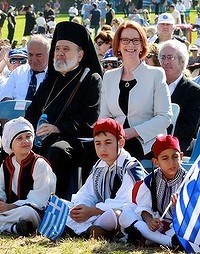
Prime Minister Julia Gillard on Sunday joined thousands of Australians celebrating Greece’s independence from the Ottoman Empire in 1828.
About 3000 people attended the Sydney event, including many families who had come towatch their children’s church or school group perform traditional Greek dances and songs.

Ms Gillard said it was “a day of seriousness and also of enjoyment”.

“[It is] a day to commemorate great patriots and a day to celebrate what they won and what their descendants have built around the world,’’ she said.
Chrys Rontziokos, 40,who emigrated to Australia in 1966, said it was a great chance to catch up with others.

‘‘Everyone gets together on this day, people we haven’t seen for a very long time,’’ she said.

PANIYIRI GREEK FESTIVAL 2013 IN SOUTH BRISBANE – TAKE THE JOURNEY

Source: Paniyiri.com

PANIYIRI GREEK FESTIVAL 2013 – TAKE THE JOURNEY

Saturday May 18 & Sunday May 19– Musgrave Park, South Brisbane


Come on a journey…In 1976, some 37 years ago, a group of passionate   Greek Australians wanted to share their cultural traditions with Brisbane. They wanted to take this city on a journey. A journey of discovery, a celebration of dance and music, a gastronomical tour through secret recipe books, a voyage through history rich in colour and passion.

Fast forward to 2012, and this kaleidoscopic cultural explosion is now legendary with over 50,000 Greeks and honorary Greeks flocking to Musgrave Park, South Brisbane every year for the annual Paniyiri Greek Festival.

Paniyiri Greek Festival will be held on Saturday May 18 and Sunday May 19, this year, making it the longest running cultural festival in Queensland and the longest running Greek festival in Australia!

In Musgrave Park more than 30 food stalls will showcase the tastes, recipes and secrets of food from all corners of Greece while on the main stage famous Greek dances the Zorba, Sirto, Kalamatiano and Sousta, performed to music performed on traditional Greek instruments including the bouzouki, tarabuka, lira and laouto are enjoyed by Greeks and non-Greeks alike in a wonderful cross cultural celebration.

The Paniyiri Main Stage in Musgrave Park will host over 20 hours of entertainment over the weekend including the return of Greek Dancing with the Stars with surprise special guests; a world record Zorba attempt; Grape Stomping, Olive and Honeypuff Eating Competitions; Hellenic Dancing and Zorba Till You Drop. The Greek Club will be a hive of activity with the popular traditional Greek Cooking Demonstrations featuring Queensland’s culinary greats plus the screening of cultural films and just next door, the Greek Orthodox Church will conduct tours to the beautiful sounds of the Byzantine Choir.

While the historic steps of the Acropolis may be some 15,000km from the grassy flats of Brisbane’s Musgrave Park, all the sights, sounds, characters and culture from the country which produced Homer, haloumi, honey puffs, Socrates, Plato and the famous Zorba will be celebrated in style during the much anticipated festival.

So… if you only learn one Greek word this year, make it Paniyiri!!!

Paniyiri is Queensland’s signature celebration of all things Greek and the state’s largest cultural festival. The event will be held from Saturday May 19 and Sunday May 20 at Musgrave Park and The Greek Club in South Brisbane. Now in its 36th  successful and exciting year, Paniyiri is a community initiative of the 25,000-strong Greek community of South East Queensland. Funds raised are channeled back into the community via the Greek Orthodox Community of St George, Brisbane’s oldest Greek community established in the 1920s.


Paniyiri 2013 Fast Facts

Date:                     Saturday May 18 & Sunday May 19, 2013

Time:                     From 12noon on Saturday and 10am on Sunday

Location:              Musgrave Park & The Greek Club, Edmondstone St, South Brisbane

Entry:                    $10 Adults (13+), $2 Aged Pensioners, Children free


Greek expats in Australia concerned about potential tax changes

Source: australiaforum

Greek expats in Australia concerned about potential tax changes

In a move which is certainly a sign of the times, and shows the Greek economy is still under major pressure, the Greek government has this week floated the idea of charging additional tax on Greek property income, either from rental or sale, for expats living in Australia. This is despite the fact that the Australian government and the Greek authorities have in place a “double taxation” agreement which should in practice avoid any such issues.

If you take a step back and look at the situation, there is no doubt that the Greek economy is under pressure, the Greek government is now in the pocket of the European Union and something needs to be done to claw back lost revenue. However, critics of the Greek government blame the fact that potentially hundreds of millions of Euros in taxes have yet to be collected, many of these debts have been written off and suggest this is the area in which regulatory changes should be made.

The Greek community in Australia

The 2006 Australian census states that there were 260,000 people of Greek nationality living Australia with 126,000 actually born in Greece. Therefore, it goes without saying that the Greek expat community in Australia is certainly a significant force and already the Australian government has confirmed that it is “monitoring the situation” with regards to potential issues of double taxation.

The fear is that the Greek government is to effectively deem all people from Greece as “living in Greece” for taxation purposes although they have stated point-blank that they will not tax income earned in Australia. For some reason the Greek expat community does not trust or believe what it is been told at the moment and there is growing anxiety amongst this expat community. There is a potential “get out clause” because the Greek government has suggested that the implementation of the recently confirmed property tax could effectively be delayed or cancelled if the Greek economy improves. How likely is this under the significant financial pressure at the moment?

The future of Greece

It is no surprise to learn that there is a significant Greek expat community in Australia especially when you bear in mind the ongoing economic difficulties. The figure of 260,000 expats gleaned from the consensus of 2006 is likely to be significantly higher especially when you bear in mind recent events. It will be interesting to see how the Australian government supports the Greek expat community because in effect by allowing them to stay in Australia they are under the stewardship of the Australian government.

Quote from AustraliaForum.com : “The Greek government has this week confirmed it is looking at introducing a property tax for Greek expats in Australia, and other areas of the world, earning rental income and sales income on properly held in Greece.”

The short to medium-term outlook for the Greek economy is not good, the Greek government is effectively at the beck and call of the European Union and many experts predict significant budget problems for many years to come. Against this backdrop, it is difficult to see the so-called “get out clause” brought up by the Greek authorities ever being activated. To all intents and purposes, this is something of a red herring to potentially take the edge off the proposed property tax.

Conclusion

While the Greek government has been talking about austerity measures and increased taxation in the same breath, looking towards those who have moved overseas, it is difficult to see how the Greek government can justify pushing this too far. Income on rental property and property sales in Greece has been suggested although so far the legislation has been held back for further discussions. Concerns about potential double taxation problems on income earned in Australia seems to be well wide of the mark but when you bear in mind the precarious position of the Greek government perhaps anything can happen?

It will be interesting to see how far the Australian government is prepared to go to protect the assets and the wealth of Greek expats living under their stewardship. This could well be a major test of the rights of expats when moving to Australia and whether indeed the federal government will look to protect these?