Ανακοίνωση τύπου για την εκδήλωση της Τετάρτης 10 Οκτ για του Βαλκανικούς Πολέμους

20121015-123906.jpg

20121015-123914.jpg

Pan-Macedonian Association of NSW Ltd

ΠΑΜΜΑΚΕΔΟΝΙΚΗ ΕΝΩΣΗ ΝΕΑΣ ΝΟΤΙΟΥ ΟΥΑΛΙΑΣ

103 Railway Parade Marrickville NSW 2204
Postal Address: PO BOX 140 EARLWOOD NSW 2206
E: ggoutzios@hotmail.com
ACN: 057951934​ABN: 59057951934
President: Chris Papapetrou​Secretary: George Goutzios

ΠΑΜΜΑΚΕΔΟΝΙΚΗ ΕΝΩΣΗ ΝΕΑΣ ΝΟΤΙΟΥ ΟΥΑΛΙΑΣ

Pan-Macedonian Association of NSW Ltd
​​

ΑΝΑΚΟΙΝΩΣΗ ΤΥΠΟΥ

«Η απελευθέρωση της Θεσσαλονίκης στον Αυστραλιανό τύπο»

Σύδνεϋ, 10 Οκτ. 2012: Με θέμα το βλέμμα του Αυστραλιανού τύπου πάνω στην απελευθέρωση τςν πόλεων και των χωριών της δυτικής Μακεδονίας δόθηκε διάλεξη από τον Δρ Παναγιώτη Διαμάντη την Τετάρτη 10 Οκτ.

Παρουσιάζοντας άρθρα του Αυστραλιανού τύπου την εποχή των Βαλκανικών Πολέμων (Οκτώβριος 1912-Φεβρουάριος 1913), ο Δρ Διαμάντης ενημέρωσε το ακροατήριο για κάποια συμπεράσματα που βγήκαν από την έρευνά του.

Πρώτων, οι εφημερίδες της Αυστραλίας κατέγραψαν με μεγάλη λεπτομέρια τις κινήσεις των στρατών καθώς και των κατοίκων της Μακεδονίας την εποχή εκείνη. Κύριες πηγές τους ήταν ο Αγγλικός και Γαλλικός τύπος.

Δεύτερων, τουλάχιστον ένας Αυστραλός ανταποκριτής παρευρέθηκε με τον Ελληνικό Στρατό στις μάχες στην δυτική Μακεδονία. Ο κς Μartin Donohoe από το Σύδνεϋ ήταν ανατποκριτής της εφημερίδας του Λονδίνου, The Daily Chronicle. Ήταν στις μάχες του Σαραντάπορου και των Γιαννιτσών, μεταξύ άλλων.

Τρίτων, όλες οι ανταπορκίσεις από τον χώρο της Μακεδονίας μας, καθώς και των νησιών του Αιγαίου, αναφέρουν τον εγκάρδιο ενθουσιασμό των ΕΛΛΗΝΩΝ κατοίκων για την απελεθυέρωση από τον Τουρκικό ζυγό.

Τέταρτων, οι αρθρογράφοι αναφέρουν ότι η απελευθέρωση των περιοχών αυτών θα είχε δυσμενότατες επιδράσεις στους Χριστιανικούς πληθυσμούς οι οποίοι παρέμειναν υπό Τουρικής κυριαρχίας.

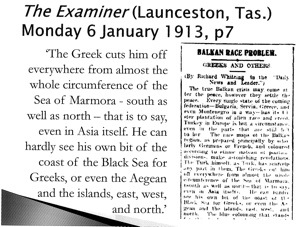
Για παράδειγμα, το Clarence and Richmond Examiner (από την επαρχιακή πόλη του Grafton στην βόρεια Nέα Νοτίου Ουαλία) Saturday 16 November 1912, ‘The most unsettling news which has so far been received is that the Turks have proclaimed a Holy War throughout Turkey. … It means in effect, that an edict has been issued, the substance of which is “slaughter till slaughtered”. … the effect of it is to kindle a dauntless courage and unconcern for consequences, and a ferocity towards all the Christians, which will result in wholesale carnage.’ Δηλαδή πρόεβλεψαν την Γενοκτονία των Ελλήνων, των Αρμενίων και των Ασσυρίων.

Πέμπτο, και ίσως πιό σημαντικό συμπέρασμα, ήταν ότι τα θέματα που προκάλεσαν τους Βαλκανικούς Πολέμους παραμένουν άλυτα σήμερα, ύστερα από έναν αιώνα. Η διαμάχη παραμένει ποιός θα είναι ο κυρίαρχος στο Αιγαίο, τόσο στα νησιά της όσο και στα παράλια του πελάγους.

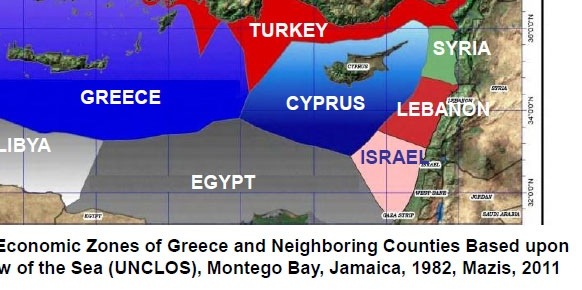
Σύμφωνα με τον Δρ Διαμάντη: «Στις ημέρες μας, που περνά τόσο δύσκολες στιγμές ο Ελληνισμός, τώρα είναι η εποχή για θρασύβουλες, για τολμηρές, αποφάσεις. Τώρα είναι που πρέπει να ακολουθήσουμε το παράδειγμα της Κυπριακής Δημοκρατίας και να κυρήξουμε τα όρια της Ελληνικής Αποκλειστικής Οικονομικής Ζώνης (ΑΟΖ).»

«Όπως έκαναν οι Έλληνες πριν από ακριβώς 100 χρόνια, πρέπει εμείς να πάρουμε τις αποφάσεις που χρειάζοντε για την εθνική μας αξιοπρέπεια και κυριαρχία.»

Η παρουσίαση έγινε στα πλαίσια των εκδηλώσεων για την Εκατοεντερίδα της Απελευθέρωσης της Θεσσαλονίκης και της δυτικής Μακεδονίας σε συνεργασία με το Εθνικό Συνέδριο της ΑΧΕΠΑ και το Ελληνικό Ανοιχτό Πανεπιστήμιο του Σύδνεϋ.

Λάμπης Λιβιεράτος: «Γιατί νοσηλεύτηκα στο ψυχιατρείο»

​Το διαζύγιο του, ο θάνατος του αδερφού του, αλλά και τα οικονομικά προβλήματα που αντιμετώπιζε, ήταν οι λόγοι που οδήγησαν το Λάμπη Λιβιεράτο να πάρει μόνος του την απόφαση να νοσηλευτεί στο ψυχιατρείο.

Μετά τα παραπάνω γεγονότα, ο τραγουδιστής έπεσε σε κατάθλιψη, δυσκολευόμενος να τα διαχειριστεί.

Δυσκολευόταν να χωνέψει πως η πρώην σύζυγος του προχώρησε τη ζωή της με άλλον άνδρα, με τις φήμες να λένε πως η Εύη Αδάμ ποτέ δεν τον συγχώρησε για τα οικονομικά προβλήματα της οικογένειας τους, κατηγορώντας τον πως ήταν ανεύθυνο να πάρει στο όνομα του όλες τις οικονομικές υποχρεώσεις του μαγαζιού που διατηρούσαν στην Αγία Παρασκευή.

Οι καυγάδες τους ήταν ομηρικοί, με την ψυχολογία του να πέφτει όλο και πιο χαμηλά. Η σταγόνα που ξεχείλισε το ποτήρι και τον έφερε στα άκρα, ήταν η αυτοκτονία του αδερφού του.

Τότε, λίγο πριν χάσει και τον ίδιο του τον εαυτό, αποφάσισε να κάνει κάτι.

Ο ψυχίατρος, του, του συνέστησε πρώτον να νοσηλευτεί σε ψυχιατρική κλινική, και δεύτερον να κόψει κάθε επικοινωνία με την πρώην σύζυγο του.

Για την απόφαση του να νοσηλευτεί, μίλησε ο ίδιος ο Λάμπης Λιβιεράτος:

«Ζήτησα μια ιατρική βοήθεια όπως χιλιάδες κόσμος. Μπήκα στην ψυχιατρική κλινική με συμβουλή του γιατρού μου, και δική μου πρωτοβουλία. Πάρα πολλοί άνθρωποι πια παίρνουν αντικαταθλιπτικά. Δεν είναι σπάνιο, ούτε ασυνήθιστο. Έτσι έγινε και με μένα. Στο νοσοκομείο είδα ανθρώπους με πολύ πιο σοβαρά προβλήματα από τα δικά μου. Χρειάστηκα ιατρική βοήθεια και τη ζήτησα. Τώρα είμαι πολύ καλύτερα, είμαι μια χαρά».

Και τονίζει: «Είμαι καλά, το παλεύω, αλήθεια. Είναι δύσκολη αυτή η περίοδος για όλους. Προσπαθώ να δω τα πράγματα με ψυχραιμία για ν΄αντιμετωπίσω τα προβλήματα. Θα τα καταφέρω και θα σταθώ στα πόδια μου».

Ένα μήνα έμεινε στο «Σωτηρία» ο τραγουδιστής, παίζοντας επιτραπέζια και διαβάζοντας βιβλία. Αν ήταν στο χέρι του, δεν θα ήθελε κανείς να μάθει τι πέρασε.

Τέλος, λέει για τους ανθρώπους που του στάθηκαν:

«Είχα μεγάλη βοήθεια. Οι φίλοι μου, μου στάθηκαν πάρα πολύ. Είμαι ευγνώμων».

Όσο για την Εύη Αδάμ; Λέει:

«Κάνει κι εκείνη ο,τι μπορεί. Όπως κι εγώ».

ΠΗΓΗ: star.gr

«Τα χρόνια της βασιλείας του Όθωνα» σε έκθεση το Ναύπλιο

Έκθεση με τίτλο «Τα χρόνια της βασιλείας του Όθωνα» (1833-1862) πραγματοποιείται στο Παράρτημα της Εθνικής Πινακοθήκης και Μουσείο Αλεξάνδρου Σούτζου, στο Ναύπλιο.

Η έκθεση διοργανώνεται στα πλαίσια των εκδηλώσεων του Δήμου Ναυπλιέων για τα 150 χρόνια από τη Ναυπλιακή Επανάσταση (1 Φεβρουαρίου – 8 Απριλίου1862).

Η έκθεση σκιαγραφεί την ιστορική περίοδο από την άφιξη του Όθωνα στο Ναύπλιο, πρώτη πρωτεύουσα της Ελλάδας, έως την έξωσή του (Οκτώβριος 1862) και εστιάζει σε βασικά χαρακτηριστικά της νεότερης εικονογραφίας του Ναυπλίου, με βασικό άξονα την οπτική των ξένων και Ελλήνων καλλιτεχνών σε σχέση με τα γεγονότα που σημάδεψαν την οθωνική περίοδο.

Περιλαμβάνει χαρακτικά και ζωγραφικά έργα με παραστάσεις από την αναχώρηση του νεαρού Όθωνα από το Μόναχο, την άφιξή του στο Ναύπλιο, πορτρέτα του Όθωνα και της Αμαλίας, έργα που αναφέρονται στα γεγονότα της 3ης Σεπτεμβρίου 1843, φωτογραφικό υλικό και ζωγραφικά έργα των πρωταγωνιστών της Ναυπλιακής Επανάστασης, λιθογραφία της έξωσης των πρώτων βασιλέων, το τραπέζι, στο οποίο υπογράφτηκε το διάταγμα της έξωσης το 1862 και γελοιογραφίες που αναφέρονται στο θέμα του ανταγωνισμού των Δυνάμεων για την εξουσία στην Ελλάδα.

Στην έκθεση εκτός από έργα της Εθνικής Πινακοθήκης παρουσιάζονται χαρακτικά της πλούσιας συλλογής του Καθηγητή της Νομικής και τ. Αντιπρύτανη του Εθνικού και Καποδιστριακού Πανεπιστημίου Αθηνών κ. Ιωάννη Καράκωστα, χαρακτικά και ζωγραφικά έργα που ευγενικά μας παραχωρήθηκαν από το Εθνικό Ιστορικό Μουσείο Αθηνών και το Μουσείο της Πόλεως των Αθηνών, Ίδρυμα Βούρου – Ευταξία, έργα από τις συλλογές ζωγραφικών και χαρακτικών έργων του Μουσείου Μπενάκη, ενδυμασίες από το Πελοποννησιακό Λαογραφικό Ίδρυμα «Β. Παπαντωνίου», έργα από τις συλλογές του Δήμου Ναυπλίου, του Δικηγόρου κ. Κωνσταντίνου Καράπαυλου και του κ. Ιωάννη Σπηλιωτάκη, καθώς και φωτογραφικό υλικό από τη Γεννάδειο Βιβλιοθήκη.

Η έκθεση διαρκεί έως τις 30 Ιανουαρίου 2013.

Ώρες Λειτουργίας: Δευτέρα, Πέμπτη, Σάββατο :10:00 – 15:00
Τετάρτη, Παρασκευή :10:00-15:00 και 17:00-20:00
Κυριακή: 10:00-14:00
Τρίτη κλειστά. Δευτέρα: Είσοδος Ελεύθερη

Παράρτημα της Εθνικής Πινακοθήκης και Μουσείο Αλεξάνδρου Σούτζου (Σιδηράς Μεραρχίας 23, Τ.Κ. 21100, Ναύπλιο, τηλ. 27520 21915-21935).

Μεγαλειώδης υποδοχή του «Άξιον Εστί» στη Θεσσαλονίκη

Μεγαλειώδης υποδοχή του «Άξιον Εστί» στη Θεσσαλονίκη

Με τιμές αρχηγού κράτους έφτασε πριν από λίγη ώρα στη Θεσσαλονίκη η θαυματουργή εικόνα της Παναγίας «Άξιον Εστί».

Την εικόνα υποδέχθηκαν σε ειδική τελετή, που πραγματοποιήθηκε στην παραλία του Λευκού Πύργου, ο υπουργός Μακεδονίας- Θράκης Θεόδωρος Καράογλου, ο αναπληρωτής υπουργός Περιβάλλοντος Σταύρος Καλαφάτης, ο υφυπουργός Αθλητισμού Γιάννης Ιωαννίδης, ο αρχιεπίσκοπος Ιερώνυμος, ο μητροπολίτης Θεσσαλονίκης Άνθιμος, εκπρόσωποι των στρατιωτικών αρχών, βουλευτές, ο αντιπεριφερειάρχης Θεσσαλονίκης Απόστολος Τζιτζικώστας, ο δήμαρχος Γιάννης Μπουτάρης, καθώς και πλήθος κόσμου.

Η εικόνα μεταφέρθηκε από τον ναό του Πρωτάτου, που βρίσκεται στις Καρυές του Αγίου Όρους, με την κανονιοφόρο «Αρματωλός», συνοδευόμενη από αντιπροσωπεία της Ιεράς Κοινότητας με επικεφαλής των πρωτοεπιστάτη, πατέρα Μάξιμο.

«Σε μια περίοδο βαθιάς δοκιμασίας οι Έλληνες στρεφόμαστε προς την Παναγία. Πολιτεία κι Εκκλησία πορεύονται για να στηρίξουν όσους δοκιμάζονται από την οικονομική κρίση», τόνισε στην ομιλία του ο υπουργός Μακεδονίας- Θράκης και εξέφρασε την πεποίθηση ότι «με τη βοήθεια του Θεού, με τη Βοήθεια της Παναγίας θα τα καταφέρουμε να βγούμε από την κρίση».

Ευχαριστίες προς την Ιερά Κοινότητα του Αγίου Όρους, που έδωσε τη χαρά να βρεθεί η εικόνα της Παναγίας δίπλα στη δοκιμαζόμενη ελληνική πολιτεία, εξέφρασε ο κ. Τζιτζικώστας.

Ο Γιάννης Μπουτάρης, από την πλευρά του, αναφέρθηκε στους ακατάλυτους δεσμούς της Θεσσαλονίκης με το Άγιον Όρος, ενώ πρόσθεσε ότι η έλευση της εικόνας αποτελεί πράξη παρηγοριάς για τους πολίτες που πλήττονται από την κρίση.

Ο πρωτοεπιστάτης Μάξιμος είπε ότι η μεταφορά τής εικόνας στη Θεσσαλονίκη προσφέρει πνευματική ανακούφιση, τόνωση του ηθικού και ευλογία στον ελληνικό λαό.

Σημειώνεται ότι η εικόνα του «Άξιον Εστί» σπάνια εξέρχεται από το Άγιον Όρος και μόνο σε ειδικές περιπτώσεις. Αυτή είναι η πέμπτη φορά (οι προηγούμενες ήταν το 1963, 1985, 1987, 1999) και η δεύτερη για τη Θεσσαλονίκη μετά το 1985.

Η έξοδός της αποφασίστηκε από την Ιερά Κοινότητα του Αγίου Όρους, ύστερα από σχετικό αίτημα του μητροπολίτη Θεσσαλονίκης, Άνθιμου, για τις εκδηλώσεις που προγραμμάτισε η μητρόπολη, στο πλαίσιο του εορτασμού των 100 χρόνων από την απελευθέρωση της Θεσσαλονίκης.

Η εικόνα θα παραμείνει έως το τέλος του Οκτωβρίου στο ναό του Αγίου Δημητρίου, όπου θα εκτίθεται σε λαϊκό προσκύνημα.

A fence along the Greek-Turkish border, designed to prevent illegal immigration

Source: Ekathimerini

Evros fence ‘ready in weeks’

A fence along the Greek-Turkish border, designed to prevent illegal immigration through the northern region of Evros, will be up and fully operational by the end of the month, authorities have told Kathimerini.

More than half of the planned 12.5-kilometer fence has already been constructed and the remainder will be in place before November, according to an official at the border crossing, which already has seen a sharp drop in illegal arrivals due to a joint crackdown by Greek police and officers of the European Union’s border monitoring agency Frontex.

Plans for the 3-meter-high, barbed-wire-topped fence were scorned earlier this year by a European Commission official as “pointless,” but European Commissioner for Home Affairs Cecilia Malmstrom, who toured the border region and visited four migrant reception centers last week, refrained from similar criticism.

Malmstrom urged authorities to improve conditions at reception centers on the islands of the Aegean which have seen a surge in illegal arrivals following the crackdown at the land border. She also prodded Greek authorities to upgrade a lax system for processing asylum claims by migrants meriting international protection.

The Swedish commissioner, who held talks with Public Order Minister Nikos Dendias and Prime Minister Antonis Samaras during her visit, said that she would push for an increase in the European Union’s contribution to funding for Greece’s immigration crackdown, from 75 percent to 95 percent of the budget. She noted however that much of the EU funding being released to Greece for curbing illegal immigration had not been used.

Greek authorities last week continued to deport dozens of undocumented migrants, many of whom have reportedly asked to be returned to their homelands after failing to find work in crisis-hit Greece. On Wednesday, a charter flight deported 68 Pakistanis, 15 of whom had been in detention and the remainder of whom had applied to be repatriated.

Greece: Migrants Victims of Loathing, Arbitrary Arrests, Violent Attacks

Source: Beforeitsnews

Three police officers in body armour surround two dark-skinned men on a busy street in Athens, Greece’s increasingly restive capital. It is a scene that has been playing out across the city since the launch of a government crackdown on illegal migration two months ago.

**Image (1). Photo: Kristy Siegfried/IRIN. Vandalised offices of the Tanzanian Community Association in Athens.

The police operation – ironically codenamed Xenios Zeus, after the Greek god of hospitality – has so far rounded up over 36,000 migrants, 9 percent of whom have been detained for lacking legal documents, contributing to an atmosphere of fear and desperation in neighbourhoods with large migrant populations.

“Even if you have full documents, they arrest you,” said Kayu Ligopora, a Tanzanian who has lived in Greece for three years.

Raided, Smashed to Pieces

“We all feel insecure since the elections, and the worst is when you have problems, you don’t know where to go. If you call the police, they ask for your documents.”

Ligopora is secretary of the Tanzanian Community Association, the offices of which were raided and smashed to pieces by a mob of club-wielding men and women the night before he spoke to IRIN. Neighbours helped the mob break through the reinforced glass windows after police led away some of the group’s leaders, but failed to make any arrests.

Many of the vandals were wearing the signature black T-shirts of extreme right-wing political party Golden Dawn, which received a record number of votes during the June elections; it now holds 18 seats in the Hellenic Parliament. The party’s popularity has risen in tandem with Greece’s plummeting economy, which its leaders have successfully blamed on a surge in illegal migration in recent years.

Tensions Rising

The perception that migrants are responsible for worsening crime and an unemployment rate of nearly 25 percent has gained traction, particularly in areas of central Athens that have become virtual ghettos for poor migrants. There is widespread popular support for the police’s efforts to “clean up” these areas, according to Nikitas Kanakis, director of the NGO Médecins du Monde (MDM) in Greece.

***Image (2): Greece’s Migration Crisis
View slideshow

Greek Fascist Party “Golden Down”

“The fascist party [Golden Dawn] has put the agenda on the table and everyone’s following it, but there is no real plan beyond, ‘Let’s clean the streets’,” he told IRIN from MDM’s offices in the Omonoia neighbourhood, where the organization offers free medical care, social services and legal advice to migrants and impoverished Greeks. “They’re trying to push them out of the centre [of Athens], put the problem out of sight; but the problem remains.”

About 2,200 migrants found without documents have so far been deported or opted for voluntary repatriation through a programme of the International Organization for Migration. Limited space in detention facilities means that the rest are usually released after a few days or weeks; they are issued a paper that gives them seven days to leave the country. The paper is written in Greek, and many migrants cannot read it, let alone act on it.

With much stricter controls at major ports like Patras, where migrants used to stowaway on ships bound for Italy, only those who can afford to pay smugglers or buy forged EU passports stand much chance of leaving. The rest are trapped in a cycle of arrest, detention and release that Kanakis described as “a waste of resources and lives”.

Hamid, a 16-year-old Afghan refugee from Iran whose family paid smugglers US$5,000 to get him to Greece 15 months ago, twice attempted to hide in trucks bound for Italy from Patras. Both times, he was discovered by police who beat him so badly he required hospital treatment. “They beat me like they wanted to kill me,” he told IRIN, speaking through a translator.

Now Hamid spends his days doing the rounds at Athens’ soup kitchens. At night, he sleeps in Pedion Areos Park, where he is regularly awoken by police. “If they find migrants sleeping in the bushes, they beat us,” he said. “Sometimes they arrest us, sometimes they just tear up our documents.”

Violent Attacks

The rise of Golden Dawn has been accompanied by a rise in violent attacks on migrants, the majority of which go unreported and unpunished. A monitoring network of NGOs, coordinated by the UN’s Refugee Agency (UNHCR) and the National Commission for Human Rights, recorded 63 incidents of racist violence between October and December 2011 in Athens and Patras; 18 of them were perpetrated by police officers. Ketty Kahayioylou of UNHCR described the figure as “just the tip of the iceberg”.

“People don’t always report incidents because they don’t feel it’s going to help them. The aim is to show patterns – when, by whom, which areas and how,” she said. “Usually it’s 10 to 15 people attacking one or two migrants, usually the most weak and vulnerable, even women and children.”

Amina Asadi, an Afghan migrant, was walking with three other women and their children in Athens when they were surrounded by five men and women wielding sticks. “We had children with us so we couldn’t run,” said Asadi, who has been stranded in Greece with her husband and three children since smugglers made off with their savings two years ago. “So we took off our shoes and closed the pram and threatened to hit them with it, and they ran away.”

Migrants who do attempt to press charges are told they must pay a fee of 100 euros. In a July report documenting the xenophobic violence, Human Rights Watch noted that there have been no convictions under Greece’s 2008 hate crime statue.

MDM’s Athens clinic treats migrants injured by racist attacks on a daily basis. Kanakis estimates they treated 300 such cases during the first half of 2011. “They are very scared,” he told IRIN. “We see more and more desperate people. Many were working on the black market, on farms or in factories, but now there are no jobs even like that.”

He added that health problems caused by migrants’ often grim living conditions, such as tuberculosis, were “creating a public health problem”.

MDM’s 26 doctors, as well as its nurses and psychologists, are all volunteers. “Not everyone is against foreigners,” said Martha Kouyia, a nurse at the clinic. “It’s politics.”

Turkish FM Ahmet Davutoglu’s interview with Athens News Agency

Source: Greeknewsonline

Constantinople.- By Alkis Kourkoulas/AMNA

ALKIS COURCOULAS: Turkey is entering a period of centenary celebrations (100 years from the Balkan wars, 100 years of the first world war, 100 of the Armenian “genocide” and finally 100 years of the establishment of the Republic. Can you please comment on those occasions and especially on the 100th anniversaries of the Balkan wars that seem to still haunt the politics of our region?

AHMET DAVUTOGLU: The following ten years, starting from 2012 to 2023 mark the 100th anniversary of an important period in history. This period represents profound systemic changes which had transformed not only the Balkans and the Middle East but a much wider geography.

The Balkan Wars, the First World War, Turkey’s Independence War and the foundation of the Turkish Republic has not only ended the Ottoman Empire, but created completely new forms of relationships among the countries of the region which were often overshadowed by the legacy of these wars.

However now, a hundred years after the outbreak of the Balkan Wars, the region as well as the entire world is going through a rapid and vast transformation. The people of the region are taking important steps in order to build a peaceful and democratic environment and act with a sense of regional ownership. Today, we have a true opportunity that gives all of us the chance to see the region from a perspective of opportunity rather than a perception of threat and fear.

It is in this respect that Turkey is supporting all efforts to establish the necessary regional and international mechanisms with a view to resolving disputes through political dialogue, economic interdependence and cultural understanding. With such a cooperative and forward looking vision, Turkey is strongly committed to mobilize all its capabilities towards achieving the common goals of our neighbourhood. We would like to establish a new region, a model region for the rest of the world. In fact, our 2023 vision is precisely based on this understanding. But we cannot do this alone.

ALKIS COURCOULAS: How does the crisis in Syria affect Turkey? (The opposition claiming that your zero problem policy has collapsed, is it the case?)

AHMET DAVUTOGLU: Syria is not just a neighboring country to Turkey. Turkish and Syrian people have lived side by side throughout history and will continue to share a common geography. There exist close ties between the societies. That is why we cannot remain indifferent to the human tragedy in Syria.

Turkey, actively contributes to the efforts of the international community for the peaceful settlement of the crisis in Syria in accordance with the legitimate aspirations of the Syrian people. On the other hand, Turkey keeps its doors open to every Syrian who is fleeing from the brutality of the regime.

Currently, we provide shelter to approximately 100,000 Syrian nationals. So far, we have established 14 camps to host our Syrian guests and new camps are being built in order to meet their needs.

To extend a helping hand to our Syrian brothers and sisters is not only a humanitarian responsibility, but also a requirement of the principle of good neighborliness and kinship. However, the number of Syrians seeking refuge in our country has increased due to the deteriorating situation in the country and we feel that, since the tragic consequences of the brutality by the Syrian regime are all tackled by the neighboring countries, the open door policy of Turkey is actually absorbing the potential international reaction. We expect the international community to live up to its responsibility in sharing this burden.

The regime in Syria has been a serious threat not only for the Syrian people, but also for the security and stability of the region. This threat is now gaining new dimensions as the regime carries its violent and aggressive policies that it has been waging against the people, beyond the borders of Syria. We are determined to take all necessary measures in compliance with international law to protect the borders of Turkey and fundamental rights and interests of Turkish citizens. The aggressive and hostile acts of the regime in Syria towards Turkey cannot go unanswered.

We will not tolerate either the attempts of radical and terrorist groups to hijack the legitimate struggle of the Syrian people and to exploit existing turmoil. Turkey decisively takes the necessary measures against all kinds of threats emanating from Syria. We consider the territorial integrity and the national unity of Syria as sacrosanct.

We wish to see the establishment of a free and democratic constitutional system in Syria that guarantees the fundamental rights and freedoms of all Syrian citizens without any discrimination and in accordance with their legitimate expectations. To this end, we call on the international community to take decisive steps in order to bring this bloodshed to an immediate end and to assist the efforts for the swift conclusion of the democratic transition process.

ALKIS COURCOULAS: How are relations with Iran affected by the Syrian crisis. Has Turkey any new elements to bring to the western approach of Iran?

AHMET DAVUTOGLU: Turkey has centuries-old relations, cultural ties and extensive economic cooperation with Iran. Almost 2 million Iranian tourists visited Turkey in 2011. Our bilateral trade volume surpassed 16 billion Dollars the same year. We expect that it will surpass 20 billion Dollars this year. We continue to exchange high level visits with Iran.

On the other hand, we find it natural that we don’t share the same views on all issues, one of which are the developments in Syria. While Iranians continue to support the Assad Regime and argue that Assad should be given more time to be allowed to maintain his position, we urge them to realize that Assad is murdering its own people and with the blood of thirty five thousand of its own people in its hands, the current regime has no legitimacy and future. The Syrian people must have the say on Syria’s future and decide how they will be governed.

It was Turkey that has exerted major efforts to bridge the gap between Iran and the P5+1 on the Iranian nuclear programme. We have been advocating dialogue and diplomacy for the solution of the problem. The Tehran Declaration was adopted in 2009 upon Turkey’s and Brazil’s joint initiative. We hosted the negotiations between Iran and the P5+1 following a one and a half years break in Istanbul on 14th April. Two technical-level meetings were held in July in Istanbul with the participation of representatives and experts from both sides. Another meeting between the Iranian Chief Nuclear Negotiator Jalili and the EU’s Foreign Policy Chief Ashton was held on 18 September in İstanbul again. This shows that the dialogue approach advocated by Turkey for a long time is the correct one.

ALKIS COURCOULAS How relations between Greece and Turkey can be affected by the idea the declaration of Exclusive Economic Zones in the Aegean and the Mediterranean?

AHMET DAVUTOGLU : It is our sincere belief that mutual understanding and respect for each other’s sensitivities on the basis of good-neighborliness are essential to further the constructive atmosphere in Turkish-Greek relations. With this understanding, Turkey is resolved to make further contributions to the current positive trend in our relations. Unilateral declaration of EEZ in disputed maritime areas would not be to the benefit of either party.

ALKIS COURCOULAS: How you assess the declaration of the Exclusive economic zones by Cyprus?

AHMET DAVUTOGLU: Unilateral actions of the Greek Cypriot side has been untimely and negative in terms of the settlement process. It is accepted by all sides that the Turkish Cypriots have equal and inherent rights over the off-shore resources of the whole Island. The oil and gas issue can either be a liability or an opportunity for Cyprus, depending on how we treat it.

The Turkish Cypriot proposal of 24 September 2011 and 29 September 2012 to the UN Secretary General is therefore a tool upon which a common understanding can be built upon. As set forth with this proposal, Turkish and Greek Cypriots should be encouraged to sit together immediately in order to jointly determine the future course of off-shore oil/gas activities, including revenue sharing and funding of a possible settlement. If achieved, this would also boost the ongoing Cyprus talks towards a comprehensive settlement. If not, the Turkish Cypriots said that they will continue off-shore exploration/exploitation activities in the south of the Island. It should also be borne in mind that besides being a major market, Turkey is the safest, most feasible and profitable gateway to the European oil/gas markets as it has the necessary infrastructure in place.

Furthermore, let me underline another aspect of the issue. Some parts of the concerned area overlaps the Turkish continental shelf to the west of the Island. Regarding its legitimate rights and interests within its continental shelf, it is natural that Turkey would spare no effort in order to preserve its ipso facto ab initio rights.

ALKIS COURCOULAS: Will Turkey intervene in the debate on the future architecture of the EU? Are you discussing this issue with the Greek government?

AHMET DAVUTOGLU: Turkey is part of the European family and has a close relationship with the EU, with a perspective to become an EU member. Therefore, it is natural that Turkey follows the developments in the EU closely and the debate concerning the future of the EU re-invigorated by the on-going financial crisis. The “State of the Union” address of Mr. Barroso, the President of the European Commission, at the European Parliament on 12 September as well as the Final Report of the “Future of Europe Group” published on 17 September herald a broad deliberation that could bring on new arrangements and even Treaty changes in the EU.

The crisis has not only a negative impact on the economies of the EU countries but also political and social implications. We hope that the crisis would not lead to an introverted EU. The enlargement policy, which significantly contributes to peace, security and prosperity in our continent, should also continue unabatedly. On the other hand, in these unfavorable circumstances, the extreme right is on the rise. Increase in racist and xenophobic tendencies and discourse is a further source of worry for us.

We will be exchanging views with our Greek neighbors on the possible way forward in the EU.

ALKIS COURCOULAS: How do you explain the lack of progress on the HALKI (HEYBELI) seminar?

AHMET DAVUTOGLU: The Heybeliada Theological School is not operational since 1971 as a result of a court case interpreting the relevant provisions of the Constitution. This is why it cannot be opened by a purely political decision and the remedy has to be legal. This court case had nothing to do with the Heybeliada Theological School per se, but it was indirectly affected. According to the Turkish Constitution and relevant legislation, religious instruction is only possible under the supervision of the State.

This Constitutional restriction applies to all religious communities in Turkey and there is no discrimination vis-a-vis the Greek Orthodox community.

In the past, the reopening of the School under the aegis of one of the state universities in Istanbul was proposed to overcome the current legal hurdle which did not receive a positive reflection.

We understand the need of the Greek Orthodox community to train its clergy and, with a constructive spirit, we are exploring a viable solution to re-open the Heybeliada Theological School on satisfactory terms to all interested parties.

ALKIS COURCOULAS: How do you explain the new law that restricts the right of Greek citizens to acquire immovable property in Istanbul?

AHMET DAVUTOGLU: In all countries, foreigners’ land or property acquisition rights are determined based on several criteria ranging from the type and location of the property to the principle of reciprocity and national security concerns. Sometimes, specific situations such as proximity to cultural property protection areas are taken into consideration. From an economic perspective our Government is taking steps to eliminate the existing restrictions as much as possible. The scope of the right of foreigners to acquire immovable properties in Turkey, and this includes citizens of all countries, not only Greeks, is determined by taking all relevant factors into account. I am pretty sure that this methodology is valid for all countries.

New Greek national party puts Montreal community on edge

Source: CBC

Golden Dawn’s new Montreal chapter sparks controversy within the Greek communityMembers of the group say they are not racist

Golden Dawn sparks controversy

The Current: The rise of Greece’s extreme right wing Golden Dawn Party

The presence of a new Montreal chapter of a right-wing nationalist Greek party is polarizing members of Montreal’s Greek community.

Golden Dawn won 18 seats in Greece’s recent election.

The party’s anti-immigrant stance is considered racist, anti-immigration and anti-Semitic by many in the international community.

The party seeks to maintain “the Greek race” and wants Christian Greeks to reclaim the country, which they say has been taken over by illegal immigrants.

“We are Greek nationalists,” said Golden Dawn’s deputy leader in Montreal, Spiros Macrozonaris. “We love our country. We are not fascists. We are not anti-immigrants. We are not neo-Nazis. We are Greeks, and we love our country. That’s all.”

But some members of Montreal’s Greek community say Macriozonaris’ words don’t allay their concerns. They point to the group’s logo, which bears a resemblance to the Nazi swastika, and to the party’s salute, which is similar to the Hitler army’s infamous arm gesture.

Louis Hondronicolas, a member of Golden Dawn, said the concerns are misplaced.

“Maybe you’ve seen pictures, and there are a lot of them being photoshopped – although… that salute is an ancient salute, and it was used by [Ioannis] Metaxas when he fought the Nazi,” said Hondronicolas. “Our party has nothing to do with Nazis or neo-Nazis.”

Montreal’s Greek community reacts

When CBC News asked members of the local Greek community how they felt about the party, many of them said although they don’t condone Golden Dawn’s violent actions, they understand the sentiment that there are too many illegal immigrants in their homeland.

A woman said “I feel very bad because we had enough problems witht he fascists when they invaded Greece in 1941 with Hitler and Mussolini. I don’t want to see another Hitler in Mussolini in my country because now it’s not the Germans or the Italians, they are the Greeks.”

B’nai Brith calls for vigilance

Steven Slimovitch, spokesperson for the B’nai Brith Canada, which advocates against racism and anti-Semitism, said he wants the city’s Hellenic community to take a stand.

“We trust the Hellenic community will come forward and do much like the Greek government has done and say that Golden Dawn party is not welcome, that they’re a racist party, and they espouse racist views,” said Slimovitch.

He added that groups that spew hate against other groups have no place on Canadian soil.

Golden Dawn made international headlines in June when a spokesman for the party slapped a member of the opposition in the face on live television.

Ken Matziorinis, an economics professor at McGill University, said the party’s popularity has picked up in the last two years because of the country’s precarious financial situation.

He said that situation is similar to the socio-economic turmoil faced in Germany in the 1920s, which led to the rise of fascism and Nazism.

Remembrance service ’68 years after the freeing of Athens from Nazis’

The 12th of October marks the 68th anniversary of the release of Greece from Nazi occupation after WW2.

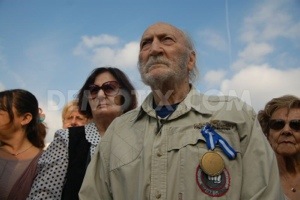
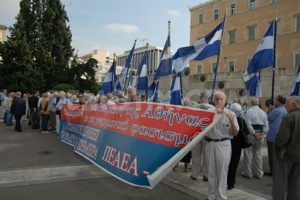
Greek members of the resistance together with friends and supporters were gathered at the Unknown Soldier monument in Syntagma square.

20121012-211120.jpg
Greeks remember the 68th anniversary of the freeing of Greece from Nazis during WW2. A veteran stands to attention during the remembrance.

20121012-211227.jpg
Greeks remember the 68th anniversary of the freeing of Greece from Nazis during WW2.

Ποιοι επώνυμοι διασκέδασαν στους Στανίση-Κοντολάζο-Σαμπρίνα;

Η προσέλευση του κοινού ήταν τόσο μεγάλη που χρειάστηκε να μπει τραπέζι και επάνω στην πίστα!

Ποιοι επώνυμοι διασκέδασαν στους Στανίση-Κοντολάζο-Σαμπρίνα;

Μια βραδιά με πολλές εκπλήξεις έζησαν όσοι βρέθηκαν εκεί παρέα με τους επώνυμους φίλους του «MAYA MAYA», Άγγελο Διονυσίου και Λιζέττα Νικολάου, οι οποίοι δεν αρνήθηκαν να πάρουν το μικρόφωνο και να ερμηνεύσουν μερικές από τις μεγάλες επιτυχίες τους.

Και βέβαια όταν ακούγονται τα «Σε έχω κάνει Θεό», «Μυστικέ μου έρωτα» και «Συγνώμη κύριε ποιος είστε ;» από την Κατερίνα Στανίση, και «Δεν μ’ αγαπάς», «Εγώ δεν ήμουνα αλήτης» και «Το κορίτσι απόψε θέλει» δια στόματος Δημήτρη Κοντολάζου… σείεται το μαγαζί!!!