Πάνος Καλίδης: «Δεν θέλω να Μέσα να ασχολούνται μαζί μου για τα προσωπικά μου»

Πάνος Καλίδης: «Δεν θέλω να Μέσα να ασχολούνται μαζί μου για τα προσωπικά μου»

«Όταν ασχολούνται τα ΜΜΕ μαζί μου, δεν θέλω να το κάνουν για τα προσωπικά μου, αλλά για τη δουλειά μου», δήλωσε ο Πάνος Καλίδης.

Ο τραγουδιστής, καλεσμένος στην εκπομπή της Σταματίνας Τσιμτσιλή, εξήγησε γιατί έχει διατηρήσει ένας χαμηλό προφίλ σε σχέση με την προσωπική του ζωή και την οικογένεια του.

«Όταν βασίζεσαι σε άλλα πράγματα όπως φωνή, εμπειρία, καλούς συνεργάτες και καλή εταιρία, δεν έχεις ανάγκη να στηρίζεσαι στη σύζυγο και στα παιδιά σου ώστε να βγει μια φωτογραφία στα περιοδικά», κατέληξε!

Εύη Αδάμ – Λάμπης Λιβιεράτος: Το τέλος ενός γάμου. Η αρχή μιας νέας ζωής!

Εύη Αδάμ – Λάμπης Λιβιεράτος: Το τέλος ενός γάμου. Η αρχή μιας νέας ζωής!

Μόλις λίγες ημέρες έχουν περάσει από την συγκλονιστική αποκάλυψη του Λάμπη Λιβιεράτου σχετικά με τον εγκλεισμό του σε ψυχιατρική κλινική και όλα όσα τον οδήγησαν εκεί.

Μετά από 13 χρόνια σχέσης ο Λάμπης Λιβιεράτος και η Εύη Αδάμ πήραν τη απόφαση να γυρίσουν σελίδα και να συνεχίζουν τη ζωή τους από την αρχή.

Όπως αναφέρει δημοσίευμα του Πρώτου Θέματος ο τραγουδιστής είναι πλέον πολύ καλά, έχοντας αφήσει πίσω του τα κακώς κείμενα του παρελθόντος.

Ζει αποκομμένος από τα media και κάθε είδους δημοσιότητα στο σπίτι του Τζώνη Θεοδωρίδη στην Πεντέλη, δείχνοντας να έχει ξεπεράσει όλα εκείνα που τον βασάνιζαν για πολύ καιρό.

Απόλυτα χαλαρός κι έχοντας συνειδητοποιήσει ποιοι ήταν αυτοί που του στάθηκαν και ποιοι εκείνοι που τον «πούλησαν», ζει και πάλι μια φυσιολογική ζωή.

Όπως χαρακτηριστικά αναφέρει το ρεπορτάζ, ο τραγουδιστής ήδη σκέφτεται σοβαρά την επιστροφή του στο τραγούδι αλλά και στις επιχειρήσεις.

«Έχουν πέσει πολλά σχέδια στο τραπέζι. Παρόλο που τίποτα ακόμη δεν φαίνεται οριστικό, και μόνο το ότι ο Λάμπης φαίνεται ανοιχτός σε νέα επαγγελματικά projects λέει πολλά», δηλώνουν οι δικοί του άνθρωποι.

Όσο για την Εύη Αδάμ; Το τελευταίο διάστημα ζει το έρωτα της με τον περιζήτητο dj, Ραμίρο Ρομέρο και από τη στιγμή που έχουν ήδη κατατεθεί τα χαρτιά του διαζυγίου της με τον Λάμπη Λιβιεράτο, κάνει αρκετές δημόσιες εμφανίσεις με τον νέο της σύντροφο, δείχνοντας πως κι εκείνη έχει γυρίσει σελίδα στη προσωπική της ζωή.

Κώστας Βουτσάς: «Μόνο αν χυθεί αίμα θα αλλάξει η κατάσταση»

Κώστας Βουτσάς: «Μόνο αν χυθεί αίμα θα αλλάξει η κατάσταση»

Την κατάσταση που επικρατεί στην Ελλάδα σχετικά με την κρίση σχολίασε με τον δικό του τρόπο σε πρόσφατη συνέντευξη του ο Κώστας Βουτσάς.

«Μόνο εάν χυθεί αίμα θα αλλάξει η κατάσταση που επικρατεί στην ελληνική κοινωνία», δήλωσε χαρακτηριστικά στην εκπομπή «Υπάρχει λόγος» και κατέληξε λέγοντας:

«Δεν ξέρω εάν κόσμος θα αφήσει την καλοπέραση και τις ανέσεις που διαθέτει για να βγει να αγωνιστεί με ένταση για αυτά που θα έρθουν».

Κράτα γερά: Πρεμιέρα τα Χριστούγεννα με Περιστέρη και Ίμβριο

Κράτα γερά: Πρεμιέρα τα Χριστούγεννα με Περιστέρη και Ίμβριο

Πρεμιέρα λίγο πριν τα Χριστούγεννα είναι πολύ πιθανό να κάνουν δυο από τα ψυχαγωγικά προγράμματα του ΑΝΤ1.

Το κανάλι του Αμαρουσίου σχεδιάζει παρά τον αρχικό προγραμματισμό να «βγάλει» νωρίτερα στον αέρα το ψυχαγωγικό show που θα παρουσιάζει ο Γιώργος Λιανός, το «Κράτα γερά».

Πρόκειται για μια εκπομπή στην οποία θα συμμετέχουν τόσο παίκτες όσο και αρκετά ονόματα από την ελληνική showbiz και όχι μόνο.

Τα γυρίσματα έχουν ξεκινήσει εδώ και λίγες μέρες και όλα δείχνουν μέχρι στιγμής πως το τελικό αποτέλεσμα θα το δούμε στις οθόνες μας στα μέσα Δεκέμβρη με πρώτους συμμετέχοντες τους Πέτρο Ίμβριο και Πατρίτσια Μίλικ Περιστέρη.

ΗΠΑ: Πάνω από 50 πόλεις με ελληνικό όνομα!

ΗΠΑ: Πάνω από 50 πόλεις με ελληνικό όνομα!

Από την Πέλλα της Άιοβα, στην Κόρινθο του Κεντάκι και στην Σπάρτη της Τζόρτζια, συνολικά πάνω από 50 αμερικανικές πόλεις φέρουν ελληνικά τοπωνύμια και ονόματα εμπνευσμένα από την ελληνική ιστορία και μυθολογία.

Οι σπουδαιότερες από αυτές είναι η Ολυμπία, πρωτεύουσα της πολιτείας Ουάσιγκτον με 46.500 κατοίκους και η Αθήνα στην Τζόρτζια με 115.000 κατοίκους, ενώ η πιο όμορφη είναι αναμφίβολα η Πέλλα της Άιοβα με 10.352 κατοίκους.

Το όνομα Αθήνα συναντάται στις πολιτείες Τζόρτζια, Οχάιο, Αλαμπάμα, Ιντιάνα, Μέιν, Νέας Υόρκη, Πενσιλβανία, Τενεσί, Τέξας, Δυτική Βιρτζίνια, Ουισκόνσιν, Λουιζιάνα, Μίσιγκαν και Ιλινόις, ενώ υπάρχουν και δύο πόλεις με το όνομα Νέα Αθήνα στο Ιλινόις και στο Οχάιο, σύμφωνα με το agelioforos.gr.

Το όνομα Μακεδονία δόθηκε συνολικά σε 7 πόλεις και οικισμούς στις πολιτείες Αλαμπάμα, Τζόρτζια (οικισμός με 1.000 σπίτια περίπου που ιδρύθηκε το 1870), Ιλινόις (οικισμός με 24 σπίτια και 51 κατοίκους), Ιντιάνα (οικισμός 718 κατοίκων), Άιοβα (οικισμός 246 που ιδρύθηκε το 1900), Τενεσί (χωριό με 4.303 κατοίκους) και Οχάιο (πόλη 11.188 κατοίκων που ιδρύθηκε αρχές του 19ου αιώνα).

Το όνομα Πέλλα φέρει μια πανέμορφη πόλη 10.352 κατοίκων στην ‘Άιοβα που ιδρύθηκε το 1860 από Γερμανούς μετανάστες και ένας οικισμός 877 κατοίκων στο Ουισκόνσιν.

Το όνομα Αρκαδία υπάρχει στις πολιτείες Καλιφόρνια, Φλόριντα, Ιντιάνα,’Άιοβα, Κάνσας, Λουιζιάνα, Μίσιγκαν, Μισούρι, Νεμπράσκα, Πενσιλβανία, Νότια Καρολίνα και Ουισκόνσιν.

Το όνομα ‘Αργος φέρει μία πόλη στην Ιντιάνα, ενώ το όνομα Κόρινθος συναντάται στις πολιτείες Κεντάκι, Μισισίπι, Νέα Υόρκη, Τέξας και Βέρμοντ.

Πόλεις με το όνομα Κρήτη υπάρχουν στις πολιτείες Ιλινόις και Νεμπράσκα και με το όνομα Θήβα στο Ιλινόις.

Δελφοί υπάρχουν στις πολιτείες Ιντιάνα, Κεντάκι και Νέα Υόρκη.

Ιθάκη υπάρχει στις πολιτείες Νεμπράσκα, Νέα Υόρκη και Οχάιο.

Το ένδοξο όνομα της Σπάρτης φέρουν 11 συνολικά πόλεις στις πολιτείες: Τζόρτζια, Ιλινόις, Οχάιο, Κεντάκι, Μίσιγκαν , Νιου Τζέρσι, Νέα Υόρκη, Τενεσί, Βιρτζίνια, και Ουισκόνσιν.

Το όνομα Ολυμπία συναντάται στις πολιτείες Καλιφόρνια, Φλόριντα, Ιλινόις, Κεντάκι, Βιρτζίνια και Ουάσινγκτον.

Το όνομα Μαραθώνας συναντάται στις πολιτείες Νέα Υόρκη , Φλόριντα, Άιοβα Τέξας, και Ουισκόνσιν.

Το όνομα Αττική συναντάται στις πολιτείες Οχάιο, Κάνσας και Νέα Υόρκη.

Το όνομα Ρόδος φέρει ένας οικισμός στην Άιοβα και η πολιτεία Rhode Island στην ανατολική ακτή.

Μαρίσα Τσόρτσιλ: Η Ελληνοαμερικανίδα σεφ που μύησε τους σταρ του Χόλιγουντ στο γαλακτομπούρεκο και τον κουραμπιέ

Μαρίσα Τσόρτσιλ: Η Ελληνοαμερικανίδα σεφ που μύησε τους σταρ του Χόλιγουντ στο γαλακτομπούρεκο και τον κουραμπιέ

Η Μαρίσα Τσόρτσιλ είναι μια πετυχημένη Ελληνοαμερικανίδα chef patissiere που έμαθε σε μεγάλους σταρ του Χόλιγουντ  την καρυδόπιτα, τον κουραμπιέ και το γαλακτομπούρεκο.

«Με τη φροντίδα και τις οδηγίες της γιαγιάς μου έμαθα να φτιάχνω δικιές μου ελιές, σπιτικό ψωμί, γλυκά και μια μεγάλη γκάμα από αυθεντικές ελληνικές συνταγές».

Πολλοί σταρ λατρεύουν τα γλυκίσματα της.

«Οι Metallica, ο Ρόμπερτ Ντε Νίρο, ο Ρόμπιν Γουίλιαμς, η Σίντι Κρόφορντ, ο Ελληνοαμερικανός Ντιν Καρνέζης έχουν δοκιμάσει όλα τα γλυκά μου. Εγώ ήμουν αυτή που τους μύησε στον κόσμο των ελληνικών γλυκών καθώς μέχρι τότε γνώριζαν μόνο τον μπακλαβά.

Σήμερα γνωρίζουν και λατρεύουν το γαλακτομπούρεκο, την καρυδόπιτα, τους κουραμπιέδες και τα μελομακάρονα. Δυστυχώς στην Αμερική τα ελληνικά γλυκά δεν είναι διαδεδομένα», δήλωσε στην εφημερίδα «Πρώτο Θέμα».

Σοκ στην Κρήτη: Αφήνουν άταφους τους νεκρούς γιατί δεν έχουν λεφτά!

Οι συγγενείς των αποθανόντων έρχονται αντιμέτωποι με μία τραγική πραγματικότητα, καθώς λόγω οικονομικών προβλημάτων δεν έχουν χρήματα για την κηδεία.

Όπως αναφέρει το Prismanews.gr, οι συγγενείς των νεκρών έρχονται σε επαφή με διάφορα γραφεία τελετών για να κανονίσουν τα διαδικαστικά της τελετής, όμως λόγω της κακής οικονομικής κατάστασης οι κηδείες γίνονται σε … δόσεις.

Κάποτε οι γέροι κρατούσαν τα χρήματα τους για εκείνη την ώρα και έτσι οι συγγενείς πλήρωναν αμέσως τα έξοδα της κηδείας. Τώρα όμως αυτό αρχίζει να μειώνεται αισθητά αφού τα γεροντάκια δίνουν την πενιχρή τους σύνταξη για να βοηθήσουν τα παιδιά τους που περνούν δύσκολα, κι έτσι όταν έρχεται η ώρα του θανάτου εκείνα πια δεν έχουν τίποτε άλλο να δώσουν, λέει στο Prismanews.gr ο κ. Κωνσταντίνος Πιτσικάκης, πρόεδρος γραφείων τελετών Ανατολικής Κρήτης. Σύμφωνα με τον πρόεδρο δεν είναι λίγοι εκείνοι που δίνουν ακόμα και 100 ευρώ το μήνα μέχρι να εξοφλήσουν τα έξοδα της κηδείας όπως επίσης εκείνοι που ρίχνουν αρκετά το κόστος μίας τελετής περικόπτοντας καμιά φορά ακόμα και τον … καφέ !

Νεκροί στα αζήτητα

Στην Κρήτη και συγκεκριμένα στο Ηράκλειο υπάρχουν αυτή τη στιγμή εννέα πτώματα στα ψυγεία των νεκροτομείων του ΠΑΓΝΗ και είναι περιπτώσεις ανθρώπων που δεν έχουν στενούς συγγενείς με αποτέλεσμα να είναι στα αζήτητα. Όλους αυτούς θα τους αναλάβουμε εμείς τα γραφεία τελετών, πληρώνοντας φυσικά εμείς οι ίδιοι τα έξοδα της κηδείας μιας και δεν έχουν συγγενείς να για να τα πληρώσουν αναφέρει ο κ. Πιτσικάκης.

Ψυγεία νέου κοιμητηρίου

Κι όμως υπάρχουν. Το θέμα είναι πόσοι Ηρακλειώτες το γνώριζαν. Στο νέο κοιμητήριο στην ΒΙ.ΠΕ Ηρακλείου υπάρχουν ψυγεία που μπορούν να φιλοξενήσουν ένα μεγάλο αριθμό νεκρών, ωστόσο δεν τέθηκαν ποτέ σε λειτουργία γιατί σύμφωνα με τους αρμόδιους φορείς κάτι τέτοιο θα είχε υψηλό κόστος αναφέρει χαρακτηριστικά ο κ. Πιτσικάκης.

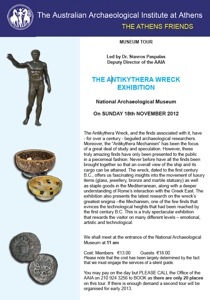
The Antikythera Wreck Exhibition…

Why not go to the next event hosted by the Athens Friends if you’re in Greece?

20121023-100512.jpg

Army IAF helicopters and Unit 669 fighters met their Greek counterparts in an exercise that took place in Greece

Source: iaf.org.il

Top of the Olympus

Filed under: Army IAF helicopters and Unit 669 fighters met their Greek counterparts in an exercise that took place in Greece. It was a good chance to exchange ideas, methods and thoughts.

The Mediterranean sea almost shimmers in response to the sun rays, but there is still no feeling of excitement at the sight of the clear water: blue is blue is blue and these helicopters made the long and monotonous journey from IAF bases to a Greek base just a few days ago. A few minutes later and the blue view changes again, the one seen from the window as well as the one mirrored on the cockpit screens.

We are making rounds, as if mimicking the rivers etched into the Mount Olympus. An isolated hut appears on the horizon and disappears time and again and the Unit 669 fighters along with their Greek counterparts are looking restless as they lean out the Blackhawk and stare downward.
Suddenly, we are landing and the rescue unit fighters leap off the helicopter. They disappear among the bushes and quickly return with a “wounded” man on one of the soldiers’ shoulders. They quickly hop back onto the plane and within a moment we’re already at an altitude of 7,000 feet.

Respect the Mountain

“In Israel we know every hill and every mountain and are less preoccupied with the elements of flying. We’re not preoccupied with navigational orientation, which is an important component of flying”, says Lieutenant Colonel Gadi, Commander of the “Rolling Sword” squadron and commander of the temporary squadron in Greece that includes Blackhawk and Apache-Longbow pilots. “Within two or three years, the average helicopter pilot has flown through the area so many times that he’s not surprised anymore. Here we have no idea. I don’t know the place and I need to study the territory extensively”.

But it wasn’t only for the element of surprise that the helicopters flew over to the other side of the Mediterranean Sea. It’s very difficult not to bow your head in respect when standing at the foot of the 2,900 meter Olympus Mountain. Major Gad: “Flying through high mountains is more complicated and requires more power.

There are winds, powerful whirlwinds, and it’s difficult to maneuver the helicopter”.
In the adjacent line, the combat helicopter formation is also watching the home of Zeus.

“The higher the helicopter climbs, the more difficult it is for it”, says Captain Or, Deputy Commander of the “Hornet” squadron. “That said, we were pleasantly surprised: The helicopter functioned a lot better than we expected and we must’ve been well prepared for the exercise and learned how to not to push ourselves into corners. Regardless, the helicopter makes it easier for you. It knows how to respond when it’s crunch time. It tells you how much power you need, what you need in order to fly, and what it limits are at that time”.

Similar and Different

A few days have passed since IAF pilots and pilots from the Greek Land army started training together, and the base hosting the participants is completely filled.

“There style of flight is different than ours. Their flight altitudes are significantly higher and their observation systems are different”, says Captain Yaki, a pilot in the “Hornet” Squadron. “We have an extremely advanced night vision system that allows us to see a clear picture, which requires of us to quickly adapt to their ability to locate targets and aim toward them”.

Captain Zois Dimitriadi, a Staff Officer in the Greek Army, adds: “Because our helicopters are A models, there’s a difference between the radars and our other systems and the Israeli helicopters. What we see on our screens is different than what can be seen on yours and because of the difference we can only transfer information by speaking on the signal operator”.

“Our operational area isn’t characterized by mountainous terrain”, explains Captain Zois Dimitriadi. “The operations that we practice are in sea or in tank combat. Tanks can’t climb mountains, so it interests us less”.

Brigadier General David Barki, Commander of Helicopter section in the IAF, also sees the importance and value of the collaborative practice. “It’s always beneficial to fly with whoever has the same missions and flies on similar platforms. A different point of view allows us to reevaluate our world view. The Greeks learn from different places, especially NATO and the experience that NATO has is from lessons learned by other Air Forces in areas like Libya, Afghanistan and Iraq. For us, these are important lessons to be learned”.

The Greek way

Kneeling close to the ground, Unit 669 Search & Rescue combat teams are scattered in the backyard of the base. The crews are in the grove near by the Squadron’s building and are training together with their Greek counterparts – Unit 31.

The training in the grove is just the warm-up. Not much time passes until the real-deal arrives: rescue and evacuation sorties performed by integrated crews of Greeks and Israelis. The “ride” was mixed as well: one performed by an Israeli Uh-60 Blackhawk, the other by a Greek UH-1.
“Flying in a different aircraft is a little weird”, says First Sergeant Yinon, Commander of the 669 crew, “there are technical differences between the helicopters: the seating arrangements and the way the equipment is organized. The flying is different mostly because of the communication with the pilots. We’re used to understanding where we’re going and knowing what’s going to happen. On the Greek helicopters only the in-flight mechanics hear the signal operator and we have no idea what’s going on”.

“Something from Everyone”

The helicopters might’ve been from both sides, but when it comes to combat doctrine there was only one option: The Israeli one. Unit 31 was formed 13 years ago, almost a generation after the formation of Unit 669 and as they say: experience cannot be replaced.

“This is our second exercise with Unit 669″, says Commander of Unit 31. “In the last exercise, we saw that 669 are very experienced and we decided to train with them again. Our activity mainly involves training sessions. We have peace and few real events, so we watch and learn from units like 669 that have combat experience, just as we learn from the Americans and the rest of the NATO countries. We need to take the best from each”.

And indeed, there is no doubt that unit 669 received the title “combat” for a reason. The unit participated in the First and Second Lebanon Wars and in many operations such as “Cast Lead” and even in “Operation Solomon” in the efforts to bring Ethiopian Jews to Israel.

“These are the Same Principles”

The last day of the exercise arrives. If at first the Israeli pilots could say that they’re still fatigued from the long flight from Israel, or that they haven’t gotten to know the terrain yet, all excuses are now invalid. They’ve already flown in unknown area, in high altitudes and in sunlight that persists until nine in the evening. Now they’re ready for the flagship sortie of the session.

Crews of UH-60 Blackhawks, Apaches, and Apache Longbows left to locate an abandoning pilot, and the leader holds a detailed list as required by NATO: the location of the pilot, confirmation code, threats in the area, and reason for abandonment.

Captain Gad: “It’s very similar to the way we do it. These are the same principles”.

But it seems that no matter what, in some areas the differences are purposeful. Aerial crews from both sides of the Mediterranean Sea are not going to develop identical combat doctrines anytime soon. Still, the breeze reaching us from the east brings a positive gust of spirit.

“There’s a nice openness amongst the pilots. It’s clear that the Greeks willingly want to join efforts and learn lessons”, says Brigadier General Yoav. “I think that we can take a few steps forward, like making our practices more complex”.

Anti-immigrant Golden Dawn rises in Greece

Source: WashingtonPost

The rise of Greece’s Golden Dawn: Ultranationalist party raises fears as it builds a network of public aid reserved only for Greek citizens and is accused of violence against immigrants.

At first glance, the shop on a nondescript street in this chaotic capital looks standard-issue military. Fatigues. Camouflage. Hunting gear. Deeper inside, the political message emerges. Black T-shirts emblazoned with modified swastikas — the symbol of the far-right Golden Dawn party — are on sale. A proudly displayed sticker carries a favorite party slogan: “Get the Stench out of Greece.”

By “stench,” the Golden Dawn — which won its first-ever seats in the Greek Parliament this spring and whose popularity has soared ever since — means immigrants, broadly defined as anyone not of Greek ancestry. In the country at the epicenter of Europe’s debt crisis, and where poverty and unemployment are spiking, the surplus shop doubles as one of the party’s dozens of new “help bureaus.” Hundreds of calls a day come in from desperate families seeking food, clothing and jobs, all of which the Golden Dawn is endeavoring to provide, with one major caveat: for Greeks only.

To fulfill its promise of a Greece for Greeks alone, the party appears willing to go to great lengths. Its supporters — in some instances with the alleged cooperation of police — stand accused of unleashing a rash of violence since the party rose to national office, including the stabbings and beatings of immigrants, ransacking an immigrant community center, smashing market stalls and breaking the windows of immigrant-owned shops.

Attacks have not stopped at foreigners. One Golden Dawn legislator slapped a left-wing female politician on national television. Party supporters have attempted to shut down performances of progressive theater. Activists see the party’s hand behind three recent beatings of gay men. The Golden Dawn has also begun engaging left-wing anarchy groups in street battles — more evidence, observers say, of a societal breakdown that some here fear could slide into a civil war if Greece is forced out of the euro and into an even deeper crisis.

But perhaps more worrisome, critics say, are signs that the Golden Dawn is establishing itself as an alternative authority in a country crippled by the harsh austerity imposed by its international lenders. It has set up its own “pure” blood bank, providing and accepting donations to and from Greeks only, in a nation of 11 million that is also home to roughly 1.5 million refugees and migrants, many of them from the Middle East, South Asia and Africa. As the party attempts to place a swelling number of unemployed in jobs, its officials say they have persuaded a major restaurant chain to begin replacing immigrants with Greek workers.

Landlords can seek the party’s help with the eviction of immigrant tenants. The Golden Dawn can provide not only government health inspectors and lawyers sympathetic to its goals, but also security, in the form of black­-uniformed followers with military haircuts who salute one another with upraised fists.

From his office inside the shop, Elias Panagiotaros, one of the new national legislators from the Golden Dawn, denied that the party is engaging in systematic attacks. But ethnic Greeks, he added, “have the right to protect themselves and their property from all these illegal savages.”

“During difficult periods of war or economic disaster, as we are facing now, there are people who have to do the hard job, the dirty job,” Panagiotaros said. “We are the ones.”

As deeply indebted European nations undergo waves of harsh government cuts in exchange for European Union-backed bailouts, observers warn that the fabric of society in some countries is being stretched to its breaking point. As countries trim spending, the elderly and disabled are enduring deep reductions in aid and pensions. Workers are losing their jobs or facing sharp salary cuts. Taxes are increased in the middle of steep recessions.

Other hot spots in Europe

The crisis has fanned the fires of independence in Catalonia and Dutch-speaking Belgium, threatening to break up the Spanish and Belgian states. But nowhere is the stress of the crisis more profound than here in Greece, where the deepest of cuts have left a grim tableau. One in every four Greeks is without work. Youth unemployment is above 50 percent. The suicide rate is climbing. Medical treatments for cancer and other illnesses have become harder to get. Growing intravenous drug use is causing a spike in the rate of HIV infection, according to a study published in the Lancet medical journal.

The collapsed economy is fertile ground for the Golden Dawn. Born in the 1980s and populated by Greek nationalists, including some who fought with the Serbs in the Balkans and had ties to Greece’s former military dictatorship, the party won its first-ever seats in Parliament in May with 7 percent of the vote. A recent poll showed that 22 percent of Greeks view the party favorably.

To be sure, nationalist and ­anti-immigrant parties are rising across Europe. But observers put the Golden Dawn in a league of its own. In 1987, the magazine of the party — headed by Nikolaos Michaloliakos, a former commando in the Greek special forces — published an issue hailing Hitler as “the great man of the 20th century.” On a recent visit to the help bureau, a poster heralding the Third Reich’s 1936 Berlin Games hung on a wall.

In a nation where memories of World War II-era atrocities remain fresh, polls have shown that most Greeks who support the Golden Dawn are doing so based solely on its anti-immigrant stance and that they largely dismiss the group’s more hard-core attributes. But its extracurricular activities are becoming more violent.

“They speak of ‘cleaning-up’ operations,” said Vassiliki Georgiadou, an academic who has studied the movement. “They will try, violently if needed, to ‘clean up’ whole neighborhoods, towns, the country.”

Greek Justice Minister Antonis Roupakiotis said he is concerned about the party’s alleged ties to the police and military. Accusations are rife that police may be working with the Golden Dawn on a new nationwide stop-and-search campaign targeting illegal immigrants. Activists also allege that segments of the police may be colluding with the party in anti-immigrant attacks, which the government estimates number at least two or three a week.

There have been limited attempts to investigate the party, including lifting parliamentary immunity for two Golden Dawn legislators who were recently videotaped harassing an immigrant market. But critics say the government has been reluctant to more broadly confront the party’s alleged abuses. Rather than banning the party, as some here suggest, Roupakiotis said the best solution is to improve social conditions in Greece to undermine the Golden Dawn’s strength.

‘Taking advantage’

“Greece fought the fascists in World War II, thousands of Jews ended up in crematoriums and now we are facing this threat again,” Roupakiotis said. He later added: “This is being caused by the tough conditions Greece is being forced to endure. Extremists are taking advantage of the situation.”

Yet Roupakiotis and others also blame the heavy flow of migrants from the Middle East and Asia who use Greece as a back door to enter the European Union, most often via Turkey. The situation is being made worse by European policies that allow E.U. countries to deport undocumented immigrants to their entry point in the union, often meaning Greece. As a result, the population in Greek jails is 40 percent non-Greek.

Since the Golden Dawn’s rise to office this year, immigrant communities across Greece are reporting what they describe as a reign of terror. In the America Square neighborhood of Athens, for instance, immigrants have begun organizing night watches after shopkeepers had their storefronts vandalized and immigrant men were assaulted. Earlier this month, residents say, a group of Greek men dressed in black stripped and humiliated an Ethiopian woman.

Some alleged attacks involve nothing more than insults. Others are more serious.

On Sept. 22, Ali Riasat Ghulam, a 47-year-old Pakistani man who has lived in Greece for 22 years, was at a gas station near his home in northern Athens. Two Greek men clad in black drove up in a car. The men, he said, asked him where he was from. After Ghulam replied “Pakistan,” the men attacked him with a knife, leaving him with three stab wounds that are still healing, including a 12-inch circular gash on his chest.

“We are terrified,” said Ghulam, who shares a rundown apartment on the edge of Athens with five other Pakistani immigrants. “We do not go out alone anymore, not even to the grocery store. We know the Golden Dawn is out there.”