Church of Holy Sepulchre

History:

Madaba map: Constantine’s basilica

  • Constantine’s Basilica (4th-7thC)

   The Church was established in 333 by the Roman emperor Constantine, after his mother, Queen Helena, marked the place of Golgotha during her visit in 326AD. The site was selected based on memories of the site as an execution place, and on the existence of a garden, tombs and fragments of wood planks.

  The large basilica was leveled by the Persian intrusion (614AD). The new church was built on top of it, so few remains of the foundation are left. However, this basilica is illustrated in the Byzantine mosaic map of Madaba, which was discovered in 1884 in a Byzantine church in Madaba, Jordan. This ancient map, laid out in the 6th C AD, shows the map of the Holy Land, with dozens of illustrated sites, including Jerusalem and the original basilica that once stood there. It has three doors on the front, parts of one of them survived in the current structure.

 
  • Restored Basilica (7th-11th C)

   After the conquest of Jerusalem by the Arabs (638AD) the basilica was partially restored on a smaller scale. It was initially  honored by the new rulers, who respected Jesus and his burial place. However, it was again leveled in 1010AD by the Arab rulers when their faith became more extreme. This destruction may have sparked the Crusaders waves of conquest, which aimed at regaining the control of the Holy city and rebuilding the church.

  • Crusaders (11-12th C)

   In 1099AD the Crusaders take the city and hold it until 1187.  They restored the basilica and inaugurated it in 1149AD as St. Sepulchre. After the surrender and fall of the city to the Saladin army, the Arabs honored the church, and the key to the church was kept by Arab families – until this date.

   The third Crusaders campaign (1189-1192) attempted to recapture the Holy city and regain control of the church, but failed. However, a treaty between Richard and Saladin (1192-1195) allowed pilgrims to visit the church. Five more Crusades (1204-1270) also failed to regain the city.

  • Modern times

   In July 1927 the church suffered damages in the 6.3 magnitude earthquake .

   The church is controlled by different Christian denominations within the church, each having a part of it: Catholics, Armenian, Greek Orthodox, Syrian Orthodox, Coptic and Ethiopian. The Muslim families have the key to the main door since 1187, and used to sit in the entrance, manage the church, and mediate  between the different denominations. It is opened to the public and attracts hundreds of thousands of visitors year round.

Structure:

     A floor plan of the church is seen below. The Holy Sepulchre (tomb, marked in orange) is located in the center of the Rotunda hall, under the larger dome. Inside the church are many altars and points of interest; they are detailed in the sections below, with smaller maps that pinpoint the specific location inside the church.

You can point and click on most of the sites to navigate to the selected description.

Photos:

The photos below follow a clock wise tour of the church, starting from the entrance on the south side.

(a) General view:

 A general view of the structure is seen from the bell tower of the Redeemer church, on the east side of the Holy Sepulcher. The larger dome is located over the Rotunda, the round hall where the tomb of Jesus is located. The smaller dome on its right is located over the Catholicon hall.

View of the Holy Sepulcher from the east side

(b) Yard and entrance:


   The church of the Holy Sepulcher, the site of the crucifixion and burial site of Jesus, can be approached from the St. Helena alley in the Christian quarter, through a gate, as seen on the right side.

    After passing the gate, there is an open yard before the church. On both sides of the yard are small churches, while the entrance to the Holy Sepulchre is located on the north side of the yard, as seen below.

Entrance to the Church through St. Helena alley

Yard in front of the Church of Holy Sepulcher.

   This is the view from the yard on the south side of the church, where the main door is located.  There are a pair of doors, but the right door is blocked off.  On the right side are stairs that lead to the Catholic’s Chapel of the Franks, the 10th station on Via Dolorosa (- stripping off Jesus garments).

Entrance to the Church of Holy Sepulcher, Jerusalem.

   In the base of the middle column on the left door is a large crack. There are reports on a fire that came out of that column in 1547. This incident is regarded by Greek Orthodox Christians as a miracle of the Holy fire that happened after they were banned from entering the Church, and helped them to reclaim rights of access.

   Other cases of the “Holy fire” occurred inside the church near the tomb of Jesus, or during a Greek Orthodox ceremony held on the night before Easter day. In such ceremonies the Patriarch lights up a fire, symbolizing the resurrection,  and passes the fire to torches held by the crowd.

   In one such case (1834) the fire caused a great panic, and hundreds of pilgrims that packed the halls were crushed when the crowd pushed their way out.

(c) Stone of Anointing (Unction):

   After entering the doors, the hall opens to the southern hall. On the floor near the entrance lays the stone of anointing. According to tradition, the body of Jesus was laid on this stone after it was removed from the cross.   The plan of the church is seen on the right; the location of the stone of Anointing is marked by a red marker close to the southern main entrance.

   In the photo below – the stone of anointing (unction) greets the visitors, who kneel, pray and kiss the stone. Above the stone are lamps, each donated by one of the denominations.

Church of Holy Sepulcher: Stone of Anointing

   This tradition is based on John 19: 40: “Then took they the body of Jesus, and wound it in linen clothes with the spices, as the manner of the Jews is to bury”.

   This is also illustrated on the wall mosaic above the entrance (see part of it on the right side).

Part of the mosaic painting above the entrance; shows the body of Jesus on the stone of Anointing

A closer view of the stone of Anointing is seen below.

Stone of Anointing

A view from the from the Crucifixion altar – on the second floor – is seen below.

Stone of Unction (Anointing) from the Crucifixion altar

 (d) Catholicon:

   The eastern dome and galleries are part of the Catholicon (“general”). This is a large Greek Orthodox cathedral, seen in the photo below.

   The plan of the church is seen on the right, with the location of the cathedral marked by a red marker in the center of the church.


The Catholicon, which parts of it is seen below, was the main part of the Crusader church.

The Catholicon.

 (e) Armenian Chapel:

   West to the Anointing stone is a small Armenian shrine, seen in the photo below.The plan of the church is seen on the right, with the location of the Chapel marked by a red marker on the southern side of the Rotunda.

Armenian chapel south to Jesus Tomb.

The photo below shows a view from the east side.

Armenian chapel

(f) Rotunda and Aedicule:

   The heart of the Holy Sepulchre is a round hall (“Rotunda”). Here, in the center of the circle, the tomb of Jesus is located in a smaller structure – the Aedicule – which has two chambers (the Chapel of the Angle and the room of the tomb).  The plan of the church is seen on the right, with the location of the Rotunda marked by a red marker on the western side of the church, below the main dome. The tomb is marked by an orange color in the center.

    The photo below shows the ceiling of the hall. The natural light filters in from the top of the cape, casting a holy spell over the hall. The dome, 11M high, is supported by 18 massive columns, and the only major part in the church that corresponds to the Constantine church.

Holy Seplucher: The Rotunda

The tomb of Jesus is located in the center of the hall, within the structure (Aedicule) seen below.

Tomb of Jesus within the Rotundo.

(g) Chapel of the Angel:

   The entrance to the tomb is through a narrow door on the east side. There is normally a queue to the enter the inner chamber.

Entrance to the tomb of Jesus

   The first chamber is called the “Chapel of the Angel”. A fragment of the blocking stone of the Sepulchre is stored here. It is called after the angel that removed the stone. The Biblical text (Matthew 28 2-3): “And, behold, there was a great earthquake: for the angel of the Lord descended from heaven, and came and rolled back the stone from the door, and sat upon it. His countenance was like lightning, and his raiment white as snow”).
Chapel of the Angel inside the tomb of Jesus

(h) Tomb of Jesus:

Behind the Chapel is another narrow door which leads to a smaller chamber – the tomb of Jesus.

Entrance to the tomb of Jesus

Parts of the tomb’s interior is seen below.  The room of the tomb is 2M by 93cm.  A marble lid covers the tomb.

Interior of the tomb of Jesus.

(i) Coptic Chapel:

   Behind the tomb of Jesus is the Coptic chapel .

 The plan of the church is seen on the right, with the location of the Chapel marked by a red marker on the western side of the church, adjacent to the Tomb of Jesus.

(j) Jacobite Chapel:

   Behind the tomb of Jesus, on the western side of the Rotunda walls,  is the Jacobite (Syrian Orthodox) chapel.

 The plan of the church is seen on the right, with the location of the Chapel marked by a red marker on the western side of the church.

 The chapel, seen below, is located in the 4th C Constantine church walls. The altar and walls around it were damaged by fire. On the southern side of the chapel are 1st C Jewish tombs. According to tradition, they are of Joseph of Arimathea and Nikodemus who took down and buried the body of Jesus (Luke 23: 50-56).

Jacobite chapel

(k) Chapel of Mary Magdalene:

   On the north side of the Rotunda, the hall of the tomb, is the Franciscan Chapel of Mary Magdalene. Mary of Magdala (Migdal) accompanied Jesus on his way to the cross and burial (Mark 15, 47: “And Mary Magdalene and Mary the mother of Jesus beheld where he was laid”) .

 The plan of the church is seen on the right, with the location of the Chapel marked by a red marker on the north-western side of the church, adjacent to the Rotunda.

   The altar is on the left side (shown on the next picture), while the Rotunda is seen in the background. On the north side of the chapel are more rooms.

Chapel of Mary Magdalene

  A view of Mary Magdalene is seen in the photo below.

(l) Greek Orthodox chapel –  Prison of Jesus:

      On the North-Eastern side of the Church, walking around the northern ambulatory,  is a Greek Orthodox  chapel of the Prison of Jesus.

 See plan of the church on the right; the location is marked by a red marker on the north-eastern corner of the church.

   A view of the chapel at the end of the northern walls is seen below. According to tradition, Jesus and the two thieves were housed here before the crucifixion.

Prison of Jesus

  On the floor, in front of the chapel,  is a mosaic figure of a double headed eagle – symbol of the Byzantine empire and the Greek Orthodox church.

   Before the entrance to the Prison of Jesus is a smaller chapel of the handcuffs of Jesus, seen on the right side.

  Under the altar, behind a glass window, are two holes in the floor. According to tradition, these holes (seen below) are the imprints of the feet of Jesus. Pilgrims leave notes inside the window.

Holes under the altar

Inside the inner room is the chapel of Prison of Jesus.

Prison of Christ

   A closer view of the altar is seen below. Pilgrims, who come to pray here, light up candles which leave black smoke marks on the walls.

Prison of Christ

(m) Greek Orthodox chapel – St. Longinus:

   Along the eastern ambulatory of the Church are three chapels – St Longinus, Division of the Holy Robes and the Derision chapel. The first of these three chapels is the Greek Orthodox chapel of St. Longinus.

 See plan of the church on the right; the location is marked by a red marker on the north-eastern side of the church, near Jesus Prison.

  This chapel memorizes another event of the crucifixion. Longinus, a Roman Centurion who commanded the soldiers that stood watch at Golgotha, was an eyewitness of the final moments of Jesus. This shock his soul and he later confessed  (Matthew 27, 54): “Now when the centurion, and they that were with him, watching Jesus, saw the earthquake, and those things that were done, they feared greatly, saying, Truly this was the Son of God”.

St Longinus

(n) Armenian chapel – Division of Holy Robes:

      On the eastern side of the Church is an Armenian chapel of the Division of the Holy Robes.

 See plan of the church on the right; the location is marked by a red marker on the eastern side of the church, near the steps to the underground level.

   This chapel memorizes the event when the soldiers divided Jesus’ clothes as booty. As per the Bible (John 19 23): “Then the soldiers, when they had crucified Jesus, took his garments, and made four parts, to every soldier a part; and also his coat: now the coat was without seam, woven from the top throughout.”.

Chapel of Division of Robes

  A view of the chapel, and its location in the eastern side of the Church, is seen below. The steps down to St. Helen are seen on the right side.

(o) St. Helen Chapel:

      On the east side of the Church are 29 steps that lead down to the Chapel of St. Helena, honoring the mother of Emperor Constantine who discovered the cross and vault in her visit (326AD).  This is a beautiful Armenian chapel. 

 See plan of the church on the right; the location is marked by a red marker on the eastern side of the church, in an underground level.


Steps lead down to the Chapel of St. Helen

  Along the walls of this wide staircase is ancient graffiti of crosses, as seen below. Those were scratched by medieval pilgrims.

Steps on the way down to St Helen chapel, with ancient graffiti.

The photo below shows the interior of the chapel with its large mosaic floor.

On the south side is a large painting showing the scene of the discovery of the cross.

St Helen Chapel - discovery of Jesus cross and sepulchre

   A smaller chapel is located on the north side of the main altar, and is dedicated to the “Good” (penitent) thief, St. Dimas (Dysmas). This thief, crucified alongside Jesus, repents of his sins and asks Jesus to remember him in his kingdom (Luke 23 42): “Then he said, “Jesus, remember me when you come into your kingdom.”.

St. Dimas - the "Good" thief

(p) Finding of the Cross Chapel :


   At the lowest chamber, 13 stairs under the Chapel of St. Helena (and towards east), is a cave called the “Finding of the Cross”.

   See plan of the church on the right; the location is marked by a red marker on the most eastern side of the church, two levels below the main floor.

    This is the place where Helena, mother of Emperor Constantine, found the fragments of the cross (on the right side).

Finding of the cross chamber

   On the left side of the chapel (see photo above) is a statue of Helena, holding the cross. Under it is an altar with the inscription seen on the right side. It was donated by the Austral-Hungarian Prince Maximilian, which later became the King of Mexico.  This was erected in 1857 and restored in 1965.

   The remains of the cross were relocated to Rome, and are on display in the “Holy Cross in Jerusalem” church (“Basilica di Santa Croce in Gerusalemme”).

Tablet under the status of Helena - St.Helena chamber

 (q) Greek – Derision chapel:

      On the eastern side of the Church is the Greek chapel of the Derision.

 See plan of the church on the right; the location is marked by a red marker on the eastern side of the church, near the steps to the underground level.


  Derision,  meaning treating with contempt, memorizes how the mob derided Jesus by mocking and laughing at him.


Derision chapel

 Under the altar, within a glass box, is a section of a stone column. According to tradition, Jesus was tied up to the pole.

Chapel of Derision

 (r) Chapel of Adam:

   Under the Calvary, on the first floor near the stone of Unction, is a small Greek Orthodox altar in the “Chapel of Adam”. According to tradition, the  the  burial site of the first man was at the site of the crucifixion.

 The plan of the church is seen on the right, with the location of the chapel marked by a red marker – in a small niche below the Greek Orthodox Calvary.

   The chapel of Adam, the first man, is seen below. Inside the altar, on its eastern side, is the Golgotha rock behind a window. A crack in the rock is, according to tradition, the result of an earthquake caused during the crucifixion. This is according to the Bible (Matthew 27, 51): “Jesus, when he had cried again… and the earth did quake, and the rocks rent”. This crack is also seen on the floor above the chapel.

Chapel of Adam

 (s) Greek Orthodox Calvary:

     On the south side of the church, near the entrance,  is a stairway leading to Golgotha, the traditional site of crucifixion.

 The plan of the church is seen on the right, with the location of the steps marked by a red marker near the entrance to the church. 


Stairway to Golgotha

   The steps lead to Golgotha on the second floor.  There are two chapels on this side of the floor – the Crucifixion altar (Greek Orthodox Calvary) and the Nails of the Cross Altar.

   The plan of the church is seen on the right, with the location of the Greek Orthodox Calvary marked by a redmarker on the second floor. 

   The Greek Orthodox Calvary (place of skull – Golgotha), seen below. According to tradition, Jesus is crucified here on the rock of Golgotha and dies on the cross.  It is also marked as station 12 in the way of the grief (Via Dolorosa).

Greek Orthodox Calvary.

   The  Greek Orthodox crucifixion altar places the exact site of the crucifixion. A silver disk with a central hole, underneath the altar, marks the spot on the rock where the cross stood; pilgrims kneel and kiss the spot, as seen below. The silver icons of Virgin Mary and St John are on Jesus side.

   Another view of the altar is seen below. On each side of the altar is a black marble disk that show the position of the crosses of the two thieves that were crucified with Jesus.

  The rich colors,  glittering silver and golden lamps – create a unique atmosphere and cast a special Holy sensation – a common theme in all Greek Orthodox churches.

Greek Orthodox calvary chapel

   Another photo of the altar is seen below with the rock of Golgotha behind the glass. The crack in the rock continues down to the chapel of Adam on the lower floor, and according to tradition the blood of Jesus dripped down the crack to the skull of Adam.

Greek Orthodox calvary chapel

 (t) Latin – Nails of the Cross:

   The Latin (Franciscan) altar on Golgotha is called the  “Nails of the Cross Altar”, and is adjacent to the Greek-Orthodox chapel. Here, according to tradition, Jesus was nailed to the cross.

   The plan of the church is seen on the right, with the location of the Latin altar marked by a red marker on the south-east side of the second floor. 


  The altar is marked as station 11 on Via Dolorosa, and is located just behind the wall of the 10th station (Chapel of the Franks).  The mosaics on the ceiling preserved a 12th C mosaic figure of Jesus. The more modern mosaics above the altar illustrate the crucifixion, the holy women at the foot of the cross, and the sacrifice of Isaac. This nave was constructed and designed in 1937  by Antonio Barluzzi, the famous Italian church architect who built many Franciscans churches in the Holy Land.

Station 11 - Nails of the Cross

Biblical references :
  These references describe the site of crucifixion and burial of Jesus.

Matthew 27:33, 35, 59-60

“And when they were come unto a place called Golgotha, that is to say, a place of a skull”…

“And they crucified him”….

“And when Joseph had taken the body, he wrapped it in a clean linen cloth, And laid it in his own new tomb, which he had hewn out in the rock: and he rolled a great stone to the door of the sepulchre, and departed”.

Mark 15:22, 46

“And they bring him unto the place Golgotha, which is, being interpreted, The place of a skull.”

“And he bought fine linen, and took him down, and wrapped him in the linen, and laid him in a sepulchre which was hewn out of a rock, and rolled a stone unto the door of the sepulchre.”

Luke 23: 33, 53

In Luke the name is Calvary (from Roman, meaning also place of skull):

“And when they were come to the place, which is called Calvary, there they crucified him,…”

“And he took it down, and wrapped it in linen, and laid it in a sepulchrethat was hewn in stone, wherein never man before was laid”.

John 19:17, 40-41

“And he bearing his cross went forth into a place called the place of a skull, which is called in the Hebrew Golgotha”.

“Then took they the body of Jesus, and wound it in linen clothes with the spices, as the manner of the Jews is to bury. Now in the place where he was crucified there was a garden; and in the garden a new sepulchre, wherein was never man yet laid”.

Scenes from the wall Mosaic above the entrance to the Church:

a: Jesus is taken down from the cross

b: Laid down and wrapped in the linen

   c: Laid into a new rock-hewn tomb

Film on plight of migrants in Greece released to the world

Source: enetenglish.gr

Crowd-funded film cataloguing the living conditions of migrants pulls no punches.

A chance email by a Somalian teenager in Athens opened the way to a series of shocking and untold stories that came to life in ‘Into the Fire’, a 40-minute crowd-funded film on the plight of migrants in Greece. Describing what they filmed as ‘unsettling’, the directors also intend to take the concept of crowd-sourcing into new territory

A hard-hitting documentary which shows the plight of refugees and migrants in Athens was released on Monday via YouTube in an experiment in distribution that its directors hope will bring the film all over the world and in different languages.

Into The Fire runs for 40 minutes and was directed by Guy Smallman and Kate Mara.

Its origins go back to this time last year when the two directors came to Athens to make a series of short films about austerity.


“What we discovered during our one day of filming on the situation of refugees in Greece was unsettling… The film grew in an organic fashion that surprised us. It seemed to have a life of its own and drag us along in its wake 

– Directors Guy Smallman and Kate Mara


Before they left, they were contacted by a teenage refugee from Somalia, who emailed them a list of problems that he and his friends were facing. They all met up, opening the door to many contacts in the migrant world and to untold and shocking stories, recorded as a short series of interviews. 

“What we discovered during our one day of filming on the situation of refugees in Greece was unsettling. Once we got back to London, we secured additional funding, to be able to go to Greece a second time and take a closer look at what was happening. From that starting point, the film grew in an organic fashion that surprised us. It seemed to have a life of its own and drag us along in its wake,” the directors said.

Shot and edited with sensitivity and compassion, it doesn’t pull its punches and makes for harrowing viewing in parts. It gives incredible insights to the reality faced by people who simply want to lead peaceful, normal lives.

The release took place simultaneously on websites, blogs and other platforms around the internet.

Having relied on crowd-funding for part of the production costs, those behind the film say they are taking the concepts of crowd-sourcing one step further.

“These days, everyone is talking about crowd-funding. Part of the production of Into the Fire was also crowd-funded. We are going one step further: Not only the production, but also the distribution of Into the Fire is crowd-sourced. On April 21 Into the Fire will be released on simultaneously on various websites and platforms around the internet.”

For the launch, they managed to have the film subtitled into nine languages –  Albanian, Czech, Danish, Dutch, French, German, Greek, Italian and Spanish – using social media networks. A team of volunteers has translated the film into a number of languages and new volunteers are still adding more languages.

The strategy of crowd-sourcing the production, launch and distribution of the film, its creators hope, will made those who view it active participants, commentators and amplifiers when it comes to opposing the conditions visited on the victims in the story.

Public screenings of the film are planned for Europe and Northern America, and those behind the film invite anyone to organise their own screening.


Γιάννης Πάριος: «Είναι ζωοποιός ο έρωτας!»

Γιάννης Πάριος: «Είναι ζωοποιός ο έρωτας!»

Μαθαίνεται ποτέ η «ύλη» του κεφαλαίου «έρωτας»;

«Νομίζεις ότι τη μαθαίνεις, αλλά όχι, δεν μαθαίνεται και αυτή ίσως είναι και η τεράστια γοητεία του.

Ότι όσο κι αν τον ξέρεις, σε εκπλήσσει κάθε φορά και σου ανατρέπει όλα όσα πίστευες ότι είχες καταλάβει. Δεν υπάρχουν συνταγές για τον έρωτα, δεν υπάρχουν όροι.

Κάθε φορά βάζεις ένα νέο στοίχημα» τόνισε στο TVΈθνος ο Γιάννης Πάριος. Έχει χορτάσει από στοιχήματα;  «Δεν είμαι νηστικός, αλλά δεν χορταίνεις ποτέ από έρωτα.

Πάντα θέλεις να υπάρχει στη ζωή σου -κι ας έχεις φάει τα μούτρα σου κι ας έχει πονέσει. Θες να ξεκουραστεί λίγο η ψυχή σου και μετά ξανά- Είναι ζωοποιός ο έρωτας!»


Σταύρος Νιάρχος: Στο… μεροκάματο όπως όλοι!

Σταύρος Νιάρχος: Στο… μεροκάματο όπως όλοι!

Τι και αν είναι γόνος μιας εκ των πλουσιοτέρων οικογενειών του κόσμου;

Ο Σταύρος Νιάρχος είναι ένας άνθρωπος όπως όλοι και για τον λόγο αυτό έχει επιλέξει να εργάζεται ως υπάλληλος σε γνωστό επενδυτικό γραφείο.

Η θητεία του σύμφωνα με την εφημερίδα Παραπολιτικά, στην EIM Group του δισεκατομμυριούχου Arki Busson η οποία διαχειρίζεται hedge funds δισεκατομμυρίων ξεκίνησε το 2011.

Ο Σταύρος Νιάρχος έπιασε δουλειά έπειτα από συνεννόηση του πατέρα του, Φίλιππου με τον Busson.

Ο Φίλιππος Νιάρχος ήθελε ο γιος του να δουλέψει σε ένα προστατευμένο περιβάλλον όπου θα ερχόταν σε επαφή με τα χρηματοοικονομικά, καθώς θα τον διαδεχτεί μια μέρα στο τιμόνι της αυτοκρατορίας που έχει χτίσει.

Ο Σταύρος Νιάρχος έπιασε δουλειά με κέφι, ενώ μάλιστα την πρώτη του μέρα τον υποδέχτηκε ο ίδιος ο Busson στα γραφεία.

Παπαρίζου-Καψάλης: Μαζί και στα δύσκολα

Παπαρίζου-Καψάλης: Μαζί και στα δύσκολα

Η Έλενα Παπαρίζου ταξίδεψε στον τόπο καταγωγής του αρραβωνιαστικού της, Ανδρέα Καψάλη στον Πύργο του νομού Ηλείας.

Η τραγουδίστρια βρέθηκε εκεί το Σαββατοκύριακο! Το ζευγάρι έφυγε το απόγευμα της Παρασκευής από την Αθήνα και έμεινε δύο 24ωρα. Ο λόγος του ταξιδιού τους;

Ο Ανδρέας έπρεπε να βρεθεί στο μνημόσυνο των σαράντα ημερών ενός αγαπημένου θείου του και φυσικά η Έλενα ήθελε να είναι δίπλα του, σύμφωνα με το περιοδικό ΟΚ.

Ο φωτογραφικός φακός τους εντόπισε έξω από το νεκροταφείο του Πύργου το περασμένο Σάββατο, όπου είχε τελεστεί το μνημόσυνο.

Actress Nia Vardalos chats with us on her most important role ever!

20130424-090941.jpg

Photo Credit: Rudy Lorejo Photography

The Second City gave Nia Vardalos a foot in Hollywood’s door but before her first big break in cinema, the Windy City was once home for her. From Winnipeg to Chicago, she set her life in comedy sharing The Second City stage with the likes of Chris Farley, and many more. She’s best known for her movie My Big Fat Greek Wedding that she’s written and starred in. For those of you who don’t remember, the movie was set here in our favorite city, Chicago.

Recently we’ve been seeing Nia everywhere on TV. This time touring for her new book called Instant Mom. Her Chicago book signing was held at the National Hellenic Museum and the #ChicagonistaLIVE caught up with her for a quick on-camera interview. Candidly she described her book as containing some “excessive name droppings”. It shed some light on how her career began with her now long-time friends, the super couple Rita Wilson and Tom Hanks. She then took her readers to what she now plays the most important role of her life: A mother. Instant Mom is about her often painful journey in finding her daughter through adoption. She talked about challenging moments like the 13 failed IVFs and on a happier note with just 14 hours notice of finally becoming a mom to a 3 years old. It was a laugh-out-loud book but be ready for a box of tissues! Instant Mom is by far the most honest parenting book I’ve read in a long time. Go get the book, but first check out our #ChicagonistaLIVE interview below.

By the way, she even mentioned about a new movie she’s working on!

Istanbul’s Greeks Demand Citizenship Restoration

The Greek population of Istanbul, which was rather forced to leave Turkey because of the sociopolitical situation, is now asking for its citizenship rights’ restoration, Sunday’s Zaman reported.
Greeks in İstanbul, known as Rums (Turkey’s Greeks), are finally given the chance to actually voice their demands thanks to recent improvements relating the minorities’ rights. Talks have been carried out with government officials through the İstanbul Rums Universal Federation, established in 2005.

The federation, after sending a letter to Prime Minister Recep Tayyip Erdoğan addressing their problems and demands, also sent a written statement to the Foreign Ministry and the Ministry of EU Affairs in September, 2012. The federation’s head, Nikolaos Uzunoğlu, presented a number of suggestions, among which were granting quick Turkish citizenship to people who would like to return, giving them orientation classes in order to help them open up small businesses and learn Turkish.

In the beginning of March, Deputy Prime Minister Bülent Arınç highlighted to his government members the importance of improving the lives of minorities in Turkey by expanding their rights, while calling minorities to return to Turkey.

Recently, Culture and Tourism Minister Ömer Çelik also made relevant statements in Moscow during an official visit.

According to Sunday’s Zaman’s extended article, Uzunoğlu also underlined that it is highly important for young Greeks to return to Turkey in order to keep their culture alive. That is why in a written statement presented to the government by his federation last year, was included the demand of support and encouragement for young Greeks’ returning.

Apart from the citizenship, the organization demands the return of property seized by members of the Greek minority who had to leave, providing students from EU member nations with the opportunity to enroll in Greek schools in Turkey, handing over the Rum Literary Society library to an İstanbul-based Greek organization, as well as financial and educational support for young Greeks in Turkey.

Τι μυστήριο κρύβουν τα παιδιά που γεννήθηκαν 1980 – 1989;

Source: Yahoo.gr

Δείτε την απίστευτη μετάλλαξη των γενεών του 1990 και του 2000 και πόσο … αδικημένα είναι αυτά τα παιδιά …

Ήμασταν στην τελευταία δεκαετία που προλάβαμε τα ομαδικά παιχνίδια Κρυφτό, Κυνηγητό, Κλέφτες κι Αστυνόμους κ.α. Ακόμα, βλέπαμε Στρουμφάκια, Thundercats, Κabamaru και Candy Candy και όχι Pokemon, Digimon και Yu Gi Oh…
Παίζαμε με Playmobil και LEGO και όταν θέλαμε ποδόσφαιρο υπήρχε ακόμα κάποια αλάνα να μας δεχθεί…
Βλέπαμε εκπαιδευτική τηλεόραση στην ΕΡΤ1 και ποιος θα ξεχάσει τη φρουτοπία και του κουτιού τα παραμύθια!
Επίσης, κάναμε ακόμη παιδικά πάρτυ στα σπίτια μας και δεν τρέχαμε σε παιδότοπους. Δεν γεννηθήκαμε μέσα στην Τεχνολογία, αλλά την ανακαλύψαμε σε μία
καλύτερη ηλικία – χωρίς να είναι η μοναδική επιλογή διεξόδου μας από την καθημερινότητα…
Τις πρώτες πορνοταινίες τις βλέπαμε σαν κλέφτες στο Βίντεο του Μπαμπά.
Ακούγαμε τη φωνή του άλλου όταν παίρναμε τηλέφωνο μέχρι που μας έφαγαν τα SMS…
Παίρναμε κουλούρια και λουκουμάδες με ζάχαρη από το κυλικείο και τρώγαμε Κουκουρούκου και Σοκοφρέτες…
Τρώγαμε ακόμη σπιτικό φαγητό… Πρωτοχρονιά και Ανάσταση καθόμασταν με την οικογένεια μας και δεν τρέχαμε 00.01 στο πρώτο κλαμπ να τσακίσουμε Mojito, Space και Cuervo…
Είδαμε τα πρώτα Χρυσά σε Ολυμπιακούς αγώνες με τη Βούλα Πατουλίδου και τον Πύρρο Δήμα… Είδαμε σε πρώτη εκτέλεση απίθανες σειρές … από το Εκμέκ Παγωτό και τους Απαράδεκτους μέχρι τις Τρεις Χάριτες και τους Μεν και Δεν…
Ξέραμε μόνο την Μπαλαρίνα και τον Μύλο στα Λούνα Παρκ και δεν μας έφευγε η ψυχή στα 3G…
Μας έδιναν ένα πεντοχίλιαρο οι γιαγιάδες και οι παππούδες και νιώθαμε ευτυχισμένοι… Δεν ήμασταν μουρτζούφληδες όπως τώρα που αν πάρουμε 20 ευρώ κοιτάζουμε με μισό μάτι…
Ακόμα και το Game Boy δεν μας έκλεινε σπίτι…. το παίρναμε και τρέχαμε έξω να το μοιραστούμε με τους φίλους μας…
Γράφαμε ακόμη ραβασάκια και δεν κάναμε comment σε twitter και Facebook!
Βγαίναμε με τα ποδήλατα στο δρόμο και δεν κινδυνεύαμε τόσο…
Θυμάστε τους Ευχούλιδες;
Ποιος θα ξεχάσει το Χάρρυ Κλυν σόου και τους Δέκα Μικρούς Μήτσους, το Κόντρα Πλακέ, τον Τροχό της Τύχης, Μέγκα Μπάγκα, ‘Αλλα Κόλπα (Ά ρε Βλάσση)…
Τα σόου της Ρούλας Κορομηλά και το Ciao Ant1….
Τους Ghostbusters- Karate Kid – ET – Home Alone – Γκούνις – Σεξογήινη (Ποιός δεν είχε κολλήσει με την Κίμ Μπάσιτζερ;), Carousel και Disney club στο Mega…
Τα αγαπημένα μας παιχνίδια ήταν Μήλα – Σχοινάκι – Μακριά γαϊδούρα
Προλάβαμε όλη την εξέλιξη του Χτυποκάρδια στο Μπέβερλυ Χιλς και το Baywatch, καθώς και τον Ιππότη της Ασφάλτου…
Τραγουδήσαμε «Το νού σου κύριε οδηγέ» και χορέψαμε λαμπάντα…
Πηγαίναμε στα «Ηλεκτρονικά» και παίζαμε Super Mario, Sonic, Mortal Compact, Streetfighter, Bubble Bubble, Tetris, Arkanoid, Top Gun και στα πλοία τρέχαμε να βρούμε που τα έχουν κρυμμένα…
Οι γονείς μας δεν ανησυχούσαν αν θα γυρίσουμε σώοι όπως τώρα… Ματώναμε τα γόνατα μας και συνεχίζαμε το παιχνίδι…
Θυμάστε τα καραμελάκια που όταν τα έβαζες στο στόμα ανατινάσσονταν; Και τη μόδα με τις τσίχλες Shock, το σπανάκι του Ποπάυ και τα τσιγάρα του Αστερίξ;
Παίζαμε Μπουκάλα και Θάρρος ή Αλήθεια, πατούσαμε τα κουτάκια από τα αναψυκτικά και περπατούσαμε σαν να ήταν τακούνια!
Κάναμε απίστευτες πλάκες με τις μπουγελόφατσες και τα μπουγέλα γενικά στα σχολεία…
Ντυνόμασταν Νίτζα, Καουμπόυ και Ρομπέν των Δασών τις Απόκριες και όχι Πίκατσου και Μπομπ Σφουγγαράκης…
Ψάχναμε για αυτοκόλλητα και τάπες στα γαριδάκια…
Είχαμε τα κλασσικά walkman με τα ακουστικά με το σφουγγαράκι στο πλάι και με το ζόρι χωρούσαμε στη τσέπη μας δύο κασέτες…
Κάναμε κοπάνες για να παίξουμε ποδόσφαιρο και όχι για να πάμε στα WEB και στα InSpot…
Βλέπαμε το Μικρό Σπίτι στο Λιβάδι, Αυθαίρετους, Ρετιρέ και Μικρομεσαίους…
Συνωστιζόμασταν στα Βίντεο Κλαμπ, για να πάρουμε κασέτες με τον Μουστάκα, τον Τσάκωνα, τον Ταμτάκο και τους νέους τότε Μιχαλόπουλο, Γαρδέλη, Ψάλτη και Στίβ Ντούζο…
Παίζαμε ακόμα με μπίλιες…Παίζαμε με τα ΥΠΕΡΑΤΟΥ καρτελάκια… αυτοκίνητα-πλοία-αεροπλάνα
Παίρναμε τα φακελάκια με τις φάρσες, μελανό μάτι, σκουλήκια στο νερό, τρύπιο δάχτυλο και άλλα πολλά… Είχαμε τις χλαπάτσες…
To πρώτο μας ηλεκτρονικό το Atari και ακολούθησαν NES, Super Nintendo, Mega Drive…
Βλέπαμε Παντρεμένους με παιδιά και τσαντιζόμασταν που η μαμά μας ήθελε να βλέπει Ατίθασα Νιάτα και Τόλμη και Γοητεία…
Πηγαίναμε στα μηχανήματα που έβγαζαν τα μπαλάκια με τα δωράκια και είχαμε αγωνία τι θα πετύχουμε…
Λέγαμε 6 αριθμούς για το νεόφερτο τότε Λόττο στους γονείς, αλλά ποτέ δεν μας κάθισαν…Παίρναμε Ξυστό και αν μας έπεφτε ένα κατοστάρικο, παίρναμε άλλο ένα και το χάναμε και αυτό…
Είδαμε να ξεφυτρώνουν καρτοτηλέφωνα σε όλη την Ελλάδα και κάναμε συλλογή από τηλεκάρτες…
Βάζαμε τα σπορτεξάκια με τα φώτα και είχαμε κολλήσει με τις τσάντες PAXOS…και ξερός…
Βλέπαμε Μάπετ Σόου…
Παίρναμε το μπλοκ με τις χειροτεχνίες και με το ασημόχαρτο και το χρυσόχαρτο φτιάχναμε στολίδια τα Χριστούγεννα…
Βλέπαμε Παιχνίδια χωρίς Σύνορα…
Είδαμε Michael Jordan και μαζεύαμε κάρτες ΝΒΑ…
Το πρώτο μας φιλί δινόταν με ακούμπισμα των χειλιών και όχι κατευθείαν η γλώσσα στον ουρανίσκο…
Μαζεύαμε καπάκια από αναψυκτικά στα ταβερνάκια που πηγαίναμε με τους γονείς.
Πιάναμε τα καλαμάκια και βάζοντάς τα κάτω από τη μασχάλη, κάναμε τεχνητά Αέρια…
Ακούγαμε Στέφανο Κορκολή, Οmega Vibes, Αλέξια και Κωνσταντίνα…
Βρέχαμε χαρτοπετσέτες και τις πετούσαμε σε ακαθόριστες πορείες και όποιον έβρισκε…
Τρώγαμε τυράκια BABYBEL και LA VAS QUI RIT(που το λέγαμε πάντα λαβάς τυρί)…
Διαβάζαμε Αλμανάκο, Κατερίνα, Μανίνα και Σαΐνια…
Βάζαμε κολόνια Μυρτώ…
Λουζόμασταν με Johnson’s όχι πια δάκρυα και βάζαμε τραυμαπλάστ με φιγούρες και ας μην είχαμε πληγή…
Τρώγαμε Καραμπόλα, αλλά ανοίγαμε το δωράκι πριν φάμε το παγωτό…
Παίζαμε τα επιτραπέζια της ΜΒ, όπως ΗΟΤEL, Μάντεψε ποιος, Το στοιχειωμένο σπίτι…
Είδαμε τον Casper και τον Σκαθαροζούμη…
Περάσαμε την επιδρομή από ψείρες και κόνιδες, και όμως είμαστε εδώ….Το φάρμακο που είχαν οι μαμάδες βρωμούσεεε…
Eίδαμε το Αγάπη μου συρρίκνωσα τα παιδιά και λατρέψαμε τα Cheerios από την σκηνή με τον μπαμπά στο πιάτο…
Τρώγαμε μπισκότα Rondo…και ανοίγαμε πρώτα να φάμε τη σοκολάτα ή τη βανίλια και μετά το μπισκότο…
Bλέπαμε τα Ρακούνς και τον Ντένις τον Τρομερό… Παράλληλα με το Για πα Ντα μπα Ντου του Φρεντ από τους Flinstones που τα άκουγε μονίμως από τη Βίλμα…
Βλέπαμε τη σειρά με το ανθρώπινο σώμα και το πως λειτουργεί ο οργανισμός…
Tραγουδούσαμε το Μ’ αρεσει να μη λέω πολλά και το Λιωμένο Παγωτό (που κολλούσε πάντα στο χέρι)…
Το σεξ ήταν ταμπού και κουβέντα στα κρυφά…
Κάθε βράδυ λέγαμε «Καληνύχτα» ένας, ένας και αν δεν τελειώναμε, δεν κοιμόμασταν… Κοιμόμασταν σε φίλους Σαββάτο βράδυ και το κανονίζαμε από την Κυριακή…
Όταν μας επισκεπτόταν κάποιος, δεν τον κοιτούσαμε στα χέρια…
Αγοράζαμε καινούρια τετράδια και κάθε χρόνο ορκιζόμασταν ότι θα τα κρατήσουμε καθαρά. 2 βδομάδες μετά είχαν γεμίσει στιχάκια και μηνύματα
με τον διπλανό…
Όταν βλέπαμε προφυλακτικά κοκκινίζαμε… Θεωρούσαμε πορνό τη «Γαλάζια Λίμνη»…
Ερωτευόμασταν και το μάθαινε όλο το τμήμα… Αργήσαμε να μάθουμε το πώς γίνονται τα παιδιά…ενώ τώρααα…
Βλέπαμε το λικέρ στο σύνθετο του σαλονιού και δοκιμάζαμε…
Τις Κυριακές, σηκωνόμασταν απο νωρίς για να προλάβουμε τα «παιδικά»….
Ζωγραφίζαμε ακόμη σε χαρτί και όχι με προγράμματα στα VISTA…
Φτιάχναμε ακόμη παζλ και οι γονείς μας τα έκαναν κορνίζες…
Την πίτσα που την τρώγαμε σπάνια και κάναμε γιορτή κάθε φορά που μαθαίναμε ότι οι γονείς θα μας πάνε σε πιτσαρία…
Μη Χάσετε:
Όλες οι ερωτήσεις και οι μύθοι για το κάπνισμα
Εύβοια: Η συγκλονιστική ιστορία της Άννας – Έκοψε το πόδι της για να ζήσει ελεύθερη!
«Ενας 15χρονος είμαι ρε παιδιά- Δεν ήξερα καν που είναι το πάγκρεας»

Υπάρχει ελπίδα για την Ελλάδα;

Η κατάσταση στην δύσμοιρη πατρίδα μας οδηγείται από το κακό στο χειρότερο και ο λαός ειδικά οι νέα γενιά έχει πάψει, να ελπίζει και να ονειρεύεται ένα καλύτερο μέλλον. Η Ελλάδα μετά από την υπογραφή και εφαρμογή τριών μνημονίων με τους δανειστές της έχει βυθιστεί σε έναν φαύλο κύκλο ύφεσης, ανεργίας και αποτυχίας επίτευξης των δημοσιονομικών στόχων, όπως από τα πρώτα άρθρα μου για το θέμα είχα επισημάνει έγκαιρα και για αυτήν την αποτυχία δεν φταίει κυρίως η δήθεν κακή εφαρμογή της οικονομικής συνταγής, όπως βολικά παπαγαλίζουν διάφοροι εγχώριοι υποστηρικτές της τρόικα. Αποκαλυπτικό μάλιστα του επικοινωνιακού παραμυθιού, που έχουν στήσει οι δανειστές και οι εγχώριοι υποτακτικοί τους είναι και το επιχείρημα, ότι δήθεν η Ελλάδα δεν έκανε τίποτα στον τομέα των μεταρρυθμίσεων και για αυτό δεν πέτυχε τους στόχους του το πρόγραμμα. Έρχεται όμως το Lisbon Council και η Berenberg Bank, για να καταδείξουν το μέγεθος του ψεύδους, όταν με την έκθεση τους «Τhe 2012 Euro Plus Monitor», που εκπόνησαν απο κοινού, η Ελλάδα παίρνει την υψηλότερη βαθμολογία (8,2 με άριστα το 10) και την υψηλότερη θέση μεταξύ 20 εξεταζόμενων χωρών της Ευρώπης, σε ότι αφορά την επίτευξη δημοσιονομικής προσαρμογής και την προώθηση μεταρρυθμίσεων. Είναι λοιπόν χωρίς αμφιβολία ο πυρήνας της συνταγής εξαρχής λανθασμένος και αδιέξοδος, που οδηγεί σε αστοχίες στα οικονομικά μεγέθη, σε παράλυση της πραγματικής οικονομίας και σε αποσάθρωση της ελληνικής κοινωνίας και των θεσμών της.

Τώρα μετά και την ομολογία του Ολιβιε Μπλανσάρ εκ μέρους του Δντ, ότι έκαναν λάθος, όσον αφορά τις επιπτώσεις και το ύψος του δημοσιονομικού πολλαπλασιαστή, δεν υπάρχει πλέον καμία δικαιολογία επ΄ αυτού. Στην περίπτωση της Ελλάδας, ο συντελεστής του «δημοσιονομικού πολλαπλασιαστή», που υπολογίστηκε κατ’ αρχήν για την τελευταία τριετία ήταν 0,5, ενώ εκ του αποτελέσματος κρίνοντας, αποδείχθηκε, ότι η επίδραση στη γενικότερη οικονομία ήταν από 1,2 έως 1,7. Αυτό σημαίνει, ότι τα μέτρα είχαν διπλάσια και τριπλάσια υφεσιακα αποτελέσματα, με αντίστοιχη μείωση του ΑΕΠ της χώρας, από ότι είχαν προβλέψει αρχικώς. Το ερώτημα, που τίθεται είναι, γιατί ενώ ομολογούν την αποτυχία τους πια, δεν διορθώνουν την παταγωδώς αποτυχημένη συνταγή; Η αποτυχία μάλιστα επίτευξης των στόχων των αντίστοιχου προγράμματος, που εφαρμόζεται στην Πορτογαλία, παρά το ότι αυτή η χώρα το εφάρμοσε χωρίς ιδιαίτερες αντιδράσεις, αποδεικνύει την λάθος κατεύθυνση, στην οποία κινούνται οι δανειστές.

To δημόσιο χρέος της Ελλάδας είναι μετά το επιθυμητό, αλλά ανεπαρκές κούρεμα (PSI) του 2012 και το πρόγραμμα επαναγοράς των ελληνικών ομολόγων (Δεκέμβριο 2012) μειωμένο από 367,9 δισ. ευρώ (ή 176,4% του ΑΕΠ) στο τέλος του 2011 σε 305,5 δισ. ευρώ (ή 156,6% του ΑΕΠ) στο τέλος του 2012. Αυτό και μόνο αποδεικνύει, ότι το δημόσιο χρέος της χώρας παραμένει απολύτως μη βιώσιμο και ότι απαιτείται βαθύτερο και συνολικότερο κούρεμα του, για να επανέλθει άμεσα σε βιώσιμα επίπεδα, όπως κατ΄επανάληψη έχω γράψει αλλά και ζητήσει σε όλες τις δημόσιες τοποθετήσεις μου από το 2011, όταν οι περισσότεροι δημοσιολογούντες, συμπεριλαμβανομένης της πολιτικής ηγεσίας τότε, ήταν αντίθετοι ακόμη και στο αρχικό κούρεμα (PSI), που τελικά έγινε και μετά πάλι λανθασμένα μας το παρουσίασαν ως τελική σωτηρία μας. Μια ματιά στις δηλώσεις των πολιτικών αρχηγών των μεγαλύτερων κομμάτων τον Ιούνιο του 2011 είναι ενδεικτική.
Άποψη μου αμετακίνητη είναι, ότι το γρηγορότερο θα πρέπει, να διεκδικηθεί από την πλευρά μας με συνεχείς πιέσεις και να αποφασιστεί από τους δανειστές μας επιτέλους, ως μόνη διέξοδος, ένα νέο πραγματικό και εθελοντικό κούρεμα του δημοσίου χρέους, που βρίσκεται στα χέρια των επίσημων δανειστών της χώρας, ένα Οfficial Sector Ιnvolvement ( OSI). Το κούρεμα αυτό πρέπει, να αφορά το σύνολο του χρέους, που έχουν στα χέρια τους οι επίσημοι δανειστές, δηλαδή οι χώρες οι οποίες μας δάνεισαν μέσω του μηχανισμού στήριξης από τον Μάιο του 2010 με τα διακρατικά δάνεια , τα ποσά που μας δάνεισαν μέσω του EFSF αργότερα , καθώς και το χρέος που κατέχει η ΕΚΤ και οι κεντρικές τράπεζες των κρατών μελών, όπως και το ΔΝΤ, που μέχρι σήμερα μας έχει δανείσει ένα ποσό περίπου 27 δις ευρώ.

Όσο δύσκολα και αν είναι για την μεν ΕΚΤ, να αποδεχθεί αλλαγή του καταστατικού της για κάτι τέτοιο και για δε το ΔΝΤ να αποδεχθεί πρώτη φορά στην ιστορία κούρεμα του δικού του ποσού, επειδή δεν θέλει, να χάνει τα χρήματα του, διότι θεωρεί, πως είναι δανειστής τελευταίου καταφυγίου και δεν πρέπει, να δημιουργηθεί προηγούμενο εις βάρος του, είναι απαραίτητο πάση θυσία, να το επιδιώξουμε συντονισμένα. Άλλωστε το ΔΝΤ για το επίσημο χρέος, που βρίσκεται στα χέρια των υπολοίπων δανειστών ορθά επιδιώκει και ζητά το κούρεμα, όπως έχουμε διαπιστώσει μέχρι σήμερα, άλλα παράλληλα επιθυμεί, να εξαιρέσει τα χρήματα, που δάνεισε στην Ελλάδα το ίδιο. Το ύψος του κουρέματος αυτού απαιτείται , να φτάσει στο 50% του χρέους, που κατέχουν οι επίσημοι πιστωτές, έτσι ώστε το δημόσιο χρέος της χώρας, να πέσει κάτω από το 80% του ΑΕΠ και να καταστεί πραγματικά βιώσιμο, διότι όπως έχω τοποθετηθεί με άρθρο μου το 2011, ο επιδιωκόμενος στόχος για χρέος 120% του ΑΕΠ το 2020 δεν καθιστά το ελληνικό χρέος βιώσιμο σε καμία περίπτωση. Το δημόσιο χρέος της χώρας, που βρίσκεται στα χέρια των επίσημων πιστωτών μας ανέρχονταν στο ύψος των 183 δις ευρώ στο τέλος του 2012 από το σύνολο των 305,5 δίς.

Επίσης το ποσό των 50 δις της ανακεφαλαιοποίησης των ελληνικών τραπεζών αποτελεί αδήριτη ανάγκη, να επιδιώξουμε μετά από σκληρή επαναδιαπραγμάτευση, να προέλθει απευθείας από τον (ΕSM) Ευρωπαϊκό Μηχανισμό Σταθερότητας, χωρίς να επιβαρυνθεί τελικά το δημόσιο χρέος, με την βοήθεια ενός συνασπισμού επιτέλους των πληττόμενων χωρών του Νότου με προεξάρχουσες τις Ιταλία και Ισπανία, που ήδη πέτυχαν για το μέλλον με την απόφαση του Συμβουλίου Κορυφής τον Ιούνιο του 2012 για τις ανάγκες ανακεφαλαιοποίησης των δικών τους τραπεζών, να προέλθουν τα απαραίτητα ποσά για αυτές απευθείας από τον (ΕSM) Ευρωπαϊκό Μηχανισμό, όταν λειτουργήσει η τραπεζική ένωση. Σε αυτό μας το αίτημα θα έχουμε συμπαραστάτη και το ΔΝΤ, το οποίο ήδη πιέζει προς αυτήν την κατεύθυνση, αναγνωρίζοντας διαρκώς σε αντίθεση με τις εμμονές των Ευρωπαίων, ότι το χρέος δεν είναι βιώσιμο αλλιώς. Κάτι τέτοιο θα έχει ως αποτέλεσμα την πρόσθετη μείωση του κατά 25% επι του ΑΕΠ, ακριβώς επειδή τα χρήματα, που θα απαιτηθούν για τις τράπεζες, δεν θα επιβαρύνουν τελικά το ελληνικό δημόσιο. Αν μάλιστα υπάρξει συνδυασμός κουρέματος κατά 50% και ανακεφαλαιοποίηση απευθείας από τον ESM, τότε θα έχουμε σωρευτικά μια μείωση του δημοσίου χρέους κατά 60% περίπου επι του ΑΕΠ.

Επιπροσθέτως μια συνολική συμφωνία του ελληνικού προβλήματος, θα χρειαστεί, να περιλαμβάνει την μείωση του επιτοκίου δανεισμού περεταίρω στο επίπεδο του 1% ή και τον εκμηδενισμό του δεδομένου, ότι το χρέος δεν είναι βιώσιμο και υπάρχει κίνδυνος, να χαθούν ολοσχερώς τα κεφάλαια, που μας δάνεισαν, άρα χρειάζεται μια ρεαλιστική προσέγγιση και από την πλευρά των δανειστών άμεσα. Η μείωση αυτή του επιτοκίου δανεισμού χρειάζεται , να αφορά οπωσδήποτε τους επίσημους πιστωτές και ίσως θα χρειαστεί, να επιδιωχθεί, αν γίνεται πια , μια νέα συμφωνία σε εθελοντική πάντα βάση και για τους ιδιώτες πιστωτές, εξαιρουμένων βέβαια των δύστυχων μικροομολογιούχων και των ασφαλιστικών ταμείων της χώρας, οι οποίοι κατέχουν πλέον το υπόλοιπο μετά το αρχικό PSI μέρος του χρέους, δηλαδή 104,6 δισ. Ευρώ, ενώ σήμερα τα ελληνικά ομόλογα, που έχουν στα χέρια τους έχουν επιτόκιο 3,6%. Βέβαια λόγος για νέο κούρεμα του κεφαλαίου του χρέους, που έχει στα χέρια του ο ιδιωτικός τομέας δεν μπορεί, να γίνει και μάλιστα εύκολα ειδικά μετά τις απαράδεκτες εγγυήσεις, που συμφωνήθηκαν με το επιβεβλημένο, αλλά ανεπαρκές αρχικό PSI, το οποίο συνοδεύθηκε δυστυχώς με την αποδοχή του επαχθούς Αγγλικού δικαίου, που εξασφαλίζει μόνο τα συμφέροντα του δανειστή. Άρα το μόνο, το οποίο απομένει, είναι, να επιδιωχθεί, αν πλέον είναι εφικτό, όσον αφορά ειδικά τους ιδιώτες πιστωτές, μετά από κατάλληλη πίεση και της τρόικα, η εθελοντική συμμετοχή τους ίσως σε μια μείωση του επιτοκίου, που εξασφάλισαν με το PSI και παραμένει υψηλό για τις δυνατότητες της χώρας.

Επίσης θα χρειαστεί , να διεκδικήσουμε όλοι μαζί, να ισχύσει και για την Ελλάδα στο μέλλον το σχέδιο για επαναγορά ομολόγων απευθείας από τον ESM και την ΕΚΤ από την δευτερογενή αγορά στις τιμές, που διαπραγματεύονται αυτά, αν απαιτηθεί και οι οποίες είναι πολύ χαμηλότερες από την ονομαστική τους αξία και άρα θα οδηγηθούμε σε πρόσθετη μείωση του χρέους, χωρίς να χρειάζεται η χώρα, να δανείζεται ποσά από τους δανειστές και να τα εγγράφει στο χρέος, για να κάνει μια τέτοια διαδικασία η ίδια, όπως έγινε με την ανεπαρκή επαναγορά ομολόγων από την Ελλάδα τον Δεκέμβριο του 2012.

Οι παραπάνω ενέργειες είναι πλέον επιβεβλημένες παρά την δυσκολία τους και απαιτείται ρεαλισμός από του δανειστές μας, διότι υπάρχει ο κίνδυνος σε περίπτωση μιας απευκταίας άτακτης ελληνικής χρεοκοπίας, να χάσουν το σύνολο των χρημάτων τους πράγμα, που πρώτα οι ίδιοι δεν επιθυμούν.

Όλα αυτά είναι απαραίτητο , να συνοδευθούν από ριζική αλλαγή της αποτυχούσας οικονομικής συνταγής, αλλά και από ένα νέο αναπτυξιακό πακέτο βοήθειας από την ΕΕ με την μορφή σχεδίου Μάρσαλ πέρα και πάνω από τα κονδύλια του ΕΣΠΑ, που θα κατευθυνθεί σε επενδύσεις, για την τόνωση της ανάπτυξης και για την δημιουργία νέων θέσεων εργασίας με την τεχνική συμβολή της ΕΕ.

Η συνταγή, η οποία εφαρμόζεται, αν δεν αλλάξει το ταχύτερο θα οδηγήσει σε νέα δραματικά αδιέξοδα τόσο την χώρα όσο και τους ίδιους τους δανειστές. Σε όλες τις προηγούμενες παρεμβάσεις μου με συνεντεύξεις και άρθρα τόνιζα, ότι όσοι προέβλεπαν ύφεση 2,8 με 3% του ΑΕΠ για το τέλος του 2012 και πρωτογενές πλεόνασμα τον Απρίλιο του 2012, είναι εκτός τόπου και χρόνου. Μίλησα για ύφεση κοντά στο 6,5% το 2012 και επιβεβαιώθηκα από την εξέλιξη της οικονομίας και τώρα πάλι θεωρώ, ότι οι προβλέψεις των δανειστών για ύφεση 4,5% το 2013 είναι για τον κάλαθο των αχρήστων, αν δεν είναι επικοινωνιακού τύπου και μόνο, διότι η ύφεση κατά την εκτίμηση μου στην καλύτερη περίπτωση για την χώρα θα μείνει γύρω στο 6,5% για το τέλος του 2013 και αν υπάρξουν και νέα μέτρα για να κλείσει η τρύπα, που θα δημιουργηθεί στο τέλος στην εκτέλεση του προϋπολογισμού του 2013 και η οποία θα αγγίξει τα 3 δις ευρώ περίπου, όσο και αν το αρνείται αυτό τεχνητά η κυβέρνηση, τότε σε συνδυασμό με τις δυσμενείς επιπτώσεις και από την κυπριακή κρίση, αυτή θα ξεπεράσει πιθανόν και το ποσοστό αυτό, κινούμενη ακόμη υψηλότερα και βυθίζοντας την κοινωνία και την πραγματική οικονομία στο χάος.

Στο σημείο αυτό εντοπίζεται και η βασική ευθύνη του ΔΝΤ, διότι ενώ η στάση του στην υπόθεση του περεταίρω κουρέματος και της ανακεφαλαιοποίησης απευθείας από τον ΕSM των ελληνικών τραπεζών, είναι πολύ υποστηρικτική και θετική απέναντι τουλάχιστον στους Ευρωπαίους, όσον αφορά την συνταγή παίζει και αυτό εξίσου με την Γερμανία και τις άλλες χώρες του ευρωπαϊκού Βορρά αρνητικό ρόλο, αφού ενώ παραδέχεται το λάθος, δεν δέχεται και αυτό περιέργως την αλλαγή της.

Τα όσα λέγονται δυστυχώς και από πλευράς της κυβέρνησης, ότι το 2013 επειδή θα εξοφληθούν στο σύνολό τους οι οφειλές προς τους ιδιώτες, που έχει συρρεύσει απαραδέκτως το κράτος και αφορούν περίπου 9,2 δις ευρώ σε συνδυασμό με την ανακεφαλαιοποίηση των τραπεζών, θα έχουν ως αποτέλεσμα την μείωση της ύφεσης σε μικρότερο ποσοστό το 2013 είναι αστήρικτα και ευσεβείς πόθοι, διότι ακόμη και αν εξοφληθεί το σύνολο των οφειλών του δημοσίου, αυτό θα εξισορροπήσει για μία μόνο χρονιά τα μέτρα των 9 δίς που πήραν φέτος. Η εξόφληση των οφειλών είναι ποσό, που θα δοθεί εφάπαξ, ενώ τα μέτρα αυτά, εκτός του ότι είναι μόνιμα και θα συνεχίσουν, να επιδρούν υφεσιακά και τις επόμενες χρονιές, θα συνοδευτούν και από νέα συμφωνημένα ήδη ύψους 4,5 δις για την περίοδο 2014- 2016 και επιπροσθέτως από άλλα λόγω της αστοχίας του προϋπολογισμού του 2013, που διαφαίνεται με βεβαιότητα στον ορίζοντα. Τι θα γίνει το 2014 λοιπόν, όταν το κράτος δεν θα έχει άλλες οφειλές στην καλύτερη περίπτωση, αλλά θα είναι σε ισχύ ακόμη τα μόνιμα μέτρα των 9 δίς συν τα υπόλοιπα, που θα ακολουθήσουν; Για να μην ξεχνάμε παράλληλα και πόσα από τα χρήματα των οφειλών θα καταλήξουν τελικά στην πραγματική οικονομία και πόσα σε λογαριασμούς ιδιωτών στην Ελβετία.

Όσον αφορά την ανακεφαλαιοποίση των τραπεζών, η οποία εξελίσσεται με ρυθμό χελώνας και δεν προχωρά ακόμη σωστά, πρέπει, να τονιστεί, ότι πάνω σε αυτήν στήνεται ένας ακόμη επικοινωνιακός μύθος, αφού οι τράπεζες έχουν πρόβλημα οξύτατο και τα 30 περίπου δις, που θα λάβουν από την Β΄ φάση της ανακεφαλαιοποίησης θα καλύψουν τις μαύρες τρύπες, που έχουν στους ισολογισμούς τους, έτσι ώστε να αρχίσουν, να λειτουργούν στοιχειωδώς και δεν θα έχουμε μία έκρηξη δήθεν ρευστότητας, όπως περιγράφεται επικοινωνιακά. Άλλωστε αρκεί, να αναρωτηθεί κανείς, τί έκαναν οι τράπεζες με τα 18 δις ευρω της Α΄φάσης ανακεφαλαιοποίησης, που έλαβαν τον Ιούλιο του 2012; Μήπως χρησιμοποίησαν τα χρήματα αυτά, για να τονώσουν την ρευστότητα της οικονομίας; Όχι βέβαια. Το μόνο, που έκαναν, ήταν να καλύψουν τις ζημίες, που έχουν στους ισολογισμούς τους, για να αποφύγουν την κατάρρευση. Να σταματήσει λοιπόν η καλλιέργεια ψευδών ελπίδων στους πολίτες και να ειπωθεί επιτέλους σε αυτούς ολόκληρη η αλήθεια.

Επίσης οι προβλέψεις για τα έσοδα από τις αποκρατικοποιήσεις ήταν εξαρχής ανεδαφικές από το 2011 ακόμη, όταν οι φωστήρες της τρόικας προέβλεπαν το εξωφρενικό ποσό 50 δις ευρώ εσόδων μέχρι το 2015 από αυτές και από πώληση ακίνητης περιουσίας του δημοσίου, ενώ γνώριζαν, ότι δεν πρόκειται, να επιτευχθεί κάτι τέτοιο ποτέ, όταν μάλιστα ήδη από τότε το χαρτοφυλάκιο του δημοσίου στις εταιρίες προς πώληση είχε χρηματιστηριακή αξία 8 δις ευρώ στην καλύτερη των περιπτώσεων και η αγορά ακινήτων κατέρρεε. Απλώς εφεύραν με αυθαίρετους υπολογισμούς τα μυθικά ποσά από τις αποκρατικοποιήσεις, για να κλείσουν με κάποιο τρόπο τα ανοίγματα του πρώτου προγράμματος, που σχεδίασαν λανθασμένα και σήμερα έχουν τροποποιήσει τις προβλέψεις τους, μιλώντας πια για έσοδα 11, 1 δίς ευρώ μέχρι και το 2016, αλλά και στην πρόβλεψη αυτή θα αποτύχουν, τόσο γιατί η αξία των εισηγμένων στο χρηματιστήριο εταιριών, στις οποίες συμμετέχει το δημόσιο, έχει μειωθεί ακόμη περισσότερο, έτσι ώστε το ποσοστό της συμμετοχής του, να αποτιμάται πλέον στα 6 δις ευρώ, όσο και γιατί η βύθιση της αγοράς ακινήτων είναι εντονότερη. Θα πρέπει μάλιστα εδώ, να τονίσω, ότι ασφαλώς πολλές αποκρατικοποιήσεις είναι αναγκαίες για την επιστροφή στην ανάπτυξη, αλλά αυτές δεν πρέπει, να γίνουν επιπόλαια με την μορφή ξεπουλήματος και με την σημερινή χρηματιστηριακή αξία των εταιριών, διότι κάτι τέτοιο θα αποτελέσει έγκλημα κατά του δημοσίου συμφέροντος. Στόχος πρέπει, να είναι παράλληλα η αποτροπή δημιουργίας ιδιωτικών μονοπωλίων, που θα αντικαταστήσουν τα κρατικά όπως και μια εύρυθμη και υγιής ελεύθερη αγορά, όπου οι κανόνες του ανταγωνισμού θα λειτουργούν πλήρως. Επίσης είναι αναγκαίο, να επιδειχθεί ιδιαίτερη προσοχή στην ενέργεια και τα ύδατα, γιατί, όποιος παραδίδει τον έλεγχο αυτών χωρίς όρους, παραδίδει ταυτόχρονα τα κλειδιά της χώρας.

Εξάλλου το φλέγον ζήτημα της ανεργίας έχει, λάβει εκρηκτικές διαστάσεις και η Ελλάδα πλέον είναι πρωταθλήτρια Ευρώπης τον Ιανουάριο του 2013 με 27,2% ποσοστό φοβερό, που δοκιμάζει τις αντοχές της ελληνικής κοινωνίας. Η ανεργία είναι συνέπεια τραγική και αυτή του αποτυχημένου υφεσιακού προγράμματος, το οποίο συνεχίζουν, να εφαρμόζουν στις πλάτες της χώρας, με δογματική εμμονή και ιδεοληψία οι μαθητευόμενοι μάγοι της τρόικα και ορισμένοι εγχώριοι συνοδοιπόροι της. Δυστυχώς προβλέπω πως η ανεργία θα σκαρφαλώσει στο 31%, αν συνεχιστεί το ίδιο μείγμα πολιτικής ως τον Δεκέμβριο του 2013 και σε ακόμη μεγαλύτερα ποσοστά το 2014, ενώ είναι βέβαιο, ότι με αυτούς τους ρυθμούς τα χαμηλά ποσοστά ανεργίας, που είχαμε το 2008 στην χώρα, στην καλύτερη περίπτωση θα τα δούμε ξανά το 2024 και αν. Αυτό σημαίνει, ότι πολλοί μακροχρόνια άνεργοι, ειδικά όσοι είναι άνω των 45 ετών σήμερα, δεν θα ξαναβρούν ποτέ δουλειά στην ζωή τους, όσο συνεχίζεται αυτό το αποτυχημένο μείγμα πολιτικής.

Για να αποφύγουμε τα χειρότερα και να ανατείλει και πάλι η ελπίδα σε αυτόν τον ταλαίπωρο τόπο, χρειάζεται όλες οι πολιτικές δυνάμεις, να αποφασίσουν, να διαπραγματευθούν με τους δανειστές σκληρά και από κοινού, πιέζοντας για αλλαγή, τόσο του προγράμματος, όσο και για το αναγκαίο νέο πραγματικό κούρεμα του δημοσίου χρέους, που απαιτείται. Δυστυχώς μέχρι σήμερα καμία κυβέρνηση δεν τόλμησε, να διαπραγματευθεί σκληρά με αυτούς, ειδικά δε στην έναρξη του προγράμματος η τότε κυβέρνηση με πρωθυπουργό τον Γ. Παπανδρέου, δεν διαπραγματεύτηκε καθόλου, ούτε πίεσε για ένα αναγκαίο πραγματικό κούρεμα του χρέους τους Ευρωπαίους δανειστές, ενώ της το ζητούσε και την στήριζε για κάτι τέτοιο, ακόμη και το ΔΝΤ, όπως αποκάλυψε ο τότε εκπρόσωπος της χώρας μας σε αυτό και πρώην υπουργός Εθν. Οικονομίας του Ανδρέα Παπανδρέου κ Π. Ρουμελιώτης. Σπεύδω, να διευκρινίσω όμως, ότι οι θεωρίες της αντιπολίτευσης περί μονομερούς άμεσης καταγγελίας του μνημονίου είναι ενέργειες αστήρικτες και επιπόλαιες, που θα οδηγήσουν σε ακόμη μεγαλύτερη καταστροφή.

Θα χρειαστεί, να πιέσουμε τους πιστωτές και να τους πείσουμε ακόμη και χρησιμοποιώντας την γεωστρατηγική θέση της χώρας και τις φοβίες τους, όπως τις ομολόγησε ο πρόεδρος του Γερμανικού Συνδέσμου Εξωτερικού Εμπορίου Άντον Μπέρνερ, ο οποίος προειδοποιεί, ότι αν η χώρα τεθεί εκτός Ευρωζώνης, τότε «θα απομακρυνθεί στην πράξη και από την Ευρωπαϊκή Ένωση» και θα «πέσει στην αγκαλιά της Ρωσίας ή της Κίνας, προκαλώντας πρόβλημα ασφάλειας για την Ευρώπη». Η πίεση αυτή μπορεί, να οδηγήσει σε αλλαγή της οικονομικής πολιτικής, που εφαρμόζεται, με τερματισμό της άκρατης φορολογίας, η οποία μειώνει, αντί να αυξάνει τα έσοδα, με τερματισμό των άδικων οριζόντιων περικοπών επι συντάξεων και μισθών αλλά και με επιτάχυνση όσων έπρεπε μόνοι μας, να κάνουμε εξαρχής, με ή χωρίς μνημόνιο, όπως είναι η δραστική μείωση της σπατάλης του δημοσίου τομέα, που δυστυχώς ακόμη συνεχίζεται, το κλείσιμο εκατοντάδων άχρηστων οργανισμών, την απόλυση επίορκων και αργόσχολων υπαλλήλων, που προκαλούν και κοροϊδεύουν ως βολεμένοι την κοινωνία την ώρα, που άδικα επωμίζεται το κόστος για την συντήρηση τους, τόσο ο έντιμος δημόσιος υπάλληλος με τις περικοπές, όσο και ο ελεύθερος επαγγελματίας με την υπέρμετρη φορολόγηση. Επίσης είναι ανάγκη, να επιταχύνουμε την πάταξη της γραφειοκρατίας, την δημιουργία φιλικού επενδυτικού περιβάλλοντος, την δημιουργία ζωνών μειωμένης φορολογίας για προσέλκυση επενδύσεων σε ακριτικές περιοχές, όπως είναι π.χ. η Φλώρινα και περιοχές που πλήττονται ιδιαίτερα από μεγάλη ανεργία, όπως και να επιδιώξουμε την δημιουργία επιτέλους σοβαρού φορολογικού μηχανισμού για την συλλογή των εσόδων. Σε αυτά τα ζητήματα θα χρειαστεί η αντιπολίτευση, να σοβαρευτεί και να αναλάβει τις ευθύνες της χωρίς, να ψηφοθηρεί, χαϊδεύοντας ανεύθυνα τα αυτιά όλων, όπως κάνει σήμερα λαϊκίζοντας επικίνδυνα.

Το μόνο σίγουρο είναι, ότι δεν μπορούμε, να περιμένουμε, πότε θα τελειώσει η κ Μέρκελ με τις εκλογές της, έτσι ώστε, να αποφασίσει, να κάνει αυτά, που πρέπει και να ομολογήσει και αυτή για πρώτη φορά την πλήρη αλήθεια στους πολίτες της, αλλά οφείλουμε, να πιέσουμε άμεσα, γιατί δεν ξέρουμε, αν θα αντέξει η χώρα ως τότε και δεν θα συμβεί κάποιο απρόβλεπτο ατύχημα. Αν γίνουν συνδυασμένα όλα τα παραπάνω , τότε ναι υπάρχει δρόμος για την ελπίδα και την έξοδο από τα τραγικά αδιέξοδα της Ελλάδας μας. Αυτό, που απομένει, να απαντηθεί, είναι, αν υπάρχει θάρρος, όραμα και πίστη.

The students of University of Athens won the First Prize at the Sixth International Roman Law Moot Court Competition

Source: LAW.OX.AC.UK

From 7 to 10 April 2013, students and academics from the Universities of Oxford, Cambridge, Liège, Trier, Athens, Vienna, Tübingen and Naples gathered in Oxford for the Sixth International Roman Law Moot Court Competition – the first time this event has been held outside of Greece. Professor Tony Honoré, formerly Regius Professor of Civil Law in Oxford, graciously opened the event with some remarks connecting Roman law mooting with civil law litigation and instruction in Oxford.

At moots conducted in the St Cross Building (where the Cube particularly impressed the Tübingen delegation) and at All Souls College (where the Old Library impressed everyone), teams presented submissions in relation to an alleged servitude, the applicability of the interdictum de fonte and a damnum iniuria claim arising out of the blocking of an underground watercourse in factual circumstances strongly reminiscent of the plot of Marcel Pagnol’s Jean de Florette.

The parties, Iohannes and Ugolinus, also contested contractual claims connected with the loan of a mule and a hypothec granted to secure a loan over the former’s now dried-out farming property.

The University of Athens was awarded the first prize (a silvered antoninianus from the reign of the Emperor Gordian), narrowly defeating the Oxford team of James Fisher (St Catherine’s), Nicholas Kamlish (St Catherine’s), Benjamin Ong (St Edmund Hall) and Alyssa Stansbury (Magdalen) in the Grand Final.

This is the second victory for an Athenian team in the contest. The Oxford team’s performance was, nonetheless, a very strong one across the competition, with three of the team members placing in the top ten oralists, and the runner-up prize of a silver denarius from the reign of Caracalla will now adorn the trophy shelf outside the Dean’s office.

20130419-205934.jpg

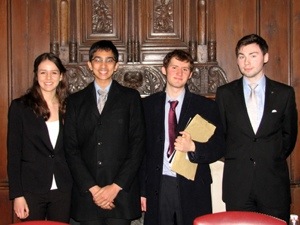
Oxford’s IRLM team (l-r): Alyssa Stansbury (Magdalen), Benjamin Ong (St Edmund Hall), Nicholas Kamlish (St Catherine’s) and James Fisher (St Catherine’s)

Although presently limited to the eight universities that have historically shared in the competition – held for the last five years in the Imaret of Kavala and in the Justinianic Roman forum at Philippi – the IRLM has generated a great deal of interest, with universities from four continents approaching the organisers to participate this year.

This interest attests to the wide influence of Roman law as well as the enthusiasm of law students, even from outside the common law tradition, for mooting. After a very successful event in 2013, sponsored by Clifford Chance LLP, the Oxford Law Faculty will look forward to hosting the Seventh International Roman Law Moot again in April 2014.

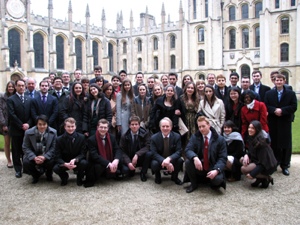
Judges and participants in the Sixth IRLM at All Souls College
20130419-205927.jpg