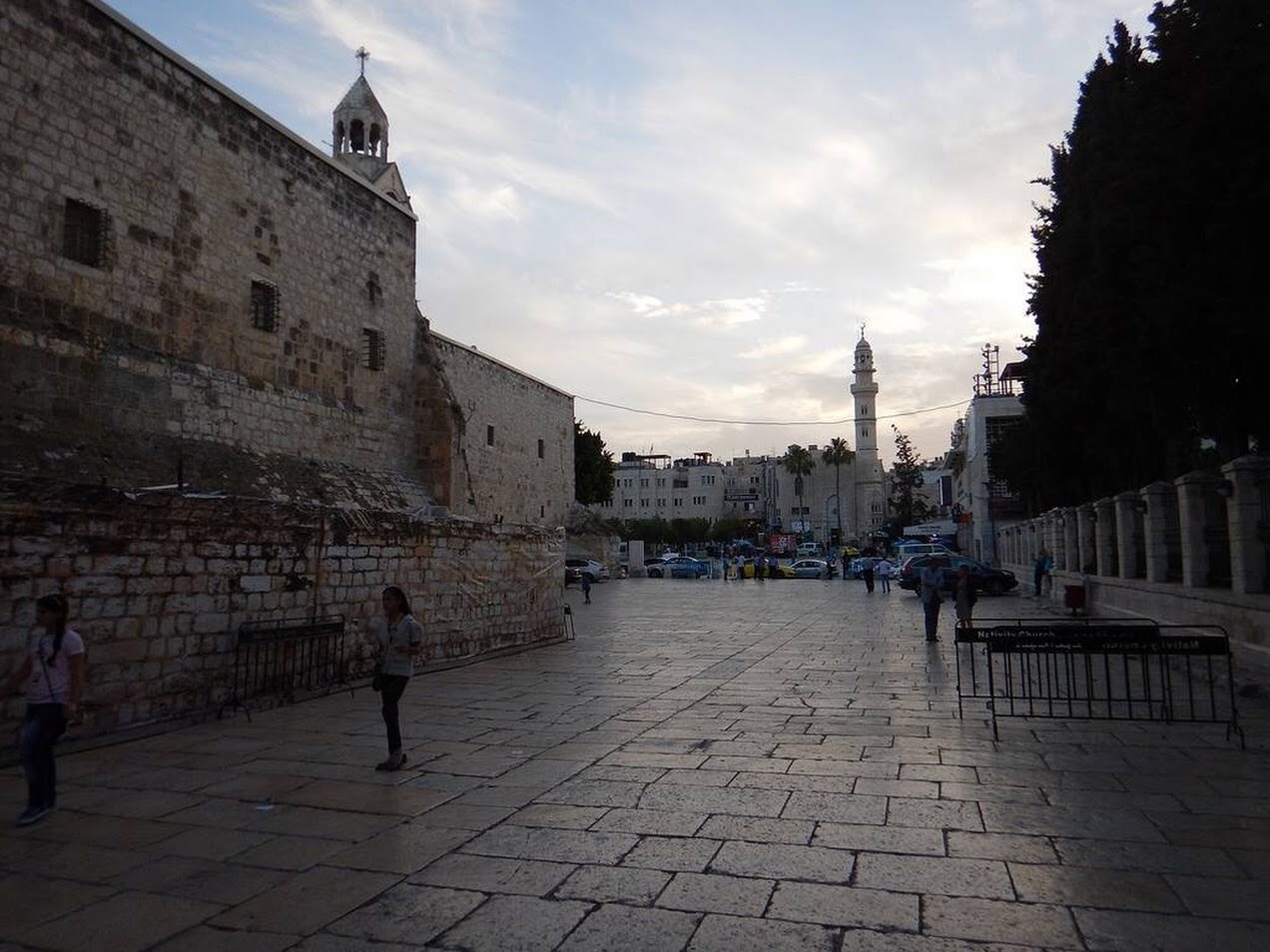
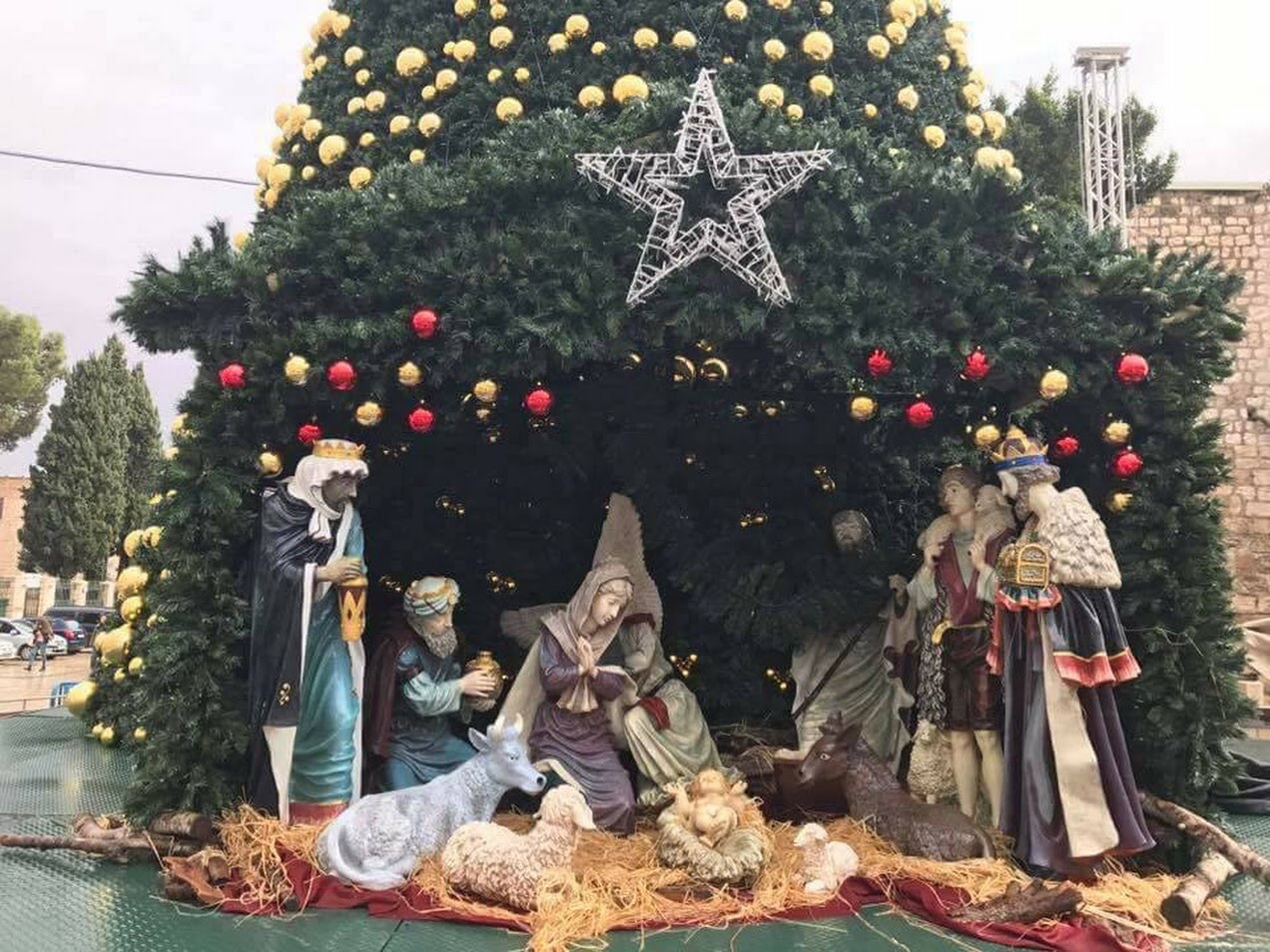
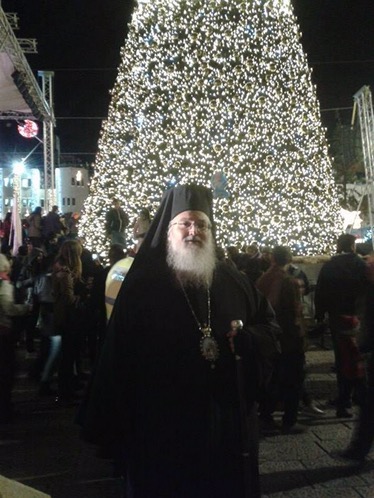
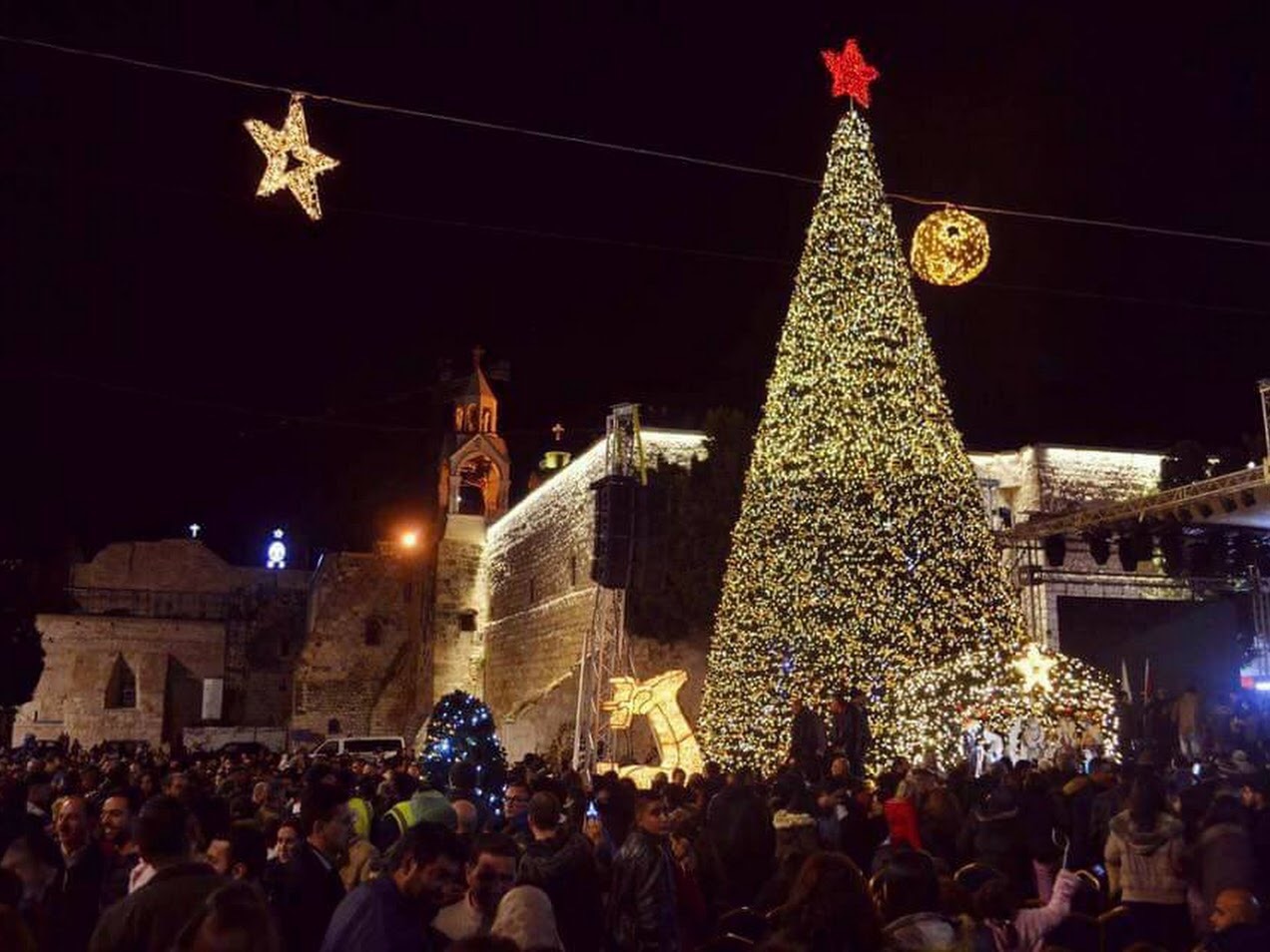
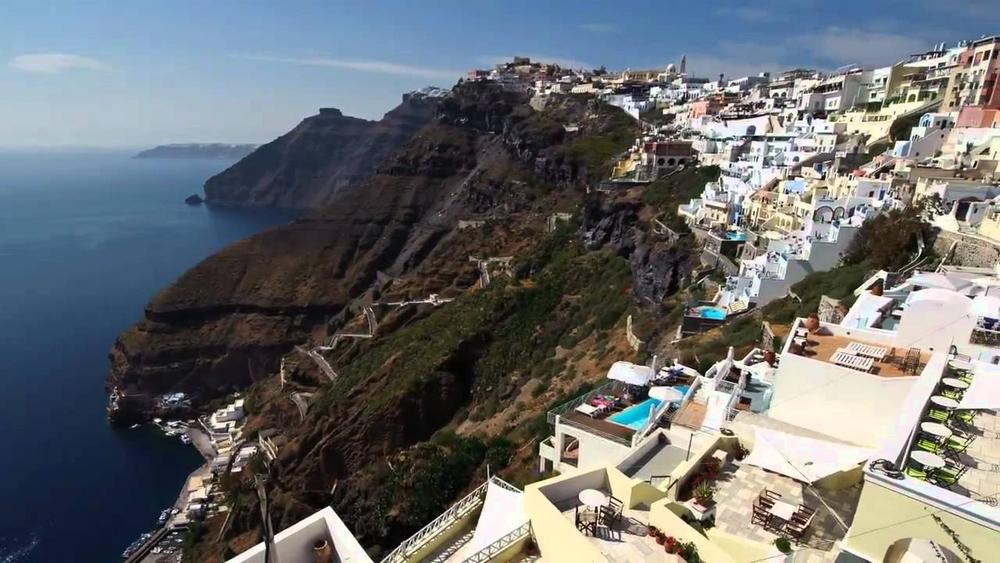
Eορταστική χριστουγεννιάτικη Βηθλεέμ 2016

Μερικές εικόνες από την φετινή εορταστική χριστουγεννιάτικη Βηθλεέμ 2016. Ηδη έχει διακοσμηθεί απ’άκρη σ’άκρη. 

Εύχομαι και οι καρδιές μας να έχουν εφέτος τόσο στολισμό και τόσα χρώματα Χριστού! 

ΕΥΛΟΓΗΜΕΝΕΣ ΕΟΡΤΕΣ.
ΑΓΙΑ ΓΗ- ΒΗΘΛΕΕΜ της ΙΟΥΔΑΙΑΣ.

10 Δεκεμβρίου 2016 (27 Νοεμβρίου 2016, εκκλησιαστικό αγιοταφίτικο ημερολόγιο).

Source: Ignatios Kazakos

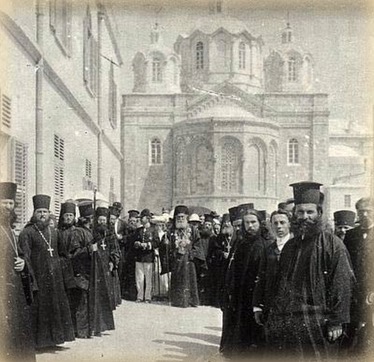
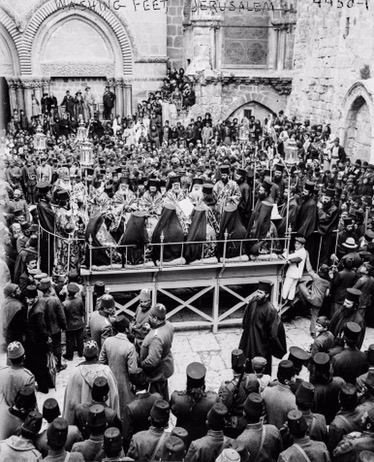
Οι μεγάλες υπηρεσίες του ελληνικού κλήρου (αγιοταφιτών)στους Αγίους Τόπους

“Είναι μεγάλες και αναντίρρητες οι υπηρεσίες του Ελληνικού κλήρου, των Αγιοταφιτών πατέρων, στο έργο της περιφρούρησης και της διατήρησης – υπέρ των Ορθοδόξων – πολλών πάρα πολλών, Αγίων Τόπων της Ιερουσαλήμ και όλης της Παλαιστίνης. Χωρίς στρατό, χωρίς στόλο, χωρίς επίσημη διπλωματία, αποκλειστικά και μόνον με τις δικές τους δρστηριότητες και ικανότητες, κατόρθωσαν οι Ελληνες να διασώσουν για την Ορθοδοξία, όχι λίγους τέτοιους Αγιους Τόπους, οι οποίοι ήσαν κάτω από διαρκείς πιέσεις – και με επιμονή και πείσμα – συμμαχικών επιθέσεων ολόκληρων λαών. Λαών που είχαν τα αναγκαία μέσα, όπως διπλωματία και μεγάλη στρατιωτική δύναμη. Ναι, σε αυτό μπορεί άνετα κανείς να διαπιστώσει την μέγιστη ιστορική σημασία των Ελλήνων για την Ορθοδοξία στην Αγία Γη. Ο Ελληνας έχει το δικαίωμα ιστορικά, νομικά και ηθικά, να αισθάνεται τον εαυτό του ορθόδοξο ιδιοκτήτη στα Ιεροσόλυμα και σε όλη την Παλαιστίνη(Αγία Γη)”.
Β.Ποπώφ, Ρώσος καθηγητής της Εκκλησιαστικής Ακαδημίας του Καζάν. Περίοδος των Ρώσων Προσκυνητών στα Ιεροσόλυμα.

Καζάν 1911.

Source: Ignatios Kazakos


Greece passes austerity 2017 budget

Greece’s Parliament has passed a budget of continued austerity as mandated by the country’s creditors, but which forecasts robust growth for 2017.

Prime Minister Alexis Tsipras says it will mark Greece’s “final exit” from its nearly decade-long financial crisis.

The budget adds more than 1 billion euros in new taxes, mostly indirect taxes on items from phone calls to alcohol. It also cuts spending by over 1 billion euros.

The budget was backed by the left-dominated ruling coalition and opposed by all other parties. It passed by a vote of 152-146 on Saturday.

Despite the continued austerity, Tsipras predicted that 2017 will be a “landmark year” with 2.7 per cent economic growth. He said his government has achieved a higher-than-forecast 2016 primary surplus.

The Republic of Cyprus will participate in the January 12th conference, in Geneva, Government stresses

The Republic of Cyprus, as a relevant party, will participate in a conference, scheduled for 12 January, in Geneva, on the Cyprus problem, the government has stressed, pointing out that the January meeting will deal with amendments to international conventions which concern the Republic.
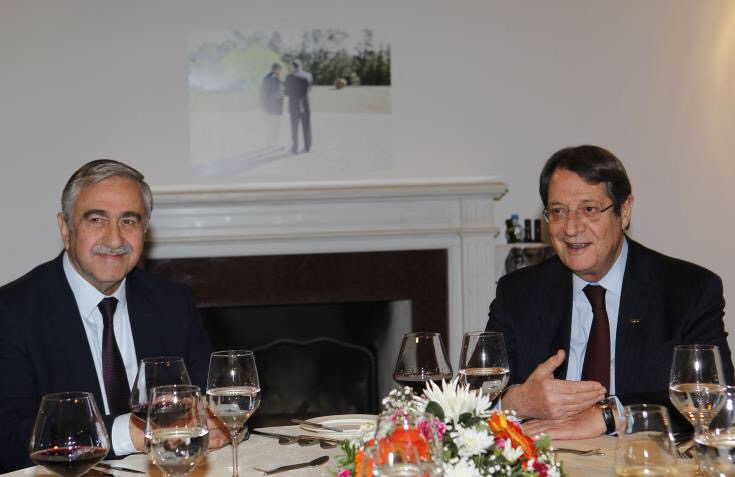
Deputy Government Spokesman Victoras Papadopoulos, in a written statement issued here today following claims about the conference by the Turkish Cypriot side, also said that any other interpretations do not correspond to what has been agreed on December 1st by Cyprus President Nicos Anastasiades and Turkish Cypriot leader Mustafa Akinci.

At a dinner on December 1st, the two leaders decided to meet in Geneva on 9th January, on the 11th they will present their respective maps. From the 12th of January, a Conference on Cyprus will be convened with the added participation of the guarantor powers. Other relevant parties shall be invited as needed, they said.

“The President of the Republic Nicos Anastasiades would like to clarify the following: At the dinner on December 1st, the following was agreed between President Anastasiades and Mr Akinci, in the presence of the Special Advisor of the UN Secretary General – and this was reflected in the press release issued after the dinner: a three-day meeting and negotiations between President Anastasiades and Mr Akinci, in Geneva, between 9-11 January,” Papadopoulos says today in his statement.

It was also agreed, the statement says, that “on January 11, maps will be tabled on the property issue, so that on 12 January a conference on Cyprus will begin, with the participation of the two sides and the three guarantor powers (UK, Greece and Turkey) on the international aspect of the Cyprus problem, on security and guarantees.”

“It is crystal clear that other relevant parties will have to be invited, according to the needs and the objectives of this conference,” Papadopoulos says in his statement.

Consequently, he stresses, “it goes without saying that the Republic of Cyprus, as a relevant party, shall be present, since we are talking about a conference which aims, among other goals, to amend international treaties which concern the Republic.”

It is equally important, the statement points out, to ensure the presence of the EU, to which Cyprus belongs. The UN and the Security Council must also be present, it adds. The UN, it notes further, will be called upon, through a strong resolution, to adopt anything that may be eventually agreed and subsequently secure implementation of everything that is agreed.

“Given the above, any other interpretations do not correspond at all to what was agreed at the dinner on December 1st,” Papadopoulos stresses, in respond to claims by the Turkish Cypriot side, which talked about a five-party conference (the two sides and the three guarantor powers), saying that other parties will be invited, if necessary, with the approval of the sides.

A statement issued on December 1st by the UN Spokesperson said `tonight, the Greek Cypriot leader, Mr. Nicos Anastasiades, and the Turkish Cypriot leader, Mr. Mustafa Akıncı, met at the Head of Mission’s Residence in the UN Protected Area (UNPA) under the auspices of the Special Adviser of the Secretary General (SASG) on Cyprus, Mr. Espen Barth Eide`.

He adds that the two leaders assessed the state of play of the negotiations and exchanged views on the way forward.

“The leaders have decided to immediately re-engage in their negotiations and have instructed their negotiators to continue meeting in order to achieve further progress on all outstanding issues interdependently. The leaders will also meet as required”.

Furthermore, he notes that in line with their joint resolve to reach a comprehensive settlement as soon as possible, they further decided that they will meet in Geneva on the 9th of January 2017.

`On the 11th of January, they will present their respective maps. From the 12th of January, a Conference on Cyprus will be convened with the added participation of the guarantor powers. Other relevant parties shall be invited as needed” he concludes.

Cyprus has been divided since 1974 when Turkey invaded and occupied its northern third. Τhe leaders of the two communities in Cyprus, namely President Anastasiades and Mustafa Akinci have been engaged in UN-backed talks since May last year, with a view to reunite the island under a federal roof.

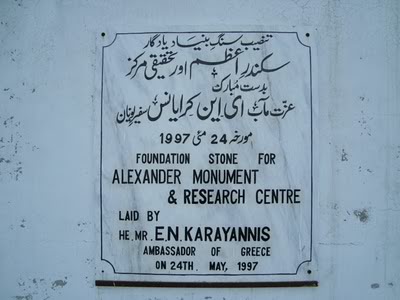
Alexander Monument in Pakistan’s Salt Range Camp

img_0162

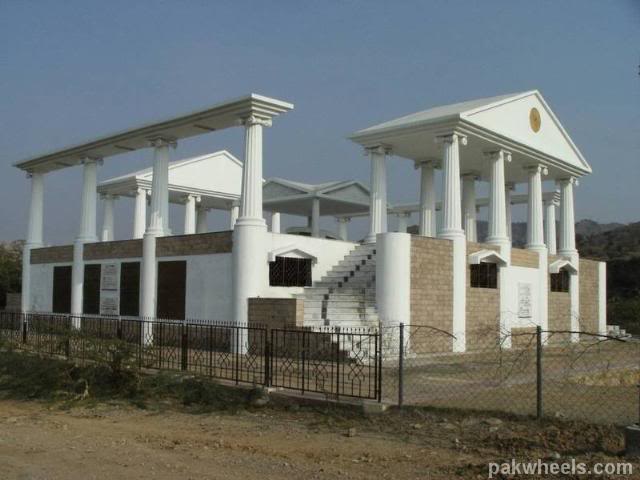
The Salt Range in Pakistan known for the salt mines, is also the site of historically important, centuries old Hindu temples, forts and monasteries. Here the Alexander Monument and Research Center was built where the forces of Alexander stopped over before reaching the plains of Punjab for his famous battle with Raja Porus at Mong village, Chillianwala.

The monument to Alexander, built with the collaboration of the Greek government and supervised by historian Ahmed Hasan Dani, is situated along the banks of the Jhelum River at Jalalpur Sharif on the road leading to Chimkon Valley in the Salt Range. Jalalpur Sharif is located opposite Mong where the battle between Alexander and Porus took place. Mong used to be thegarrison of King Porus who had assembled 30,000 men, 2000 cavalry, and 200 elephants to fight against the Macedonians. Remains of the ancient walls are still there at the summit of the hill, which rise 1000 feet above thepresent-day Jalalpur.Coins found among the ruins date backto the period of Graeco-Bactrian kings.

img_0163

Atop the as yet unfinished monument a covered platform stands flanked by Grecian style arches. On it is a painted map of Alexander’s empire from Greece to South Asia showing the route he took in this part of the world with arrows (Hund -Taxila – Jalalpur – Beas – back to Jalalpur and to the Arabian sea along River Jhelum). But for many years it has been waiting for historians to come and do research on the great king and his arrival in the sub-continent. Construction of the monument has stopped, entry is restricted and its doors are locked. Thorny bushes on the stairs prevent anyone going up on the roof to see the map, the colours of which are already peeling. There was no-one, not even a janitor, who could tell us about the current state ofaffairs or why the construction work has been stopped. Why? Lack of funds, lack of interest, or both!?

Alexander was undoubtedly a man of great substance: He was an illustrious soldier who always followed the rules of war. He brought disciplines of medicine (Tibb-e-Yunani) and philosophy to what is now Pakistan. More than two thousand yeas ago he recognized the enormous potential in terms of commerce and trade of the immediate hinterland of Karachi. He called this place the bridge between east and west.

Former vice-president of the Society of Asian Civilizations Brig. Naeem Rana said the monument was constructed with a view to conducting research but, unfortunately, the aim has not been achieved. He said law and order, among other things, kept international researchers, historians and diplomats from visiting historical places such as the monument. Both the gates were locked by a local watchman, Mohammad Khan. When asked, he said no government official was present there. He said the last time any government official visited the site was some five or six months back. To a question about the visits of tourist groups at the site, he said hardly a few number of tourists had, especially foreigners, had visited the place. He said there were no facilities of boarding and lodging in the area, a point of concern for the tourists.

Tufail, a local resident, while talking with the scribe outside the monument said, after the completion of the monument, the governments of Pakistan and Greece had abandoned the project. He said the project had great attraction for international tourists but, due to lack of facilities, no one was willing to come to the area. About the issue of law and order, he said the area was peaceful enough and locals were very hospitable.

Source: Davecullen.com

Ποια είναι η πιο όμορφη χώρα στον κόσμο;

09/12/2016

Οι αναγνώστες του ταξιδιωτικού περιοδικού Conde Nast Traveler ψήφισαν! Δείτε σε ποια θέση είναι η Ελλάδα.

Όλοι θεωρούμε πως η χώρα, που ζούμε είναι η πιο όμορφη στον κόσμο. Οι Έλληνες ίσως να έχουν λίγο πιο αυξημένη αυτή την τάση, αλλά έχουν άδικο; Από ό,τι φαίνεται, οι αναγνώστες του διάσημου ταξιδιωτικού περιοδικού Conde Nast Traveler τους δικαιώνουν! Στο πλαίσιο των ετήσιων βραβείων τουρισμού, το περιοδικό έβαλε τους αναγνώστες του να ψηφίσουν ποια θεωρούν την πιο όμορφη χώρα του κόσμου για το 2016. Η Ελλάδα κατέκτησε την πρώτη θέση!

«Η Ελλάδα συνεχίζει να αιχμαλωτίσει τη φαντασία σας ενθουσιάζοντας σε όλους τους τομείς» γράφει στον πρόλογο των Βραβείων για την Καλύτερη Χώρα του Κόσμου 2016 το περιοδικό, εγκωμιάζοντας την Ελλάδα. Έτσι, η χώρα μας καταφέρνει να αφήσει κατά πολύ πίσω άλλους εξωτικούς και διάσημους προορισμούς.

Ας δούμε τις 20 πιο όμορφες χώρες του κόσμου: 

1. Ελλάδα

2. Ιταλία

3. ΗΠΑ

4. Νότιος Αφρική

5. Γαλλία

6. Ισπανία

7. Ινδία

8. Αυστραλία

9. Ταϊλάνδη

10. Μεξικό

11. Νέα Ζηλανδία

12. Πορτογαλία

13. Καναδάς

14. Αργεντινή

15. Σρι Λάνκα

16. Μαρόκο

17. Ινδονησία

18. Ιρλανδία

19. Ιαπωνία

20. Βιετνάμ

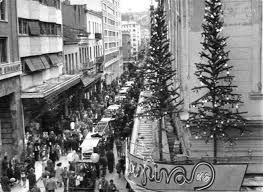
Τα χριστούγεννα στην παλιά Αθήνα

img_0160

Τα Χριστούγεννα στην παλιά Αθήνα και η Βυζαντινή (Ελληνική) καταγωγή του χριστουγεννιάτικου δένδρου !

Αποτέλεσμα εικόνας για Τα χριστουγεννα στην παλια Αθήνα
Στην παλιά Αθήνα τα Χριστούγεννα είχαν μια ξεχωριστή ομορφιά. Όλοι οι Αθηναίοι, μικροί και μεγάλοι, έβγαιναν στην αγορά, τρεις ή τέσσερις μέρες νωρίτερα, όχι βέβαια για να ψωνίσουν, αλλά περισσότερο για να κάνουν χάζι στα διάφορα μαγαζιά, όπως γίνεται και σήμερα.
«Την εποχή εκείνη, σημειώνει παλιός Αθηναίος, οι Βαυαροί είχαν φέρει από τη βορινή τους πατρίδα το έθιμο του στολισμένου έλατου, που στην πραγματικότητα ήταν έθιμο καθαρά βυζαντινό. Γιατί ο πρώτος που σκέφθηκε να στολίσει τα κλαδιά του έλατου με πολύχρωμα κεριά, άσπρα, κίτρινα και κόκκινα, ήταν ο νεαρός αυτοκράτορας Μιχαήλ ο Γ΄, ο επιλεγόμενος ‘Μέθυσος’. Για τον Μιχαήλ, θα μπορούσε να πει κανείς πως ήταν ο πρώτος ‘τέντυ –μπόυ’, που έβγαλε η φημισμένη πόλη των Καισάρων, επειδή του άρεσε να ξαφνιάζει τους ανθρώπους με τις τρέλες του.

Μια παραμονή Χριστουγέννων, λοιπόν, διέταξε τους αυλικούς του να τοποθετήσουν κατά τη διάρκεια της νύχτας ένα μεγάλο έλατο στην πλατεία του Ταύρου, όπου ήταν και τα ανάκτορα. Έπειτα ο ίδιος, με μια σκαλωσιά, κρέμασε στα κλαδιά του δέντρου διάφορα κεριά τεράστια σε μέγεθος και χοντρά όσο ένα μπράτσο δυνατού άντρα. Τα κεριά αυτά τα άναψε, τη στιγμή ακριβώς που οι καμπάνες του μεσονυκτίου καλούσαν τους πιστούς στην εκκλησία. Η νύχτα ήταν γλυκιά και ήρεμη. Δεν φυσούσε καθόλου και το χιόνι είχε σταματήσει να πέφτει, λες και του άρεσε η παράξενη εκείνη σκηνοθεσία του Μιχαήλ. Τα κεριά έμειναν αναμμένα αρκετή ώρα και ο κόσμος που περνούσε από την Πλατεία του Ταύρου, βλέποντας το φωτισμένο έλατο, έμενε με το στόμα ανοιχτό. Δεν ήξερε τι να υποθέσει και νόμιζε ότι βρισκόταν μπροστά σε ένα θαύμα. Στον λαό άρεσε αυτό και έτσι τον επόμενο χρόνο αρκετοί άρχοντες του Βυζαντίου επανέλαβαν το ίδιο σκηνικό. Με μια διαφορά. Ότι αντί να στολίσουν κάποιο δέντρο του κήπου τους στόλιζαν τα σπίτια τους».

Με τον καιρό η συνήθεια αυτή εδραιώθηκε τόσο πολύ στη συνείδηση του λαού ώστε γενικεύθηκε και έμεινε σαν έθιμο. Το έθιμο του στολισμένου έλατου το πήραν μαζί τους οι Σταυροφόροι που είχαν καταλάβει την Κωνσταντινούπολη και το μετέφεραν στις πατρίδες τους. Μετά την Άλωση οι Έλληνες το ξέχασαν. Οι Δυτικοί όμως εξακολούθησαν να το διατηρούν χωρίς να ξέρουν πολλά πράγματα για την προέλευσή του. «Πάντως πίστευαν, όπως το πιστεύουν ακόμη», σημειώνει πάντα ο παλιός Αθηναίος, «όσοι δεν διάβασαν την ιστορία του, μια ιστορία που λέει καθαρά ότι το έθιμο αυτό είναι καθαρά βυζαντινό και κατ’ επέκταση ελληνικό».

Απ’ όπου και αν προέρχεται το χριστουγεννιάτικο έλατο δεν παύει να γοητεύει μικρούς και μεγάλους. Είναι σαν τα παραμύθια της γιαγιάς με τις νεράιδες και τους καλικάντζαρους. Με τον ερχομό του Όθωνα στην Ελλάδα, οι ακόλουθοί του έφεραν μαζί τους και το έθιμο του χριστουγεννιάτικου δέντρου, χωρίς όμως να φαντάζονται πως το κουβαλούσαν πίσω στον τόπο της καταγωγής του. Είναι γνωστό πως η Αθήνα ήταν επαρχία της Βυζαντινής Αυτοκρατορίας.

Όπως και αν έχει το ζήτημα, «οι παλιοί Αθηναίοι, που έβλεπαν για πρώτη φορά στολισμένο έλατο, με κεριά, με παιχνίδια και με επιχρυσωμένες κουκουνάρες, γοητεύονταν τόσο πολύ που σχημάτιζαν ουρές για να το θαυμάσουν». Ιδίως τα παιδιά δεν ξεκολλούσαν τα μάτια τους από πάνω του. Και ήταν φυσικό. Το δέντρο, ένα τεράστιο έλατο, είχε τοποθετηθεί κοντά στο σημερινό Πεδίο του Άρεως, όπως περίπου γίνεται και σήμερα με τα έλατα που στήνουν στις κεντρικές πλατείες οι διάφοροι δήμοι. Ήταν φορτωμένο με όμορφα και πολύχρωμα παιχνίδια και λαμποκοπούσε ολόκληρο. Το δέντρο είχε για φύλακες δύο Βαυαρούς φρουρούς για να μην κλέψει κανείς κάποιο από τα ωραία στολίδια του. Έμεινε δε σε εκείνη τη θέση όλο το Δωδεκαήμερο. Την ημέρα που έπρεπε να το πάρουν από τη θέση του οι Αθηναίοι αντέδρασαν. Ήθελαν να το κρατήσουν λίγο ακόμη. Ο δήμος τους έκανε το χατίρι. Συνεννοήθηκε με τους Βαυαρούς και αυτοί το άφησαν στην ίδια θέση ως το τέλος Ιανουαρίου.

Μόλις η Ελλάδα ελευθερώθηκε από τους Τούρκους και έγινε ανεξάρτητο κράτος, τα Χριστούγεννα βρήκαν και πάλι την παλιά τους αίγλη. Αυτή την αίγλη που είχαν πριν από την Άλωση της Πόλης. Παρ’ όλο που η Αθήνα περιοριζόταν σε τέσσερις συνοικίες: την Πλάκα, το Μοναστηράκι, του Καλαμιώτου και τον Άγιο Φίλιππα. Η μικρή πρωτεύουσα του ελληνικού κράτους ζούσε έντονα τη ζωή της, τουλάχιστον τις εορτάσιμες αυτές μέρες. Το κέντρο της πόλης είχε μεταφερθεί τώρα, από την οδό Αδριανού, όπου ήταν παλαιότερα, στη διασταύρωση των οδών Αιόλου και Ερμού. Εκεί ήταν τα εμπορικά καταστήματα, τα καλύτερα ζαχαροπλαστεία και τα καφενεία: το πιο γνωστό ήταν της Ωραίας Ελλάδος, κοντά στην Αγία Ειρήνη.

Το μεγάλο αυτό καφενείο «ήταν το πρώτο δημόσιο κέντρο που στόλισε για πρώτη φορά το 1848 χριστουγεννιάτικο έλατο με πολύχρωμα κεράκια, επιχρυσωμένους καρπούς, παιχνίδια από αληθινή πορσελάνη και ένα σωρό άλλα μπιχλιμπίδια. Για την εποχή στοίχιζαν πανάκριβα, επειδή τα έφερναν όλα από το εξωτερικό. Αυτή η χριστουγεννιάτικη ‘ατραξιόν’, που κατέπληξε και συνάρπασε κυριολεκτικά τους Αθηναίους, μικρούς και μεγάλους, ήταν έμπνευση ενός Βαυαρού αξιωματικού, του Ρούντολφ Έρχαρτ, που ήταν πραγματικά φιλέλληνας». Ο Έρχαρτ , όπως γράφει στα απομνημονεύματά του, ήθελε να γενικεύσει το ωραίο αυτό έθιμο, πιστεύοντας πως ήταν προϊόν της πατρίδας του. Δεν ήξερε, δηλαδή, πως το «χριστουγεννιάτικο δεντράκι» είχε τις ρίζες του στο Βυζάντιο.

Όπως και αν έχει το ζήτημα, κατά κάποιον τρόπο ο Έρχαρτ πέτυχε αυτό που ήθελε. Γιατί τα επόμενα Χριστούγεννα, τα Χριστούγεννα του 1849, έκαναν την εμφάνισή τους και άλλα στολισμένα έλατα, σε διάφορα αρχοντικά της Αθήνας. Από εκεί και πέρα το έθιμο καθιερώθηκε φτάνοντας ως την εποχή μας. Λένε ότι το ωραίο παρελθόν σβήνει και χάνεται. Και οι απαισιόδοξοι συμπληρώνουν ότι όπως όλα έχουν χάσει την ποίησή τους στην πεζή εποχή μας, έτσι και οι γιορτές και τα έθιμά τους έχασαν την παλιά τους ομορφιά, το παλιό τους χρώμα. Λάθος. Η εποχή μας θα μπορούσε να πει κανείς ότι είναι ρομαντική. Απόδειξη, ότι μόλις απαγορεύθηκε η κοπή των ελάτων, όλοι έπεσαν στα ψεύτικα έλατα, στα πλαστικά, που η πώλησή τους αυξήθηκε κατακόρυφα.

Αλλά και το πρώτο ψεύτικο «δέντρο» κρατάει και τούτο από παλιά. Τα Χριστούγεννα του 1905, από την παραμονή άρχισε να χιονίζει. Η Αθήνα έγινε κατάλευκη. Όλο το απόγευμα, ωστόσο, μερικοί εργάτες κάτι μαστόρευαν στην Πλατεία του Συντάγματος. Οι διαβάτες δεν έδιναν σημασία. Αλλά η πλατεία φώτισε με μιας. Τι είχε συμβεί; Ένα τεράστιο ψεύτικο έλατο που μας το έστειλαν από τη Γερμανία είχε στηθεί στο κέντρο της. Πολύχρωμα λαμπιόνια και φαναράκια ήταν αναμμένα σε κάθε του κλαδί μαζί με διάφορα παιχνίδια. Το τι έγινε τότε δεν περιγράφεται. Όλη η Αθήνα και ο Πειραιάς συγκεντρώθηκαν στο Σύνταγμα για να χαρούν το πανέμορφο εκείνο χριστουγεννιάτικο δέντρο, που ο κόσμος πίστευε πως ήταν αληθινό.

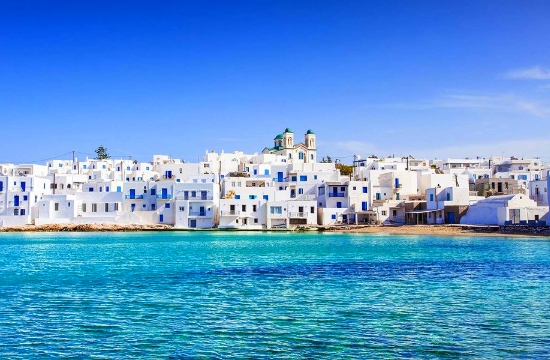
Travel and Leisure magazine: Paros in top 50 list to visit in 2017

Dec, 10 2016

img_0159

The island of Paros was included in travel renowned travel magazine’s “Travel + Leisure” list of top 50 destinations to visit in 2017.

Paros-Greece

Kitesurfers have long made a playground of the breezy beaches of Paros, and no wonder: this sunshiny isle is a Cycladic triumvirate of sandy shoreline, history, and culture. Last summer the island debuted a new airport, opening it to larger aircraft and more vacationers. And the fishing village of Naousa, with its boxy white architecture and seaside tavernas, is increasingly sophisticated—check in to the modern, adults-only apartments of Porto Naousa or the elegant Seven Santa Maria, where six airy, all-white suites (and a separate villa) come with a private boat and skipper for exploring the island’s secret coves.

Following are 20 of the places worth visiting, according to Travel and Leisure Magazine:

Angra dos Reis, Brazil

Angra dos Reis, RJ, Brazil

Belfast, Northern Ireland

Belgrade, Serbia

Bermuda

Cambodian Coast

Cape Town, South Africa

Cincinnati, Ohio

Devon, England

Guayaquil, Ecuador

Hamburg, Germany

Hampi, India

Helsinki, Finland

Honolulu, Hawaii

Indianapolis, Indiana

Jackson Hole, Wyoming

Jebel Akhdar, Oman

Jerusalem, Israel

Jura, France

Kanazawa, Japan

Lake Lucerne, Switzerland

Saint Nicholas true story

CLICK ON THE LINK TO SEE VIDEO SAINT NICHOLAS STORY
The great veneration with which St. Nicholas has been honored for many ages and the number of altars and churches all over the world that are dedicated in his memory are testimonials to his wonderful holiness and the glory he enjoys with God. As an episcopal see, and his childhood church falling vacant, the holy Nicholas was chosen bishop, and in that station became famous by his extraordinary piety and zeal and by his many astonishing miracles. The Greek histories of his life agree he suffered an imprisonment of the faith and made a glorious confession in the latter part of the persecution raised by Dioletian, and that he was present at the Council of Nicaea and there condemned Arianism. It is said that St. Nicholas died in Myra, and was buried in his cathedral.

St. Nicholas’ episcopate at Myra during the fourth century is really all that appears indubitable authentic, according to Alban Butler, an English Roman Catholic priest from the 1700s. This is not for lack of material, beginning with the life attributed to the monk who died in 847 as St. Methodius, Patriarch of Constantinople. Nevertheless, the universal popularity of the saint for so many centuries requires that some account of the legends surrounding his life should be given.

St. Nicholas, also known as “Nikolaos of Myra,” was a fourth century saint and Greek bishop of Myra. Nicholas was born in Asia Minor in the Roman Empire as an only child to Christian parents. Nicholas would take nourishment only once on Wednesdays and Fridays, and that in the evening according to the canons. “He was exceedingly well brought up by his parents and trod piously in their footsteps. The child, watched over by the church, enlightened his mind and encouraged his thirst for sincere and true religion.” Both of his parents tragically died during an epidemic when he was a young man, leaving him well off, but to be raised by his uncle – the Bishop of Patara. Nicholas was determined to devote his inheritance to works of charity, and his uncle mentored him as a reader and later ordained him as a presbyter (priest).

An opportunity soon arose for St. Nicholas and his inheritance. A citizen of Patara had lost all his money, and needed to support his three daughters who could not find husbands because of their poverty; so the wretched man was going to give them over to prostitution. Nicholas became informed of this, and thus took a bag of gold and threw it into an open window of the man’s house in the night. Here was a dowry for the eldest girl and she was soon duly married. At intervals Nicholas did the same for the second and the third; at the last time the father was on the watch, recognized his benefactor and overwhelmed Nicholas with his gratitude. It would appear that the three purses represented in pictures, came to be mistaken for the heads of three children and so they gave rise to the absurdstory of the children, resuscitated by the saint, who had been killed by an innkeeper and pickled in a brine-tub.

Coming to the city of Myra when the clergy and people of the province were in session to elect a new bishop, St. Nicholas was indicated by God as the man they should choose. This was during the time of persecutions in the beginning of the fourth century and “as he [Nicholas] was the chief priest of the Christians of this town and preached the truths of faith with a holy liberty, the divine Nicholas was seized by the magistrates, tortured, then chained and thrown into prison with many other Christians. But when the great and religious Constatine, chosen by God, assumed the imperial diadem of the Romans, the prisoners were released from their bonds and with them the illustrious Nicholas, who when he was set at liberty returned to Myra.”

St. Methodius asserts that “thanks to the teaching of St. Nicholas the metropolis of Myra alone was untouched by the filth of the Arian heresy, which it firmly rejected as death-dealing poison,” but says nothing of his presence at the Council of Nicaea in 325.

According to other traditions St. Nicholas was not only there during the Council of Nicaea in 325, but so far forgot himself as to give the heresiarch Arius a slap in the face. The conciliar fathers deprived him of his episcopal insignia and committed him to prison; but our Lord and His Mother appeared there and restored to him both his liberty and his office.

As against Arianism so against paganism, St. Nicholas was tireless and often took strong measures: among other temples he destroyed was that of Artemis, the principal in the district, and the evil spirits fled howling before him. He was the guardian of his people as well in temporal affairs. The governor Eustathius had taken a bribe to condemn to death three innocent men. At the time fixed for their execution Nicholas came to the place, stayed the hands of the executioner, and released the prisoners. Then he turned to Eustathiujs and did not cease to reproach him until he admitted his crime and expressed his penitence.

St. Nicholas’ presence was found in a separate occasion involving three imperial officers simply on their way to duty in Phrygia. When the men were back again in Constantinople, the jealousy of the prefect Ablavius caused them to be imprisoned on false charges and an order for their death was procured from the Emperor Constantine. When the officers heard this they remembered the example they had witnessed of the powerful love of justice of the Bishop of Myra and they prayed to God that through his merits and by his instrumentality they might yet be saved. That night St. Nicholas appeared in a dream to Constatine, and told him with threats to release the three innocent men, and Ablavius experienced the same thing. In the morning the Emporor and the prefect compared notes, and the condemned men were sent for and questioned. When he heard they had called on the name of the Nicholas of Myra who appeared to him, Constatine set them free and sent them to the bishop with a letter asking him not to threaten him any more, but to pray for the peace of the world. For a long time, this has been the most famous miracle of St. Nicholas, and at the time of St. Methodius was the only thing generally known about him.

The accounts are unanimous that St. Nicholas died and was buried in his episcopal city of Myra, and by the time of Justinian, there was a basilica built in his honor at Constantinople.

An anonymous Greek wrote in the tenth century that, “the West as well as the East acclaims and glorifies him. Wherever there are people, in the country and the town, in the villages, in the isles, in the furthest parts of the earth, his name is revered and churches are built in his honor. Images of him are set up, panegyrics preached and festivals celebrated. All Christians, young and old, men and women, boys and girls, reverence his memory and call upon his protection. And his favors, which know no limit of time and continue from age to age, are poured out over all the earth; the Scythians know them, as do the Indians and the barbarians, the Africans as well as the Italians.” When Myra and its great shrine finally passed into the hands of the Saracens, several Italian cities saw this as an opportunity to acquire the relics of St. Nicholas for themselves. There was great competition for them between Venice and Bari.

Bari won and the relics were carried off under the noses of the lawful Greek custodians and their Mohammedan masters. On May 9, 1087 St. Nicholas’ relics safetly landed in Bari, a not inappropriate home seeing that Apulia in those days still had large Greek colonies. A new church was built to shelter the relics and the pope, Bd. Urban II, was present at their enshrining.

Devotion to St. Nicholas has been present in the West long before his relics were brought to Italy, but this happening greatly increased his veneration among the people, and miracles were as freely attributed to his intercession in Europe as they had been in Asia.

At Myra “the venerable body of the bishop, embalmed as it was in the good ointments of virtue exuded a sweet smelling myrrh, which kept it from corruption and proved a health giving remedy against sickness to the glory o f him who had glorified Jesus Christ, our true God.” The translation of the relics did not interrupt this phenomenon, and the “manna of St. Nicholas” is said to flow to this day. It was one of the great attractions that drew pilgrims to his tomb from all parts of Europe.

The image of St. Nicholas is, more often than any other, found on Byzantine seals. In the later middle ages nearly four hundred churches were dedicated in his honor in England alone, and he is said to have been represented by Christian artists more frequently than any saint, except our Lady.

St. Nicholas is celebrated as the patron saint of several classes of people, especially, in the East, of sailors and in the West of children. The first of these patronage is most likely due to the legend that during his lifetime, he appeared to storm tossed mariners who invoked his aid off the coast of Lycia and brought them safely to port. Sailors in the Aegean and Ionian seas, following a common Eastern custom, had their “star of St. Nicholas” and wished one another a good voyage in the phrase “May St. Nicholas hold the tiller.”

The legend of the “three children” is credited to his patronage of children and various observances, ecclesiastical and secular, connected there with; such were the boy bishop and especially in Germany, Switzerland and the Netherlands, the giving of presents in his name at Christmas time.

This custom in England is not a survival from Catholic times. It was popularized in America by the Dutch Protestants of New Amsterdam who converted the popish saint into a Nordic magician (Santa Claus = Sint Klaes = Saint Nicholas) and was introduced into this country by Bret Harte. It is not the only “good old English custom” which, however good, is not “old English,” at any rate in its present form. The deliverance of the three imperial officers naturally caused St. Nicholas to be invoked by and on behalf of prisoners and captives, and many miracles of his intervention are recorded in the middle ages.

Curiously enough, the greatest popularity of St. Nicholas is found neither in the eastern Mediterranean nor north-western Europe, great as that was, but in Russia. With St. Andred the Apostle, he is patron of the nation, and the Russian Orthodox Church even observes the feast of his translation; so many Russian pilgrims came to Bari before the revolution that their government supported a church, hospital and hospice there.

He is also the patron saint of Greece, Apulia, Sicily and Loraine, and of many citiesand dioceses (including Galway) and churches innumerable. At Rome the basilica of St. Nicholas in the Jail of Tully (in Carcere) was founded between the end of the sixth and the beginning of the seventh centuries. He is named in the preparation of the Byzantine Mass. St. Nicholas became recognized as a saint long before the Roman Catholic Church began the regular canonizing procedures in the late 10th century. Therefore, he does not have a specific date of canonization, rather records of him exist in a gradual spread until his stories became widley known and celebrated. St. Nicholas’ feast day is December 6.


AHI Releases Letter To 60 Minutes Refuting Importance Of Turkey’s Air Bases

FOR IMMEDIATE RELEASE CONTACT: Georgea Polizos
December 6, 2016—No. 57 (202) 785-8430

WASHINGTON, DC —The American Hellenic Institute wrote to 60 Minutes following Correspondent Steve Kroft’s November 20, 2016 report, “Turkey’s disillusionment with the U.S.,” which described Turkey’s air bases, namely Incirlik, as having extreme importance to the United States and NATO for its staging areas and projection of power in the region

AHI President Nick Larigakis’ November 22 letter presents how the facts prove otherwise by citing how Turkey refused to allow the United States to use its bases to open a northern front against the Saddam Hussein dictatorship. “The United States’ successful prosecution of the war against Iraq without access from Turkey proved Turkey’s limited value as a strategic military resource,” Larigakis wrote.

Furthermore, Larigakis states that when Turkey does allow access, such as was the case with the fight against ISIS, it does so only after it stalls.  

Click here to read President Larigakis’ letter 

The American Hellenic Institute is a non-profit Greek American public policy center and think tank that works to strengthen relations between the United States and Greece and Cyprus, and within the Greek American community.

###

For additional information, please contact Georgea Polizos at (202) 785-8430 or at pr@ahiworld.org. For general information about the activities of AHI, please see our website at http://www.ahiworld.org.


November 22, 2016
Mr. Michael H. Gavshon
Mr. Howard L. Rosenberg
Mr. David M. Levine
Producers
60 Minutes
CBS News
524 West 57th Street
New York, NY 10019

Dear Mr. Gavshon, Mr. Rosenberg, and Mr. Levine:

Correspondent Steve Kroft’s report, “Turkey’s disillusionment with the U.S. President” described Turkey’s air bases, namely Incirlik, as having extreme importance to the United States and NATO for its staging areas and projection of power in the region. The facts of the matter prove otherwise. Turkey refused to allow the United States to use its bases to open a northern front against the Saddam Hussein dictatorship. Turkey’s reasoning was that it wanted $6 billion more — in addition to $26 billion offered by the Bush Administration — for a total of $32 billion. A former Bush administration official called Turkey’s negotiating tactics “extortion in the name of alliance.” (New York Times, Feb. 20, 2003; A1; col. 6.) The United States’ successful prosecution of the war against Iraq without access from Turkey proved Turkey’s limited value as a strategic military resource.  

Further, almost on a daily basis, Turkey violates the sovereign territory (air and sea) of neighboring NATO ally, Greece. And 43 years later continues to illegally occupy Cyprus, an EU country.

Moreover, when Turkey does allow access, it stalls.  

In 2015, U.S. Director of National Intelligence James R. Clapper, when asked if he was optimistic that Turkey would become “more engaged” in the fight against ISIS, testified before the Senate Armed Services Committee, “No, I’m not. I think Turkey has other priorities and other interests.”

Turkey serves to destabilize the region and not to project U.S. interests in the vitally important region of the Eastern Mediterranean.


Respectfully submitted,

Nick Larigakis

President  

###

For additional information, please contact Georgea Polizos at (202) 785-8430 or at pr@ahiworld.org. For general information about the activities of AHI, please see our website at http://www.ahiworld.org and follow us on Twitter @TheAHIinDC.