Cuts to interpreters for Greek elderly and sick

Source: NeosKosmos

The Baillieu Government has cut back on the number of interpreters available to patients at the Northern Hospital, according to the Victorian opposition.

Jenny Mikakos MP, Labor Member for Northern Metropolitan Region said this act is “simply outrageous” and believes it will force the elderly and sick to “rely on family members to translate for them in sensitive matters such an elderly woman with gynaecological problems having to rely on her son to translate for her.

“Elderly migrants will be the ones most affected by this decision as they rely heavily on interpreters to communicate effectively with their doctors,” she said.

“I am concerned that this may impact on patients’ ability to make informed decisions about their medical care as well as their understanding of their medical condition and treatment.

There is a clear pattern of neglect emerging from this Government for people from disadvantaged backgrounds including migrants and our elderly.”

20121003-145018.jpg

Greek Australian candidates in Victoria’s council election

Source: NeosKosmos

63 Greek Australian candidates will be competing for a place in one of the 78 Victorian councils this October.

The list of Greek Australian candidates includes prominent members of the Greek community such as Mike Zafiropoulos, President of Fronditha Care.

Stonnington City Council, Whittlesea City Council, and Moreland City Council Mulgrave City Council – which includes the Oakleigh ward; Manningham City Council and Darebin City Council have the largest representation of Greek Australian candidates.

This year’s local council election has seen over 2004 candidates compete for the 631 councillor positions following the closure of nominations this week.

The Greek Australian candidates include:

Mr Ron Janas; Mrs Gina Papadopoulos; Ms Alissa Fotiades; Ms Kaela Katherine Pandelides; Mr Peter Kostos; Mr Phillip Mallis; Mr Alexander Teligioridis; Ms Bianca Stavropoulos; Louis Kiriakidis; Leon Zembekis; Mrs Maria Topalidis; Mr Steven Tsitas; Mr Peter Drakopoulos; Mr Rodney Andonopoulos; Mr Angelo Kakouros; Mrs Leanne Raditsas; Mr Jim Marinis; Mrs Helen Patsikatheodorou; Mr James Didolis; Mr Kon Mosidis; Mr Tass Koutsikos; Mr Steve Staikos; Mr Jim Grivokostopoulos; Mr Mike Zafiropoulos; Mr George Neofytou; Mr John Mitakakis; Mrs Kylie Georgiou; Mrs Androulla Touvanna; Mr Con Parthimos; Mr Eric Koutroubas; Mrs Stella Koutsikos; Mrs Vicki Sifredi; Mr Alexander Tamvakis; Mr Paul Klisaris; Mr Bill Pontikis; Mr Stephen Dimopoulos; Mr Argyri Stavridis; Mr Theo Zographos; Mrs Lucy Athanadopoulos; Ms Mary Spiropoulos; Mrs Miriam Gillis; Mr Ange Kenos; Mrs Stella Kariofyllidis; Mr Steve Liberogiannis; Mrs Bess Kyriakidis; Mr Lambros Tapinos; Mr Jim Doukas; Ms Meni Christofakis; Mr Jimi Athanasopoulos; Tas Athanasopoulos; Mr Evri Katsavos; Mr George Neophytou; Ivy Fatouros; Miss Jami Klisaris; Tini Athanasopoulos Peter Patisteas; Mr Steve Stefanopoulos; Ms Tina Sofos; Mr John Koutras; Mr John Nicholas Katis; Mr Peter Sycopoulis; Ms Mary Lalios; Mrs Sofia Kotanidis; Ms Kris Pavlidis; Mr Nikos Psaltopoulos; and Mr Phillip Vlahogiannis.

2012 ARIA Fine Arts Award winners full list

Kathy McCabe National Music Editor
News Limited Network

Emma Hack and Wally de Backer (Gotye) putting the final touches on artwork.
2012 ARIA FINE ARTS AWARD NOMINEES – WINNERS ARE IN BOLD

Best Classical Album
Jose Carbo with Slava & Leonard Grigoryan – My Latin Heart (ABC Classics)
Orchestra of the Antipodes – Bach: Brandenburg Concertos (ABC Classics)
Sally Whitwell – The Good, The Bad and The Awkward (ABC Classics)
Sydney Symphony, Vladimir Ashkenazy – Elgar: The Dream of Gerontius (Decca/ABC Classics)
William Barton – Kalkadungu (ABC Classics)

Best Jazz Album
Barney McAll – Graft (Jazzhead/MGM Distributon)
Grace Knight – Keep Cool Fool (ABC Music)
James Morrison – Snappy Too (Morrison Records)
McGann – Wending (Rufus/Universal Music)

Sarah McKenzie – Close Your Eyes (ABC Music)
Steven Rossitto – Night & Day (ABC Music)

Best Original Soundtrack/Cast/Show Album
Jane Rutter – An Australian In Paris (ABC Classics)
Jon English & The Original Cast of The Rock Show – The Rock Show (Ambition / EMI)
Rockwiz – Rockwiz Christmas Album (Liberation Music)
triple j – Straight To You: triple j’s Tribute To Nick Cave (ABC Music)
Various Artists – The Sapphires – Original Motion Picture Soundtrack (Sony Music)

Best World Music Album
Dead Can Dance – Anastasis (Liberation Music)
Joseph Tawadros – Concerts of the Greater Sea (ABC Classics)
Nicky Bomba’s Bustamento – Intrepid Adventures To The Lost Riddim Island (Vitamin Records / Transmitter Records)
Sarah Calderwood – As Night Falls (ABC Music)
Warren H Williams & The Warumungu Songmen – Winanjjara: The Song Peoples Sessions (ABC Music)

2012 ARIA ARTISAN AWARD NOMINEES – WINNERS ARE IN BOLD

Best Cover Art
Christopher Doyle – The Jezabels ‘Prisoner’ (The Jezabels / MGM)
Debaser – 360, Falling & Flying (Soulmate / EMI)
Frank De Backer (Artwork & Handwriting) & Wally De Backer– Making Mirrors (Samples ‘n’ Seconds Records / Eleven: A Music Company / Universal Music Australia)
Rennie Ellis – Oh Mercy, Deep Heat (EMI)

Engineer of the Year
Francois Tetaz for Gotye – Making Mirrors (Samples ‘n’ Seconds Records / Eleven: A Music Company / Universal Music Australia)
Lachlan Mitchell – The Jezabels ‘Prisoner’ (The Jezabels / MGM)
Matt Fell – Tim Freedman, Australian Idel (Sony Music)
Scott Horscroft & Phillip Threlfall – 360, Falling & Flying (Soulmate / EMI)
Wayne Connolly – Josh Pyke, Only Sparrows (Ivy League Records)

Producer of the Year
Chong Lim – Sarah McKenzie Close Your Eyes (ABC Music)
Lachlan Mitchell –The Jezabels ‘Prisoner’ (The Jezabels/MGM)
Lanie Lane – Lanie Lane To The Horses (Ivy League Records)
Styalz Fuego – 360, Falling & Flying (Soulmate / EMI)
Virginia Read – Sally Whitwell, The Good The Bad and The Awkward (ABC Classics)

By Kylie Keogh The success of a 10-year murder investigation depicted in Underbelly Badness hinged on an unlikely partnership.
Alba and husband fly coach

Cover Media JESSICA Alba and her husband Cash Warren roughed it in coach while their kids lapped up the luxury in first class.
Rapper 360 dominees

Kathy McCabe National Music Editor HIP pop phenomenon 360 has taken the poll position in the 2012 ARIA Awards as his Falling and Flying record dominated the charts.

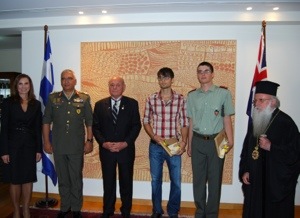
The Ambassador of Australia Jenny Bloomfield hosted an event for the Australian Veterans award outstanding Cretan students

20120929-075722.jpg
Photo caption: Ambassador Bloomfield with Chief of Defence General Kostarakos, Brigadier John Sheldrick OAM (Retd), Awarded Students and Bishop Irineos

ΠΡΕΣΒΕΙΑ ΑΥΣΤΡΑΛΙΑΣ

ΔΕΛΤΙΟ ΤΥΠΟΥ

Αυστραλοί Βετεράνοι βραβεύουν αριστούχους μαθητές από τη Κρήτη

Αθήνα, 28 Σεπτεμβρίου 2012

Η Πρέσβης της Αυστραλίας κα Τζένη Πολυξένη Μπλούμφιλντ παρέθεσε δεξίωση στην Πρεσβευτική Κατοικία κατά την οποία απονεμήθηκαν τα ετήσια βραβεία της Ένωσης Παλαιών Πολεμιστών και Αποστράτων της Αυστραλίας σε αριστούχους μαθητές της Κρήτης, που τιμούν τους άρρηκτους δεσμούς που σφυρηλατήθηκαν ανάμεσα στους δύο λαούς κατά τη Μάχη της Κρήτης.

Τα βραβεία απονεμήθηκαν στους μαθητές από τον Ταξίαρχο ε.α. John Sheldrick OAM, Πρόεδρο της Ένωσης Παλαιών Πολεμιστών και Αποστράτων της Αυστραλίας υπεύθυνο της Επιτροπής Διαχείρισης των Εκπαιδευτικών Βραβείων. Ο Αρχηγός ΓΕΕΘΑ Στρατηγός Μιχαήλ Κωσταράκος παρασημοφόρησε τον Ταξίαρχο με τον Αστέρα Αξίας και Τιμής τον οποίο αποδέχτηκε εκ μέρους των Αυστραλών Βετεράνων.

Συγχαίροντας τους φετινούς βραβευθέντες μαθητές, η Πρέσβης της Αυστραλίας κα Μπλούμφιλντ ανέφερε ότι τα βραβεία αυτά τιμούν τους διαχρονικούς δεσμούς ανάμεσα στις δύο χώρες και εκφράζουν την απέραντη ευγνωμοσύνη των Αυστραλών προς τους Κρητικούς.

Η Πρέσβης δήλωσε: «Η Μάχη της Κρήτης μπορεί να έλαβε χώρα πριν από 71 χρόνια, αλλά το μήνυμα της ειρήνης και της αλληλεγγύης παραμένει ζωντανό. Σε αυτές τις δύσκολες στιγμές, η Αυστραλία στέκεται δίπλα στην Ελλάδα με το ίδιο πνεύμα αλληλεγγύης που ένωσε τους δύο λαούς μας το 1941. Είμαστε σίγουροι ότι η Ελλάδα θα ξεπεράσει τις προκλήσεις της και θα βγει από την κρίση ακόμη πιο δυνατή.»

Την εκδήλωση τίμησαν με την παρουσία τους ο Υφυπουργός Διοικητικής Μεταρρύθμισης κ. Μανούσος Βολουδάκης, Βουλευτές Κρήτης, ο πρώην Πρέσβης της Ελλάδας στην Αυστραλία κ. Αλέξης Χριστόπουλος, οι Αντιπεριφερειάρχες Χανίων και Ρεθύμνου, ο Σεβασμιότατος Μητροπολίτης Λάμπης, Συβρίτου και Σφακίων κ.κ. Ειρηναίος, ξένοι Αμυντικοί Ακόλουθοι, εκπρόσωποι συλλόγων βετεράνων και μέλη της Ελληνο-Αυστραλιανής κοινότητας στην Ελλάδα.

—————————————————–

AUSTRALIAN EMBASSY ATHENS

PRESS RELEASE

Australian Veterans award outstanding Cretan students

The Ambassador of Australia Jenny Bloomfield hosted an event at the Australian Residence for the presentation of annual awards by the Returned and Services League of Australia to outstanding students from Crete, to honour the shared sacrifice of the two nations during the Battle of Crete of May 1941.

The awards were presented to the students by Brigadier John Sheldrick OAM (Retd), Chairman of National Trustees of the Returned and Services League of Australia, responsible for the RSL and the 6th Division Australian Hellenic Educational Memorial Trust. The Chief of the Hellenic Defence Forces, General Michael Kostarakos, presented the Star of Merit and Honour to Brigadier Sheldrick, who accepted it on behalf of the Returned and Services League of Australia.

Congratulating this year’s winners, Ambassador Bloomfield said that the RSL annual awards honoured the timeless bonds forged between the two countries and expressed Australians’ ongoing gratitude to the people of Crete.

The Ambassador said, “Seventy-one years after the Battle of Crete, its message of solidarity and friendship remains alive today. During these difficult times, Australia stands by Greece with the same spirit of solidarity which joined our two nations in 1941. We are certain that Greece will overcome its challenges and emerge even stronger from the crisis”.

The ceremony was attended by Deputy Minister for Administrative Reform Mr Manoussos Voloudakis, Members of the Hellenic Parliament, the former Greek Ambassador to Australia Mr Alexis Christopoulos, the Vice Governors of Chania and Rethymno, His Eminence Bishop Irineos, defence representatives, representatives of veteran associations and members of the Australian-Greek community in Greece.

Athens, 28 September 2012

A rare white whale has been spotted off Australia

Source: BBC

A rare white humpback whale has been spotted off Australia’s Gold Coast for the first time this year on his annual migration.

The whale, named Migaloo – Aboriginal for “white fella” – was the first all-white humpback ever to be seen when he was first spotted in Australian waters in 1991.

Every year Migaloo and some 17,000 other humpbacks make the journey to and from the tropical waters of northern Australia to the Antarctic.

Survey uncovers ghosts of Gallipoli almost 100 years after the war

Source: The Advertiser

ALMOST 100 years after thousands of young Australian men died at Gallipoli, a scientific team is trying to unravel what happened. Ian McPhedran reports from Gallipoli.

AS HE watched the Anzac landings on April 25, 1915, from the deck of a hospital ship moored in the Ege (Aegean) Sea off a place called Kabatepe, 22-year-old infantryman Alexander Burton must have wondered what the generals were thinking.

With his comrades from the 7th Battalion fighting for their lives and the higher ground above a narrow, rocky shore that would become Anzac Cove, Burton was recovering from a throat infection, but his absence from the fight was short lived. Just a week later he was ashore in the trenches pushing onwards and upwards towards the Turkish positions beyond the first ridge evading Turkish snipers and shrapnel shells.

The legend of Lone Pine began on day one of the campaign when the Anzacs first reached the ridge top and a few weeks later in May its place in the Anzac legend was assured when Albert Jacka was awarded Australia’s first Victoria Cross. By August, the small battlefield on the second ridge would be well and truly cemented into the Australian story in the blood of young men. Remarkably, seven VCs would be awarded at Lone Pine.
Advertisement

After three months in the trenches Corporal Alexander Burton, from Kyneton in Victoria, and his surviving mates from the 7th were battle-hardened veterans of a brutal and at times stealthy campaign of trench warfare.

By August, 1915, it was clear that the stalemate along the ridgelines between Lone Pine and Baby 700 could not be sustained. The trenches and tunnels at places like Quinn’s Post were so close that the two sides could almost spit at each other.

An offensive was ordered and, on the morning of August 9, Burton found himself inside an enemy trench alongside Lieutenant Frederick Tubb from Longwood, Corporal William Dunstan from Ballarat and several others. Ironically, Burton and Tubb, as well as a third Victoria Cross recipient from the Boer War, Lieutenant Colonel Cecil Maygar from Kilmore, all enlisted at Euroa north of Melbourne, the site of Ned Kelly’s last stand.

The Turks advanced in a bold bid to re-take the trench and blew up the sand bag barricade, but the three Victorians re-built it and then re-built it again before Burton was blown up and killed by an enemy bomb.

All three men, along with another four, Captain Alfred Shout, Lieutenant William Symons, Lance Corporal Leonard Keysor and Private John Hamilton, were awarded Victoria Crosses for their gallantry at the August battle of Lone Pine, making it the most highly decorated place in Australian military history.

Alexander Burton has no known grave and, like thousands of other Australian soldiers, he lies beneath the dirt of a beautiful Turkish peninsula far, far from home.

According to government historian Dr Richard Reid, the trench that generated the three VCs was located just behind where the Lone Pine Memorial now stands and probably beneath the road that carries hundreds of thousands of tourists to Gallipoli each year.

Corporal Burton’s name appears on the memorial wall at Lone Pine with all 3268 of the 8700 Australians killed at Gallipoli and the 456 Kiwis who have no known grave, including 960 buried under the azure waters of the Aegean Sea. For a fledgling nation in 1915, Gallipoli was a tragedy of biblical proportions.

Today a joint historical and archaeological survey of Gallipoli by the Australian, Turkish and New Zealand governments is using modern technology such as GPS and ground penetrating radar and a bit of good old-fashioned, bush-bashing field work to piece together the story of a disastrous military campaign that forged a young nation’s identity.

Ninety years after the event in 2005, the three governments agreed that until a detailed scientific survey had been carried out the full story of Gallipoli, and the men who fought there, would never be told. So now a dedicated team of 16 scientists and historians is unveiling the terrible story of Gallipoli’s trenches, tunnels, pits and dugouts in painstaking detail.

News Limited was given unprecedented access last week to the spider’s web of trenches and tunnels that criss-cross this stretch of hallowed ground. Now in its third season, the survey is gradually piecing together a complete picture drawing on painstaking field work, historical maps and official documents and the diaries of the men who dug and lived and died in and above the trenches of Gallipoli.

Australia’s ambassador to Turkey, Ian Biggs, said the survey was the first scientific attempt to discover what remains and how that dovetails with the Anzac narrative.

“The site itself is one of great antiquity,” Mr Biggs said. “But it is also fascinating to see how much material from the campaign remains on the ground.”

While the survey team does not do any excavation or digging, it has managed to collect an array of war relics.

Tony Sagona, Professor of Classics and Archaeology at the University of Melbourne, has been the leading scientist on the survey team for the past three years.

The team occasionally finds a bone that might possibly be human and when it does the team leader, retired Rear Admiral and former Repatriation Commissioner Simon Harrington, conducts a small but dignified burial service with a Turkish official in attendance, to lay to rest what could be the remains of a soldier.

“When we find a bone, I think about the poor bloke and how his life was taken away from him,” Mr Harrington said.

“It doesn’t matter which side, it is very sad.”

What were two-metre deep trenches are now mostly 70cm or less indentations and the former network of man-high tunnels that criss-crossed many sites are visible only as slumps where they have given way or caved in. The extent and complexity of the tunnel system has surprised the team, but the amount of lead flying around above ground made life in the open air tenuous, so the only solution was to tunnel towards the enemy and to break out into firing positions.

The most terrifying tunnels are the deeper ones dug beneath enemy tunnels with the object of setting charges and destroying the enemy shaft and anyone unlucky enough to be in it at the time. The Turks did the same from the opposite direction.

Professor Sagona said every piece of material the team collected, down to the tiniest fragment of shrapnel, was recorded and photographed.

So far the count is almost 1000 exhibits. This year the finds have included Roman relics at Lone Pine, dating from 200AD.

“There are some impressive finds,” Professor Sagona says.

Greek-Australian production, DREAM OF A SHADOW of Greek migrants to Australia

DREAM OF A SHADOW – PRESS RELEASE
(GREEK COMMUNITY MEDIA)

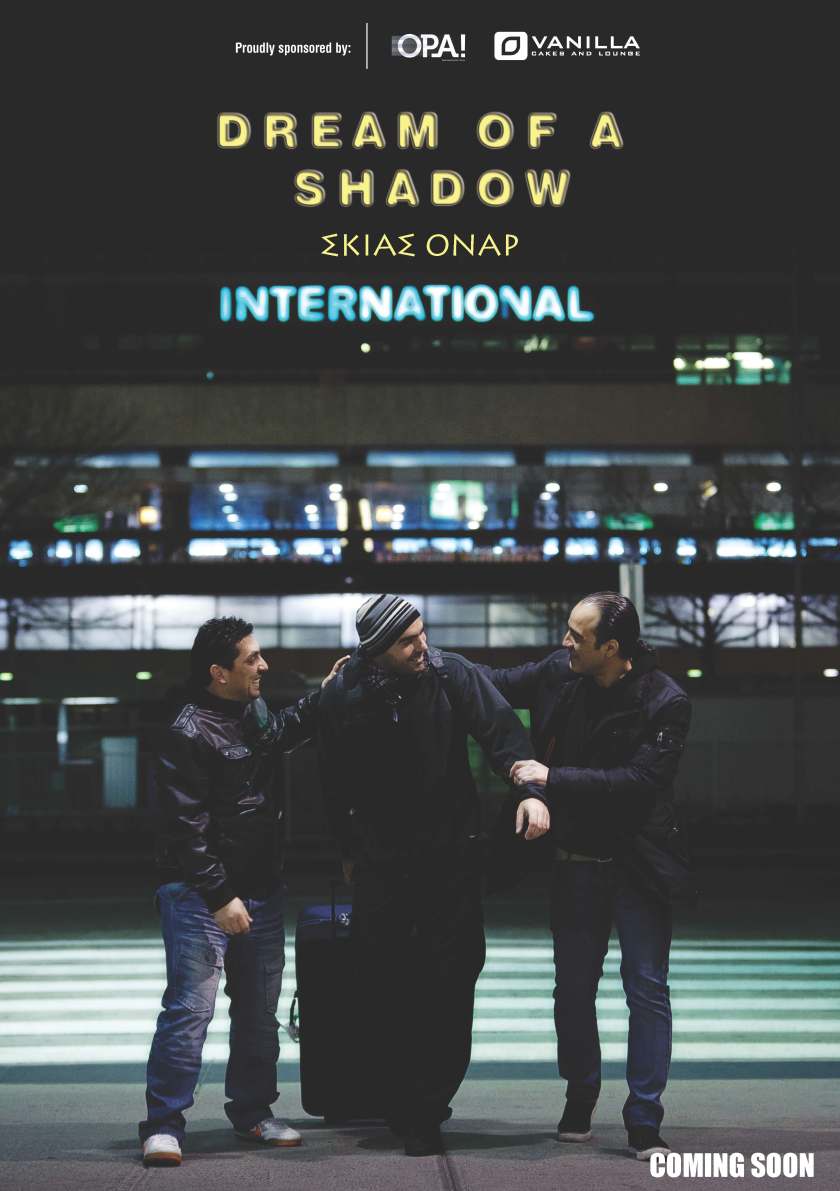
We would like to announce the release of the new Greek-Australian production, DREAM OF A SHADOW, a drama series about the new wave of Greek migrants to Australia.

DREAM OF A SHADOW tells the story of the protagonist Spiros Cheliotis who has recently emigrated from Greece with a new dream. Co-starring are well known Greek actresses Joanna Pilihos, and Sunny Hatziaryiri, Nikitas Ballas, a member of our own Greek community as well as new immigrants Stratos Attalithis and Themis Tzanis.

The cast includes other members of our local Greek community such as Christina Kato, George Papadakis and Michael Manthalis. The cast also features popular models/actresses Hollie Nilsson, Tanya Jani, Rebecca Catalina and Monica Eklund as well as many young and upcoming actors from Greece and Australia.

The four member Production team comprises Director of Cinematography, Tasos Kontovasis, Artistic Director Christina Kato and of course Nikita Ballas and Spiros Cheliotis, the two writers and composers.

The main sponsor of the series, DREAM OF A SHADOW, is Melbourne’s well known cafe Vanilla Cakes & Lounge situated in Oakleigh, where filming will be undertaken. The official sponsor and coordinator of communication is none other than the nation’s most awarded and loved OPA! magazine.

The intent of the drama series is to highlight the difficulties (or challenges) confronting recent Greek immigrants in their new country.  It projects a positive image of Greeks widely as having a love for life, decency, humanity, creativity and invention, Thereby discarding the negative and insulting stereotypes of Greeks being cheats and lazy.

DREAM OF A SHADOW further explores the ideal that the Greek charm will win through irrespective of the adverse developments in Greece, and how at anytime, Greece may shine again and win the sympathy of foreigners.

The Greek people have many talents, first and foremost, imagination.

The challenge is therefore to create a new foundation from which they can express themselves and that this can only be achieved with a new vision.  By building new dreams, the Greek people can triumph again if they can succeed in maintaining a healthy balance between reality and fantasy.

The script focuses on the history of Spiro (Spiros Cheliotis), a new Greek immigrant who manages to become famous; mesmerizing Australian society with effortless charisma, whilst struggling to not be damaged and altered by the ephemeral glory that suddenly seduces him.

The title of the series, DREAM OF A SHADOW refers symbolically to the very human condition, that of our indecisiveness between reality and fantasy.

Filming commenced in Athens on 14 September 2012 with great success by Tassos Kontovasi and Christina Cato. The production of the series has now been taken over by the famous Greek director Marina Leontaris in Melbourne, and is scheduled to commence shooting in late October.

For more information contact the communications coordinator at OPA!  Keep informed of any changes in the production schedule at facebook.com /DreamOfAShadow where photographs from the shooting will also appear.

For interview opportunites with talent, writers & producers and more info/images contact:

Steve Agi – MEDIA PARTNER

m: +61 432210963

e: editor@opamagazine.com.au


35 χρόνια «Fronditha Care»

Source: NeosKosmos

 Ο Ιάκωβος Φρονίστας

Ο πρόεδρος του Δ.Σ. της “Φροντίδας” με ένα από τα ιδρυτικά στελέχη του οργανισμού και μέλος του Δ.Σ. τον κ. Ιάκωβο Φρονίστα

Kατά τη διάρκεια μιας άρτια διοργανωμένης εκδήλωσης το απόγευμα της περασμένης Κυριακής, το Διοικητικό Συμβούλιο του Οργανισμού «Φροντίδα», γιόρτασε στο Stars International Reception, την 35η επέτειο από την ίδρυση του και τίμησε τους πρωτεργάτες και ιδρυτές του Οργανισμού, για το όραμα, την προσφορά, τη σκληρή δουλειά και την επιμονή τους, να δημιουργήσουν δειλά και σταθερά το πρώτο απάνεμο λιμάνι στο Springs Street στο Clayton, για να στεγάσει τους συμπαροίκους που βαδίζουν αισίως τα σκαλοπάτια της τρίτης ηλικίας.

Ο Οργανισμός τίμησε, επίσης, όλους εκείνους που σεβόμενοι τον συνάνθρωπο, προωθούν την πολιτιστική μας κληρονομιά και με το χέρι στην καρδιά συμβάλλουν στην πρόοδο του Οργανισμού. Ανάμεσά τους η γνωστή κι αξιαγάπητη αείμνηστη Άννα Μάθιους, η Άννα Γεωργούση και άλλοι.

Τα χρόνια πέρασαν και ο Οργανισμός, χάρη στις άοκνες προσπάθειες των αμέτρητων εθελοντών, ακολουθώντας τις ανάγκες της παροικίας που, εκ των πραγμάτων, γηράσκει, διεύρυνε τις δραστηριότητές του και δημιούργησε και άλλα κέντρα φροντίδας, προσφέροντας συνάμα ζεστασιά και αγάπη.

Σήμερα διαθέτει την «Άνεση» στο Station St., στο Thornbury, τη «Θαλπωρή» στο St Albans και τη «Στοργή» στο Omar Street στο Lower Templestowe. Επίσης, το ίδρυμα «Ιπποκράτης» στο Newcastle και, φυσικά, τα τρία «Στέγη», «Πρόνοια» και «Γαλήνη» στο Κλάιτον.

32.000 ΗΛΙΚΙΩΜΕΝΟΙ – ΑΠΟΓΡΑΦΗ 2011

Στο μήνυμά της, η πρωθυπουργός της χώρας, κ. Τζούλια Γκίκαρντ, το οποίο διαβάστηκε από την βουλευτή Calwell, κ. Μαρία Βαμβακινού, αναφέρθηκε στο όραμα των πρωτεργατών που ανταποκρινόμενοι στις ανάγκες της πρώτης γενιάς δημιούργησαν πριν 35 χρόνια το λαμπρό οικοδόμημα, για να στεγάσουν τα κουρασμένα γηρατειά».

Η κ. Βαμβακινού, υπογράμμισε, ότι είναι και δική μας ευθύνη ως φορολογούμενοι πολίτες να πιέσουμε την ομοσπονδιακή και τις πολιτειακές κυβερνήσεις να στηρίξουν το έργο του Οργανισμού.

Την αξιωματική αντιπολίτευση και τον αρχηγό, κ. Ντανιέλ Άντριους, εκπροσώπησε η γερουσιαστής κ. Τζένη Μικάκου, η οποία μεταξύ άλλων μίλησε για τον σημαντικό αριθμό των 32.000 ηλικιωμένων (Απογραφή 2011) και τη χαρά της, για την μέριμνα που προσφέρει το «Fronditha Care» στους ηλικιωμένους μας.

«Δεν μου προκαλεί εντύπωση η παρουσία των 500 και πλέον καλεσμένων. Από επισκέψεις μου στο γειτονικό μου Γηροκομείο «Στοργή», διαπιστώνω ότι υπάρχει μέριμνα στο συνάνθρωπο και ιδιαίτερα όταν έχει να κάνει με άτομα της τρίτης Ηλικίας.

Άλλωστε, η Ελλάδα έχει μακρόχρονη παράδοση σεβασμού και φροντίδας στα γηρατειά και χαίρομαι που αυτήν την παράδοση την φέρατε μαζί σας και ρίζωσε και άνθισε και στους Αντίποδες.

Στηρίζω το έργο σας, είναι μεγάλο και αξίζει της υποστήριξης της ευρύτερης παροικίας», είπε στο χαιρετισμό της, μεταξύ άλλων, η γενική πρόξενος της Ελλάδας, κ. Ελένη Λιανίδου.

«ΜΑΣ ΚΑΝΕΤΕ ΥΠΕΡΗΦΑΝΟΥΣ»

Την στήριξη του Victorian Multicultural Commission δήλωσε ο αντιπρόεδρος της Πολυπολιστικής Επιτροπής κ. Σπύρος Αλατσάς, ο οποίος εκπροσώπησε και τον υπουργό Πολυπολιτισμού, κ. Νίκο Κότσιρα -το VMC πρόσφερε $3,000 και ο πρόεδρος της Ελληνικής Κοινότητας- κ. Βασίλης Παπαστεργιάδης.
Παρόντες ήταν και ο βουλευτής, κ. Γιάννης Πανταζόπουλος, η διευθύντρια της Αυστραλοελληνικής Πρόνοιας, κ. Βούλα Μεσημέρη, ο πρόεδρος της Ένωσης Ελληνικών Συλλόγων Ηλικιωμένων, κ. Θεοδόσης Νομικός, ο διευθύνων σύμβουλος της Τράπεζας Κύπρου, κ. Γιώργος Τακτικός, -η Τράπεζα πρόσφερε επιταγή των $5,000- και μια ατέλειωτη σειρά εθελοντών, αρκετοί τρόφιμοι με μέλη των οικογενειών τους, άτομα που λαμβάνουν υπηρεσίες από τη «Φροντίδα», στελέχη και πολλοί άλλοι γνωστοί και μη εξαιρετέοι αντιπρόσωποι της παροικίας και υποστηρικτές του Οργανισμού.

Το πρόγραμμα παρουσίασε ο διευθύνων σύμβουλος του Οργανισμού, ο αγαπητός σε όλους, Γιώργος Λεκάκης.

Οι παραβρεθέντες παρακολούθησαν και ένα βίντεο που έφερε μνήμες, αναδεικνύοντας και τις σκληρές προσπάθειες των πρωτεργατών στο πρώτο ξεκίνημα.

Το χαμόγελο της ικανοποίησης ήταν έντονα ζωγραφισμένο στο πρόσωπο του διευθυντή του Διοικητικού Συμβουλίου, κ. Σάκη Ζαφειρόπουλου, καθώς απένειμε στους τιμηθέντες πλακέτα για την πολύχρονη κοινωνική τους προσφορά.

«Σας ευχαριστούμε για την υποστήριξη και τις γενναιόδωρες προσφορές σας.

Ευχαριστούμε το προσωπικό υπό τη διεύθυνση του Γιώργου Λεκάκη και όλους εσάς τους ακούραστους εθελοντές. Μας κάνετε να νιώθουμε υπερήφανοι για τις πρωτοβουλίες και τα επιτεύγματα της «Φροντίδα», είπε ο κ. Ζαφειρόπουλος.


Museum of our innocence

Source: NeosKosmos
By Dean Kalimniou

20120928-113951.jpg

“The power of things inheres in the memories they gather up inside them, and also in the vicissitudes of our imagination, and our memory of this there is no doubt.” Orhan Pamuk

Where do old photographs go when the people they depict and those who remember them are no longer extant? Are they as perishable as the memories they supposedly encapsulate or do they become the memory itself?

In the Museum of Innocence, Nobel Prize winning author Orhan Pamuk examines the concept of memory and its objectification by relating an account of the obsessive love that Kemal, a wealthy businessman, bears for Fusun, a lower class shop girl.

Oblivious to his own selfishness, Kemal first refuses to give up his fiance to be with the love of his life, and then becomes an obsessive collector of the artefacts of his life with her.

This is a relationship that is both lengthy and increasingly bizarre as Kemal objectifies Fusun and becomes a collector intent on satisfying his emotional obsession with his object of desire rather carrying on a healthy human relationship with his beloved.

At the close of the novel, Kemal is founding a museum wherein the artefacts he collected that relate to his beloved will be exhibited.

Here in Melbourne, artefacts attesting to times long forgotten lie, largely forgotten in various unsuspected places. For example, in the file of one of my clients, I once found the cheque book and minute memoranda of one of our more ancient and largely defunct pre-war community organizations.

A cursory glance of such records, inscribed in beautiful copperplate handwriting, do much to illuminate a particularly obscure period in our early communal history.

A particularly avid collector of such artefacts is the indefatigable proprietor of the renowned Greek restaurant Philhellene and astounder of the native populace by the poise of his mustachios, John Rerakis.

The walls of his restaurant are wallpapered with old and rare photographs, gravures and other visual media that allude to times past, not only in Greece but also in Melbourne itself and which provide the patron with a fascinating crash course in contemporary Greek culture.

One of the pictures that adorn his walls is the one featured in this diatribe. It is a picture that John Rerakis was given by stalwart Greek dance teacher Olga Black. It truly is a masterpiece, with light and shadow accentuating the youthfulness, optimism and vitality of its subjects, yet at first glance it appears to be what it is: an old photo of some traditionally clad Greek dancers, something to look up from your meal of lago stifado, to appreciate for a few moments, only to re-commence immersing yourself in the ecstasies of the aforementioned dish. Yet for unsuspecting patrons, a chance glance at such photographs, have the capacity to prove life-changing. Enter Menelaos Stamatopoulos, who, looking up absent-mindedly from his Philhellenic plate of comestibles a few weeks ago, was shocked to arrive at the realization that the smiling and dapper young gent pictured second from the right was a youthful portrayal of his now eighty seven year old progenitor, Odysseus. Moved beyond belief and astounded that he had never seen this photograph of his father before, he arranged a small surprise for him, inviting him to dinner at the restaurant and seating him directly underneath the photograph. When the venerable, hearty but hale octogenarian cast eyes on the photograph and beheld himself in his prime, resplendent in full foustanella, fashionably fastened at the waist, he wept. A few weeks later, I am seated opposite both Menelaos and Odysseus at Philhellene restaurant. With trembling hands, Odysseus lovingly opens an envelope and fingers the black and white photographs that spill out from it. They too, are photographs of a suave and debonair Odysseus, resplendent in full regalia, ensconced among other suitably attired gents and demoiselles, posed in various dancing attitudes. The play of light and shadow causes their outline to be juxtaposed crisply against the background, granting them a nineteen forties movie star aura of glamour. The reason for the fortuitous capturing of these moments in such a skilful manner can be discerned by flipping to the reverse of the photographs. There we see stamped indelibly in purple ink: “Property of the Herald.” “These photographs were taken in 1953,” Odysseus explains. “I had just arrived in Melbourne and was feeling lonely, so I joined the Olympic Dance Group, a way of meeting new people. Of the girls that you see in the photos, at least two are Australian. Back in those days, some of the Australian girls who had married Greek men would learn to dance and perform with us. Other Australian girls had no connection with Greece other than an interest in the country after the War.” This statement, it seemed to me, tended to do much to restore balance to a somewhat one-sided community myth that would have the pre-nineteen sixties broader Australian social context look disparagingly upon migrants and especially their culture to the extent where openly being Greek was socially impermissible. The stereotype of Greek men marrying Australian women who were invariably opposed to manifestations of Greek culture and thus excluded their men-folk from the community also seemed to be in part, contradicted. Such bias apparently did not exist among the smiling young Australian ladies of the photograph who seem less embarrassed to don Greek traditional costume then some of their Greek-Australian counterparts some six decades later. Further belying the myth that Australia was largely not interested in the migrant cultural experience prior to the advent of the official policy of multiculturalism, is the fact that the series of photographs have been taken by mainstream Australian print media. Odysseus takes great pains to point out that the bulk of the performances undertaken by the young dance group were for Australian audiences, with the group even performing publicly at festivals organized to welcome the advent of the 1954 Olympic Games to Melbourne.

It appears that, possibly because of the novelty value, that exhibitions of Greek culture, such as they were, and possibly owing to their novelty and the sympathy Greece elicited in the hearts of many Australian returned servicemen at the time, were much more integrated within the mainstream and captured more interest than many do now, our primary focus being our own entertainment. As I gazed at the photograph and listened to the venerable Odysseus relate fascinating stories of his life, I marvelled at the swiftness of the passage of time. The young man, full of promise, optimism and raw sexual energy is now a mellow yet sprightly grandfather. Many of the smiling youths of the photograph are no longer with us and when the last of them go, one of the fading reminders of their brief sojourn on this earth will be a photograph on the wall of a restaurant, interesting, evocative but largely incomprehensible to those who have not yet embraced oblivion. As Odysseus talks, I notice that the street-facing window of his restaurant, John Rerakis has strategically placed some old suitcases that have an unknown lady’s name painted on them and then that singular word «ΠΑΤΡΙΣ,» that evokes so many memories and causes an outpouring of emotion from first generation migrants, upon its utterance. “I bought it at a local second hand shop,” Rerakis explains, with the relish of a connoisseur. Then his voice plunges and becomes sombre. “A wooden stefanothiki came with it and it was part of a deceased estate. Just imagine. This old lady kept the suitcases she arrived in Australia with and of course, the stefana with which she was married. And they ended up in an op-shop. I display the suitcases so that Greek and other patrons alike always are reminded where we came from. A half remembered early childhood sitting on old wooden milk-crates and surrounded by rusty farming implements from the fifties, old photographs, printed tickets to dances long ago forgotten and being told stories of our family’s life on the farm in Bulla in the thirties suffice to convince me that it is not enough for us to attempt to understand and draw our identity solely from the motherland, ossifying an idealized interpretation of its traditions into a liturgy of aspirant cultural continuity. A whole way of life, the time of Innocence, of the valiant first generation struggling to acculturate and settle in Australia, is disappearing before our very eyes, its values considered quaint and irrelevant and its accoutrements, hoarded lovingly in the polished drawers of nineteen sixties furniture, being discarded in the trash or adorning the shelves of op-shops around Melbourne. As we lose this value insight into our past, its labyrinthine permutations as exemplified by Odysseus Stamatopoulos’ experiences, we lose a veritable part of our souls. John Rerakis valiant anthropological endeavours to preserve the material evidence of our past should act as a clarion call to our entire community. It is high time that a Museum of our own Innocence is established, there to house the multitude of ephemera and memorabilia that testify to the vibrancy and cohesiveness of our community during its most golden period. A festival program, tattered and replete with advertisements for 1980’s business long since closed down, old props from school plays, report cards from Greek schools, all these things form as much a part of our cultural heritage as the Parthenon. And in pride of place over the foyer there should hang, the photo of Odysseus and his merry crew of dancers – a reminder to the visitor of our innate optimism, permitting one to ponder just how far we have departed from our perceived communal path and whether the future roads will take us. *

IT may not be art but it will take over Newcastle for the next few days

Source: NewcastleTheHerald

The annual This Is Not Art Festival was launched last night, with a smorgasbord of creative events spread across 22 venues in the city today and over the weekend.

This Is Not Art is expected to play a key part in a blockbuster weekend in the Hunter expected to net between $10 million and $12 million for the region’s economy.

Festival co-ordinator Sarah Thrift said the four-day festival would have a digital bent this year as part of a push to expand the event’s focus.

‘‘It’s not just for the arts, it’s for the business sector to come along as well,’’ Ms Thrift said.

‘‘This year we’ve tapped into the fact the creative and business sectors need to start talking more.’’

Among the attractions will be three large, luminescent mobile sculptures mounted on bicycle taxis called the Angler Fish.

Group D Creative Collective principal Cassie Stronach said her creations were designed for the Vivid Festival in Sydney earlier this year.

‘We spent three months designing and building them,’’ Ms Stronach said.

This weekend’s appearance, commissioned by the Hunter Development Corporation, is the first outside that festival.

They will be based in the Honeysuckle area. Newcastle City Council major tourism event developer Mark Stratford said This Is Not Art had an appeal that drew visitors internationally.

‘‘It’s becoming quite a lucrative festival,’’ he said.

‘‘It’s a bit of a strange beast because it rebirths itself every year but this year I think will be above previous attendance.’’

Mr Stratford said the festival was also a key component of Newcastle being named a World Festival and Events City by the International Festivals and Events Association.

The title recognises the Hunter’s ability to host major events as well as its strong annual calendar of attractions.

Several hotels and hostels have been booked out.