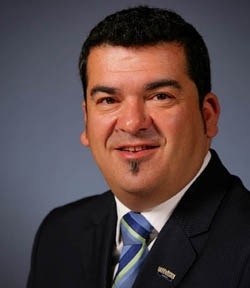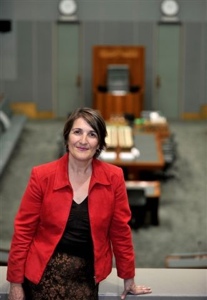
Why give this man Michael Wilkins money to go on a fantastic ride?

Source: IllawarraMercury
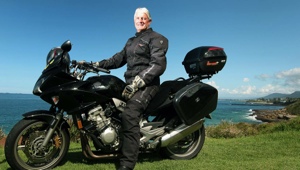
20130415-103336.jpg
Michael Wilkins. Picture: SYLVIA LIBER

The second time around of a life-changing experience is never the same as the first time.

Some things are easier, some things are harder.

For Michael Wilkins, now in the final preparations for his second time riding around Australia on a motorbike, he’s already noticed that money is much tighter this time.

On his first trip, in 2010, he raised more than $8000 for the Steven Walter Children’s Cancer Foundation.

This time, he’s struggling to raise $5000.

“Some of the businesses that supported me on the first ride have said they can’t do it now,” he said.

“I have written to businesses concerned with motorcycling and the community and I haven’t even received a reply. Not even a ‘no’.

“A lot of people wonder why they should give me money to go on a fantastic ride.

“I stress that none of the donated funds goes towards my costs, which will be in the order of about $8500 in accommodation, food and petrol.”

Wilkins’s motivation to set off on a trip to Townsville, west to Tennant Creek and Katharine via Mount Isa, through the Kimberley and back across the Nullarbor Desert, is not just to have a good time.

He first came across the Steven Walter Children’s Cancer Foundation while riding on the famous Snowy Ride, an annual event attracting around 3000 riders that has raised more than $3 million for childhood cancer research.

Walter was only 19 when he died in July 2000 after an eight-year fight against cancer.

His whole life revolved around motorcycles and he was a former NSW Junior Enduro Champion and an Australian Four Day silver medallist.

“The funds raised by the charity help pay for clinical trials, which are not necessarily funded by government money or drug companies,” Wilkins said.

“They are a small charity with only three employees, so the majority of the money goes to the researchers where it’s meant to go.”

His trip in 2010 was his first around Australia and it had a profound effect on the 63-year-old mechanical designer and self-confessed “born-again motorcyclist” from Bellambi.

“It was difficult readjusting when I returned,” he said.

“In fact, I still haven’t. We all had to face that fact that we had to get back in the harness and work for a living.

“It’s changed a lot of things.”

He wrote a book about the trip, A Lap for the Little Ones, and this time around will be writing a blog for the Mercury when he rides out of the Sydney Children’s Hospital on May 1.

“It is an expensive exercise but I have been able to justify that in my own mind because it is raising money for something that is pretty important, and because I had such a great time,” he said.

“It wasn’t so much the touristy things like the tree walk and the Nullarbor.

“It was more the intangible things – the freedom of being out there.

“There is such a feeling of release from responsibilities, worries, concerns and alarm clocks.

“The feeling of the freedom and the space.

“That’s the thing.”

After growing up in Oberon, where he learned how to ride dirt bikes, Wilkins came to Wollongong at the age of 22 to work at the steelworks.

He rode a bike to work and went out for more adventurous rides at weekends when he could, but time was tight.

Then he took a sales job in the early 1980s that came with a company car, and after keeping the bike unused in a garage for months, he ended up giving it to his daughter.

After many years involved in the Tech Waratahs Rugby Club, including six as president, he came back to motorcycling in his early 50s, when his body was too old for rugby.

Slowly, he met other motorcyclists and started travelling down to Phillip Island with members of the Ducati Club in Sydney.

“Although motorcycle riding is a solitary activity to a certain extent, it’s like anything – if something is worth doing, it’s worth sharing with somebody,” Wilkins said.

“That said, I often get out by myself on the bike and may do a loop down to Ulladulla, but it’s different with a group.”

Although this will be his last time around Australia, it won’t be the end of his work for the foundation, nor the end of his long bike trips.

He’s got the bug.

“There is the vastness and the wonder of it all,” he said.

“There’s the feeling that you are insignificant as an entity.

“The land is the dominating factor out there.

‘Einstein parents’ say no to kids’ vaccination

Source: The Daily Telegraph

ALMOST 80,000 Australian children are not immunised against deadly diseases, and the highest number live in Sydney’s west.

Experts say the “baby Einstein” demographic – parents who take an intensive interest in their children’s education and health, eat organic food and use alternative medicines – is responsible.

Sydney’s west has an immunisation rate of 90 per cent for five-year-olds but last financial year was home to 3600 children who were not fully immunised. In wealthy Manly, Mosman and eastern Sydney, however, fewer than 85 per cent of children are immunised in some age groups.The figures are contained in a National Health Performance Authority report.

The World Health Organisation says immunisation rates for measles must be above 93 per cent to prevent its spread. Immunisation expert Julie Leask says parents who perform extensive research and are often suspicious of medicine are more likely to object to vaccination.

“I think what these figures say is … you can’t rely on herd immunity in your region,” the University of Sydney academic said.

Australian Medical Association president Dr Steve Hambleton said the removal of an $18.50 government incentive for doctors to chase up unvaccinated children would exacerbate the problem.

New data on immunisation rates in smaller areas shows the Richmond Valley on the north coast, home to the anti-immunisation Australian Vaccination Network, has the lowest immunisation rate in the country. Only 82 per cent of one-year-olds are fully immunised, falling to just 80 per cent for two-year-olds and 75 per cent of five-year-olds.

NSW Health infectious diseases expert Dr Jeremy McAnulty said two children died on the north coast last year during a whooping cough epidemic that infected 24,000 people. Western and southwestern Sydney were also hard hit by a measles outbreak, with 199 cases last year.Naturopath and mother-of-two Genevieve Milton is convinced vaccines can be harmful and decided against immunising her sons.

Husband Darrell, however, is pro-vaccination and admits he is not entirely comfortable with the decision. “I don’t know I totally agree with her but if Gen wasn’t going into this armed with all the information that she obviously has, then I would be more against her,” he said.Mrs Milton believes she can best protect sons Cadel, 4, and Keanu, 21 months, by strengthening their immune system with good nutrition, vitamins and good hygiene.

She says her boys “line up every day for their echinacea and fish oil” and stresses white sugar and flour must be eliminated from children’s diets for a strong immune system to develop.

The South Sydney Harold Matthews under 16s team has finished the regular season with the Minor Premiership, and the SG Ball under 16s team has finished in second spot on the ladder

Source: rabbitohs.com.au

Junior Rep Teams Finish Regular Season in First and Second Positions

Photo
Junior Rep Teams Finish Regular Season in First and Second Positions

The South Sydney Harold Matthews under 16s team has finished the regular season with the Minor Premiership, and the SG Ball under 16s team has finished in second spot on the ladder, following the final round of matches last weekend.

The under 16s turned in a compelling performance to win 36 points to 10 over a strong Parramatta Eels side, and the under 18s played out a ten-all draw against the Eels as well.

The Harold Matthews side are undefeated so far this season, having won all of their nine round matches.

The SG Ball side won six matches, drew two and only lost one match on their way to a top-two finish.

The South Sydney boys will both play home Qualifying Finals at the Suttons South Sydney High Performance Centre at Redfern Oval this Saturday 13 April, with the under 16s taking on the fourth placed Newcastle Knights at 12:30pm, and the under 18s playing the third placed St George Dragons at 11am.

Harold Matthews:

South Sydney 36 (Reimis Smith 2, Gabriel Hamlin, Keeden Kelly, Cameron Murray, Siosifa Talakai, Jonathan Tufuga tries; Siosifa Talakai 4 goals)

defeated

Parramatta 10

SG Ball:

South Sydney 10 (Tulsa Saumamao, Tevita Cottrell tries; Paul Momirovski goal)

drew with

Parramatta 10

Harold Matthews Cup Final Ladder

https://i0.wp.com/staticnrl.sportalhosting.com/site/_content/image/00038705-image.jpg

SG Ball Cup Final Ladder

https://i0.wp.com/staticnrl.sportalhosting.com/site/_content/image/00038706-image.jpg

Science tests for all school students in push to expand NAPLAN

Source: TheAustralian

ALL students will sit national science tests in Years 3, 5, 7 and 9 under an expansion of the literacy and numeracy testing program that bolsters the federal government’s reforms linking school improvement to increased funding.

The National Education Reform Agreement, which will go to the Council of Australian Governments on April 19, includes an expansion of the existing National Assessment Program — Literacy And Numeracy tests to include science from 2015, with online testing available from 2016.

W.H.I.A President John Pandazopoulos’ Statement on the International Day for the elimination of Racial Discrimination

20130323-133457.jpg

ΠΑΓΚΟΣΜΙΑ ΔΙΑΚΟΙΝΟΒΟΥΛΕΥΤΙΚΗ ΕΝΩΣΗ ΕΛΛΗΝΙΣΜΟΥ (Πα.Δ.Ε.Ε)
WORLD ΗΕLLENIC INTER-PARLIAMENTARY ASSOCIATION
(W.H.I.A)

W.H.I.A President John Pandazopoulos’ Statement on the International Day for the elimination of Racial Discrimination

“It is important in these economically difficult times that we value basic human rights-respect and tolerance for all irrespective of race, ethnicity, religion or country of origin. These are values that have ensured the survival and progress of the Hellenic diaspora. As a diaspora we have had to fight racism, intolerance and prejudice. As a result many of our Hellenic community leaders have been pioneers in racial equality, anti-discrimination, racial and religion tolerance and promotion of multiculturalism. These endeavours have strengthened our community under an understanding that our culture and religion are not barriers to our progress with an understanding that we are also citizens of the countries in which we live in accepting our responsibilities to be good hard working citizens that support the laws and institutions of the lands in which we live.
As a result we have been able to flourish with our churches, community centers, schools and Greek language publications. These have not weakened the nations in which we live but instead have made them stronger through everyone working in the interests of our nations, through linking us with other parts of the world and broadening our minds. These have all been good for our countries and also been good for Greece and Cyprus.

The diaspora now has a more significant role to play in support of Greece and Cyprus as they undertake their difficult economic tasks. This environment of multiculturalism, tolerance and mutual respect allows us to talk openly about how we can support the economic growth of Greece and Cyprus through trade, investment and tourism. It is important that this and Greece’s economic recovery is not undermined by the emergence of extremism in Greece which turns away tourists, investment and trade.

As Hellenic heritage legislators we TOTALLY oppose such extremism and do not welcome any of this BAD POLITICS in Greece or it coming to any of the countries in which we live. We have members from a diverse range of political beliefs but we are all united against extremism, racism, intolerance and violence. These are the same reasons that we became involved in politics in the first place – to support our communities and to build the institutions that allow and sustain diversity, tolerance and mutual respect. It is no surprise that many of our members have been Ministers responsible for Multiculturalism and Citizenship, spokespersons for their Party’s or Chairs of Parliamentary Committee’s on multiculturalism.

Today we remember the struggles for equality from pioneers of diverse backgrounds many being Greek. Those that changed the rules to make it better for us and future generations. It is also a day to remember our role in maintaining this which can be fragile particularly in difficult economic times.”

New report on migration and multiculturalism in Australia

20130320-104753.jpg

Australia is a vibrant multicultural society according to the findings of the Migration Committee report tabled in the Parliament today. The report received bi-partisan support and made 32 recommendations after receiving over 500 submissions and holding 27 public hearings over a two year period.

The report found that Australian multiculturalism is a success story, and stands as a good example to the world on how to build a cohesive society.

Chair of the Migration Committee Maria Vamvakinou said: “immigration and settlement in Australia has always been a nation building exercise. The committee believes that access to Australian citizenship has been at the heart of the success and cohesion of Australian society. Settlement is a long term and intergenerational process, and we need a whole of government approach and better coordination between all three tiers of Australian government”.

The committee’s recommendations include: rebuilding Australia’s research capacity in this field, especially in qualitative research; factoring cultural and linguistic diversity into the Government’s Social Inclusion Agenda, greater flexibility in English language training and support for micro enterprises, especially for women. The Committee found Job Services Australia needs to improve its delivery of services to people of diverse backgrounds, including refugees.

Deputy Chair Louise Markus said the committee welcomed meeting people at the grass roots where business and local communities were collaborating to improve relationships, and build skills and opportunities for people from different backgrounds.

“In Dandenong, the South East Melbourne Manufacturers Alliance is bringing employers and young refugees together; the National Australia Bank’s African Inclusion Program is exemplary; and social enterprises, like The Studio, are inspirational. These initiatives deserve special mention and prove that cooperation, cross-cultural awareness, and commitment provide tangible results,” Mrs Markus said.

Mrs Markus said there was “no doubt that immigration has enriched the social, economic and cultural life of our country”.

Ms Vamvakinou said every society is dynamic and open to the influences of globalisation, wars, and economic crises. We are a resilient society and well placed to meet these challenges.

Earth Hour Is a Colossal Waste of Time—And Energy

Source: Slate

Plus, it ignores how electricity has been a boon for humanity.

142198193

The Eiffel Tower is seen after the lights are turned off during Earth Hour 2012 in Paris.
Photo by Antoine Antoniol/Getty Images

On the evening of March 23, 1.3 billion people will go without light at 8:30—and at 9:30, and at 10:30, and for the rest of the night—just like every other night of the year. With no access to electricity, darkness after sunset is a constant reality for these people.

At the same time, another 1 billion people will participate in “Earth Hour” by turning off their lights from 8:30-9:30.

The organizers say that they are providing a way to demonstrate one’s desire to “do something” about global warming. But the reality is that Earth Hour teaches all the wrong lessens, and it actually increases CO2 emissions. Its vain symbolism reveals exactly what is wrong with today’s feel-good environment.

Earth Hour teaches us that tackling global warming is easy. Yet, by switching off the lights, all we are doing is making it harder to see.

Notice that you have not been asked to switch off anything really inconvenient, like your heating or air-conditioning, television, computer, mobile phone, or any of the myriad technologies that depend on affordable, plentiful energy electricity and make modern life possible. If switching off the lights for one hour per year really were beneficial, why would we not do it for the other 8,759?

Hypothetically, switching off the lights for an hour would cut CO2 emissions from power plants around the world. But, even if everyone in the entire world cut all residential lighting, and this translated entirely into CO2 reduction, it would be the equivalent of China pausing its CO2 emissions for less than four minutes. In fact, Earth Hour will cause emissions to increase.

As the United Kingdom’s National Grid operators have found, a small decline in electricity consumption does not translate into less energy being pumped into the grid, and therefore will not reduce emissions. Moreover, during Earth Hour, any significant drop in electricity demand will entail a reduction in CO2 emissions during the hour, but it will be offset by the surge from firing up coal or gas stations to restore electricity supplies afterward.

And the cozy candles that many participants will light, which seem so natural and environmentally friendly, are still fossil fuels—and almost 100 times less efficient than incandescent light bulbs. Using one candle for each switched-off bulb cancels out even the theoretical CO2 reduction; using two candles means that you emit more CO2.

Electricity has given humanity huge benefits. Almost 3 billion people still burn dung, twigs, and other traditional fuels indoors to cook and keep warm, generating noxious fumes that kill an estimated 2 million people each year, mostly women and children. Likewise, just 100 years ago, the average American family spent six hours each week during cold months shoveling six tons of coal into the furnace (not to mention cleaning the coal dust from carpets, furniture, curtains, and bedclothes). In the developed world today, electric stoves and heaters have banished indoor air pollution.

Similarly, electricity has allowed us to mechanize much of our world, ending most backbreaking work. The washing machine liberated women from spending endless hours carrying water and beating clothing on scrub boards. The refrigerator made it possible for almost everyone to eat more fruits and vegetables, and to stop eating rotten food, which is the main reason why the most prevalent cancer for men in the United States in 1930, stomach cancer, is the least prevalent now.

Electricity has allowed us to irrigate fields and synthesize fertilizer from air. The light that it powers has enabled us to have active, productive lives past sunset. The electricity that people in rich countries consume is, on average, equivalent to the energy of 56 servants helping them. Even people in Sub-Saharan Africa have electricity equivalent to about three servants. They need more of it, not less.

This is relevant not only for the world’s poor. Because of rising energy prices from green subsidies, 800,000 German households can no longer pay their electricity bills. In the United Kingdom, there are now more than 5 million fuel-poor people, and the country’s electricity regulator now publicly worries that environmental targets could lead to blackouts in less than nine months.

Today, we produce only a small fraction of the energy that we need from solar and wind—0.7 percent from wind and just 0.1 percent from solar. These technologies currently are too expensive. They are also unreliable (we still have no idea what to do when the wind is not blowing). Even with optimistic assumptions, the International Energy Agency estimates that, by 2035, we will produce just 2.4 percent of our energy from wind and 0.8 percent from solar.

To green the world’s energy, we should abandon the old-fashioned policy of subsidizing unreliable solar and wind—a policy that has failed for 20 years, and that will fail for the next 22. Instead, we should focus on inventing new, more efficient green technologies to outcompete fossil fuels.

If we really want a sustainable future for all of humanity and our planet, we shouldn’t plunge ourselves back into darkness. Tackling climate change by turning off the lights and eating dinner by candlelight smacks of the “let them eat cake” approach to the world’s problems that appeals only to well-electrified, comfortable elites.

Focusing on green R&D might not feel as good as participating in a global gabfest with flashlights and good intentions, but it is a much brighter idea.

Australian research brings hope to cancer kids

Source: News

When Sydney woman Maria Rossi learned her baby girl had blood cancer, the only thing she wanted to hear was high percentage odds that little Mia would pull through.

“We kept asking, what are her chances? And you just want to hear that number,” she remembered on Tuesday.

“Any number that is higher gives you more hope.”

Now, thanks to an Australian-led medical trial published on Tuesday, more families will be presented with odds that give them belief.

As recently as the 1990s, as few as a third of children with high-risk Acute Lymphoblastic Leukaemia (ALL) recovered from the illness.

But research initiated at the Sydney Children’s Hospital Randwick and The Children’s Hospital at Westmead, and detailed in the journal Leukaemia on Tuesday, has boosted the survival rate for those children to 75 per cent.

Scientists at the Children’s Cancer Institute Australia (CCIA) developed a way to test for the slightest trace of diseased cells in the bone marrow of children with ALL – including among patients who appeared to be responding well to treatment – to identify possible relapses months or years in advance.

Children at a high risk of relapsing were then treated with an intensive chemotherapy protocol.

Glenn Marshall, director of the Kids Cancer Centre at Sydney Children’s Hospital Randwick, said 1000 children had been involved in the research in Australia, New Zealand and the Netherlands.

“Approximately 30 to 40 children in those countries would not be alive today if we didn’t have our trial, because the cure rate for those high-risk patients compared to the 90s has doubled,” he told reporters on Tuesday.

Deputy CCIA director Murray Norris said doctors had previously relied on slides under a microscope to determine whether cancer was in remission.

“You’re lucky if you can pick up one leukaemia cell amongst 20 or 50 normal cells,” he said.

“What we developed was a molecular genetic test, essentially it was based on taking a DNA fingerprint of the child’s leukaemia.”

The Minimal Residual Disease testing could pick out the equivalent of one leukaemia cell from up to a million normal cells, he said.

Maria Rossi credits the research with saving her daughter’s life.

Today, Mia Yule needs to visit a hospital for check-ups only every four weeks.

The rest of the month, the bouncy six-year-old is busy going to school, playing soccer, and even doing kung-fu.

“I really hope Dr Marshall makes other kids better,” Mia told reporters.

Her mum said she felt “blessed”.

“We went through treatment with other families who weren’t so lucky,” she said.

“I think it was one in three of them who didn’t make it, so we feel very excited by the news today that they’re continuing to make progress to give every child the chance to live a life.”

Australian universities improve world standing

Source: News

University table

AUSTRALIAN universities have improved their international standing in the past year and now enjoy the third highest ranked reputation in the world.

The Times Higher Education World Reputation Rankings, to be released today, found Australian now lags only behind the US and UK, with six of our universities ranked in the Top 100.

In the past year, Australian universities outperformed the Netherlands, Japan and Germany, with two new entrants on the list – Monash University in Victoria, and the University of NSW – joining the four existing place holders.

The University of Melbourne improved its rank from 43 to 39 and Australian National University from 44 to 42. Sydney University rose one place to 49, and University of Queensland remained in the 80th percentile.

Times Higher Education editor Phil Baty said the reputation rankings have been held since 2011 and Australia has improved its standing at each survey.

The results are based on a global opinion poll and take into account more than 16,000 responses from senior published academics in 150 countries.

“Australia is a country very much on the way up in terms of worldwide academic prestige,” Mr Baty said in a statement.

“In many ways these results show that Australia’s image among scholars around the world is catching up with the reality: until now it has tended to perform less well in the reputation rankings compared with the overall, objective World University Rankings.

“These results show how well poised Australia is to make the most of its geographical advantages: while it has strong links with the best universities in the West, it has also made the most of East Asia’s booming higher education scene. If it continues to exploit these opportunities, Australia could be a serious beneficiary of the Asian century, which is great news for its economy and competitiveness.”

Monash University president Ed Byrne said in a statement: “Australia is ideally situation between the rising academic powerhouses of Asia and established centres in the old Westticipate a bright future.”

UNSW Vice Chancellor, Professor Fred Hilmer, put the institution’s first-time inclusion down to a “very strong improvement path”.

“When you look at the quality of the student intake, it’s gone up every year. It’s harder and harder to get in and if you look at research in particular, we are winning increasingly competitive grants,” Professor Hilmer said.

Universities in the US and UK still hold the bulk of the top 100 positions, (43 in the US and nine in the UK) with an elite group of six “super-brands” including Harvard, Oxford and Cambridge, holding the top positions since the rankings’ inception.

The highest ranking university outside of the US and UK is the University of Tokyo at 9th, while India and New Zealand are among the countries with no entrants on the Top 100 list. China’s two most prestigious universities, Tsinghua University and Peking University, both dropped slightly in the rankings, but they remain in the Top 50.

Sydney Children’s Hospital has announced a new partnership with the Steven Walter Children’s Cancer Foundation

$1.2 million partnership for Sydney Children’s Hospital

Sydney Children’s Hospital has announced a $1.2 million partnership with a New South Wales-based foundation. Greg Johnson reveals the details.

Sydney Children’s Hospital (SCH) has announced a new partnership with the Steven Walter Children’s Cancer Foundation (SWCCF), which will see the foundation donate $1.2 million to SCH over the next three years. The funding is in support of the Kids Cancer Centre at SCH, specifically for research into relapsed patients with acute lymphoblastic leukaemia and an experimental therapy project for childhood brain tumours.

“We are honoured to partner with the inspiring team at the Steven Walter Children’s Cancer Foundation and are incredibly grateful for their continued generosity and commitment to our Kids Cancer Centre,” explained Sydney Children’s Hospital Foundation chief executive officer Adam Check.

“Their support ensures that the Kids Cancer Centre team can continue in their mission to find a cure for childhood cancer, and help our seriously ill patients with cancer look to a brighter future.”

SWCCF has already donated over $1 million to the hospital during its 12 year association.

The two organisations share a close bond, with Steven Walter a patient at the hospital before passing away in his late teenage years.

“This partnership builds upon the $1 million funding our foundation has already donated to find a cure for childhood cancer,” said SWCCF executive director Allan McGuirk.
SWCCF raises funds through a number of initiatives, including two key motorbike rides – one through the snowy mountains and another which goes around Australia.

For more information on Steven Walter Children’s Cancer Foundation, visit: http://www.stevenwalterfoundation.org.au
Greg Johnson is the editor of Fundraising & Philanthropy Magazine.