Syrian refugees find little to cheer in Greece

Source: TheGuardian

Like so many Syrians fleeing their war-shattered country, Mohamad Alkhalil did not think it could get any worse.

In the space of two years, the 26-year-old had survived a bullet in his foot, severe shrapnel wounds and a long stint in hospital in Turkey and pursuit by the security forces from whom he had defected to sign up with rebel fighters in the Free Syrian Army in June 2011.

“In that time, I have lost 46 members of my family, all in bombardments of our village near Hama,” he says, showing pictures on his iPhone of a succession of relatives, some old, some young, who have died since the start of the conflict.

“My brother Noor was killed on 20 January 2012,” he adds, pointing to man with slicked-back hair standing in front of a Cadillac. “My cousin,” he continues, pointing to a tousled-haired youth in a body bag “was killed a few months later. We were close and, after that, I decided my best option was to go to Europe.”

Alkhalil’s father, a long-time opponent of the Ba’athist regime, had lived in Brussels for years. As Alkhalil lay on a hospital bed in the Turkish city of Antalya, he plotted the journey that would take him to Europe and the embrace of relatives.

But that, the Syrian now believes, is where his real problems began. Sneaking into Greece across the Evros river last summer the reception was anything but warm.

“I thought I was coming to Europe but Greece isn’t Europe,” he says. “The police immediately detained me because I had no papers and then I was put on trial. The first thing the judge asked is ‘why did you defect and join rebel forces? Why did you make such a mistake?’ I was just so shocked.”

For 10 months, Alkhalil found himself being moved from prison to prison across northern Greece. “I was jailed in Alexandroupolis, then Xanthi, then Serres,” he says, noting that at least his experiences had given him the chance to learn Greek – the language in which he tells his story. “After being released last month I’ve been trying to get to Belgium the legal way.”

Alkhalil is far from alone in experiencing such hardship in crisis-hit Greece. Since the onset of their country’s war in March 2011, some 20,000 Syrians have entered Greece, mostly from neighbouring Turkey, according to the Community of Free Syrians Abroad in Athens.

After a fence was erected on the Greek-Turkish land border last year, growing numbers have made sea crossings instead, attempting to reach the eastern Aegean islands of Lesvos, Samos and Chios in dinghies and rickety boats.

“In recent months we have seen a lot of women and children making the journey alone,” said Ashraf Hasno, the community’s general secretary. “Families are being split up in Turkey. It is a heart-rending sight.”

Human rights defenders and immigration experts monitoring the situation in Greece report that Syrian refugees have been repulsed by the Hellenic coastguard, or detained, or summarily deported or refused asylum if they manage to make such a request in the first place.

“Not until 9 April 2013 was there a police decision to release detained Syrian asylum seekers and cease repatriations of Syrians,” says Martin Baldwin-Edwards, who heads the Mediterranean Migration Observatory in Athens. “Many still remain held in custody.” He estimates that some 2,187 Syrians were detected by the coastguard and police in the first five months of 2013.

With its chronically disorganised state apparatus and debt-stricken economy, Greece is not only ill-equipped to deal with the influx but has been widely accused of acting out of blatant disregard for international conventions. “Basically Greece does not believe it has any international obligations under the Geneva convention and doesn’t see why it should host refugees,” says Baldwin-Edwards. “It’s a big mess.”

In the chaos, it has fallen to Syria’s exiled community to provide support. “Almost every Syrian sees Greece as a transit route to Germany or Sweden or some other place in Europe,” said Hasno. “They soon find out how difficult it is and want to leave.”

Alkhalil is the first to agree. “In Syria the situation is very bad,” he says. “But when you get to the country of your dreams and discover there is no freedom, that is even worse.”

Spyridon Gianniotis retains 10K title

Source: Associated Press

BARCELONA, Spain — Spyridon Gianniotis of Greece defended his title in the grueling 10-kilometer open water event at the swimming world championships Monday.

Gianniotis finished in 1 hour, 49 minutes, 11.8 seconds in the waters of Barcelona’s harbor.

Thomas Lurz of Germany was second, 2.7 seconds behind, and Olympic champion Oussama Mellouli of Tunisia was third, 7.4 back.

The women’s 10K is scheduled for Tuesday.

Athens metro extension, four new Line 2 stations to open at noon on Friday

Source: Ekathimerini

The extension of Line 2 on the Athens metro, from Aghios Dimitrios to Elliniko, will be open to passengers from noon on Friday, it has been announced.

Four new stations will be in operation in southeastern Athens: Ilioupoli, Alimos, Argyroupoli and Elliniko.

Seventeen new trains are to be introduced into the Athens metro network to coincide with the opening of the Elliniko extension.

The South Korean-manufactured trains were bought at a cost of 155 million euros to cope with the increase in the number of passengers expected once the Elliniko extension, as well as the ones toward Haidari, Peristeri and Piraeus are completed. The latter is not due until 2017.

The Hyundai Rotem-Hanwha trains have a smart start and stop system that is designed to save energy.

It is expected that an extra 80,000 people will use the metro system once the four new stations on Line 2 open. This will mean 50,000 fewer trips by car in Athens each day, according to transport experts. Passengers will be able to travel from Elliniko in southeastern Athens to Syntagma in the city center in 14 minutes.

Search underway for unrecovered Aussie WWII casualties who died in April 1941 during the Battle of Vevi

Source: Neos Kosmos by Michael Sweet

20130725-122223.jpg

Vevi lost soldiers dig begins

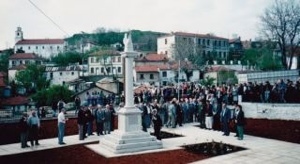
The Greek army has begun excavating the alleged unmarked burial site of Australian soldiers who died in April 1941 during the Battle of Vevi.

The dig, sanctioned by the Greek government after the intervention of Minister for Macedonia and Thrace, Theodoros Karaoglou, began last Monday in Vevi.

The location was first pointed out to a delegation of Australian veterans in 1991 who visited the village during the 50th anniversary commemoration of the Greek Campaign in WWII.

More than 22 years later the first steps are being taken to finally ascertain the validity of the claim.

Newcastle school teacher Tom Tsamouras – who brought the alleged site to the attention of the Greek authorities – told Neos Kosmos that the excavation team, led by Brigadier General Panayiotis Stamatis of the 1st Army Corp, had experienced a number of ‘hits’ on metal detectors since the dig began on Monday, but no human remains had been found as yet.

“They are convinced that the area we photographed and supplied to them is ‘unusual’,” Mr Tsamouras told Neos Kosmos.

In recent months Mr Tsamouras has corresponded with Unrecovered War Casualties – Army (UWCA), the Australian Defence Force department responsible for investigating assertions of unrecovered war dead.

The department – that was due to open a case-file to examine evidence relating to the site – has reportedly expressed disappointment at the Greek military going ahead with the dig without it being undertaken in conjunction with Australian authorities.

Mr Tsamouras said that whilst he was delighted that the dig had begun, “I would have been more delighted if this was a joint venture with our own UWCA”.

Neos Kosmos understands that UWCA’s contact details were supplied to the Greek authorities before the dig began.

If remains are discovered that are believed to be those of Australian soldiers, it is the responsibility of UWCA to seek to identify the remains, and if identified, make funeral arrangements with the Commonwealth War Graves Commission.

Ο φάκελος των αγνοουμένων Αυστραλών της μάχης της Βεύης έτοιμος για το υπουργείο Ενόπλων Δυνάμεων Αυστραλίας

20130626-220448.jpg

Καθηγητής του Νewcastle Θωμάς Τσαμούρας.

26 Ιουνίου 2013-06-27

Πηγή άρθρου: Michael Sweet

Μετά την ανακοίνωση του ‘Έλληνα υπουργού Μακεδονίας και τη Θράκης, Θεόδωρου Καράογλου – ότι ποσό ύψους μέχρι 30.000 ευρώ έχει διατεθεί για μια ανασκαπτική έρευνα στην πιθανολογούμενη περιοχή, στην οποία Αυστραλοί στρατιώτες τάφηκαν ανώνυμα στην βόρεια Ελλάδα κατά τον Β ‘Παγκόσμιο Πόλεμο οι ερευνητές στην Αυστραλία θα παρουσιάσουν τώρα ένα φάκελο των αποδεικτικών τους στοιχείων στο υπουργείο Ενόπλων Δυνάμεων Αυστραλίας.

Για τον Στρατό των αγνοουμένων (UWCA), είναι υπεύθυνη η μονάδα ADF για την διερεύνηση των υποδεικνυόμενων θέσεων ταφής του Αυστραλιανού στρατιωτικού προσωπικού, που παρείχε υπηρεσίες στο εξωτερικό. Παρά την προφορική υποστήριξη των ελληνικών αρχών για την ανασκαφή, η UWCA δεν έχει λάβει ακόμη μια έκθεση πεπραγμένων από τον Ελληνικό Στρατό για να διευκολυνθεί η προκαταρκτική έρευνα ή μια επίσημη αίτηση για βοήθεια. Ο Έλληνας υπουργός, ο οποίος επιβεβαίωσε, ότι ο Ελληνικός Στρατός είχε ετοιμάσει λεπτομερή σχέδια, για να ανασκάψει την περιοχή, είπε, ότι θα εγκρίνει τις δαπάνες προσωπικά. “Νομίζουμε ότι ξέρουμε, που βρίσκεται ο τάφος αυτών των στρατιωτών, και αναζητούμε μια άδεια για να σκάψουμε εκεί», είπε ο κ. Καράογλου.

«Θέλουμε να λύσουμε αυτό το σοβαρό ζήτημα και πιστεύω, ότι η αυστραλιανή κυβέρνηση θα συμφωνήσει μαζί μας, ότι πρέπει, να προχωρήσουμε. Θέλουμε, να τιμήσουμε αυτούς τους στρατιώτες.

Η Βεύη, 16 χιλιόμετρα νότια από τα σύνορα της Ελλάδας με την Γιουγκοσλαβία, ήταν η περιοχή της πρώτης εμπλοκής μεταξύ των αυστραλανών και των γερμανικών στρατευμάτων κατά την ελληνική εκστρατεία στην διάρκεια του Β ‘Παγκοσμίου Πολέμου. Οι συμμαχικές απώλειες κατά την Μάχη της Βεύης υπολογίζονται σε περίπου, 60 στρατιώτες νεκρούς κατά την δράση, ανάμεσα στους οποίους 28 Αυστραλοί στρατιώτες. 480 Βρετανοί στρατιώτες της Κοινοπολιτείας συνελήφθησαν αιχμάλωτοι. Μια ομάδα ερασιτεχνών ερευνητών στην Νέα Νότια Ουαλία και την Βικτώρια λένε, πως υπάρχουν σημαντικές ενδείξεις, ότι έως και 20 Αυστραλοί στρατιώτες που σκοτώθηκαν στη μάχη τάφηκαν σε ομαδικούς τάφους ανώνυμα και δεν έχουν ανευρεθεί.

Το 1991 ο βετεράνος Ταξίαρχος Keith Rossi είχε δείξει την πιθανολογούμενη περιοχή σε μια επίσκεψη του στη Βεύη για τον εορτασμό της 50ης επετείου από την ελληνική εκστρατεία. Ένας από τους ερευνητές, στο Νιουκάστλ της Αυστραλίας ο Έλληνας δάσκαλος Θωμάς Τσαμουρας, ο οποίος έχει συμβάλει στον εντοπισμό της πιθανολογούμενης θέσης του χώρο ταφής των αγνοουμένων στη Βεύη είπε στον Νέο Κόσμο αυτή την εβδομάδα, ότι το έργο βρίσκεται στο στάδιο της ολοκλήρωσης. “Η αποστολή μου ήταν, να εντοπίσω το σημείο όπου έχουν ταφεί, με βάση τις πληροφορίες από τον Ταξίαρχος Keith Rossi και άλλες τοπικές εκθέσεις. «Πιστεύω ότι έχουμε βρει τώρα το σημείο και έχουμε φωτογραφίες από αυτό.

«Έχουμε, επίσης, έγγραφα από το ελληνικό στρατό, που έχει συντάξει μια λεπτομερή έκθεση σχετικά με το, τί απαιτείται για μια 15-ημέρη προκαταρκτική ανασκαφή, η οποία αφορά δύο στρέμματα,”είπε ο κ. Τσαμούρας. Η έκθεση του ελληνικού στρατού αυτή τη στιγμή μεταφράζεται στα αγγλικά. Ο κ. Τσαμουρας έχει βοηθηθεί στις προσπάθειές του από τον Έλληνα δικηγόρο κ Ευάγγελο Ιωαννίδη, ο οποίος ζει κοντά στη Βεύη και ο οποίος έθεσε το θέμα αρχικά στις ελληνικές αρχές. Τα αρχεία από τις εκσκαφές όσων σκοτώθηκαν στη δράση και θάφτηκαν μετά τη μάχη της Βεύης τον Απρίλιο του 1941 – και τα ονόματα των ατόμων που είναι περισσότερο πιθανό, να μην έχουν ανευρεθεί – έχουν συνταχθεί από τους ερευνητές της πολιτείας της Βικτώρια Μαρία Cameron και Carl Johnson. Οι πληροφορίες αυτές θα πρέπει, να προστεθούν στο φάκελο UWCA. Εν τω μεταξύ, ο κ. Τσαμούρας εμπλέκεται στη διασταύρωση των ανεπίσημων και άλλων αποδεικτικών στοιχείων σχετικά με το σημείο ταφής, συγκεντρώνοντας εκθέσεις κατά τη διάρκεια των ετών, που έγιναν από κατοίκους της Βεύης. Ο κ. Τσαμούρας λέει, ότι ο φάκελος με τα αποδεικτικά στοιχεία θα κατατεθεί στο UWCA μέσα σε λίγες εβδομάδες. “Να εξετάσουν αυτές τις πληροφορίες και να αποφασίσουν αν είναι αντάξιες μιας προκαταρκτικής ανασκαφής», δήλωσε ο ερευνητής από το Newcastle. “Αν χρειάζονται περισσότερες πληροφορίες, τότε μπορεί, να χρειαστεί, να παράσχουν περισσότερα στοιχεία ή να το κάνουν μόνοι τους, αξιοποιώντας την βοήθεια, η οποία προσφέρεται από τις ελληνικές αρχές. «Αν εμείς πρέπει, να το κάνουμε μόνοι μας και να βρούμε αποδείξεις των ανθρωπίνων λειψάνων, το UWCA είναι υποχρεωμένο από το νόμο να διεξάγει μια κανονική ανασκαφή.”

HAMILTON OLYMPIC SOCCER CLUB “35 Years On and Forever We’ll Be Strong“

Source: http://www.hamiltonolympic.com.au

Football in Australia, received a major boost in this country with the post war economic boom that saw thousands of migrants from throughout Europe settle in the far away “Southern Land” called Australia.

Hundreds of Greeks chose Newcastle as their new home with BHP and various other industries offering these “New Australians” a chance to make a new life far from their home land. Of course Soccer is a great way to keep ties with your family and community, and that’s how Hamilton Olympic was first established.

During the 60’s and 70’s, the Newcastle Greek Community supported a very strong Football Club called “Pan Hellenic”. Due to a combination of reasons, this proud ethnic based club sadly folded.

This in fact was a catalyst for the creation of a new Soccer Club for the Newcastle Greek community to support, led by Jim Kapalos, the Nicholas brothers, Stavros Ioannou, Chris and Andrew Tagaroulias and yes, still heavily involved with the club at present, Con Gounis. This group of gentlemen were adamant that Newcastle had a Greek based Soccer Club present in this town, and went on to form a new Soccer club. In 1976 they rallied the troops and entered three grades into the Northern NSW Soccer Federation 4th Division competition and were to be known as “Newcastle Olympic Soccer Club”.

The newly formed club played their first competition game against South Wallsend in April 1976 at Walker Field, South Wallsend. Ironically, for the new club their home ground was Darling St Oval, before a move in 1977 the following year to Austral Park – Birmingham Gardens.

Newcastle Olympic began to climb through the divisions and then saw the signing of Australian Hall of Fame recipient and 1956 Australian Soccer team Olympian, Bruce Morrow, whom captain coached Newcastle Olympic. Bruce Morrow’s charges went on to win the club’s first title in 1978, crowned minor and major premiers in the NSW Soccer Federation 4th Division competition with their first Grand Final victory 1-0 over the more fancied Garden Suburb club. Names of that era include Karamaniolos, Chatziconstantinos. Nicolas, Chourtos, Caimakamis, Rendina, Gounis, Thodas, Bachus, Pappas and Papadimitrious just to name a few.

The Clubs success continued in 1980, when they were promoted to 2nd division after finishing as runners up in 3rd division in 1979 and then promoted to 2nd division in 1981. The club competed successfully in 2nd division for a couple of years before the NSW Soccer Federation re-structure of divisions and relegated the club back to 4th division in 1983.

Now came the difficult the years. Between 1983 and 1989, the club was forced to leave Austral Park as their home base when the rent for this venue was quadrupled. The Club found themselves a new home ground being Myer Park, Adamstown, which had little infrastructure, and the club had very few dedicated committee members. Again a band of dedicated people refused to see this proud club lie down, and rallied together to install new life into the club. Tribute must be made to a few of the faithful committee of the time such as Nick Thodas, Jim Papadimitriou, Con Gounis and also to the players who kept the club functioning at this low point in the club’s history, which included the Karamaniolos brothers, Chris, John, Mick and Neil, the Asvestas brothers Harry, Nick and Jim, Mark Simpson, Leo Magnisalis, Con Xenakis and many others. Those days saw the club travel to play matches in multi-cultural deprived areas such as Kearsley, Greta-Branxton, Muswellbrook, Cardiff Railway, Beresfield and Thornton where the action off the park was often just as interesting as it was on the park.

The watershed for the Club was no doubt the acquisition of Terry Robson as player coach from the start of the 1988 season. After just missing automatic promotion in 1988, Terry led the team to the minor premiership in 1989, which saw the club back in 3rd division in 1990, the first time in almost a decade. An astute coach, Terry brought in some inspiring signings to the club, Brett McDonald, Steve
Foteados, Rod Arthur and Bob Mountford, who with the existing squad, were ready to take on the challenge of 3rd division. An added bonus for the 1990 season was the recruitment of ex-KB United and Australian International Player, Joe Senkalski. Newcastle Olympic easily won the Minor & Major Premierships with a 4-1 Grand Final victory over arch rivals, Cooks Hill. The club was on the move with 2nd division beckoning in 1991. The recruitment of 2 youngsters, strikers Lincoln Latunin and goal keeper Craig Tselembis coupled with the conversion of striker Con Safouris to sweeper alongside skilful players like Zervas, Magnisalis, Karamaniolos, Primmer and Simpson saw the club win the 2nd division title by a record 13 points, as well as a dramatic Grand Final win in a penalty shootout against the Lambton Jaffas. Again, tribute must also be given to the hard working committee of that era with Manuel Tserepas as Club President and his band of dedicated committee members Con Gounis, Chris Christo, Jim Papadimitriou, Kerry James, Nick Thodas, Con Pappas, Nick Nicholas and others who kept the club on the path to its ultimate goal.

The Early Years in First Division

1992

1st Division Soccer for the blue and white was finally reached after 16 years in the lower divisions. Hamilton Olympic were the only team to have won 3 automatic promotion movements from 4th division to 1st division in three years. After drifting around in the lower divisions the Club was building momentum and recruited Merv Duff as their 1st Grade Coach. This looked to be an encouraging season with an influx of experienced players coming to the club such as the Dorman brothers, Steve and Scott, Mark Ryan, Glen Chapman mixed with young blood Costa Caimakamis, Harry James, Con Sakavaras and Con Safouris saw the clubs early years in the NBN State League competition as it has become known.

Phil Ridley was appointed as 1st grade coach in 1993 and was in charge until the 1995 season, a three year reign at the helm.

The club began winning its first titles in the State League Competition, with the Under 18’s in 1994 and second grade in 1995 which were promising signs for the future. By this time the club had moved back to Darling Street Oval as their home base, and finalising the ground development was the clubs priority due to the fact that in order to compete in the NBN State League 1st division competition, the clubs ground facilities had to fall in line with a certain criteria set out by the Federation. With the completion of a 400 seat grandstand in 1993, in 1995 the club installed 4 galvanised steel light poles and 20 new lights, The redevelopment of Darling Street Oval came at a cost to the club of over $100,000.00, much to the delight of the Newcastle City Council. Today sees Darling Street Oval facilities up there with the best in the North and is the envy of other clubs that play in the 1st division competition. At the end of the 1995 season the club parted company with their second, 1st division Coach Phil Ridley, and was on the scout for a new coach for the 1996 season. The Smith era was about to begin.

The Golden Years – The “ Smithy “ Era

1996 – 2005

After interviewing a number of applicants for the ‘Head’ coaching position at Olympic, it was obvious that Greg Smith was the man to lead the club to the upper echelon of the NBN State League competition. A highly successful coach with Belmont/Swansea and Adamstown, Greg had a distinguished playing career for nearly two decades. A resident of Hamilton, Greg agreed to terms with Hamilton Olympic and was appointed head coach, the start of an era, unrivalled within Northern NSW Soccer circles.

A coach whom gained loyalty and 100% commitment from his players, Greg nearly had instant success with the 1st Grade losing a marathon penalty shootout to Highfields Azzurri, 11-10, in the 1996 final. Success was not far away, when on a wet September Sunday, Olympic won the first of their four consecutive Premiership titles with a 2-1 victory over arch rivals Broadmeadow Magic in the 1998 1st division Grand Final. Greg always believed in encouraging youth players from within the club whom came through the ranks from our under 18’s team. Players such as Michael Allan, Aaron Thompson, Mathew Austin, Evis Heath and Trent Austin, all would play a major role in the future success of the club.

1999 was probably the clubs most comprehensive Premiership victory with a 4-0 thrashing of Adamstown Rosebuds, at Breakers Stadium, Birmingham Gardens. Captain Benn Lane alongside talented players such as Mat Austin, Adam Sanderson, Craig Wallwork, Peter McGuiness, Doug West, Corey Filipcevic and Craig Harris saw the side play outstanding football.

The Millennium year 2000, witnessed Hamilton Olympic win another Premiership against arch rivals Edgeworth Eagles. Greg Smith prepared his charges to perfection for the 3-0 Grand Final Victory courtesy of goals from Wallwork, Filipcevic and McAteer.

The Premiership Victory in 2001 against Highfields Azzuri, a comfortable 2-0 win saw Hamilton Olympic equal the record held by Weston, by winning 4 consecutive premierships, only the second time in the Federation’s 100 history has this feat been achieved.

During the ten Golden Years “Smithy” was head coach, the club also won numerous 2nd grade and Youth Grade Titles, Club Championships and pre season competitions. Greg had the ability to bring out the best in his players by sharing his vast knowledge of the game with his players and coaching staff, and has no doubt taken the profile of the club to be known as one of the “Heavy Weights of the NBN State League competitions.”

The Last Five Years

2006 – 2011

Since our 30th Anniversary Ball held in 2006, the club has been successful in gaining two further Premiership Titles, one in 2007 and the other one in 2009. Both were gained with the 1st Grade team coming from fourth spot to be victorious in the Grand Final. In 2007, under Head Coach and club stalwart, Alex Tagaroulias, a Trent Austin goal saw the team defeat Edgeworth Eagles by One goal to Nil to take out the 2007 title. Featuring in that team was former Socceroo Matthew Bingley, as well as Captain Mathew Austin, his brother Trent Austin, Corey Filipcevic, Aaron Thompson and Doug West who had all gained numerous Premierships in the “Smithy Era”. That season the club also took out the Club Championship.

2009 saw the club take out the Premiership decider with a Two Goals to One Victory over Valentine Phoenix. Under Head Coach Bobby Naumov, a double to Murray Fletcher saw Olympic keep up its perfect record of never losing in a Premiership decider, winning all six that the club have featured in, which also allowed First Grade Captain Mathew Austin to keep up his perfect record of playing in five winning Grand Finals.


YOU CAN HEAR “STUDIO 3 NEWCASTLE” IN THE FOLLOWING NEW LINKS

Winamp, iTunes
http://streams.streemi.com:2199/tunein/ttsamour.pls

Windows Media Player http://streams.streemi.com:2199/tunein/ttsamour.asx

Real Player http://streams.streemi.com:2199/tunein/ttsamour.ram

QuickTime http://streams.streemi.com:2199/tunein/ttsamour.qtl

Specialists reach out to childhood cancer survivors missing out on follow-up care

Source: ABCNEWS

Cancer survivors neglecting long term care

Specialists are trying to reach out to childhood cancer survivors who have withdrawn from the medical system, saying they are at a much higher risk of serious health problems later in life.

Childhood cancer survival rates are now the best they have ever been, with roughly 80 per cent beating their illness.

However, researchers at Sydney Children’s Hospital say two-thirds of survivors will suffer a serious health problem later in life, and the majority are not receiving proper follow-up care.

Associate Professor Richard Cohn, the director of the Survivorship Program at Sydney Children’s Hospital, says there is a growing number of people in need of long-term support.

“It’s very exciting that we’ve reached a point where we’re not only concentrating on the cure but on the quality of the cure that we achieve with childhood cancer patients,” he said.

“All organs are in fact at risk, and there can be effects on the heart, the lungs, the kidneys, the liver… and we know that patients who’ve been treated for one cancer, for example, are at risk of developing second cancers.”

Professor Cohn says for that reason, it is extremely important that survivors return to long-term follow-up clinics to prevent and treat a range of conditions.

“We know from patients who we’ve followed over many years that many of the late effects, the side effects of chemotherapy radiation and surgery… may only present many years after the completion of therapy,” he said.

In an effort to coax survivors back to long-term clinics, cancer centres across Australia and New Zealand are surveying survivors about their experiences.

They will be asked about the barriers to receiving proper follow-up to help develop a new model of care.

Behavioural scientist Dr Jordana McLoone is coordinating the study and says there are a range of factors contributing to the low rate of return.

For some people, returning to the paediatric hospital is not a pleasant memory and for some people who’ve now grown and become adults, they too don’t like to return to a paediatric setting for their care.
Behavioural scientist Dr Jordana McLoone
“Some of them can be very practical reasons,” she said.

“Sydney Children’s Hospital has a large catchment area and so for people who live hundreds of kilometres away that can be difficult.

“For others, they might feel that they’re quite healthy. Often late effects don’t actually present until many years down the track.”

Dr McLoone says many survivors also find the journey back to their treating hospital a traumatic experience.

“There are always psychological and emotional factors,” she said.

“For some people, returning to the paediatric hospital is not a pleasant memory, and for some people who’ve now grown and become adults, they too don’t like to return to a paediatric setting for their care.”

Survivor says she feels responsibility to ‘give back’
Michele Joyce survived a rare kidney tumour at the age of five. Forty years later, she has two adult children and a job dispensing chemotherapy at Campbelltown Hospital in Sydney.

But she says it has not been a smooth road. Despite being vigilant in her health checks, Michele has already suffered a second cancer.

At 22, she was diagnosed with cervical cancer which was caught early during one of her regular pap smears.

She also suffers from scoliosis and muscle wastage down one side of her body as a result of the radiotherapy she underwent as a child.

Michele’s doctors had warned her she may not be able to have children, but thanks to the advice of specialists she knew to try early.

“The first call I made was back to Sydney Children’s Hospital, to my childhood specialist. I was so excited, I wanted to tell him that I had fallen pregnant,” she said.

I have this keen sense of responsibility to give back for them saving my life. If I keep going back I’m giving them the hospital and the researchers the information that I’ve got.
Cancer survivor Michele Joyce
“He congratulated me, but also added that he had to tell me that there were risks in being pregnant. Although I’d overcome the risk of not being able to have children, he said there were risks that I needed to be aware of throughout pregnancy.

“The main ones he listed for me were miscarriage, early labour, and birth defects… I was told I could have children with heart defects and club feet, different things from the drugs they’d used on me as a child.

“I’m lucky none of those things happened.”

Ms Joyce says her health is not the only reason she returns religiously to Sydney Children’s Hospital.

“I have this keen sense of responsibility to give back for them saving my life. If I keep going back I’m giving them the hospital and the researchers the information that I’ve got,” she said.

“They need to know the side effects and the late effects… they’ve been able to improve the treatment from knowing what happened to me.

“It works both ways. I get a lot out of it and it gives back to research and the hospital and the people that saved me.

Canteen bridges gap between teenagers and hospital
Canteen is one organisation that works with survivors at a time that many withdraw from the medical system.

Chief executive Peter Orchard says the transition into adulthood represents a high-risk time for someone who has come through cancer treatment.

“Throw into the mix cancer treatment and all the side effects of that… and it can be so hard to deal with that they don’t want to go back near it again,” he said.

“There can be really negative associations with hospital and treatment and so getting people to stay connected is a bit of a challenge.”

Canteen is rolling out services at new federally funded youth cancer centres around the country.

Mr Orchard says the new centres are designed for people aged between 15 and 30.

“It’s in recognition of the fact that in an adult environment young people often feel like an alien species… so the youth cancer services we fund play a critical role in trying to help them feel comfortable in what is essentially an alien environment,” he said.

If you think you are eligible to take part in the study, you can find it online at http://www.behaviouralsciencesunit.org/long-term-follow-up.html

The Mani region of Greece is featured in the new movie “Before Midnight (starring Ethan Hawke and Julie Delpy)

Mani delights in Greece

This sleepy, rural region of Greece is coming to a screen near you. Marjory McGinn suggests you beat the crowds to experience its romance

One of the memorable scenes in the new Hollywood film Before Midnight, mostly set in the Mani region of southern Greece, is a long, convivial, Mediterranean-style lunch for six friends on the stone balcony of a seafront house.

It’s the seductive image of laid-back Greek life that tourists still crave in vast numbers. But what makes this scene even more appealing is that this elegant property in the coastal village of Kardamili was the Greek retreat of the late, great travel writer Patrick Leigh Fermor.

Fermor, who died in 2011, was an iconic figure, war hero and bon vivant, whose soirees on the terraces of this house attracted princes, poets, and Hollywood legend Sophia Loren on one occasion.

It was Fermor who first popularised this “wild” region of the southern Peloponnese when he wrote his seminal book Mani, charting his trailblazing adventures there in the 1950s when the area was cut off from the rest of Greece due to abysmal roads. He described the Mani as having “survived in a fierce and enchanting time warp”. In subsequent decades, however, the Mani relaxed back into a kind of blissful obscurity and Fermor’s description still seems relevant.

All that is likely to change when Before Midnight (starring Ethan Hawke and Julie Delpy), is released this weekend. Already tipped for an Oscar, the film is certain to create a buzz about the Mani again.

And the timing couldn’t be better. Although some dedicated visitors would still rather have the “time warp”, Maniots at least will relish an influx of tourists, having suffered years of economic crisis, like the rest of Greece. Many will even be hoping the film will do for this region what Captain Corelli’s Mandolin did for Kefalonia. Another boost for the area is easyJet’s launch this summer of flights to Kalamata from Gatwick.

The Mani is a vast, diverse region with many pretty coastal settlements like Kardamili, built mostly in the 17th century but dating back to the time of Homer, but it is also dominated by the Taygetos mountains with its wilderness areas and the deep ravines of Rindomo and Viros, and by its wealth of Byzantine churches and monasteries.

For me, the north Mani holds the greatest appeal. I spent the past three years there, living in a hillside village on what started out as a year’s casual adventure but quickly grew. I can vouch for the seductive charm of the place and its people and the way it can undo your best-laid plans. The village of Megali Mantineia, although just 30 minutes from Kalamata, is a world apart, where life hasn’t changed much in centuries and locals still harvest olives, though it is rare in having four lively tavernas and a kafeneion (coffee shop).

Few villagers there speak English and many are blissfully ignorant of the outside world. The joy of this part of the Mani is the wealth of old settlements tucked away in the hills and the network of cobbled donkey tracks (kalderimia) that connect these places and make it perfect for those who love walking and leisurely exploration.

Few visitors venture down to the tip of the Mani, to Cape Tainaron, and yet the drive there (two-and-a-half hours from north Mani) is the best introduction to this long peninsula with 50 miles of mountain range running down the middle of it like a spine. The road winds past some of the Mani’s best-kept secrets, such as the sandy beach of Kalogria, south of Kardamili, where the writer Nikos Kazantzakis, author of Zorba the Greek, lived in a wooden hut in the early 1900s with the mad idea of running a lignite mine in nearby Stoupa. He hired the real-life George Zorbas to oversee the venture, and he became the inspiration for the fictional character.

The road will also take you past wide Otylo Bay and Limeni Bay, with fish tavernas that hug the waterside, and the famous village of Vathia, with its rows of fortified towers, mostly in ruins, filing across the peak of a low hill. The village reflects the turbulent history of the Mani, with its clan warfare, macho revolutionaries, and its skirmishes with the Ottoman Turks.

Further south and the landscape has a sun-scorched, barren feel and the mighty Taygetos finally runs out of steam just before the end of the road at Cape Tainaron. For me, the cape has always been a ghoulish magnet, as its main “attraction” is the fabled Cave of Hades, or the entrance to the mythological Underworld, overlooking the Bay of Asomati. This was the portal through which Hercules descended for his 12th “labour” to drag up the snarling, three-headed dog Cerberus.

With the remains of an ancient temple to Poseidon, there’s a mystical quality to the Cape that attracts scores of pilgrims every summer.

The film does use other locations in the southern Peloponnese that have also been largely unknown until recently. There are scenes throughout the equally attractive Messinian peninsula, including a long segment around eerie, sprawling Methoni Castle, once a Venetian stronghold at the tip of this prong. The whole southern Peloponnese deserves more world attention and Before Midnight might just deliver that. But even if tourists mob the place, I feel sure that villages like Megali Mantineia won’t change a bit. The film will come and go like another autumn olive harvest.

Sydney Youth Cup and Sydney Junior Cup 2013 Finals completed with a record number teams

MEDIA RELEASE – 8 JULY 2013
SYDNEY YOUTH CUP & SYDNEY JUNIOR CUP

Sydney hosted the largest annual youth football (soccer) tournaments recently, the annual 2013 Sydney Youth Cup + 2013 Sydney Junior Cup at Sydney Olympic Park, June 30 – July 5, 2013 http://www.sydneyyouthcup.com held over the first week of the July School Holidays. The 2013 Tournament attracted a record number of youth football teams from around the City, State and Australia.

The six day tournament culminated with a variety of teams qualifying for the Finals series for the 2013 Sydney Youth Cup:

2013 Winners of the Sydney Youth Cup:

UNDER 12s – Sydney Olympic FC
UNDER 13s/14s – BUFC
UNDER 15s – South Melbourne FC
UNDER 16s/18s – ASA (Australasian Soccer Academy) A’s
Sydney Youth Cup 2013 Runners Up:

UNDER 12s – Mascot Kings
UNDER 13s/14s – South Melbourne FC 14s
UNDER 15s – Pagewood Botany
UNDER 16s/18s – Belmore United FC
Sydney Youth Cup 2013 3rd Place:

UNDER 12s – Marrickville Red Devils
UNDER 13s/14s – Belmore United 14s
UNDER 15s – Balmain Tigers
UNDER 16s/18s – ASA (Australasian Soccer Academy) B’s
Sydney Youth Cup 2013 4th Place:

UNDER 12s – Lourdes FC
UNDER 13s/14s – South Melbourne FC 13s
UNDER 15s – Belmore United
UNDER 16s/18s – Sydney Boys High School
Sydney Youth Cup 2013 Players of the Tournament:

UNDER 12s – Scott Browning (Sydney Olympic FC)
UNDER 13s/14s – Aidan Taouil (BUFC)
UNDER 15s – Gabriel Riven (South Melbourne FC)
UNDER 16s/18s – Matt Pombart (Australasian Soccer Academy A’s)

Sydney Youth Cup Tournament Manager, Anthony Lazarou indicated “having youth teams from all over Australia, different competitions and leagues, including private and public schools, Association and State League teams is what makes the Sydney Youth Cup an exciting tournament”

Leo Athanasakis, President of South Melbourne FC stated that “South Melbourne is excited to be participating at the Sydney Youth Cup and taking on elite teams from all over Australia. Participating in strong tournaments and exposing our players against quality interstate opposition is an invaluable experience. We look forward to the challenge of competing and the opportunity to make new friends throughout the tournament.”

The Sydney Junior Cup is aimed at ages U8 – U11, these teams can be boys, girls or mixed teams.

The Sydney Youth Cup is aimed at ages U12 – U18 (boys and girls), each age group will be split up into boys and girls competitions.

Teams can register for the 2014 Sydney Youth Cup via info@sydneyyouthcup.com and http://www.sydneyyouthcup.com

For all non Sydney based Clubs, including Clubs from other countries please call us on 02 9758 6371 or international +61 2 9759 6371 as we have packages and accommodation support in place for all.

Click on the links below for some of the great football action in 2012.