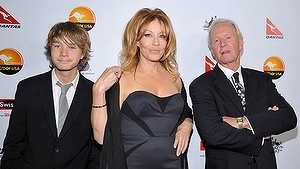
Paul Hogan’s wife and Crocodile Dundee co-star Linda Hogan has filed for divorce

20131018-131855.jpg

Linda Kozlowski and Paul Hogan with their son Chance. Photo: John Sciulli

According to gossip site TMZ, Linda Hogan has cited irreconcilable differences as the reason the 23-year marriage has ended.

The main sticking point will be custody of their 15-year-old son, Chance. Linda Hogan wants joint legal and physical custody.

Then there is spousal support, which will be substantial, as 74-year-old Paul is worth a reported $20 million.
Linda Hogan will also revert to her maiden name, Kozlowski.

According to the documents seen by TMZ, the couple separated last month. A representative for Paul says the split has been amicable.

Last month, the couple sold their Malibu mansion to Chris Hemsworth.

This will be Paul Hogan’s third divorce, from two wives – he married first wife Noelene, then divorced her, then remarried her. When it finally blew up permanently in 1986, the split became one of Australia’s ugliest celebrity divorces.

20131018-132021.jpg

Bill Shorten names his new shadow ministry

Source: TheAge

Opposition Leader Bill Shorten has named a new-look ministerial lineup with an emphasis on women, working parents and those under 50.

”It’s a young team, blended with experience,” he told reporters in Canberra on Friday.

Deputy leader Tanya Plibersek will take on foreign affairs as well as international development. Senate Leader Penny Wong moves from finance to trade and investment, while her deputy, Stephen Conroy moves from communications to defence.

Tony Burke, who had both the environment and immigration porfolios in government, will be Labor’s finance spokesman. He will also take on the high-profile tactical position of manager of opposition business – going up against Christopher Pyne in the House of Representatives.

The man Mr Shorten defeated in Labor’s leadership contest, Anthony Albanese, keeps the infrastructure and transport portfolio and is also the oppositions’s tourism spokesman.

Mr Shorten said he believed his team was a “break from the past” with more senior women than ever before, and that it was both energetic and diverse.
Ms Plibersek explained her move from health to foreign affairs, saying she had a long-held interest in the area. She said she was particularly interested in the international development side.

The deputy opposition leader will also take on responsibility for the Centenary of Anzac commemorations, noting she had visited Gallipoli as a teenager and had long had an interest in history.

As expected Chris Bowen will remain as shadow treasurer. Mark Butler also stays in the high profile environment and climate change portfolio, Mark Dreyfus stays as shadow attorney-general and Joel Fitzgibbon stays in agriculture.

South Australian MP Kate Ellis secures a promotion to the education portfolio, while also keeping early childhood education.

Catherine King has similarly been promoted as shadow minister for health, while experienced Labor frontbencher Jenny Macklin remains in families and disability reform.

Rudd backer Richard Marles takes on the difficult portfolios of immigration and border protection.

Former minister for home affairs Jason Clare takes on communication, with western Sydney MP Michelle Rowland, known for her impressive knowledge of the NBN, will assist in the communications portfolio.

Canberra MP Andrew Leigh and former economics academic takes on the prized junior role of shadow assistant treasurer.

Mr Shorten has also exercised his powers as party leader to appoint some new faces as parliamentary secretaries, which were not included in his initial frontbench list announced on Monday.
Newly elected Queensland MP, and former adviser to Wayne Swan, Jim Chalmers will be a shadow parliamentary secretary to Mr Shorten, along with Jacinta Collins and Michael Danby.

Canberra MP Gai Brodtman will be shadow parliamentary secretary for defence.

Tony Zappia, Ed Husic, Warren Snowdon, Lisa Singh, Amanda Rishworth, Carol Brown and Louise Pratt were also among those named as parliamentary secretaries.

Outback donkeys guard stock from dog attacks

Source: ABCNew

20131018-130827.jpg

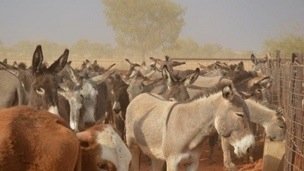
Some of the wild donkeys yarded during a recent muster at Elkedra Station in central Australia.

Feral donkeys from central Australia are being used to guard sheep and cattle from wild dogs in New South Wales.

Amber Driver from Elkedra Station, north of Alice Springs, says a mob of more than 100 yarded donkeys captured during a recent muster has been sent east.

She says donkeys are migrating south through the Northern Territory competing with cattle for food and water.

“They are making a big impact on what little grass we have and our water supply for our cattle so it’s really good to get the numbers down in a way that can be helpful for someone,” she said.

“Otherwise, they get culled.”

An estimated five million donkeys are roaming across remote Australia.

Ranger Michael McFarlane from the Hume Livestock Health and Pest Authority in NSW says donkeys may appear docile around people but they have a healthy dislike for canines and will run them off.

He is currently training 19 of the animals to watch over sheep and cattle.

“Donkeys in any sort of number are really difficult to get,” he said.

“I was trying to get some tame ones, some quiet ones, but you just can’t get them in numbers.

“So we just sort of put the feelers out to see if we could get some information and we finally found a bloke who knew a bloke who knew a bloke, and it was just worked on from there.”

Mr McFarlane says donkeys are already used to protect livestock in Africa.

“They are using donkeys a lot over there for protection against leopards and jackals,” he said.

“It is pretty well noted around the world that they are good protectors.”

Race and racism drive Christos Tsiolkas after The Slap

Source: Australian Broadcasting Corporation

Author Christos Tsiolkas doesn’t mind tackling difficult areas of Australian identity and his thoughts on race and racism reveal some of what is behind his new novel.

Transcript

ANNABEL CRABB, PRESENTER: The writer Christos Tsiolkas is the son of Greek immigrants who would never have imagined when they arrived here that one day their child would write a novel about their new homeland that would sell more than a million copies and dominate a summer’s worth of backyard arguments.

That novel was The Slap, which went on to become a hit ABC series.

Tsiolkas is now one of Australia’s best-known writers and thinkers. I caught up with him to talk about his new novel, Barracuda.

Christos, thanks for joining us on 7.30.

CHRISTOS TSIOLKAS, AUTHOR: Thank you very much.

ANNABEL CRABB: Listen, you’re a great Australian novelist, but I am seriously pleased that you do not write our tourism material. Some of the Australians in your novels just are so awful. Are we really like that?

CHRISTOS TSIOLKAS: Yes. Yes, sometimes we are really awful. Sometimes we are incredibly parochial and incredibly selfish, incredibly fearful. Maybe we are still insecure about who we are, so we tend to want to be represented in particular ways. I think that may be – I don’t think Australia’s the only nation that has that insecurity, but it is an insecurity that I think is part of our culture.

ANNABEL CRABB: The new novel Barracuda is about this boy Danny, who’s a second-generation Greek boy, working class …

CHRISTOS TSIOLKAS: Second-generation Greek on his mother’s side, but Scotch-Irish on his father’s side, which is …

ANNABEL CRABB: Right. And he’s a working-class boy who leaves his school and all his mates to go and be trained as an elite swimmer at a really posh boys’ school. And I guess social mobility is something that we treasure in Australia and we think that we have, but sometimes I think we overlook just how painful that process can be and to me that’s the most sort of heart-wrenching part of your novel.

CHRISTOS TSIOLKAS: You know, in a way I think Barracuda has been a novel that I’ve been putting off writing for a long time. I’m not Danny Kelly, I’m not the character, but I think one of the most wrenching and most exhilarating experiences of my life was when I got into university. And suddenly I was torn from a working class migrant world that after a few years at university, after choosing this – following this desire to be a writer, I feel that I am no longer a part of. I’m very proud of that – of where I’ve come from. I’m really proud of who my parents were and are. But I don’t feel like I have an ownership to that notion of working class that my parents did.

ANNABEL CRABB: Isn’t this such a deep part of Australia, this migrant cycle that happens, that you’ve got these people that come and live here, bringing all of their expectations and their own histories and their own cultures sort of snap-frozen who have to adjust to the world that they find and then the world that that world becomes. I mean, you wrote in your piece for The Monthly recently about the extent of hostility towards asylum seekers in first and second-generation migrant groups in Australia, which I think touches on this, doesn’t it?

CHRISTOS TSIOLKAS: In that piece it’s certainly true that I think one of the histories of migration is that every immigrant group turns on the other. It’s part of how we defend our space in this country. But I also think that if you – whatever position my relatives may take about asylum seekers, if you actually sat down and explain the situation to them and explained – conveyed the exile of that individual, of that family, of that child, that woman, that man – I have heard it again and again from Greek immigrants, from Vietnamese immigrants, from Italian immigrants – it doesn’t matter where they come from – we have so much space here. We have more space. With that article in particular, I wanted to say that we don’t need to be frightened of talking about racism. Maybe it goes back to that thing I said about this – our insecurity as Australians about who we are. Racism is part of who we are. Racism is part of the history of this country. Racism is inevitable in a colonial nation.

ANNABEL CRABB: So what happens to these kids, these migrant kids? You wrote about them in The Slap and Danny is a classic example, caught up in that incredible cocktail of aspiration, shame, pride, love for his own background. What happens to these kids?

CHRISTOS TSIOLKAS: I will try and answer as Christos Tsiolkas, the person first and then talk about the characters. I had to do battle for so long about, “Am I Greek? Am I Australian?,” a battle that took so long and that was quite wearying. And I look at my nieces now, my nephews and nieces, who’s – one parent may be Greek, another parent may be Irish-Australian, one parent may be Chinese, one may be Dutch. They seem to possess a greater confidence about being able to live this duality, that they’re actually – and I’m really – I think that’s really important. I think that’s – to go to your question about, “Will we always be racist?,” yes, but we won’t always be racist in the same way we are now, I think – I have to be hopeful for that. And I think that’s partly what I wanted to do with the character of Danny in Barracuda, kinda to say his questioning of what it means to be Australian is not identical to mine. Because he’s from a different time, he’s from a different context.

ANNABEL CRABB: Well there’s nothing like the sniff of a redemptive ending, is there? (Laughs)

CHRISTOS TSIOLKAS: (Laughs) People are going to ask me what this book is about, and I had a note that was above my desk at the beginning of writing this book and it’s how to be a good man. That to me – yes, it’s about a boy who wants to be an Olympic swimmer. That’s part of what the book is. But really, it’s about how do you be a good man? It’s about how do you come back from something so shameful – and failure, real failure is shameful. And real failure does mean that you can do things to yourself and you can do things to others that are unforgivable. The question I wanted to ask was: can that occur and at the same time that you can make atonement? Are we forever going to be judged by something that happens in our youth?

ANNABEL CRABB: Well, thank you for joining us on 7.30, Christos. The book, congratulations on it; it’s a great adventure, but also furiously thought-provoking at the same time, very typically of you. Thanks for joining us.

CHRISTOS TSIOLKAS: Thanks very much, mate.

Mythical yeti ‘could be descended from ancient polar bear’

20131018-125734.jpg

20131018-125744.jpg

A British geneticist said Thursday he may have solved the mystery of the yeti, after matching DNA from two animals said to be the mythical beast to an ancient polar bear.
“We have found an exact genetic match between two samples from the Himalayas and the ancient polar bear,” said Bryan Sykes, emeritus professor at Oxford University

There have for centuries been legends about hairy, ape-like creatures, also known as “migoi” in the Himalayas, “bigfoot” in North America and “almasty” in the Caucasus mountains.

The myth was given credence when explorer Eric Shipton returned from his 1951 expedition to Everest with photographs of giant footprints in the snow.

Eyewitness accounts have since fuelled speculation that the creatures may be related to humans, but Sykes believes they are likely to be bear hybrids.

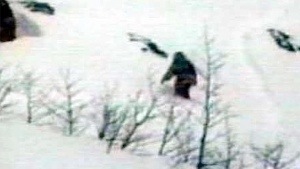
A reported sighting of the famous Abominable Snowman.

He made a global appeal last year for samples from suspected Yeti sightings and received about 70, of which 27 gave good DNA results. These were then compared with other animals’ genomes stored on a database.

Two hair samples came up trumps — one from a beast shot in the Kashmiri region of Ladakh 40 years ago and the other found in Bhutan a decade ago.

“In the Himalayas, I found the usual sorts of bears and other creatures amongst the collection,” Sykes told BBC radio, ahead of the broadcast of a TV programme about his findings.

“But the particularly interesting ones are the ones whose genetic fingerprints are linked not to the brown bears or any other modern bears, (but) to an ancient polar bear.”

The DNA from the Himalayan samples was a 100 percent match with a sample from a polar bear jawbone found in Svalbard in Norway, dating back between 40,000 and 120,000 years.

Brown bears and polar bears are closely related as species and are known to interbreed when their territories overlap, according to Sykes.

“This is an exciting and completely unexpected result that gave us all a surprise,” he said in a statement, adding: “There’s more work to be done on interpreting the results.

“I don’t think it means there are ancient polar bears wandering around the Himalayas. But… it could mean there is a sub-species of brown bear in the High Himalayas descended from the bear that was the ancestor of the polar bear.

“Or it could mean there has been more recent hybridisation between the brown bear and the descendent of the ancient polar bear.”

A breast cancer drug holds hope for patients with pancreatic cancer

Source: YahooNews

A breast cancer drug holds hope for patients with pancreatic cancer, one of the deadliest cancers.

A breast cancer drug can double two-year survival rates of patients with pancreatic cancer, trial results have shown.

Nab-paclitaxel, marketed as Abraxane, also increased the proportion of patients still alive after one year by 59 per cent.

It is already approved for women with spreading breast cancer who have run out of other options.

Pancreatic cancer is one of the deadliest cancers, killing 80 per cent of patients within a year.

The disease claimed the life of Hollywood star Patrick Swayze.

Data from the MPACT (Metastatic Pancreatic Adenocarcinoma Clinical Trial) study showed significant improvements when patients were treated with Abraxane in combination with standard chemotherapy.

Average survival increased from 6.7 months to 8.5 months. One year survival rates rose from 22 per cent to 35 per cent and at two years they doubled from 4 per cent to 9 per cent.

The results are published in the New England Journal of Medicine.

“Today’s news represents a major step-forward in the treatment of advanced pancreatic cancer,” said consultant oncologist Dr Harpreet Wasan, from Hammersmith Hospital in London, who runs a pancreatic cancer research program.

“The prognosis for these patients is exceptionally poor and, unlike many other cancers, current treatment options are limited. Based on this data, nab-paclitaxel offers patients a major new advance.”

Ali Stunt, founder and chief executive of the charity Pancreatic Cancer Action, said: “Pancreatic cancer is lagging behind other cancers in terms of treatments that extend survival, but nab-paclitaxel has the potential to offer hope to patients with this deadly disease.”

Abraxane’s manufacturer Celgene has applied to the European Medicines Agency (EMA) for a licence to use the drug to treat advanced pancreatic cancer.

Malaysia must back off threats: Independent Senator Nick Xenophon

Source: News

Independent Senator Nick Xenophon has called on the government to press Malaysia to back off threats against students who attend an event featuring opposition leader Anwar Ibrahim this weekend.

Senator Xenophon said the level of paranoia from the Malaysian government was just extraordinary.

“The Australian government needs to make it absolutely clear to the Malaysian government as a matter of urgency some time on Friday that these threats are completely unacceptable,” he told ABC’s 730 on Thursday.

“These students have a right to attend this forum involving Malaysia’s opposition leader without any fear of retribution.”

Mr Ibrahim, a longtime opponent of the Malaysian government who was jailed for nine years on trumped up sodomy charges, will speak at the Adelaide Festival of Ideas on Saturday.

But Malaysian students in Australia had been warned against attending.

An email from the student adviser at the Malaysian consulate in Sydney reportedly told Malaysian scholarship students to stay away.

“I wouldn’t hesitate to take stern action to those scholars who are involved. You know really well what you have signed into,” the email said, according to ABC television.

Senator Xenophon, who was barred from entering Malaysia in February and is now banned from returning there, said Mr Ibrahim was an impressive figure who had been jailed, victimised and defamed by the Malaysian government.

“There needs to be a guarantees by the Malaysian government that this threat will be withdrawn and there will be no consequences,” he said.

Emergency fire warnings issued as three major fires burn across NSW near Newcastle, Blue Mountains and Southern Highlands

Plumes of smoke can be seen from a fire near Heatherbrae which has forced the closure of Williamtown Airport in Newcastle.

A HOME is ablaze, a regional airport is closed and authorities are warning of a serious threat to life as bushfires burn across NSW.

In the Southern Highlands, south-west of Sydney, a fire at the village of Balmoral, in Wingecarribee, was moving very quickly.

Rural Fire Service spokesman Joel Kursawe says there are reports one house is on fire.

“They’re saying that one house is already alight, that could be because the house was alight and it’s spread, or not, we don’t know,” he told reporters.

“It’s all happened very quickly.”

Attempts to waterbomb in Lithgow were being hindered by 90km winds, Mr Kursawe said, which were also capable of carrying embers up to six kilometres.

“The problem is when you’ve got aircraft over fires like that with (those) winds, a lot of the time they’re just getting knocked around in the sky,” Mr Kursawe told journalists at RFS headquarters in Sydney.

RURAL FIRE SERVICE MAP OF CURRENT FIRES AND INCIDENTS

Homes at Clarence, Dargan, Doctors Gap and Hartley are expected to come under threat from the fire, which has already burnt more than 1000 hectares of bushland.

Two evacuation centres have been set up at Lithgow Workers Club and Mt Tomah Botanic Gardens.

Meanwhile, more than 130 firefighters are fighting the blaze near Port Stephens.

“Some of the pictures we’re getting from up there, it’s just incredible,” Mr Kursawe said.

“It’s just a mass smoke cloud over the whole town.”

The fire at Balmoral Village was approaching the township of Yanderra and residents were being urged to move towards Bargo.

A total fire ban remains in place for several areas of the state with temperatures of 34C forecast.

It was nudging 34C in Sydney at 1pm (AEDT) with gusty winds.

The Heatherbrae bushfire near Williamtown Airport in Newcastle. Picture: Twitter
Of most concern to firefighters are three fires.

In the Blue Mountains west of Sydney, near Lithgow, more than 100 firefighters are battling a massive blaze that is skirting the village of Oaky Park and spotting into Clarence.

A new fire had also broken out at Springwood.

RFS deputy commissioner Rob Rogers tweeted: “lithgow fire becoming unpredictable. Residents please take extreme care. Very serious danger to life today”.

A Blue Mountains resident said the RFS had just knocked on his door warning the fire was approaching.

“The sky is very dark with the sun burning orange through the dark smoke,” the resident told ABC radio.

Bells Line of Road has been closed between Lithgow and Bell in both directions.

The Darling Causeway is closed northbound at the Great Western Highway in Mount Victoria.

NSW National Parks and Wildlife Service has closed additional areas of the Blue Mountains National Park because of the threat.

Blue Mountains Regional Manager Geoff Luscombe said all tracks and trails in the Grose Valley, as well as lookouts along the Bells Line of Road, are now closed as a precautionary measure.

“With a very high fire danger rating there’s always a chance that the Lithgow fire could enter the park and if that happens we don’t want people walking in there,” he said.

Residents who hadn’t already evacuated before noon were advised to take shelter in their homes.

And at Port Stephens, north of Newcastle, Williamtown Airport was closed about midday and all flights in and out were suspended because of a bushfire burning nearby.

Passengers are advised to not come to the airport and to contact their airline for flight details.

Smoke from the Port Stephens fires, not far from where four homes were lost on Sunday, was visible from the Newcastle CBD.

The dramatic scene at Williamtown Airport, Newcastle. Picture: Twitter @WynRichards
Similar conditions on Sunday resulted in six homes being lost to fires at Port Stephens, north of Newcastle, and near Kempsey on the north coast.

The airport was closed after a fire burning near Heatherbrae breached containment lines fanned by gusty winds, the RFS said.

Properties around Tomago Road, Cabbage Tree Road, Barrie Close, and Williamtown Drive may also come under threat, the RFS warns.

Smoke from the fire is visible from the Newcastle CBD.

In the Blue Mountains region, residents of Clarence and Oaky Park have been urged to seek shelter and protect themselves from flying embers, with properties there expected to be threatened.

Those who had planned to leave their homes in a bushfire should have left by noon (AEDT), NSW Fire Commissioner Shane Fitzsimmons said.

Conditions were worsening with winds expected to reach up to 95km/h.

“History will show, too many lives are lost when people flee at the last minute,” he said.

The fire broke out near an army range on Wednesday afternoon, with explosions and detonations making it too dangerous to send in firefighters and aircraft.

Mr Fitzsimmons says the fire would take some time to control given the sweltering conditions and its geographic location.

It’s expected to skirt to the northeast of Lithgow and head into the mountains as the winds pick up.

Conditions were worsening this afternoon with winds expected to reach up to 95km/h.

If the high winds do fan the blaze, it could disrupt the Western rail line through the area, Mr Fitzsimmons said.

A 367-hectare bushfire is also burning 15km east of Singleton, in the Hunter Valley, but is being controlled.


Lund University cancer researchers have discovered the path used by exosomes to enter cancer cells

Source: Healthcare

Cancer cells’ communication path blocked

Lund University cancer researchers have discovered the path used by exosomes to enter cancer cells, where they stimulate malignant tumour development. They have also succeeded in blocking the uptake route in experimental model systems, preventing the exosomes from activating cancer cells.

VIDEO STORY
The Lund University research team has looked at how cancer cells communicate with surrounding cells and how this encourages the development of malignant tumours. The idea is to try and inhibit tumours by disrupting this communication. The focus of their research is ‘exosomes’, small virus-like particles that serve as ‘transport packages’ for genetic material and proteins transmitted between cells.
The importance of exosomes in the tumour microenvironment has been demonstrated within the field in recent years, as it has been shown that tumour development is halted if the production of exosomes inside the cancer cell is stopped.

“However, it is very difficult to achieve this in a clinical situation with patients. A major question in the field recently has therefore been the uptake path into the cell. How do the exosomes get into the recipient cells? That is what our discovery is about”, says Mattias Belting, research group leader and Professor of Clinical Oncology at Lund University.

The Lund researchers’ discovery is the exosomes’ journey from the sender cell to the receiver cell and how the receiver cell captures and internalizes the exosomes. They have also found a way to block the path to uptake in the receiver cell.

“When we block the path into the cell, we also block the functional effects of the exosomes. This means that the entry route now appears to be a very interesting focus point for future cancer treatments”, says Mattias Belting.
In the current study, the Lund researchers have shown that heparan sulfate proteoglycans – proteins with one or several long sugar chains connected to them – serve as receptors of exosomes and carry them into the cell. It is the proteoglycans’ sugar chains, heparan sulfate, that capture the exosomes at the surface of the cell.
“Previous studies have shown that heparan sulfate plays a role in the cells’ uptake of different viruses, such as HIV and the herpes simplex virus. In this way, the mechanism by which exosomes enter cells resembles the spread of viral infections”, says Helena Christianson, doctoral student in Belting’s research team and first author of the study.

Earlier this year, Mattias Belting and his colleagues published an article in PNAS that showed how they had managed to isolate exosomes in a blood sample from brain tumour patients. The analysis suggested that the content of the exosomes closely reflected the properties of the tumour in a unique way.

“Research on exosomes is exciting and relatively new. There is significant potential for exosomes as biomarkers and treatment targets of various cancers as we learn more about them”, says Mattias Belting.

Study:
Cancer cell exosomes depend on cell-surface heparan sulfate proteoglycans for their internalization and functional activity

Authors: Helena C. Christianson, Katrin J. Svensson, Toin H. van Kuppevelt, Jin-Ping Li and Mattias Belting
PNAS

Contact:
Mattias Belting, Professor of Clinical Oncology at Lund University, consultant at Skåne University Hospital
+46 733 507473

Independent Senator for South Australia, Nick Xenophon, has called on Qantas Chairman Leigh Clifford to step aside until overseas authorities

Source: NickXenophon

Qantas chairman must step aside pending investigations Independent Senator for South Australia, Nick Xenophon, has called on Qantas Chairman Leigh Clifford to step aside until overseas authorities, including the UK Serious Fraud Office, the Financial Conduct Authority (UK), the US Department of Justice and the US Securities Exchange Commission, have completed their investigations into the activities of Barclays Plc, at the time Mr Clifford was a director.

Independent Senator for South Australia, Nick Xenophon, has called on Qantas Chairman Leigh Clifford to step aside until overseas authorities, including the UK Serious Fraud Office, the Financial Conduct Authority (UK), the US Department of Justice and the US Securities Exchange Commission, have completed their investigations into the activities of Barclays Plc, at the time Mr Clifford was a director.

Barclays, and a number of its officers, are being investigated for an ‘advisory fee’ of $500 million that was allegedly paid to facilitate a transaction with Qatar Holding LLC for a £9.2 billion injection of capital in 2008. Mr Clifford was a director of Barclays at the time the alleged payments occurred, as reported in the Australian Financial Review today.

The US investigations are examining whether payments made by Barclays to third parties have breached the US Foreign Corrupt Practices Act.

Last year, Qantas non-executive director Corinne Namblard resigned, as a result of a corruption investigation in Italy relating to allegations of bid rigging and document fraud for a company of which she was an officer.

“When Ms Namblard stood down, Mr Clifford said the Qantas board ‘appreciated her sentiments’ that she did not want the media coverage of the Italian investigation to impact on Qantas,” Nick said. “Perhaps Mr Clifford should consider these very comments in light of his own circumstances.”

“Mr Clifford needs to explain to Qantas shareholders what he knew about those ‘advisory payments’ and explain what involvement, if any, he had in authorising them,” Nick said.

“The duties of a director in the UK are as onerous in the UK as they are in Australia,” Nick said. “As a director of Barclays, Mr Clifford should have known about all the payments associated with the Qatar capital raising.”

As reported in the Australian Financial Review, the UK Financial Conduct Authority fined Barclays $84 million just last month for not disclosing the secret fees.

“If the ‘advisory fees’ were above board, why weren’t they disclosed to Barclays shareholders?” Nick asked. “They should have been disclosed as relevant information.”

“The question also needs to be asked if the transaction would have been facilitated if not for these ‘advisory fees’.”

“What did Mr Clifford actually know about this murky deal?”

Mr Clifford is due to face Qantas shareholders at its AGM in Brisbane this Friday.