Eight of the scariest, haunted places in Australia

Source: News

 By day, the Monte Cristo homestead at Junee looks like any other grand manor.

By day, the Monte Cristo homestead at Junee looks like any other grand manor. Source: Supplied

By night, it's Australia's most haunted house. Spooky.

By night, it’s Australia’s most haunted house. Spooky. Source: Supplied

REGINALD Ryan and his wife Olive had just moved into a beautiful homestead in Junee, NSW, when they drove downtown for supplies one foggy night in 1963.

When they turned up their driveway on the return trip, a brilliant fierce light was streaming out of every door and window of the house.

They thought they were being burgled, but as they drove cautiously closer to the house, the lights suddenly switched off and the house was again lost in the ghostly fog and darkness.

The Ryans had no idea the Monte Cristo homestead was the country’s most haunted home. And it doesn’t seem to have fazed them – they still live there.

Reginald’s nephew and his wife once visited Monte Cristo and were looking for the loo late one night. A young woman dressed in white appeared before them, whispered “Don’t worry, it will be all right” and vanished.

Olive once found dead and mutilated cats in the kitchen. Visiting children inexplicably throw tantrums around the staircase, where a child once died. There are phantom footsteps, strange apparitions and haunting noises.

It’s little wonder the home’s ghost tours are booked out months in advance.

But Monte Cristo isn’t the only haunted place in the country, of course. Here are seven more of our spookiest.


STUDLEY PARK HOUSE, NSW

The eerie house at dusk.

The eerie house at dusk. Source: News Limited

On October 15, 1909, in the grounds of the then Camden Grammar School, 14-year-old Ray Blackstone drowned in the dam after failed rescue attempts by his school mates, ancestry.com.au tells us.

His body was placed in the cold, dark cellar of the school until his burial.

Three decades later, while living in the transformed school house, 13-year-old Noel William Gregory – son of Twentieth Century Fox sales manager Arthur Adolphus Gregory, died from appendicitis.

It’s believed that the spirits of both boys play together and remain in the house as a constant reminder of their tragic lives.


REDBANK RANGE TUNNEL, NSW

The disused tunnel is said to be haunted by a death that occurred in 1914.

The disused tunnel is said to be haunted by a death that occurred in 1914. Source: News Limited

Emily Bollard entered a railway tunnel at Picton (no longer in use) and met the oncoming train. It didn’t end well.

Emily’s ghost is said to wander the tunnel.


NATIONAL FILM AND SOUND ARCHIVE, ACT

The National Film and Sound Archive in Canberra. Fine by day, but would you wander around at night?

The National Film and Sound Archive in Canberra. Fine by day, but would you wander around at night? Source: Supplied

In its current incarnation, this grand art deco building in Canberra is a living archive of important images and sounds deemed worthy of preservation.

But until 1984, it operated as the Australian Institute of Anatomy, where notable body parts were kept and collected.

Some people believe the spectres of the dead haunt the hallways.

The downstairs corridor, which once housed hundreds of human skulls, is said to be a hive of poltergeist activity.

And a contractor claims to have been pinned against a wall in the basement by an unexplained presence.


BOGGO ROAD JAIL, QLD

The Boggo Road Jail, in Brisbane's inner-south, has a checkered history of violence.

The Boggo Road Jail, in Brisbane’s inner-south, has a checkered history of violence. Source: News Limited

It’s one the country’s most infamous prisons – known for tough inmates and even tougher wardens.

Boggo Rd was a place of execution until 1913, and held some of Australia’s most dangerous men and women including the Whiskey Au-Go-Go firebombers James Finch and Andrew Stuart, and the only woman hanged in Queensland, Ellen Thomson.

Given its long history of rooftop riots, executions and fatal overcrowding, Boggo understandably has a ghostly folklore surrounding it.

No longer running as a prison, the historic site is now open to ghost tours.


FREMANTLE ARTS CENTRE, WA

A bustling cultural hub today. A lunatic asylum in the past.

A bustling cultural hub today. A lunatic asylum in the past. Source: Flickr

Before this 150-year-old building was Fremantle’s home of live music and weekend crafternoons, it was the local insane asylum.

It’s believed to be one of the southern hemisphere’s most active haunted places.

Visitors have reported all the spooky hallmarks of a haunted house: cold spots, ghostly touches, apparitions, moving lights and generally strange feelings.

Ghost hunters investigated it recently and heard creepy voices saying creepy things like “Those are chains” and “It’s not cold”. CREEPY.


PORT ARTHUR, TAS

Ghost tours operate at Port Arthur.

Ghost tours operate at Port Arthur. Source: Supplied

Hundreds of men died during Port Arthur’s first decades as a convict settlement, and many people believe those lost souls have hung around.

Tour guides show interested rubber-neckers around the spooky historic town, convinced that the wall separating the worlds of the living and the dead is at its thinnest in Port Arthur.

Some of the local accommodation houses even have an “Unusual Occurrence Form” that guests can fill out when they’ve seen something ghostly.

Recurring visions include the Lady in Blue – apparently the weeping spectre of a young woman who died in childbirth.

More than 2000 apparitions have been lodged in the past two decades.


PRINCESS THEATRE, VIC

The grand old dame of Melbourne's theatre scene in 1908.

The grand old dame of Melbourne’s theatre scene in 1908. Source: Flickr

In March 1888, the baritone Frederick Federici was performing a scene from Faust when he had a sudden heart attack and died.

It’s said his phantom still haunts the opera, and for many years a seat was reserved for him in the third row of the dress circle. Touching. But creepy.

A big thank you to Steve and Rosa Prapas who organised and raised $14,000 to go to Bear Cottage, Manly


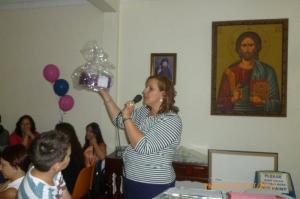
A BIG THANKS goes to Steve and Rosa Prapas together with their family and friends for their huge effort on the day.

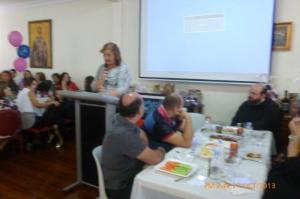
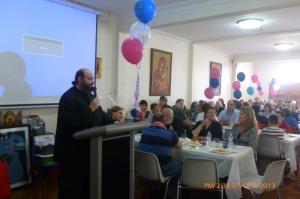
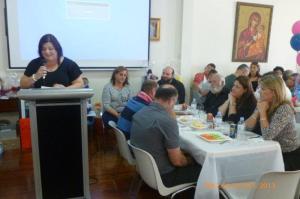
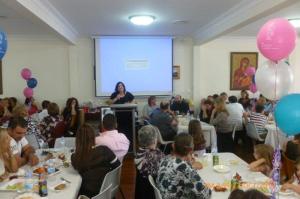
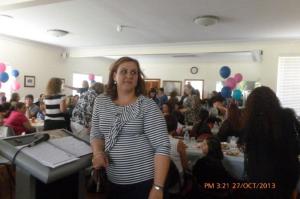
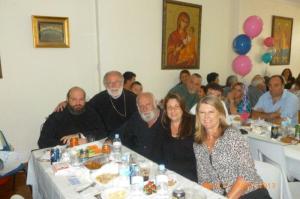
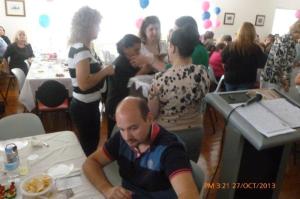
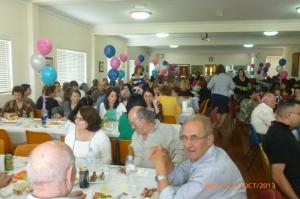
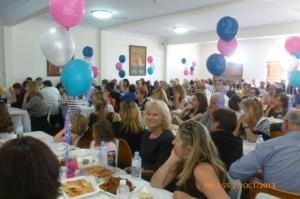
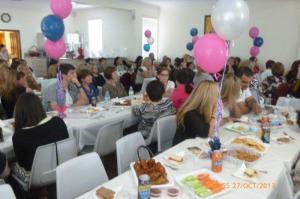
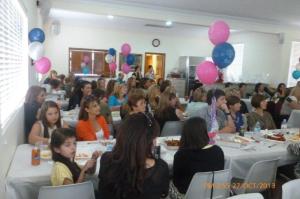
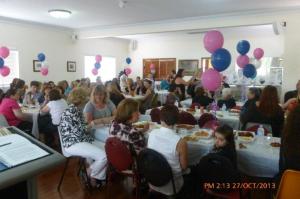
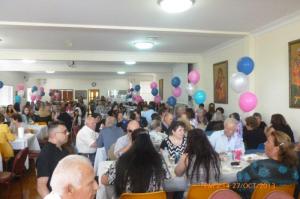
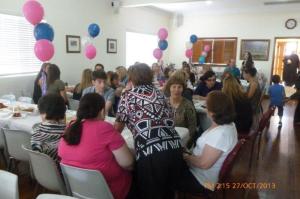
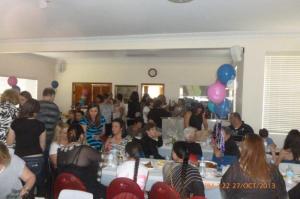
A wonderful tea charity event was organised at St Nicholas Church at Marrickville on the Sunday 27th October, 2013 to raise much needed funds for Bear Cottage at Manly.

A lot of work was put into the planning and running of the event to raise money towards Bear Cottage, Manly.

Peoples’ generosity ensured that all raffles, money board games, auction items were sold in record time.

Steve and Rosa Prapas are extremely pleased to announce that $14,000 was raised for Bear Cottage in Manly which will directly go to the children of the cottage in an effort to make those beautiful smiles even bigger.

The huge donation to Bear Cottage would not have been possible without the generous donations from businesses and individuals that supported the event through cash or donation of prizes.

The day was a huge success with 220 supporters from the Marrickville Greek community and as well as non-greek residents of the area.

P1090266

Rosa Prapas

P1090265

Reverend Christodoulos Economou

P1090267

P1090269

Penelope Tserpes talking about her experience at Bear Cottage

P1090275

Rosa Prapas watching slides of Rita’s experience at Bear Cottage

P1090278

Reverend Christodoulos Economou, Reverend Father Nicolaos Bozikis, Rita’s grandfather and mother and Narrelle Martin (Hospice nursing unit manager, Bear Cottage)

P1090274

P1090262

People couldn’t get enough of buying tickets

P1090280

Rosa Prapas on a roll in starting the auction items

P1090268

P1090270

P1090271

P1090259

P1090261

P1090263

P1090276

Coffee and cake time

j

What is bear cottage?

A little bit about Bear Cottage

Bear Cottage is the only children’s hospice in NSW, one of only two in Australia, and the only one in the world affiliated with a children’s hospital. It is a very special place that’s dedicated to caring for children with life-limiting conditions and their families.

Planning began for Bear Cottage almost 20 years ago, when Dr John Yu and Dr Michael Stevens from The Children’s Hospital at Westmead decided to enhance the hospital’s palliative care program.

Located on Sydney’s Northern Beaches, in Manly, Bear Cottage is like a home away from home – as far removed from a hospital environment as possible. Here staff do not wear uniforms, no medical procedures are carried out in the bedrooms, the children’s rooms are designed to like a normal bedroom, and we even have a family pet, Frankie, our adorable Labrador. That said, Bear Cottage is set up to provide excellence in paediatric medical care 24 hours a day, and our affiliation to The Children’s Hospital at Westmead means we have access to some of the best medical resources in the world.

The facility was established entirely through community support, at a cost of $10 million, and was officially opened on St Patrick’s Day, 17 March 2001,

Bear Cottage does not receive any recurrent government funding and so continues to rely on donated funds and community support to raise over $2.9 million required to operate each year.

,

Who benefits from Bear Cottage?

Bear Cottage provides support, respite and end of life care for children with life-limiting illnesses and their families.

We care for children from across Australia, regardless of where they receive their primary care, although the majority of families that access the service are from NSW. The children who visit Bear Cottage will range from newborn infants to 18 years of age; however accommodation is also available for parents, as well as siblings, of the children staying.

When these families are told that their child’s life will be cut short, their everyday existence takes on a monumental change. As they embark on such a terrible journey, there are limited options available to help them get through each day, and answer the many questions that arise. Having Bear Cottage available to them for care and support enables these families to focus on the important things, such as spending quality time together and making every moment count.

Most families staying at Bear Cottage will come for respite; with the average length of stay is around one week to ten days. Families are generally able to visit Bear Cottage around 4 times a year for general respite, however for end of life care this can be open ended.

m

The Facts and Figures

Estimates suggest there are well over 5000 children aged 0 – 19 years across Australia requiring palliative care. In the last year alone we have cared for well over 200 children with a life-limiting illness. There have been 16 children this year that have come to Bear Cottage for end-of-life care – where they can be surrounded by love and support, in a happy, safe environment, right until the end. And in the last 10 years we have supported around 600 families, both current and bereaved, as they go through their heart wrenching journey.

.

Why is Bear Cottage special?

Whilst staying with us, our families can do as little or as much as they like. We have staff and volunteers on hand to do the cooking and cleaning, allowing families to forget about the stresses of everyday life, if just for a short time. We are fully medically assisted, so our nurses are available 24 hours a day to administer medications and support and guidance; and Frankie, our resident dog, is always around for a cuddle. We have full-time play and music therapists, and volunteers are there so mum and dad can spend time together or with their other children – often something that is forgotten when you’re caring for a terribly ill child.

Bear Cottage is there for every child, parent, or family who needs us, and they will never have to pay a cent. With one, and sometimes both parents, giving up work to care for their child, many of our families are simply not in a financial position to pay for anything that is not absolutely necessary.

By having Bear Cottage available to them at no charge means they can take a break and re-charge their batteries, safe in the knowledge that their child is being cared for by the best staff available. They can enjoy time with one another without having to worry about the housework and cooking. Most importantly though, they can spend quality time together and create special memories that will last long after their child has passed away.

l

Goals for Bear Cottage – 2013

It currently costs more than $2.9 million a year to keep the doors open at Bear Cottage. With no recurrent government funding, we rely entirely on community support to raise these funds.

Our goal for 2013, as with every year, is to raise sufficient funding to keep Bear Cottage available for the very special kids and their families that rely on it. We also aim to give the children that visit Bear Cottage as many special memories as possible – because although we can’t add years to their lives we can add life to their years.

All funding makes an incredible difference to Bear Cottage and the children that come here. It allows us to continue providing vital services such as:

  • paying for daily medication for patients
  • funding important kid and parent camps
  • providing a play therapist for the children
  • ensuring that vital equipment is available for treatment and care
  • help fund families to stay at Bear Cottage for respite and end of life care
  • help pay for a specialised paediatric palliative care doctor

For many people, Bear Cottage is perceived as a sad place. But for those families who visit here, the staff who work here and the volunteers and community who support us, it is an incredibly special and happy place, where lasting memories are created.

Source: Bear Cottage
http://www.bearcottage.chw.edu.au/

Bear Cottage - An initiative of The Children's Hospital at Westmead

Underwater Marmaray tunnel linking Europe and Asia via Istanbul opens

Source: News

Turkish President Abdullah Gul (3rd R), Turkish Prime Minister Recep Tayyip Erdogan (4th R), Somalian President Hasan Sheikh Mahmud (2nd R) and Japanese Prime Minister Shinzo Abe (R) listen to the train driver at the Uskudar Marmaray station.

TURKEY has opened world’s first underwater tunnel connecting two continents, fulfilling an Ottoman sultan’s dream 150 years ago in a three-billion-euro mega project.

The Marmaray tunnel runs under the Bosporus, the strait that connects the Black Sea to the Sea of Marmara and divides Istanbul between Asia and Europe. The tunnel is 13.6km long, including an underwater stretch of 1.4km.

It is among a number of large infrastructure projects under the government of Turkish Prime Minister Recep Tayyip Erdogan that have helped boost the economy but also have provoked a backlash of public protest.

“I wish from God that the Marmaray that we are inaugurating will be a benefit to our Istanbul, to our country, to all of humanity,” Mr Erdogan said at the opening ceremony.

Officials hope that with up to 1.5 million passengers a day, the tunnel will ease some of Istanbul’s chronic traffic, particularly over the two bridges linking the two sides of the city. A more distant dream is that the tunnel may become part of a new train route for rail travel between Western Europe and China.

The underwater portion of the tunnel wasn’t dug, but was dropped in sections to the sea bottom – the immersed-tube method used around the world.

Turkish officials say that at more than 55m deep, it is the world’s deepest railway tunnel of its type.

Turkey is for the first time connecting its European and Asian sides with a railway tunnel, completing a plan initially proposed by an Ottoman sultan about 150 years ago.

Started in 2005 and scheduled to be completed in four years, the project was delayed by important archaeological finds, including a 4th century Byzantine port, as builders began digging under the city.

Rejecting any fears that the tunnel could be vulnerable to earthquakes in a region of high seismic activity, Turkish Transportation Minister Binali Yildirim said that it is designed to withstand a massive 9.0 magnitude quake. He calls it “the safest place in Istanbul.”

The tube sections are joined by flexible joints that can withstand shocks.

Ottoman Sultan Abdulmejid is said to have proposed the idea of a tunnel under the Bosporus about a century and a half ago. One of his successors, Abdulhamid, had architects submit proposals in 1891, but the plans were not carried out.

The tunnel is just one of Mr Erdogan’s large-scale plans. They include a separate tunnel being built under the Bosporus for passenger cars, a third bridge over the strait, the world’s biggest airport, and a massive canal that would bypass the Bosporus.

The projects have provoked charges that the government is plunging ahead with city-changing plans without sufficient public consultation. The concern fueled protests that swept Turkey in June.

Officials hope the tunnel will eventually carry 1.5 million passengers a day, easing some of Istanbul’s chronic traffic problems.

Tuesday’s ceremony on the 90th anniversary of the founding of the Turkish Republic was attended by Mr Erdogan and other officials, including Japanese Prime Minister Shinzo Abe, whose country was heavily involved in the construction and financing of the railway tunnel project.

Japan’s Seikan tunnel linking the Japanese islands of Honshu and Hokkaido is the world’s deepest, getting 140 metres below the seabed and 240m below sea level. The Channel Tunnel linking Britain and France is as much as 75m below sea level.

EARLIER:

The inauguration of the ambitious scheme – dubbed “the project of the century” by the government – coincides with the 90th anniversary of the founding of modern Turkey.

The idea was first floated by Ottoman sultan Abdoul Medjid in 1860 but technical equipment at the time was not good enough to take the project further.

However the desire to build an undersea tunnel grew stronger in the 1980s and studies also showed that such a tunnel would be feasible and cost-effective.

Mr Erdogan, a former mayor of Istanbul, revived the plan in 2004 as one of his mega projects for the bustling city of 16 million people – which also include a third airport, a third bridge across the Bosphorus and a canal parallel to the international waterway to ease traffic.

His ambitions were one cause for the massive anti-government protests that swept the country in June, with local residents complaining the premier’s urban development plans were forcing people from their homes and destroying green space.

Mr Erdogan’s critics accuse him of bringing forward the inauguration of the Bosphorus tunnel in time for municipal elections in March 2014.

The project will not be fully operational immediately and construction is expected to continue for several more years.

Construction of the tunnel started in 2004 and had been scheduled to take four years but was delayed after a series of major archaeological discoveries.

Some 40,000 objects were excavated from the site, notably a cemetery of some 30 Byzantine ships, which is the largest known medieval fleet.

But these unexpected finds eventually frustrated Mr Erdogan, who complained two years ago that artefacts were trumping his plans to transform Istanbul’s cityscape.

“First (they said) there was archaeological stuff, then it was clay pots, then this, then that. Is any of this stuff more important than people?”

Transport is a major problem in Istanbul, and each day two million people cross the Bosphorus via two usually jammed bridges.

“While creating a transportation axis between the east and west points of the city, I believe it will soothe the problem… with 150,000 passenger capacity per hour,” said Istanbul’s mayor Kadir Topbas.

Adelaide voted one of the world’s best cities for 2014

Source: News

THIS time, the winner ISN’T Sydney.

Or Melbourne.

Instead, it’s Adelaide that has scored a mention in Lonely Planet’s list of the world’s best cities to visit in 2014.

Joining the likes of Paris and Shanghai on the list, Adelaide, which attracts just 332,000 visitors a year, has been deemed an emerging hotspot due to its secret beaches, arts and wine scene.

“Having always lived in the shadow of its gregarious eastern-seaboard cousins,” the Lonely Planet review said, “the ‘City of Churches’ has been quietly loosening its pious shackles and embracing its liberal foundations.

“The year 2014 beckons big changes for the city’s heart, with the completion of the multi-million-dollar refurbishment of the Adelaide Oval, which will link central Adelaide with the Oval and its beautiful surrounding parklands, and historic North Adelaide further on.”

“Adelaide is effortlessly chic – and like a perfectly cellared red, it’s ready to be uncorked and sampled.”

South Australian Tourism Minister, Leon Bignell, said Adelaide has undergone a huge transformation in recent years, making it a ‘more appealing destination’.

Last year, it was Hobart that made the Lonely Planet list due to its ‘natural beauty, arts and foodie scene’.

HAVE YOUR SAY: Should Adelaide be at the top of tourists’ bucket lists? Tell us below.

The top 10 cities are:

1. Paris, France

2. Trinidad, Cuba

3. Cape Town, South Africa

4. Riga, Latvia

5. Zurich, Switzerland

6. Shanghai, China

7. Vancouver, Canada

8. Chicago, US

9. Adelaide, Australia

10. Auckland, New Zealand


Aussie city voted one of world's best for 2014

Visit the ‘City of Churches’ in 2014. Picture: Thinkstock Source: ThinkStock

American’s Death Still A Greek Mystery, 65 Years Later

Source: npr

CBS correspondent George Polk and his wife, Rea, in 1948, shortly before his murder on May 8 of that year in Greece.

CBS correspondent George Polk and his wife, Rea, in 1948, shortly before his murder on May 8 of that year in Greece.

Megaloeconomou/AP

George Polk may have been born to make history. He was descended from the American president who led the conquest of Texas and much of the Southwest. But for George Polk, Texas was too small, says his brother William.

In the 1930s, “Texas was a little backwater at the time, and very few people even knew where other countries were — what the names were, what the languages were that were spoken,” William Polk says. “And he had a tremendous sense of curiosity.”

"The Greek Civil War was a kind of precursor to the American involvement in Vietnam," says William Polk, younger brother of George Polk.

“The Greek Civil War was a kind of precursor to the American involvement in Vietnam,” says William Polk, younger brother of George Polk.

Milbry Polk

So George Polk became a journalist, reporting from China, Japan and France. During World War II, he served as a fighter pilot in the Pacific and was badly wounded. After the war, he watched the trial of Nazi war criminals in Nuremberg, Germany.

“He had the remarkable experience of sitting just a few feet away from Hermann Goering and the various other leading Nazis,” William Polk says, whereas during the war, “he had been in a foxhole in Guadalcanal, where a Japanese soldier tried to kill him with a knife.”

George Polk was determined that the world not fall back into the grip of fascism, his brother says. And that’s one reason he was attracted to Greece, his base for broadcasting as the CBS radio correspondent for the Middle East.

A Gruesome Discovery

In the late 1940s, Greece was the front line of the Cold War. Communist guerrillas were fighting a right-wing government in a bloody civil war. More than 158,000 people died, and more than a million were displaced. Polk suspected Greek officials were, at the very least, stealing aid money from the United States.

“He found that what the Greek government at that time was doing, and what it was like, was not the kind of government he fought to save during World War II,” William Polk recalls.

The Greek government was so unhappy with George’s reports that they asked CBS to reassign him (CBS refused). He got death threats and was constantly followed. Undaunted, he traveled to the port of Thessaloniki in the embattled north. A few days later, a fisherman found his body floating in Salonica Bay.

He was blindfolded, hands and feet bound, with a bullet wound in the back of the head. George Polk was 34 years old and had been married to Rea Kokkonis, whom he’d met in Greece, for just seven months.

A Show Trial

The Greek government blamed his murder on the communist rebels. In a trial the following year, two were convicted in absentia. A third man, a journalist named Gregory Staktopoulos, confessed to involvement. But William Polk wasn’t buying it.

"The Greek justice system failed miserably in the Polk case," says retired prosecutor Athanasios Kafiris.

“The Greek justice system failed miserably in the Polk case,” says retired prosecutor Athanasios Kafiris.

Joanna Kakissis/NPR

“The trial was a joke,” he says. “The defense attorneys never raised any of the issues they could have raised. They never called witnesses they could have called. It was like a Soviet show trial.”

William Polk was then just 19 and had dropped out of Harvard to find out what really happened to his older brother. He wondered whether a secret organization called X may have been involved. Then he started getting death threats, too. And he received no help from Americans, who supported the Greek regime.

“The American government at that time said, OK, it’s corrupt, OK, it’s deceitful … but it’s our group,” he says. “We can’t deal with the communists.”

The U.S. government seemed content with the verdict. And the man accused of involvement in the Polk murder, Staktopoulos, went to jail for more than a decade, until he was pardoned. But until his death in 1998, he never stopped professing his innocence. Staktopoulos also wrote a memoir that alarmed writer and Princeton University professor Edmund Keeley.

“He described in detail how he’d been mistreated, how he’d been beaten, how he’d been held in police headquarters in Salonica under terrible circumstances,” Keeley says. “He was forced to make a number of confessions, and the confessions changed as [the authorities] found new evidence that did not corroborate what they’d made him confess before, so he had to confess again. It was clear he had been railroaded into confessing things that he hadn’t done.”

Searching For Exoneration

Keeley wrote the definitive book on the Polk murder and investigation, , published in 1990. Several more books on the case, in both Greek and English, have come out since then.

The latest is by a retired prosecutor named . He’d first heard about Polk when he was a sixth-grader in a rural school in the Peloponnese.

“All we knew about the story then was that communists had killed an American journalist,” says Kafiris, who now lives in Athens.

As the case faded away, ignored by a succession of Greek governments, Kafiris never questioned this narrative — until 2002, while serving as a prosecutor on the Greek Supreme Court. The widow of Staktopoulos asked Kafiris to help her exonerate her husband. It was the family’s fourth appeal.

It did not take long for Kafiris to conclude that Staktopoulos — and the other two men convicted for Polk’s murder — were scapegoats. But the Supreme Court, once again, rejected the appeal. He resigned from his post as prosecutor in protest.

Kafiris, now 75, is trying again. He’s enlisted the help of another prosecutor as well as his publisher, Angelos Sideratos, who’s trying to make a documentary about the still-unsolved Polk case.

Kafiris says Greece must right this wrong and face its past. The social turmoil in Greece today is not just a product of the deep economic depression, he says. It has its origins in a bloody civil war that pitted families and friends against each other.

“What’s happening in our country today is directly related to the civil war,” he says. “The rise of neo-Nazis like Golden Dawn, for example, that’s a result of deep hate that still exists after so many years.”

William Polk is now 84 years old and a of the Middle East. He agrees that overturning the verdicts in his brother’s murder case could be cathartic for Greece. But he doesn’t expect it will help him find out what happened to his brother.

“The documentation has now all been destroyed, illegally I should say. It was supposed to be in the national archives, but it has been ‘lost,’ ” he says.

William Polk says that would have galled his brother, who believed that “the message is the really important thing. If the public doesn’t receive the message, it cannot be responsible as a citizen. And therefore democracy and freedom simply will wither away.”

George Polk is buried in Athens. Shortly after his murder, the George Polk Awards, honoring brave journalism that lays bare the truth, were named in his honor.

It’s all Greek at Carss Bush Park Festival 2013

  • Something to behold: Catherine with a headpiece fromSomething to behold: Catherine with a headpiece from”Replica’s are us”. Pictures: John VeagePictures: John Veage

    Pictures: John Veage

    Pictures: John Veage

    Pictures: John Veage

     Mary ''Effie

    Mary ”Effie” Coustas. Pictures: John Veage

    Pictures: John Veage

    Picture: John Veage

An estimated 40,000 people attended the annual Gymea Village Fair on Sunday – a record, according to organisers.

The turnout was even more impressive considering that the weekend shaped up as a  Super Sunday for fairs across St George and Sutherland Shire including the Greek festival at Carss Park, Halloween celebrations at Kyeemah, as well as the Food and Groove Festival at Bexley the previous day.

Aussies might be keen on yelling ‘‘oi’’ oi’’ ‘‘oi’’, but around this  time of year Greeks like to mark ohi day.

The ‘‘ohi’’ stands for ‘‘no’’ symbolising Greek resistance during World War II to the forces of Italy’s Mussolini.

The Greek commemorative day marked on Sunday  added a lighter side to the anniversary when an estimated crowd of about 20,000 people came to mark the occasion with the Being Greek festival at Carrs Bush Park.

The best true stories from the fake world of wrestling

Source: News

Wrestling legend Uncle Elmer had a real wedding to his bride Joyce live on WWE in 1985. Courtesy WWE.


John Cena is one of the biggest current day wrestlers. Photo: Supplied

John Cena is one of the biggest current day wrestlers. Photo: Supplied

“AN honest man can sell a fake diamond if he says it is a fake diamond, ain’t it?”

Today’s kingpin CEO of professional wrestling, WWE owner Vince McMahon, would agree with that sentiment. But he didn’t say it. The quote belongs to 1920s wrestling promoter Jack Pfefer. Even around the turn of last century, when legitimate wrestling was vying with boxing as spectator sport, promoters knew the truth: wrestling is boring. Two guys lying on a mat, entangled for minutes at a time. Who’d pay to watch that?

So they faked it. Slaps across the face that missed by inches. Melodramatic headbutts that sent 300-pound bruisers flying onto their backs. Sleeper holds, pile-drivers, the suplex body slam that hoisted complicit doomed wrestlers off their feet – and lifted fans out of their chairs in excitement.”

In his new book The Squared Circle: Life, Death and Professional Wrestling, author David Shoemaker tells the history of the fabulism – but also notes that some of the best stories are the ones that weren’t faked.

The NY Post asked Shoemaker to pick his favourite true tales from professional wrestling:

1. Doctors use Andre the Giant’s legendary booze intake to determine how much anaesthesia to give him

As with everything involving the gargantuan Frenchman, the myth is indistinguishable from the reality, but the legend of Andre the Giant’s drinking almost overshadows his wrestling triumphs.

There are numerous stories of his drinking feats: 119 beers in one sitting, 156 beers in one sitting, a case of wine on a four-hour bus ride, a $40,000 bar tab while filming “The Princess Bride,” an average of 7,000 calories of alcohol intake a day.

When Vince McMahon asked Andre to come back to the WWF as a villain in 1987 to feud with Hulk Hogan and headline WrestleMania III, Andre said that his back was too hurt for him to wrestle. McMahon was determined, though, so he paid for Andre to have surgery and let him rehab at the McMahon family home.

Legend has it that the anaesthesiologist responsible for putting Andre under had never before had a giant for a patient and had no idea how much anaesthesia to give him. He ended up asking how much booze he normally drank and used that as a guide for his dosage. “It usually takes two litres of vodka just to make me feel warm inside,” Andre quipped.


Andre the Giant died in 1993. Photo: Supplied

Andre the Giant died in 1993. Photo: Supplied

2. Captain Lou Albano gets run out of Chicago by the mob

Before he became the wacky, rubber-band-wearing manager famous as a part of the WWF’s Rock ‘n’ Wrestling Era (and for playing Cyndi Lauper’s dad in her “Girls Just Want to Have Fun” video), Captain Lou was a wrestler in his own right. He paired up with Tony Altomare to form The Sicilians, a tag team presenting itself as Mafia tough guys. While they were wrestling as villains in Chicago, they enraged fans with their tactics – and they also managed to infuriate the real-life Mafia.

In 1961, three members of the Chicago Outfit – supposedly including Tony Accardo – paid The Sicilians a visit and told them to lay off because their antics were giving the mob a bad name. They must have made their point – The Sicilians left town surreptitiously, hightailing it back to the Northeast.

3. Uncle Elmer gets married on WWF television – for real

Usually it’s safe to assume that what happens on wrestling TV shows is fake. But when the October 1985 wedding of Uncle Elmer, a rotund, snaggle-toothed, overalls-clad rube who was the “uncle” of Hillbilly Jim was hyped as a special attraction on Saturday Night’s Main Event, it was even more ridiculous than it sounded on its face – it was a real wedding between Elmer (real name Stan Frazier) and his fiancee, Joyce Stazko.

It’s unclear why Joyce agreed to have her nuptials performed in front of TV cameras – and with her husband-to-be playing the role of a dimwitted hog farmer – but undoubtedly Vince McMahon thought the wedding would make the show a smash hit.

Barnyard animals filled the ring, “Rowdy” Roddy Piper interrupted the proceedings with a string of insults, announcer Jesse “The Body” Ventura heckled the couple over the PA and the whole crowd laughed hysterically through – nonetheless Elmer and Joyce managed to make it through. They walked out of the arena that night as man and wife, and the marriage lasted for six years. Presumably they left the pigs at ringside.

4. Harley Race pulls a gun on Hulk Hogan

In the mid-’80s, McMahon’s WWF went national, threatening the status quo of the wrestling world. Until then, numerous promotions were set up across the country, operating independently under the banner of the NWA.

So, when McMahon started airing national WWF shows and touring his troupe into the cities normally controlled by these territorial groups, the old guard was none too happy. It wasn’t till they toured into the long-time NWA stronghold of Kansas City, though, that the enmity reached a boiling point.

Supposedly, Hulk Hogan was in the dressing room when a local wrestler named Harley Race stormed in. Race walked up to a seated Hogan and punched him, knocking him to the floor. When Hogan sheepishly said that he was surprised Harley wasn’t carrying a gun, Race reached into this jacket and pulled out a .38 Special. Nobody got shot, but Race had made his point. Hogan later claimed that Race actually tried to burn down the WWF ring, though Race denies it. Like most other regional promoters, Race lost a lot of money when the WWF took over, and to make back the money he lost, he ended up going to work for McMahon just a couple of years after the gun incident.


Hulk Hogan is now 60 years old. Photo: AP Photo/Chris Carlson

Hulk Hogan is now 60 years old. Photo: AP Photo/Chris Carlson

5. Yukon Eric loses an ear to Killer Kowalski

In October 1952, Yukon Eric – a beloved, brawny mountain man, was fighting the nefarious Wladek Kowalski in front of an electric Montreal crowd. The two rivals were deep into their match when Kowalski climbed the ropes to deliver his signature knee drop.

He landed on the side of Eric’s head, accidentally clipped one of Eric’s cauliflowered ears – the grotesquely bloated and hardened ears wrestlers are famous for – and accidentally tore it off the side of his head.

The fans went nuts, and when the papers the next day confirmed the mauling, outrage grew to a fever pitch. The promoter feared for Kowalski’s personal safety, lest some livid fan decide to exact some vigilante justice. So it was suggested to Kowalski that he visit Eric in the hospital to give the appearance of contrition. Kowalski agreed – he and Eric were friends in real life, after all.

There was a reporter from the local paper there covering the plight of Eric, and when Kowalski got into the hospital room, the sight of his “foe” in a ridiculous full-head bandage made him laugh.

“I swear, the first thing I thought of was Humpty Dumpty on the wall,” Kowalski later said. Eric laughed right along, but when the reporter heard the laughter from the hall, he only heard Kowalski’s booming voice, and the headline the next day said that Kowalski showed up only to laugh in Eric’s face.

It only confirmed the fans’ revulsion toward the villain. Suddenly Kowalski had a new nickname – “Killer” – and a new persona as a masochist. Real injures sell tickets, though, and after that, Eric and Kowalski were drawing giant crowds all over the country.

6. Randy Savage kept Miss Elizabeth under lock and key

“Macho Man” Randy Savage was one of the biggest wrestling stars of the 80s and 90s, and his on-screen character was famous for being more than a little nutty, obsessed with treachery and sedition, and overly protective of his lady friend, Miss Elizabeth. Any other wrestler who gave her undue attention – from George “The Animal” Steele to Hulk Hogan – was deemed an enemy. In real life, Savage and Liz were married and, as it turns out, the protectiveness was more than just show. Hogan himself has said that Savage would make Elizabeth keep her gaze fixed on the ground backstage so she wouldn’t make eye contact with any of the other guys, and he made sure she had her own locked dressing room to keep her separate from the fray. It’s also frequently reported that as his obsession deepened, he would lock their home – from the outside – when he left, sometimes shutting her inside for days at a time.


Randy Savage was known as the 'Macho Man,' and died in 2011. Photo: AP Photo/WWE

Randy Savage was known as the ‘Macho Man,’ and died in 2011. Photo: AP Photo/WWE

7. The Spider Lady (a k a The Fabulous Moolah) steals Wendy Richter’s title – for real

Negotiating a contract could be hell in the WWF.

On Nov. 17, 1985, female superstar Wendy Richter was in the middle of salary talks with the WWF when she was set to defend her WWF women’s title against a masked opponent named The Spider Lady. But when the masked challenger made her way to the ring, Richter – and the fans – could clearly tell it was Richter’s long-time rival, The Fabulous Moolah, under the mask.

While most people probably thought it was just another storyline doublecross, Moolah’s arrival was a legitimate shock to Richter. As The Spider Lady enters the ring, you can see she isn’t acting.

She tries to wrench off Moolah’s mask to expose her, but to no avail – Moolah muscled Richter into submission, and the complicit referee counted a quick three. After the bell, Richter yanked off the mask and exposed Moolah, attacked her, and tried for a pin of her own, but it was too late.

It’s only when the announcer climbed into the ring that Richter realised it was all over. “Ladies and gentlemen,” legendary voice of the WWF Howard Finkel said, “the winner of this bout and new World Wrestling Federation Ladies Champion: The Spider? The Fabulous Moolah?”

Richter was livid, but there was nothing to be done. Moolah had the title back, and Richter would never get her new contract. She was never seen in the WWF again.

8. Bruiser Brody gets killed by a co-worker in Puerto Rico

Bruiser Brody was one of the biggest draws before the WWF went national – a 6-foot-plus wild man with a curly, black mane and a penchant for violence. Like many stars of the era – and particularly the monstrous sort of stars – he travelled the world plying his brutal trade.

In 1988, Brody was in Puerto Rico for a big card full of American talent. Before his match, he was called into the locker room shower by Jose Gonzales – a k a Invader No. 1 – a wrestler and close confidant of the promoter (and star) of Puerto Rico, Carlos Colon.

Suddenly, the other wrestlers in the locker room heard Brody moan and looked up to see Gonzales holding a bloody knife.

Brody was a notoriously difficult person to work with, declining to lose any time he didn’t feel like it, but even taken in the extreme, this seemed like a shocking means of working out business affairs.

When paramedics got there, they couldn’t move the enormous Brody, so fellow wrestler Tony Atlas carried him to the ambulance, but it was too late: He died at the hospital.

Gonzalez was charged with murder, but the charges were reduced before trial, and neither Mantel nor Atlas nor any other American wrestler on hand that night was brought back to San Juan to testify. Gonzalez claimed to have been acting in self- defence, and after Colon, a local hero without equal, testified in his defence, Gonzalez was acquitted.


David Shoemaker’s The Squared Circle: Life, Death, and Professional Wrestling (Gotham) is out this week.


New creatures found in Cape York’s ‘lost world’

Source: News

A new species of leaf-tailed gecko sits on a tree trunk in this Cape York rainforest. Picture: Supplied

A new species of leaf-tailed gecko sits on a tree trunk in this Cape York rainforest. Picture: Supplied Source: Supplied

SCIENTISTS have discovered a lost world of unknown creatures in a rainforest perched on massive boulders in a remote part of Cape York in Queensland’s north.

Surveys have previously been conducted on the millions of black granite boulders piled hundreds of metres high around the base of Cape Melville, north of Cooktown.

But the rainforest has remained largely unexplored, fortressed by massive walls of boulders.

In March, James Cook University’s Dr Conrad Hoskin and National Geographic photographer and Harvard University researcher Dr Tim Laman led a research team that was choppered in to explore the area.

Within several days they found three species previously unknown to science: a leaf-tailed gecko, a golden-coloured skink, and a boulder-dwelling frog.


A new species of boulder frog found among the boulders of the Cape Melville Range. Picture: Supplied

A new species of boulder frog found among the boulders of the Cape Melville Range. Picture: Supplied Source: Supplied

“The top of Cape Melville is a lost world,” Dr Hoskin said. “Finding three new, obviously distinct vertebrates would be surprising enough in somewhere poorly explored like New Guinea, let alone in Australia, a country we think we’ve explored pretty well.

“They’ve been isolated there for millennia, evolving into distinct species in their unique rocky environment.”

Dr Hoskin described the findings as the discovery of a lifetime.

The highlight of the expedition was the discovery of the “primitive-looking” Cape Melville Leaf-tailed Gecko of which its new scientific name – Saltuarius eximius – means exceptional or exquisite.


Herpetologist Conrad Hoskin with a new species of leaf-tailed gecko. Picture: Supplied

Herpetologist Conrad Hoskin with a new species of leaf-tailed gecko. Picture: Supplied Source: Supplied

Intriguing features of the gecko are its huge eyes and long and slender body and limbs – most likely adaptations to life in the dimly lit boulder fields.

Patrick Couper, Curator of Reptiles and Frogs at the Queensland Museum, says the gecko is the strangest new species he’s seen in his 26-year career as a herpetologist.

“That this gecko was hidden away in a small patch of rainforest on top of Cape Melville is truly remarkable,” he said.

Scientists are hopeful future expeditions will reveal further secrets.


Conrad Hoskin holds a new species of Shade Skink (Saproscincus saltus). Picture: Supplied

Conrad Hoskin holds a new species of Shade Skink (Saproscincus saltus). Picture: Supplied Source: Supplied

Farmers happy to be heard – Government needs to listen Joint release with Senator John Madigan

Source: NickXenophon

Following the success of yesterday’s Farming Forum in Beaufort, senators John Madigan and Nick Xenophon are looking forward to holding similar events across regional Victoria and South Australia in the future.

The day provided local farmers the opportunity to raise any issues they saw as important to the future viability of their industry, with a common theme being that both state and federal governments aren’t doing enough to assist food producers.

Key issues that need to be addressed immediately are: clearer labeling laws; a reduction of bureaucratic red tape; the supermarket duopoly of Coles and Woolworths; fair trade, not free trade; and a greater understanding of life on the land by city-centric government departments.

“Many people spoke about how their children had left the farm, never to return, because of the difficulty in making a decent dollar in a sector where successive governments have favoured multinational companies and supermarket lobbyists, rather than local food producers,” Senator Madigan said.

“I empathise with these people and can only imagine how frustrated they must be with politicians.

“Yesterday’s event will not be a one-off. Attendees were thankful that they had finally been given an opportunity to air their grievances to relevant stakeholders, and I look forward to giving more Australian farmers a voice in the coming months and years.”

Senator Xenophon told attendees that he would continue to fight for a fairer go for Australian farmers.

“Australian farmers have been thrown to the wolves of free trade – our farmers have been abandoned by successive governments and left to fend for themselves in an uneven playing field,” Senator Xenophon said.

“Unless there is urgent action, there won’t be a new generation of farmers to replace this one as they retire or walk off the land.

“We need to look at reinstituting a rural development bank – as we used to have in Australia – to provide long-term, sustainable finance for farmers.”

Speakers on the day were BeyondBlue ambassador Tony McManus, VFF vice-president David Jochinke, DEPI regional director (Grampians) Brendan Roughead, Pyreenees Shire councillor and farmer Robert Vance, and legal specialist Tom Moloney.

Senators Madigan and Xenophon are co-founders of the Australian Manufacturing and Farming Program:

A Wonderworking Icon of the Archangel Michael Weeps in Rhodes

Inhabitants of Rhodes are talking about a miracle, having seen on Saturday morning an icon of the Archangel Michael weeping in the Sacred Church of the Archangel Michael in the Old Cemetery of Ialyssos.

At 2:00 PM Metropolitan Kyrillos of Rhodes went to the place himself where the icon can be found following reports from the faithful, in order to determine if this was a miracle or some other event.

The Metropolitan, after indeed verifying there were tears on the face of the Archangel, asked for the icon to be moved from the place it was hanging.

They then examined the back side of the icon as well as the wall on which it rested to determine if there was moisture which passed on to the icon.

Having established that this was impossible, the Metropolitan of Rhodes testified that this was in fact a miracle, and he asked that the icon be brought to the Sacred Church of the Dormition of the Theotokos in Ialisou for public veneration, as well as to see if a change in environment would halt the phenomenon.

“We will move it to the big church to see how the phenomenon evolves,” Metropolitan Kyrillos told the faithful who had gathered in the small chapel.

The first to see the icon weeping were women who went on Saturday morning to open the church and who in turn informed the vicar of the church.

As the vicar, Fr. Apostolos, informed that the icon was constructed in 1896 and had recently undergone maintenance by the archaeological department.

As of today, the icon continues to weep in its new environment, sometimes stopping but then continuing again, and it is even reported that a second icon of the Archangel Michael is weeping from the original church as well. Large crowds have gathered to venerate the icon and have been anointed with the holy myrrh.

In the video below, the moment can be seen when the Metropolitan was investigating the icon as well as the testimonials of the residents.