Χρήστος Δάντης: «Αρκετοί πήραν πολλά κατά καιρούς, όμως έχουν δώσει πολύ περισσότερα»

Χρήστος Δάντης: «Αρκετοί πήραν πολλά κατά καιρούς, όμως έχουν δώσει πολύ περισσότερα»

Έχει μετανιώσει για συνεργασίες του παρελθόντος ο Χρήστος Δάντης;

«Για καμία. Όλες αυτές με έφεραν εδώ που είμαι τώρα και είμαι απόλυτα ικανοποιημένος.

Ξέρω ότι υπάρχει μια μεγάλη μερίδα συναδέλφων η οποία όχι μόνο με αποδέχεται, αλλά με αγαπά πραγματικά.

Το ίδιο απολαμβάνω από τον κόσμο» δηλώνει στο «Έθνος Tv» ο τραγουδιστής και συνεχίζει:

«Αρκετοί πήραν πολλά κατά καιρούς, όμως έχουν δώσει πολύ περισσότερα.

Όχι μόνο σε υλικό και πνευματικό επίπεδο, αλλά και πρακτικά. Πρέπει ο κόσμος να αντιληφθεί πως οι εργάσιμες ημέρες ενός καλλιτέχνη είναι πολύ λιγότερες από άλλες κατηγορίες επαγγελμάτων που απολαμβάνουν και ένα ικανοποιητικό εισόδημα».

Η Αγγελική Ηλιάδη μιλά πρώτη φορά για τον ξαφνικό χωρισμό της από τον Μηλιωτάκη!

Η Αγγελική Ηλιάδη μιλά πρώτη φορά για τον ξαφνικό χωρισμό της από τον Μηλιωτάκη!

Ύστερα από αρκετό καιρό, η Αγγελική Ηλιάδη για πρώτη φορά μιλά για τον ξαφνικό χωρισμό της από τον Κώστα Μηλιωτάκη, λίγο πριν ανέβουν τα σκαλιά της εκκλησίας.

«Με τον Κώστα προσπαθήσαμε για τη σχέση μας όσο έπρεπε. Το εξαντλήσαμε! Με απόλυτη ειλικρίνεια και το χέρι στην καρδιά θα σας πω ότι την κατάλληλη στιγμή πήραμε τη σωστή απόφαση. Να μην προχωρήσουμε δηλαδή στο γάμο. Θα ήταν ακόμα πιο επώδυνο να παντρευόμασταν και μετά από ένα χρόνο να χωρίζαμε», είπε χαρακτηριστικά η τραγουδίστρια στο περιοδικό Hello!

«Ιδανικά ζευγάρια δεν υπάρχουν. Όλα τα ζευγάρια έχουν τα θέματά τους και τα προβλήματά τους. Από εκεί και πέρα τον σημαντικότερο ρόλο παίζει πόσο έχεις τη διάθεση να προσπαθήσεις και να παλέψεις για τη σχέση σου» δήλωσε!

«Η αλήθεια είναι ότι άκουσα και διάβασα πάρα πολλά τον τελευταίο χρόνο που δεν είχαν καμία βάση αλήθειας. Ήμασταν πολύ καλά όταν βγήκαν οι φήμες για χωρισμό. Ήμουν όμως πολύ ερωτευμένη και ενθουσιασμένη και δεν με ένοιαζε καθόλου τι έλεγαν. Κατόπιν όμως δεν σας κρύβω ότι σκέφτηκα αρκετές φορές ότι όλο αυτό το συνονθύλευμα αρνητικών δημοσιευμάτων ίσως να έφερε και λίγο γρουσουζιά» τόνισε σχετικά με τα διάφορα δημοσιεύματα που μιλούσαν για το χωρισμό της!

Όσο για το αν υπήρχε τρίτο πρόσωπο απαντά: «Αυτά που ακούστηκαν για το τρίτο πρόσωπο ήταν κάτι που ενόχλησε πολύ τον Κώστα. Νιώθω ότι όλα αυτά ήταν όσα τον οδήγησαν να πάρει την απόφαση να βγει και να μιλήσει για το χωρισμό μας.

Δεν αισθανόταν καλά να αφήσει τέτοιες εντυπώσεις. Έτσι κι αλλιώς ο Κώστας δεν είναι τέτοιος άνθρωπος. Εγώ από την πλευρά μου δεν στάθηκα καθόλου σ’ αυτό. Κανένας δημοσιογράφος δεν ξέρει για ποιο λόγο φτάνει ένα ζευγάρι στο χωρισμό και αυτό δε θα πρέπει να αφορά κανέναν. Τον τελευταίο καιρό έχω διαβάσει τόσα πολλά άσχημα πράγματα, για κάποια από τα οποία έχω ήδη ξεκινήσει διαδικασίες να κινηθώ νομικά».

Τέλος, η τραγουδίστρια τόνισε: «Νομίζω ότι όταν κάτι τελειώνει, τελειώνει! Όταν βλέπεις μπροστά στου το τέλος δεν υπάρχει κάτι άλλο μετά. Μπορεί δύο άνθρωποι να λατρεύουν ο ένας τον άλλο, αλλά για κάποιους λόγους να μην μπορούν να είναι μαζί. Δυστυχώς υπάρχει και αυτό στη ζωή μας».

Disney: Η αγορά δισεκατομμυρίων της LucasFilm είναι γεγονός, όπως και το επόμενο Star Wars !

Disney:  Η αγορά δισεκατομμυρίων της LucasFilm είναι γεγονός, όπως και το επόμενο Star Wars !

Έπρεπε να το είχαμε καταλάβει όταν πριν λίγες μέρες ο George Lucas δήλωνε ότι αποσύρεται.

Αυτό τώρα είναι γεγονός καθώς ο διάσημος σκηνοθέτης και δημιουργός των ταινιών του Πολέμου των Άστρων έκανε μια κολοσσιαία συμφωνία με την Disney.

Σύμφωνα με την ανακοίνωση η Disney αναλαμβάνει την LucasFilm έναντι του ποσού των 4 δισεκατομμυρίων δολαρίων!

Στην ίδια ανακοίνωση επιβεβαιώθηκε το γεγονός ότι το 2015 θα δούμε το 7ο Επεισόδιο του Πολέμου των Άστρων με τον George Lucas να μετέχει μόνο ως σύμβουλος στη δημιουργία των χαρακτήρων και του σεναρίου.

«Είναι η στιγμή να δώσω τη σκυτάλη του Star Wars σε μια νέα γενιά δημιουργών», ανέφερε σε ανακοίνωσή του ο Lucas. Ο πρόεδρος της Disney στην δήλωση του τόνισε ότι καταλαβαίνει απόλυτα τι είναι αυτό που αναλαμβάνει και πως θα σταθούν στο ύψος των περιστάσεων.

Όμως, οι αντιδράσεις των φανατικών του Star Wars Saga, δεν άργησαν και πολλοί ήταν αυτοί που δήλωσαν απογοητευμένοι για το γεγονός.

Κάποιοι μάλιστα ανέφεραν ότι η πριγκίπισσα Leia θα γινει μία από τις πριγκίπισσες του Disney κάτι που δεν τους αρέσει καθόλου.

«Θα ψηφίσω όποιον υποψήφιο πρόεδρο σταματήσει τη δημιουργία του επόμενου Star Wars», αναφέρεται σε κάποιο από τα μηνύματα στο twitter.


‘Operation Domestic’ – an unexplored avenue of Greek migration

Source: NeosKosmos

“Greek women came to Australia in large numbers and in the early sixties they outnumbered the men”

‘Operation Domestic’ - an unexplored avenue of Greek migration

“Vassiliki Daflou, a small, pretty, blue eyed girl from Epiros, in NW Greece, on the Albanian border, is typical of thousands of poverty stricken, desperate people in Europe, particularly in Greece, Italy and Spain, to whom ICEM has brought happiness. In Sydney Vassiliki cooks on a gas stove, works as a domestic in a hospital, and boards with a Greek family…” Photo: National Archives of Australia.

Greeks of the diaspora have migrated for a variety of reasons, whether as a result of events in Greece, or to be close to family that have already migrated. Dr Maria Palaktsoglou, Lecturer in Modern Greek language and culture in the Department of Language Studies, Flinders University, has recently discovered another reason Greek women in particular decided to make the long journey to Australia and has decided to investigate it further, so as to understand more fully the experiences of these women.

Through a scheme established by the Intergovernmental Committee for European Migration (ICEM) and Australia in the late 1950s called ‘Operation Domestic’, Greek women were invited to migrate to Australia as domestic servants for families both in cities and in the country. This plan was intended to benefit both countries involved, as many in Greece were still suffering the social and economic after-effects of both the German occupation of Greece during the Second World War, as well as the Greek Civil War that followed.

Australia, on the other hand, was much more economically stable, and there was a need for cheap domestic labour. These women were apparently eager to escape the harsh economic climate of Greece, and so agreed to migrate to Australia. In total, nearly 4000 Greek women were involved in this scheme. While researching Greek migration, Dr Maria Palaktsoglou stumbled upon ‘Operation Domestic’, and was surprised to discover that although domestic servants have received much attention from scholars around the world in more recent years, there has not as yet been any research undertaken on this unique group of Greek women who came to Australia from the late 1950s.

Dr Palaktsoglou is currently the Director of Studies and the co-ordinator of first year Modern Greek topics at Flinders University. She is well versed in matters relating to Greek migration, having carried out research related to both literary history and semi-migration-history. She has written two books and several articles on these topics, which makes her well suited to an analysis of the Greek women who were a part of ‘Operation Domestic’. She is herself also a Greek migrant to Australia, so can relate somewhat to the women who were a part of ‘Operation Domestic’.

Palaktsoglou told Neos Kosmos: “I can partly understand the emotions, the doubts, the fear these women experienced before and upon arrival and settlement in Australia. It’s a story which needs to be told.” Indeed, research on these women is vital now, as most are in their late ’60s and ’70s. Dr Palaktsoglou fears that the unique experiences of this group of women may be lost in the future, so is eager to draw from their extensive “cultural knowledge and personal memories” to aid this essential study on Greek migration to Australia.

Similar studies have emerged about Greek women who migrated to Canada for similar reasons, and Palaktsoglou has realized the importance of similarly documenting the experiences of those who came to Australia. She has already spent some time in National Archives around Australia collecting information about Greek female migrants to Australia, and has analysed newspapers from the period.

She also plans to access the archives of the ICEM for more information. Dr. Palaktsoglou has identified three main aims of her research, being to collect these women’s stories first hand, to figure out exactly how ‘Operation Domestic’ worked, and to determine how long it lasted, as well as how successful it was in aiding Greek women to leave a country that was in economic turmoil. She is now searching for Greek Australian women who came to Australia under the ‘Operation Domestic’ scheme so as to gain this information.

She has not yet conducted any interviews with women, as the correct procedure for research involving human subjects did require her to gain ethics approval from the Flinders University Social and Behavioural Research Ethics Committee before seeking interviewees. Having now gained that approval, Dr Palaktsoglou has now advertised publicly for Greek female migrants who arrived in Australia under the ‘Operation Domestic’ scheme, through the ICEM, in the late 1950s and 1960s, and then were then domestic workers in Australia.

These women will help Dr Palaktsoglou include this significant group of Greek women in the body of knowledge already existing on domestic workers around the world. Those who do become involved will be interviewed, either in Greek or English, with a Greek-speaking researcher from Flinders University, about their immigration and later domestic work. As demanded by ethics standards, all confidentiality is assured, and the women involved will remain anonymous in all resulting publications – whether they are articles or books.

Dr Palaktsoglou believes that this research will benefit not only the growing number of people around the world investigating domestic workers, but will also aid general history focusing on Greeks of the diaspora, as well as specifically Greek-Australian history. She told Neos Kosmos: “I believe that the project is very important as it will add to the collective history of Greek migration to Australia. Greek women came to Australia in large numbers and in the early sixties they outnumbered the men.

Despite that, we do not have many works which specifically address women’s migration.” Dr Palaktsoglou is seeking to redress this imbalance. She does have some information about the women from archives she has already consulted: “For the women who came as domestic servants the information is very limited. Because it’s early stages I do not know what the findings will be but I hope that the outcomes will be revealing. According to the Scheme ‘Operation Domestic’, the women who were targeted were ‘underprivileged, with no dowry and no real prospect of getting a prosperous future’ (a good marriage that is).

So it’s interesting to see if these women stayed with their employers for the duration of the two years and if they settled in the country successfully.” Dr Palaktsoglou is hoping that, with the cooperation of a number of the Greek women who were involved in this scheme, she will be able to add to the already rich body of knowledge of Greek domestic workers and Greek female migration to Australia.

This will not only help us today discover how significant members of our community migrated to Australia, but also ensure that those in the future will have as much information as possible about the history of Greek migration to Australia. Those who are interested in participation, or for further enquiries, contact Dr Maria Palaktsoglou, Lecturer in Modern Greek at Flinders University, South Australia on (08) 8201 5960 or maria.palaktsoglou@flinders.edu.au


Greeks of Australia may soon have the right to vote in Greek elections

Greeks of Australia may soon have the right to vote in Greek elections if draft law giving expatriates the right to vote is approved

Right to vote in Greek elections

Greeks living in Australia may have the right to vote in Greece’s elections after the debate resurfaced this week led by Greek Minister of Interior, Euripidis Stylianidis. Mr Stylianidis told members of the Hellenic Parliament’s Special Committee on Hellenes Abroad, that the right to vote for expatriates was a “critical national issue” and told the committee that many Greek politicians are in favour of giving the vote to Greeks of the diaspora.

As it stands, a working group of the Ministry of the Interior are preparing draft law for expatriates to vote. The law will need to include information on the equality of the voting process; the legitimacy / transparency of the voting process and administrative procedures needed for the votes to take place worldwide. The ministry is also looking at the financial aspect of Greeks abroad voting and the need for the financial impact of the operation to be minimal.

The draft law will be followed by a public consultation and after the suggestions of the parties have been included, will go up as a bill for a vote in the Parliament. Greece views Greeks abroad as a powerful source in promoting Greece’s image as many expatriates around the world are in prominent position. The ministry feel allowing them to vote will ultimately create a strong and more successful Hellenic Republic.

Allowing Greeks of the diaspora the right to vote will also create solid relationships between the countries and Greece and create a better peace and understanding for Greeks of the diaspora and for Greeks in Greece. All the members of the Hellenic Parliament’s Special Committee on Hellenes Abroad expressed their desire to give rights to expatriates to vote. The members of the committee have also discussed the need to solve administrative issues, such as: the registration of expatriates on the electoral lists; how they would vote – postal, with polls, or via internet – and the reliability of these votes; and the costs of voting aboard.

Several members suggested one or two regions abroad are created with electoral seats that could be removed from the ballot territory. However, with the postal vote, the minister raised some concerns. One of them being high cost, as well as the fact that the postal vote does not ensure that the voter is the one voting and not his relative or member of the family.

In contrast, the ballot box is the only unimpeachable vote, but should be seen from the reduction of costs point of view. Interior Minister Stylianidis has described this week’s fruitful discussion as an important first step on the vote of expatriates, stressing a need for constant dialogue on this issue. The President of SAE (World Council of Hellenes), Stefanos Tamvakis, who attended the meeting, expressed his disappointment about the lack of representation of expatriates in the Greek Parliament, stressing though that the Greeks of diaspora do not want their vote to influence the balance of power in Greece. Mr Stylianidis explained that of all member countries of the EU, only Greece and Ireland do not give this right to their expatriates.


Steve Kyritsis, author of Greek Australians to talk at Ithacan Society

Steve Kyritsis, author of Greek Australians in the Australian Armed Forces WWI and WWII will be talking about his motivations for writing the book

Kyritsis to talk at Ithacan Society

Honouring duty and sacrifice: Steve Kyritsis, president of the Hellenic RSL and author of Greek Australians in the Australian Armed Forces WWI and WWII.

Steve Kyritsis, author of Greek Australians in the Australian Armed Forces WWI and WWII will be talking about his motivations for writing the book, and shedding more light on the remarkable stories it contains, at the Ithacan Philanthropic Society next month.

In May, hundreds of veterans’ families, MPs, and other dignitaries joined Mr Kyritsis at the Victorian Parliament for the book’s official launch by Murray Thompson MP. At the launch, Mr Thompson – speaking on behalf of Victorian Premier Ted Baillieu – said that Steve Kyritsis had created “a lasting tribute to the ideals, service and courage of Greek Australians who had served Australia”.

The book, dedicated to the contribution and sacrifice of Australians of Greek heritage who served in both World Wars, took three years of painstaking research at the National Archives and in many cases extensive personal interviews with veterans and their families across Australia. Published in Greek and English the 745 page publication reveals the name of every Greek who enlisted with the Australian military as far back as the second Anglo-Boer War (1899-1902).

His research uncovered five individuals who took part in the Boer War, 80 who served in WWI – (including 11 who fought at Gallipoli) and nearly 2500 Greek Australians who served in WWII. Mr Kyritsis told Neos Kosmos: “I felt I had a duty as a veteran myself to tell these stories going back more than 100 years. “These veterans’ names were in a dark room, and I wanted them to be acknowledged.”

Mr Kyritsis’ talk will take place on Sunday 18 November at 3pm at the Ithacan Philanthropic Society’s club rooms at 329 Elizabeth Street, Melbourne.


Australia’s Ambassador Jenny Bloomfield promotes diaspora role in Greek recovery

Jenny Bloomfield, Australia’s Ambassador in Athens says Greece should capitalise on the diaspora’s knowledge to assist Greece’s long-term economic growth

Ambassador promotes diaspora role in Greek recovery

Ambassador Jenny Bloomflield at the IHT Investment Forum in Athens.

Ambassador Jenny Bloomfield used the platform of a major investment forum organised by the International Herald Tribune to proclaim the need for stronger engagement between Greece and Australia on trade relations.

The forum – which took place in Athens on October 15 and 16 – was attended by leading analysts, advisors to the Greek government and political leaders – including Prime Minister Antonis Samaras and PASOK president and former Finance Minister Evangelos Venizelos.

Ms Bloomfield’s speech entitled Developing stronger links to the Greek diaspora: The role of Hellenism abroad in today’s Greek crisis invited Greece to harness the entrepreneurial skills of Greeks living outside Greece, had been nation-builders in their adopted countries – none more so than Australia. The Ambassador told the conference that Australia’s migrants had “contributed to building one of the world’s most open economies, and one of the most open and fair societies,” and that Greek Australians were “an asset which can and should be utilised to broaden and deepen bilateral relations and help develop cooperation which promotes productivity, entrepreneurship, innovation and our common prosperity.

“Greeks abroad are an important bridge and a link between Greece and the world, which can help support the country’s efforts for sustainable long-term economic and social development. “Just as the one million Australians who live, work or study abroad, including 150,000 in Greece, represent Australia in the world, Greeks abroad are Ambassadors for their country,” said the Ambassador.

“The skills, knowledge and experience they gain, the connections they forge, their understanding of different cultures and ways of thinking, can bring substantial economic, educational, cultural, diplomatic and other benefits to their homeland.” Ms Bloomfield added that “in today’s globalised world, the term ‘migration’ takes on new dimensions and new meaning.

“Today, mobility among professionals is a natural trend which impacts positively on the individual, but also on broader society,” she said. “Not the so-called ‘Brain Drain, but ‘Brain Gain'” Ms Bloomfield told the conference that the world’s most successful economies are also the most open economies, and that the Greek crisis offered companies opportunities to restructure and adapt their business models, as well as provide a greater capacity to expand and invest in overseas markets.

Countries with a diaspora presence she said could offer new markets for products, services and two-way investment: “At the same time, businesses of the diaspora can have an important role to play in the effort to secure economic growth. “They know the language, the culture and local conditions. They have personal and professional links and financial, property and business interests in both countries.

They are in a unique position to recognise and take up investment opportunities, utilising their understanding and connections with both countries”. Ms Bloomfield said that trade connections to the diaspora offered important advantages to Greece. “But of themselves, they are not enough,” she added. “The right conditions in the origin country must also be in place, to enable the full potential of this valuable resource of the diaspora to be realised.

“These include an open, stable, well-managed and supervised regulatory framework for business activity and investments, achieved through institutional and structural reforms that free up productive capacity by removing distortions, reduce barriers and bureaucratic limitations, and improve performance through enhanced productivity and competition.”

Ms Bloomfield said that Australia’s experience with structural reforms had underpinned 20 years of continuous growth in the Australian economy, at rates higher than most other developed economies. The Ambassador suggested the Greek government should consider implementing policies which would make it easier for commercial collaboration between the diaspora and the Greek state, including the transfer of pension and taxation rights and the offering of tax incentives.

She also proposed that the government in cooperation with business could help support network building, identify investment opportunities and enable co-funding diaspora investment initiatives. “Exploiting synergies, investing in the valuable resource of the diaspora, is worthwhile,” she said. “I believe that the diaspora has the capacity to make an effective and potentially substantial contribution to the recovery of the Greek economy.”

Scientists offer quantum theory of soul’s existence

Source: News

Patrick Swayze

Maybe Patrick Swayze was onto something when he walked off to heaven at the end of ‘Ghost’.

A PAIR of world-renowned quantum scientists say they can prove the existence of the soul.

American Dr Stuart Hameroff and British physicist Sir Roger Penrose developed a quantum theory of consciousness asserting that our souls are contained inside structures called microtubules which live within our brain cells.

Their idea stems from the notion of the brain as a biological computer, “with 100 billion neurons and their axonal firings and synaptic connections acting as information networks”.

Dr Hameroff, Professor Emeritus at the Departments of Anesthesiology and Psychology and Director of the Centre of Consciousness Studies at the University of Arizona, and Sir Roger have been working on the theory since 1996.

They argue that our experience of consciousness is the result of quantum gravity effects inside these microtubules – a process they call orchestrated objective reduction (Orch-OR).

In a near-death experience the microtubules lose their quantum state, but the information within them is not destroyed. Or in layman’s terms, the soul does not die but returns to the universe.

Dr Hameroff explained the theory at length in the Morgan Freeman-narrated documentary Through the Wormhole, which was recently aired in the US by the Science Channel.

The quantum soul theory is now trending worldwide, thanks to stories published this week by The Huffington Post and the Daily Mail, which have generated thousands of readers comments and social media shares.

“Let’s say the heart stops beating, the blood stops flowing, the microtubules lose their quantum state,” Dr Hameroff said.

“The quantum information within the microtubules is not destroyed, it can’t be destroyed, it just distributes and dissipates to the universe at large.

‘If the patient is resuscitated, revived, this quantum information can go back into the microtubules and the patient says “I had a near death experience”.’

In the event of the patient’s death, it was “possible that this quantum information can exist outside the body indefinitely – as a soul”.

Dr Hameroff believes new findings about the role quantum physics plays in biological processes, such as the navigation of birds, adds weight to the theory.

Guinness World Record for the largest Greek Zorba Syrtakia dance was not successful in Sydney

THE Greek Ohi Day is set to become an annual celebration and part of local tradition following the success of the first Being Greek Festival at Carss Bush Park on Sunday.

Organisers estimated that 20,000 people came and went during the afternoon, with at least 15,000 in the park at the 4pm peak hour.

Five lambs on the spit disappeared quickly, along with 100 kilos of yeeros meat, 6000 souvlakis and many thousands of loukomathes (those delicious honey puffs).

‘‘It was so unexpected for the festival’s first year,’’ said organiser Billy Billiris.

‘‘We were shocked, but it was a reward for all the hard work — there were many nights when we didn’t sleep.’’

But did they manage to create a new Zorba record — said to stand at 5000 people joining in the famous dance?

Mr Billiris said that it could have been done, given all the people present, but organisation had let them down.

‘‘We only managed to register 2000 people but we’ll be better prepared next year,’’ he said.

Ohi Day, or No Day, celebrates the Greeks saying ‘‘no’’ to Italian dictator Benito Mussolini in World War II when he wanted to occupy strategic Greek sites in 1940.

No Syrtaki Record, But Greek for a Day

Some 20,000 people attended the Being Greek Festival, a festival full of kefi, held in Sydney on Oxi Day, Oct. 28. it was organized by the municipality of Kogarah, the Greek community in the region and other immigrant organizations, under the slogan, Be Greek for a Day.

The organizers attempt to break the Guinness World Record for the largest Greek Zorba Syrtakia dance was not successful although 2,000 people participated, according to AMPE.

“We didn’t manage to break the record of participation in Zorba dance,but it was an undeniably great event,” said the organiser, Billy Biliris adding that, “This event made Greece look good while raising our National Oxi Day.”

For this event, everyone said Nai.

20121031-045839.jpg

20121031-045844.jpg

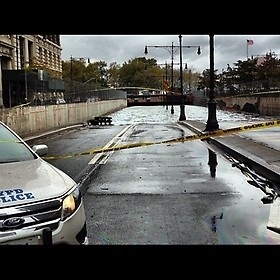
Hurricane Sandy Aftermath: Storm Leaves Millions Without Power, More Than A Dozen Dead

Source: HuffingtonPost

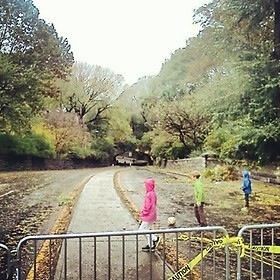
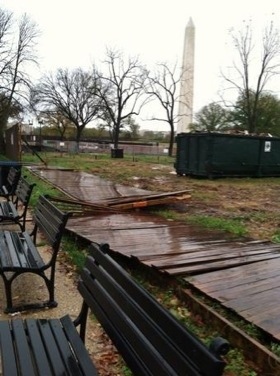
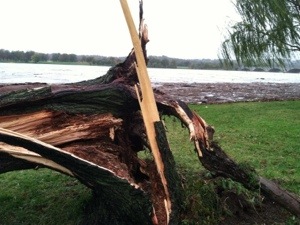
Millions of people from Maine to the Carolinas awoke Tuesday without electricity, and an eerily quiet New York City was all but closed off by car, train and air as superstorm Sandy steamed inland, still delivering punishing wind and rain. The U.S. death toll climbed to 33, many of the victims killed by falling trees.

The full extent of the damage in New Jersey, where the storm roared ashore Monday night with hurricane force, was unclear. Police and fire officials, some with their own departments flooded, fanned out to rescue hundreds.

“We are in the midst of urban search and rescue. Our teams are moving as fast as they can,” Gov. Chris Christie said. “The devastation on the Jersey Shore is some of the worst we’ve ever seen. The cost of the storm is incalculable at this point.”

At least 7.4 million people across the East were without power. Airlines canceled more than 15,000 flights around the world, and it could be days before the mess is untangled and passengers can get where they’re going.
The storm also put the White House campaign on hold just a week before Election Day. President Barack Obama canceled a third straight day of campaigning, scratching events scheduled for Wednesday in swing state Ohio, which got clobbered by Sandy’s winds as the storm pushed west.
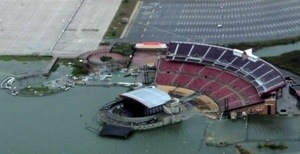
Lower Manhattan, which includes Wall Street, was among the hardest-hit areas after the storm sent a nearly 14-foot surge of seawater, a record, coursing over its seawalls and highways and into low-lying streets.
Water cascaded into the gaping, unfinished construction pit at the World Trade Center, and the New York Stock Exchange was closed for a second day, the first time that has happened because of weather in more than a century.
A huge fire destroyed as many as 100 houses in a flooded beachfront neighborhood in Queens on Tuesday, forcing firefighters to undertake daring rescues. Three people were injured.
A downtown hospital, New York University’s Tisch, evacuated 200 patients after its backup generator failed. About 20 babies from the neonatal intensive care unit were carried down staircases and on battery-powered respirators.
And a construction crane that collapsed in the high winds on Monday still dangled precariously 74 floors above the streets of midtown Manhattan. And on Staten Island, a tanker ship wound up beached on the shore.
With water standing in two major commuter tunnels and seven subway tunnels under the East River, and Mayor Michael Bloomberg said it was unclear when the nation’s largest transit system would be rolling again. It shut down Sunday night ahead of the storm.
Joseph Lhota, chairman of the regional Metropolitan Transportation Authority, said the damage was the worst in the 108-year history of the New York subway.
The saltwater surge inundated subway signals, switches and electrified third rails and covered tracks with sludge. Workers began pumping the water out and will ultimately have to walk all of the hundreds of miles of track to inspect it.
Millions of more fortunate New Yorkers surveyed damage as dawn broke, their city brought to an extraordinary standstill.
“Oh, Jesus. Oh, no,” Faye Schwartz said she looked over damage in neighborhood in Brooklyn, where cars were scattered like leaves.
Reggie Thomas, a maintenance supervisor at a prison near the overflowing Hudson River, emerged from an overnight shift there, a toothbrush in his front pocket, to find his Honda with its windows down and a foot of water inside. The windows automatically go down when the car is submerged to free drivers.
“It’s totaled,” Thomas said with a shrug. “You would have needed a boat last night.”
Besides the subway and the stock exchange, most major tunnels and bridges in New York were closed, as were schools, Broadway theaters and the metropolitan area’s three main airports, LaGuardia, Kennedy and Newark.
“This will be one for the record books,” said John Miksad, senior vice president for electric operations at Consolidated Edison, which had more than 670,000 customers without power in and around New York City.
The death toll climbed rapidly, and included 17 victims in New York State — 10 of them in New York City — along with four dead in Pennsylvania and three in New Jersey. Sandy also killed 69 people in the Caribbean before making its way up the Eastern Seaboard.
In New Jersey, a huge swell of water swept over the small town of Moonachie, near the Hackensack River, and authorities struggled to rescue about 800 people, some of them living in a trailer park.
And in neighboring Little Ferry, water suddenly started gushing out of storm drains overnight, submerging a road under 4 feet of water and swamping houses.
Police and fire officials used boats and trucks to reach the stranded.
“I looked out and the next thing you know, the water just came up through the grates. It came up so quickly you couldn’t do anything about it. If you wanted to move your car to higher ground you didn’t have enough time,” said Little Ferry resident Leo Quigley, who with his wife was taken to higher ground by boat.
Jersey City was closed to cars because traffic lights were out, and Hoboken, just over the Hudson River from Manhattan, dealt with major flooding. In Atlantic City, most of the world-famous boardwalk was intact, but pieces washed away Monday night.
Remnants of the hurricane were forecast to head across Pennsylvania before taking another sharp turn into western New York by Wednesday morning. Although weakening as it goes, the storm will continue to bring heavy rain and flooding, said Daniel Brown of the National Hurricane Center in Miami.
As Hurricane Sandy closed in on the Northeast, it converged with a cold-weather system that turned it into a monstrous hybrid of rain, high wind — and even snow in West Virginia and other mountainous areas inland.
In a measure of how big the storm was, high winds spinning off the edge of Sandy clobbered the Cleveland area early Tuesday, uprooting trees, cutting power to hundreds of thousands, closing schools and flooding major roads along Lake Erie.
Hundreds of miles from the storm’s center, gusts topping 60 mph prompted officials to close the port of Portland, Maine, and scared away several cruise ships.
Just before it made landfall at 8 p.m. near Atlantic City, N.J., forecasters stripped Sandy of hurricane status, but the distinction was purely technical, based on its shape and internal temperature.
While the hurricane’s 80 mph winds registered as only a Category 1 on a scale of five, it packed the lowest barometric pressure on record in the Northeast, giving it terrific energy to push water inland.
Obama declared a major disaster in the city and Long Island.
In New York, the construction crane atop a 1,000-foot, $1.5 billion luxury high-rise in midtown Manhattan dangled for a second day while authorities tried to figure out how to secure it. Thousands were ordered to leave nearby buildings as a precaution, including 900 guests at the ultramodern Le Parker Meridien hotel.
Alice Goldberg, 15, a tourist from Paris, was watching television in the hotel — whose slogan is “Uptown, Not Uptight” — when a voice came over the loudspeaker and told everyone to leave.
“They said to take only what we needed, and leave the rest, because we’ll come back in two or three days,” she said as she and hundreds of others gathered in the luggage-strewn marble lobby. “I hope so.”
An explosion Monday night at a substation for Consolidated Edison, the main utility service New York City, knocked out power to about 310,000 customers in Manhattan.
“It sounded like the Fourth of July,” Stephen Weisbrot said from his 10th-floor apartment.
In Baltimore, fire officials said four unoccupied rowhouses collapsed in the storm, sending debris into the street but causing no injuries. A blizzard in western Maryland caused a pileup of tractor-trailers that blocked part of Interstate 68 on slippery Big Savage Mountain.
“It’s like a long-tailed cat in a room full of rocking chairs up here,” said Bill Wiltson, a Maryland State Police dispatcher.
20121031-044520.jpg

20121031-044525.jpg

20121031-044530.jpg

20121031-044535.jpg

20121031-044541.jpg

20121031-044546.jpg

20121031-044550.jpg

20121031-044555.jpg